交通运输

Search documents
传奇基金经理出手了!
Ge Long Hui· 2025-05-24 07:12
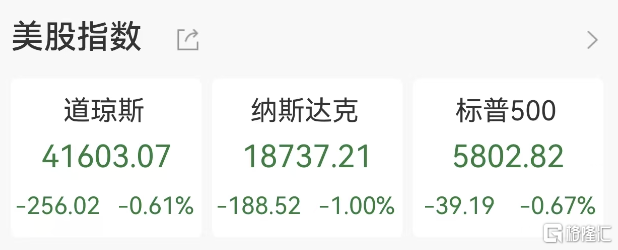
Group 1 - The core viewpoint of the article highlights the impact of Trump's threats to impose tariffs on the EU and Apple, which has led to a significant decline in the U.S. stock market, particularly affecting major tech stocks like Apple [1][2] - The S&P 500 index has experienced a four-day decline, with Apple leading the drop among the tech giants, marking an eight-day losing streak [1] - Bill Ackman, a prominent hedge fund manager, has taken advantage of the market dip by buying Amazon shares after a significant price drop due to tariff concerns, indicating a potential undervaluation of the company [1][2] Group 2 - Ackman's investment strategy is supported by two main reasons: the resilience of Amazon Web Services (AWS) as the core profit driver and the limited impact of tariffs on Amazon's retail business, as less than 15% of its self-operated products are imported [2] - Ackman is recognized for his legendary investment acumen, having predicted the subprime mortgage crisis in 2007 and profiting significantly during the COVID-19 pandemic [2] - The article notes Ackman's strategic timing in selling Nike shares before the tariff announcement, raising questions about his investment decisions and market timing [2][4] Group 3 - Yang Dong, another notable fund manager, has made significant adjustments to his investment portfolio in April, reducing exposure to convertible bonds while increasing investments in sectors like real estate, power, and chemicals [5] - Yang's focus on domestic demand growth and the stabilization of the real estate market is seen as a key strategy for future investments [5] - He emphasizes that stocks remain a favorable investment choice compared to fixed-income assets, citing the potential for structural opportunities in consumption, healthcare, and new infrastructure [5] Group 4 - The first batch of new floating-rate funds has been rapidly approved, reflecting regulatory attention to enhancing the public fund industry [6][10] - These funds will feature a performance-based fee structure, linking management fees to investment performance, which is expected to improve active management capabilities and align interests between fund managers and investors [10][14] - The floating-rate funds are designed to encourage long-term investment by requiring a minimum holding period of one year to benefit from fee adjustments, thereby reducing short-term speculation [14]


新财观|从5403家上市公司年报里,我们能看到什么?
Xin Hua Cai Jing· 2025-05-23 15:04
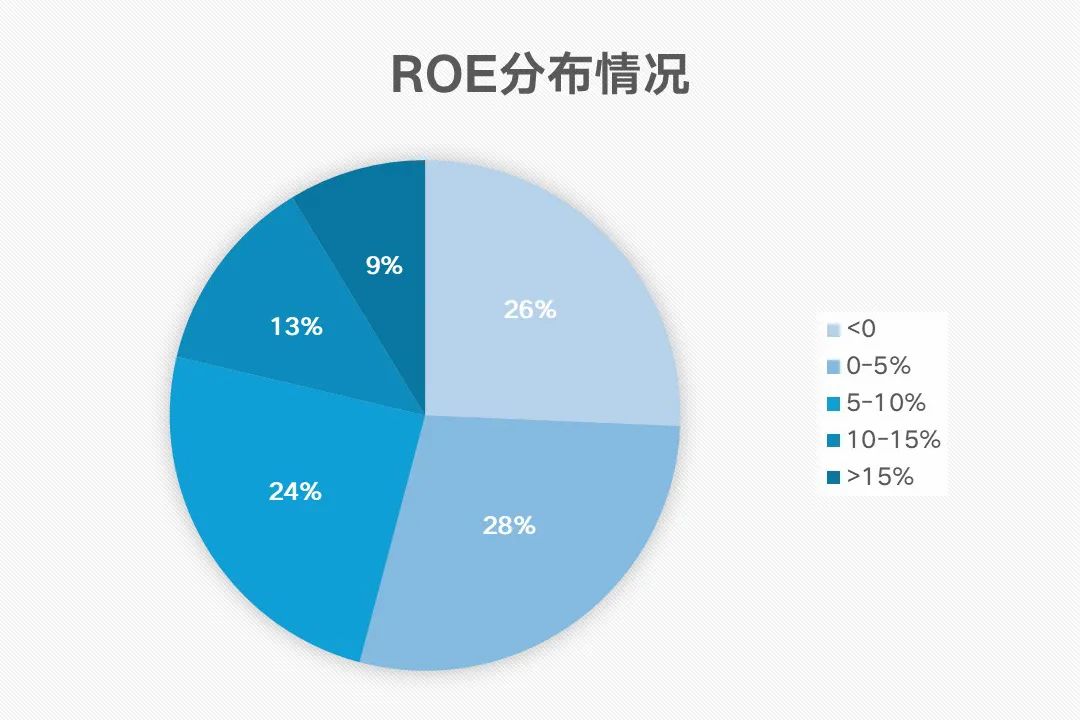
Core Insights - The article emphasizes the importance of three key financial metrics—ROE, cash flow, and growth potential—as the foundational pillars for assessing a company's value and its ability to navigate market cycles [1][8]. ROE Analysis - The overall ROE for the A-share market decreased from 5.6% in 2023 to 4.3% in 2024, indicating a general decline in profitability across the market [5][7]. - The household appliance sector leads with an ROE of 8.2%, supported by a 0.75 asset turnover ratio and a 6.1% net profit margin, exemplifying a high-frequency turnover and reasonable profit model [6][7]. - The coal industry saw its ROE plummet from 12.0% to 7.3%, primarily due to a significant drop in net profit margin from 10.1% to 6.7% as resource advantages diminished [7][8]. - The real estate sector is the only one with a negative ROE of -0.4%, driven by a -3.2% net profit margin and a high leverage ratio of 3.3, indicating unsustainable high-leverage models under declining demand [7][8]. Growth Potential - The electronics industry leads in revenue growth with a 17.4% increase, driven by surging demand for AI computing power and semiconductor manufacturing [9][11]. - Nine industries, including electronics and automotive, reported net profit growth, with the electronics sector achieving a remarkable 35.8% increase in net profit [11][12]. - The computer industry has the highest R&D investment ratio at 12.9%, indicating a focus on building technological barriers for long-term value creation [12][13]. Cash Flow Insights - The coal industry has the highest operating cash flow, amounting to 2,111.3 million, with a strong profitability ratio of 1.6, indicating robust cash flow coverage [16][19]. - Only 44% of A-share companies have a healthy cash flow ratio, with 56% showing concerning profitability quality, highlighting potential funding shortages for many firms [19][20]. - The top five industries by operating cash flow (oil and petrochemicals, communication, public utilities, transportation, and automotive) demonstrate a trend of stable cash flow generation, supporting capital expenditures without excessive reliance on external financing [20][21].
交通运输部审议《关于严格规范交通运输涉企行政检查的实施意见》等
news flash· 2025-05-23 13:04
Group 1 - The Ministry of Transport held a meeting to review the "Traffic Transport Safety Production and Service Guarantee Work Mechanism for Short Holidays" and "Implementation Opinions on Strictly Regulating Administrative Inspections Related to Enterprises in Transportation" [1] - The meeting was chaired by Liu Wei, the Secretary of the Party Group and Minister of the Ministry of Transport [1]
广东4月份经济运行总体平稳,港口货物吞吐量同比增6%
Nan Fang Du Shi Bao· 2025-05-23 12:08
Economic Overview - In April 2025, Guangdong's economy showed overall stability despite increased external shocks, supported by effective macro policies [2] - The industrial production maintained steady growth with a 3.4% year-on-year increase in the first four months [2] Industrial Performance - The industrial added value for large-scale enterprises grew by 3.4% year-on-year from January to April, with manufacturing up by 4.1% [2] - Key sectors such as computer, communication, and electronic equipment manufacturing saw a 7.1% increase, while automotive manufacturing grew by 7.8% [2] - New energy vehicles, industrial robots, and civilian drones experienced significant production increases of 22.9%, 36.4%, and 48.6% respectively [2] Service Sector - The large-scale service industry reported a revenue of 1.39 trillion yuan in Q1, marking a 7.6% year-on-year growth [2] - The transportation, storage, and postal services sectors grew by 9.8%, contributing significantly to the service industry's revenue growth [2] Transportation Market - In April, freight volume and turnover increased by 2.8% and 4.4% year-on-year, with railway freight volume rising by 16.4% [3] - Passenger transport also saw growth, with civil aviation passenger volume increasing by 9.9% [3] Retail and Consumption - The total retail sales of consumer goods in Guangdong increased by 3.0% year-on-year in the first four months, with urban consumption growing by 3.4% [4] - The "old-for-new" consumption policy showed positive effects, with significant growth in categories like home appliances and communication equipment [4] Investment Trends - Fixed asset investment in Guangdong decreased by 8.4% in the first four months, but infrastructure investment rose by 4.5% [5] - Investment in the automotive manufacturing sector increased by 20.8%, indicating a strong focus on industrial technology upgrades [5] Price Stability - The Consumer Price Index (CPI) in April showed a year-on-year decrease of 0.4%, with food and non-food prices both declining [6] - The Producer Price Index (PPI) also fell by 1.4% year-on-year in April, reflecting broader price stability in the industrial sector [6]

央妈再次大额加量续作,“红利双雄”又要起飞了
Sou Hu Cai Jing· 2025-05-23 06:34
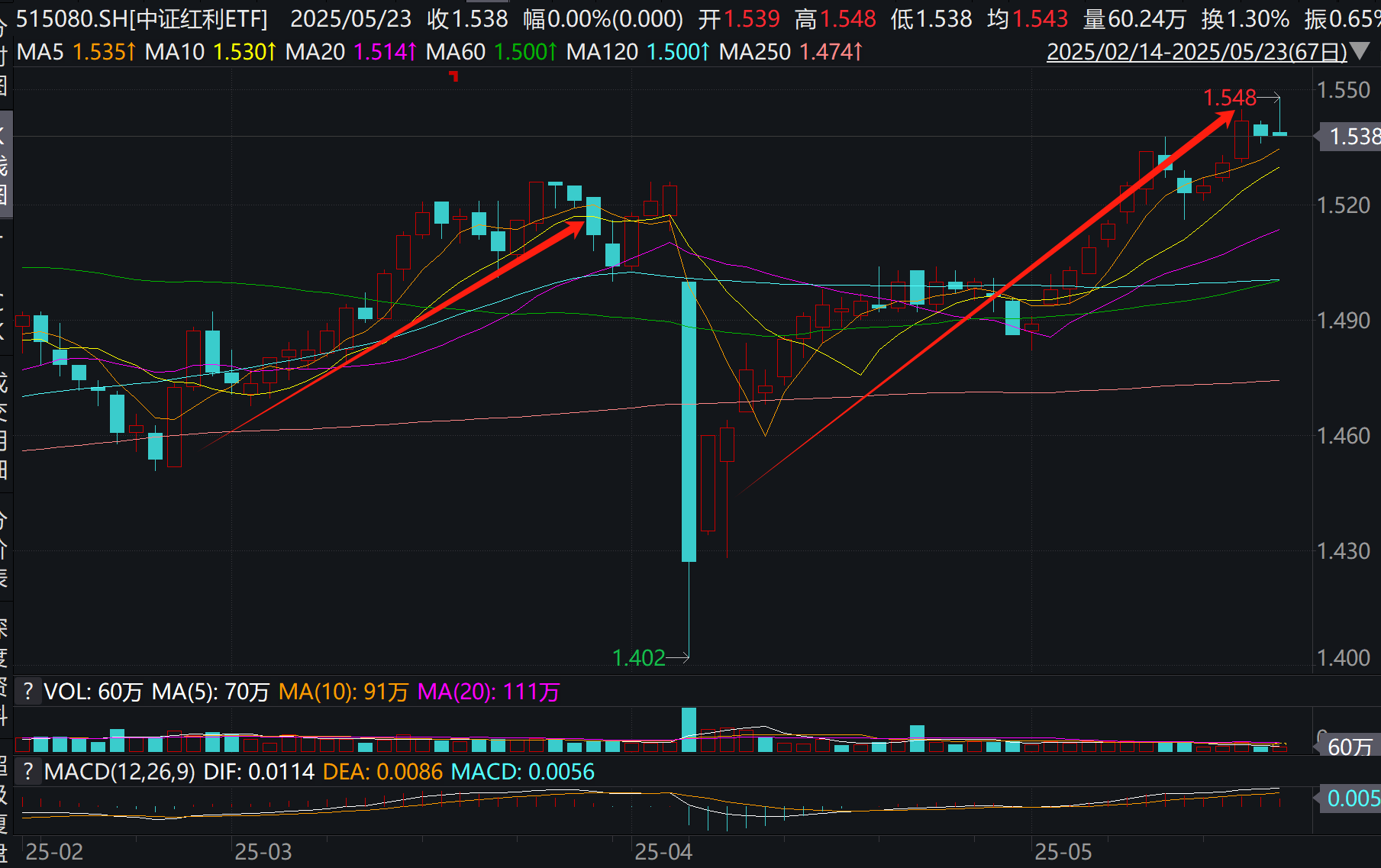
央妈今天开展了5000亿MLF操作,我看这个月已经有1250亿MLF到期,那也就是说5月央行MLF净投放有3750亿。这已经是央行连续第三个月加量续作,也 是连续第二个月大额加量续作。 叠加月初央妈刚刚实施降准、释放长期资金约1万亿,5月MLF继续大额净投放,流动性宽松、利率下行直接对高股息资产构成利好,这下子红利又要继续 起飞了。 事实上红利一直都很强势。4月8日以来,分别代表港股红利和A股红利的"红利双雄":恒生港股通高股息低波动和中证红利分别上涨了16%和8%,截至最 新股息率高达8.2%和6.3%。在一年期存款利率跌破1字头的大环境下,只能说红利资产实在太具有吸引力了,并且还在持续增强。 这次MLF加量续作叠加之前的降准,能够在一定程度上提升银行信贷投放能力,相关企业融资成本下降,有助于改善高股息行业的盈利水平。盈利水平提 升企业现金流得到改善,分红能力也会增强。 红利资产的低估值、高股息特征能提供天然的安全边际,长期高分红还能提供稳定现金流,与当前市场尤为契合。 比如跟踪恒生港股通高股息低波动的$港股红利低波ETF(SH520550)$,今年以来已经21次刷新历史新高,从4月8日以来累计上涨了12% ...
浙商证券浙商早知道-20250523
ZHESHANG SECURITIES· 2025-05-22 23:30
Market Overview - The Shanghai Composite Index fell by 0.2%, the CSI 300 decreased by 0.1%, the STAR 50 dropped by 0.5%, the CSI 1000 declined by 1.1%, the ChiNext Index decreased by 1.0%, and the Hang Seng Index fell by 1.2% on Thursday [4] - The best-performing sectors on Thursday were banking (+1%), media (+0.1%), and home appliances (0%), while the worst-performing sectors included beauty care (-2.0%), social services (-1.8%), basic chemicals (-1.7%), environmental protection (-1.5%), and real estate (-1.4%) [4] - The total trading volume in the Shanghai and Shenzhen markets was 1,102.7 billion yuan, with a net inflow of 3.88 billion Hong Kong dollars from southbound funds [4] Important Insights Fixed Income Credit Bonds - The core viewpoint indicates that the main value of sci-tech bonds lies in contributing incremental value to the bond market, with an expected annual issuance close to 1.9 trillion yuan, which alleviates asset scarcity issues [5] - In terms of pricing, sci-tech bonds have an average yield spread of approximately 10 basis points compared to ordinary bonds issued by the same entity, suggesting that the market pricing for sci-tech bonds has not changed due to policy shifts [5] Macroeconomic Analysis - The core viewpoint highlights that the fiscal situation in April 2025 showed improvement, with national public budget revenue increasing by 1.9% year-on-year (compared to 0.3% in March), and public budget expenditure rising by 5.8% year-on-year (compared to 5.7% in March) [6] - The second budget also improved, with government fund budget revenue growth recorded at 8.1%, returning to positive growth [6] - The report suggests that to address potential uncertainties, the central government has reserved sufficient tools and policy space, including the possibility of issuing special government bonds and special bonds [6]
中国最新六大科技企业!!
Datayes· 2025-05-22 11:51
Core Viewpoint - The article discusses the recent fluctuations in the A-share market, highlighting the contrasting performance of bank stocks amidst a broader market decline, influenced by external factors such as U.S. Treasury yields and geopolitical tensions [1][2][3]. Market Performance - On May 22, A-shares experienced a decline, with the Shanghai Composite Index down 0.23%, the Shenzhen Component down 0.72%, and the ChiNext Index down 0.96%. The North Star 50 index fell significantly by 6.15% [5]. - The total market turnover was 11,398 billion yuan, a decrease of 747 billion yuan from the previous day, with over 4,400 stocks in the market showing losses [5]. Sector Analysis - Bank stocks showed resilience, with Qingdao Bank and Chongqing Rural Commercial Bank leading the gains [5]. - The article notes a significant drop in previously hot sectors such as pet economy and solid-state batteries, while innovative drug concepts remained active, with Sanofi's stock hitting a four-day limit up [5]. - The AI sector saw activity with Kunlun Wanwei's stock also hitting the limit up after the launch of its Skywork Super Agents product [5]. External Influences - The article mentions that the A-share market's decline was influenced by external factors, including significant risks in Japanese and U.S. bonds, with the 30-year U.S. Treasury yield rising to 5.09% and the 10-year yield to 4.60% [2]. - Bitcoin has emerged as a preferred asset for global investors amid uncertainty, reaching a new high of over $110,000, reflecting a 60% increase since Trump's election [3]. Investment Trends - The article highlights that foreign investors are increasingly reluctant to purchase U.S. assets, indicating rising fiscal risks in the U.S. economy [3]. - The article also notes that the Chinese central bank is taking measures to maintain liquidity in the banking system, with a planned 500 billion yuan MLF operation [6]. Capital Flow - The net outflow of main funds reached 470.82 billion yuan, with the basic chemical industry experiencing the largest outflow [8]. - The banking, defense, media, light manufacturing, and comprehensive sectors saw net inflows, while basic chemicals, power equipment, machinery, computing, and electronics faced net outflows [8].





【22日资金路线图】两市主力资金净流出超250亿元 银行板块实现净流入
证券时报· 2025-05-22 10:53
5月22日,A股市场整体下跌。 截至收盘,上证指数收报3380.19点,下跌0.22%;深证成指收报10219.62点,下跌0.72%;创业板指收报 2045.57点,下跌0.96%。两市合计成交11026.9亿元,较上一交易日减少707.55亿元。 1. 两市主力资金净流出超250亿元 今日沪深两市主力资金开盘净流出57.48亿元,尾盘净流出41.77亿元,全天净流出252.63亿元。 | | | 沪深两市最近五个交易日主力资金流向情况(亿元) | | | | --- | --- | --- | --- | --- | | 日期 | | 净流入金额 开盘净流入 | 尾盘净流入 | 超大单净买入 | | 2025-5-22 | -252. 63 | -57.48 | -41.77 | -104. 55 | | 2025-5-21 | -229.13 | -102. 74 | -15. 22 | -82.09 | | 2025-5-20 | -19.30 | -67.28 | 4. 68 | 46. 36 | | 2025-5-19 | -124.08 | -134.53 | -1. 67 | -37.99 | ...

汇丰中国股市策略:盈利改善推动成长股持续跑赢,推荐十大股票!
智通财经网· 2025-05-22 06:42
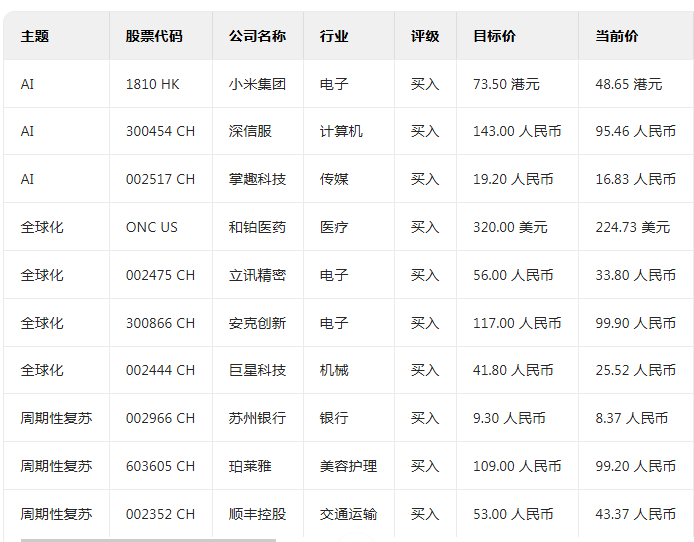
Core Viewpoint - HSBC forecasts a 3.8% year-on-year growth in A-share earnings for Q1 2025, led by the materials (+40.3%) and information technology (+24.7%) sectors, with a continued outperformance of growth style over the market [1][2] Investment Themes Artificial Intelligence (AI) - The penetration rate of AI is rising, with 68% of A-share companies mentioning "AI" in their 2024 annual reports, up from 43% in the first half of 2024 [3] - Market expectations indicate accelerated profit growth in the AI value chain for 2025, with infrastructure companies expected to grow faster than technology enablers and applicators [3] Globalization - Recent breakthroughs in US-China trade negotiations serve as a catalyst for globalization-themed stocks [4] - In 2024, overseas revenue accounted for 11.7% of total revenue for CSI 300 constituents, an increase of 1.4 percentage points year-on-year, with the information technology sector having the highest overseas revenue share at 31.4% [4] Cyclical Recovery - Cyclical industries are expected to see profit improvements, with overall earnings projected to grow by 18.8% in Q1 2025, compared to a decline of 17.9% in Q3 2024 [5] - Factors contributing to structural opportunities in cyclical industries include steady policy rollout, structural recovery in the real estate market, and attractive valuations [5] Recommended Stocks - Based on the three investment themes and bottom-up research, HSBC recommends the following 10 stocks with buy ratings: - AI Theme: Xiaomi Group-W (01810), Deepin Technology (300454.SZ), Zhangqu Technology (300315.SZ) [6] - Globalization Theme: HAPO (02142), Luxshare Precision (002475.SZ), Anker Innovations (300866.SZ), Giant Star Technology (002444.SZ) [6] - Cyclical Recovery Theme: Suzhou Bank (002966.SZ), Proya Cosmetics (603605.SH), SF Holding (002352.SZ) [6]




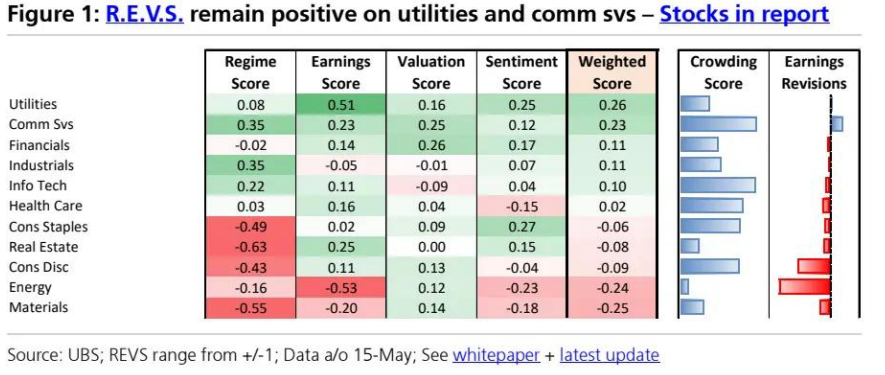
瑞银:美股行情延续,阿尔法机会升温
Zhi Tong Cai Jing· 2025-05-22 04:28
Group 1: Market Trends - After the tariff announcement on April 2, the US stock market quickly priced in a recessionary regime, eliminating the possibility of a "Goldilocks" (moderate growth) scenario. This trend has since reversed, with the probability of the Goldilocks regime returning to March's average level [1] - The Purchasing Managers' Index (PMIs) continues to decline, while OECD leading indicators show the economy remains in a late cycle but has not yet exited the expansion phase. The REVS regime favors late-cycle defensive sectors like communication services, but as leading indicators weaken, preferences may shift more towards utilities [2] Group 2: Earnings Adjustments - Almost all sectors have seen downward revisions in sales and earnings expectations, but the pace of these adjustments has slowed. The sectors with the largest downward revisions include automotive, durable goods, and building materials. The dispersion in earnings scores indicates the presence of alpha opportunities in the market [3] Group 3: Valuation Insights - Forward price-to-earnings ratios have mostly rebounded, returning to a "growth optimism" range. The US stock market's valuation remains higher than other global regions, with dollar-denominated earnings outperforming Europe by 10%, exceeding long-term trends [4] Group 4: Sentiment Analysis - Utilities and consumer staples sectors maintain positive sentiment. UBS crowding data indicates a persistent overweight position in the US market, although it has decreased from March's peak. The significant rotation from cyclical consumer stocks (durable goods and automotive) to defensive sectors (like consumer staples) has not fully normalized [5] Group 5: Top and Bottom Rated Stocks - The highest-rated stocks based on the REVS framework include Intercontinental Exchange, Virtu Financial, and Broadcom, with price changes since March 31 ranging from 10.9% to 37.3% [6] - The lowest-rated stocks include Ziprecruiter, Bioxcel Therapeutics, and Jetblue Airways, with price changes since March 31 ranging from 0% to 3.6% [7]