
煤炭

Search documents
上海能源:截至2026年1月20日股东34530户
Zheng Quan Ri Bao Wang· 2026-01-26 12:44
证券日报网讯1月26日,上海能源(600508)在互动平台回答投资者提问时表示,截至2026年1月20日, 上海能源股东34530户。 ...

山西焦煤:公司2025年1月-9月财务费用同比增长76.88%
Zheng Quan Ri Bao Wang· 2026-01-26 12:43
Core Viewpoint - Shanxi Coking Coal (000983) reported a significant increase in financial expenses for the period from January to September 2025, primarily due to interest expenses related to the acquisition of mining rights [1] Financial Performance - Financial expenses increased by 76.88% year-on-year for the period mentioned [1] - The increase is attributed to the financing costs incurred from the acquisition of coal and associated bauxite exploration rights in the Xinxian area of Luliang City, Shanxi Province, which was won at a bid of 24.705 billion yuan [1]

今年国内煤炭进口能否回升?
中国能源报· 2026-01-26 12:18
业内预测,到20 3 0年,全球动力煤贸易量或持续收缩,焦煤有望在冶金需求支撑下显现 韧性。进入2 0 26年,海外煤炭主产国或为稳定煤价开始收缩产量,我国煤炭进口总量或 延续小幅减量趋势。 海 关 总 署 日 前 公 布 的 数 据 显 示 , 2025 年 我 国 共 进 口 煤 炭 4 9 0 2 7 万 吨 , 同 比 下 降 9 . 6% 。 2 0 25年由此成为近1 0年来,除2022年之外第二个进口量负增长的年份,作为主要进口煤 种的动力煤进口同比降幅更是达到12%。 2 0 25年,国内煤炭供应量提升,煤炭消费却出现自20 1 7年以来的首次同比负增长。不仅 国内对进口煤炭需求收窄,全球煤炭贸易都在2025年呈现下降态势。业内预测,到2 0 3 0 年 , 全 球 动 力 煤 贸 易 量 或 持 续 收 缩 , 焦 煤 有 望 在 冶 金 需 求 支 撑 下 显 现 韧 性 。 进 入 2026 年,海外煤炭主产国或为稳定煤价开始收缩产量,我国煤炭进口总量或延续小幅减量趋 势。 国内供应充裕,进口增转降 不同耗煤行业所需的煤种有所不同,因此进口煤炭的来源和品种十分多样。从煤种看,发 电需要燃 ...


ETF日报:在能源安全战略与国企市值管理考核的双重背景下,煤炭龙头的估值重塑之路或仍未结束,关注煤炭ETF
Xin Lang Ji Jin· 2026-01-26 12:04
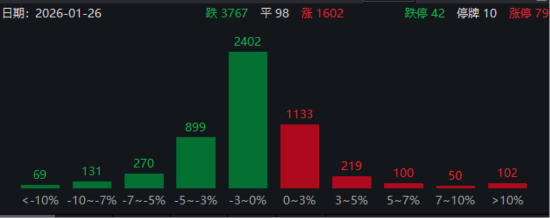
Market Overview - The stock market experienced adjustments, with the Shanghai Composite Index down 0.09% and the Shenzhen Component Index down 0.85%, amid geopolitical tensions and concerns over a potential U.S. government shutdown [1] - High trading volume was maintained, exceeding 3.28 billion yuan, indicating active market participation despite the downturn [1] Livestock Farming Sector - The livestock farming sector has gained renewed attention, with the Livestock ETF (159865) rising over 2% as the average price of live pigs increased to approximately 13.02 yuan/kg, with some regions exceeding 14 yuan/kg [3] - The improvement in supply-demand dynamics is a key driver, with the breeding sow inventory expected to decrease to about 39.61 million heads by the end of 2025, a 2.9% year-on-year decline, supporting future price increases [3] - The upcoming Spring Festival is expected to boost demand, providing strong support for pig prices, while the sector remains undervalued historically, offering a favorable risk-reward profile [3] Investment Opportunities in Livestock ETF - The Livestock ETF (159865) is highlighted as an efficient investment tool, tracking the Livestock Index and including leading companies in the pig farming sector as well as upstream and downstream players [4] - Despite potential short-term price fluctuations post-holiday, the long-term outlook remains positive due to the delayed effects of capacity reduction expected to manifest by 2026 [4] Coal Sector Performance - The coal sector has shown strong performance, with the Coal ETF (515220) rising approximately 2% due to high winter electricity demand and cold weather [5] - The investment logic for coal is shifting from purely cyclical to a dual driver of "dividend + growth," with supply constraints and a balanced supply-demand situation expected to persist [5] - The coal industry is currently undervalued, with a TTM P/E ratio of about 15.0 and a P/B ratio of 1.44, alongside a dividend yield exceeding 6%, making it attractive in a low-interest-rate environment [5] Future Outlook for Coal Sector - The valuation of leading coal companies may continue to be restructured, making the Coal ETF (515220) appealing for investors seeking stable returns [6] - Investors are advised to monitor macroeconomic recovery and seasonal price fluctuations in coal [6] Gold Market Dynamics - Gold prices have surged, with COMEX gold surpassing $5000/oz and gold ETFs (518800) and (517400) experiencing significant gains [7] - Central banks are increasing gold purchases, with Poland's central bank planning to buy 150 tons, reflecting a growing trend of de-dollarization and heightened demand for precious metals [7] - The short-term outlook remains supported by ongoing geopolitical tensions, while the long-term perspective is bolstered by expectations of a Federal Reserve rate cut and increasing global uncertainties [7] Dividend-Focused Investment Strategies - The Dividend State-Owned Enterprise ETF (510720) has risen by 1.04%, reflecting a favorable environment for dividend-focused investments amid market volatility [8] - Long-term policies are enhancing the demand for dividend assets, with a notable increase in insurance capital entering the market [8] - The new "National Nine Articles" policy is expected to strengthen the valuation logic for dividend-paying assets, making them attractive for investors [8]
行业研究|行业周报|煤炭与消费用燃料:如何看待年初以来煤炭板块内部行情分化?-20260126
Changjiang Securities· 2026-01-26 11:55
丨证券研究报告丨 行业研究丨行业周报丨煤炭与消费用燃料 [Table_Title] 如何看待年初以来煤炭板块内部行情分化? 报告要点 [Table_Summary] 为何年初至今煤炭板块内部资金从"红利"向"弹性成长"轮动?我们认为,这主要和行业景 气有望筑底回暖、风险偏好提升、资金结构变化有关。考虑到 2026 年煤炭需求改善可期、反 内卷大背景下供给受限,供需改善下煤价中枢仍有望提升。因此一旦后续供给政策明朗化或需 求超预期,行情驱动将从"预期博弈"转向"基本面兑现",弹性煤炭公司或因低估值高赔率获 得较优相对收益。与此同时,依旧需要重视红利投资价值,尤其是红利标的中煤能源 H+A、中 国神华 H+A、陕西煤业有望因稳步改善的绝对股息率的投资性价比而获得增配。 分析师及联系人 请阅读最后评级说明和重要声明 %% %% %% %% research.95579.com 1 [Table_Author] SAC:S0490516080003 SAC:S0490519030001 SAC:S0490517070008 SAC:S0490522090003 SAC:S0490524120007 SFC:BUT91 ...
公募基金指数跟踪周报(2026.01.19-2026.01.23):“春季躁动”行情分化,逐步切换至绩优方向-20260126
HWABAO SECURITIES· 2026-01-26 11:42
1. Report Industry Investment Rating There is no information provided regarding the report's industry investment rating in the given content. 2. Core Viewpoints of the Report - In the equity market last week (2026.01.19 - 2026.01.23), under the environment of continuous regulatory policy suppression and abundant liquidity, the market structure was highly differentiated. Weight - stocks in consumption, medicine, and finance declined significantly due to large - scale ETF redemptions by policy funds, while the growth direction was active, and the commercial space sector regained strength after adjustment. As the earnings period begins, the market may rotate towards profit recovery and valuation repair. With the in - depth implementation of anti - involution policies, the investment growth rates of various industries have turned negative, implying future supply contraction, while demand stabilizes under the background of fiscal stimulus and economic recovery. This shift in the supply - demand contradiction consolidates the performance inflection points of leading companies in cyclical sectors such as non - ferrous metals and chemicals, and also drives the rise of sectors with price - increase logic like photovoltaics, lithium batteries, and coal [2][10][12]. - In the fixed - income market last week, short - term bond yields rose, and long - term yields fell. The 1 - year Treasury yield rose 3.95BP to 1.28%, the 10 - year Treasury yield fell 1.26BP to 1.83%, and the 30 - year Treasury yield fell 1.65BP to 2.29%, narrowing the term spread. Some funds entered the bond market for safety as the stock market cooled. The central bank governor's statement about potential reserve requirement ratio and interest rate cuts, along with positive news from the Ministry of Finance and good 7 - year Treasury bond issuance results, contributed to the narrowing of the term spread and the decline of long - term interest rates. There is support for the bond market sentiment, and there are opportunities to capture band trading in ultra - long - term interest - rate bonds [3][13]. 3. Summary by Relevant Catalogs 3.1 Weekly Market Observation 3.1.1 Equity Market Review and Observation - Index performance: Last week, the Shanghai Composite Index rose 0.84%, the CSI 300 fell 0.62%, and the ChiNext Index fell 0.34%. The average daily trading volume of the entire A - share market was 27,972 billion yuan, a decrease from the previous week [10]. - ETF funds: Overall, ETF funds showed a net outflow trend last week. The CSI 300ETF had the most significant share reduction, with 49.603 billion shares less in the past week. The CSI 1000, SSE 50, SSE STAR 50, and CSI A500 also had share reductions of 23.3 billion, 11.5 billion, 9.6 billion, and 7.9 billion respectively. Since January 15, patient funds have continuously redeemed a basket of ETFs, and during this period, some individual stocks with high weight in the index and actively priced by funds performed better. The market trading volume has shrunk from around 4 trillion to around 2.5 trillion, indicating that policy goals have achieved some results. Future market - overheating adjustment methods may focus on cracking down on hot money, relaxing IPOs, and executive share - sales, and the impact of ETF redemptions on the market may weaken marginally [11]. - External factors: The latest US economic data remains resilient, and the November PCE inflation data is in line with market expectations, with no obvious signs of inflation rebound. This week, the Federal Reserve will hold an interest - rate meeting, and the market will focus on the meeting and the earnings reports of large technology companies, especially on performance guidance and the sustainability of profit realization under high valuations. Overseas geopolitical conflicts are also an important short - term uncertainty factor, and market risk - aversion sentiment will remain before the situation in Iran is resolved [11]. 3.1.2 Pan - Fixed - Income Market Review and Observation - Domestic bond market: Last week, short - term bond yields in the domestic bond market rose, and long - term yields fell, narrowing the term spread. The 1 - year Treasury yield rose 3.95BP to 1.28%, the 10 - year Treasury yield fell 1.26BP to 1.83%, and the 30 - year Treasury yield fell 1.65BP to 2.29%. Some funds entered the bond market for safety as the stock market cooled. Positive factors such as the central bank governor's statement on potential reserve requirement ratio and interest rate cuts, the Ministry of Finance's press conference, and good 7 - year Treasury bond issuance results contributed to the narrowing of the term spread and the decline of long - term interest rates. There is support for the bond market sentiment, and there are opportunities to capture band trading in ultra - long - term interest - rate bonds [3][13]. - US Treasury yields: Last week, US Treasury yields fluctuated. The 1 - year US Treasury yield fell 2BP to 3.53%, the 2 - year yield rose 1BP to 3.60%, and the 10 - year yield remained flat at 4.24%. Trump's remarks about Greenland led to European selling of US Treasuries and a rise in yields, but his subsequent attitude reversed the trend. US Treasuries will likely continue to fluctuate in the future, with increased unpredictability [14]. - REITs: Last week, the CSI REITs Total Return Index rose 2.17% to 1047.51 points, and all types of REITs closed higher, with data centers, consumption, and warehousing leading the gains. In the primary market, 5 public REITs withdrew or terminated, including 4 initial projects and 1 expansion project [14][15]. 3.1.3 Public Fund Market Dynamics On January 23, 2026, the China Securities Regulatory Commission issued the "Guidelines for the Performance Comparison Benchmark of Publicly Offered Securities Investment Funds," and the Asset Management Association of China issued the "Operation Rules for the Performance Comparison Benchmark of Publicly Offered Securities Investment Funds." The official versions are generally consistent with the draft versions, with some adjustments including clarifying restrictions on benchmark changes, exempting money - market funds from disclosing performance - benchmark comparisons, and modifying the requirements for long - term performance evaluation by fund evaluation institutions [16]. 3.2 Fund Index Performance Tracking 3.2.1 Equity Strategy Theme - Based Index - Active Stock Fund Selection Index: The index selects 15 funds each period, with equal - weight allocation. It selects active equity funds based on performance competitiveness and style stability within value, balanced, and growth styles, and allocates them according to the style distribution of the CSI Equity - Oriented Fund Index (930950.CSI). The performance benchmark is the CSI Equity - Oriented Fund Index (930950.CSI) [20][21]. 3.2.2 Investment Style - Based Index - Value Stock Fund Selection Index: It includes both deep - value and quality - value styles. It selects 10 funds of deep - value, quality - value, and balanced - value styles based on multi - period style classification. The performance benchmark is the CSI 800 Value Index (H30356.CSI) [24]. - Balanced Stock Fund Selection Index: It selects 10 funds of relatively balanced and value - growth styles based on multi - period style classification. The performance benchmark is the CSI 800 (000906.SH) [24]. - Growth Stock Fund Selection Index: It aims to capture the performance and valuation double - click opportunities of high - growth companies and select "dark - horse" stocks. It selects 10 funds of active - growth, quality - growth, and balanced - growth styles based on multi - period style classification. The performance benchmark is the 800 Growth (H30355.CSI) [27]. 3.2.3 Industry Theme - Based Index - Pharmaceutical Stock Fund Selection Index: It classifies funds according to the intersection market value of fund equity holdings and the constituent stocks of the CITIC Pharmaceutical Index (with an average purity of not less than 60% in the past 3 years or since inception). It constructs an evaluation system in the eligible sample, considering factors such as relative benchmark index win - rate, product drawdown, style stability, and overall performance competitiveness, and selects 15 funds to form the index. The performance benchmark is the pharmaceutical theme fund index (fitted by Huabao Securities' fund research and investment platform) [30][31]. - Consumption Stock Fund Selection Index: It classifies funds according to the intersection market value of fund equity holdings and the constituent stocks of relevant CITIC consumption - related indices (with an average purity of not less than 50% in the past 3 years or since inception). It constructs an evaluation system in the eligible sample and selects 10 funds to form the index. The performance benchmark is the consumption theme fund index (fitted by Huabao Securities' fund research and investment platform) [31][32]. - Technology Stock Fund Selection Index: It classifies funds according to the intersection market value of fund equity holdings and the constituent stocks of relevant CITIC technology - related indices (with an average purity of not less than 60% in the past 3 years or since inception). It constructs an evaluation system in the eligible sample and selects 10 funds to form the index. The performance benchmark is the technology theme fund index (fitted by Huabao Securities' fund research and investment platform) [35]. - High - End Manufacturing Stock Fund Selection Index: It classifies funds according to the intersection market value of fund equity holdings and the constituent stocks of relevant CITIC high - end manufacturing - related indices (with an average purity of not less than 50% in the past 3 years or since inception). It constructs an evaluation system in the eligible sample and selects 10 funds to form the index. The performance benchmark is the high - end manufacturing theme fund index (fitted by Huabao Securities' fund research and investment platform) [40][41]. - Cyclical Stock Fund Selection Index: It classifies funds according to the intersection market value of fund equity holdings and the constituent stocks of relevant CITIC cyclical - related indices (with an average purity of not less than 50% in the past 3 years or since inception). It constructs an evaluation system in the eligible sample and selects 5 funds to form the index. The performance benchmark is the cyclical theme fund index (fitted by Huabao Securities' fund research and investment platform) [43][44]. 3.2.4 Money - Market Enhancement Index - Money - Market Enhancement Strategy Index: It aims at liquidity management, pursuing a curve that exceeds money - market funds and is smooth and upward. It mainly allocates money - market funds with relatively good performance and passive index - bond funds (inter - bank certificate of deposit index funds). The performance benchmark is the CSI Money - Market Fund Index (H11025.CSI) [47]. 3.2.5 Pure - Bond Index - Short - Term Bond Fund Selection Index: It aims at liquidity management, pursuing a smooth and upward curve while controlling drawdown. It mainly allocates 5 funds with stable long - term returns, strict drawdown control, and significant absolute - return ability. The performance benchmark is 50% * Short - Term Pure - Bond Fund Index + 50% * Ordinary Money - Market Fund Index [50]. - Medium - and Long - Term Bond Fund Selection Index: It invests in medium - and long - term pure - bond funds, aiming for stable returns while controlling drawdown. It selects 5 funds with both return and drawdown control, and adjusts the duration and the ratio of credit - bond funds and interest - rate bond funds according to market conditions. The performance benchmark is not clearly stated in a simple formula in the text [52]. 3.2.6 Fixed - Income + Index - Low - Volatility Fixed - Income + Selection Index: The equity center is set at 10%. It selects 10 fixed - income + funds with an equity center (considering convertible bond and stock positions) of less than 15% in the past three years and recently. It focuses on the risk - return ratio and holding experience. The performance benchmark is 10% CSI 800 Index + 90% ChinaBond New Composite Full - Price Index (CBA00303.CS) [55]. - Medium - Volatility Fixed - Income + Selection Index: The equity center is set at 20%. It selects 5 fixed - income + funds with an equity center between 15% and 25% in the past three years and recently, emphasizing the risk - return ratio and performance elasticity. The performance benchmark is 20% CSI 800 Index + 80% ChinaBond New Composite Full - Price Index (CBA00303.CS) [58]. - High - Volatility Fixed - Income + Selection Index: The equity center is set at 30%. It selects 5 fixed - income + funds with an equity center between 25% and 35% in the past three years and recently, emphasizing the risk - return ratio and performance elasticity. It selects funds with stable bond - end returns, no credit - downgrading, and strong stock - selection ability on the equity end. The performance benchmark is 30% CSI 800 Index + 70% ChinaBond New Composite Full - Price Index (CBA00303.CS) [61]. 3.2.7 Other Pan - Fixed - Income Index - Convertible Bond Fund Selection Index: It selects bond funds with an average convertible - bond investment proportion of not less than 60% in the latest period and not less than 80% in the past four quarters as the sample space. It constructs an evaluation system from the fund product, fund manager, and fund company dimensions, considering factors such as long - and short - term returns, drawdown, risk - adjusted returns, and the manager's timing and bond - selection abilities, and selects 5 funds to form the index [64]. - QDII Bond Fund Selection Index: It selects 6 QDII bond funds with stable returns and good risk control based on credit and duration conditions. The underlying assets of QDII bond funds are overseas bonds, covering regions such as the world, Asia, and emerging markets, and investment targets include Chinese - funded US dollar bonds and US dollar bonds [67]. - REITs Fund Selection Index: It selects 10 REITs funds with stable operation, reasonable valuation, and certain elasticity based on the underlying asset type. The underlying assets of REITs are mainly mature, high - quality, and stable - operating infrastructure projects, with relatively clear cash - flow expectations and limited unit - net - value volatility [68].
焦煤,低位区间震荡
Bao Cheng Qi Huo· 2026-01-26 11:36
Report Summary 1. Report Industry Investment Rating No investment rating information is provided in the report. 2. Core View of the Report - Since mid - January, the coking coal futures have experienced a correction and are currently in a low - level range - bound pattern. This is due to the lack of direct policy support and the weak fundamentals of coking coal. However, winter storage and the expectation of coal mine shutdowns during the Spring Festival limit the downside space. In the absence of policy intervention, coking coal futures lack the momentum for a one - sided upward movement, but there is also strong resistance to further short - term declines. The main contract is expected to remain in a low - level range [2][6]. 3. Summary by Related Content Market Performance - Futures: Since mid - January, the main contract of coking coal futures has fallen from around 1,250 yuan/ton to about 1,100 yuan/ton and then entered a range - bound state. In the past year, the upward movement of coking coal futures has mainly relied on industrial policies or macro - expectations. This year, in the absence of direct policy support, the market is mainly driven by fundamental factors [2][6]. - Spot: In January, the coking coal spot market performed well, with no obvious decline in the prices of mainstream coal types. As of January 23, the prices of some coal types such as Shanxi Linfen low - sulfur main coking coal, Shanxi Lvliang medium - sulfur main coking coal, and Meng 5 clean coal at Tangshan Port all increased month - on - month. Short - term winter storage and the expectation of coal mine shutdowns during the Spring Festival provided support, but in the long - term, the low downstream demand and the loose supply - demand contradiction of coking coal limit the continuous upward movement of coal prices [3]. Fundamental Analysis - Supply: Domestic coal mines maintained stable production before the Spring Festival. In terms of imports, the seaborne coal arrivals in the first two weeks of January decreased compared with December but increased by 13.8% year - on - year. The Mongolian coal imported by rail increased significantly in December last year. Although the daily vehicle - passing number at the Ganqimaodu Port decreased briefly in January, it gradually recovered in the middle of the month. As of January 23, the daily output of clean coal from 523 coking coal mines in the country was 770,000 tons, with a slight week - on - week increase of 100 tons and a year - on - year increase of 36,000 tons [2][4]. - Demand: Since January, the multiple attempts to increase the price of coke have failed. Coking enterprises are suffering heavy losses, resulting in low production enthusiasm. The latest data shows that the profit per ton of coke in independent coking plants is - 66 yuan/ton, and the total daily output of coke in independent coking plants and steel mill coking plants is 1,102,100 tons, with a slight week - on - week increase of 40 tons [4]. - Inventory: The total coking coal inventory within the statistical scope this week is 25.4473 million tons, with a week - on - week increase of 383,800 tons, indicating a loose supply situation. The inventory accumulation mainly occurs in downstream independent coking plants, reflecting the ongoing winter storage demand, which supports the spot price [4].
1月26日盘后播报
Sou Hu Cai Jing· 2026-01-26 11:30
Group 1: Market Overview - The stock market experienced adjustments, with the Shanghai Composite Index down 0.09% at 4132.61 points and the Shenzhen Component Index down 0.85% at 14316.64 points, amid geopolitical tensions leading to increased risk-averse trading [1] - The total trading volume across both markets remained high, exceeding 3.28 billion [1] Group 2: Livestock Industry - The Livestock ETF (159865) rose over 2%, with the national average price of live pigs increasing to approximately 13.02 yuan/kg as of January 25 [1] - The livestock sector has undergone significant capacity reduction after a deep adjustment in 2025, with current valuations still at relatively low historical levels [1] - The industry is transitioning from losses to slight profits, indicating a high safety margin and cost-effectiveness for investment [1] - The delayed effects of capacity reduction are expected to manifest gradually in 2026, with the industry's prosperity likely to spiral upward [1] - The sector is currently in a "bottoming" phase, suggesting that investors should consider the allocation value of the Livestock ETF (159865) and adopt a phased investment strategy [1] Group 3: Coal Industry - The coal sector performed well, with the Coal ETF (515220) rising approximately 2% due to strong cold air sweeping the nation and record-high winter electricity loads [2] - The investment logic in the coal sector is shifting from purely "cyclical speculation" to a dual drive of "dividends + growth" [2] - Supply constraints due to reduced capital expenditure under the "dual carbon" policy are expected to maintain a tight balance in supply and demand for the long term [2] - The coal industry's valuation remains at a relatively low historical level, with the China Securities Coal Index's dividend yield exceeding 6% over the past 12 months, making it attractive in the current low-interest market [2] - The Coal ETF (515220) is considered worthy of attention for investors seeking stable returns and defensive positions [2] Group 4: Precious Metals - COMEX gold prices surpassed 5000, with the Gold Fund ETF (518800) increasing by 2.61% and the Gold Stock ETF (517400) rising by 8.4% [3] - Continued purchases of gold by global central banks and the selling of U.S. Treasury bonds have heightened market risk aversion, increasing demand for precious metals [3] - Short-term outlook suggests that ongoing geopolitical conflicts will keep trading in the precious metals sector active, supporting gold prices [3] - The recent strength in gold prices may lead to short-term volatility risks after reaching new highs [3] - The long-term outlook remains supported by factors such as the Federal Reserve's interest rate cut cycle, increasing global uncertainties, and the trend of de-dollarization [3] - Investors are encouraged to continue monitoring investment opportunities in the Gold Fund ETF (518800) and Gold Stock ETF (517400) [3]
关注地方两会 | 河南将启动新一轮国资国企改革行动 加大战新产业等投资力度
Xin Lang Cai Jing· 2026-01-26 11:15
Core Viewpoint - In 2026, Henan Province aims to deepen reforms in key areas, with a focus on economic growth and structural adjustments in various sectors [2][3][14]. Economic Goals - The main expected targets for 2026 include an economic growth rate of around 5%, industrial added value growth of approximately 6.5%, fixed asset investment growth of about 5%, and retail sales growth of 5.5% [2][13]. - The province aims for a grain production of over 1.3 trillion jin, with a goal to achieve more growth compared to the previous year [2][13]. Reform Initiatives - A new round of state-owned enterprise reform will be initiated, focusing on strategic restructuring and professional integration [3][14]. - The government plans to enhance the investment in strategic emerging industries and the livelihood sector [3][14]. - There will be a comprehensive implementation of zero-based budgeting reforms and performance management mechanisms [3][14]. Employment and Social Policies - The urban unemployment rate is targeted to be around 5.5%, with over 1.1 million new urban jobs expected to be created [2][13]. - The government will implement policies to ensure the synchronization of resident income growth with economic growth [2][13]. Infrastructure and Investment Projects - Over 1,000 key provincial projects will be implemented, with an annual investment completion target of 1 trillion yuan [19]. - Major infrastructure projects include high-speed rail developments and enhancements in digital infrastructure [19][22]. Financial Strategies - The province plans to issue 132.7 billion yuan in local government special bonds to support project construction [8][18]. - There will be an increase in social financing scale by 1 trillion yuan, alongside efforts to manage local government financing platforms effectively [22]. Industry Development - The share of strategic emerging industries in industrial added value is expected to exceed 25% [8][18]. - The government will support the development of six major industrial clusters and 18 rural prosperity industrial chains [22].


2026年能源及相关行业发展展望:“十五五”规划下中美能源战略差异及投资机会
Guo Tai Jun An Qi Huo· 2026-01-26 11:14
Report Industry Investment Rating No relevant information provided. Core View of the Report - For China, the energy strategy is to clean up traditional energy and shift the development focus to non-fossil energy. It is recommended to overweight industries related to non-fossil energy substitution in China, such as non-ferrous metals and rare earths, and wait for the opportunity of coal's bottom - rebound [1]. - For the US, the energy strategy is to prioritize traditional energy and restrict the development of new energy. It is advisable to be cautiously bearish on crude oil and consider buying on dips to obtain geopolitical conflict premiums [1]. Summary by Relevant Content China's Energy Strategy Traditional Energy - **Coal**: In 2026, coal demand will peak and production will continue to decline, with a structural adjustment of the coal industry. The domestic coal consumption will remain at the peak of 4.8 - 5 billion tons during 2026 and the "14th Five - Year Plan" period. The state will control the scale of new coal - fired power plants, promote the upgrading and transformation of coal - fired power, and develop new coal chemical industry to improve coal utilization efficiency. The coal production growth rate may turn negative in 2026, and production will be concentrated in resource - rich areas [5][8]. - **Petroleum**: To reduce the dependence on oil imports (73.2% in 2025), China will encourage oil exploration and development in 2026, open up the market access for oil and gas exploration, and utilize deep - sea, deep - layer and unconventional oil and gas resources. The "14th Five - Year Plan" will continue to guide the exit of backward production capacity in the petrochemical industry to solve the over - capacity problem [10][11]. New Energy - China has introduced a series of fiscal policies to support new energy development, including tax incentives, subsidies, special funds, and financing support. With the support of the "14th Five - Year Plan", the substitution of new energy for fossil energy is sustainable. The key is to develop energy storage facilities to solve the intermittency and volatility of new energy power generation [12][14]. US Energy Strategy Traditional Energy - **Coal**: The US energy strategy prioritizes traditional energy, with a focus on expanding domestic development. The demand for coal for power generation may increase significantly due to the growth of data centers' power demand. The US government has strong policy support for the coal industry, including providing more mining land, tax incentives, etc. [18][19][23]. - **Petroleum**: The US has set a high production increase target for oil. Although shale oil production is expected to be stable in 2026, traditional oil production will continue to increase slightly. The overall oil price is expected to fluctuate widely between $50 - 60 per barrel in 2026 if geopolitical risks subside [23][24]. Restriction on New Energy and Electric Vehicles - The US restricts the development of electric vehicles and non - fossil energy. The cancellation of electric vehicle subsidies may reduce the demand and penetration rate of electric vehicles, increasing the demand for gasoline and coal - fired power. The "Great and Beautiful Act" and other policies also limit the development of non - fossil energy [26][29]. Analysis of Sino - US Energy Strategy Differences - **Objective Conditions**: The differences in Sino - US energy strategies mainly come from resource endowments. China aims for non - fossil energy substitution to achieve green development and carbon peak goals, while the US tends to increase production of fossil energy [30]. - **Import - Export Structure**: China is highly dependent on imported oil and gas, while the US is a major energy exporter. China will reduce its dependence on imported traditional energy, and the US will develop domestic oil resources [30]. - **Use of Traditional Fossil Energy**: In China, coal is used for power generation, coal chemical industry and steelmaking, while in the US, 90% of coal is used for power generation and export [32]. - **Power Grid Infrastructure**: China's power grid is state - led and unified, with advanced energy storage technology to support non - fossil energy substitution. The US power grid is market - driven, which amplifies the problems of non - fossil energy power generation [32][33]. Investment Recommendations - **Coking Coal Futures**: The transformation of coal chemical industry is expected to relieve the pressure of over - capacity of coking coal. The price is expected to bottom out in 2026Q4 - 2027. Pay attention to coking coal 202610 [34]. - **Crude Oil Futures**: The pattern of oversupply of oil may continue in 2026. With the decline of geopolitical risks, it is advisable to buy on dips [34]. - **Non - ferrous Metals ETF**: Non - ferrous metals are expected to continue to rise in 2026 due to the dual benefits of financial and industrial attributes. The Fed's expected interest rate cut and the demand from the "14th Five - Year Plan" for clean energy and power grid construction support the upward trend [35]. - **Rare Earth ETF**: Rare earths have strategic and industrial attributes, playing an important role in trade negotiations and new energy industries. It is recommended to maintain a certain degree of attention and allocation [35].