
关键矿产

Search documents
格陵兰会是下一个“黑天鹅”吗?德银总结了未来走向的四种情景
Hua Er Jie Jian Wen· 2026-01-16 12:15
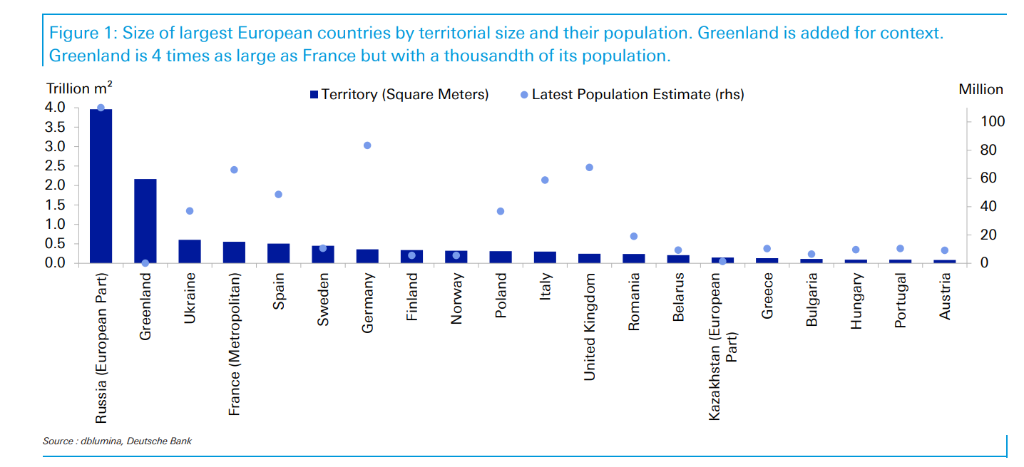
Core Viewpoint - Deutsche Bank considers Greenland as a potential "black swan" that could impact global markets due to its strategic geopolitical significance and the rising tensions surrounding it [1][4]. Group 1: Geopolitical Context - President Trump has reiterated the U.S. interest in acquiring or controlling Greenland, which is set against a backdrop of recent unilateral military actions by the U.S. [1] - A meeting between U.S. officials and Danish and Greenlandic leaders failed to resolve core sovereignty disputes, highlighting political divisions and increasing tail risks for investors [3]. Group 2: Strategic Assets and Motivations - Deutsche Bank identifies three main drivers for U.S. interest in Greenland: national security, critical minerals, and Arctic trade routes [4]. - Greenland's strategic location offers unique Arctic advantages, including proximity to key missile tracking systems and emerging shipping routes that could reduce transit times between Asia and Europe by up to 50% [4]. - The island is estimated to have significant rare earth reserves, potentially up to 1.5 million tonnes, which is crucial for the U.S. as it seeks to reduce dependence on Chinese mineral dominance [4]. Group 3: Future Scenarios - Deutsche Bank outlines four potential scenarios for Greenland's future that could influence market risk pricing: 1. A negotiated security agreement that enhances U.S. presence without altering sovereignty [5]. 2. A long-term lease arrangement granting the U.S. effective control while avoiding direct sovereignty transfer [5]. 3. A free association agreement granting Greenland semi-independence but with U.S. control over defense and foreign affairs [5]. 4. A military coercion scenario, which poses significant risks of escalation and could lead to severe crises within NATO, impacting economic relations and causing market volatility [5].


绕开最高法裁决风险 特朗普动用232条款对部分半导体及关键矿产加征关税
智通财经网· 2026-01-14 22:27
Group 1 - The U.S. government has signed two executive orders imposing tariffs on certain semiconductors and critical minerals under the national security clause of the Trade Act, specifically Section 232 [1] - The tariffs are expected to have exemptions for specific uses, including chips for artificial intelligence and some domestic procurement [1] - Analysts anticipate that the tariffs on semiconductors and critical minerals were expected, as previous tariffs have been implemented on aluminum products and auto parts [1] Group 2 - The U.S. Treasury has been coordinating with officials from France, Australia, South Korea, and the UK to enhance supply chain security for critical resources like rare earths [2] - The specific scope and implementation details of the tariffs have not yet been clarified by the White House, indicating ongoing uncertainty in trade policy [2] - Following the announcement, semiconductor stocks generally declined, with notable drops in Nvidia, Oracle, and Broadcom, while rare earth stocks saw significant gains [2]


美国承认犯下大错!特朗普之前真的没料到,中方敢跟美国这么打
Sou Hu Cai Jing· 2025-12-31 17:16
Core Viewpoint - The article discusses the unexpected escalation of tariffs between the U.S. and China, highlighting the shift in strategy from the U.S. and the underlying factors that empowered China to respond aggressively [1][14]. Group 1: U.S.-China Tariff Dynamics - The U.S. initially imposed a 34% tariff on China, which was met with a reciprocal increase by China, raising tariffs to 84% and eventually 125% on key sectors [1][3]. - The U.S. government's overall tax burden on China reached 145%, significantly higher than initially anticipated, pushing trade to the brink of a "quasi-embargo" [1][3]. - The U.S. strategy of using threats and a buffer period to force negotiations backfired as China responded swiftly, disrupting U.S. plans [3][5]. Group 2: China's Strategic Position - China's response was underpinned by three main pillars: a diversified trade network, strong control over critical supply chains, and a flexible policy toolkit [7][9]. - China's trade with Africa and parts of Latin America has been growing at double-digit rates, reducing reliance on any single market [7]. - In key sectors like rare earths and photovoltaic materials, China maintains significant control, allowing it to leverage export controls and other measures beyond tariffs [7][9]. Group 3: Economic Implications and Future Outlook - The high tariffs have raised concerns about inflation, economic growth, and unemployment in the U.S., leading to a shift in political narratives regarding the burden of tariffs [11][16]. - By mid-April, the U.S. Treasury began signaling a need to ease tensions, resulting in an agreement to lower some tariffs within a 90-day window [11][13]. - The future is likely to see a "high volatility, structural adjustment" phase in U.S.-China relations, with tariffs remaining elevated but potentially offset by exemptions and management strategies [13][16].
欧盟高官威胁中国:我们的计划若不奏效,将用“核武器”对华反制
Sou Hu Cai Jing· 2025-12-06 02:55
Core Points - The European Union has launched the "ResourceEU" plan aimed at critical raw materials, focusing on recycling, joint procurement, strategic reserves, and investment to reduce dependence on China while avoiding further tensions in EU-China relations [1][3][6] - The urgency of the plan reflects the EU's recognition of its vulnerabilities in the critical minerals sector, where it heavily relies on imports from Africa and South America, as well as processing from China [6][20] - The plan is a response to the global competition for key minerals essential for technologies like electric vehicle batteries and semiconductors, which are crucial for future industrial dominance [5][8] Industry Insights - The EU's dependence on China is stark, with over 60% of the global market share in refining critical minerals like rare earths, lithium, and cobalt held by China, and some minerals exceeding 80% [20][21] - The "ResourceEU" plan emphasizes the need for supply chain security, which is a core interest for any economic entity, but the transition to a more self-sufficient supply chain is complex and time-consuming [23] - The EU's proposed "anti-coercion instrument" is seen as a significant economic deterrent, but its actual implementation could lead to substantial losses for European industries that are closely tied to the Chinese market [12][18] Strategic Considerations - The EU's strategy includes enhancing recycling capabilities, which currently face technological and scale limitations, making rapid implementation challenging [23] - The "anti-coercion instrument" is a collective action plan that aims to strengthen the EU's bargaining power in international trade, leveraging its large internal market [16][14] - The EU's approach reflects a balancing act between asserting its economic independence and maintaining cooperative relations with China, as both sides have intertwined interests in the critical minerals sector [25]

报道:日本经济方案考虑纳入芯片、矿产、国防三大领域
Hua Er Jie Jian Wen· 2025-11-10 13:34
Core Viewpoint - Japan's Prime Minister Sanna Takashi plans to initiate a new growth strategy through the first economic stimulus plan, focusing on investments in 17 key sectors including semiconductors, critical minerals, and defense industries [1] Group 1: Key Investment Areas - The economic plan emphasizes investments in sectors deemed crucial for Japan's economic growth, including semiconductors, artificial intelligence, shipbuilding, defense industries, and critical minerals [2] - Additional areas covered by the plan include supply chain strengthening, nurturing startups, financial growth promotion, and helping companies increase wages [3] Group 2: Fiscal and Monetary Policy Coordination - Takashi has indicated a shift towards more expansionary fiscal policies, aiming for wage growth that exceeds inflation rates to address high consumer prices [4] - The expert group suggests that the government should enhance the financial foundation of international cooperation banks and Japan Trade Insurance to ensure the implementation of investment plans related to the Japan-U.S. tariff agreement [3][4] - The scale and nature of the economic plan, along with the supplementary budget for funding, will serve as indicators of Takashi's commitment to fulfilling campaign promises without alarming investors [4] Group 3: Economic Outlook and Concerns - Economists expect the scale of the new economic plan to exceed last year's, but excessive spending may raise concerns in the bond market, potentially increasing long-term yields and triggering strong inflation [5]
日本首相高市早苗:首推刺激方案,聚焦17领域投资
Sou Hu Cai Jing· 2025-11-10 13:17
Group 1 - The core viewpoint of the article is that Japanese Prime Minister Sanna Takashi aims to initiate a new growth strategy through a stimulus plan, focusing on "crisis management investment and growth investment" to drive strong growth [1] - An expert group has been tasked with formulating a new growth strategy for Japan by next summer, emphasizing the importance of investing in 17 key sectors identified by Takashi, including semiconductors, artificial intelligence, shipbuilding, defense industry, and critical minerals [1] - Takashi signals a shift towards a more expansionary fiscal policy, stating that Japan has only made half the journey towards stable inflation supported by wage growth, and expresses a cautious approach as the Bank of Japan gradually raises interest rates [1]
全球外交进入“亚洲时间” ,经贸谈判、打击电诈等领域传来利好
Xin Lang Cai Jing· 2025-10-27 04:27
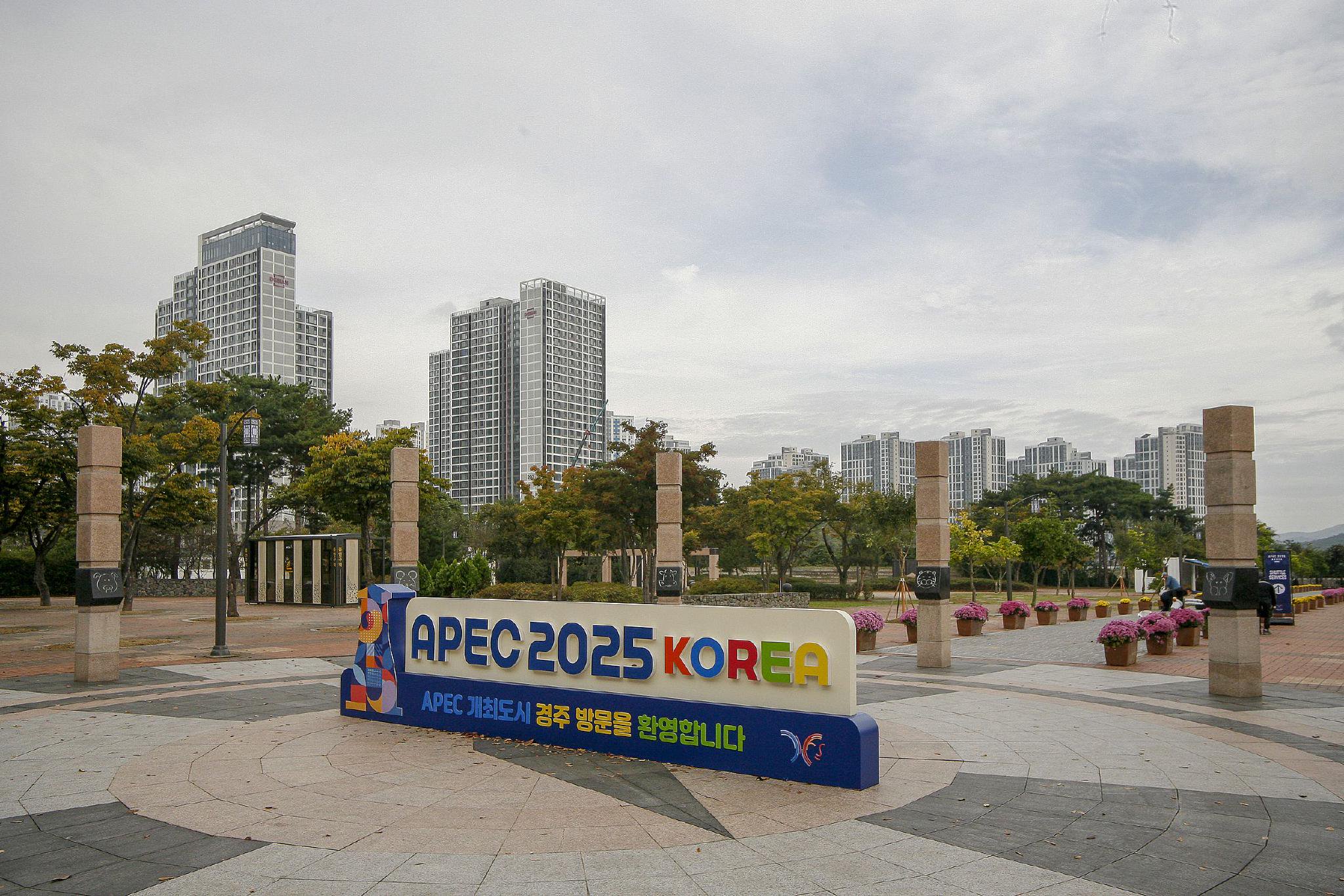
Group 1 - The ASEAN Summit held in Kuala Lumpur from October 26 to 28 is considered one of the most significant Southeast Asian summits in recent years, with leaders from various countries including China, the US, Japan, and Brazil in attendance [1] - The US and Malaysia, Cambodia, Thailand, and Vietnam have established new trade agreements, which include reducing tariffs and regulatory barriers on US automobiles and agricultural products, and Malaysia has committed to investing $70 billion in the US over the next decade [1][2] - The US maintains an overall tariff rate of 19% to 20% on these countries but will exempt certain goods from tariffs, with specific details to be announced [2] Group 2 - The US has signed critical mineral agreements with Thailand and Malaysia to provide US companies with priority access to rare earths, and Malaysia and Cambodia have agreed to prevent third-country companies from dumping goods into the US [4] - Brazilian President Lula revealed constructive talks with Trump regarding tariff issues, as Brazil faces high tariffs from the US, and is seeking to diversify its trade structure in Asia [4] - A significant agenda item at the summit is addressing cross-border telecom fraud, particularly in regions like northern Myanmar and parts of Cambodia, where criminal groups exploit the lack of effective government control [5] Group 3 - Malaysian Prime Minister Anwar emphasized the need for stronger collective action against cross-border online fraud during the summit [5] - The upcoming APEC meeting in South Korea will also be a platform for discussions, with ongoing communication between China and the US regarding a potential meeting between their leaders [5] - The positive news surrounding the summit has led to significant increases in stock indices, with the Nikkei 225 index surpassing 50,000 points and the KOSPI200 index also reaching historical highs [5]
机构研究周报:AH股指还有新高,黄金短期性价比不高
Wind万得· 2025-10-26 22:41
Core Viewpoints - The "15th Five-Year Plan" emphasizes high-quality economic development, focusing on technology and consumption, which is expected to drive further growth in the Chinese stock market, particularly in the A and H shares [3][5]. Economic Development Goals - The main goals for the "15th Five-Year Plan" include significant improvements in high-quality development, technological self-reliance, deepening reforms, enhancing social civilization, improving living standards, and advancing ecological progress [3]. - The transition from quantity to quality in economic growth is crucial during this period, allowing for structural reforms and a shift in growth drivers from solely GDP to a combination of actual GDP, inflation, and exchange rates [3]. Equity Market Insights - Guotai Junan Securities predicts that the "transformation bull market" in China will deepen, with a focus on advanced manufacturing, export-oriented industries, and consumer sectors [5]. - Goldman Sachs indicates that a "slow bull market" is forming in the Chinese stock market, with a potential 30% increase in key indices by the end of 2027, driven by profit growth and valuation recovery [6]. - Bosera Fund highlights that the recent rise in the Shanghai Composite Index reflects positive market sentiment and structural adjustments, suggesting a "steady foundation with moderate aggression" investment strategy [7]. Asset Performance Overview - The performance of major asset classes shows that the A-share market has seen significant gains, with the Shanghai Composite Index up 17.86% year-to-date, while the Hang Seng Index has increased by 30.41% [8]. - Gold prices are expected to enter a high volatility range, with analysts suggesting that it is no longer a high-value global asset, and a price range of $3,800 to $3,900 per ounce is seen as a fundamental support area [18]. Macro and Fixed Income - Guohai Franklin Templeton Fund anticipates a volatile bond market, with potential for continued interest rate cuts and a generally positive monetary policy environment [16]. - Bosera Fund expects monetary policy to accelerate easing, particularly if the Federal Reserve continues to lower rates, which would favor the bond market [17]. Asset Allocation Strategies - Guotai Asset Management suggests a "technology growth + high dividend" strategy for A-shares, focusing on sectors with global competitiveness like AI and semiconductors, while also including high-dividend assets for stability [20].

尽管新兴市场外国直接投资普遍下滑,麦肯锡仍将智利作为投资战略要地
Shang Wu Bu Wang Zhan· 2025-10-17 03:23
Core Insights - Despite a global decline in foreign direct investment (FDI), Chile is strategically positioned to attract FDI due to its traditional strengths in minerals and energy sectors [1] - The report highlights a shift in global FDI towards future-oriented industries such as artificial intelligence infrastructure, semiconductors, electric vehicles, and critical minerals, which accounted for 75% of investments since 2022 [1] - Chile's average annual FDI is projected to reach $12 billion between 2022 and 2025, representing a 31% increase compared to the 2015-2019 period, with 91% directed towards energy, mining, and advanced technology sectors, significantly exceeding the global average of 75% [1] - McKinsey suggests that Chile has the potential to evolve from a mere resource exporter to a global provider of energy transition solutions, emphasizing the need to attract more investments to enhance capabilities in refining, advanced manufacturing, and technology services [1] Investment Trends - The global FDI landscape is shifting towards industries that shape the future, with a notable focus on sectors like AI, semiconductors, and electric vehicles [1] - Chile's investment appeal is bolstered by its exports of key minerals such as copper and lithium, alongside the development of renewable energy projects [1] Future Outlook - Chile is positioned to strengthen its role as a regional hub for sustainable mining and clean energy, contingent upon attracting further investments [1] - The emphasis on enhancing capabilities in refining and advanced manufacturing is critical for Chile to solidify its status in the global energy transition [1]
U.S.-China tensions spotlight critical minerals as markets weigh long term risk
Youtube· 2025-10-13 12:28
Group 1: U.S.-China Relations and Investment Implications - The U.S. is facing a long-term challenge due to its reliance on critical minerals controlled by China, highlighting a vulnerability in the current geopolitical landscape [3][4][11] - Despite short-term optimism regarding potential meetings between U.S. and Chinese leaders, the underlying issues related to China's regulatory controls and export restrictions on critical minerals remain unresolved [9][10] - Investment sentiment towards Chinese equities has shifted, with some investors becoming more bullish, recognizing that China is too significant to ignore despite the risks associated with weaponized interdependence [5][6][7] Group 2: Sector-Specific Insights - Chinese tech stocks are particularly vulnerable to U.S. trade tensions, similar to the recent sell-off in U.S. tech stocks, while companies focused on the domestic economy may be more insulated from these tensions [13] - Sectors such as consumer-focused companies in Macau are expected to benefit from domestic wealth, indicating potential safe havens within the Chinese market [14] - The Israeli market has shown resilience and outperformance amid geopolitical tensions, with local stocks reaching all-time highs and global stocks available as ETFs also performing well [16][17]