
黄金业

Search documents
10月27日重要资讯一览
Sou Hu Cai Jing· 2025-10-27 13:46
New Stock Offerings - Delijia has a subscription code of 732092 with an issue price of 46.68 yuan per share and a subscription limit of 0.95 million shares [1] - Zhongcheng Consulting has a subscription code of 920003 with an issue price of 14.27 yuan per share and a subscription limit of 630,000 shares [1] Financial Market Updates - The People's Bank of China has suspended government bond trading due to market risk accumulation but plans to resume operations as the bond market stabilizes [2] - The China Securities Regulatory Commission (CSRC) will implement reforms for the Growth Enterprise Market to better serve emerging industries and innovative enterprises [2] - The Financial Regulatory Bureau emphasizes its commitment to preventing systemic financial risks and improving the efficiency of financial regulation [2][3] Economic Indicators - From January to September, profits of large-scale industrial enterprises reached 53,732 billion yuan, a year-on-year increase of 3.2% [4] - State-owned enterprises reported profits of 17,021.8 billion yuan, a slight decline of 0.3%, while private enterprises saw a profit increase of 5.1% to 15,131.7 billion yuan [4] Corporate News - Guizhou Moutai's chairman Zhang Deqin has resigned due to work adjustments [8] - Hongwei Technology's subsidiary signed a parts procurement contract with a leading domestic electric vehicle client [8] - Sichuan Gold reported a net profit of 160 million yuan for Q3, a year-on-year increase of 184.38% [8] - North Rare Earth reported a Q3 net profit of 610 million yuan, up 69.48% year-on-year [8] - Postal Savings Bank has been approved to establish a financial asset investment company with a registered capital of 10 billion yuan [8]
降息潮来了!2025年这3样东西越买越贵,普通人早准备早省钱
Sou Hu Cai Jing· 2025-10-04 05:14
Core Viewpoint - The recent interest rate cuts by the Federal Reserve and other global central banks are leading to rising prices for essential goods, including energy and agricultural products, while making bank savings less valuable [1][3][5]. Group 1: Impact of Interest Rate Cuts - The Federal Reserve's recent decision to cut interest rates by 25 basis points is the first since 2025, prompting a global trend of monetary easing [1]. - Lower interest rates decrease the returns on bank deposits, leading individuals to seek alternative investments like gold, which has seen a price increase from 680 yuan to 912 yuan per gram [3]. - Predictions indicate that further interest rate cuts may occur by the end of 2025, potentially driving gold prices even higher [3]. Group 2: Rising Energy Prices - Electricity prices have increased by 20% over three months, with charging costs rising from 1.5 yuan to 1.8 yuan per kilowatt-hour [5]. - The rise in energy prices is attributed to lower financing costs for businesses due to interest rate cuts, leading to increased demand while supply remains constrained [5]. - Natural gas prices are also rising, with heating costs expected to increase by 10% due to higher transportation costs for liquefied natural gas [5]. Group 3: Agricultural Product Price Increases - The price of rice has risen from 3.8 yuan to 4.3 yuan per jin, reflecting a broader trend of agricultural price increases driven by both extreme weather and rising production costs [5][8]. - Global wheat production has decreased by 10% in India, and rice production has dropped by 8% in Thailand, contributing to higher prices [5]. - The cost of essential food items like flour and soybean oil has also increased, with flour prices rising by 6% and soybean oil by 9% [8]. Group 4: Strategic Recommendations - Individuals are advised to stock up on essential goods like rice and flour during promotions, while maintaining a balanced investment in gold to hedge against inflation [8]. - A recommendation is made to allocate 10% of household assets to gold and to store a three-month supply of energy and agricultural products to avoid waste [8]. - The emphasis is on prudent spending during the interest rate cut period, focusing on essential needs rather than being overly concerned with low bank interest rates [8].


有色金属:寻找有色中的低洼地
2025-09-28 14:57
Summary of Key Points from the Conference Call on Non-Ferrous Metals Industry Overview - The non-ferrous metals market is expected to see an early start, with strong orders in October and sustained downstream demand despite price pressures. Supply disruptions from Congo and Zijin Mining are anticipated to last over a year, supporting metal prices [1][2][4]. Copper Market Insights - The copper supply-demand balance is shifting, with significant production cuts at Grasberg mine expected to lead to a shortage by Q4 2025. A reduction of over 400,000 tons in 2026 is projected, alongside low inventory levels, suggesting copper prices could stabilize above $10,000 per ton in Q4 2025 and potentially reach $12,000 per ton in 2026 [1][2][3]. - Current high inventory levels indicate strong demand, with September and October orders being robust. Supply-side disruptions are expected to continue, reinforcing the bullish outlook for copper [2][3]. Aluminum Market Dynamics - The aluminum sector shows strong demand, particularly in Q4, with stable orders from key downstream enterprises. The global supply growth of electrolytic aluminum is expected to lag behind demand growth, leading to a potential shortage and a forecasted price surge to over 23,000 yuan per ton by 2026 [1][7][8]. - Despite an increase in overall inventory, the production of electrolytic aluminum remains stable, indicating a positive short-term outlook for aluminum prices [7][8]. Silver and Other Precious Metals - Silver is highlighted as a significant investment opportunity, with expectations of price increases following the end of the interest rate hike cycle. The anticipated rise in copper prices may also catalyze an earlier increase in silver prices, positioning silver for strong performance among metals [1][4][5][6]. - Gold prices are projected to experience long-term upward trends, with a trading range expected to shift to $3,500-$3,600 by mid-2025, driven by declining trust in mainstream currencies and increased central bank allocations to gold [10][11][12]. Strategic Investment Opportunities - The recent policy guidance from the Ministry of Industry and Information Technology emphasizes the improvement of the non-ferrous metals industry environment, which could enhance corporate profitability. Companies with advanced technology and environmental advantages are likely to gain market share [4][15][16]. - Investment strategies should focus on companies with low absolute valuations and high dividend yields, as well as those with solid earnings and minimal capital expenditure [9]. Lithium and Cobalt Market Outlook - The lithium market is currently oversupplied but is expected to stabilize due to improving demand from the 3C industry and advancements in solid-state battery technology. Short-term prices are projected to remain between 70,000 and 75,000 yuan [14]. - Cobalt is identified as a short-term investment opportunity, with supply constraints from Congo and increased demand from the U.S. Department of Defense likely to drive prices above 400,000 yuan in the coming months [13][14]. Conclusion - The non-ferrous metals sector is poised for growth, driven by supply disruptions, strong demand, and favorable policy support. Investors are encouraged to focus on specific metals and companies that align with these trends for potential returns in the coming years [1][4][5][6][9][10].
美联储预防性降息落地 金价中长期向上趋势未改
Jin Tou Wang· 2025-09-18 05:59
Group 1 - The Federal Reserve has lowered the federal funds rate target range by 25 basis points to between 4.00% and 4.25%, marking the first rate cut within 2025 and a continuation of the easing cycle after three consecutive cuts in 2024 [2] - The decision to cut rates is primarily driven by a weak labor market, which poses greater risks than the moderate rebound in inflation, prompting the Fed to take "preventive" measures [2] - The dot plot indicates that among 19 Fed officials, 9 expect one more rate cut this year, while another 9 anticipate two additional cuts, and one official predicts a total cut of 125 basis points [2] Group 2 - Gold prices have surged approximately 40% year-to-date, driven by market sentiment surrounding the Fed's rate cuts and ongoing geopolitical tensions [2] - The current gold price is trading around $3,657.58 per ounce, with a slight decline of 0.05%, and has shown a bullish short-term trend [1][2] - Analysts expect that while geopolitical factors may introduce volatility in gold prices, the long-term outlook remains positive as gold serves as a hedge against inflation and economic uncertainty [3] Group 3 - Technical analysis suggests that gold prices are currently supported by the 183-hour moving average, with potential resistance at $3,685/86 if the price breaks above the 20-period moving average [4] - The Fed's dovish stance is expected to benefit gold in a low-interest-rate environment, as it reduces the opportunity cost of holding non-yielding assets and supports inflation expectations [4]
以为存定期最踏实?算完账才发现,钱躺银行竟不如买点 “稳当货”
Sou Hu Cai Jing· 2025-09-17 20:47
Core Viewpoint - The article discusses the changing attitudes towards traditional bank savings due to declining interest rates, prompting individuals to seek alternative investment options to preserve and grow their wealth [2][11][21]. Group 1: Interest Rate Changes - The interest rate for a three-year fixed deposit has decreased from 2.45% to 1.55%, resulting in a reduction of interest income by 5,400 yuan for a 200,000 yuan deposit [3][4]. - Current interest rates for demand deposits are as low as 0.05% to 0.2%, leading to concerns about the diminishing purchasing power of savings [5][11]. Group 2: Alternative Investment Strategies - Individuals are exploring new strategies, such as splitting their savings between bank wealth management products (with expected returns of 3%) and gold, which has increased in price from 660 yuan per gram to 830 yuan per gram [5][9]. - The article highlights the experiences of individuals like Liu Ayi and Li Yao, who have adopted diversified investment approaches, including gold ETFs and mutual funds, to enhance their financial management [9][16]. Group 3: Market Trends - Data indicates a significant shift in household savings, with a net decrease of 1.11 trillion yuan in July alone, while non-bank financial institutions saw an increase of 4.69 trillion yuan in deposits [17][18]. - The number of new accounts opened in the A-share market increased by over 70% year-on-year in July, reflecting a growing interest in alternative investment avenues [18]. Group 4: Investment Mindset - The article emphasizes that investment should be tailored to individual preferences, with some prioritizing stability through wealth management and gold, while others prefer more flexible options like diversified funds [20]. - The overarching theme is that as traditional savings become less appealing, individuals are taking proactive steps to ensure their money remains productive and resilient against inflation [21].

每日投行/机构观点梳理(2025-09-10)
Jin Shi Shu Ju· 2025-09-10 11:32
Group 1: Global Market Insights - Goldman Sachs reported that global hedge funds' net purchases of Chinese stocks reached a new high since September 2024, with a 76 basis points increase in positions, marking a two-year peak [1] - ANZ raised its gold price target for the end of 2025 from $3600 to $3800 per ounce, expecting gold to reach nearly $4000 per ounce by June 2026 [2] - Barclays increased its S&P 500 index target for the end of 2025 from 6050 to 6450 points, and for the end of 2026 from 6700 to 7000 points [2] - Deutsche Bank also raised its S&P 500 index target for the end of 2025 from 6550 to 7000 points, citing positive corporate earnings growth and manageable tariff impacts [3] Group 2: Domestic Market Developments - CICC noted that the photovoltaic industry is at a critical observation point for "anti-involution," with operational pressures easing but debt levels remaining high [5] - Tianfeng Securities highlighted that the development of AI servers is driving demand for high-end copper foil, with domestic manufacturers expected to benefit from this growth [6] - CITIC Securities projected that the scale of listed companies' deposits transitioning to wealth management could reach several hundred billion yuan in the next year [7] - CITIC Securities also recommended focusing on companies in the silicon-based materials industry that are extending into high-growth downstream sectors [8] - CITIC JianTou reported that the property management industry is shifting towards high-quality development, with leading companies maintaining strong positions [9] - Huatai Securities indicated that core real estate companies are showing resilience despite the overall market being in a bottoming phase [11] - Zhongtai International expressed a cautious optimism for the capital market in the second half of the year, while maintaining a positive outlook on gold [12]
债券市场2025年8月月报:震荡区间上移博弈修复机会-20250905
Nan Jing Yin Hang· 2025-09-05 03:37
Report Industry Investment Rating The provided content does not mention the report industry investment rating. Core Views of the Report - Overseas markets: Since August, the US has raised tariffs, with its economy remaining resilient, inflation rising, and employment slowing unexpectedly. The Fed has hinted at rate cuts, leading to a decline in US Treasury yields and a slight depreciation of the US dollar. The eurozone economy is showing signs of improvement, with inflation remaining moderate, and the euro is expected to appreciate slightly against the US dollar. Japan's economy presents a mixed picture, with tariffs suppressing exports and core inflation cooling, and the yen is expected to fluctuate slightly against the US dollar. The narrowing of the Sino-US yield spread, the release of domestic entities' foreign exchange settlement demand, and the inflow of foreign capital into the domestic stock market have led to a slight appreciation of the RMB against the US dollar, and it is expected to continue to appreciate slightly in the short term [3]. - Macroeconomic fundamentals: In July, both demand and production converged, with the demand side experiencing a larger decline, partly due to falling prices. The production side showed a slight decline, indicating the implementation of anti-involution policies, but overall, it remained resilient. Export data slightly exceeded expectations, but there is downward pressure in the future. The bond market has largely anticipated the weakness in aggregate demand but is sensitive to the upward shift in the price center. As the inflation center rises, the bottom of bond yields will gradually increase [3]. - Monetary policy and liquidity: Since August, the central bank has made net injections, and the short-term capital price center has shifted downward. Looking ahead, the stock market may experience short-term fluctuations, and there are concerns about market overheating and capital idling. The supply of government bonds will remain high, and there will be pressure on the maturity of interbank certificates of deposit, leading to fluctuations in the end-of-quarter capital market. Overall, although there are more disturbances in the capital market, the downward trend in financing costs continues, and liquidity does not have a basis for a trend tightening [4]. - Interest rate bond strategy: Since August, bond yields have first declined and then risen due to fluctuations in industrial product prices under anti-involution policies. Looking ahead, aggregate demand remains weak, but the bond market's reaction to fundamentals is gradually dulling. There are increasing interference factors in the bond market, including the impact of anti-involution policies on prices, the stock market's rise, and the increase in bond interest income tax. However, given the weak demand, the possibility of a significant increase in interest rates is low, and the interest rate center is expected to rise, with the oscillation range also shifting upward. Trading desks can seize repair opportunities when interest rates rise, while allocation desks can intervene when interest rates reach the upper limit of the range, and medium- and long-term bonds are more valuable for allocation [4]. - Credit bond strategy: In August, the "stock-bond seesaw" effect continued to suppress the bond market, and the redemption pressure of funds intensified the volatility of long-term interest rates. As the bond market adjusts, the cost-effectiveness of medium- and high-grade credit bonds with a maturity of three years has increased, but the credit spread is still relatively low. It is recommended to focus on defensive strategies, appropriately reduce duration, and pay attention to coupon opportunities for bonds with a maturity of less than three years. The central bank has taken measures to maintain a balanced and loose liquidity environment, and the pressure on further significant price increases for certificates of deposit may be controllable [5]. Summary by Relevant Catalogs Part I: Overseas Markets - US economic situation: Since August, the US manufacturing and service sectors have expanded significantly. However, the employment market has slowed unexpectedly, and core inflation has continued to rise. The Fed is likely to implement a preventive 25-basis-point rate cut in September. The Fed has been gradually reducing its balance sheet, leading to a marginal convergence of US dollar liquidity. The primary demand for US Treasury bonds has weakened again, and long-term Treasury bond yields face upward pressure. The US dollar is expected to depreciate slightly in the short term [8][10][16]. - Eurozone economic situation: The eurozone economy is showing signs of improvement, with inflation remaining moderate. The euro has appreciated against the US dollar and is expected to continue to appreciate slightly in the short term [31][34]. - Japanese economic situation: Japan's economy presents a mixed picture, with external challenges increasing and core inflation cooling. The yen has appreciated against the US dollar and is expected to fluctuate slightly in the short term [39][44]. - RMB exchange rate situation: Since July, the inversion of the Sino-US Treasury yield spread has gradually decreased, and domestic entities' foreign exchange settlement demand has continued to be released. The RMB has appreciated slightly against the US dollar and is expected to continue to appreciate slightly in the short term [49][55]. - Gold market situation: In August, the price of gold fluctuated upward within a range. Non-commercial net long positions decreased slightly, while gold ETFs continued to flow in. Emerging central banks continued to purchase gold, supporting the medium- and long-term price of gold. It is expected that the price of gold will fluctuate at a high level in the short term [58][65]. Part II: Domestic Macroeconomy - Investment situation: From January to July, the growth rate of fixed asset investment continued to decline, with the growth rates of real estate, infrastructure, and manufacturing investment all falling. Real estate investment is still in the process of bottoming out, and the growth rate of real estate sales has slightly rebounded, while the land transaction premium rate has decreased. The downstream demand for steel is weak, and the price increase is not well supported [71][75][80]. - Consumption situation: In July, the growth rate of consumption continued to decline, mainly due to the diminishing effect of subsidies and the decline in automobile consumption [83]. - Export situation: From January to July, the cumulative year-on-year growth rate of exports was 6.1%, and the growth rate in July was 7.2%, showing strong resilience. However, due to factors such as the increase in tariffs and the overdraft effect of pre-exporting, the export growth rate is expected to decline in the future [86]. - Production situation: From January to July, the cumulative year-on-year growth rate of industrial added value was 6.3%, showing a slight slowdown. The operating rates of the steel and coal industries have generally increased [90][93]. - Employment situation: In July, the urban surveyed unemployment rate increased seasonally, and the employment demand of small and medium-sized enterprises decreased rapidly [96]. - Inflation situation: In July, the year-on-year growth rate of CPI was 0%, and the year-on-year growth rate of core CPI was 0.8%, showing an upward trend. The year-on-year growth rate of PPI stopped falling, and it is expected that the decline will gradually narrow in the future [99][102]. - VAT new policy: Since August 8, 2025, the interest income of newly issued government bonds, local government bonds, and financial bonds will be subject to VAT. This policy will lead to an increase in the spread between new and old bonds, benefit interbank certificates of deposit and credit bonds, and have an impact on financial institutions [103][104][106]. Part III: Liquidity and Monetary Policy - Liquidity review: In August, the central bank made net injections, and the short-term capital price center shifted downward, while the long-term capital price center changed little. The trading volume of pledged repurchase decreased in the middle and late August. The growth rate of M1 and M2 exceeded expectations, and the growth rate of social financing increased [116][121][130]. - Liquidity outlook: In September, the supply of government bonds is expected to remain high, and the maturity pressure of interbank certificates of deposit is large, leading to increased disturbances in the end-of-quarter capital market. However, given the weak demand, the downward trend in financing costs continues, and liquidity does not have a basis for a trend tightening [133]. Part IV: Interest Rate Bond Strategy - Interest rate bond trend: Since August, bond yields have generally shown an upward trend, mainly due to the rise of the stock market and the increase in bond interest income tax. The yield curve has become steeper, and the medium- and long-term spreads are relatively large [137][138][142]. - Investment strategy: Trading desks can seize repair opportunities when interest rates rise, while allocation desks can intervene when interest rates reach the upper limit of the range, and medium- and long-term bonds are more valuable for allocation [4].
金价大跌!美联储降息“板上钉钉”?
Sou Hu Cai Jing· 2025-08-18 02:22
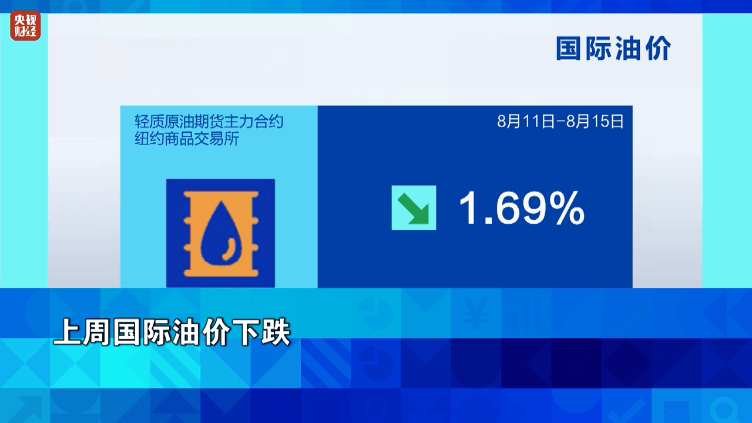
Group 1: Economic Indicators and Market Reactions - The US Consumer Price Index (CPI) for July showed a year-on-year increase slightly below expectations, boosting market optimism for potential Federal Reserve interest rate cuts, leading to a rise in the three major US stock indices, with the Dow Jones up 1.74%, S&P 500 up 0.94%, and Nasdaq up 0.81% [1] - The International Energy Agency reported that global oil supply growth is expected to significantly outpace demand over the next two years, potentially causing further market imbalance, with NY oil prices down 1.69% and Brent oil prices down 1.11% last week [3] - Gold prices fell over 3% last week, marking the largest weekly decline since March, as market expectations for a Federal Reserve rate cut in September solidified [5] Group 2: Geopolitical Developments - Investors are focusing on the upcoming meeting between US President Trump and Ukrainian President Zelensky in the White House, which is expected to discuss all details related to ending the Russia-Ukraine conflict, with potential implications for geopolitical tensions [7] - The global central bank meeting in Jackson Hole, Wyoming, is anticipated to be a key event, with Federal Reserve Chairman Powell's speech expected to address aggressive rate cut expectations [9] - Recent comments from two Federal Reserve officials indicate a need for clearer understanding of tariff impacts on inflation before deciding on rate cuts, making Powell's stance on rate cuts and economic outlook a focal point for investors [11]
大类资产周报:资产配置与金融工程美联储降息预期增强,全球权益市场共振上行-20250812
Guoyuan Securities· 2025-08-12 03:42
Market Overview - The market's risk appetite has significantly improved, with the probability of a Federal Reserve rate cut in September rising to 94%[4] - The Nasdaq led the gains with an increase of 3.87%, while gold prices rose by 1.72% due to geopolitical tensions and tariffs[4] - Brent crude oil experienced a sharp decline of 4.81%[4] Asset Allocation Recommendations - Fixed Income: Favor high-grade credit bonds and adjust duration flexibly, focusing on bank and insurance sector movements[5] - Overseas Equities: Suggest long-term investment opportunities in the US tech sector, particularly AI, given the resilience of economic data[5] - Gold: Strengthened as a safe-haven asset due to geopolitical conflicts and economic slowdown, serving as a hedge against inflation[5] - A-shares: Current liquidity supports the market, but valuation pressures are evident; focus on low-valuation sectors[5] - Commodities: Overall underweight due to weak supply and demand; consider opportunities in new energy sectors[5] Risk Factors - Policy adjustment risks, market volatility risks, geopolitical shocks, economic data validation risks, and liquidity transmission risks are highlighted[6]
美国“对等关税”生效 日本印度瑞士发声
Zhong Guo Xin Wen Wang· 2025-08-08 03:37
Core Points - The U.S. government has implemented adjusted "reciprocal tariffs" ranging from 10% to 41% on several trade partners, leading to dissatisfaction from countries like India, Japan, and Switzerland [1] Group 1: Japan's Response - Japan faces a 15% "reciprocal tariff" and is strongly urging the U.S. to amend the presidential executive order, citing unfulfilled commitments regarding tax reductions [2] - Japanese Prime Minister Kishida expressed that there is no disagreement between Japan and the U.S. on this issue, emphasizing the need for clarity on whether the new tariffs will be added to existing rates [2] - Japan is also seeking a reduction in tariffs on automobiles during discussions with U.S. officials [2] Group 2: India's Position - India is subject to a 25% "reciprocal tariff," with an additional 25% imposed by President Trump due to India's imports of Russian oil, effective by the end of August [3] - Indian Prime Minister Modi stated that the welfare of farmers is paramount and that India will not compromise on this issue, despite the potential heavy costs [3] - The trade negotiations between India and the U.S. have collapsed after five rounds due to disagreements over agricultural market access and oil purchases [3] Group 3: Switzerland's Stance - Switzerland faces the highest tariff rate among developed countries at 39% and is committed to negotiating with the U.S. to lower these tariffs [4] - The Swiss government held an emergency meeting and is in close contact with affected industries, aiming to continue discussions with U.S. authorities [4] - Switzerland is not considering retaliatory tariffs, as such measures would burden its economy and increase import prices from the U.S. [4]