
传媒

Search documents
马年A股喜迎“开门红”:周期“老登”领涨 科技、消费遇冷
Mei Ri Jing Ji Xin Wen· 2026-02-24 14:32
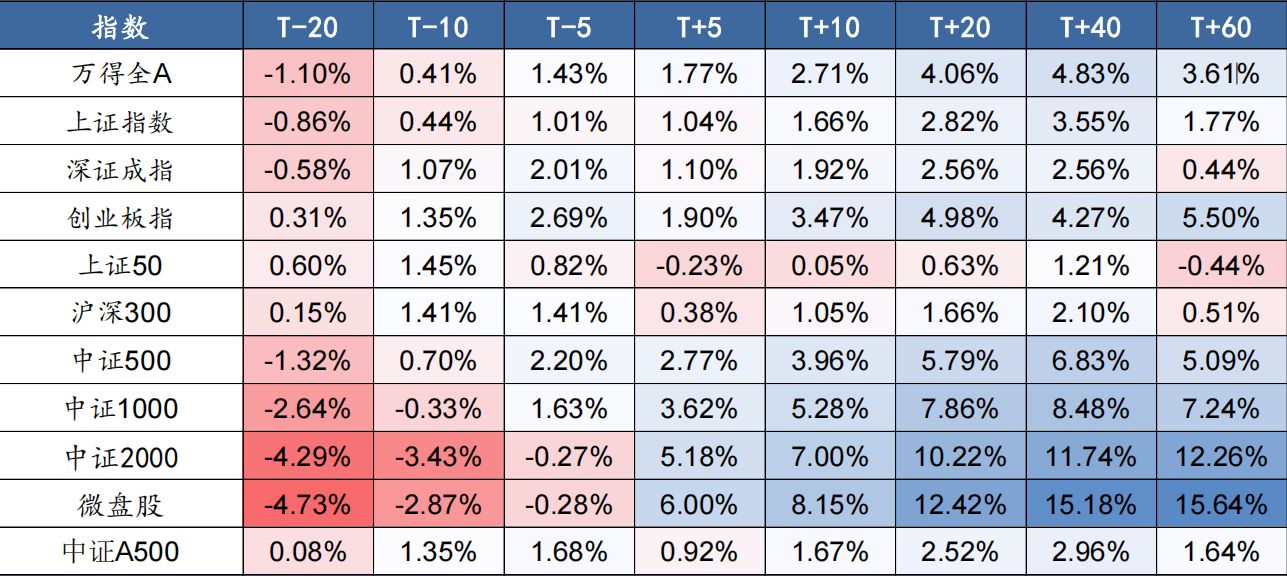
Group 1 - The A-share market experienced a broad increase on the first trading day of the Year of the Horse, with most core indices rising between 1% and 2% [1][2] - The Shanghai Composite Index rose by 0.87% to close at 4117.41 points, returning above the 4100-point mark [2] - The technology sector showed weaker performance, with the Sci-Tech 50 and Sci-Tech 100 indices declining by 0.34% and 1.55%, respectively [2] Group 2 - The market's "opening red" trend is attributed to the overseas markets showing upward trends during the Spring Festival holiday and a recovery demand following a significant adjustment before the holiday [4] - The spring market is expected to continue, with a short-term outlook of sector rotation and upward fluctuations [4] - Historical data since 2010 indicates a high probability of A-shares rising shortly after the Spring Festival, particularly in small-cap indices like the CSI 2000 and micro-cap stocks, which have shown average gains exceeding 10% in the 20 trading days post-holiday [4] Group 3 - The leading sectors today were traditional industries such as petrochemicals, building materials, basic chemicals, non-ferrous metals, coal, and steel, with significant gains [5][6] - The Petrochemical Index surged by 5.53%, while building materials, basic chemicals, and non-ferrous metals indices all rose over 3% [5][6] - In contrast, sectors like AI models, robotics, and consumer goods, which performed well in the Hong Kong market during the holiday, did not reflect similar trends in the A-share market [7] Group 4 - The recent improvement in the Producer Price Index (PPI) and the high valuations in the technology sector have led to a market shift towards traditional sectors [8] - The PPI for January showed a year-on-year decline of 1.4%, with a narrowing drop compared to previous months, indicating a potential recovery in pricing power across various industries [8] - The resource sector, particularly non-ferrous metals, has been a standout performer in the A-share market, with price increases becoming a central theme across multiple sectors [9] Group 5 - Looking ahead to the next 1-2 months, there is optimism for cyclical "old economy" assets, particularly as seasonal economic activities typically rise in March and April [13] - The period following the National People's Congress is expected to see accelerated implementation of macro policies, which could enhance market sentiment towards cyclical sectors [13]

金融市场流动性与监管动态周报:历史上两会前后A股风格如何演绎?-20260224
CMS· 2026-02-24 14:31
Market Performance - Historically, A-shares tend to perform well in the two weeks leading up to the National People's Congress (NPC), with a probability of over 50% for indices like the CSI 1000 and CSI 500 to rise, averaging over 3% returns in the two weeks prior [9][18] - After the NPC, the probability of market increases rises significantly, with indices like the CSI 1000 and CSI 500 showing a 64% probability of rising in the weeks following the congress [9][18] Style Performance - There is a calendar effect observed in A-shares around the NPC, where small-cap stocks generally outperform both before and after the congress, driven by expectations of stable growth policies and active financing [12][18] - The small-cap growth and value styles are expected to dominate during the NPC period, while large-cap styles may gain traction in the month following the congress [12][18] Industry Performance - Industries such as basic chemicals, non-ferrous metals, and construction materials show strong performance before and after the NPC, with over 50% probability of rising in the weeks leading up to the congress [14][18] - Post-NPC, industries like real estate, construction materials, and consumer goods are expected to see higher probabilities of increases as stable growth policies are implemented [16][18] Liquidity and Funding - The liquidity indicators show a net outflow of financing funds amounting to 830.2 billion yuan, with a significant drop in ETF inflows [30][36] - The issuance of public funds increased by 340.3 million units, indicating a rise in demand for equity investments despite the overall net outflow [30][36] Market Sentiment - Market sentiment has shown a decrease in trading activity, with the proportion of financing transactions in A-share trading falling to 8.6% [44] - The VIX index has decreased, indicating improved risk appetite in the market, with the Nasdaq and S&P 500 indices also showing positive performance [46][48]
廖市无双-节后开盘-A股是否有机会进攻
2026-02-24 14:16
Summary of Conference Call Records Industry Overview - The conference call primarily discusses the A-share market in China, focusing on market trends, sector performance, and investment opportunities post-Chinese New Year [1][2][3]. Key Points and Arguments Market Performance and Trends - The A-share market exhibited a strong oscillation pattern before the Chinese New Year, with the Shanghai Composite Index peaking at 4,142 points, aligning with the expected range of 4,000 to 4,150 points [2][3]. - Major indices failed to break above the 5-week moving average due to large funds suppressing market movements, indicating a preference for maintaining a range-bound market rather than a rapid upward trend [3][5]. - The market is currently in an ABC adjustment structure, with the B phase ongoing, suggesting that a clear upward movement is unlikely until the C phase is completed [9][14]. Sector Performance - Sectors that performed well before the holiday include technology growth, computing, electronics, media, and telecommunications, which are closely related to the mainstream market trends since September 24, 2022 [4]. - The consumer sector, particularly retail and general consumption, saw significant capital outflows, reflecting a lack of investor confidence in economic recovery [7]. - The food and beverage sector is not expected to experience a major upward trend, with a clear bearish pattern observed [8]. Investment Opportunities - Short-term investment strategies are recommended, focusing on sectors with lower price levels and potential for quick gains, such as brokers, building materials, and banks [20]. - The technology growth sector, including AI applications and robotics, may present localized investment opportunities, but significant upward trends are not anticipated [18]. - The first quarter of 2026 may see the non-ferrous metals sector forming a significant bottom, with a notable increase in the index by 97.5 points in 2025 [21]. Market Sentiment and Future Outlook - The market is expected to maintain a high-risk preference in the short term, with potential for continued focus on technology growth sectors, although caution is advised due to the last trading day before the holiday [6][15]. - New funds are advised to wait for clearer investment opportunities post-March, as the current environment does not favor long-term investments [19][16]. - The overall market structure is likely to remain balanced, with a mix of growth and value styles emerging [30]. Other Important Insights - The recent appreciation of the RMB, surpassing 6.89, is seen as beneficial for the A-share market, supporting a positive outlook for capital markets [11]. - The upcoming political events, such as the two sessions in March, are anticipated to provide clearer investment signals [16]. - The historical context of spring market movements suggests a potential for short-term volatility, but with a cautious approach to avoid chasing high prices [28][31]. This summary encapsulates the key insights from the conference call, providing a comprehensive overview of the current state and future outlook of the A-share market and relevant sectors.
慈文传媒:截至2026年2月13日收盘公司股票持有人总数为45702户
Zheng Quan Ri Bao Wang· 2026-02-24 12:41
Group 1 - The core point of the article is that Ciweng Media (002343) reported the total number of shareholders as of February 13, 2026, which is 45,702 households [1]

2月24日A股市场点评:马年首日收涨
Zhongshan Securities· 2026-02-24 12:07
Market Performance - On February 24, the A-share market showed a collective increase, with major indices rising, indicating a broad market rally. The Shanghai Composite Index rose by 0.87%, the Shenzhen Component Index increased by 1.36%, and the CSI 300 Index gained 1.01% [3][6] - The energy and materials sectors led the gains, with the oil and gas industry, chemicals, precious metals, and fiberglass sectors showing significant increases, driven by a rebound in international oil prices and heightened geopolitical risks [6] Sector Analysis - The top-performing sectors included: - Oil and Petrochemicals: +5.53% - Building Materials: +3.71% - Basic Chemicals: +3.45% - Non-ferrous Metals: +3.31% - Coal: +3.10% - Conversely, the underperforming sectors were: - Media: -3.20% - Computers: -1.81% - Retail: -1.46% - Food and Beverage: -0.86% - Non-bank Financials: -0.42% [3] Concept Indices - The top-performing concept indices included: - Cultivated Diamond Index: +12.05% - Fiberglass Index: +8.98% - Phosphate Chemical Index: +8.41% - Oil and Gas Extraction Index: +7.92% - Superhard Materials Index: +7.39% - The underperforming concept indices were: - Seedance Video Model Index: -5.83% - Short Drama Game Index: -4.29% - DeepSeek Index: -4.22% - Kimi Index: -4.20% - AIGC Index: -3.55% [3] Monetary Policy Insights - The People's Bank of China conducted a 7-day reverse repurchase operation of 526 billion yuan at a fixed rate of 1.40%, indicating a net withdrawal of 926.4 billion yuan for the day. This reflects the central bank's assessment that the current market liquidity is sufficient [5] - The upcoming expiration of 22.524 billion yuan in reverse repos and other liquidity tools suggests a focus on managing liquidity in response to pre-holiday cash demands [5] Market Outlook - The market is expected to continue its structural trend, supported by improved liquidity post-holiday, rising policy expectations, and signals for stable growth ahead of the Two Sessions. However, geopolitical uncertainties and tariff policy disruptions may increase volatility [6] - Investors are likely to rotate funds towards cyclical sectors while keeping an eye on new productivity areas that may benefit from policy changes [6]
流动性周报2月第3期:社融同比增速放缓,权益基金发行回暖-20260224
Guohai Securities· 2026-02-24 11:01
Group 1 - The macro liquidity environment is relatively loose, with the central bank conducting a net injection of 12,089 billion yuan through reverse repos and a 10,000 billion yuan six-month buyout reverse repo operation [11][12] - In January 2026, the social financing scale increased significantly to 72,208 billion yuan, with a year-on-year growth of 8.2%, although the growth rate decreased by 10 basis points compared to December 2025 [12][13] - The structure of new financing shows that new RMB loans played a leading role, with an increase of 49,016 billion yuan, while non-standard financing turned positive [12][13] Group 2 - The supply side of the stock market shows structural differentiation, with a recovery in equity fund issuance, as 22 new active equity funds were established, raising a total of 212.77 million fund units [19][20] - The net inflow of financing was observed in industries such as media and non-ferrous metals, while significant outflows were noted in the power equipment and non-bank financial sectors [20][25] - The stock ETF saw a net outflow of 486.45 billion yuan, with notable inflows into indices like CSI 2000 and CSI 1000, while outflows were prominent in indices such as CSI A500 and CSI 300 [20][26] Group 3 - The demand side of the stock market also shows structural differentiation, with an increase in equity financing to 206.23 billion yuan, driven mainly by directed placements [30] - The scale of locked-up shares released this week was significantly lower at 547.7 billion yuan, easing market pressure [30][32] - The net reduction in holdings by major shareholders increased to 125.16 billion yuan, with notable reductions in the electronics and power equipment sectors [30][39]
国泰海通|春节速览
国泰海通证券研究· 2026-02-24 10:41
一、研究报告 (点击标题查看报告) 三、深度报告节选 【宏观】 新春经济温和修复 春节出行和消费市场呈温和回升、层次鲜明特征,政策聚焦扩内需优结构,实体、物价、流动性各维度数据表现分化。 春运前19天跨区域人员流动日均2.48 亿人次、同比增5.1%,水运成增长亮点,出行市场进入常态化周期;商品消费依托政策与消费升级实现量价回升,智能产品成亮点,服务消费中旅游表现亮 眼,电影消费受供给质量影响表现平淡。近两周政策围绕扩内需稳增长、优结构强创新双线发力,兼顾短期与中长期发展。实体端内需待振外需亮眼,生产分 化,基建资金充裕但项目短缺问题的仍存,节前停工早于往年,出口仍有韧性或对经济起到托底作用,生产分化持续;物价上CPI小幅上涨、PPI整体平稳; 流动性保持合理充裕,人民币持续升值。 风险提示:贸易局势不确定性,国内需求修复不及预期 。 >>以上内容节选自国泰海通证券已经发布的研究报 告: 新春经济温和修复 , 具体分 析内容(包括风险提示等) 请详见完 整版报告。 01、 宏观| 新春经济温和修复 26.02.22 02、 宏观| 春节期间:海外有何变化 26.02.22 03、 固收| 春节期间不可错过的事 ...

2.24犀牛财经晚报:27只基金密集提示溢价风险
Xi Niu Cai Jing· 2026-02-24 10:28
Group 1: Fund Premium Risk Alerts - 27 funds have issued premium risk alerts, primarily focusing on overseas theme QDII products covering markets such as the US, Brazil, France, Germany, and Japan [1] - Notable funds include Guotai Asset Management's silver LOF and Southern Oil LOF, which have also released premium alerts [1] - Fund companies are advising investors to be cautious of high premium rates in secondary market transactions to avoid significant losses [1] Group 2: Sales Fee Regulation - Starting from February 24, 2026, new regulations will prohibit fund managers from charging subscription fees and sales service fees for direct sales [1] - Currently, two public fund managers, Xingquan Fund and Caitong Asset Management, have announced the waiver of subscription fees for direct sales [1] Group 3: Semiconductor Industry Insights - The global silicon wafer shipment volume is projected to reach 12.973 billion square inches in 2025, marking a 5.8% increase from the previous year [1] - Despite the growth in shipment volume driven by AI and HBM demand, wafer sales revenue is expected to decline by 1.2% to $11.4 billion due to lagging demand and price recovery [1] Group 4: Television Panel Price Trends - In February 2026, television panel prices have increased, with the highest price rise reaching $3 for certain sizes [2] - The demand for television panels remains stable, and manufacturers are adjusting production capacity during the Lunar New Year [2] Group 5: Solar Industry Inventory Trends - During the Lunar New Year, silicon wafer prices remained stable, but inventory levels have increased due to reduced orders [2] - Battery manufacturers are expected to resume operations post-holiday, potentially leading to improved inventory levels [2] Group 6: Camera Price Surge - Camera prices have surged significantly, with some models increasing by up to 10 times their original price [3] - The market for cameras is experiencing a price trend contrary to that of smartphones, with certain models being referred to as "electronic gold" by consumers [3] Group 7: Gold Product Price Increases - Chow Tai Fook is expected to raise prices for gold products by 15%-30% around mid-March, with some stores already receiving notifications [3] - A specific gold bracelet is projected to increase from 53,800 yuan to 71,800 yuan, reflecting a price rise of over 33% [3] Group 8: Novo Nordisk Stock Decline - Novo Nordisk's stock plummeted over 16% following disappointing clinical trial results for its new weight loss drug CagriSema, which showed a 23% weight loss compared to 25.5% for Eli Lilly's competitor [4] - This decline has erased all gains from the previous weight loss drug, semaglutide, and poses challenges for Novo Nordisk in a competitive market [4] Group 9: Corporate Name Changes - Several companies under Wahaha have changed their names to "Hongsheng," indicating a potential rebranding strategy [5] Group 10: Business Contracts and Financial Performance -韶能股份 has signed a significant business contract worth 22 million yuan for an independent energy storage project [6] - 风范股份 has won a procurement project from Southern Power Grid valued at approximately 184 million yuan, representing 5.7% of its audited revenue for 2024 [7] - 恒誉环保 reported a 106.25% increase in net profit for 2025, with revenues reaching 294 million yuan [8] - 甬矽电子 achieved a 23.99% increase in net profit for 2025, with revenues of 4.4 billion yuan [9] - 三生国健 reported a remarkable 317.09% increase in net profit for 2025, with revenues of 4.199 billion yuan [10] - 中微半导's net profit grew by 108.05% in 2025, with revenues of 1.122 billion yuan [11] - 交控科技's net profit increased by 86.13% for 2025, with revenues of 2.537 billion yuan [12] Group 11: Corporate Name Change Announcement - 内蒙华电 has announced a change in its stock name to "华能蒙电" to enhance brand recognition [13] Group 12: Acquisition and Stock Suspension - 多瑞医药's stock will be suspended following the expiration of a tender offer for 19.44 million shares at 32.07 yuan each [14] - 东阳光 is planning to acquire control of 东数一号, leading to a temporary suspension of its stock [15] Group 13: Market Performance Overview - The Shanghai Composite Index rose by 0.87% on the first trading day of the Year of the Horse, with over 4,000 stocks increasing in value [16] - The oil and gas sector saw collective gains, with several stocks hitting the daily limit [16]
公募基金指数跟踪周报(2026.02.09-2026.02.13):地缘关税扰动并存,市场结构趋势延续-20260224
HWABAO SECURITIES· 2026-02-24 10:08
Report Industry Investment Rating No relevant content provided. Core Viewpoints of the Report - In the short - term, the event disturbances during the Spring Festival holiday do not strongly drive a comprehensive market rise. The market may continue its characteristics of structural differentiation and high - level volatility. The logic of price increases due to anti - involution, geopolitical disturbances, and supply - demand mismatches in the AI supply chain will run through the whole year. Attention should be paid to long - position opportunities in细分 fields. However, the Two Sessions will be held on March 4th, and the detailed 15th Five - Year Plan will be finalized, which means that the policy - favorable expectations for technology and growth will be realized. One needs to beware of the decline risk after the growth style's good news is exhausted. With the in - depth and continuous promotion of anti - involution policies, the demand side will stabilize under the tone of fiscal stimulus and economic recovery. The reversal of the supply - demand contradiction may consolidate the performance inflection point of leading industry companies. Focus on the mid - stream industries with profitability repair and ROE improvement [3][14]. - The bond market has both bullish and bearish factors. After the Spring Festival, the concentrated maturity of reverse repurchases may put some pressure on short - term market liquidity, but the central bank is likely to maintain a supportive attitude, and the liquidity disturbance is probably controllable. The supply pressure of local bonds will decrease after the festival. However, the yield of the 10 - year Treasury bond has fallen below 1.8%, and the resistance to further decline has increased. The purchasing power of institutional allocation funds may decline after the festival, and the market game will intensify before the Two Sessions with a low probability of interest rate cuts. Although the relative value of coupon allocation still exists, the downward space for bond yields of various maturities may be limited [4][15]. Summary by Relevant Catalogs 1. Weekly Market Observation 1.1. Equity Market Review and Observation - During the week before the Spring Festival holiday (2026.02.09 - 2026.02.13), the Shanghai and Shenzhen 300 rose 0.36%, the CSI 500 rose 1.88%, and the ChiNext Index rose 1.22%. The market had some enthusiasm, but the sentiment was restrained, and the trading volume did not effectively increase, remaining at around 2 trillion. The rebound hotspots were concentrated in the TMT and media industries. Pan - technology stocks were significantly repaired, and there was a concentrated rise in sub - directions such as diesel generators and gas turbines related to the North American computing power power outage. The market was still mainly characterized by a structural trend, and all market mainlines were basically centered around the AI narrative [12]. - During the Spring Festival holiday, the US tariff unconstitutional ruling and the Middle East situation injected new uncertainties into the market. The US Supreme Court ruled that Trump's imposition of reciprocal tariffs under the International Emergency Economic Powers Act was unconstitutional. Trump's administration then announced a 10% temporary tariff on imported goods for 150 days starting from February 24th and later proposed to raise it to 15%. The US - Iran negotiation was completed without a substantial agreement, and Trump threatened a "limited - scale" military strike on Iran. The release of the US December PCE inflation data and the Fed's FOMC meeting minutes weakened the market's expectation of an optimistic Fed interest rate cut [13]. - Domestically, the long - holiday consumption data was mixed. The travel traffic reached a new high, highlighting the prosperity of the service - based tourism consumption economy, but there was internal structural differentiation. The overall consumption showed the characteristics of increasing volume but decreasing price, and traditional consumption in areas such as film and real estate was weak, while consumption in areas such as return - home tourism, outbound tourism under visa - free policies, and smart wearable devices was strong. The popularity of humanoid robots and AI applications during the Spring Festival Gala is expected to continuously boost the market's enthusiasm for technology [14]. 1.2. Pan - Fixed - Income Market Review and Observation - In the week before the Spring Festival holiday (2026.02.09 - 2026.02.14), the bond market performed well. The yield of the 1 - year Treasury bond decreased by 0.62BP to 1.31%, the yield of the 10 - year Treasury bond decreased by 2.03BP to 1.79%, and the yield of the 30 - year Treasury bond decreased by 0.50BP to 2.25%. Driven by the pre - holiday allocation demand, the bond market continued its oscillatory recovery trend [15]. - The US Treasury yield curve flattened last week (2026.02.09 - 2026.02.23). The 1 - year US Treasury yield rose 5BP to 3.50%, the 2 - year yield fell 7BP to 3.43%, and the 10 - year yield fell 19BP to 4.03%. The decline in long - term US Treasury yields was mainly due to the speech of the National Economic Council Chairman suggesting a possible downturn in the employment market and the lower - than - expected CPI growth in January, which reduced inflation expectations. Although the January employment data was better than expected, as the US stock market continued to weaken and market risk appetite decreased, some funds flowed into the bond market, leading to a significant decline in long - term US Treasury yields [17]. - The CSI REITs Total Return Index rose 0.41% during the week before the Spring Festival holiday (2026.02.09 - 2026.02.13), closing at 1047.08 points, with most sectors rising, especially in consumption and data centers. In the primary market, 4 new public REITs made progress last week: Huatai Three Gorges Clean Energy REIT was under feedback, CITIC Construction First Agricultural Food Group Commercial Real Estate REIT and Guotai Haitong Chongbang Commercial Real Estate REIT were accepted, and AVIC Beijing Changbao Rental Housing REIT was under inquiry [17]. 2. Fund Index Performance Tracking 2.1. Equity Strategy Theme - Based Index - **Active Stock Fund Selection Index**: The index selects 15 funds each period, with equal - weight allocation for each fund. The core positions select active equity funds based on performance competitiveness and style stability within value, balanced, and growth styles, and the style distribution is roughly balanced according to the style distribution of the CSI Equity - Oriented Fund Index (930950.CSI). The performance benchmark is the CSI Equity - Oriented Fund Index (930950.CSI) [21][22]. 2.2. Investment Style - Based Index - **Value Stock Fund Selection Index**: The value style includes both deep - value and quality - value styles. The index selects 10 funds of deep - value, quality - value, and balanced - value styles based on multi - period style classification. The performance benchmark is the CSI 800 Value Index (H30356.CSI) [25]. - **Balanced Stock Fund Selection Index**: Balanced - style fund managers balance the valuation and growth of individual stocks and switch to more cost - effective stocks when the cost - performance of held stocks decreases. The index selects 10 relatively balanced and value - growth style funds based on multi - period style classification. The performance benchmark is the CSI 800 (000906.SH) [25]. - **Growth Stock Fund Selection Index**: The growth style aims to capture the double - click opportunities of performance and valuation of high - growth companies and discover "dark - horse" companies in high - potential fields. The index selects 10 funds of active - growth, quality - growth, and balanced - growth styles based on multi - period style classification. The performance benchmark is the 800 Growth Index (H30355.CSI) [28]. 2.3. Industry Theme - Based Index - **Pharmaceutical Stock Fund Selection Index**: The index selects funds based on the intersection market value ratio of the fund's equity holdings and the constituent stocks of the representative index (CITIC Pharmaceutical). Funds with an average purity of no less than 60% in the past 3 years or since establishment are selected. An evaluation system is established, and 15 funds are selected to form the index. The performance benchmark is the pharmaceutical theme fund index (fitted by Huabao Securities' fund research and investment platform) [31][32]. - **Consumption Stock Fund Selection Index**: The index selects funds based on the intersection market value ratio of the fund's equity holdings and the constituent stocks of representative indices (CITIC Automobile, Home Appliances, Commerce and Retail, Consumer Services, Textile and Apparel, Food and Beverage, Agriculture, Forestry, Animal Husbandry and Fishery). Funds with an average purity of no less than 50% in the past 3 years or since establishment are selected. An evaluation system is established, and 10 funds are selected to form the index. The performance benchmark is the consumption theme fund index (fitted by Huabao Securities' fund research and investment platform) [32]. - **Technology Stock Fund Selection Index**: The index selects funds based on the intersection market value ratio of the fund's equity holdings and the constituent stocks of representative indices (CITIC Electronics, Communications, Computer, Media). Funds with an average purity of no less than 60% in the past 3 years or since establishment are selected. An evaluation system is established, and 10 funds are selected to form the index. The performance benchmark is the technology theme fund index (fitted by Huabao Securities' fund research and investment platform) [36]. - **High - end Manufacturing Stock Fund Selection Index**: The index selects funds based on the intersection market value ratio of the fund's equity holdings and the constituent stocks of representative indices (CITIC Construction, Light Industry Manufacturing, Machinery, Power Equipment and New Energy, National Defense and Military Industry, Electronics, Communications). Funds with an average purity of no less than 50% in the past 3 years or since establishment are selected. An evaluation system is established, and 10 funds are selected to form the index. The performance benchmark is the high - end manufacturing theme fund index (fitted by Huabao Securities' fund research and investment platform) [41]. - **Cyclical Stock Fund Selection Index**: The index selects funds based on the intersection market value ratio of the fund's equity holdings and the constituent stocks of representative indices (CITIC Petroleum and Petrochemical, Coal, Non - ferrous Metals, Steel, Building Materials, Basic Chemicals, Banks, Non - bank Finance, Real Estate, Comprehensive Finance). Funds with an average purity of no less than 50% in the past 3 years or since establishment are selected. An evaluation system is established, and 5 funds are selected to form the index. The performance benchmark is the cyclical theme fund index (fitted by Huabao Securities' fund research and investment platform) [44]. 2.4. Money - Market Enhancement Index - **Money - Market Enhancement Strategy Index**: The index aims at liquidity management, pursuing a curve that surpasses money - market funds and is smooth and upward. It mainly allocates money - market funds with relatively good performance and inter - bank certificate of deposit index funds among passive index - bond funds. The performance benchmark is the CSI Money - Market Fund Index (H11025.CSI) [46]. 2.5. Pure - Bond Index - **Short - Term Bond Fund Selection Index**: The index aims at liquidity management, pursuing a smooth and upward curve while ensuring drawdown control. It mainly allocates 5 funds with stable long - term returns, strict drawdown control, and significant absolute - return ability. The performance benchmark is 50% * Short - Term Pure - Bond Fund Index + 50% * Ordinary Money - Market Fund Index [50]. - **Medium - and Long - Term Bond Fund Selection Index**: The index invests in medium - and long - term pure - bond funds, pursuing stable returns while controlling drawdowns. It aims for excess returns relative to the medium - and long - term bond fund index and a stable upward net - value curve. It selects 5 funds each period, balancing coupon strategies and band - trading operations, adjusting the duration and the ratio of credit - bond funds and interest - rate - bond funds according to market conditions [51]. 2.6. Fixed - Income Plus Index - **Low - Volatility Fixed - Income Plus Selection Index**: The equity center of the index is positioned at 10%. It selects 10 fixed - income plus funds each period, focusing on those with an equity center (total equity position considering convertible - bond and stock holdings) of less than 15% in the past three years and recently. It considers both the risk - return ratio and the holding experience. The performance benchmark is 10% CSI 800 Index + 90% ChinaBond New Composite Full - Price Index (CBA00303.CS) [55]. - **Medium - Volatility Fixed - Income Plus Selection Index**: The equity center of the index is positioned at 20%. It selects 5 fixed - income plus funds each period, choosing those with an equity center between 15% and 25% in the past three years and recently. It focuses on the risk - return ratio and selects funds with certain performance elasticity. The performance benchmark is 20% CSI 800 Index + 80% ChinaBond New Composite Full - Price Index (CBA00303.CS) [58]. - **High - Volatility Fixed - Income Plus Selection Index**: The equity center of the index is positioned at 30%. It selects 5 fixed - income plus funds each period, choosing those with an equity center between 25% and 35% in the past three years and recently. It focuses on the risk - return ratio and selects funds with certain performance elasticity, mainly screening for funds that can obtain stable returns on the bond side without credit downgrading and have strong stock - picking ability and offensive ability on the equity side. The performance benchmark is 30% CSI 800 Index + 70% ChinaBond New Composite Full - Price Index (CBA00303.CS) [61]. 2.7. Other Pan - Fixed - Income Index - **Convertible - Bond Fund Selection Index**: The index selects bond - type funds with the average proportion of convertible - bond investment in bond market value of no less than 60% in the latest period and no less than 80% in the past four quarters as the sample space. An evaluation system is established from the fund - product, fund - manager, and fund - company dimensions, considering factors such as long - and short - term returns, drawdowns, risk - adjusted returns, and the timing and bond - selection abilities of fund managers. Five funds are selected to form the index [64]. - **QDII Bond Fund Selection Index**: The underlying assets of QDII bond funds are overseas bonds, covering regions such as the world, Asia, and emerging markets, with investment targets including Chinese - funded US dollar bonds and US dollar bonds. According to credit ratings, they are usually divided into investment - grade and high - yield products. Six funds with stable returns and good risk control are selected to form the index [67]. - **REITs Fund Selection Index**: The underlying assets of REITs are mainly mature, high - quality, and stable - operating infrastructure projects with relatively clear cash - flow expectations and relatively limited unit - net - value volatility. Ten funds with stable operations, reasonable valuations, and certain elasticity are selected to form the index according to the underlying asset types [68].
投资者微观行为洞察手册·2月第2期:外资延续流入,公募新发积极
GUOTAI HAITONG SECURITIES· 2026-02-24 10:05
Market Pricing Status: Trading Activity Slightly Decreased, Profitability Increased - The trading turnover rate has decreased, with the average daily trading volume for the entire A-share market dropping to 2.1 trillion yuan, and the average number of daily limit-up stocks decreasing to 60.8 [8][12] - The proportion of stocks that increased in value rose to 47.6%, while the median weekly return for A-share stocks increased to -0.1% [12][15] - The trading concentration in both primary and secondary industries has declined, with six industries having turnover rates in the historical top 90% [12][19] A-Share Liquidity Tracking: Foreign Capital Slightly Inflows, ETF Capital Slightly Outflows - Foreign capital inflow amounted to approximately 3.67 million USD, with the northbound trading volume accounting for 34.6% of total trading [29][46] - The new issuance scale of equity funds increased to 43.63 billion yuan, indicating a rise in overall stock positions of public funds [29][31] - ETF funds experienced a net outflow of 44.18 billion yuan, with the proportion of passive trading decreasing to 6.6% [29][25] A-Share Industry Allocation Tracking: Divergence in Movements of Foreign Capital, ETF Capital, and Financing Capital - Foreign capital saw net inflows in the non-ferrous metals (+39.1 million USD) and banking (+21.4 million USD) sectors [29][43] - Financing capital showed net inflows in the media (+2.88 billion yuan) and environmental protection (+0.24 billion yuan) sectors, while there were significant outflows in power equipment (-6.5 billion yuan) and non-bank financials (-4.56 billion yuan) [29][19] - The ETF sector experienced widespread outflows, particularly in electronics (-11.47 billion yuan) and power equipment (-4.94 billion yuan) [29][19] Hong Kong Stock and Global Liquidity Tracking: Slowing Inflows from Southbound Funds, Marginal Inflows of Global Foreign Capital into Developed Markets - Southbound fund inflows decreased to 27.8 billion yuan, representing the 76th percentile since 2022 [29][4] - The Hang Seng Index fell by 0.6%, while global markets showed mixed performance, with South Korea leading with a 5.5% increase [29][4] - Global foreign capital saw marginal inflows into developed markets, particularly in the US (+8.13 billion USD), Japan (+3.9 billion USD), and the UK (+2.11 billion USD) [29][4]