
债券

Search documents
“迷你版特拉斯时刻”席卷东京!日债遭抛售引发全球震荡,巨额债务供应拉响警报
智通财经网· 2026-01-29 03:14
Group 1 - The core viewpoint is that the recent sell-off of Japanese bonds and the resulting global volatility reflect market concerns over the massive government debt supply, exacerbated by the Bank of Japan's quantitative tightening [1][2] - Fitch's chief economist Brian Coulton emphasized that the market is being forced to absorb both the Bank of Japan's QT and the financing needs arising from the national budget deficit, which is causing unease among investors [1] - The turmoil in the Japanese bond market has been compared to a "lightweight Liz Truss moment," indicating fears of significant fiscal expansion ahead of the upcoming elections [1] Group 2 - Coulton noted that the actual scale of the Bank of Japan's quantitative tightening is approximately 6% to 7% of GDP annually, significantly higher than that of the Federal Reserve or the Bank of England [2] - The market's reaction to the potential slight expansion of the fiscal deficit indicates a heightened sensitivity to supply issues, which is a shift from previous years when the focus was primarily on long-term policy and inflation [2] - There is an increased level of concern regarding fiscal issues in major government bond markets compared to the past, suggesting a change in market dynamics [2]
美债买点将至
2026-01-29 02:43
今年年初以来,全球权益资产表现较好,其中商品类资产表现最为突出。美元 之外的其他货币整体升值,包括人民币、欧元和日元等。在美日联合干预的情 况下,这些货币也取得了向上的走势。然而,与之相对的是国债类资产表现不 佳,美债和日债均处于较弱状态。美债收益率自去年 12 月会议结束后,从之 前的低点 3.9 左右反弹了约 30 个基点,成为近期市场最弱的资产。 美债收益率上行的原因有哪些? 美债买点将至?20260128 摘要 美债收益率受多重利空因素影响上行,包括降息利好出尽、市场交易复 苏及通胀预期,以及特朗普政策和鲍威尔调查对美元资产信誉的冲击, 海外债市颓势和季节性因素亦有影响。 短期内美债收益率或高位震荡,但全年仍存交易机会。当前收益率较高, 汇率压力释放后,美债或迎买点。长期看,美国经济增速与当前利率不 匹配,AI 资本开支回落,预计联储将降息,美债收益率将下行。 预计美国经济增速将逐步下行,高利率难以支撑经济复苏,AI 相关资本 开支增速将回落,传统消费等领域难改善。因此,预计联储将继续降息, 美债收益率将回落,滞胀风险有限。 2026 年美国通胀压力预计不大,商品关税影响达峰,大宗商品权重较 低,服务 ...
How the Fed impacts stocks, bonds, crypto and other investments
Yahoo Finance· 2026-01-28 18:52
In 2022, cryptocurrency prices struggled as interest rates looked to move higher. When rates began to top, crypto prices bottomed and then rose in 2023 and throughout 2024. The introduction of bitcoin ETFs initially helped boost the price of bitcoin, ethereum and other cryptocurrencies, but prices deteriorated throughout the end of 2025 while other assets, including precious metals took off to new highs.Major stock indexes such as the S&P 500 spent most of 2022 in a funk due to rising rates, but they fared ...
债市日报:1月28日
Xin Hua Cai Jing· 2026-01-28 15:38
Market Overview - The bond market showed signs of warming up with a general decline in interbank bond yields, particularly for government bonds with maturities of 5 years and above, where the 10-year government bond yield approached 1.81% [1] - The net injection in the open market was 14 billion yuan, leading to a decline in short-term funding rates across the board [1] Bond Futures - Government bond futures closed higher across the board, with the 30-year main contract rising by 0.07% to 112.09, the 10-year main contract up by 0.05% to 108.21, and the 5-year main contract increasing by 0.06% to 105.87 [2] - The China Convertible Bond Index rose by 0.50% to 531.58 points, with notable increases in several convertible bonds, including N Lianrui and Jinjiji bonds, which rose by 30.00% and 13.82% respectively [2] International Bond Market - In North America, U.S. Treasury yields showed mixed results, with the 2-year yield rising by 0.64 basis points to 3.596% and the 10-year yield increasing by 2.79 basis points to 4.243% [3] - In the Eurozone, yields on 10-year government bonds also increased, with French bonds rising by 0.1 basis points to 3.435% and German bonds up by 0.8 basis points to 2.873% [3] Primary Market - The Export-Import Bank's 2-year and 3-year financial bonds had winning yields of 1.5501% and 1.6044%, respectively, with bid-to-cover ratios of 5.34 and 4.54 [4] - The Xinjiang Uygur Autonomous Region's local bonds showed strong demand, with bid-to-cover ratios exceeding 15 times for both the 20-year and 30-year bonds [4] Funding Conditions - The central bank conducted a 7-day reverse repurchase operation with a total amount of 377.5 billion yuan at a rate of 1.40%, resulting in a net injection of 14 billion yuan for the day [5] - Short-term Shibor rates declined across the board, with the overnight rate down by 0.5 basis points to 1.366% [5] Institutional Insights - CITIC Securities noted that long-term government bonds are primarily priced by funds, which have significant holdings and trading volumes, while rural commercial banks have weaker pricing power [6] - Huaxi Fixed Income pointed out that the current interest rate decline is driven by a supply-demand mismatch, with banks increasing their allocations in the secondary market [7] - Zhejiang Commercial Bank indicated that while this week is a data vacuum period, supply pressure from government bonds will gradually emerge, and the market is sensitive to negative news [7]
超长信用债探微跟踪:2.4%的超长债值得追吗?
SINOLINK SECURITIES· 2026-01-28 15:32
1. Report's Investment Rating for the Industry No information provided regarding the report's investment rating for the industry. 2. Core Viewpoints of the Report - The current rally in ultra - long credit bonds is a sentiment - driven "technical rebound." The sustainability of this rally largely depends on the performance of the interest - rate bond market. Given the insufficient conditions for a trend - based upward movement, such as local bond supply pressure, weak core buying power, and limited room for credit spread compression, it is recommended to adopt a trading - range strategy. Investors should closely monitor marginal changes in central bank monetary policy signals and stock market performance and set timely profit - taking targets. [5][45] 3. Summary by Relevant Catalogs 3.1 Stock Market Characteristics - Ultra - long - end bonds led the market recovery. During the week of January 19 - 23, 2026, the bond market rebounded under the policy expectation of "room for reserve requirement ratio cuts and interest rate cuts" and the large - scale MLF injection by the central bank. Yields of various bond varieties mostly declined, and ultra - long credit bonds strengthened. The number of outstanding ultra - long credit bonds with a yield of 2.4% - 2.5% increased to 357 compared to the previous week. [2][13] 3.2 Primary Issuance Situation - The subscription sentiment for new ultra - long urban investment bonds increased. The total supply of new ultra - long credit bonds this week was 10.27 billion, with a slight increase. The issuance rate of new ultra - long urban investment bonds dropped to around 2.6%, while the overall rate of new ultra - long industrial bonds increased due to the relatively high coupon of Yangzhou Jiankong's new bond. Despite the hot secondary - market trading of ultra - long bonds and the central bank's strong intention to support the liquidity, the subscription enthusiasm for new ultra - long industrial bonds declined, and only the subscription sentiment for new ultra - long urban investment bonds improved. [3][22] 3.3 Secondary Trading Performance - Ultra - long credit bond indices followed the upward trend. The ultra - long Treasury bonds performed strongly this week. Due to the anxiety of investors who missed the opportunity, they chased other long - duration bond varieties passively, leading to a short - squeeze situation in ultra - long credit bonds. Compared with the previous week, the ChinaBond full - price indices of AA+ credit bonds with maturities of 7 - 10 years and over 10 years increased by 0.29% and 0.35% respectively, outperforming long - end secondary bonds and medium - to - short - term credit bonds. [4][30] - The trading activity of ultra - long credit bonds improved. The average trading yield of over - 10 - year general - credit bonds declined significantly. The yields of over - 10 - year urban investment bonds and industrial bonds decreased by 12bp and 7bp respectively compared to the previous week. Meanwhile, the trading volume also increased. The number of trading transactions of ultra - long general - credit bonds rebounded to 390, and the weekly trading volume of 7 - 10 - year industrial bonds exceeded 200 again. [4][32] - The TKN ratio of 7 - 10 - year general - credit bonds rebounded to 74%. The trading direction in the past two weeks shifted to low - valuation transactions, indicating a significant recovery in the sentiment of going long on long - term bonds. [4] - In terms of investor structure, public funds and wealth management products remained cautious about long - duration and illiquid bond varieties. Funds only slightly increased their holdings of 7 - 10 - year bonds. Insurance companies and other institutions are the main buyers of ultra - long non - financial credit bonds, but due to the expected slowdown in premium income growth and the positive outlook for the stock market, the incremental demand for bond investment from insurance funds may weaken, and their role as the "stabilizer" of ultra - long bonds is being challenged. [4][43]
分析师:贵金属“贬值交易”情绪尚未蔓延至债市等更大市场
Ge Long Hui A P P· 2026-01-28 10:38
Core Viewpoint - The rise in precious metal prices is not solely due to the depreciation of the US dollar, but reflects market concerns regarding Trump's political maneuvers both domestically and internationally, centering around potential risks of dollar depreciation rather than current weakness [1] Group 1: Market Sentiment - The sentiment of "devaluation trade" appears to be prevalent in the precious metals market, but is not observed in larger markets, particularly the bond market [1] - The amount of capital required to drive significant volatility in gold and silver prices is relatively limited, making prices susceptible to emotional and short-term capital flows [1] Group 2: Investment Outlook - The company maintains a bullish stance on gold while holding a neutral view on silver [1]
中加基金配置周报|国内经济数据出炉,美欧关系反复
Xin Lang Cai Jing· 2026-01-28 07:38
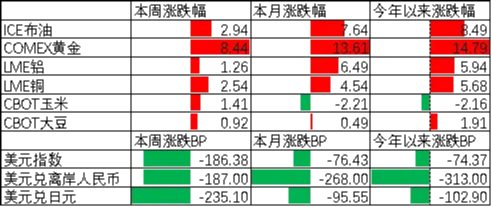
Economic Overview - In 2025, China's GDP is projected to grow by 5% year-on-year, reaching 140.19 trillion yuan, with a fourth-quarter growth of 4.5% [1][19] - The industrial added value for large-scale industries is expected to increase by 5.9%, maintaining China's position as the world's largest manufacturing sector [1][19] - The service sector's added value is anticipated to grow by 5.4%, raising its share of GDP to 57.7% [1][19] - Retail sales of consumer goods are projected to grow by 3.7%, with final consumption contributing 52% to economic growth [1][19] - Fixed asset investment is expected to decline by 3.8%, with real estate development investment decreasing by 17.2% [1][19] - By the end of 2025, the national population is estimated to be 1.40489 billion, with a net decrease of 3.39 million people [1][19] Monetary Policy - The one-year Loan Prime Rate (LPR) is set at 3.00%, and the five-year LPR is at 3.50%, both unchanged from the previous month [1][19] - This marks the eighth consecutive month of stability in LPR rates following a reduction of 10 basis points in May 2025 [1][19] Market Performance Futures Market - ICE Brent crude oil rose by 2.94% to $65.44, while COMEX gold increased by 8.44% to $4,983.1 [21][22] - The U.S. dollar index fell by 186.38 basis points, leading to a significant appreciation of the Chinese yuan by 187 basis points [22] Stock Market - The Shanghai Composite Index decreased by 1.54%, while the ChiNext Index fell by 0.34% [23][24] - The CSI 500 Index saw an increase of 4.34%, indicating a strong sentiment in the domestic market [24] Bond Market - Short-term credit bonds saw an increase, while long-term bonds experienced a decline, with the 10-year national development bond dropping by 4 basis points [29] - The overall bond rates are expected to fluctuate downwards due to significant net injections from MLF operations amid weakening economic data [29] International Relations - The Greenland crisis has seen a turnaround, with U.S. President Trump announcing a framework agreement with NATO Secretary General Jens Stoltenberg, which could benefit the U.S. and NATO members [2][20] - The announcement led to a rise in U.S. stock indices, with all three major indices increasing by over 1% [20] Investment Outlook - The recent economic data indicates a potential rebound in China's economy, supported by relaxed real estate policies and increased birth subsidies [32] - The ongoing geopolitical tensions, particularly regarding Greenland, may impact asset prices and macroeconomic conditions [32]

中加基金固收周报|存单利率下行,债市情绪继续走暖
Xin Lang Cai Jing· 2026-01-28 07:38
Market Overview and Analysis - The issuance scale of government bonds, local bonds, and policy financial bonds in the primary market last week was 515 billion, 231.6 billion, and 187.5 billion respectively, with net financing amounts of 344.3 billion, 203.2 billion, and 187.5 billion [1][8] - The total issuance scale of non-financial credit bonds was 322.6 billion, with a net financing amount of 151.9 billion. Two new convertible bonds were issued, with an expected financing scale of 2.9 billion [1][8] Secondary Market Review - Interest rates generally declined last week, with long-term bonds and public bonds performing well. Key influencing factors included strong bond allocation demand, increased central bank injections, and stock market fluctuations [2][9] Liquidity Tracking - The net injection in the open market last week was 229.5 billion, with the central bank conducting an excess of 700 billion in MLF, and 150 billion in treasury cash deposits maturing, indicating a relaxed funding environment [3][10] Policy and Fundamentals - The Ministry of Finance stated that the overall fiscal expenditure in 2026 will "only increase, not decrease." The central bank indicated that there is still room for rate cuts and reserve requirement ratio reductions this year. The actual GDP growth for Q4 2025 is projected at 4.5%, with an annual growth of 5% [4][11] Overseas Market - Disputes arose between the US and Europe over Greenland, coupled with Japan's government preparing for fiscal expansion by dissolving the House of Representatives. US and Japanese long-term bond yields rose significantly, while the dollar index fell by 1.9% over the week, and precious metals surged [5][12] Equity Market - The A-share market continued to rise last week, with the total A-share index increasing by 1.81%. The CSI 500 saw a significant rise of 4.34%, while the CSI 300 and SSE 50 fell by 0.62% and 1.54% respectively. The construction, chemical, and real estate sectors led the gains, while communication and banking sectors lagged [6][13] Bond Market Strategy Outlook - The recent recovery in the bond market is essentially a correction of previous overly pessimistic sentiments. However, the urgency for total easing policies remains to be observed as structural policies are gradually implemented. The continuous rise in commodity prices makes short-term inflation expectations difficult to dismiss [7][14] - Attention should be paid to policy signals released during local two sessions and the demand for allocation following the increase in local bond issuance next week. The overall outlook on whether the interest rate center can break downward still requires more confirmation signals [7][14]
黄金一飙升,美债就慌:特朗普真正的命门不是航母,是借钱的信用
Sou Hu Cai Jing· 2026-01-28 06:15
很多人提起特朗普,第一反应就是关税、制裁、军力、狠话,觉得他总是拿大棒威慑四方。但如果你把美国这套体系拆开来看,会发现一个更深层次、甚至 更致命的因素:美债。美国最强的,往往不是能打,而是能借钱。它能以极低的成本向全球借到巨额资金,用来支撑军费、补贴、科技投入和盟友体系,这 才是美国长期维持霸权的发动机。所以,特朗普的软肋,往往不在战场,而是在金融市场。只要美债出问题,美国的基础就会动摇。 那么,黄金和白银为何是危险的信号?它们代表着逃离纸面信用的趋势。为什么说一旦资本将美债换成黄金、白银,金银价格一涨,特朗普就感到了危险? 黄金的上涨有两种逻辑:一种是正常的避险需求,世界不太平,资金流入避险资产,黄金价格上涨,这在全球金融体系中非常常见。另一种则是信心的转 移:全球资本开始怀疑美元资产的价值,将一部分储备资金从纸信用转向硬资产。美国真正敏感的,是第二种情况。因为这意味着一个长期的趋势:全球储 备资产结构的变化,美元资产的唯一性正在被削弱。黄金、白银的上涨本身或许无关紧要,但它背后隐藏着的一句话才是致命的——我不再完全相信你了。 为什么特朗普尤其害怕金融市场的失控?因为他是一个交易型总统。特朗普的行事风格就是 ...

固收深度报告20260128:分子与分母的拉锯战:债市波动中不同权益板块的应对逻辑
Soochow Securities· 2026-01-28 06:07
证券研究报告·固定收益·固收深度报告 [Table_Tag] [Table_Summary] 观点 2026 年 01 月 28 日 证券分析师 李勇 执业证书:S0600519040001 010-66573671 liyong@dwzq.com.cn 证券分析师 徐沐阳 执业证书:S0600523060003 xumy@dwzq.com.cn 相关研究 固收深度报告 20260128 分子与分母的拉锯战:债市波动中不同权益 板块的应对逻辑 《"十五五"规划中的"债"机遇:详 解政策东风如何重塑产业债格局(主 线篇)》 2026-01-26 《 转债建议同时关注高胜率顺周期 标的》 2026-01-26 东吴证券研究所 1 / 12 请务必阅读正文之后的免责声明部分 ◼ 股债定价逻辑与 DDM 模型:股利折现模型(DDM)为理解股价与债券 收益率之间的关系提供了清晰框架。在该模型中,股价受两条路径影响: 一是分子端,即股息及其未来增长潜力,主要反映了经济预期与企业盈 利;二是分母端,即无风险利率,通常以国债收益率为代表。一般情况 下,当经济预期向好时,分子端上行支撑股价,但分母端利率也可能同 步上行,压制估 ...