电气机械

Search documents
6月经济数据点评:量价分配开启再均衡之路
Huachuang Securities· 2025-07-16 04:42
Economic Growth - The GDP growth rate for Q2 is 5.2%, with a cumulative growth rate of 5.3% for the first half of the year, indicating a reduced difficulty in achieving the annual GDP target[2] - The nominal GDP growth rate for Q2 is 3.94%, with a contribution rate of 132% from volume and -30.6% from price, highlighting a high degree of imbalance in volume-price distribution[2][9] - Final consumption expenditure contributed 52.3% to economic growth in Q2, slightly up from Q1, while capital formation contributed 24.7% and net exports contributed 23%[3][25] Investment and Consumption - Fixed asset investment growth in June was -0.1%, down from 2.7% in the previous month, with manufacturing and infrastructure investment both declining[4][55] - The consumer spending growth rate in June was 4.8%, down from 6.4%, with notable declines in restaurant and related goods consumption[4][44] - The consumer propensity to spend was 68.6% in Q2, slightly higher than the previous year's 68.5%, indicating a stable consumer sentiment[5][28] Capacity Utilization and Employment - The capacity utilization rate for Q2 was 74.0%, down from 74.9% in the same period last year, with several industries showing declines[3][32] - The total number of rural migrant workers was 19.139 million at the end of Q2, with a year-on-year growth of 0.7%[3][35] - The urban survey unemployment rate remained stable at 5.0% in June, reflecting a steady employment situation[40]
锚定长远,凝心聚力助推广东现代化产业体系建设
2 1 Shi Ji Jing Ji Bao Dao· 2025-07-11 09:25
Group 1 - The core viewpoint emphasizes the importance of building a modern industrial system that aligns with high-quality development and domestic circulation to promote sustained economic growth and enhance new productivity [1][2] - Guangdong, as a major economic and manufacturing province, is expected to play a crucial role in accelerating the construction of a modern industrial system, particularly in the context of strengthening, expanding, supplementing, and extending industrial chains [1][2] - The meeting held by the Guangdong Provincial People's Congress highlighted the province's advancements in artificial intelligence and robotics, with the added value of the intelligent robotics industry cluster projected to grow by 32.9% in 2024 [1][2] Group 2 - Guangdong's modern industrial system is supported by significant production figures, including accounting for one-quarter of the national output of new energy vehicles, 44% of industrial robots, and over 40% of smart phones [2] - The province has formed nine trillion-yuan industrial clusters, including electronic information and new energy, and possesses eight national advanced manufacturing clusters, indicating a positive cycle of mutual empowerment between industrial clusters and regional economies [2] - The current industrial system in Guangdong is characterized by a strong total output and an optimized structure, integrating traditional industry upgrades with the development of strategic emerging industries and future-oriented industries [2][3] Group 3 - The construction of a modern industrial system requires a collaborative effort between government and market forces, emphasizing the need for both visible and invisible hands to work together [3] - The role of the Guangdong Provincial People's Congress is crucial in creating platforms that address the needs of enterprises, enhancing the effectiveness of industrial policies, and ensuring precise implementation [3] - The acceleration of new productivity in Guangdong's modern industrial system relies on thorough research and a grounded approach, particularly in high-tech industries such as artificial intelligence, drones, high-end equipment manufacturing, industrial robotics, semiconductors, and integrated circuits [3][4] Group 4 - Since the beginning of 2025, Guangdong's modern industrial system has been rapidly evolving towards innovation, supported by various initiatives and decisions from the provincial government [4] - The seven specialized meetings held by the Guangdong Provincial People's Congress focus on dissecting key tasks by sector, promoting breakthroughs in priority areas, and driving the integration of industry and technology [4] - These efforts aim to continuously inject support into the construction of Guangdong's modern industrial system and the development of new productivity, facilitating the province's industrial and intelligent manufacturing sectors to expand globally [4]
专题 | 发挥多层次债券市场功能,服务民营经济高质量发展
Sou Hu Cai Jing· 2025-07-11 08:41
Core Viewpoint - The Shenzhen Stock Exchange (SZSE) emphasizes the importance of private enterprises in China's socialist market economy and aims to enhance support for these enterprises through innovative financing channels and products, thereby promoting their growth and development [1]. Group 1: Financing Support for Private Enterprises - As of March 2025, SZSE has supported private enterprises in issuing bonds totaling 3.67 trillion yuan, accounting for 36% of the total bond issuance on the exchange [1]. - The bond issuance includes 2.29 trillion yuan in corporate bonds, 1.37 trillion yuan in asset-backed securities (ABS), and 81 billion yuan in REITs [1]. - The majority of private enterprise bonds have maturities of 3 to 5 years, with ratings primarily at AA+ and AAA, covering various industries such as finance, leasing, and manufacturing [1]. Group 2: Product Innovation and Diversification - SZSE has launched a series of targeted bond products to serve private enterprises, including technology innovation bonds, green bonds, and low-carbon transition bonds, with a total issuance of 1.31 trillion yuan in these areas by March 2025 [2]. - The technology innovation bonds support companies involved in new materials, semiconductors, and digital economy sectors, aligning with national strategic goals [2]. Group 3: Debt Instruments for High-Quality Development - The introduction of relief bonds and convertible bonds has helped private listed companies raise funds, with the issuance of relief bonds reaching 234 billion yuan [3]. - The issuance of hybrid products combining equity and debt has approached 560 billion yuan, enhancing financing options for private enterprises [3]. Group 4: Intellectual Property and Supply Chain Financing - SZSE pioneered a model for intellectual property securitization, issuing 32.3 billion yuan in related products, benefiting around 2,100 tech innovation companies [4]. - The supply chain financing model has mobilized nearly 800 billion yuan, aiding small and medium-sized enterprises in various sectors [4]. Group 5: REITs Market Development - Over five years, SZSE has listed 22 REITs, raising 57.8 billion yuan, covering asset types such as industrial parks and clean energy [5][6]. - The REITs market supports private enterprises in asset listing and investment expansion, fostering a positive investment cycle [5]. Group 6: Enhancing Credit Support Mechanisms - By March 2025, SZSE has issued 640 billion yuan in bonds with credit enhancement measures, promoting a collaborative credit support model [7]. - The introduction of credit protection tools has facilitated 177 contract transactions, leveraging 234 billion yuan in financing for private enterprises [7]. Group 7: Secondary Market Development - SZSE has improved the liquidity of private enterprise bonds by revising market-making guidelines and encouraging market makers to provide quotes [9]. - As of March 2025, 15 securities firms have applied to become bond market makers, enhancing the trading environment for private enterprise bonds [9]. Group 8: Challenges and Future Directions - The financing landscape for private enterprises faces challenges, including weaker qualifications and higher default risks, necessitating a multi-faceted approach to support [10][11]. - SZSE aims to continue developing a multi-tiered bond market and enhancing the financing support mechanisms for private enterprises to foster high-quality economic growth [11].
热点思考 | “反内卷”,被低估的决心(申万宏观·赵伟团队)
申万宏源宏观· 2025-07-10 15:58
Group 1 - The core viewpoint of the article emphasizes the need for a comprehensive approach to address "involution" in various sectors, highlighting the importance of policy coordination and market mechanisms [2][6][65] - The recent meeting of the Central Financial Committee outlines a higher-level and broader coverage for the "anti-involution" initiative, focusing on the integration of local governments, enterprises, and residents [2][65] - The article identifies a significant decline in revenue growth for "involution" industries, dropping from 28.5% in 2021 to -0.4% in 2024, while fixed costs remain rigid, leading to a drastic reduction in average net profit growth to -28.2% [20][19][66] Group 2 - "Involution" is primarily manifested through low-price competition, which compresses supply chain costs, with accounts payable turnover decreasing to 4.6% in 2024, down by 1 percentage point from 2021 [26][31][66] - The internal cost-cutting measures in "involution" industries include a significant reduction in sales expenses, projected at -9.7% for 2024, and a decrease in management expenses growth to 2.6% [31][66] - The profitability of "involution" industries remains under pressure, with a return on assets (ROA) of 2.9% in 2024, a decline of 2.7 percentage points from the 2021 peak, which may hinder long-term industry transformation and development [40][66] Group 3 - To resolve the "involution" dilemma, the focus should be on alleviating supply-demand contradictions and promoting the orderly exit of outdated production capacity, while also restructuring demand expansion dynamics [44][50][66] - Structural transformation can be driven by policy guidance, industry self-discipline, and market mechanisms, encouraging innovation and moving away from price competition [50][66] - Addressing structural unemployment during the transformation process by accelerating the development of the service sector is crucial, as recent trends show a decline in employment in key service industries [56][66]


6月CPI转降为升,后续价格或出现修复性反弹
Hua Xia Shi Bao· 2025-07-10 13:22
Group 1 - The Consumer Price Index (CPI) increased by 0.1% year-on-year in June, marking the first rise after four consecutive months of decline [2][3] - The Producer Price Index (PPI) decreased by 3.6% year-on-year, indicating ongoing pressure on industrial prices, particularly in coal, electricity, and black metal smelting sectors [2][5] - The marginal improvement in CPI is attributed to the recovery in industrial consumer goods prices, which saw a reduction in the year-on-year decline from 1.0% to 0.5% [3][4] Group 2 - Food prices experienced a year-on-year decline of 0.3%, with beef prices rising by 2.7% after 28 months of continuous decline, while pork prices fell by 8.5% [3][4] - Energy prices showed a slight recovery, with gasoline prices increasing by 0.4% month-on-month, contributing to a 0.1% rise in overall energy prices [4] - The core CPI rose by 0.7% year-on-year, the highest increase in nearly 14 months, indicating a stable rise in service prices [4][5] Group 3 - Industrial prices remain under significant pressure, with coal mining and washing prices dropping by 5.5% and 3.4% respectively, primarily due to ample supply and reduced thermal power demand [5][6] - Export-oriented industries, such as computer communication equipment and textiles, are facing price declines, reflecting weak external demand and trade barriers [5][6] - Some high-tech sectors, including wearable smart devices and aerospace manufacturing, are showing positive price growth, indicating resilience in new momentum industries [6]
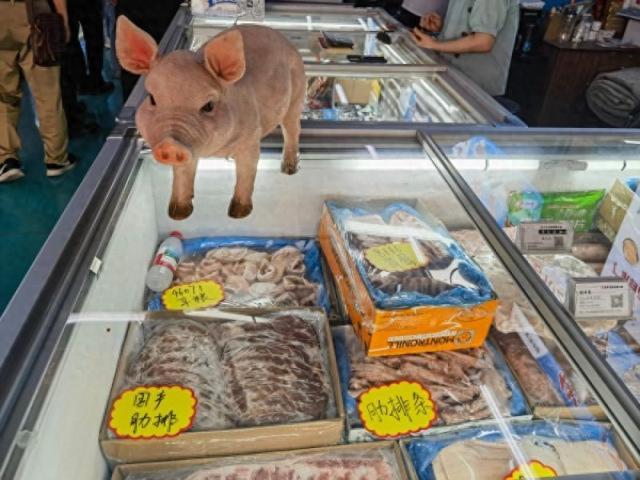
“反内卷”系列之三:“反内卷”,被低估的决心
Shenwan Hongyuan Securities· 2025-07-10 10:44
Group 1: Overview of "Anti-Involution" Policy - The recent "anti-involution" initiative is characterized by a higher stance, broader coverage, and stronger coordination among local governments, enterprises, and residents[2] - The Central Financial Committee emphasized "lawful governance of low-price disorderly competition" and "orderly exit of backward production capacity" as key directions for the "anti-involution" policy[2] - Revenue growth in "involution" industries dropped from 28.5% in 2021 to -0.4% in 2024, while fixed cost growth remained rigid at 12.3%[2] Group 2: Negative Feedback from Involution - Involution industries experienced a significant decline in average net profit growth to -28.2% in 2024, contrasting with a positive growth of 3.5% in non-involution industries[2] - The accounts payable turnover rate for involution industries decreased to 4.6% in 2024, indicating a shift in cost management strategies[3] - Sales expenses in involution industries fell by 9.7% in 2024, while management expenses grew at a slower rate of 2.6%[3] Group 3: Strategies to Address Involution - To resolve the "involution" dilemma, it is crucial to alleviate supply-demand contradictions and promote the orderly exit of backward production capacity[5] - Structural transformation can be achieved through policy guidance, industry self-discipline, and market mechanisms to encourage supply innovation[5] - Accelerating the development of the service industry is essential to address structural unemployment issues during the transformation process[6]
【广发宏观郭磊】6月PPI低于预期的原因
郭磊宏观茶座· 2025-07-09 09:59
Core Viewpoint - The June CPI increased by 0.1% year-on-year, surpassing the previous value of -0.1%, while the PPI decreased by 3.6% year-on-year, lower than the previous value of -3.3%. The simulated deflation index based on CPI and PPI remains at -1.38%, consistent with May and at a low since February 2024 [1][5]. Summary by Sections CPI and PPI Analysis - The CPI data met expectations, with high-frequency data estimating a 0.14% year-on-year increase, while the PPI was significantly lower than the expected -3.0% [1][5]. - The PPI showed a base effect advantage with a 0.2% month-on-month recovery, but year-on-year figures continued to decline, indicating potential discrepancies in high-frequency data representation [1][7]. Price Movements in Industries - In June, the PPI for coal processing fell by 5.5% month-on-month, and the prices in coal mining and black metal industries also decreased, reflecting weaker performance compared to high-frequency data [1][7]. - The durable consumer goods segment of PPI fell from 0.1% to -0.1%, with notable declines in the computer and textile sectors, possibly influenced by tariff uncertainties and the "618" e-commerce promotions [2][8]. Positive Trends in PPI - The automotive manufacturing sector saw a month-on-month PPI increase of 0.2%, indicating initial positive effects of the "anti-involution" trend in production [3][9]. - The prices for complete vehicles and new energy vehicles rose by 0.5% and 0.3% respectively, suggesting a narrowing of year-on-year declines in these categories [10]. Notable CPI Details - Key details in CPI include a 0.3% month-on-month decrease in alcohol prices, a shift in clothing prices from increase to decrease during the "618" sales, and a 0.4% decline in transportation tools, indicating ongoing price reductions in the automotive retail sector [4][10]. - Medical service prices have shown a consistent upward trend, with a year-to-date increase of 0.7%, while pork prices fell by 1.2% month-on-month, although a rebound was noted post-June 26 [4][10]. Overall Price Stability and Future Outlook - The current task of stabilizing prices remains significant, with no signs of a turning point in the simulated deflation index. Various factors, including supply-demand fundamentals and external demand fluctuations, are influencing prices [4][13]. - Positive signs include a moderate rise in core CPI year-on-year, improvements in coal and meat prices since July, and initial positive signals in automotive manufacturing prices [4][13]. Key future indicators will be the recovery of local project starts and the continued effectiveness of the "anti-involution" trend [4][13].

通胀数据点评:6月通胀,三大分化
Shenwan Hongyuan Securities· 2025-07-09 09:40
Group 1: Inflation Data Overview - In June, the CPI increased by 0.1% year-on-year, compared to a previous value of -0.1% and an expectation of 0%[12] - The PPI decreased by 3.6% year-on-year, down from a previous value of -3.3% and an expected -3.2%[12] Group 2: Divergence in Price Trends - The PPI for upstream commodities like coal and steel fell, while CPI for food and platinum rose, leading to a contrasting trend between CPI and PPI[3] - The PPI decreased by 0.4% month-on-month, with significant contributions from steel, cement, and coal prices[3] - Core commodity PPI remains at historical lows, reflecting tariff impacts and low utilization rates in downstream capacities[4] Group 3: Consumer Price Index Insights - Core commodity CPI rose by 0.3 percentage points to 0.6% year-on-year, driven by consumer stimulus policies[4] - Prices for entertainment durable goods, household textiles, and household appliances increased by 2.0%, 2.0%, and 1.0% respectively[4] - The rental CPI showed weak performance, with a month-on-month increase of only 0.1%, below the historical average of 0.2%[4] Group 4: Future Outlook - Policy measures and recovery in domestic demand are expected to alleviate inflationary pressures, but commodity prices may face downward pressure in the second half of the year[5] - The PPI is anticipated to remain weaker than CPI due to ongoing low capacity utilization rates in downstream industries[5]
通胀数据点评:6月通胀:三大分化
Shenwan Hongyuan Securities· 2025-07-09 08:42
Group 1: Inflation Data Overview - In June, the CPI increased by 0.1% year-on-year, compared to a previous value of -0.1% and an expectation of 0%[8] - The PPI decreased by 3.6% year-on-year, down from a previous value of -3.3% and below the expected -3.2%[8] - Month-on-month, the CPI fell by 0.1%, while the PPI decreased by 0.4%[8] Group 2: Price Divergence Analysis - Commodity prices for upstream coal and steel fell, negatively impacting the PPI, while food and platinum prices rose, supporting the CPI[2] - The core PPI remains at historical lows, reflecting tariff impacts and low capacity utilization in downstream industries, with a core PPI of -1%[21] - Core CPI rose by 0.3 percentage points to 0.6%, driven by consumer stimulus policies and increased domestic demand[3] Group 3: Service Sector Insights - The service CPI remained stable at 0.5% year-on-year, with core service CPI unchanged at 0.8%[50] - Rent CPI showed weakness, with a month-on-month increase of only 0.1%, below the historical average of 0.2%[25] Group 4: Future Outlook - Policy measures and recovery in domestic demand are expected to alleviate inflationary pressures, but commodity prices may face downward pressure in the second half of the year[27] - The PPI is anticipated to underperform compared to the CPI due to ongoing low capacity utilization and external factors such as tariffs and global oil supply constraints[27]
券商首席热议!“反内卷”如何提振市场内生动力?
天天基金网· 2025-07-09 03:27
Core Viewpoint - The concept of "anti-involution" is essential for promoting sustainable and healthy industrial development, as it addresses the negative impacts of irrational competition on corporate profits and overall industry growth [2][3][10]. Group 1: Impact on Industries - Involution leads to a decline in corporate profits and creates issues in industry development, contradicting the goal of high-quality growth [2][3]. - The comprehensive governance of involution is crucial for the current Chinese economy, as it helps break the downward pressure on inflation and promotes a positive economic cycle [3][10]. - The focus of "anti-involution" policies will likely target key industries such as new energy vehicles, photovoltaic components, and e-commerce platforms, which are currently facing significant challenges [9][10]. Group 2: Policy Implementation - The current approach to "anti-involution" relies heavily on industry self-regulation, with expectations for more structured policies to emerge following government meetings [5][6]. - A balanced approach, termed "symptomatic and fundamental treatment," is recommended, which includes regulating irrational price wars and addressing local protectionism [7][8]. - The implementation of "anti-involution" policies is expected to be gradual and tailored to different industries, ensuring that the measures do not adversely affect macroeconomic stability or consumer experience [6][7]. Group 3: Potential Benefits - Emerging industries such as photovoltaic, new energy vehicles, and lithium battery storage are anticipated to benefit from improved competitive dynamics under "anti-involution" policies [9][10]. - The restructuring and consolidation of industries, particularly in sectors dominated by state-owned enterprises, will face fewer obstacles, while private sectors may see increased self-regulation and price stabilization efforts [9][10].