家电

Search documents
格力电器大股东减持引发市场关注
Jing Ji Guan Cha Wang· 2026-02-27 03:09
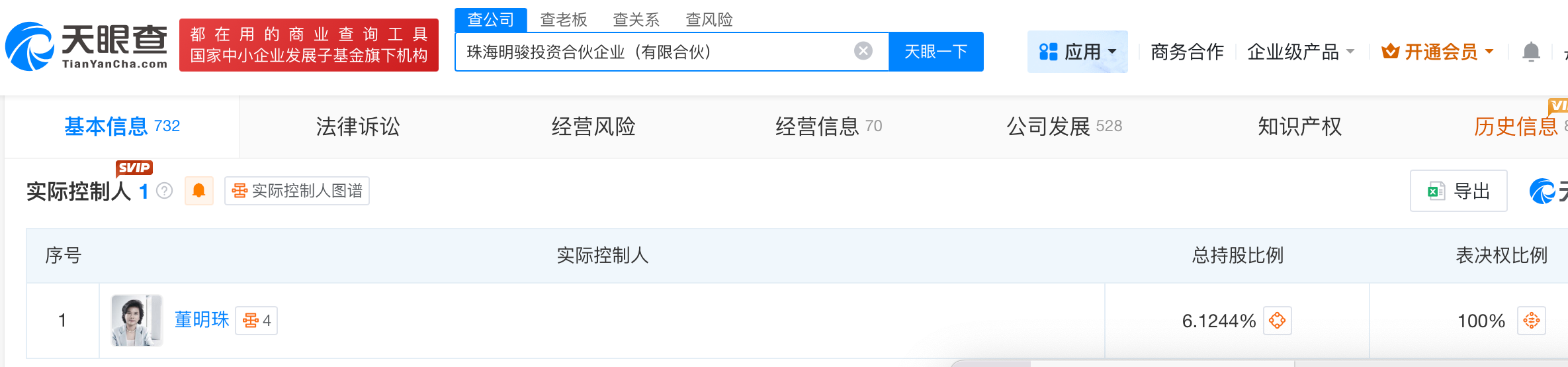
Group 1 - Gree Electric Appliances announced that its largest shareholder, Zhuhai Mingjun Investment Partnership, plans to reduce its stake by up to 2% through block trading to repay upcoming bank loans, marking the first public reduction plan since Hillhouse Capital acquired control in 2020 for 41.662 billion yuan [1] - Zhuhai Mingjun currently holds 902,359,632 shares, accounting for 16.11% of the total share capital, and the reduction will start 15 trading days after the announcement and is expected to be completed within three months [1] - The funds raised from the share reduction will be used entirely to repay bank loans, with the shares coming from an agreement transfer from Gree Group in early 2020 [1] Group 2 - Gree Electric has implemented a high dividend policy over the past six years, distributing a total of 165.8 yuan in cash dividends per 10 shares, amounting to approximately 14.955 billion yuan received by Zhuhai Mingjun from dividends [2] - The company's performance has been under pressure, with a 15.09% year-on-year decline in revenue and a 9.92% drop in net profit for the third quarter of 2025, alongside a 6.50% and 2.27% decline in overall revenue and net profit for the first three quarters [2] - Following the announcement, Gree's stock price fell by 2.34%, reflecting market concerns not only about the share reduction but also about the company's fundamentals, with a potential supply scale of 4.3 billion yuan causing caution among northbound funds and public funds [2] Group 3 - As a model for mixed-ownership reform, Gree's development now relies on capital structure and shareholder dynamics, in addition to product innovation and channel development [3] - The balance between maintaining stable control, driving performance recovery, and meeting capital exit demands will be crucial for Gree to navigate its current challenges [3]

未知机构:中国春节黄金周数据显示旅游人次显著改善核心结论-20260227
未知机构· 2026-02-27 02:35
Summary of Conference Call Records Industry Overview - The records focus on the **Chinese tourism industry** during the **Spring Festival Golden Week** and its implications for the accommodation sector and consumer spending. Key Points Domestic Tourism Data - During the Spring Festival Golden Week, domestic tourist numbers and tourism revenue increased by **5.7%** and **5.5%** year-on-year, respectively, following an adjustment in holiday length [1][2] - The nine-day holiday period (February 15-23, 2026) was longer and later than in previous years, typically accounting for about **10%** of annual tourism revenue [1] - Compared to pre-pandemic levels (2019), domestic tourist numbers were up by **33.3%**, while tourism revenue was **21.6%** higher [2] Consumer Spending Insights - Per capita tourism revenue remained flat compared to last year, indicating constrained consumer spending capacity, with a decline of **8.8%** compared to pre-pandemic levels [2] - Daily average income in consumption-related industries grew by **13.7%** during the holiday, compared to **4.5%** growth during last year's National Day holiday [2] - Sales of smart home appliances, such as robotic vacuum cleaners and high-end TVs, increased by **19%** due to ongoing consumer incentives [2] Cross-Border Travel Trends - Cross-border travel activity saw a significant increase, driven by extended holidays and visa-free policies, with daily average cross-border (inbound + outbound) passenger numbers rising by **10.1%** year-on-year [3] - The trend of "reverse Spring Festival travel" emerged, with an increase in older travelers (aged 50 and above) booking train tickets to major cities, reflecting a **25%** increase in bookings [3] Accommodation Sector Performance - The accommodation sector experienced enhanced growth momentum during the Spring Festival, although overall housing consumption remained constrained by a weak real estate market [4] - The upcoming **March "Two Sessions"** and the full text of the **14th Five-Year Plan** are expected to provide more details on China's short- and long-term plans to boost consumption [4] Additional Observations - The average box office revenue during the Spring Festival was reported at **5.8 billion yuan**, marking the lowest daily average since the pandemic, influenced significantly by major film releases [2] - The visitor numbers from mainland China to Hong Kong showed a **11.1%** year-on-year increase during the holiday, indicating a recovery trend [3][4] This summary encapsulates the key insights and data points from the conference call records, highlighting the current state and trends within the Chinese tourism industry and its related sectors.
春节假期家电、数码和智能产品消费增长强劲
Jing Ji Ri Bao· 2026-02-27 02:05
Group 1 - The core viewpoint of the article highlights a significant increase in sales of home appliances and digital products during the Spring Festival holiday, with a total of 5.106 million units sold, representing a 21.7% growth compared to the previous year [1] - The subsidy policy has effectively supported offline retail development, with offline sales accounting for 73.3% of total sales in the home appliance and digital product categories [1] - The trend towards smart products and quality consumption is evident, with mid-to-high-end mobile phones making up 65.0% of sales, and the introduction of smart glasses into the subsidy program for the first time in 2026 [1] Group 2 - The Ministry of Commerce has organized effective implementation of the subsidy program, with strong consumer demand observed in provinces such as Hebei, Guangdong, Jiangsu, and Shandong [2] - Various regions have established service points in rural areas to facilitate the "trade-in for new" program, providing comprehensive services including delivery, installation, and old product recycling [2] - The combination of national subsidies, local incentives, and merchant discounts has allowed consumers to benefit from substantial financial incentives [2]
假期消费向好人员流动活跃 高频数据传递经济平稳开局积极信号
Zhong Guo Zheng Quan Bao· 2026-02-26 23:52
Group 1: Economic Recovery Indicators - The recent high-frequency data indicates a sustained recovery in China's economy, with increasing vitality and potential being released [1] - The average daily sales revenue in consumption-related industries during the 2026 Spring Festival holiday increased by 13.7% compared to the previous year [2] - The total number of passengers transported by rail during the Spring Festival exceeded 3 billion, signaling strong economic activity [4] Group 2: Consumer Spending Trends - Sales revenue for smart and green consumer products, such as vacuum robots and projection TVs, grew by 19% during the Spring Festival [2] - The tourism market saw a significant increase, with sales revenue for travel-related services rising by 39.6%, and Hainan's scenic area services increasing by 70.9% [2] - Payment transaction data showed a 37.45% increase in the number of transactions and a 19.26% increase in transaction amounts compared to the 2025 Spring Festival [3] Group 3: Financial Market Performance - The social financing scale stock grew by 8.2% year-on-year as of the end of January, with an increase of 166.2 billion yuan compared to the same period last year [5] - In January, RMB loans increased by 4.71 trillion yuan, with a year-on-year growth of 6.1% [6] - The average interest rate for corporate loans was approximately 3.2% in January 2026, down 2.4 percentage points from the peak in late 2018 [6]
音频 | 格隆汇2.27盘前要点—港A美股你需要关注的大事都在这
Ge Long Hui A P P· 2026-02-26 23:19
Group 1 - The U.S. stock market showed mixed results, with Nvidia dropping over 5% and the Chinese concept index declining by 1.78% [2] - The U.S. Department of Commerce plans to hold a roundtable meeting with manufacturers in March to discuss robot policies [2] - The aerospace and semiconductor industries in the U.S. are facing increasing rare earth shortages [2] Group 2 - China's AI usage has surpassed that of the U.S., with four major models ranking in the global top five [2] - The Hang Seng Technology Index has hit a new low since July last year, down over 23% from its peak in October [2] - The offshore RMB has strengthened against the U.S. dollar, breaking above 6.83, marking a new high since March 2023 [2] Group 3 - Dell Technologies saw a post-market surge of over 10% after announcing a 20% increase in annual stock dividends and a $10 billion expansion in stock buybacks [2] - Baidu reported a 5% quarter-over-quarter revenue increase in Q4, with AI computing subscription revenue soaring by 143% year-over-year [2] - The new generation AI terminal project by Luxshare has commenced in Suzhou, with an expected annual output value exceeding 100 billion [2]


假期消费向好 人员流动活跃 资金支持有力 高频数据传递经济平稳开局积极信号
Zhong Guo Zheng Quan Bao· 2026-02-26 21:42
Group 1: Consumer Activity - The Spring Festival holiday showcased a vibrant consumer market, with average daily sales revenue in consumption-related industries increasing by 13.7% compared to the previous year [2] - Notable growth in specific sectors included a 19% increase in sales revenue for smart and green home appliances, and a significant 163.9% rise in sales revenue for electric vehicle charging [2] - The tourism sector experienced a 39.6% increase in sales revenue, with Hainan's scenic area services soaring by 70.9% [2][3] Group 2: Transaction Data - During the Spring Festival period, a total of 39.302 billion transactions were processed, amounting to 13.12 trillion yuan, with daily transaction numbers and amounts increasing by 37.45% and 19.26% respectively compared to the previous year [3] - Cross-border payment transactions from overseas visitors to China saw a remarkable growth of 78.10% in transaction numbers and 44.33% in transaction amounts [3] - The number of users utilizing Alipay's "AI payment" surpassed 100 million, with spending by inbound tourists increasing by over 80% compared to last year [3] Group 3: Passenger Flow - National railway passenger numbers exceeded 310 million during the Spring Festival, with a total of 363 million train tickets sold [4] - The civil aviation sector also reached new heights, transporting 22.05 million passengers and operating 171,000 flights during the holiday, marking a 7.7% and 4.4% increase respectively compared to the previous year [4] - Daily passenger flow during the peak travel day reached 2.668 million, a 7.6% increase from the same day in the previous year [4] Group 4: Financial Data - As of the end of January, the social financing scale stock grew by 8.2% year-on-year, with an increase of 166.2 billion yuan compared to the same period last year [6] - In January, RMB loans increased by 4.71 trillion yuan, with the total loan balance reaching 276.62 trillion yuan, reflecting a year-on-year growth of 6.1% [7] - The weighted average interest rate for corporate loans was approximately 3.2% in January, down 2.4 percentage points from the peak of the current interest rate cycle [7]
高频数据传递经济平稳开局积极信号
Zhong Guo Zheng Quan Bao· 2026-02-26 20:28
Consumption Highlights - During the Spring Festival holiday, the average daily sales revenue in consumption-related industries increased by 13.7% compared to the previous year, driven by policies promoting consumption and the popularity of smart and green products [1] - Sales revenue for household appliances, including sweeping robots and projection TVs, grew by 19%, while sales revenue for electric vehicle charging surged by 163.9% [1] - The tourism market saw a significant increase, with sales revenue for travel-related services rising by 39.6%, and Hainan scenic area services increasing by 70.9% [1] Transaction Data - During the Spring Festival holiday from February 15 to February 23, 2026, UnionPay and NetUnion processed 39.302 billion transactions amounting to 13.12 trillion yuan, with daily transaction numbers and amounts increasing by 37.45% and 19.26% respectively compared to the previous year [2] - The number of payment transactions from inbound tourists increased by 78.10%, and the transaction amount grew by 44.33% [2] - WeChat reported over 20% growth in offline transactions for travel and entertainment during the holiday, while Alipay's "AI payment" user count surpassed 100 million, with spending by inbound tourists increasing by over 80% compared to last year [2] Passenger Flow Data - National railway passenger numbers exceeded 310 million during the Spring Festival, with a total of 3.63 billion train tickets sold [3] - The civil aviation sector transported 22.05 million passengers during the holiday, with a daily average of 2.45 million passengers, marking a 7.7% increase from the previous year [3] - The peak travel day on February 23 saw 2.668 million passengers, a 7.6% increase compared to the same day in 2025, indicating a strong demand for travel [3] Financial Data - As of the end of January, the social financing scale stock grew by 8.2% year-on-year, with an increase of 166.2 billion yuan compared to the same period last year [4] - In January, RMB loans increased by 4.71 trillion yuan, with the total loan balance reaching 276.62 trillion yuan, reflecting a year-on-year growth of 6.1% [4] - The weighted average interest rate for corporate loans was approximately 3.2% in January 2026, down 2.4 percentage points from the peak in late 2018 [4]
海口春节消费市场火热开局 离岛免税销售额12.06亿元
Zhong Guo Xin Wen Wang· 2026-02-26 14:04
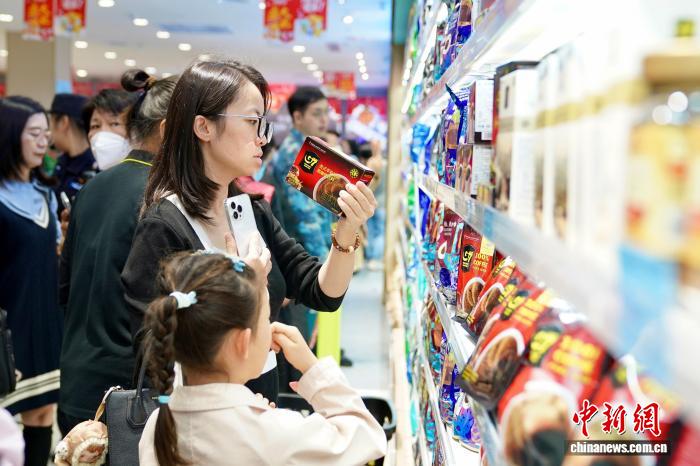
Core Insights - Haikou's consumer market showed strong performance during the Spring Festival, with duty-free sales reaching 1.206 billion yuan, a year-on-year increase of 12.7% [1] - The city welcomed 2.4695 million tourists, marking a 28.77% increase, and total tourist spending reached 3.627 billion yuan, up 33.44% [1] Group 1: Duty-Free Sales and Consumer Incentives - Haikou issued 4.5 million yuan in consumer vouchers and collaborated with duty-free enterprises to launch themed activities, resulting in a 19.7% increase in sales at Haikou International Duty-Free City [2] - The first batch of duty-free shops for island residents opened on February 11, offering imported goods such as milk powder and coffee, benefiting both tourists and local residents [2] - A total of 1.5 million yuan in dining vouchers were distributed, covering over 300 merchants, and the "Haikou Chicken Culture Grand Award" attracted participation from over 30 time-honored brands, drawing more than 100,000 visitors in three days [2] Group 2: Tourism and Cultural Events - The 35th International Table Tennis Federation Asian Cup held before the Spring Festival attracted 78,500 spectators, boosting hotel, dining, and scenic area traffic in Haikou [2] - The 18th Wanchun Festival introduced traditional activities like "Zuan Jiaozi·Le You Yuan," attracting over 270,000 participants, showcasing a blend of traditional and modern experiences [4] - Industrial tourism emerged as a highlight, with the Coconut Tree Group opening its factory for free tours, attracting over 4,000 visitors daily during the festival [4] Group 3: Future Development Plans - Haikou aims to continue developing its unique sectors to convert increased foot traffic into economic benefits, aspiring to become a vibrant consumer city and a culturally appealing island [4]

欧洲冬天取暖难的问题,竟被浙江人破解了,他们是咋闷声发大财的
Sou Hu Cai Jing· 2026-02-26 13:09
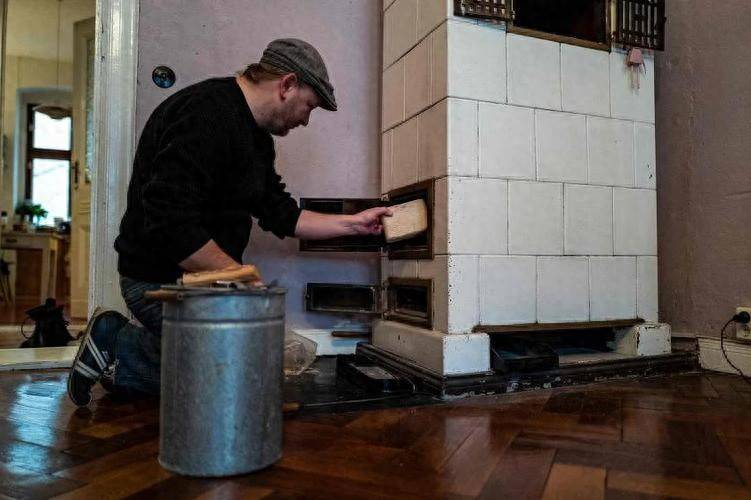
Core Insights - The article highlights how the energy crisis in Europe during 2022 led to a surge in demand for heating appliances, particularly electric blankets and heaters from China, specifically from Cixi, Zhejiang [1][3][5] Group 1: Impact of the Energy Crisis - The energy crisis was triggered by the Russia-Ukraine conflict, which resulted in sanctions against Russia and a significant disruption in Europe's energy supply, leading to skyrocketing energy prices [3][11] - European consumers, who traditionally relied on central heating and natural gas, faced a survival crisis and turned to Chinese heating products as a solution [5][11] Group 2: Cixi's Manufacturing Advantage - Cixi, with over 2,000 home appliance manufacturers and more than 10,000 supporting enterprises, was uniquely positioned to meet the urgent demand for heating devices, achieving an export value of 3.35 billion yuan in heating appliances to the EU, a 55.2% increase [7][9] - The local supply chain in Cixi allowed for rapid production and delivery of heating devices, showcasing a "capillary-level" capability in manufacturing [9][19] Group 3: European Manufacturing Challenges - The crisis exposed the hollowing out of European manufacturing, where many brands had outsourced production to China, resulting in a dependency on imports for essential heating equipment [13][15] - In 2022, 70% of heating equipment in the EU was imported, with over 60% coming from China, highlighting a significant reliance on Chinese manufacturing [15][21] Group 4: Shifts in Consumer Behavior and Political Landscape - The demand for Chinese heating products led to a backlash against the European elite's environmental policies, with rising support for right-wing parties as citizens prioritized immediate needs over long-term environmental goals [17][19] - The situation illustrated a contradiction in EU policies, where efforts to reduce reliance on Chinese products in high-tech sectors contrasted with increasing dependence in consumer goods [21][23] Group 5: Future of Cixi's Manufacturing - Cixi's manufacturers are evolving from mere OEMs to brand creators, with a significant increase in self-owned brands registered in the EU, rising from 12% to 28% of exports [27][29] - The focus is shifting towards innovation and technology, with local companies developing advanced heating solutions that exceed EU standards, indicating a transformation in the competitive landscape [27][29] Group 6: Long-term Implications - The article suggests that the surge in heating demand is not a one-time event but reflects deeper issues in European energy policy and the resilience of Chinese manufacturing capabilities [33] - The future of Sino-European trade will likely revolve around regulatory standards rather than tariffs, presenting both challenges and opportunities for Chinese companies [31][33]
416亿并购案迎来“还款时刻” 高瓴资本首次减持格力电器
Jing Ji Guan Cha Wang· 2026-02-26 11:48
Core Viewpoint - Gree Electric Appliances is initiating a share reduction plan by its largest shareholder, Zhuhai Mingjun Investment Partnership, to repay bank loans, marking the first reduction since Hillhouse Capital's acquisition in 2020. The reduction is driven by a repayment pressure of approximately 25 billion yuan [1][4]. Group 1: Share Reduction and Financial Impact - Zhuhai Mingjun plans to reduce up to 111,702,774 shares, representing 2% of the total share capital after excluding repurchased shares, with an estimated cash inflow of about 4.3 billion yuan [1][8]. - The initial acquisition price was 46.17 yuan per share, with a total transaction value of 41.662 billion yuan for 902,359,632 shares, leading to a current effective holding cost of around 34 yuan per share after accounting for dividends [1][2]. - Despite Gree's generous dividends exceeding 13 billion yuan over six years, there remains a funding gap of nearly 10 billion yuan against the estimated debt repayment of 25 billion yuan [4][7]. Group 2: Market Reaction and Company Performance - Following the announcement, Gree's stock price fell by 2.34% to 37.59 yuan, with a total market capitalization dropping to around 210 billion yuan [1][7]. - Gree's financial performance has shown a decline, with Q3 2025 revenue at 39.855 billion yuan, down 15.09% year-on-year, and a net profit of 7.049 billion yuan, down 9.92% [7][8]. - The company faces rising costs due to copper prices exceeding 100,000 yuan per ton, which could pressure profit margins as Gree has committed to maintaining product prices without passing costs to consumers [7][8]. Group 3: Future Outlook and Strategic Considerations - The potential for further share reductions exists if stock prices remain low, which could create a cycle of reduced share value and additional sell-offs [5][9]. - Gree's valuation is currently low, with a dynamic price-to-earnings ratio below 7, but achieving stability in revenue and gross margins in Q1 2026 could mitigate short-term market concerns [8][9]. - The balance between maintaining control, performance recovery, and capital exit strategies will be crucial for Gree's future, especially given its status as a mixed-ownership reform benchmark [9].