
消费

Search documents
公募把脉2026年投资新机遇
Zhong Guo Zheng Quan Bao· 2025-12-23 20:18
Core Viewpoint - The investment outlook for 2026 is optimistic, with expectations of a shift from valuation-driven to a dual driver of "profit + valuation" for market growth [1][2] Group 1: Overall Market Performance - The overall corporate performance is expected to improve in 2026, supported by a transition to an innovation-driven economic growth model, with infrastructure and high-tech industries driving growth [1][2] - The A-share market is anticipated to gradually shift towards a "slow and steady" performance supported by corporate earnings, with structural highlights likely to increase [1][2] - The current ratio of A-share free float market value to household deposits is relatively low, indicating potential for more new funds entering the stock market [1] Group 2: Sector-Specific Insights - The AI technology sector is expected to continue its growth, with long-term opportunities outweighing short-term risks, focusing on the AI industry chain's weak links [2] - The consumer sector is poised for a turning point, driven by rising resident income expectations and a recovery in consumer goods prices, with investment strategies focusing on leading companies with improved cash flow and competitive positioning [3] Group 3: Fixed Income and Bond Market - The macroeconomic environment in 2026 is expected to be stable, with fixed asset investment from state-owned sectors contributing to growth, and a focus on long-term bond investment opportunities following recent declines [4] - The bond market is anticipated to experience a balance between supply and demand, providing support for overall valuation in the convertible bond market [4]
关于明年A股 基金经理最新研判
Zhong Guo Zheng Quan Bao· 2025-12-23 15:14
Group 1 - Multiple fund managers express optimism for the equity market in 2026, highlighting investment opportunities in AI technology, consumption, and innovative pharmaceuticals [1] - The market is expected to transition from a valuation-driven to a dual-driven model of profit and valuation, with a healthy valuation structure currently in place [1] - The Chinese economy is shifting from a real estate-driven growth model to an innovation-driven one, with infrastructure and high-tech industries taking over [2] Group 2 - The supply-side pressure in the manufacturing sector is expected to ease by 2026, leading to improved profitability for companies [3] - The AI technology sector is still in a "big infrastructure era," with long-term opportunities outweighing short-term risks [4] - The consumption sector is anticipated to experience a turning point, driven by rising resident income expectations and supportive monetary policies [4] Group 3 - The innovative pharmaceutical sector is expected to have significant growth potential in 2026, with many products entering critical clinical phases that could enhance market confidence [5] - Investment strategies will focus on optimizing competition in traditional consumption and selecting high-quality new consumption stocks with strong fundamentals [4][5]
关于明年A股,基金经理最新研判
Zhong Guo Zheng Quan Bao· 2025-12-23 15:07
Group 1 - Multiple fund managers express optimism for the equity market in 2026, highlighting investment opportunities in AI technology, consumption, and innovative pharmaceuticals [1] - The market is expected to transition from a valuation-driven to a dual-driven model of profit and valuation, with a healthy valuation structure currently in place [1][2] - The Chinese economy is shifting from a real estate-driven growth model to an innovation-driven one, with infrastructure and high-tech industries taking over [2] Group 2 - The supply-side pressure in the manufacturing sector is expected to ease by 2026, leading to a potential reversal in supply-demand dynamics and improved corporate profitability [3] - The AI technology sector is still in a "big infrastructure era," with long-term opportunities outweighing short-term risks, despite challenges in the industry [4] - The consumption sector is anticipated to experience a turning point in investment opportunities, driven by rising resident income expectations and a recovery in consumer goods prices [4][5] Group 3 - The innovative pharmaceutical sector, which showed strong performance in 2025, is expected to regain momentum in 2026, supported by significant clinical developments and market confidence [5]
艰难五连阳,到底是去是留?
Jin Rong Jie· 2025-12-23 11:07
Group 1 - The market is likely to face a correction after five consecutive days of gains, but the adjustment may not be significant due to some short sellers exiting their positions [1] - Investors holding stocks are advised to consider high sell-low buy strategies, while those without positions should look to enter around the 20-day moving average during the correction [1] - The commercial aerospace sector is experiencing divergence due to the failure of the Long March 12 rocket recovery, with some stocks hitting the limit down, but the overall market sentiment remains cautious about the sector's future performance [1] Group 2 - The chip and liquid cooling sectors showed good performance, with expectations of a rebound following a previous correlation with the index, but there is a need to monitor which stocks can unify after initial divergence [2] - Consumer stocks were expected to perform well during the market pullback, but key stocks experienced a high-to-low reversal, raising concerns if they do not recover soon [2] - Other sectors like lithium batteries, chemicals, and resource stocks were influenced by news but did not exhibit strong sector effects, indicating a lack of significant momentum [2]
放量阳包阴,这个底部确认了?
Jin Rong Jie· 2025-12-23 03:38
Group 1 - The core viewpoint is that the upcoming resumption of trading for CICC may lead to a potential price surge, similar to the previous case with Guotai Junan, but the overall market sentiment remains cautious due to the current phase of market correction [1] - The market's recent rise is attributed to the influence of brokerage firms and external factors, including comments from a former Japanese central bank deputy governor about avoiding premature interest rate hikes, and speculation about large-scale purchases of index ETFs by Huijin [1] - The market is currently experiencing a divergence, with a significant number of stocks declining, particularly due to regulatory extensions on high-profile stocks, which has negatively impacted market sentiment [1] Group 2 - In terms of sector performance, the strongest performers today are optical modules and liquid cooling, which align with the preferences of institutional investors and show some market momentum [2] - Commercial aerospace is expected to continue its trend, but it requires the release of negative sentiment before any significant recovery can be anticipated, while consumer stocks should be approached with a high sell-low buy strategy until they align with the index [2] - The lithium battery sector is currently viewed as a potential rebound opportunity following the cancellation of 27 mining rights in Yichun, indicating a reaction to oversold conditions [2]

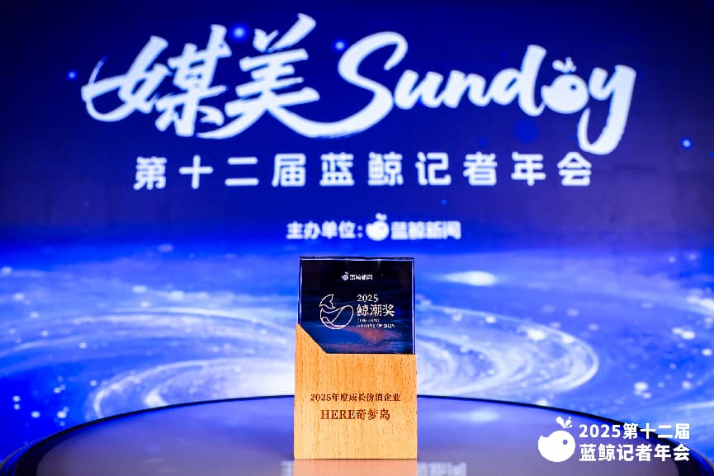
HERE奇梦岛荣膺“2025鲸潮奖·年度成长价值企业”
Jin Rong Jie· 2025-12-23 02:50
Core Insights - HERE Qimeng Island won the "Annual Growth Value Enterprise" award at the "2025 Whale Tide Award" for its innovative practices and rapid growth in the consumer sector, highlighting its recognized growth momentum and business model by industry authorities [1][4]. Group 1 - HERE Qimeng Island focuses on the "IP + Scene + Product" core strategy, targeting the young consumer market through original IP incubation, immersive experiences, and innovative marketing [2][3]. - The company has achieved significant brand value and user scale growth, exemplified by the success of its popular IP series "WAKUKU" and the rapid establishment of diverse business formats such as pop-up stores and collaborations [2][3]. - The award reflects HERE Qimeng Island's commitment to continuous innovation in the new consumption wave and its potential for future growth [4]. Group 2 - The "Whale Tide Award" aims to gather leading companies, investors, and industry experts in the consumer sector to identify resilient growth forces and provide guidance for the upgrade of the new consumption industry [4].

高盛复盘2025年中国股市十大趋势:AI重估科技,反内卷修复盈利,慢牛已在路上
Hua Er Jie Jian Wen· 2025-12-23 02:15
Core Insights - The Chinese stock market is at a new starting point after two consecutive years of growth, with a potential "slow bull" market driven by profit growth and valuation recovery [1][3] - Key variables defining future market trends include artificial intelligence (AI), "anti-involution" policies, and capital repatriation [1] Market Performance - A-shares and H-shares recorded annual returns of 16% and 29% respectively in 2025, significantly surpassing initial predictions [1] - The MSCI China Index's forward P/E ratio increased from 9.9x at the beginning of 2025 to 12.5x, while forward EPS declined by 4% [3] Economic Indicators - China's trade performance exceeded expectations, with exports growing by 5.4% year-on-year and the RMB appreciating by 4% against the USD [5] - Strong export performance led to an upward revision of China's GDP growth forecast for 2025 [6] AI Impact - The release of DeepSeek-R1 has transformed the investment narrative for Chinese tech stocks, contributing to a market capitalization increase of over $2 trillion across relevant sectors [7] - AI adoption is projected to drive annual corporate profit growth of 3% over the next decade through cost savings and productivity improvements [7] Export Dynamics - China's export story is evolving from low-cost manufacturing to selling high-value products to emerging markets, with overseas revenue share of listed companies increasing from 12% a decade ago to 16% currently [8] - The "China Going Global Leaders" investment portfolio has risen by 35% this year, outperforming the MSCI China Index by 9 percentage points [8] Consumer Trends - Despite a sluggish real estate market, new consumption sectors such as entertainment and specialty retail have shown strong performance, with an average net profit growth of 28% in the first half of 2025 [9] - New consumption theme stocks have returned 43% year-to-date, significantly outperforming the broader market [9] Policy and Market Sentiment - The "anti-involution" strategy has been elevated to a national level, with potential supply-side reductions expected to enhance profit margins in affected industries by 50% by 2027 [10] - The "14th Five-Year Plan" emphasizes technology, security, and livelihood as key development priorities, with a constructed investment portfolio yielding a 68% return over the past year [11] Capital Flows - Domestic capital is increasingly interested in equity assets, with southbound capital inflows reaching $180 billion this year, a historical record [12] - Global hedge funds have increased their net exposure to China from 6.8% at the beginning of the year to 7.8% by the end of November [13] Diversification Value - The correlation of returns between Chinese and U.S. markets is among the lowest, with Chinese equities trading at a 35% and 9% discount compared to developed and emerging markets [14] - The structural shift towards equity assets is beginning, as domestic investors' allocations to real estate and cash remain high, while equity assets are underrepresented [14]
港股开盘 | 恒指高开0.29% 有色金属板块强势 天齐锂业涨超2%
智通财经网· 2025-12-23 01:33
Group 1 - The Hang Seng Index opened up 0.29%, while the Hang Seng Tech Index rose by 0.14%. The materials sector showed strength, with Zijin Mining up 1.19% and Tianqi Lithium up 2.02%. However, Kuaishou fell by 3.3% due to a cyber attack on its platform [1] - Huatai Securities noted that the combination of early-year reallocation and RMB appreciation may support an improvement in the funding environment in the next phase. Defensive dividend assets in the Hong Kong stock market are expected to gain renewed attention as a core option [1] - By 2026, three catalysts related to "expectation differences" are anticipated for the Hong Kong stock market: the formation of consensus on RMB appreciation, a stable Sino-U.S. relationship in the first half of 2026, and breakthroughs in key sectors like AI and semiconductors that could drive independent performance in the tech sector [1] Group 2 - CITIC Securities indicated that after a unilateral rise in September, the Hong Kong stock market has experienced fluctuations due to changing overseas macro expectations since October. Quality assets are now entering a high cost-performance range, supported by continuous capital inflow and improved profit expectations [1] - Huatai Securities believes the market is still in a left-side layout phase, with the right-side turning point not yet clear. There is strong consensus on an early spring rally, but year-end supply and demand pressures create uncertainty for a "Santa rally" [2] - China Galaxy suggested focusing on the technology sector as a long-term investment theme, which is expected to rebound after previous adjustments. The consumer sector is also anticipated to receive significant policy support, with current valuations at relatively low levels, indicating substantial long-term upside potential [2]

12.17盘前速览 | 卫星产业持续闪耀,消费再获预期支撑
Jin Rong Jie· 2025-12-22 16:13
Macroeconomic Dynamics - The market anticipates a 58 basis point rate cut by the Federal Reserve in 2026 following the release of U.S. employment data, with a 31% probability of a rate cut in January [1] - Key future focus areas include the nomination of a new Federal Reserve chair, prospects for U.S. fiscal stimulus, and actual measures to expand domestic demand [1] Satellite Internet - Sellers indicate that key launch projects are ready and awaiting coordination for new timelines [1] - The IPO of Electronic Science and Technology Blue Sky has been approved, positioning it as a core supplier for aerospace power [1] - Recent catalysts include the Hainan Wenchang Conference and multiple commercial rocket maiden flights [1] - Related ETF: Satellite Industry ETF (on-market: 159218) [1] Consumer Sector - The National Development and Reform Commission emphasizes the need to enhance consumer willingness and implement special actions to boost consumption [1] - The Central Financial and Economic Affairs Commission has identified expanding domestic demand as the top priority for next year [1] - Three departments have issued documents encouraging the use of digital RMB smart contract red envelopes to promote consumption [1] - Related ETFs: Consumer ETF (on-market: 510150, off-market link: 217017), Food and Beverage ETF (on-market: 159843) [1] Robotics - Sellers report that prototype demonstrations will occur after Christmas, with new suppliers and sales strategies to be introduced in March, while dexterous hands are undergoing rapid iteration [1] - Related ETFs: Robotics Index ETF (on-market: 560770, off-market link: 020482) [1] Artificial Intelligence - NVIDIA has released the Nemotron 3 family of open-source models [1] - Ant Group's AI health application "Antifortune" has reached third place on the Apple app rankings [1] - The Volcano Engine Conference on the 18th will focus on the Doubao large model, edge AI, and Agent ecosystem [1] - Reports suggest that Google's Asian supply chain visits are intensifying, with an expected procurement of 4 million TPUs next year [1] - Related ETFs: Cloud Computing ETF (on-market: 159890, off-market link: 021716), Software Leaders ETF (on-market: 159899, off-market link: 018385) [1] Autonomous Driving - Hongmeng Zhixing and Xpeng have been approved to begin internal testing of L3 autonomous driving [1] - Horizon Robotics has set a target of 5.5 million chip shipments for 2026, a 30% increase from previous expectations [1] - Related ETFs: Consumer Electronics 50 ETF (on-market: 159779, off-market link: 016007) [1] Market Observation - On December 16, trading volume was 1.7242 trillion, a decrease of 49.3 billion [2] - The index retraced to 3816 points, with strong performance in sectors such as retail, beauty care, and social services [2] - The satellite sector experienced fluctuations but rebounded, while intelligent driving and AI liquid cooling showed performance in the adjustment phase [2] - The market is expected to follow a "first suppress then rise" pattern, with strong resilience in the consumer sector and opportunities for layout in technology and satellite themes during adjustments [2]
杨德龙:年底是布局2026年行情的时间窗口 | 立方大家谈
Sou Hu Cai Jing· 2025-12-22 12:39
杨德龙 | 立方大家谈专栏作者 2025年行情逐步接近尾声,整体来看,我国资本市场在2025年走出了一轮较为典型的慢牛、长牛走势, 主要指数一度突破4000点关口。然而,由于市场内部结构性分化较为明显,银行股与科技股表现相对突 出,集中配置上述方向的投资者获得了较好回报,而其他板块和部分投资者的获得感相对不足。这也导 致一个较为特殊的现象,即在指数已运行至4000点附近的背景下,仍有相当一部分市场参与者并不认为 这是一轮牛市。 进入年底阶段,部分资金选择兑现收益,市场出现一定幅度的调整。但从当前情况来看,这一调整已接 近尾声,部分着眼于2026年布局的资金开始逐步入场,市场整体呈现反复震荡、逐步企稳的特征。综合 判断,当前阶段正是为2026年行情、尤其是一季度春季行情进行布局的相对合适窗口。 展望2026年,宏观层面上,我国经济有望出现一定程度的复苏,稳增长相关政策预计将进一步加码。中 央经济工作会议对2026年的经济工作作出了明确部署,提出将采取更加积极有为的宏观政策以稳定经济 增速,并通过有效措施推动房地产市场止跌回稳。这有助于改善投资者预期,稳定消费增速。在提振内 需作为重要政策方向的背景下,通过内需修 ...