TMT

Search documents
突破4000点后A股怎么走?
雪球· 2025-10-28 08:38
Core Viewpoint - The article discusses the historical context and implications of the A-share market breaking through the 4000-point mark, analyzing past bull markets in 2007 and 2015 to draw insights for the current market situation [2][4][9]. Historical Analysis - In the history of A-shares, there have been 16 instances of breaking through 4000 points, with seven instances based on closing prices, notably five times in 2007 and two times in 2015 [2][3]. - The maximum increase after breaking 4000 points in 2007 was 51.8%, taking 160 days, while in 2015, the maximum increase was 28.06%, occurring in just 63 days [4][6]. 2007 Bull Market - The 2007 bull market was driven by resource and financial real estate sectors, with significant gains in non-ferrous metals (250%), coal (220%), and financial sectors (190%) [6]. - Macroeconomic indicators supported this bull market, including a GDP growth rate of 11.4%, fixed asset investment growth of 24.8%, and a trade surplus of $262.2 billion [6]. 2015 Bull Market - The 2015 bull market was characterized by the "Internet+" policy and the rise of new industries, with notable stock performances from companies like Dongfang Finance (600% increase) and China CNR (500% increase) [7][8]. - However, this market was marked by excessive leverage and regulatory shortcomings, leading to a peak in margin financing of 2.27 trillion yuan in June 2015 [8]. Current Market Context - The current A-share market exhibits characteristics of a "water bull," with structural features in both the economy and capital markets, indicating a shift towards high-end manufacturing [9]. - Despite economic challenges, there is a noticeable change in fiscal spending towards long-term projects, suggesting a more sustainable growth trajectory compared to previous bull markets [9].


早盘直击|今日行情关注
申万宏源证券上海北京西路营业部· 2025-10-27 03:05
Group 1 - The "15th Five-Year Plan" has been officially released, providing a clearer path for domestic economic restructuring, which positively impacts market confidence [1] - The current phase of concentrated disclosure of third-quarter reports from listed companies will provide more micro-level information reflecting the state of the real economy, indicating a potential for market fluctuations as investors seek confirmation [1] - There are signs of improvement in the current market state compared to the past two weeks, with investor confidence beginning to recover [1] Group 2 - The market experienced a rebound last week, with the Shanghai Composite Index reaching a new high during this round of recovery, indicating a strong upward momentum [2] - The Shenzhen Component Index also accelerated its rebound, surpassing all short-term moving averages, reflecting a positive trend in growth sectors, particularly in TMT [2] - The average daily trading volume in both markets remained above 2.1 trillion yuan, indicating stable market activity [2]

廖市无双:双创指数能直接创新高吗?
2025-10-27 00:31
Summary of Conference Call Notes Industry or Company Involved - The discussion primarily revolves around the performance of the Chinese stock market, particularly focusing on the 创业板 (ChiNext) and 科创 50 (STAR Market) indices, as well as the broader market represented by 上证指数 (Shanghai Composite Index) and 上证 50 (SSE 50) [1][2][3][4][6][10]. Core Points and Arguments 1. **Market Performance and Uncertainty** - Recent market volatility has been significant, with the Shanghai Composite Index and SSE 50 outperforming the 创业板 and 科创 50 indices, indicating market uncertainty and investor sentiment being easily influenced [1][2][3]. 2. **B Wave Rebound Expectations** - A judgment was made on October 17 that the adjustment phase was nearing its end, with expectations for a B wave rebound. The rebound has exceeded expectations but requires monitoring of trading volume and the separation of index performance from individual stocks [1][4][10]. 3. **Sector Performance** - Technology-related sectors, particularly TMT (Telecommunications, Media, Technology) and robotics, have shown strong performance, while dividend and consumer stocks have lagged [1][13]. 4. **Key Resistance Levels** - The Shanghai Composite Index is at a critical resistance level of 3,950 points, which is a sensitive position that could lead to either a breakout or a pullback [1][16]. 5. **Brokerage Sector Influence** - The brokerage sector is crucial for market direction. A strong performance from brokerages could lead to upward momentum in the market, while weakness could hinder progress [7][19]. 6. **Volume and New Capital Concerns** - Current market rebounds are characterized by insufficient trading volume and a lack of new capital inflow, raising concerns about the sustainability of price increases [9][12]. 7. **Future Market Outlook** - The future trajectory of the 创业板 remains uncertain, with potential for either continued upward movement or a C wave adjustment depending on market performance in the coming days [14][20]. 8. **Investment Strategy Recommendations** - A cautious approach is advised, with recommendations to maintain existing positions and avoid new investments in the current volatile environment. Focus should be on brokerage stocks, which are seen as pivotal for market direction [17][26]. Other Important but Possibly Overlooked Content 1. **Historical Context** - The current market situation is compared to historical patterns, suggesting that similar conditions in the past have led to significant adjustments before new highs were achieved [16][24]. 2. **Feedback Effects** - The positive feedback effect from leveraged trading and buyer incentives is noted as a factor contributing to the current bull market, although there are risks of negative feedback if volatility reaches extreme levels [27]. 3. **Balanced Sector Allocation** - There is no clear sector dominance; a balanced approach to sector allocation is recommended to mitigate risks associated with market fluctuations [28]. 4. **Potential for Market Correction** - The market may face corrections if key indices do not maintain upward momentum, with specific attention to the performance of the brokerage sector as a leading indicator [25]. This summary encapsulates the key insights and recommendations from the conference call, providing a comprehensive overview of the current market dynamics and future outlook.
机构论后市丨A股重回“慢牛”趋势;科技主线不变
Di Yi Cai Jing· 2025-10-26 10:19
Group 1 - A-shares have shown positive performance with the Shanghai Composite Index up 2.88%, Shenzhen Component Index up 4.73%, and ChiNext Index up 8.05% this week [1] - Huaxi Securities indicates a return to a "slow bull" trend, driven by a global technology AI market rally, with expectations for short-term risk appetite to improve [1] - The focus will be on the earnings reports of A-share companies and US tech giants next week, as the global AI arms race accelerates [1] Group 2 - Everbright Securities highlights that under liquidity-driven market conditions, the TMT (Technology, Media, and Telecommunications) sector is likely to become a mid-term focus, with catalysts such as the onset of the Federal Reserve's rate cut cycle and ongoing AI industry trends [2] - In case of market volatility, attention should shift to sectors with stagnant growth, such as high-dividend and consumer sectors [2] Group 3 - Huajin Securities maintains that the slow bull trend and technology as the main line remain unchanged, with expectations for risk appetite to rise and liquidity to remain loose [3] - The report suggests that after adjustments, technology and cyclical sectors may outperform, particularly those related to AI and rising commodity prices [3] - Recommendations include low-cost allocations in sectors benefiting from the "14th Five-Year Plan" and improved third-quarter earnings, such as telecommunications, electronics, media, machinery, and new energy [3]
投资策略周报:重回“慢牛”趋势,全球科技AI行情共震-20251026
HUAXI Securities· 2025-10-26 09:32
Market Review - Recent positive developments in China-US trade negotiations, the Russia-Ukraine ceasefire, and the Fourth Plenary Session of the 20th Central Committee have boosted global risk appetite, leading to a rally in Chinese stocks. The Shanghai Composite Index surpassed 3950 points, marking a new high in this bull market, with significant gains in A and H shares in the technology growth sector. The Hang Seng Tech Index rose by 5.2%, while the ChiNext Index and the STAR 50 Index increased by 8.0% and 7.3% respectively. A-shares saw a trading volume rebound to around 2 trillion yuan, indicating a positive market sentiment driven by policy signals from the Fourth Plenary Session [1][2][4]. Market Outlook - The report anticipates a return to a "slow bull" trend, with a focus on the global technology and AI sectors. The Fourth Plenary Session solidified long-term policy expectations for investors, alongside expectations of US-China interactions at the APEC summit and potential interest rate cuts by the Federal Reserve. The A-share market is expected to maintain its "slow bull" trend, with "big technology" remaining a key focus for the medium to long term. Upcoming earnings reports from A-share companies and major US tech firms will be critical, particularly in the context of the accelerating global AI arms race [2][4]. Industry Focus - The report emphasizes the importance of focusing on "big technology" in industry allocation, particularly in areas such as AI computing and applications, robotics, high-end equipment manufacturing (including semiconductor supply chains, solid-state batteries, energy storage, and aerospace), new materials, and future industries. The theme of "mergers and acquisitions" is also highlighted as a point of interest [2][4]. Economic Policy Insights - The Fourth Plenary Session of the 20th Central Committee has incorporated "maintaining economic development as the central task" into the five-year plan, suggesting a target for medium-high economic growth during the 14th Five-Year Plan period. While no specific quantitative growth targets were set, the implicit goal is to achieve a growth rate of no less than 4.5%-5%. The meeting emphasized the need to achieve this year's economic and social development goals, indicating that the pressure to reach a 5% growth rate is manageable [4]. Technological Development Goals - The report indicates that the 14th Five-Year Plan will set higher requirements for technological self-sufficiency, with upcoming documents expected to provide more specific policy directions. The focus will be on breakthrough innovations in key core technologies, with priority given to emerging industries such as new energy, new materials, aerospace, and low-altitude economy, as well as future industries like quantum technology, biomanufacturing, hydrogen energy, and brain-computer interfaces [4].
A股策略周报20250921:风格再均衡,寻找新主线-20251026
SINOLINK SECURITIES· 2025-10-26 09:15
Group 1 - The report indicates that the risks in the market have been alleviated, particularly regarding the U.S. service sector and regional bank concerns, which have contributed to a more stable investment environment [2][10][25] - The U.S. October PMI data showed service PMI at 55.2% and manufacturing PMI at 52.2%, both exceeding market expectations, which alleviated recession fears [10][25] - The TMT sector has seen a shift in trading logic, expanding beyond AI infrastructure to include domestic computing power and consumer electronics, indicating a rebalancing of investment styles [3][13][14] Group 2 - The report highlights the potential for global manufacturing recovery, which is expected to drive physical consumption expansion and create investment opportunities in key resources like copper and lithium [25][27] - China's position as a "seller of shovels" in the global manufacturing landscape is emphasized, particularly in the power sector, where it has advantages in renewable energy equipment exports [25][27] - The report suggests that the combination of effective markets and proactive government policies will be crucial for navigating deflationary pressures and stabilizing domestic prices [44][45] Group 3 - The report outlines a shift in investment focus towards physical assets, particularly in the context of a potential interest rate cut cycle, which could enhance manufacturing activity and resource demand [4][56] - The recommended investment sequence includes upstream resources and capital goods, reflecting China's role in the global supply chain and the expected recovery in domestic consumption [4][56] - The report notes that the market is currently in a phase of seeking new opportunities as risks have subsided, with a focus on sectors that show signs of recovery and growth potential [53][54]
快手发布AI Coding产品矩阵,科创AIETF(588790)强势上涨超2%,澜起科技领涨
Sou Hu Cai Jing· 2025-10-24 02:08
Group 1: Market Performance - The Shanghai Stock Exchange Sci-Tech Innovation Board Artificial Intelligence Index rose by 1.99% as of October 24, 2025, with notable increases in stocks such as Hongsoft Technology (up 4.37%) and Lanke Technology (up 4.00%) [3] - The Sci-Tech AI ETF (588790) increased by 2.00%, with a latest price of 0.82 yuan, and has seen a cumulative increase of 35.53% over the past three months as of October 23, 2025 [3] Group 2: Company Developments - Alibaba's Quark app launched a new "Dialogue Assistant" feature, integrating AI dialogue capabilities with existing search and scanning tools, aimed at creating an AI super entry point for younger users [4] - ByteDance's Seed team introduced the 3D generation model Seed3D 1.0, which can create high-quality 3D models from a single image, outperforming competitors in geometric generation performance [4] - Kuaishou's StreamLake announced a new AI programming product matrix, including tools and models aimed at building a new AI programming ecosystem for enterprises and developers [4] Group 3: Technological Advancements - Micron Technology has begun sampling its 192GB SOCAMM2 memory module, achieving a 50% capacity increase while maintaining the same size, with a transmission rate of 9.6 Gbps, significantly enhancing AI data center efficiency [5] Group 4: Industry Insights - The TMT sector continues to experience fluctuations as the market enters the third-quarter earnings disclosure period, with a focus on the performance of companies and core industry developments [6] - AI technology is reshaping production methods and may have profound impacts on employment structures and social governance, with a need for China to cultivate AI as a fourth industry for high-quality development [6] Group 5: ETF Insights - The Sci-Tech AI ETF is the largest product tracking the Sci-Tech Innovation Board Artificial Intelligence Index, with significant growth in scale and shares over the past week and six months, respectively [7] - The top ten weighted stocks in the Sci-Tech AI Index account for 71.9% of the index, highlighting the concentration of investment in key players within the AI sector [8]

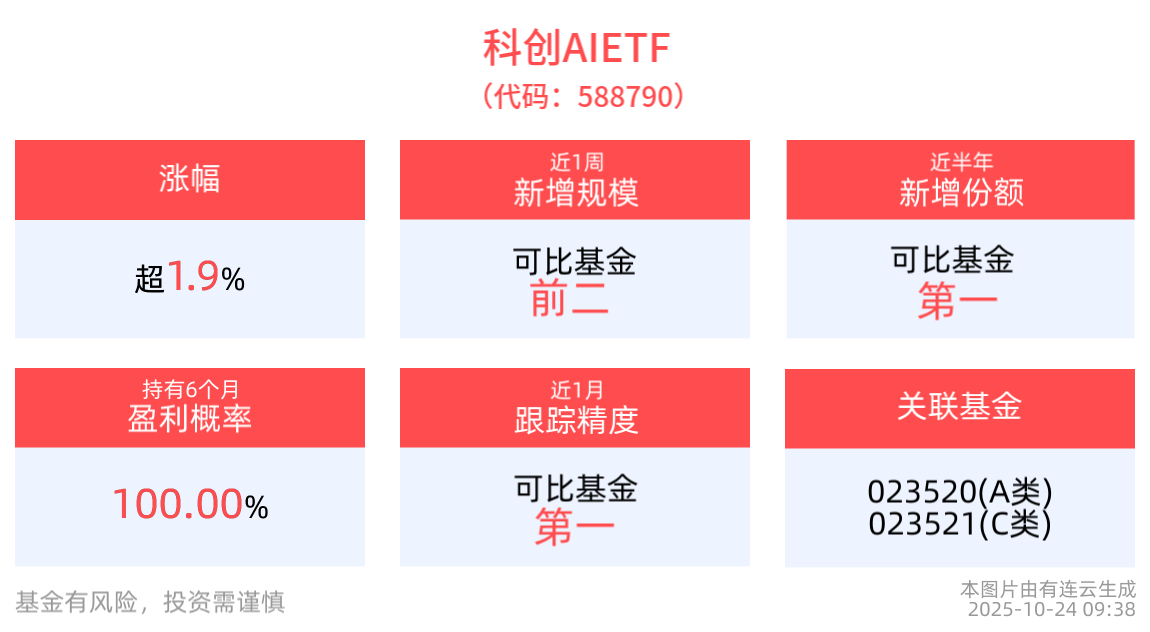
聚焦高质量发展,进一步稳固A股慢牛
Huajin Securities· 2025-10-24 00:09
Group 1 - The report emphasizes a shift towards focusing on economic construction during the 14th Five-Year Plan, indicating a heightened urgency for economic growth compared to the previous plan [10][13][19] - Key areas of focus include the development of advanced manufacturing, technological self-reliance, and expanding domestic demand, which are seen as strategic priorities for the 15th Five-Year Plan [2][13][20] - The report anticipates that policies aimed at achieving economic growth targets will likely lead to increased fiscal and monetary support in the fourth quarter [10][18] Group 2 - The report suggests that the A-share market is likely to maintain a slow bull trend, with improving profit expectations driven by policies focused on economic construction and advanced manufacturing [3][15][18] - Short-term market dynamics may also benefit from increased liquidity and a positive outlook on economic growth, which could enhance market risk appetite [3][18][19] - The report identifies specific sectors that may benefit from these trends, including TMT (Technology, Media, and Telecommunications), machinery, and military industries, which are aligned with the modernization of the industrial system [4][19][20] Group 3 - Industries related to new productive forces, such as TMT, machinery, and military sectors, are expected to benefit from policies promoting technological innovation and infrastructure development [4][19][20] - The advanced manufacturing sector, including non-ferrous metals, chemicals, and pharmaceuticals, is highlighted as a key area for growth, driven by national security and environmental sustainability initiatives [20][21][22] - Consumer sectors, particularly those related to social services and retail, are also positioned to gain from policies aimed at boosting domestic demand and improving living standards [22][23]
股市面面观丨下周超4300家公司将发三季报 这些结构性亮点值得关注
Zhong Guo Jin Rong Xin Xi Wang· 2025-10-23 09:51
Group 1 - A total of 401 companies have disclosed their Q3 reports as of October 23, with 5,033 companies yet to report, and over 4,300 companies are expected to disclose next week [1][4][5] - Among the disclosed companies, 338 reported profits while 63 incurred losses, with 250 companies showing profit growth and 151 experiencing declines [2][3] - Notably, 57 companies achieved a net profit growth rate exceeding 100%, representing 14.2% of the total 401 companies [3] Group 2 - New Strong Union leads with a staggering net profit growth of 1,939.5%, and its stock price has risen over 22% in October [2] - Four companies reported net profit growth between 500% and 1,000%, with Wanchen Group at 917.04% [3] - Key sectors to watch include non-bank financials, AI industry chain, and lithium battery sectors, as they are expected to show structural highlights [7]

国泰海通|固收:不惧扰动,保持定力
国泰海通证券研究· 2025-10-22 11:04
Core Viewpoint - The convertible bond market is experiencing significant short-term valuation compression, but given the resilience of the equity market, convertible bonds still present investment opportunities, particularly through a low premium strategy [1][2]. Group 1: Market Performance - The Shanghai Composite Index declined by 1.47% last week, while the China Convertible Bond Index fell by 2.35%, indicating a notable compression in convertible bond valuations [1]. - Institutional profit-taking is a major factor influencing short-term valuations in the convertible bond market, although long-term trends remain positive as long as the equity market continues its upward trajectory [1][2]. Group 2: Valuation and Risks - As of October 17, the average parity of convertible bonds was 97.34 yuan, with an average conversion premium rate of 39.99%. High premium convertible bonds have seen significant compression in their conversion premium rates due to increased expectations of forced redemptions [1]. - Large-scale convertible bonds, such as those from Liugong and Hengbang, have experienced rapid compression in premium rates following market speculation about forced redemptions, highlighting the risks associated with high premium and large-scale convertible bonds [1]. Group 3: Investment Strategy - Despite external disturbances, the equity market's upward trend is expected to continue, providing a favorable environment for convertible bonds, which exhibit relative resilience and investment value [2]. - In a sustained bull market, a low premium strategy is recommended as it allows for better participation in the upside of underlying stocks while minimizing valuation compression risks [2]. - The technology sector, particularly semiconductor stocks and TMT industries benefiting from increased overseas AI capital expenditure, is identified as a key investment focus, alongside a balanced approach to cyclical and financial sectors [2].