
证券业

Search documents
中国金融结构正在发生历史性转折!连平、郭磊、余向荣等大咖最新发声
券商中国· 2026-01-10 15:06
Core Viewpoint - The article discusses the insights and predictions from the 2026 China Chief Economist Forum, highlighting the historical shift in China's financial structure and the investment opportunities during the "15th Five-Year Plan" period. Group 1: Economic Outlook - The global economy is expected to experience low growth as a norm by 2025, with instability arising more from structural issues than cyclical ones [2][3] - China aims to provide stability to the world economy through its own stable development, addressing external uncertainties with internal certainties [3] Group 2: Financial Structure Changes - China's financial structure is undergoing a historic transformation, with a steady increase in the proportion of direct financing compared to indirect financing, which has seen a decline [4][5] - As of November 2025, the proportion of direct financing increased by 4.7 percentage points compared to November 2019, indicating a faster growth rate than indirect financing [4] Group 3: Investment Opportunities - The "15th Five-Year Plan" is seen as a critical period for China to embrace a new wave of technological revolution, particularly in renewable energy and artificial intelligence [10] - Investment opportunities are identified in three main areas: AI application, large finance, and cyclical sectors, with a focus on companies that integrate AI into their business models [13] - The manufacturing sector is expected to benefit from the completion of the "Made in China 2025" initiative, with related companies entering a profit release phase [14] Group 4: Policy and Market Dynamics - The Chinese stock market is anticipated to recover steadily, supported by a surge of high-tech companies and unprecedented policy support from regulatory bodies [6][7] - The real estate market is undergoing significant changes, with a shift away from previous high-demand patterns, leading to a more stable market environment [7]

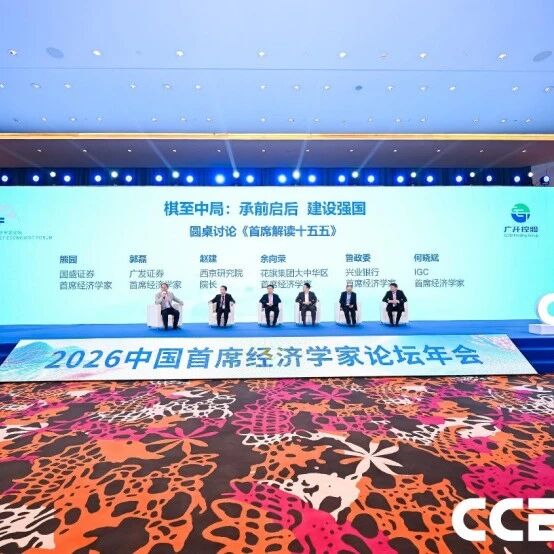
中国首席经济学家论坛理事长连平:中国金融结构正发生历史性转折
2 1 Shi Ji Jing Ji Bao Dao· 2026-01-10 12:54
Group 1 - The core viewpoint is that China's financial structure is undergoing a historic shift, with a decrease in the proportion of indirect financing and an increase in direct financing [1] - Direct financing, which involves transactions directly between initial fund providers and final demanders, is becoming more prominent compared to indirect financing, which relies on financial intermediaries [1] - As of January to November 2025, the cumulative new social financing in China reached 33.4 trillion yuan, with indirect financing accounting for 15.2 trillion yuan (45.7%) and direct financing for 15.8 trillion yuan (47.4%) [1] Group 2 - Fiscal expansion continues to provide a stable source of demand for direct financing, with a significant increase in government bond issuance supporting social financing growth [2] - The net increase in government bonds from January to November 2025 was 13.2 trillion yuan, contributing positively to social financing [2] - The shift towards direct financing is seen as a reflection of China's transition from high-speed growth to high-quality development, indicating an optimization of the financial structure that will aid in economic transformation [2]
中外资机构:2026年中国将是全球投资者瞩目的市场
Sou Hu Cai Jing· 2026-01-10 12:33
Group 1 - China is expected to be a focal market for global investors by 2026, driven by the rise in the valuation and quality of its technology sector, which has developed an independent AI ecosystem with vast applications and market potential [5][6][21] - Since April 2025, there has been a trend of global investors reallocating assets away from the US, which is likely to continue into 2026, leading to increased capital allocation towards Chinese assets [7] - The Chinese stock market is anticipated to experience a valuation reassessment driven by innovation, with future upward momentum expected to shift from valuation recovery to profit improvement [8] Group 2 - The "barbell strategy" is recommended for asset allocation, combining high-dividend stocks for defensive positioning with a focus on technology stocks benefiting from self-reliance and international expansion [8][9] - The core drivers for the A-share market in 2026 are expected to be policy support, profit recovery, and favorable liquidity conditions, with a focus on sectors such as technology innovation and manufacturing [9][10] - The Hong Kong stock market is projected to benefit from strong capital inflows and active IPO activities, supported by policies favoring artificial intelligence [21] Group 3 - The 14th Five-Year Plan emphasizes the construction of a modern industrial system and expansion of domestic demand, with investment opportunities in traditional industry upgrades, advanced manufacturing, and emerging sectors like renewable energy and aerospace [10][11] - The focus on technology self-reliance and high-quality development is expected to drive policy initiatives aimed at stimulating consumption and stabilizing the real estate market [11] - The anticipated US Federal Reserve interest rate cuts are expected to enhance global liquidity and lower financing costs, benefiting risk assets and corporate earnings [14][19] Group 4 - In the context of a reshaped global order, investment strategies for 2026 should focus on diversified paths to enhance portfolio resilience, particularly in technology sectors related to capital expenditure expansion and energy transition [20] - Asia is identified as a core growth engine, with positive outlooks for stock markets in mainland China, Hong Kong, Singapore, and South Korea, while maintaining a cautious approach towards US equities [20][21] - The emphasis on diversification includes emerging market bonds outperforming developed market bonds, with gold expected to continue its upward trend in 2026 [22]

每日机构分析:1月9日
Xin Hua Cai Jing· 2026-01-09 12:33
Group 1 - The U.S. labor market may have passed its worst phase, with the upcoming December non-farm payroll report seen as a key indicator to validate this trend [1][2] - The market for short positions on the U.S. dollar is becoming crowded, and a seasonal rebound in the first quarter could lead to a technical recovery for the dollar, particularly against currencies like the euro and Australian dollar that are heavily shorted [1] - Germany is facing a structural economic dilemma, with a report indicating that corporate bankruptcies are expected to reach 17,604 in 2025, the highest level since 2005, impacting approximately 170,000 jobs [2] Group 2 - The volatility of U.S. Treasury bonds has dropped to a four-year low, suggesting that the market may have returned to a more stable state following significant disruptions caused by high inflation and aggressive rate hikes [3] - Geopolitical uncertainties in Greenland are increasing the term premium on Eurozone long-term bonds, as investors anticipate higher defense spending in Europe [3] - Germany's industrial output showed a temporary rebound in November due to a recovery in automobile production, but overall, the economy remains stagnant with a 2.5% decline in exports [3]
金融对外开放不断深化|加快建设金融强国
Xin Lang Cai Jing· 2026-01-09 04:19
Group 1: Financial Industry Opening and Development - The financial sector's opening is a crucial part of China's reform and opening-up strategy, with accelerated steps during the "14th Five-Year Plan" period and a focus on building a strong financial nation in the "15th Five-Year Plan" [1] - Key tasks include enhancing Shanghai's financial market influence, supporting institutional opening in the financial sector, and strengthening legal protections for the international financial center [1] - The establishment of the International Monetary Fund (IMF) Shanghai Center in December 2025 signifies China's commitment to global financial governance and cooperation [2] Group 2: RMB Internationalization and Global Financial Governance - The RMB's international status has steadily improved, with its weight in the IMF's Special Drawing Rights (SDR) basket increased from 10.92% to 12.28% in 2022, maintaining its position as the third most significant currency [3] - China aims to contribute to a more stable and inclusive global financial governance system, emphasizing multilateralism and reform [4] Group 3: Cross-Border Financial Services and Digital Currency - The People's Bank of China (PBOC) has launched initiatives to enhance cross-border financial services in Shanghai, including improving settlement efficiency and optimizing risk management services [5] - The Digital RMB International Operation Center has been established to support cross-border digital payments, marking a significant step in the internationalization of the digital RMB [5] Group 4: Strengthening Hong Kong's Financial Center Role - Hong Kong is recognized as the largest offshore RMB business center, with ongoing support from the PBOC to enhance its financial market and facilitate RMB transactions [6] - The PBOC has introduced measures to provide stable funding sources for Hong Kong banks, reinforcing its position as a key player in the international financial landscape [6] Group 5: High-Level Financial Opening and Market Integration - The PBOC is advancing high-level financial opening, optimizing mechanisms like Bond Connect and Swap Connect to facilitate foreign investment in China's financial markets [7] - As of August 2025, foreign investment in China's bond market has significantly increased, with nearly 1,170 foreign investors participating, representing a fourfold growth since the launch of Bond Connect [7] Group 6: Regulatory Framework and Risk Management - Efforts are underway to align financial market rules with international standards, enhancing the global competitiveness of Chinese bonds and promoting RMB bonds as widely accepted collateral [8] - The PBOC emphasizes balancing high-level opening with risk management, ensuring a robust regulatory framework to support the safe operation of financial markets [8] Group 7: Future Financial Reforms and Initiatives - The PBOC plans to continue optimizing cross-border financial service mechanisms and expand the infrastructure for RMB usage, aiming to enhance the efficiency of cross-border transactions [9]
财联社C50风向指数调查:2025年12月社融增速或继续回落,M2与M1剪刀差走扩
Sou Hu Cai Jing· 2026-01-09 03:41
Group 1: Loan and Social Financing Trends - The median forecast for new RMB loans in December 2025 is 0.77 trillion yuan, representing a year-on-year decrease of 0.22 trillion yuan compared to 0.99 trillion yuan in December 2024 [2] - The median forecast for new social financing in December 2025 is 1.74 trillion yuan, down 1.12 trillion yuan from 2.86 trillion yuan in December 2024 [6][9] - High-frequency data indicates that the manufacturing and construction PMIs in December are above the threshold, recorded at 50.1% and 52.8% respectively, suggesting potential support for corporate loans [4] Group 2: Consumer Price Index (CPI) and Producer Price Index (PPI) - The CPI for December 2025 increased by 0.8% year-on-year, aligning with market expectations, while the PPI decreased by 1.9%, showing a smaller decline than anticipated [12][16] - Food prices rose by 1.1%, while non-food prices increased by 0.8%, contributing to the overall CPI increase [15] - The PPI decline was less severe than in previous months, indicating a potential stabilization in industrial prices [16][17] Group 3: Economic and Financial Conditions - The M1 growth rate is expected to continue its downward trend, while M2 growth is projected to slightly decline, leading to an expansion of the M2-M1 gap [10][11] - The pressure on local finances due to hidden debt becoming visible is expected to persist, affecting credit availability [5] - The overall economic environment remains cautious, with businesses likely to prioritize efficiency in capital usage amid uneven recovery in profits and cash flows [10]
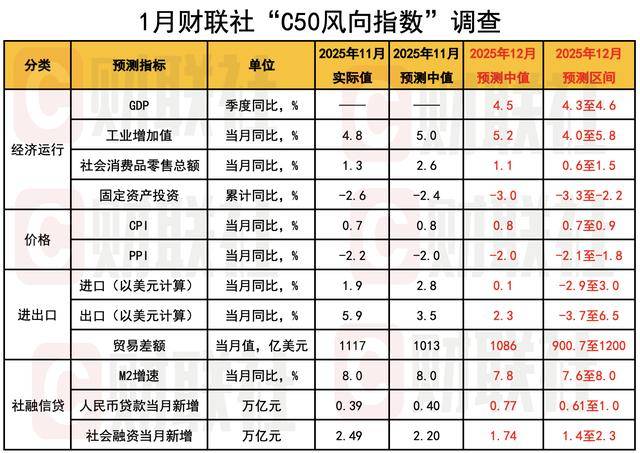
田轩:撬动更多金融资源流向创新前沿
Jing Ji Ri Bao· 2026-01-09 00:03
从银行业实践看,人工智能大模型广泛推动金融服务从"经验驱动"向"数据驱动"转型,如建设银 行"天眼"智能风控系统覆盖全行98%的零售信贷业务,信用卡欺诈损失率同比下降52%,印证了智能风 控对传统金融风险定价模型的优化升级。 从市场规模看,2024年我国智能投顾资产管理规模超190亿元。预计到"十五五"末,个性化资产配 置方案覆盖率将持续增加,反映出金融服务与创新需求的匹配度不断提升。 科技与金融的深度融合,是创新驱动发展的动力所在。作为联结资本与创新的纽带,科技金融体制 构建关系到我国高水平科技自立自强目标的实现。亟须以系统思维培育与创新驱动发展战略相匹配的金 融生态体系,推动"科技—产业—金融"良性循环。 我国科技金融服务体系已初步构建起政策支持、市场运作与监管引导协同发力的多元格局,科技金 融发展生态加速优化。在此进程中,以人工智能为代表的新一轮科技革命,通过技术赋能重构了金融业 态的运行逻辑与价值创造模式,形成了科技金融发展的"技术赋能—效率提升—生态优化"链条。 从资本市场领域看,技术赋能的效果同样显著。深交所与华为联合发布的证券行业法规大模型,提 升了信息披露质量与审核效率,利用技术手段有效破解了 ...
发展科技金融激发创新活力
Jing Ji Ri Bao· 2026-01-08 21:43
Core Viewpoint - The development of technology finance is crucial for promoting the mutual enhancement of technology and finance, as emphasized in China's economic planning and regulatory frameworks [1][3]. Group 1: Importance of Technology Finance - Technology finance is positioned as a key support for achieving high-level technological self-reliance and building a strong technological nation, being recognized as the foremost area in financial development [2]. - The evolution of technology finance in China dates back to 1985, with a focus on integrating financial services with technological innovation through diverse financial tools and systems [2]. - The current phase of the "14th Five-Year Plan" is critical for advancing technology finance, which aids in overcoming key technological challenges and supports the transformation of traditional industries [3]. Group 2: Policy and Structural Developments - Significant policy initiatives have been introduced to enhance financial support for technology innovation, including the establishment of a comprehensive technology finance system that aligns with national technological goals [4]. - By the end of Q3 2025, loans to high-tech enterprises reached 18.84 trillion yuan, with a loan growth rate surpassing the average for all loans, indicating a robust expansion of technology finance [4]. - The establishment of multiple technology finance reform pilot zones aims to reduce financing costs for technology enterprises and optimize the allocation of financial resources [12][13]. Group 3: Role of Patient Capital - Patient capital, characterized by a long-term investment outlook and a higher risk tolerance, is essential for supporting technology innovation, particularly in high-risk, long-cycle projects [7][8]. - The government encourages the development of patient capital through various investment vehicles, which can provide stable funding for technology projects and help bridge the gap between short-term financial returns and long-term innovation goals [9][10]. - The growth of patient capital is seen as a vital driver for directing resources towards new quality productivity and addressing the challenges faced by technology enterprises in securing financing [10]. Group 4: Challenges and Future Directions - Despite the potential of patient capital, challenges such as an imbalanced supply structure and inadequate market ecology hinder its effectiveness in supporting technology innovation [10]. - Future efforts should focus on broadening the sources of patient capital, enhancing market mechanisms, and improving incentive structures to encourage investment in technology innovation [11][16]. - The establishment of a robust policy framework and the integration of market-driven approaches are necessary to enhance the sustainability and coverage of financial support for technology innovation [16].
【笔记20260108— 特朗普:房住不炒】
债券笔记· 2026-01-08 11:20
Core Viewpoint - The market is driven by trends rather than news and logic pushing it forward [1] Group 1: Market Conditions - The financial market is experiencing a balanced and slightly loose liquidity environment, with a significant decline in long-term bond yields [4][6] - The central bank conducted a 99 billion yuan reverse repurchase operation, resulting in a net injection of 99 billion yuan into the market [4] - The interbank funding rates are stable, with DR001 around 1.27% and DR007 around 1.47% [4] Group 2: Interest Rate Expectations - The industry anticipates two interest rate cuts this year, which has slightly boosted market sentiment [6] - The 10-year government bond yield opened at 1.892% and fluctuated, closing at 1.888% after a brief recovery [6][9] Group 3: Stock and Commodity Market Trends - The stock market has recorded 15 consecutive days of gains, although it experienced a slight decline recently [6] - Commodity prices are weakening, indicating a potential shift in market dynamics [6] Group 4: Policy Implications - Recent policy announcements include a ban on institutional investors purchasing standalone residential properties, emphasizing that housing is for living, not for speculation [7] - There is also a new salary cap for executives in military enterprises, reflecting a broader trend of regulatory tightening [7]
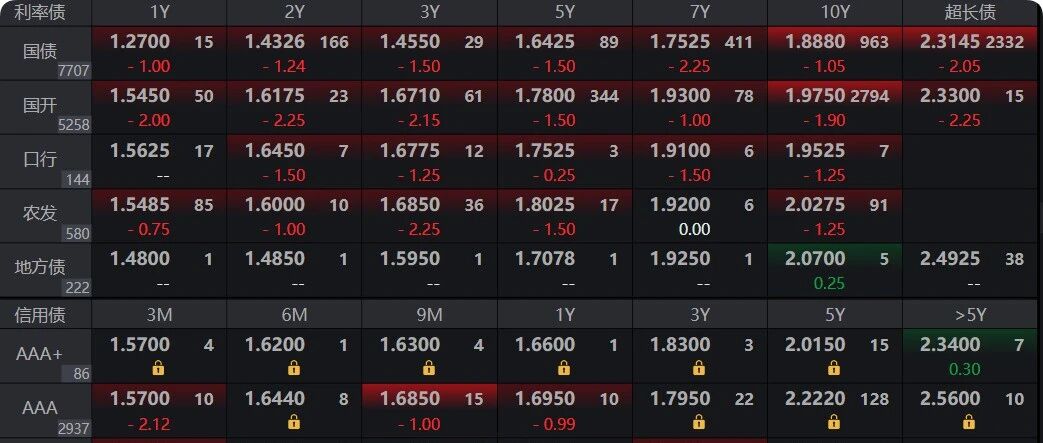
宏观纵览 | 央行2026年政策定调,降准降息可期
Sou Hu Cai Jing· 2026-01-08 08:44
Group 1 - The People's Bank of China (PBOC) has outlined seven key priorities for 2026, focusing on monetary policy implementation, financial services for the real economy, risk prevention, and financial reform and opening-up [3] - The monetary policy for 2026 will be moderately accommodative, aiming to promote high-quality economic development and reasonable price recovery, utilizing various tools such as reserve requirement ratio (RRR) cuts and interest rate reductions [4][5] - The PBOC aims to maintain a stable RMB exchange rate at a reasonable and balanced level while preventing excessive fluctuations, with a supportive external environment expected for the RMB's moderate appreciation in 2026 [6][7] Group 2 - The PBOC's accommodative monetary policy will have two main directions: total policy and structural policy, ensuring liquidity remains ample and financing conditions are relatively loose [4] - Structural policies will focus on targeted support for key areas such as expanding domestic demand, technological innovation, and small and micro enterprises, with an increase in the overall quota of structural monetary policy tools [5] - The PBOC is exploring mechanisms to provide liquidity support to non-bank financial institutions in specific scenarios to mitigate financial risks, reflecting a proactive approach to financial stability [8][9][10]
