
必选消费

Search documents
招银国际焦点股份-20251020
Zhao Yin Guo Ji· 2025-10-20 09:02
Group 1: Stock Recommendations - 吉利汽车 (Geely Auto) has a target price of HKD 32.00, with a current market value of USD 24.8 billion and a PE ratio of 19.01[5] - 零跑汽车 (Leap Motor) is rated as a buy with a target price of HKD 80.00, showing a potential upside of 35%[5] - 极兔速递 (J&T Express) has a target price of HKD 58.00, with a market value of USD 11.7 million and a PE ratio of 11.7[5] Group 2: Performance Overview - The basket of 25 stocks listed in the previous report had an average return of -3.9%, compared to the MSCI China Index return of -3.6%[10] - Out of the 25 stocks, 11 stocks outperformed the benchmark index[10] - The report includes a total of 25 long positions, indicating a diverse investment strategy[10]



投资策略周报:珍惜优质筹码,修复行情将在10月下旬缓慢展开-20251019
HUAXI Securities· 2025-10-19 08:29
Market Review - Since October, global risk events have increased, including the potential U.S. government shutdown, heightened political uncertainty in Japan, and escalating China-U.S. trade tensions, leading to a rise in market risk aversion. Precious metals have strengthened while oil prices have declined, with Hong Kong stocks experiencing a greater drop than A-shares and U.S. stocks due to the strong U.S. dollar and international capital flow impacts. A-shares have shown characteristics of risk-averse trading, evidenced by a decrease in trading volume, with daily turnover falling below 2 trillion yuan, and a style shift where previously strong sectors like the ChiNext and STAR Market have seen significant adjustments while defensive dividend indices have risen [1][2]. Market Outlook - The report emphasizes the importance of cherishing quality assets, predicting a gradual recovery in the market starting in late October. Recent signals from U.S. trade representatives indicate a potential easing of trade tensions, with expectations for some consensus to be reached during upcoming economic discussions and the APEC summit. This contrasts with the previous widespread declines in April, as the current trade situation reflects a shift in capital flows rather than a broad market downturn. Overall, financing and ETF funds continue to see net inflows, suggesting that micro liquidity in the stock market remains relatively abundant. The construction of a "stabilizing mechanism" in the capital market and improvements in investor return systems are highlighted as key features of this market cycle, supporting the notion of a sustained "slow bull" market in A-shares, which are currently viewed as not overly expensive [2][3]. Key Focus Areas 1. The U.S. government has released signals indicating a potential easing of trade tensions, with discussions between Chinese and U.S. trade leaders suggesting a possible return to "TACO" trading dynamics. This could lead to a recovery in capital market risk appetite [2]. 2. Positive domestic and international factors are expected to support the market, with the upcoming 20th Central Committee meeting likely to address various themes such as new productivity, green development, and external openness, potentially catalyzing investment opportunities. Additionally, a likely interest rate cut by the Federal Reserve and a stable U.S. dollar index are anticipated to provide further support [3]. 3. The recent market style shift, characterized by a decline in tech-heavy indices and a rise in defensive dividend stocks, reflects a defensive positioning by investors amid reduced trading volumes. The report attributes the tech sector's adjustment to several factors, including increased trading congestion and profit-taking amid rising risk aversion due to trade tensions [4][5]. Industry Configuration - The report suggests that the current valuation fluctuations in the tech sector do not indicate a permanent style shift. Upcoming events, including the Central Committee meeting and the release of quarterly reports, are expected to boost market sentiment and catalyze thematic trading. The report notes that growth sectors like TMT continue to show relative performance advantages, while cyclical sectors lack fundamental support due to ongoing negative PPI trends. The report anticipates that once market structures stabilize, the focus will likely return to growth and technology investments, with a recommendation to pay attention to "mergers and acquisitions" as a theme [5][6].
鲁政委:美联储降息周期下的港股再审视
Sou Hu Cai Jing· 2025-10-08 05:30
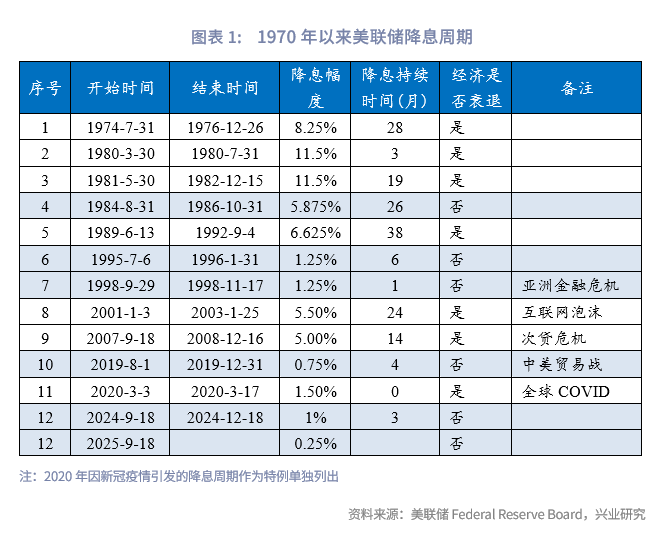
Core Viewpoint - The current macroeconomic backdrop, including stagflation risks in the U.S. and the misalignment of economic cycles between China and the U.S., suggests that the Hong Kong stock market (HK stock market) is unlikely to replicate historical trends during the Federal Reserve's (Fed) interest rate cut cycle, leading to significant structural differentiation instead [1][3]. Summary by Sections 1. Impact of Fed Rate Cuts on HK Stock Market - Historical experience indicates that during Fed rate cut cycles, the HK stock market typically exhibits "preventive rate cut rallies" and "recessionary rate cut declines" [1]. - The performance of the HK stock market during these cycles shows distinct characteristics: preventive rate cuts generally lead to positive market performance, while recessionary cuts result in market pressure [7][11]. 2. Differentiation in Market Performance - The analysis reveals that aside from the Hang Seng Technology Index, other styles (such as large-cap and small-cap stocks, as well as dividend styles) have not shown independent trends during past rate cut cycles, indicating a high correlation with the Hang Seng Index [10]. - In recessionary rate cuts, defensive sectors like utilities and consumer staples tend to perform better due to reduced market risk appetite, while in preventive cuts, high-growth sectors like technology and pharmaceuticals are favored [11]. 3. Current Rate Cut Context - The current rate cut cycle is characterized by greater uncertainty regarding the Fed's path, influenced by political pressures and the ongoing AI revolution reshaping capital expenditure in the tech sector [2][49]. - The performance of the HK stock market in the coming quarters will be closely tied to the recovery of the Chinese economy, with a focus on liquidity-sensitive growth sectors as a core strategy under optimistic scenarios [2][50]. 4. Historical Rate Cut Analysis - The analysis categorizes Fed rate cut cycles since 1970 into "preventive" and "recessionary" based on whether the economy entered a recession during the cut period [4]. - Preventive rate cuts are generally shorter and involve smaller cuts, while recessionary cuts tend to last longer and involve larger reductions [4]. 5. Future Scenarios for HK Stock Market - Three potential scenarios for the HK stock market are outlined: 1. **Baseline Scenario**: Gradual Fed rate cuts with moderate recovery in the Chinese economy, leading to a valuation-driven market with growth sectors outperforming [51]. 2. **Optimistic Scenario**: More aggressive Fed cuts without triggering recession fears, resulting in a favorable liquidity environment for growth stocks [53]. 3. **Pessimistic Scenario**: Fed pauses or slows rate cuts due to persistent inflation, leading to a return to fundamentals driven by the Chinese economy's recovery [54]. 6. Strategic Focus - The strategic focus should be on liquidity-sensitive growth sectors in baseline and optimistic scenarios, while in pessimistic scenarios, the emphasis should shift to defensive assets and closely monitoring Chinese macroeconomic data [55].

东南亚研究 | 美联储降息周期下的港股再审视
Sou Hu Cai Jing· 2025-10-08 02:25
Core Viewpoint - The recent Federal Reserve interest rate cut on September 18, 2024, is set against a complex macroeconomic backdrop, including risks of stagflation in the U.S. and misalignment in the economic cycles of China and the U.S., suggesting that the Hong Kong stock market may not replicate historical trends but instead exhibit significant structural differentiation [1][2]. Group 1: Historical Context and Market Behavior - Historical experience indicates that during Fed rate cut cycles, the Hong Kong stock market typically shows a "preventive rate cut rally" or a "recessionary rate cut decline" pattern [1]. - In terms of market style, the Hang Seng Technology Index has demonstrated a "high win rate and high return" characteristic during preventive rate cut cycles, while other styles have not shown independent trends [1][2]. - Industry-wise, defensive sectors like utilities and consumer staples tend to perform better during recessionary rate cuts, while high-growth sectors such as technology and pharmaceuticals excel during preventive rate cuts [1][2][3]. Group 2: Current Economic Landscape - The current macroeconomic environment is more complex than historical experiences, with the U.S. economy facing stagflation risks and ongoing misalignment with China's economic cycle, making it difficult for the Hong Kong market to follow a straightforward trend [2][3]. - The upcoming October monetary policy meeting is crucial for assessing the future pace and intensity of rate cuts, influenced by various structural variables, including political pressures and the ongoing AI industry revolution [3][4]. Group 3: Future Outlook and Scenarios - The performance of the Hong Kong stock market in the next one to two quarters will depend not only on the Fed's rate cut path but also on the recovery process of the Chinese economy [2][52]. - Three potential scenarios are outlined: 1. **Baseline Scenario**: Gradual Fed rate cuts with a moderate recovery in the Chinese economy, favoring growth-sensitive sectors [52][53]. 2. **Optimistic Scenario**: More aggressive Fed cuts without triggering recession fears, leading to a favorable liquidity environment for growth stocks [55]. 3. **Pessimistic Scenario**: Fed pauses or slows rate cuts due to persistent inflation, putting pressure on the Hong Kong market, which will depend heavily on the recovery of the Chinese economy [56]. Group 4: Structural Opportunities - The analysis indicates that different types of rate cut cycles lead to distinct long-term performances in the Hong Kong market, with preventive rate cuts generally resulting in positive returns for the Hang Seng Index [9][10]. - The Hang Seng Technology Index has shown superior performance during preventive rate cuts, benefiting from lower discount rates and improved financing conditions [12][13]. - Defensive sectors tend to outperform during recessionary rate cuts, while growth sectors thrive in preventive cut environments, highlighting the importance of sector selection in investment strategies [13][14].
南下资金年内净流入破万亿!AI仍是港股主线
证券时报· 2025-09-21 13:05
Core Viewpoint - The Hong Kong stock market is experiencing significant net inflows, with the Hong Kong Stock Connect seeing over HKD 1 trillion in net inflows year-to-date, surpassing the total for the entire year of 2024, indicating a potential record high for the year [1][4]. Group 1: Market Performance - The average daily trading volume of the Hong Kong Stock Connect has reached HKD 60.8 billion, accounting for 24.5% of the overall market [4]. - In August 2025, the Hong Kong stock market recorded a net inflow of HKD 112.2 billion, marking the ninth highest monthly inflow on record [6]. - The Southbound trading of ETFs has seen an average daily trading volume of HKD 3.8 billion in the first half of 2025, setting a new semi-annual record [6]. Group 2: Sector Analysis - The financial sector remains the largest holding in the Hang Seng Stock Connect, accounting for 32%, followed by information technology at 20% and consumer discretionary at 16% [6]. - The healthcare sector has seen the largest increase in weight from 3% to 7% year-to-date, while consumer discretionary and information technology sectors have increased by 3 and 2 percentage points, respectively [6]. Group 3: Earnings and Growth Outlook - The Hong Kong stock market has stabilized, with positive earnings growth in the first half of 2025, showing revenue and profit growth rates of 1.9% and 4.6%, respectively [8]. - The sectors of technology, healthcare, and materials are expected to maintain high growth, while some sectors like energy and utilities are still under pressure [8]. - The second half of 2025 is anticipated to see a turning point in earnings growth, with expectations for a rebound in previously underperforming sectors [8]. Group 4: Investment Trends - AI remains a key theme in the Hong Kong stock market, with internet stocks expected to benefit significantly [9]. - The demand for AI cloud services is driving revenue growth, with private cloud service providers outpacing state-owned telecom companies for the first time in four years [10].

每日投资策略-20250912
Zhao Yin Guo Ji· 2025-09-12 05:43
Global Market Overview - The Hang Seng Index closed at 26,086, down 0.43% for the day but up 30.04% year-to-date [1] - The Shanghai Composite Index rose by 1.65% to 3,875, with a year-to-date increase of 15.62% [1] - The US markets saw the Dow Jones increase by 1.36% to 46,108, with a year-to-date gain of 8.38% [1] Sector Performance - In the Hong Kong market, the healthcare, energy, and consumer discretionary sectors led the decline, while materials, utilities, and industrials saw gains [3] - The semiconductor and rare metals sectors performed notably well, with significant inflows from southbound funds amounting to HKD 189.89 billion [3] Economic Indicators - The European Central Bank (ECB) maintained interest rates and revised down its inflation forecast for 2027 to 1.9% [3] - The US Consumer Price Index (CPI) showed a month-on-month increase of 0.4% and a year-on-year increase of 2.9%, aligning with market expectations [3] Investment Recommendations - Geely Automobile is rated as a "Buy" with a target price of HKD 25.00, representing a potential upside of 33% [4] - Luckin Coffee is also rated as a "Buy" with a target price of USD 44.95, indicating a 19% upside [4] - Semiconductor companies like Horizon Robotics and Beike Micro are rated as "Buy" with target prices of HKD 12.30 and HKD 93.00, respectively, showing potential upsides of 19% and 76% [4]
招银国际每日投资策略-20250904
Zhao Yin Guo Ji· 2025-09-04 03:14
Market Overview - Global markets showed mixed performance, with the Hang Seng Index closing at 25,343, down 0.60% for the day but up 26.34% year-to-date [1] - The Shanghai Composite Index fell by 1.16% to 3,814, while the Shenzhen Composite Index decreased by 1.41% to 2,380 [1] - In the US, the Dow Jones Industrial Average decreased slightly by 0.05% to 45,271, while the S&P 500 rose by 0.51% to 6,448 [1] Sector Performance - The Hang Seng Financial Index fell by 0.72% to 44,195, while the Hang Seng Real Estate Index dropped by 1.23% to 18,116 [2] - The healthcare sector showed resilience, with medical devices and innovative drugs performing well [3] Company Analysis: VILIZHIBO (9887 HK) - VILIZHIBO focuses on developing next-generation immuno-oncology therapies, with a broad product pipeline including immune checkpoint inhibitors and T-cell engagers [4] - The company has established proprietary platforms for drug innovation, including the LeadsBody platform for CD3 T-cell engagers and the X-body platform for 4-1BB agonists [4] - LBL-024, targeting PD-L1/4-1BB, is in the registration clinical stage and shows promising clinical data, with an overall response rate (ORR) of 33.3% in specific cancer patients [5] Company Analysis: China Life (2628 HK) - China Life reported a net profit increase of 7% to 40.9 billion RMB for the first half of 2025, despite a 31% decline in Q2 due to rising insurance service costs [7] - The new business value grew by 20.3% to 28.5 billion RMB, driven by significant growth in bancassurance channels [8] - The company’s core equity assets increased, benefiting from realized capital gains and dividend income [8] Company Analysis: JS Global (1691 HK) - JS Global's SharkNinja brand continues to see high growth in the Asia-Pacific region, with market share in Australia and New Zealand increasing significantly [10] - The company is shifting focus from scale to profitability, with expectations of improved gross and net margins due to product upgrades and SKU optimization [11] - Despite a slight decline in sales, the company anticipates a recovery in overseas sales and improved profitability in the coming years [12]
A股流动性与风格跟踪月报:短期震荡不改成长风格主线,大盘股更优-20250903
CMS· 2025-09-03 13:03
Market Style Outlook - The current liquidity-driven environment remains the main characteristic of the short-term stock market, with changes in market risk appetite dominating market rhythm. As September approaches, the anticipated interest rate cut by the Federal Reserve is expected to influence market expectations. The current heat of financing funds has reached a relatively high level, and future inflows may slow down slightly. However, with the potential for the Fed to restart rate cuts, the appreciation of the RMB, and the stabilization of domestic PPI, foreign capital may gradually shift towards inflow. Historically, during the pullback phase of a bull market, previously strong styles may experience larger corrections, but the market quickly returns to the previous strong main style after a brief pullback. Therefore, the market style in September is likely to favor large-cap stocks, with growth styles expected to continue to dominate [1][4][12]. Liquidity and Fund Supply-Demand - In September, incremental funds are expected to continue net inflow, with positive feedback from incremental funds likely to persist. The central bank continues to use various liquidity management tools to meet liquidity needs, maintaining a strong willingness to protect liquidity. The overall funding rates are expected to remain low. External liquidity conditions are also favorable, with market expectations for a high probability of a Fed rate cut in September, which may lead to a weaker dollar index. In August, the net inflow of funds in the stock market expanded significantly, with financing funds becoming the main source of incremental capital. The supply side shows a rebound in the scale of newly issued equity funds, and the market's risk appetite continues to improve [2][3][20]. Market Sentiment and Fund Preference - In August, market risk appetite further rebounded, with the overall A-share risk premium falling below the historical average. Major indices broke through previous resistance levels, showing an accelerated upward trend. The technology style performed well, with the ChiNext 50 and the Growth Enterprise Market leading the gains. The performance of sectors related to communication electronics and AI computing was particularly strong, with notable performances in computer, power equipment, and machinery sectors [3][31][41]. Major Asset Performance Review - The A-share market led global markets in August, with major indices breaking previous loss resistance levels and showing an accelerated upward trend. The market's upward slope has slowed down towards the end of August, with a shift in style from small-cap to large-cap stocks. The ChiNext 50 and small-cap growth indices led the gains, while the value and dividend styles performed relatively weakly [31][36][37].
招银国际焦点股份-20250818
Zhao Yin Guo Ji· 2025-08-18 11:21
Group 1: Stock Recommendations - Geely Automobile is rated as a "Buy" with a target price of HKD 25.00, representing a potential upside of 25%[5] - Li Auto is rated as a "Buy" with a target price of HKD 72.00, indicating a potential upside of 7%[5] - Sany International is rated as a "Buy" with a target price of HKD 8.70, suggesting a potential upside of 22%[5] - Luckin Coffee is rated as a "Buy" with a target price of USD 44.95, indicating a potential upside of 17%[5] - Tencent is rated as a "Buy" with a target price of HKD 705.00, representing a potential upside of 19%[5] Group 2: Performance Overview - The basket of 26 long positions had an average return of 4.7%, compared to the MSCI China Index return of 5.2%[10] - Out of the 26 stocks, 11 stocks outperformed the benchmark[10] - The report includes a total of 26 stocks with varying sectors such as automotive, technology, and healthcare[5]
宏观经济与股票市场
Zhao Yin Guo Ji· 2025-08-06 02:42
Economic Overview - The U.S. economy is projected to experience a nominal GDP growth rate of approximately 5% in 2024, followed by a slight decline to 4.9% in 2025 and 4.6% in 2026 due to tariff impacts and diminishing policy effects[64] - China's economic recovery is characterized by fluctuations, with GDP growth expected to rise from 4.6% in Q3 2024 to 5.4% in Q1 2025, before declining again[64] Stock Market Performance - In the economic contraction phase, stocks generally decline significantly, with essential consumption, energy, utilities, and healthcare sectors outperforming, while real estate and technology sectors lag behind[18] - During the economic recovery phase, stocks in discretionary consumption, real estate, technology, and materials sectors show the highest gains, while utilities and essential consumption sectors underperform[18] Sector Analysis - In the economic expansion phase, technology, finance, and real estate sectors tend to outperform, while utilities, essential consumption, and healthcare sectors underperform[18] - Average annual returns for the consumer discretionary sector during the recovery phase are 40.8%, with a market outperformance rate of 64.5%[15] Economic Indicators - Key economic indicators include consumer confidence, manufacturing orders, and employment rates, which are closely linked to stock market performance[28][29] - The U.S. consumer confidence index has a direct correlation with the S&P 500 index, indicating that increased consumer confidence typically leads to stock market gains[27] Monetary Policy and Interest Rates - The U.S. Federal Reserve's monetary policy is influenced by the Taylor rule, which incorporates inflation rates and unemployment levels to determine the federal funds rate[43] - High fiscal deficit rates combined with low household savings rates contribute to high inflation and interest rates in the U.S. economy[46] Currency and International Relations - The U.S. dollar index is expected to fluctuate, potentially dropping below 95, with a slight rebound anticipated towards the end of the year[55] - The relationship between the U.S.-China nominal GDP growth rates and interest rate differentials will influence the USD/CNY exchange rate, with projections suggesting a slight appreciation of the yuan[114] Investment Strategy - The S&P 500 is forecasted to rise by 3% in the second half of the year and 8.5% for the entire year, with a favorable outlook on sectors such as information technology, communication services, finance, healthcare, and essential consumption[50]