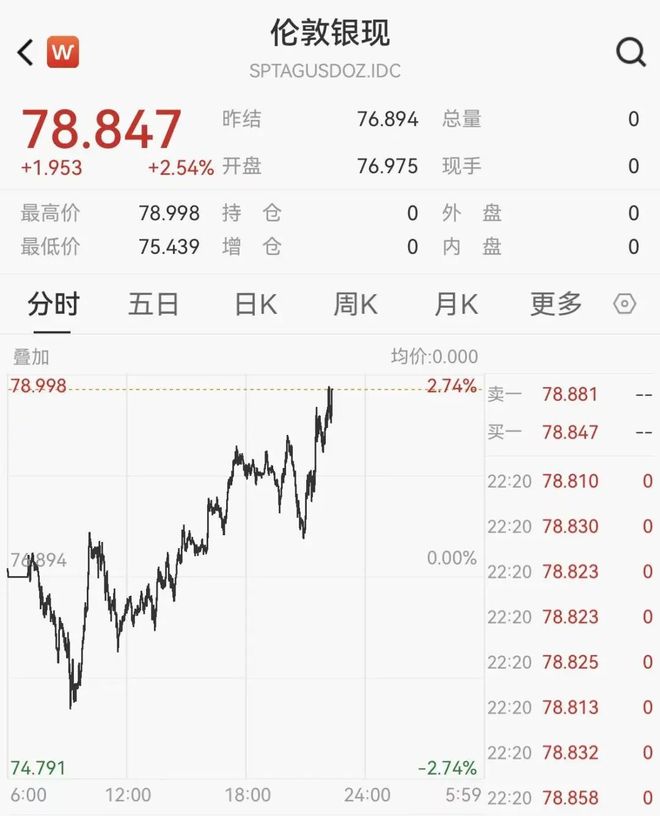
期货业

Search documents
费城制造业活动意外扩张沪银回调
Jin Tou Wang· 2026-01-16 03:43
Group 1 - The silver futures market is currently experiencing a slight decline, trading at 22,615 CNY/kg, down 0.69% from the opening price of 22,980 CNY/kg, with a trading range between 22,007 CNY/kg and 23,123 CNY/kg [1] - The Philadelphia Fed's manufacturing index rose to 12.6 in January, marking the highest level since September of the previous year, indicating unexpected expansion in manufacturing activity [2] - Over 23% of surveyed firms reported an increase in activity, while approximately 11% reported a decrease, suggesting a mixed outlook for the manufacturing sector [2] Group 2 - New orders and shipments have significantly increased, contributing to the overall growth in manufacturing activity, although the employment index showed a decline [2] - The inventory index has dropped to its lowest level since July 2024, indicating potential supply chain constraints [2] - Despite a slight slowdown in price increases, the overall price index remains well above long-term averages, reflecting ongoing inflationary pressures in the manufacturing sector [2]
外贸加速回暖,人民币运行区间上移
Hua Tai Qi Huo· 2026-01-16 03:14
1. Report Industry Investment Rating - Not mentioned in the provided content 2. Core View of the Report - The RMB is expected to be range - bound and may show stronger characteristics. The current economic situation shows that the economic expectation gap is favorable for the RMB, the Sino - US interest rate difference is neutral, and trade policy uncertainty is neutral. If US inflation or employment data weakens further, the RMB may test the 6.90 - 6.95 range. Attention should be paid to the rhythm of export settlement and changes in global risk appetite [47]. 3. Summary by Relevant Catalogs 3.1 Quantity - price and Policy Signals 3.1.1 Quantity - price Observation - The implied volatility curve of the 3 - month USD/CNY option shows an appreciation trend of the RMB, with the volatility on the Put side higher than that on the Call side, and the Put - side volatility slightly decreasing [4]. 3.1.2 Policy Observation - The value of the counter - cyclical factor has shifted downwards, and the negative adjustment signal has strengthened. The three - month CNH HIBOR - SHIBOR spread fluctuates [9]. 3.2 Fundamentals and Views 3.2.1 Macro 3.2.1.1 Interest Rate and Liquidity - There is a divergence in the pricing of interest rate cuts between the US and Europe. The TGA account balance on January 7 was 783.5 billion (- 89.2 billion), and the reserve balance of deposit institutions in November was 2.87 trillion (- 65.6 billion) [16]. 3.2.1.2 US Economic Data - Employment authority has declined, non - farm payrolls exceeded expectations, and inflation in November was lower than expected, supporting subsequent interest rate cuts. Economic expectations have been revised upwards, with a slight decline in PMI and a slight increase in real estate sales in November [18]. 3.2.1.3 Fed Chair Candidates - Trump has no plan to replace Powell for now and is open to the choice of the next Fed chair. Different candidates have different views on interest rate policies, such as Christopher Waller advocating for a cautious interest rate cut, Kevin Warsh calling for a large - scale balance sheet reduction to create room for rate cuts [19][20]. 3.2.1.4 Inflation - The CPI performance in the US in December was moderate, with a slight increase in the contribution of food and core commodities, a decline in the contribution of crude oil, and a decline in the contribution of core services. The pricing of interest rate cuts changed little after the data release [21]. 3.2.1.5 Non - farm Payrolls - In December, non - farm payrolls showed a K - shaped divergence. Employment in trade, transportation, construction, and manufacturing decreased, while employment in services, education, and healthcare continued to increase, and government employment also increased. The unemployment rate was affected by different factors, and the employment environment was deteriorating [24]. 3.2.1.6 Chinese Economy - There is a structural divergence in the Chinese economy. In November, imports and exports showed resilience, but fixed - asset investment faced pressure and consumption slowed down. Against the background of increasing pressure, the government's policy window has loosened, and the gap between fundamentals and sentiment has widened [25]. 3.2.1.7 December Exports - The characteristics of re - exports continued. Exports to the US and Canada decreased, while exports to ASEAN, India, and South Africa increased. Items such as automobiles, mechanical and electrical products, integrated circuits, and high - tech products showed obvious resilience, as did exports of raw materials such as aluminum and steel [27]. 3.2.2 2026 Monetary Policy - The policy focuses on reducing the re - lending rate by 25BP, setting up a 1 - trillion RMB re - loan for private enterprises, adding 400 billion RMB in technological transformation quotas, and reducing inventory of commercial real estate. The policy features "moderate in aggregate and precise in structure", and the RMB exchange rate maintains strong resilience supported by high - level foreign exchange reserves and stable settlement - sales surpluses [30]. 3.3 Core Content Interpretation 3.3.1 Settlement and Sale of Foreign Exchange - In December 2025, the bank's foreign exchange settlement was significantly higher than its sale. The annual pattern was a net settlement. The settlement rate of received foreign exchange rose to 61.01%, and the purchase rate of paid - out foreign exchange fell to 55.41% [35][36]. - In December 2025, the bank's agent for overseas receipts was higher than payments, showing a surplus. The annual situation was a net inflow. In the current account, the contribution of goods trade was significant, increasing from about 726.66 billion in November to about 1259.22 billion in December, strongly driving the surplus in receipts and payments [43]. 3.3.2 Overall View - The RMB is expected to be range - bound against the US dollar. If US inflation or employment data weakens further, the RMB may show stronger characteristics, and there is a possibility of testing the 6.90 - 6.95 range in the short - term. Attention should be paid to the rhythm of export settlement and changes in global risk appetite [47]. 3.3.3 2026 Scenario Deduction - Throughout 2026, there will be important events such as Fed chair candidate announcements, FOMC meetings, government work reports, and national two - sessions. These events will affect policy expectations, inventory cycles, and economic re - balancing, as well as lead to tariff games and changes in the Fed's stance [50].
东海期货宏观数据观察:12月社融数据超预期,企业融资改善
Xin Lang Cai Jing· 2026-01-16 03:13
邮箱:mingdy@qh168.com.cn 主要观点: 从业资格证号:F03092124 投资咨询证号:Z0018827 电话:021-68758786 东海期货分析师:明道雨 数据及事件要点: 1、2026年1月15日,央行举行新闻发布会。人民银行推出八项结构性货币政策措施,并强调在实施过程 中,将与财政贴息、担保和风险成本分担等财政政策协同配合。正通过下调结构性货币政策工具利率、 扩大再贷款额度、优化政策工具结构等多项举措,进一步加大对实体经济的精准支持力度,为经济稳定 增长和结构转型营造宽松适宜的货币金融环境。 2、12月新增人民币贷款9100亿元,预期8000亿元,前值3900亿元。12月社会融资规模增量为22075亿 元,预期19000亿元,前值为24926亿元,同比少增6462亿元;12月末,社会融资规模存量为442.12万亿 元,同比增长8.3%,较上月下降0.2%。12月M2同比增长8.5%,预期8.0%,前值8.0%,M2较上月上升 0.5%。 主要观点: 12月新增人民币贷款9100亿元,预期8000亿元,前值3900亿元;新增社会融资规模22075亿元,预期 19000亿元,前值为24 ...


国泰君安期货所长早读-20260116
Guo Tai Jun An Qi Huo· 2026-01-16 01:38
Report Industry Investment Ratings Not provided in the document. Core Views of the Report - The central bank has lowered the interest rates of various structural monetary policy tools by 0.25 percentage points, and there is still room for reserve requirement ratio cuts and interest rate cuts this year. The bond market fluctuations are concentrated in the ultra - long - term, and the A - share market is expected to maintain a stable growth trend in 2026. The market sentiment of treasury bond futures remains oscillating and bearish since mid - last year, with short - term resilience and a possible slight recovery in the long - term [7][9]. - Affected by the expected US biodiesel policy, rapeseed oil is expected to shift from a recent weak trend to a wide - range oscillating trend. The valuation of PX has returned with the cost - end adjustment, and the supply is expected to gradually loosen. PTA's polyester production cut plan has increased, and the actual implementation needs attention. MEG's supply pressure has eased, and the short - term is expected to rebound strongly [10][81]. Summary by Related Catalogs 1. Treasury Bonds - Central bank policies: Lowered the interest rates of various structural monetary policy tools by 0.25 percentage points, with the one - year re - loan rate dropping to 1.25%. There is still room for reserve requirement ratio cuts and interest rate cuts this year [7]. - Market analysis: The bond market fluctuations are concentrated in the ultra - long - term. Treasury bond futures maintain an oscillating and bearish view since mid - last year. Short - term has resilience, and the long - term may have a slight recovery. It is recommended to conduct 30 - 10 spread compression trading and long - position substitution in the short - term, and continue to recommend hedging at high levels, long - spread trading, and positive spread trading in the medium - term [9]. 2. Rapeseed Oil - Policy impact: The expected US biodiesel policy is expected to boost global oil and fat consumption and support the international rapeseed oil price. The domestic rapeseed oil market is in a situation of strong current reality but weak expectations, and it is expected to shift from a weak trend to a wide - range oscillating trend [10]. 3. PX, PTA, MEG - PX: The valuation has returned with the cost - end adjustment, and the supply is expected to gradually loosen. Overseas processing fee hedging has entered the market, and domestic PX factories' hedging positions have increased. The downstream PTA and polyester's future production is expected to decline [81]. - PTA: The processing fee is at a high level. The supply side's production increase space is limited, and the polyester production cut plan has further increased. The actual implementation needs to be observed. The unilateral price has limited downward space [82]. - MEG: The short - term is expected to rebound strongly, and short positions should be closed. Attention should be paid to the spring maintenance implementation of coal - chemical ethylene glycol plants, and long the 5 - 9 spread at low levels [82]. 4. Other Commodities - Gold: Safe - haven sentiment has rebounded [16]. - Copper: The strengthening of the US dollar restricts price increases [16]. - Zinc: It is easy to rise but difficult to fall [16]. - Lead: The decrease in LME inventory supports the price [16]. - Tin: It is consolidating at a high level [16]. - Aluminum: Slightly under pressure [16]. - Alumina: Oscillating downward [16]. - Platinum: Oscillating upward [16]. - Palladium: Following the upward oscillation [16]. - Nickel: There is a game between industrial and secondary funds, and it operates in a wide - range oscillation [16]. - Stainless steel: The price center of gravity is lifted by ferronickel, and the market is speculating on Indonesian policies [16]. - Lithium carbonate: With inventory reduction and increased purchasing willingness, there may be support at the bottom [16]. - Industrial silicon: Downstream production cuts, and it is advisable to short at high levels [16]. - Polysilicon: In an oscillating state [16]. - Iron ore: The valuation is high, and it is necessary to be cautious about chasing up [16]. - Rebar: Oscillating repeatedly [16]. - Hot - rolled coil: Oscillating repeatedly [16]. - Ferrosilicon: The raw material cost is loosening, and it oscillates in a wide range [16]. - Silicomanganese: The demand side is slightly tightening, and it oscillates in a wide range [16]. - Coke: Oscillating at a high level [16]. - Coking coal: Oscillating at a high level [16]. - Steam coal: The supply - demand contradiction is not prominent, and the price is adjusted narrowly in the short term [16]. - Log: Oscillating repeatedly [16]. - Rubber: Oscillating weakly [16]. - Synthetic rubber: Oscillating at a high level [16]. - LLDPE: The production of standard products remains at a low level, and spot transactions have weakened [16]. - PP: The monomer prices continue to diverge, and the cost support is relatively strong [16]. - Caustic soda: Oscillating weakly [16]. - Pulp: Oscillating weakly [16]. - Glass: The price of the original sheet is stable [16]. - Methanol: Oscillating and falling following the commodity index [16]. - Urea: Oscillating in the short term and the central price is expected to rise in the medium term [16]. - Styrene: Oscillating in the short term [16]. - Soda ash: The spot market has little change [16]. - LPG: The short - term supply is tight, and geopolitical disturbances are strong [128]. - Propylene: The spot supply and demand are tightening, and the trend is strong [129]. - PVC: Oscillating weakly [16]. - Fuel oil: The night - session decline has paused the upward trend [16]. - Low - sulfur fuel oil: Turning to decline, and the spot high - low sulfur spread in the overseas market continues to shrink [16]. - Container Freight Index (European Line): Oscillating weakly; pay attention to the resumption of shipping expectations for the far - month contracts [16]. - Short - fiber: In a short - term oscillating market [16]. - Bottle chips: In a short - term oscillating market [16]. - Offset printing paper: Consider closing short positions opportunistically [16]. - Pure benzene: Oscillating mainly in the short term [16]. - Palm oil: The sentiment in the oil and fat sector has warmed up as the US biodiesel policy is approaching implementation [16]. - Soybean oil: The rebound height is limited due to the lack of soybean - related themes [16]. - Soybean meal: Wait and see, pending the progress of China - Canada trade consultations [16]. - Soybean: Rebounding and oscillating [16]. - Corn: Pay attention to the spot price [16]. - Sugar: Mainly operating weakly [16]. - Cotton: Continuing the adjustment trend [16]. - Eggs: The spot market is profitable, and the sentiment for far - month contracts has weakened [16]. - Hogs: The demand expectation has been priced in advance [16]. - Peanuts: Oscillating [16].
“组合拳”支持经济高质量发展:申万期货早间评论-20260116
申银万国期货研究· 2026-01-16 00:36
Core Viewpoint - The central theme of the articles revolves around the Chinese central bank's "combination punch" to support high-quality economic development through various monetary policy measures, including interest rate cuts and increased lending to small and medium-sized enterprises [1][8]. Monetary Policy Measures - The central bank has lowered the re-lending and rediscount rates by 0.25 percentage points [1][8]. - The re-lending quota for agricultural and small business support has been increased by 500 billion yuan, with a total quota of 1 trillion yuan specifically for private enterprises [1][8]. - The re-lending quota for technological innovation and transformation has been increased by 400 billion yuan, expanding the support scope [1][8]. - The minimum down payment ratio for commercial property loans has been reduced to 30% [1][8]. - The central bank indicated that there is still room for further rate cuts and reserve requirement ratio reductions this year [1][8]. International Trade and Tariffs - The U.S. plans to impose a 25% import tariff on certain semiconductor products starting January 15, which includes Nvidia's H200 chip and AMD's MI325X [1][7]. Commodity Market Trends - In the commodity market, energy products saw significant declines, with fuel oil dropping by 2.82% and various chemical products also experiencing downturns [1]. - Agricultural products mostly rose, with corn starch increasing by 0.55% [1]. Oil Market Insights - The oil market is influenced by geopolitical factors, with expectations of increased exports from Venezuela due to a stable situation [2][15]. - OPEC forecasts that global demand for oil from its member countries will remain stable, with daily demand projected to increase to 43 million barrels by 2027 [2][15]. Palm Oil Market Analysis - Malaysia's palm oil production in December was reported at 1,829,761 tons, a decrease of 5.46% month-on-month, while exports increased by 8.52% [3][27]. - Concerns about palm oil demand have arisen due to Indonesia's decision to maintain its biodiesel blending ratio at B40 instead of increasing it to 50% [3][27]. Precious Metals Outlook - Recent economic data indicates easing inflation pressures in the U.S., which supports expectations for interest rate cuts and a favorable environment for precious metals [4][20]. - Gold's long-term upward trend is expected to continue, supported by factors such as central bank purchases and weakening dollar confidence [4][20]. Financial Market Developments - The stock market is experiencing a shift from valuation-driven growth to profit-driven growth, with expectations for continued upward movement supported by policy effects and economic recovery [12]. - The financing balance in the stock market increased by 15.237 billion yuan, indicating a positive sentiment among investors [12].

冲击三位数!白银或迎历史性涨幅
Jin Tou Wang· 2026-01-14 08:07
Core Viewpoint - Geopolitical risks have led to significant increases in gold and silver prices, with gold reaching a record high of $4639.39 per ounce and silver surpassing $90 per ounce for the first time, indicating strong market demand and investment interest [1][2]. Group 1: Price Movements - Gold prices have increased by over 7% since 2026, while silver has surged by more than 25% during the same period [1]. - Domestic gold jewelry prices have generally risen, with brands like Chow Tai Fook and Chow Sang Sang increasing prices by 10 CNY per gram to 1436 CNY per gram [2]. - Analysts predict that gold will average $4538 per ounce in 2026, with potential to challenge the $5000 mark [2]. Group 2: Market Predictions - Analysts expect silver's upward momentum to continue into 2026, with predictions of prices reaching unprecedented levels due to macroeconomic factors [1]. - The gold-silver ratio of approximately 59 suggests that silver has more room for price increases, with potential prices of $135 per ounce if the ratio returns to historical lows [2]. - Citigroup analysts forecast that gold prices will exceed $5000 per ounce in Q1, while silver could reach $100 per ounce [3]. Group 3: Supply and Demand Dynamics - Supply constraints in the silver market are exacerbating price volatility, with strong industrial demand providing additional support [3]. - The recent changes in margin requirements by the CME Group may impact trading costs and speculative interest in platinum and palladium, potentially leading to a divergence in their performance compared to gold and silver [4]. - Geopolitical tensions and concerns over U.S. fiscal discipline are expected to continue driving investment into gold, while silver remains supported by strong industrial demand [3][4].
宏观宽松预期持续提振资金情绪驱动贵金属走强
Guang Fa Qi Huo· 2026-01-14 07:48
1. Report Industry Investment Rating - Not provided in the given content 2. Core View of the Report - The continuous expectation of macro - easing boosts capital sentiment, driving the strength of precious metals. In the long - term, precious metals have allocation value due to dual benefits of macro - financial and supply - demand attributes, leading to a rising price center. In the short - term, silver and platinum - palladium metals face tariff risks and high volatility, giving their prices stronger elasticity. It is recommended to buy on dips with a light position, referring to technical indicators like the 20 - day moving average [1][13]. 3. Summary by Related Catalogs Market Performance - This week, due to uncertainties in the US domestic and foreign situations, capital sentiment is high, and precious metal prices break through again after a short - term adjustment last week. Silver leads the increase, with the international silver price breaking through the historical high of $90 per ounce, and the main silver futures contract AG2604 rising by over 8% to nearly 22,900 yuan per kilogram. The main platinum futures contract PT2606 rises by over 6% and then narrows [1]. Driving Factor 1: Weak US Employment Market and Moderate Inflation Boost Fed's Easing Expectation - In December, the US non - farm employment increased by 50,000 people, lower than the expected 65,000 and the previous value of 64,000. From October to November, the total was revised down by 76,000. In 2025, the annual employment increase was only 580,000, the weakest since the pandemic. The unemployment rate dropped to 4.4%, but it was mainly due to the decline in the labor force participation rate in the household sample. The number of registered unemployed people reached 7.5 million, remaining at a high level since mid - 2021 [3]. - In December, US CPI inflation was moderate, with a year - on - year increase of 2.7% and a month - on - month increase of 0.3%, both the same as the previous values. Core CPI increased by 2.6% year - on - year and 0.2% month - on - month, slightly lower than the market expectation of 2.7% [3][4]. - The weak labor market and inflation situation increase the urgency of further policy easing. The US president pressures the Fed, and the Republican Party is looking for a new Fed chairman. Since last September, the Fed has cut interest rates three times, with a cumulative cut of 75 basis points, and launched RMP to buy short - term treasury bonds. Although the market expects the Fed to remain on hold in January, there is a possibility of a more dovish attitude. Under the expectation of policy and loose liquidity, institutional funds have high sentiment for early - year allocation, and precious metals will gain a higher premium [4]. Driving Factor 2: Geopolitical Conflicts and Resource Competition Intensify Supply Tension, and COMEX Physical Delivery Demand is Strong - US intervention in the geopolitical situations in the Middle East, South America, and Greenland is to control and plunder strategic resources. The growth of AI and data centers increases the demand for electricity, and China's tightened silver export policy since January 1, 2026, drive the US to increase resource control in other regions [7]. - Since January, the total number of delivery notices issued for non - main COMEX silver futures contracts has reached 7,212 lots, equivalent to 36 million ounces. The delivery volume in less than half a month is three times that of January last year. Some main - contract positions are "reverse - rolled" to the near - term, indicating strong short - term physical demand. Although the London spot market is relatively loose, the global silver ETF holdings are rising, and the inventory structural tension may not be truly alleviated [8]. Outlook - Precious metals have long - term allocation value, but in the short - term, silver and platinum - palladium metals face tariff risks and high volatility. Investors should set stop - loss and take - profit points according to news and use a strategy of buying on dips with a light position, referring to the 20 - day moving average [13].
国际金融市场早知道:1月14日
Zhong Guo Jin Rong Xin Xi Wang· 2026-01-14 00:56
Global Economic Outlook - The World Bank has raised its global economic growth forecast for 2026 to 2.6%, an increase of 0.2 percentage points. The U.S. is expected to grow by 2.2%, while the Eurozone and Japan are projected to slow to 0.9% and 0.8%, respectively [1][8] U.S. Economic Policy and Market Reactions - Former President Trump has called for the Federal Reserve to lower interest rates as the economy improves, denying any plans for another government shutdown and indicating upcoming policies aimed at reducing the cost of living [7][8] - Trump has accused Fed Chair Powell of overspending by billions, labeling him as "incompetent or corrupt," and has indicated plans to nominate a new Fed chair soon. This has drawn support for Powell from former Treasury Secretaries and central bank leaders, who criticized political interference in central bank independence [8] U.S. Fiscal Situation - The U.S. Treasury reported a record budget deficit of $145 billion for December 2025, the highest for that month historically. The deficit for the fiscal year 2026 so far stands at $602 billion, down from $711 billion in the same period last year [8] Labor Market and Inflation - The New York Fed President Williams stated that the current U.S. economic conditions are "quite favorable," with no signs of rapid deterioration in the labor market, and expects stabilization and gradual improvement this year. He noted that monetary policy is close to neutral, with no strong pressure for rate cuts or hikes in the short term [2][8] - The U.S. Consumer Price Index (CPI) for December 2025 rose by 2.7% year-on-year, with core CPI increasing by 2.6%, both unchanged from previous values. Due to prior government shutdowns, the data's reference value is limited, and the market anticipates a 95% probability that the Fed will maintain interest rates in January [8] Market Dynamics - The Dow Jones Industrial Average fell by 0.8% to 49,191.99 points, the S&P 500 decreased by 0.19% to 6,963.74 points, and the Nasdaq Composite dropped by 0.1% to 23,709.87 points [3][9] - COMEX gold futures declined by 0.44% to $4,594.40 per ounce, while COMEX silver futures rose by 2.08% to $86.86 per ounce [4][10] - U.S. oil futures increased by 2.69% to $61.1 per barrel, and Brent crude rose by 2.43% to $65.42 per barrel [5][11]
今日金价大跌1月10日
Sou Hu Cai Jing· 2026-01-10 17:50
Core Viewpoint - The gold market is experiencing fluctuations in prices, with various factors influencing both gold and silver prices, including industrial demand and investment sentiment. Group 1: Gold and Silver Prices - As of January 10, the international spot gold price slightly decreased by 0.03% to $4,475.8 per ounce, while the basic gold price in China remained stable at 993 yuan per gram [1] - The price of gold bars varies significantly among banks, with Agricultural Bank's "Chuan Shi Zhi Bao" rising to 1,017.05 yuan per gram, while the Shanghai Gold Exchange lists gold bars at 989 yuan per gram [1] - The price of gold jewelry from leading brands ranges from 1,158 to 1,398 yuan per gram, with different brands reflecting varying levels of premium and market positioning [1] Group 2: Trading Dynamics - The Shanghai Gold Exchange reported a 0.40% increase in Au9999 to 1,007 yuan per gram, while the 100g gold price fell by 0.47% to 1,006 yuan per gram [2] - The trading dynamics show mixed movements, with AuT D at 996.54 yuan per gram (down 0.45%) and silver T D experiencing a significant rise of 4.25% to 20,060 yuan per kilogram [2] Group 3: Collectibles and Gold-Silver Ratio - The 2026 Panda gold set is priced at 60,084 yuan, highlighting the transition of gold from everyday use to collectible status [3] - The gold-silver ratio currently stands at 59, indicating a potential for mean reversion, as it has decreased over 40% since April [3] Group 4: Institutional Perspectives - Institutions emphasize the importance of the gold-silver ratio as a navigational tool for investors, suggesting a reallocation between gold and silver [5] - Regular investment in gold ETFs is recommended to mitigate the challenges of liquidating physical gold while smoothing out price volatility [5] Group 5: Long-term Market Insights - The ongoing accumulation of gold by central banks for 14 consecutive months, alongside the depreciation of the dollar and policy uncertainties, suggests that the narrative around gold extends beyond mere price fluctuations [6]
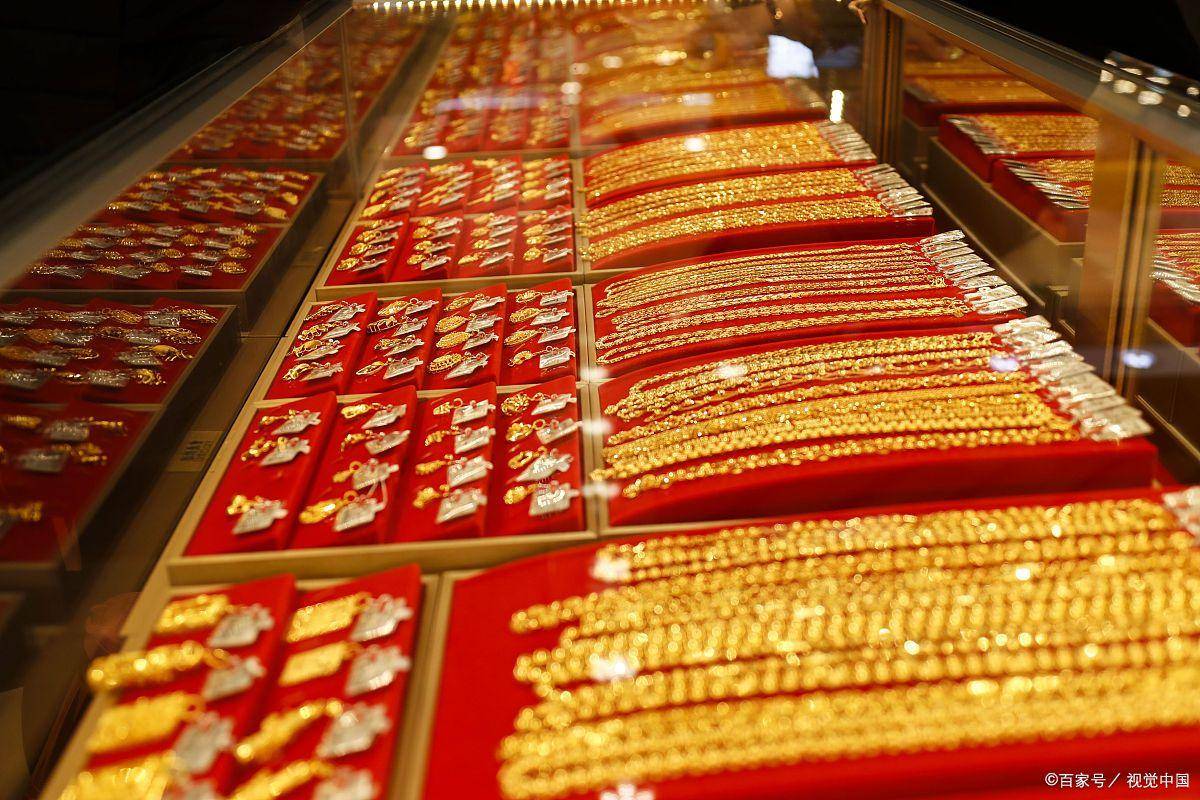
白银短线拉升,有机构已开始做空
2 1 Shi Ji Jing Ji Bao Dao· 2026-01-09 17:07
Group 1 - The core viewpoint of the article highlights the significant volatility in the silver market, with prices reaching a historical high of $82.744 per ounce on January 6, followed by a sharp decline due to the Bloomberg Commodity Index's annual weight adjustment, which reduced the expected increase from 15% to 4% [1][3] - Despite the short-term fluctuations, the overall bullish trend for silver remains intact, supported by global market turmoil and expectations of interest rate cuts by the Federal Reserve [3][6] - The Bloomberg Commodity Index, a widely used benchmark in the commodity investment field, is undergoing a significant weight adjustment from January 8 to 14, 2026, which will impact silver and gold's market positions [5][6] Group 2 - The weight adjustment will lead to substantial selling pressure, with Citigroup estimating a sell-off of approximately $7 billion for both gold and silver, while Morgan Stanley predicts that silver will face the most significant selling pressure compared to previous years [5][6][10] - The Chicago Mercantile Exchange (CME) has raised margin requirements for precious metals, including silver, to manage market volatility, which is a common regulatory response to excessive trading activity [6][7] - Some investors are positioning themselves to short silver futures, anticipating a significant price drop due to the upcoming selling pressure from the index rebalancing [10][11] Group 3 - Despite recent price volatility, many institutions remain optimistic about silver's long-term prospects, viewing any weakness as a potential buying opportunity [13][14] - The silver market is expected to benefit from macroeconomic factors, including dovish signals from the Federal Reserve and new regulations in India that may increase demand [13][14] - Historical data suggests that silver has a higher potential for price appreciation compared to gold, with analysts indicating that the current gold-silver ratio implies significant upside for silver prices [14]