
橡胶

Search documents
光大期货能化商品日报(2026年1月6日)-20260106
Guang Da Qi Huo· 2026-01-06 06:19
1. Report Industry Investment Rating - All the analyzed energy and chemical products, including crude oil, fuel oil, asphalt, rubber, methanol, polyolefins, and PVC, are rated as "volatile" [1][2][4][6]. 2. Core Viewpoints of the Report - The geopolitical situation in Venezuela has led to short - term fluctuations in crude oil prices. OPEC and non - OPEC countries' production plans and Venezuela's actual supply situation will affect the oil market. Overall, short - term downside risks for oil prices are limited [1]. - The fuel oil market is under pressure due to sufficient supply. High - sulfur fuel oil has some demand support, while low - sulfur fuel oil demand is weak. Both high - and low - sulfur fuel oil prices are expected to follow oil price fluctuations [2]. - The asphalt market has bottom support from raw materials and supply, but there is uncertainty in future raw material supply. Prices are expected to stabilize and strengthen [4]. - The rubber market is affected by factors such as heavy - truck sales and overseas production. With minor fundamental contradictions, rubber prices are expected to fluctuate [4]. - The methanol market has a supply - demand balance. A decline in Iranian shipments will support prices, while compressed MTO device profits may put pressure on prices. It is expected to maintain a low - level, strong - side fluctuation [6]. - The polyolefin market has a supply reduction in January and a demand recovery in the first half of the month. However, inventory is expected to increase in the second half of the month, so prices will fluctuate at the bottom [7]. - The PVC market has high - level supply, weak domestic demand, and a weak - reality, strong - expectation structure. Price increases are limited, and it is expected to fluctuate at the bottom [8]. 3. Summary by Relevant Catalogs 3.1 Research Views - **Crude Oil**: On Monday, oil prices rose. WTI February contract closed up $0.10 to $58.32 per barrel, Brent March contract closed up $1.01 to $61.76 per barrel, and SC2602 closed up 1.3 yuan to 428.1 yuan per barrel. OPEC and 8 major non - OPEC countries will maintain the production plan and pause production increases in February and March. Venezuela has large oil reserves, but short - term supply has increased marginally, and medium - term uncertainty remains. Overall, short - term downside risks for oil prices are limited [1]. - **Fuel Oil**: On Monday, the main fuel oil contracts on the Shanghai Futures Exchange declined. Singapore's fuel oil supply is expected to be sufficient in January - February, with high - sulfur and low - sulfur fuel oil supply increasing. High - sulfur fuel oil demand is strong, while low - sulfur fuel oil demand is weak. The market is under pressure, and prices are expected to follow oil price fluctuations [2]. - **Asphalt**: On Monday, the main asphalt contract on the Shanghai Futures Exchange rose. Diluted asphalt port arrivals are stable in the short term, but there is uncertainty in future raw material supply. With winter - storage contracts supporting the bottom, asphalt prices are expected to stabilize and strengthen [4]. - **Rubber**: On Monday, rubber - related contracts on the Shanghai Futures Exchange rose. In December 2025, China's heavy - truck sales decreased by about 16% month - on - month but increased by about 13% year - on - year. Indonesia's rubber exports increased. With minor fundamental contradictions, rubber prices are expected to fluctuate [4]. - **Methanol**: On Monday, methanol - related prices were reported. In January, domestic production is expected to increase slightly, and imports will decline. Demand has certain support. Iranian shipments decline will support prices, while compressed MTO device profits may put pressure on prices. It is expected to maintain a low - level, strong - side fluctuation [6]. - **Polyolefins**: On Monday, polyolefin - related prices were reported. In January, supply will decrease slightly, and demand will recover in the first half of the month but weaken in the second half. Inventory is expected to increase in the second half of the month, and prices will fluctuate at the bottom [7]. - **PVC**: On Monday, PVC market prices in different regions showed narrow fluctuations. Supply remains high, domestic demand slows, and there is a weak - reality, strong - expectation structure. Price increases are limited, and it is expected to fluctuate at the bottom [8]. 3.2 Daily Data Monitoring - The report provides data on the basis of various energy and chemical products, including crude oil, liquefied petroleum gas, asphalt, high - sulfur fuel oil, low - sulfur fuel oil, methanol, urea, linear low - density polyethylene, polypropylene, etc. It shows spot prices, futures prices, basis, basis rates, price changes, and the position of the latest basis rate in historical data [9]. 3.3 Market News - US President Trump stated that US investment in Venezuela's oil industry is a key goal, and the US embargo on Venezuelan oil remains in effect. OPEC and 8 major non - OPEC countries will maintain the production plan and pause production increases in February and March to stabilize the oil market [11]. 3.4 Chart Analysis - **4.1 Main Contract Prices**: The report presents historical price charts of main contracts for various energy and chemical products from 2021 - 2025, including crude oil, fuel oil, low - sulfur fuel oil, asphalt, LPG, PTA, ethylene glycol, etc. [13][14][15]. - **4.2 Main Contract Basis**: It shows historical basis charts of main contracts for various products, such as crude oil, fuel oil, low - sulfur fuel oil, asphalt, ethylene glycol, PP, etc. [30][34][35]. - **4.3 Inter - contract Spreads**: The report provides charts of inter - contract spreads for different products, including fuel oil, asphalt, PTA, ethylene glycol, PP, LLDPE, natural rubber, etc. [42][44][48]. - **4.4 Inter - product Spreads**: It presents charts of inter - product spreads, such as crude oil's internal - external spread, B - W spread, fuel oil's high - low sulfur spread, fuel oil/asphalt ratio, etc. [59][61][63]. - **4.5 Production Profits**: The report shows production profit charts for LLDPE and PP [68]. 3.5 Research Team Member Introduction - The report introduces the members of the energy and chemical research team, including Deputy Director Zhong Meiyan, Research Director Du Bingqin, Natural Rubber/Polyester Analyst Di Yilin, and Methanol/Propylene/Pure Benzene PE/PP/PVC Analyst Peng Haibo, along with their educational backgrounds, honors, and work experiences [72][73][74]. 3.6 Contact Information - The company's address is in the China (Shanghai) Pilot Free Trade Zone, with a phone number, fax number, customer service hotline, and postal code provided [77].
2025·我的年度账本丨一个新材料项目的“升级账”
Qi Lu Wan Bao· 2026-01-06 03:42
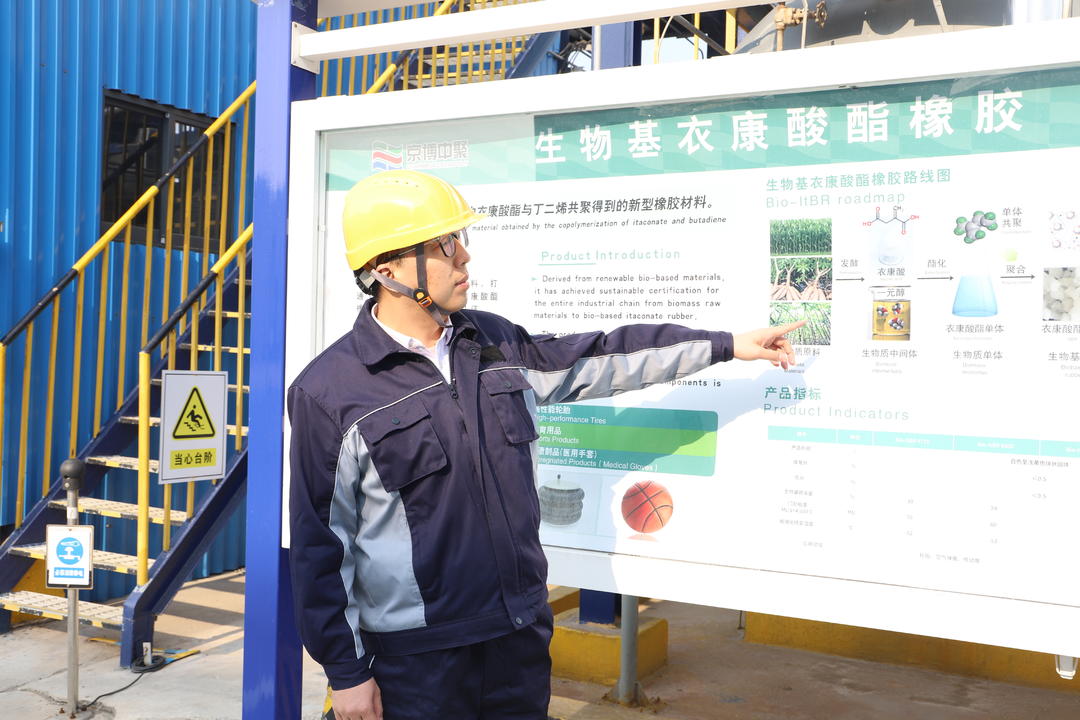
刘超口中的"中试平台"指的是由山东京博石油化工有限公司牵头,联合11家高校与企业共建的绿色化工与新材料中试平台。2025年12月,工业和信息化部 公布首批21家国家级制造业中试平台名单,在全国2400余个申报平台中,该平台凭借卓越的技术实力和产业价值成功入选,成为山东省唯一入选平台,也 是石化化工领域中唯一由民营企业牵头的平台。 中试是紧密连接创新链、技术链和产业链的关键环节,是畅通技术创新到市场应用的"中间站"。近年来,国家系统布局中试能力建设,将其作为促进科技 产业深度融合、培育新质生产力的战略支撑。 你能想象吗?汽车的轮胎、鞋子的鞋底,所用的橡胶都有可能来自玉米秸秆。在滨州市博兴县,一个"绿色"橡胶项目,正在借助国家级中试平台,将这种 神奇的"魔法"带出实验室,送上生产线,直至消费端。 "目前我们的非粮生物基橡胶正在从工业化走向商业化,部分产品已经开始用于鞋材、轮胎的生产。"京博中聚特种橡胶分公司总经理刘超说,橡胶属于国 家战略物资,但我国缺少天然橡胶原料,而且传统橡胶生产的关键技术和产业链大都掌握在国外。 从2008年张立群院士提出"生物基橡胶"概念,到2016年国内科研人员攻克其分子结构,再到202 ...

青岛港口库存继续回升
Hua Tai Qi Huo· 2026-01-06 03:10
化工日报 | 2026-01-06 青岛港口库存继续回升 市场要闻与数据 期货方面,昨日收盘RU主力合约15790元/吨,较前一日变动+185元/吨;NR主力合约12805元/吨,较前一日变动+180 元/吨;BR主力合约11645元/吨,较前一日变动+125元/吨。 现货方面,云南产全乳胶上海市场价格15500元/吨,较前一日变动+250元/吨。青岛保税区泰混14850元/吨,较前 一日变动+150元/吨。青岛保税区泰国20号标胶1890美元/吨,较前一日变动+20美元/吨。青岛保税区印尼20号标胶 1830美元/吨,较前一日变动+25美元/吨。中石油齐鲁石化BR9000出厂价格11500元/吨,较前一日变动+0元/吨。浙 江传化BR9000市场价11550元/吨,较前一日变动+100元/吨。 市场资讯 2025年11月中国天然橡胶(含技术分类、胶乳、烟胶片、初级形状、混合胶、复合胶)进口量64.36万吨,环比增 加25.98%,同比增加14.69%,2025年1-11月累计进口数量587.16万吨,累计同比增加16.98%。 ANRPC最新发布的2025年11月报告预测,11月全球天胶产量料降2.6%至1 ...
日度策略参考-20260106
Guo Mao Qi Huo· 2026-01-06 02:51
Report Industry Investment Rating No relevant information provided. Report Core Viewpoints - Short - term, the stock index may continue a relatively strong trend, but attention should be paid to the impact of overseas geopolitical events on market risk appetite. In the long - term, the stock index is expected to rise in 2026 based on 2025 [1]. - Asset shortage and weak economy are beneficial to bond futures, but the central bank has recently warned of interest - rate risks, and attention should be paid to the Bank of Japan's interest - rate decision [1]. - Different commodities have various trends, including price increases, oscillations, and potential reversals, with corresponding investment strategies recommended [1]. Summary by Related Catalogs Macro Finance - Short - term, the stock index may continue to be strong, and in the long - term (2026), it is expected to rise on the basis of 2025 due to factors like continuous policy efforts, inflation recovery, capital market reform, and the support of Central Huijin [1]. - Asset shortage and weak economy benefit bond futures, but the central bank warns of interest - rate risks, and the Bank of Japan's interest - rate decision should be watched [1]. Metals Non - ferrous Metals - Copper: The price has further increased due to weak industry fundamentals but positive macro sentiment and continuous premium. However, short - term adjustment risks should be guarded against, and the upward trend is expected to continue [1]. - Aluminum: Domestic electrolytic aluminum has accumulated inventory, but positive macro sentiment and the early fermentation of supply - tightness expectations are likely to keep the price strong [1]. - Alumina: The supply side has a large release space, and the weak industry fundamentals put pressure on the price. However, the current price is near the cost line, so it is expected to oscillate [1]. - Zinc: The fundamentals have improved, the cost center has moved up, recent negative factors have been mostly realized, and market sentiment is volatile, leading to price oscillations [1]. - Nickel: Positive macro sentiment, concerns about supply due to Indonesian events, slow inventory accumulation, and unconfirmed Indonesian policies are likely to keep the short - term price strong. It is recommended to go long at low prices and control risks [1]. - Stainless Steel: Positive macro sentiment, concerns about raw - material supply, a rebound in nickel - iron prices, a slight reduction in social inventory, and an increase in January production plans are likely to keep the short - term futures price strong. It is recommended to go long at low prices, and enterprises should wait for opportunities to sell and hedge [1]. - Tin: The industry association's initiative has put pressure on the price, but considering the tense situation in Congo - Kinshasa, the supply may still be affected. After a short - term decline, the downward space is limited, and low - long opportunities near the support level are recommended [1]. - Precious Metals: Geopolitical risks and international - order uncertainties have boosted the demand for hedging, making the price strong in the short - term. However, the high VIX of silver indicates potential risks. Platinum and palladium are expected to fluctuate widely in the short - term, and platinum can be bought at low prices or a [long - platinum short - palladium] arbitrage strategy can be adopted in the long - term [1]. Black Metals - Iron Ore: There is a combination of weak reality (weak direct demand, high supply, and inventory accumulation) and strong expectation (potential supply disturbances from energy - consumption control and anti - involution). The near - month contract is restricted by production cuts, while the far - month contract has upward potential [1]. - Steel (including Rebar): The valuation of the price is not high, and it is not recommended to short. Positions in cash - and - carry arbitrage can take rolling profits [1]. - Glass: Supply and demand are acceptable, and the valuation is low, so the downward space is limited, and it may be under pressure to oscillate [1]. - Soda Ash: It follows the trend of glass, with acceptable supply and demand, low valuation, and limited downward space, and may oscillate under pressure [1]. - Coking Coal: The fourth - round spot price cut has started. After the futures price dropped to the corresponding position and rebounded, attention should be paid to whether it can reach a new low during the implementation of the price cut. There is a high possibility of wide - range oscillations [1]. - Coke: The logic is the same as that of coking coal [1]. Energy and Chemicals - Crude Oil: OPEC + has suspended production increases until the end of 2026, the uncertainty of the Russia - Ukraine peace agreement, and US sanctions on Venezuelan oil exports have an impact on the price [1]. - Fuel Oil: The short - term supply - demand contradiction is not prominent, and it follows the trend of crude oil. The probability of the 14th Five - Year Plan's rush - work demand is falsified, the supply of Marey crude oil is sufficient, and the asphalt profit is high [1]. - Asphalt: The cost is strongly supported, the spot - futures price difference is low, and the mid - stream inventory may tend to accumulate [1]. - Rubber: For natural rubber, the mid - stream inventory may tend to accumulate, and the price oscillates. For BR rubber, the futures position has declined, the price increase has slowed down, the processing profit is gradually repaired, it maintains high - level operation in terms of production and inventory, and the spot trading is weak [1]. - PTA: The PX market has experienced a sharp increase, and the domestic PTA maintains high - level operation, benefiting from stable domestic demand and the recovery of exports to India since the end of November [1]. - MEG: Two sets of MEG devices in Taiwan, China, are planned to stop production due to efficiency reasons. The price has rebounded rapidly due to supply - side news, and the downstream polyester operating rate is over 90%, with better - than - expected demand [1]. - Short - fiber: The price continues to fluctuate closely following the cost [1]. - Styrene: The Asian styrene market is generally stable. Suppliers are reluctant to reduce prices due to continuous losses, while buyers keep pressing prices due to weak downstream demand and profit compression. The market is in a weak - balance state, and the short - term upward momentum depends on overseas market drive [1]. - Steam: The upward space is limited due to insufficient domestic demand, but there is support from anti - involution and the cost side [1]. - Propylene: The supply pressure is large, the downstream improvement is less than expected, the cost is strongly supported by high - level propylene monomers and rising crude - oil prices, and there is a risk of rising crude - oil prices due to intensified geopolitical conflicts [1]. - PVC: The global production in 2026 is expected to be low, but currently, new capacity is being released, the supply pressure is increasing, and the demand is weak [1]. - Chlorine: The inventory pressure in Shandong is large, the supply pressure is high due to high - level operation and few overhauls, the non - aluminum demand is in the off - season, and the cost support is weakened by the rising price of liquid chlorine [1]. - LPG: The January CP has risen unexpectedly, providing strong cost - end support. Geopolitical conflicts in the US, Venezuela, and the Middle East have increased the short - term risk premium. The EIA weekly C3 inventory is in an accumulation trend, with a temporary slowdown in overseas demand. The domestic PDH maintains high - level operation but is deeply in deficit, and the overseas olefin blending - oil demand is acceptable [1]. New Energy and Silicon Industry - Polysilicon: There is production increase in the northwest and decrease in the southwest. The December production plan has decreased. A capacity storage platform company has been established, with a long - term expectation of capacity reduction. The terminal installation in the fourth quarter has increased marginally. Large enterprises are willing to support the price but not to deliver. The short - term speculative sentiment is high [1]. - Lithium Carbonate: It is the traditional peak season for new - energy vehicles, the energy - storage demand is strong, the supply - side production resumption has increased, and the price has risen rapidly in the short - term [1]. Agricultural Products - Palm Oil: The MPOB December data is expected to be negative, but it may reverse under themes such as seasonal production reduction, the B50 policy, and US biodiesel. If the price gaps up due to geopolitical events, short - selling can be considered [1]. - Soybean Oil: It follows the trend of other oils in the short - term, and waiting for the January USDA report is recommended [1]. - Rapeseed Oil: News of blocked trader purchases and Australian seed imports has led to a large rebound in the single - side price and the 1 - 5 spread, but it is difficult to change the subsequent loosening of the fundamental situation. A decline in sentiment is expected, and short - selling on rebounds can be considered [1]. - Cotton: The domestic new - crop harvest is expected to be good, but the purchase price of seed cotton supports the cost of lint. The downstream operation rate remains low, but the yarn - mill inventory is not high, with rigid restocking demand. The cotton market is currently in a situation of "having support but no driver", and attention should be paid to factors such as the central government's No. 1 Document in the first quarter of next year, planting - area intentions, weather during the planting period, and peak - season demand [1]. - Sugar: There is a global surplus and a large supply of domestic new - crop sugar, with a strong consensus on short - selling. If the futures price continues to fall, the cost support is strong, but the short - term fundamentals lack continuous driving forces, and attention should be paid to changes in the capital side [1]. - Corn: The grass - roots grain - selling progress is relatively fast, the current port and downstream inventory levels are still low, and most traders have not started strategic inventory building. The spot price is expected to be strong in the short - term, and the futures price is expected to have limited decline and then maintain an oscillating and strengthening trend [1]. - Soybeans: Attention should be paid to the adjustment in the January USDA report and the impact of Brazilian harvest selling pressure on CNF premiums. The M05 contract is expected to be relatively weak, while the M03 - M05 spread is expected to be in a positive - arbitrage situation in the short - term, but caution should be exercised due to potential changes in customs policies, soybean auctions, and directional policies [1]. - Pulp: The 05 contract is expected to oscillate in the range of 5400 - 5700 yuan/ton due to the tug - of - war between "strong supply" and "weak demand" [1]. - Logs: The spot price has shown signs of bottom - rebounding, and the downward space of the futures price is limited. However, the January overseas quotation has slightly declined, and there is a lack of upward - driving factors in the spot - futures market. It is expected to oscillate in the range of 760 - 790 yuan/m³ [1]. Livestock - Hogs: The spot price has gradually stabilized recently, with demand support. The slaughter weight has not been fully cleared, and the production capacity still needs to be further released [1].
能源化工期权:能源化工期权策略早报-20260106
Wu Kuang Qi Huo· 2026-01-06 02:20
Group 1: Report Overview - The report is an energy and chemical options strategy morning report dated January 6, 2026 [2] - It covers various energy and chemical options, including energy (crude oil, LPG), polyolefins (PP, PVC, etc.), polyesters (PX, PTA, etc.), and alkali chemicals (caustic soda, soda ash) [3] - The recommended strategy is to construct option combination strategies mainly as sellers, along with spot hedging or covered strategies to enhance returns [3] Group 2: Underlying Futures Market Overview - The table shows the latest prices, price changes, trading volumes, and open interest of various option underlying futures contracts [4] - For example, the latest price of crude oil (SC2602) is 428, with a price increase of 1 and a gain of 0.30%, trading volume of 4.45 million lots, and open interest of 3.43 million lots [4] Group 3: Option Factors - Volume and Open Interest PCR - The table presents the trading volume, volume change, open interest, open interest change, volume PCR, volume PCR change, open interest PCR, and open interest PCR change of various options [5] - Volume PCR and open interest PCR are used to describe the strength of the option underlying market and the turning point of the underlying market, respectively [5] Group 4: Option Factors - Resistance and Support Levels - The table lists the at - the - money strike price, resistance point, resistance point deviation, support point, support point deviation, maximum call option open interest, and maximum put option open interest of various options [6] - These levels are determined based on the strike prices of the maximum open interest of call and put options [6] Group 5: Option Factors - Implied Volatility - The table shows the at - the - money implied volatility, weighted implied volatility, weighted implied volatility change, annual average implied volatility, call option implied volatility, put option implied volatility, HISV20, and the difference between implied and historical volatility of various options [7] - The weighted implied volatility uses volume - weighted average [7] Group 6: Strategy and Recommendations for Energy Options - Crude Oil - Fundamental analysis: US military raid on Maduro, Saudi - UAE rift in Yemen, OPEC+ expected to maintain production policy, NNPC aims to increase production [8] - Market analysis: Crude oil showed a weak - biased market trend after a series of price movements [8] - Option factor research: Implied volatility remained below the average, open interest PCR indicated a weak market, resistance level was 540, and support level was 440 [8] - Strategy recommendations: Directional strategy: None; Volatility strategy: Construct a short - biased call + put option combination strategy; Spot long - hedging strategy: Construct a long collar strategy [8] Group 7: Strategy and Recommendations for Other Options - Similar analyses and strategy recommendations are provided for LPG, methanol, ethylene glycol, PVC, rubber, PTA, caustic soda, soda ash, and urea options [9][10][11] - Each analysis includes fundamental analysis, market analysis, option factor research, and corresponding strategy recommendations [10][11]
合成橡胶:基本面支撑有限 BR跟随商品波动
Jin Tou Wang· 2026-01-06 02:04
Raw Materials and Spot Prices - As of January 5, the price of butadiene in the Shandong market is 8950 (+200) CNY/ton; CIF price for butadiene in China is 965 (+0) USD/ton; the market price for styrene-butadiene rubber (BR9000) from Qilu Petrochemical is 11650 (+50) CNY/ton, with a price difference of -3200 (+0) CNY/ton for styrene-butadiene rubber and a basis of 5 (+25) CNY/ton [1] Production and Operating Rates - In December, China's butadiene production was 500,100 tons, a month-on-month increase of 3.8%; styrene-butadiene rubber production was 144,000 tons, a month-on-month increase of 10.4%; semi-steel tire production was 58.39 million units, a month-on-month increase of 0.1% and a year-on-year increase of 3.3%; full-steel tire production was 12.86 million units, a month-on-month decrease of 1.2% and a year-on-year increase of 5.5% [1] - As of January 2, the operating rates in the styrene-butadiene rubber industry showed differentiation, with butadiene industry operating rate at 71.2%, a month-on-month increase of 0.8%; high cis-styrene-butadiene rubber industry operating rate at 77.2%, a month-on-month increase of 0.3%; semi-steel tire sample manufacturers' operating rate at 66.5%, a month-on-month decrease of 5.4%; full-steel tire sample manufacturers' operating rate at 57.9%, a month-on-month decrease of 6.1% [1] Inventory Levels - As of January 2, butadiene port inventory was 44,700 tons, a month-on-month increase of 1,400 tons; styrene-butadiene rubber factory inventory was 26,300 tons, a decrease of 2,550 tons, a month-on-month decrease of 8.8%; trader inventory was 7,180 tons, an increase of 1,490 tons, a month-on-month increase of 26.2% [2] Industry Insights - On January 5, following the New Year holiday, the rubber sector showed a strong performance, with the main contract for synthetic rubber BR2602 closing at 11,645 CNY/ton, an increase of 0.82% compared to the previous day's settlement price [2] - Starting from the second half of January, three domestic butadiene facilities are expected to gradually restart, influenced by anticipated increases in exports and decreases in imports, which may lead to a reduction in net import volumes; however, overall supply is expected to remain ample, and port inventories are projected to stay at high levels [2] - The styrene-butadiene rubber facility at Maoming Petrochemical is expected to undergo maintenance and restart in mid to late January 2026 [2] - Demand from the tire and other rubber product industries is expected to remain stable, with some pre-Spring Festival stocking demand; however, a concentrated shutdown may occur from late January to February [2] - Overall, limited cost support and weakening supply-demand dynamics suggest significant resistance to price increases for BR in January, with attention needed on macroeconomic disturbances [2] Short-term Outlook - The short-term price range for BR2602 is expected to fluctuate between 11,200 and 12,000 CNY/ton [2]
宝城期货橡胶早报-2026-01-06-20260106
Bao Cheng Qi Huo· 2026-01-06 01:31
Report Summary 1. Report Industry Investment Rating No relevant information provided. 2. Report's Core View - Both Shanghai rubber (RU) and synthetic rubber (BR) are expected to run in a strong - leaning pattern on the short - term, mid - term, and intraday basis, with an overall view of strong - leaning operation [1][5][7]. 3. Summary by Related Categories Shanghai Rubber (RU) - **Short - term, Mid - term, and Intraday Views**: Short - term and mid - term views are "oscillation", while the intraday view is "strong - leaning". The overall view is "strong - leaning operation" [1][5]. - **Core Logic**: The weakening of geopolitical risks in Thailand and Cambodia has reduced the expected decline in Southeast Asian rubber supply, weakening the bullish drive. However, domestic Yunnan and Hainan natural rubber production areas are in the off - season, reducing domestic supply pressure. Southeast Asia is in the peak tapping season. Meanwhile, domestic automobile production and sales data are optimistic, and December heavy - truck sales are better than expected. Supported by a bullish atmosphere, the rubber market maintains a strong - leaning pattern [5]. Synthetic Rubber (BR) - **Short - term, Mid - term, and Intraday Views**: Short - term and mid - term views are "oscillation", while the intraday view is "strong - leaning". The overall view is "strong - leaning operation" [1][7]. - **Core Logic**: Optimistic domestic automobile production and sales data, better - than - expected December heavy - truck sales data, and the strong - leaning oscillation pattern of Shanghai rubber futures indirectly support synthetic rubber futures. The supply - demand outlook for synthetic rubber has improved, and the bullish atmosphere is dominant [7].
宏观金融类:文字早评2026-01-06-20260106
Wu Kuang Qi Huo· 2026-01-06 01:11
Report Industry Investment Rating No relevant content provided. Core Viewpoints of the Report - For the stock index, at the beginning of the year, institutional allocation funds are expected to flow back into the market, and with the unchanged policy support for the capital market, the medium - to long - term strategy is mainly to go long on dips [2][3]. - For treasury bonds, the improvement of market expectations for the economy may put pressure on the bond market. Although the central bank maintains an attitude of caring for funds, the bond market is expected to be weak and volatile in the first quarter, mainly affected by the spring rally in the stock market, government bond supply, and interest - rate cut expectations [4][6]. - For precious metals, there may be a short - term significant correction in January, but it does not mean the end of the upward cycle of gold and silver. In the long term, there are expectations of loose fiscal and monetary policies [7][8]. - For non - ferrous metals, most non - ferrous metals are affected by factors such as supply - demand relationships, cost, and market sentiment, with different trends. For example, copper prices are expected to slow down in their upward trend; aluminum prices are expected to be volatile and strong; zinc prices are expected to be volatile in the medium term and strong in the short term; lead prices are expected to be weak in the short term; nickel prices may have bottomed out in the short term; tin prices are expected to fluctuate with market sentiment; and the prices of some non - ferrous metal products such as stainless steel and casting aluminum alloy also have their own trends [10][11][13] [16][17][18]. - For black building materials, steel prices are expected to continue to oscillate in the bottom range; iron ore prices are expected to oscillate, with upside space limited by high inventory and supply expectations and downside supported by restocking expectations; glass prices may have some upward potential; and the supply - surplus pattern of soda ash has not changed fundamentally [32][33][35]. - For energy chemicals, different products have different trends. For example, rubber is recommended to be observed; the valuation of heavy - oil products in crude oil is expected to increase; methanol is considered to have the feasibility of going long on dips; urea is recommended to take profits on rallies; and the trends of pure benzene, styrene, and other products are also affected by factors such as cost, supply, and demand [49][50][55]. - For agricultural products, the short - term logic of rising pig prices is strong, but the medium - term support may collapse; egg prices have limited upside and downside space; the prices of soybean meal and rapeseed meal are expected to oscillate; the current fundamentals of oils and fats are weak, but the medium - and long - term expectations are optimistic; sugar prices may rebound after the northern hemisphere's harvest; and cotton prices are recommended to go long on dips after a correction [78][79][83]. Summary by Relevant Catalogs Stock Index - **Market Information**: The CSRC will strengthen the coordination of administrative, criminal, and civil actions to combat financial fraud. Goldman Sachs recommends overweighting Chinese stocks, expecting a 15% - 20% annual increase in 2026 and 2027. The basis ratios of stock - index futures are provided [2]. - **Strategy Viewpoint**: At the beginning of the year, institutional allocation funds are expected to flow back into the market, and with policy support, the medium - to long - term strategy is to go long on dips [3]. Treasury Bonds - **Market Information**: The prices of Treasury bond futures contracts have different changes. The National Development and Reform Commission has introduced policies for Yangtze River protection projects. The central bank conducted 135 billion yuan of 7 - day reverse repurchase operations, with a net withdrawal of 4688 billion yuan [4]. - **Strategy Viewpoint**: The improvement of economic expectations may put pressure on the bond market. Although the central bank maintains an attitude of caring for funds, the bond market is expected to be weak and volatile in the first quarter, mainly affected by the spring rally in the stock market, government bond supply, and interest - rate cut expectations [6]. Precious Metals - **Market Information**: The prices of Shanghai gold and silver, and COMEX gold and silver have increased. Weak US manufacturing PMI data and geopolitical issues have strengthened the expectations of the Fed's loose monetary policy, leading to a short - term increase in precious - metal prices [7]. - **Strategy Viewpoint**: There may be a short - term significant correction in January, but it does not mean the end of the upward cycle of gold and silver. In the long term, there are expectations of loose fiscal and monetary policies [8]. Non - Ferrous Metals Copper - **Market Information**: The price of LME copper has reached 13,000 US dollars for the first time. The price of domestic copper has continued to be strong, with changes in inventory and basis [10]. - **Strategy Viewpoint**: The upward trend of copper prices is expected to slow down, with support from supply - side factors and pressure from demand - side factors [11]. Aluminum - **Market Information**: The prices of domestic and international aluminum have accelerated their upward movement, with changes in inventory and basis [12]. - **Strategy Viewpoint**: Aluminum prices are expected to be volatile and strong, affected by factors such as supply - side disturbances and the high prices of precious metals and copper [13]. Zinc - **Market Information**: The prices of zinc futures and spot have changed, with changes in inventory and basis [14][15]. - **Strategy Viewpoint**: Zinc prices are expected to be volatile in the medium term and strong in the short term, affected by factors such as inventory and supply - demand relationships [16]. Lead - **Market Information**: The prices of lead futures and spot have changed, with changes in inventory and basis [17]. - **Strategy Viewpoint**: Lead prices are expected to be weak in the short term, affected by factors such as inventory and market sentiment [17]. Nickel - **Market Information**: The price of nickel has oscillated, with changes in spot premiums and cost factors [18]. - **Strategy Viewpoint**: The short - term bottom of nickel prices may have appeared, and it is recommended to observe in the short term [18]. Tin - **Market Information**: The price of tin has increased, with changes in supply, demand, and inventory [20][21]. - **Strategy Viewpoint**: Tin prices are expected to fluctuate with market sentiment, and it is recommended to observe [22]. Carbonate Lithium - **Market Information**: The price of carbonate lithium has increased, with changes in futures prices and inventory [23]. - **Strategy Viewpoint**: The fundamentals of carbonate lithium are expected to improve, but there are concerns about demand if prices remain high. It is recommended to observe or take a light - position attempt [23]. Alumina - **Market Information**: The price of alumina has decreased, with changes in inventory and basis [24]. - **Strategy Viewpoint**: It is recommended to observe. If there is no actual production - reduction action, short positions can be considered on rallies [26]. Stainless Steel - **Market Information**: The price of stainless steel has decreased, with changes in inventory and basis [27]. - **Strategy Viewpoint**: It is recommended to consider going long on dips and pay attention to the implementation of policies [28]. Casting Aluminum Alloy - **Market Information**: The price of casting aluminum alloy has accelerated its upward movement, with changes in inventory and basis [29]. - **Strategy Viewpoint**: Casting aluminum alloy prices are expected to be volatile and strong, affected by cost and supply - side factors [30]. Black Building Materials Steel - **Market Information**: The prices of rebar and hot - rolled coil have decreased, with changes in inventory and basis [32]. - **Strategy Viewpoint**: Steel prices are expected to continue to oscillate in the bottom range, affected by factors such as supply, demand, and macro - policies [33]. Iron Ore - **Market Information**: The price of iron ore has increased, with changes in inventory and basis [34]. - **Strategy Viewpoint**: Iron ore prices are expected to oscillate, with upside space limited by high inventory and supply expectations and downside supported by restocking expectations [35]. Glass and Soda Ash - **Market Information**: The price of glass has decreased, and the price of soda ash has decreased. There are changes in inventory and basis [36][38]. - **Strategy Viewpoint**: Glass prices may have some upward potential, and the supply - surplus pattern of soda ash has not changed fundamentally [37][38]. Manganese Silicon and Ferrosilicon - **Market Information**: The prices of manganese silicon and ferrosilicon have decreased, with changes in inventory and basis [39]. - **Strategy Viewpoint**: The future trends of manganese silicon and ferrosilicon are affected by factors such as market sentiment, cost, and supply - side disturbances [41][42]. Industrial Silicon and Polysilicon - **Market Information**: The price of industrial silicon has decreased, and the price of polysilicon has increased, with changes in inventory and basis [43][46]. - **Strategy Viewpoint**: Industrial silicon prices are expected to oscillate, and polysilicon prices are expected to be volatile, affected by factors such as supply, demand, and market sentiment [44][47]. Energy Chemicals Rubber - **Market Information**: The price of rubber has oscillated and increased, with different views from bulls and bears [49][50]. - **Strategy Viewpoint**: It is recommended to observe and partially close the hedging position of buying RU2605 and selling RU2609 [53]. Crude Oil - **Market Information**: The price of crude oil has decreased, and the prices of refined - oil products have also changed, with changes in inventory [54]. - **Strategy Viewpoint**: The valuation of heavy - oil products is expected to increase [55]. Methanol - **Market Information**: The regional spot prices of methanol have changed [56]. - **Strategy Viewpoint**: Methanol is considered to have the feasibility of going long on dips [57]. Urea - **Market Information**: The regional spot and futures prices of urea have changed, with a certain basis [58]. - **Strategy Viewpoint**: It is recommended to take profits on rallies [59]. Pure Benzene and Styrene - **Market Information**: The prices of pure benzene and styrene have changed, with changes in cost, supply, demand, and basis [60]. - **Strategy Viewpoint**: It is considered that the non - integrated profit of styrene has room for upward repair, and it is recommended to go long on the non - integrated profit of styrene before the first quarter of next year [61]. PVC - **Market Information**: The price of PVC has decreased, with changes in cost, supply, demand, and inventory [62][63]. - **Strategy Viewpoint**: It is recommended to short on rallies before significant production cuts in the industry [64]. Ethylene Glycol - **Market Information**: The price of ethylene glycol has decreased, with changes in supply, demand, and inventory [65]. - **Strategy Viewpoint**: The supply - demand pattern of ethylene glycol needs to be improved through increased production cuts, and the valuation may need to be compressed in the medium term [66]. PTA - **Market Information**: The price of PTA has decreased, with changes in supply, demand, and inventory [67]. - **Strategy Viewpoint**: PTA is expected to enter the Spring Festival inventory - accumulation stage after short - term destocking. It is recommended to pay attention to the risk of correction in the short term and the opportunity of going long on dips in the medium term [69]. Para - Xylene - **Market Information**: The price of para - xylene has decreased, with changes in supply, demand, and inventory [70]. - **Strategy Viewpoint**: PX is expected to maintain a small inventory - accumulation pattern before the maintenance season. It is recommended to pay attention to the risk of correction in the short term and the opportunity of going long on dips in the medium term [71]. Polyethylene (PE) - **Market Information**: The price of PE has changed, with changes in supply, demand, and inventory [72]. - **Strategy Viewpoint**: It is recommended to go long on the LL5 - 9 spread on dips [73]. Polypropylene (PP) - **Market Information**: The price of PP has changed, with changes in supply, demand, and inventory [74][75]. - **Strategy Viewpoint**: The supply - surplus pattern of PP may change in the first quarter of next year, and the price may bottom out [76]. Agricultural Products Live Pigs - **Market Information**: The prices of live pigs in different regions have changed, with different supply and demand situations in the north and south [78]. - **Strategy Viewpoint**: The short - term logic of rising pig prices is strong, but the medium - term support may collapse. It is recommended to short on rallies and pay attention to the support of far - month contracts [79]. Eggs - **Market Information**: The prices of eggs have changed, with stable supply and different digestion speeds in the terminal market [80]. - **Strategy Viewpoint**: Egg prices have limited upside and downside space. It is recommended to short on rallies [81][82]. Soybean Meal and Rapeseed Meal - **Market Information**: The prices of soybean meal and rapeseed meal futures have changed, with changes in spot prices and inventory [83]. - **Strategy Viewpoint**: The prices of soybean meal and rapeseed meal are expected to oscillate, affected by factors such as import costs and inventory [84]. Oils and Fats - **Market Information**: The prices of oils and fats futures have decreased, with changes in spot prices and inventory [85][86]. - **Strategy Viewpoint**: The current fundamentals of oils and fats are weak, but the medium - and long - term expectations are optimistic. The prices are not far from the bottom range [87][88]. Sugar - **Market Information**: The price of sugar futures has increased, with changes in spot prices and production data in different regions [89][90]. - **Strategy Viewpoint**: Sugar prices may rebound after the northern hemisphere's harvest, and the short - term downside space of domestic sugar prices is limited [91]. Cotton - **Market Information**: The price of cotton futures has changed, with changes in spot prices, supply, demand, and inventory [92]. - **Strategy Viewpoint**: It is recommended to go long on cotton after a correction, affected by factors such as supply - demand relationships and policy expectations [93].
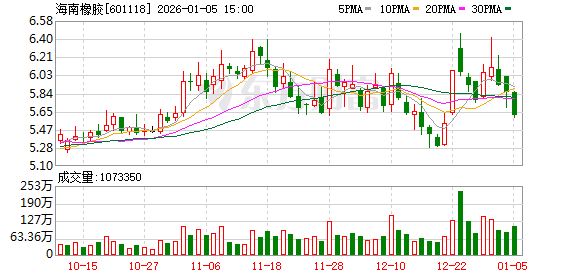
海南橡胶:截至2025年12月19日股东总户数约为9.1万户
Zheng Quan Ri Bao· 2026-01-05 13:36
Group 1 - The core point of the article is that Hainan Rubber has approximately 91,000 shareholders as of December 19, 2025 [2]

瑞达期货天然橡胶产业日报-20260105
Rui Da Qi Huo· 2026-01-05 09:12
1. Report Industry Investment Rating - No relevant information provided. 2. Core Viewpoints of the Report - The total inventory at Qingdao Port continues to accumulate, with both bonded and general trade warehouses showing inventory accumulation, and the overall inventory accumulation amplitude expanding month - on - month. Before the holiday, rubber prices fluctuate at a high level. Some tire enterprises are on holiday for maintenance, and most are in a wait - and - see mode, purchasing cautiously, leading to a significant inventory accumulation at Qingdao Port due to the decline in total outbound volume. In terms of demand, the capacity utilization rate of domestic tire enterprises decreased last week, and it may rise slightly this week. The ru2605 contract is expected to fluctuate in the range of 15,400 - 16,000 in the short term, and the nr2603 contract is expected to fluctuate in the range of 12,600 - 13,000 in the short term [2]. 3. Summary by Relevant Catalogs 3.1 Futures Market - The closing price of the main Shanghai rubber contract is 15,790 yuan/ton, with a month - on - month increase of 185 yuan/ton; the closing price of the main 20 - number rubber contract is 12,805 yuan/ton, with a month - on - month increase of 150 yuan/ton. The 20 - number rubber 2 - 3 spread is - 40 yuan/ton. The spread between Shanghai rubber and 20 - number rubber is 2,985 yuan/ton, with a month - on - month increase of 5 yuan/ton. The trading volume of the main Shanghai rubber contract is 181,920 lots, with a month - on - month increase of 13,145 lots; the trading volume of the main 20 - number rubber contract is 70,581 lots, with a month - on - month increase of 40,988 lots. The net position of the top 20 in Shanghai rubber is - 45,601 lots, with a month - on - month increase of 1,974 lots; the net position of the top 20 in 20 - number rubber is - 15,481 lots, with a month - on - month decrease of 1,297 lots. The warehouse receipts of Shanghai rubber in the exchange are 100,690 tons, with a month - on - month increase of 100 tons; the warehouse receipts of 20 - number rubber in the exchange are 57,959 tons, with no change [2]. 3.2 Spot Market - The price of state - owned whole latex in the Shanghai market is 15,300 yuan/ton, with a month - on - month decrease of 50 yuan/ton; the price of Vietnamese 3L in the Shanghai market is 15,500 yuan/ton, with no change. The price of Thai standard STR20 is 1,870 US dollars/ton, with no change; the price of Malaysian standard SMR20 is 1,865 US dollars/ton, with no change. The price of Thai RMB mixed rubber is 14,700 yuan/ton, with no change; the price of Malaysian RMB mixed rubber is 14,650 yuan/ton, with no change. The price of Qilu Petrochemical's styrene - butadiene 1502 is 11,500 yuan/ton, with no change; the price of Qilu Petrochemical's cis - butadiene BR9000 is 11,500 yuan/ton, with no change. The basis of Shanghai rubber is - 490 yuan/ton, with a month - on - month increase of 15 yuan/ton; the basis of non - standard products of the main Shanghai rubber contract is - 1,090 yuan/ton, with a month - on - month increase of 25 yuan/ton. The price of 20 - number rubber in the Qingdao market is 13,152 yuan/ton, with a month - on - month decrease of 40 yuan/ton; the basis of the main 20 - number rubber contract is 1,895 yuan/ton, with a month - on - month increase of 5 yuan/ton [2]. 3.3 Upstream Situation - The market reference price of Thai raw rubber (smoked sheets) is 58.15 Thai baht/kg, with a month - on - month decrease of 0.35 Thai baht/kg; the market reference price of Thai raw rubber (sheets) is 55.49 Thai baht/kg, with a month - on - month increase of 0.1 Thai baht/kg. The market reference price of Thai raw rubber (glue) is 54.2 Thai baht/kg, with no change; the market reference price of Thai raw rubber (cup rubber) is 52.95 Thai baht/kg, with a month - on - month increase of 0.85 Thai baht/kg. The theoretical production profit of RSS3 is 138.6 US dollars/ton, with a month - on - month increase of 13.6 US dollars/ton; the theoretical production profit of STR20 is - 17.4 US dollars/ton, with a month - on - month decrease of 19.8 US dollars/ton. The monthly import volume of technically classified natural rubber is 168,800 tons, with a month - on - month increase of 42,700 tons; the monthly import volume of mixed rubber is 302,200 tons, with a month - on - month increase of 45,800 tons [2]. 3.4 Downstream Situation - The weekly start - up rate of all - steel tires is 59.55%, with a month - on - month decrease of 2.4 percentage points; the weekly start - up rate of semi - steel tires is 69.35%, with a month - on - month decrease of 2.7 percentage points. The inventory days of all - steel tires in Shandong at the end of the week is 47.05 days, with a month - on - month increase of 3.27 days; the inventory days of semi - steel tires in Shandong at the end of the week is 47.05 days, with a month - on - month increase of 0.19 days. The monthly output of all - steel tires is 13.01 million pieces, with a month - on - month increase of 0.59 million pieces; the monthly output of semi - steel tires is 58.31 million pieces, with a month - on - month increase of 6.63 million pieces [2]. 3.5 Option Market - The historical 20 - day volatility of the underlying is 13.06%, with a month - on - month decrease of 0.21 percentage points; the historical 40 - day volatility of the underlying is 13.3%, with a month - on - month increase of 0.01 percentage points. The implied volatility of at - the - money call options is 21.17%, with a month - on - month increase of 0.63 percentage points; the implied volatility of at - the - money put options is 21.18%, with a month - on - month increase of 0.66 percentage points [2]. 3.6 Industry News - In December 2025, China's heavy - duty truck market sold about 95,000 vehicles (wholesale basis, including exports and new energy), a month - on - month decrease of about 16% compared with November 2025 and a year - on - year increase of about 13% compared with 84,200 vehicles in the same period of the previous year. In 2025, China's heavy - duty truck market ended with nearly 1.14 million vehicles. As of January 4, 2026, the total inventory of natural rubber in bonded and general trade in the Qingdao area was 548,300 tons, a month - on - month increase of 23,500 tons, an increase of 4.48%. The bonded area inventory was 88,100 tons, an increase of 8.16%; the general trade inventory was 460,300 tons, an increase of 3.8%. As of January 4, the capacity utilization rate of China's semi - steel tire sample enterprises was 66.53%, a month - on - month decrease of 3.83 percentage points and a year - on - year decrease of 11.05 percentage points; the capacity utilization rate of all - steel tire sample enterprises was 57.93%, a month - on - month decrease of 3.76 percentage points and a year - on - year increase of 1.37 percentage points [2].