
证券业

Search documents
张伟:数字金融创新成效显著|金融与科技
清华金融评论· 2025-12-22 09:08
Core Viewpoint - Digital finance encompasses both technology-driven financial innovation and the digital transformation of the financial system, which is crucial for deepening financial reforms and promoting the integration of the digital economy with the real economy in China [3][4][8]. Group 1: Digital Transformation in Finance - The financial industry has made significant progress in digital transformation during the 14th Five-Year Plan period, enhancing the efficiency of financial products and services [4]. - Policies such as the "Financial Technology Development Plan (2022-2025)" and guidelines for the digital transformation of banking and insurance sectors have accelerated the pace of digital transformation in financial institutions [5]. - Financial institutions are leveraging technologies like artificial intelligence, big data, and blockchain to improve risk control, marketing, investment advisory, and operational management [5]. Group 2: Support for Digital Economy - The core industries of the digital economy are expected to account for about 10% of GDP by 2024, with significant improvements in digital innovation capabilities [6]. - The People's Bank of China and other departments have launched initiatives to accelerate digital financial innovation, supporting the development of core industries in the digital economy [6]. - The loan balance for core industries of the digital economy reached 8.2 trillion yuan, with a year-on-year growth of 13.0%, indicating a faster growth rate compared to other loan categories [6]. Group 3: Future Development of Digital Finance - The expansion of the digital economy necessitates the development of digital finance to seize opportunities presented by technological revolutions and industrial transformations [7]. - The integration of data, algorithms, and resources is accelerating the construction of a national data center system, providing foundational support for the development of digital finance [7]. - Financial institutions are required to adapt to new demands from the digital economy, enhancing their understanding of market needs and optimizing financial products and risk control models [7]. Group 4: Strategies for High-Quality Development - Strengthening policy guidance and activating new momentum for the digital economy is essential, including the formulation of a development plan for digital finance during the 15th Five-Year Plan period [8]. - A comprehensive legal and regulatory framework is needed to support digital financial governance, focusing on data security, personal information protection, and algorithm ethics [8]. - Enhancing infrastructure and technological support is crucial, with an emphasis on advancing computing power and applying technologies like cloud computing and artificial intelligence [8].


资金面继续保持宽松,债市延续暖意
Dong Fang Jin Cheng· 2025-12-22 08:26
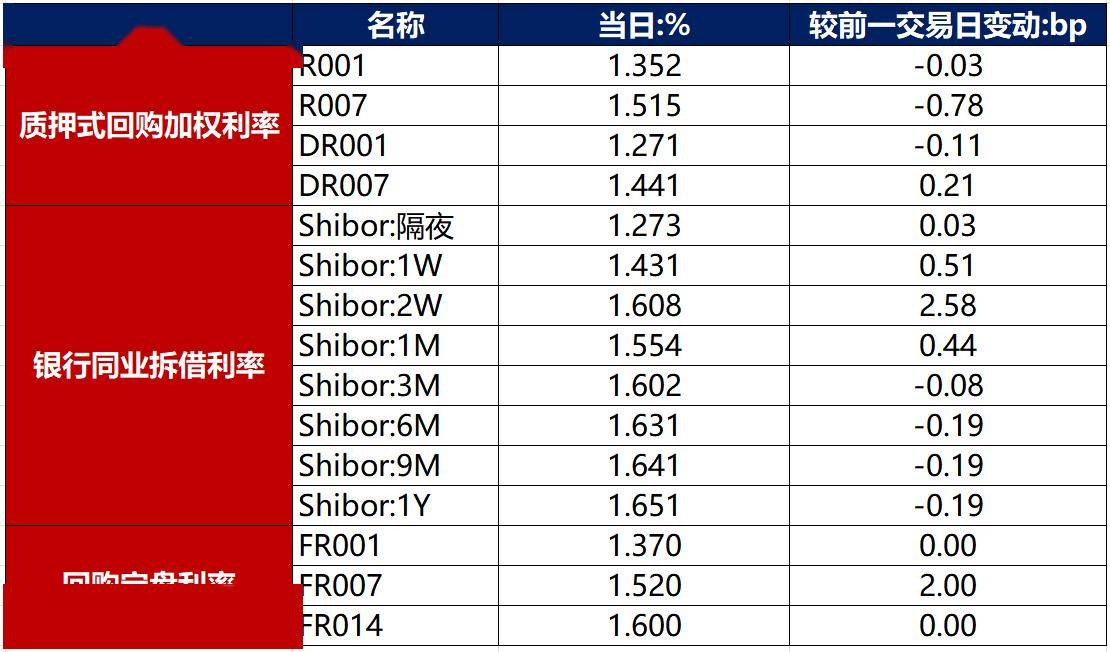
1. Report Industry Investment Rating - Not provided in the content. 2. Core Viewpoints of the Report - On December 19, the liquidity remained loose, the bond market continued to be bullish, the convertible bond market followed the equity market and continued to rise, most convertible bond issues increased, yields on US Treasuries of various maturities generally increased, and 10-year government bond yields in major European economies generally rose [2]. 3. Summary by Relevant Catalogs 3.1 Bond Market News 3.1.1 Domestic News - The State Council executive meeting arranged the implementation of the decisions and deployments of the Central Economic Work Conference, emphasizing that all departments should implement the work to consolidate and expand the positive economic trend [4]. - The Shanghai and Shenzhen Stock Exchanges, together with China Securities Depository and Clearing Corporation Limited, issued notices to support overseas institutional investors in conducting bond repurchase business to deepen the opening-up of the exchange bond market [5]. - The National Financial Regulatory Administration released a draft for comments on the Asset-Liability Management Measures for Insurance Companies to strengthen supervision of the insurance industry's asset-liability [5]. - In November 2025, cross-border payments remained active, and securities investment fund flows became more stable, with a net inflow of $17.8 billion in cross-border funds from non-bank sectors [6]. 3.1.2 International News - The Bank of Japan raised interest rates by 25 basis points to 0.75%, the highest since 1995, and may continue to raise rates depending on economic and price conditions [7]. - New York Fed President John Williams said there is no urgency to cut rates further, strengthening the market's expectation of a short-term pause in rate cuts [8]. 3.1.3 Commodities - On December 19, international crude oil futures prices continued to rise, and international natural gas prices turned up. WTI January crude oil futures rose 0.91% to $56.66 per barrel, Brent February crude oil futures rose 1.09% to $60.47 per barrel, COMEX February gold futures rose 0.52% to $4,387.3 per ounce, and NYMEX natural gas prices rose 2.05% to $4.026 per ounce [9][10]. 3.2 Liquidity 3.2.1 Open Market Operations - On December 19, the central bank conducted 7-day reverse repurchase operations worth 56.2 billion yuan at an interest rate of 1.40% and 14-day reverse repurchase operations worth 100 billion yuan. With 120.5 billion yuan of reverse repurchases maturing, the net capital injection was 35.7 billion yuan [12]. 3.2.2 Funding Rates - On December 19, the liquidity remained loose. DR001 fell 0.11bp to 1.271%, and DR007 rose 0.21bp to 1.441% [13]. 3.3 Bond Market Dynamics 3.3.1 Interest Rate Bonds - **Spot Bond Yield Trends**: On December 19, boosted by LPR rate cut expectations, the bond market continued to be bullish. By 20:00, the yield on the 10-year Treasury bond active issue 250016 fell 0.70bp to 1.8350%, and the yield on the 10-year CDB bond active issue 250215 fell 1.55bp to 1.8920% [15]. - **Bond Tendering**: The issuance scale of the 3-year and 5-year Treasury bonds was 97 billion yuan and 99 billion yuan respectively, with corresponding winning yields of 1.3554% and 1.5603% [17]. 3.3.2 Credit Bonds - **Secondary Market Trading Anomalies**: On December 19, the trading prices of two industrial bonds deviated by more than 10%. "19 Shanghai Shimao MTN001" and "20 Shanghai Shimao MTN001" rose by more than 26% [17]. - **Credit Bond Events**: Multiple companies had events such as debt restructuring, being listed as an executor, being criticized for violations, and canceling bond issuances [20]. 3.3.3 Convertible Bonds - **Equity and Convertible Bond Indexes**: On December 19, the three major A-share indexes rose, and the convertible bond market followed the equity market. The CSI Convertible Bond Index, Shanghai Convertible Bond Index, and Shenzhen Convertible Bond Index rose 0.38%, 0.27%, and 0.52% respectively. Most convertible bond issues rose [19]. - **Convertible Bond Tracking**: On December 19, Changgao Electric's convertible bond issuance was approved, some convertible bonds proposed to lower the conversion price or were about to meet the conditions, and some were about to be redeemed early or met the early redemption conditions [24]. 3.3.4 Overseas Bond Markets - **US Bond Market**: On December 19, yields on US Treasuries of various maturities generally rose. The 2-year and 10-year yields rose 2bp and 4bp to 3.48% and 4.16% respectively. The 2/10-year yield spread widened 2bp to 68bp, and the 5/30-year yield spread narrowed 2bp to 112bp. The 10-year TIPS break-even inflation rate remained unchanged at 2.24% [22][23][25]. - **European Bond Market**: On December 19, 10-year government bond yields in major European economies generally rose. German, French, Italian, Spanish, and British 10-year yields rose 4bp, 5bp, 4bp, 5bp, and 5bp respectively [26]. - **Daily Price Changes of Chinese Dollar Bonds**: As of the close on December 19, some Chinese dollar bonds had significant price changes, with some rising and some falling [28].
高峰预警:数据治理滞后失灵已成金融系统性风险诱因,“智治”转型刻不容缓
Jing Ji Guan Cha Bao· 2025-12-22 03:54
Core Insights - The failure of data governance has been recognized as a systemic risk factor in the financial industry, necessitating a transition from traditional human-driven governance to AI-driven governance [1][2] Group 1: Current State of Data Governance - In 2024, the volume of AI-generated data in the global banking sector is expected to surge by 470% compared to 2021, encompassing dynamic and real-time information streams [2] - Many financial institutions still rely on outdated data governance models based on manual input and static compliance, which are inadequate for modern high-speed trading and risk management needs [2] - The financial regulatory authority has officially included "data governance failure" in its systemic risk assessment criteria, indicating that insufficient governance capabilities could trigger industry-wide risks [2] Group 2: Challenges and Structural Issues - There is a significant imbalance between investment in data governance and its returns, with state-owned banks investing over 2 billion yuan annually but achieving only a 1.5x return on investment [2] - Traditional data governance practices are facing structural challenges, as resources are often wasted on repetitive tasks without translating into business value [2] Group 3: Transition to AI-Driven Governance - The financial industry must undergo three fundamental shifts: from "humans finding data" to "data finding humans," from static compliance to dynamic value creation, and from "data-driven governance" to "AI-driven governance" [3] - AI is reshaping the data ecosystem, with examples of banks and insurance companies significantly improving their operations through AI technologies [3][4] Group 4: New Governance Paradigms - The governance model is evolving from "human-led, AI-assisted" to "AI-executed, human-supervised," expanding the governance scope to include all data modalities [4] - The emergence of "Data Governance Agents" (DGA) represents a shift towards autonomous governance engines capable of decision-making and execution [4] Group 5: Strategies for Intelligent Governance - Five major challenges in intelligent data governance include technical adaptation, ownership clarification, increased privacy risks, algorithmic bias, and long ROI cycles [5] - Six strategies proposed for overcoming these challenges include building agile technology architectures, establishing clear ownership mechanisms, creating robust security frameworks, ensuring ethical governance, developing hybrid talent, and planning long-term resource investments [6]
加息难挡贬值压力,日元将跌至160?
日经中文网· 2025-12-22 03:23
Core Viewpoint - The Bank of Japan raised interest rates to 0.75% on December 19, but the lack of a clear hawkish stance from the governor led to unexpected depreciation of the yen, with potential for further decline towards 160 yen per dollar [2][4][6]. Group 1: Interest Rate and Currency Impact - The long-term interest rates in Japan rose to 2% for the first time in 19 years following the interest rate hike, but the yen's exchange rate remained relatively stable around 155.80 yen before the announcement [4]. - After the press conference, the yen quickly depreciated, reaching a low of 157.70 yen per dollar, marking a one-month low due to the unexpected lack of aggressive monetary tightening signals from the Bank of Japan [6][8]. - Market participants expect the yen to depreciate further, with many anticipating a rate of around 160 yen by the end of March 2026 [6][8]. Group 2: Market Reactions and Predictions - Analysts predict that the next interest rate hike by the Bank of Japan may not occur until October 2026, leading to a potential depreciation of the yen to 162 yen in the first quarter of 2024 [8]. - Concerns about currency intervention have arisen, especially as the yen approaches the 160 yen mark, with officials indicating readiness to respond to excessive movements [8]. - Some analysts believe that the yen's depreciation may be limited, with expectations of a potential appreciation back to 155 yen by March 2024, influenced by anticipated actions from the U.S. Federal Reserve [9]. Group 3: Stock Market Implications - The depreciation of the yen is expected to benefit export-oriented companies, potentially driving up stock prices, with forecasts suggesting the Nikkei average could rise to between 50,000 and 55,000 points [10]. - Concerns about fiscal expansion and political developments, such as potential early elections, could pose risks to stock prices, with some analysts suggesting a possible adjustment to around 45,000 points [10].

中加基金配置周报|中央经济工作会议召开,美联储降息25BP
Xin Lang Cai Jing· 2025-12-22 03:09
Group 1 - China's total goods trade import and export value reached 41.21 trillion yuan in the first 11 months of 2025, a year-on-year increase of 3.6%. Exports were 24.46 trillion yuan, up 6.2%, while imports were 16.75 trillion yuan, up 0.2% [1][19] - In November, China's goods trade growth rebounded, with a total import and export value of 3.9 trillion yuan, an increase of 4.1%. Exports were 2.35 trillion yuan, up 5.7%, and imports were 1.55 trillion yuan, up 1.7% [1][19] - The People's Bank of China reported that in the first 11 months, RMB loans increased by 15.36 trillion yuan, and the total social financing scale increased by 33.39 trillion yuan, exceeding last year's total by 3.99 trillion yuan [7][21] Group 2 - The Federal Reserve's FOMC announced a 25 basis point rate cut, lowering the federal funds rate target range to 3.50%–3.75%. This marks the third rate cut of the year, with a voting outcome of 9 in favor and 3 against [2][19] - The Fed's statement indicated moderate economic expansion, with slowing job growth and a slight increase in the unemployment rate, while inflation remains high. The Fed will begin a monthly purchase plan of approximately $40 billion in short-term Treasury bonds starting December 12 [2][19] - Fed Chairman Powell stated that monetary policy has no preset path and will be data-driven, with core inflation showing significant improvement. The policy is transitioning from restrictive to neutral [3][20] Group 3 - China's November CPI rose by 0.7% year-on-year, the highest since March 2024, while core CPI increased by 1.2%, maintaining a growth rate above 1% for three consecutive months [4][20] - The Central Economic Work Conference emphasized the continuation of a more proactive fiscal policy and moderately loose monetary policy, focusing on resolving local fiscal difficulties and promoting investment recovery [5][21] - The Central Political Bureau meeting highlighted the need for stable economic work in 2026, advocating for strong domestic demand, innovation-driven growth, and coordinated development [6][22]
资讯早班车-2025-12-22-20251222
Bao Cheng Qi Huo· 2025-12-22 03:05
1. Report Industry Investment Rating No relevant content provided. 2. Core Views of the Report - The overall operation of China's commodity market in 2025 was stable, with obvious characteristics of new and old kinetic energy conversion. The average value of the China Commodity Price Index was expected to be 112.1 points, a decrease of 0.1% compared to the previous year [4]. - The Chinese bond market showed a positive trend, with the yields of interest - rate bonds declining. The year - end bond market might continue to fluctuate, and the market was cautious about the overall space of the bond market next year [26]. - A - share market entered a critical window for cross - year layout, and structural opportunities would focus on the tracks where policy orientation and industrial prosperity resonated, with the subsequent spring market worth looking forward to [36]. 3. Summary by Directory 3.1 Macro Data Overview - GDP growth in Q3 2025 was 4.8% year - on - year, slightly lower than the previous quarter's 5.2% but higher than the same period last year's 4.6% [1]. - In November 2025, the manufacturing PMI was 49.2%, and the non - manufacturing PMI for business activities was 49.5%, both showing a certain decline [1]. - Social financing scale in November 2025 increased compared to the same period last year, and M0, M1, and M2 growth rates showed different trends [1]. 3.2 Commodity Investment Reference 3.2.1 Comprehensive - Guangzhou Futures Exchange restricted the daily opening volume of lithium carbonate futures contracts [2]. - Dalian Commodity Exchange adjusted the premium and discount of designated delivery warehouses for coking coal futures [2]. - Shanghai International Energy Trading Center planned to revise the standard contract of the Container Shipping Index (European Line) futures [3]. - The Ministry of Commerce launched a final review investigation on anti - dumping measures for imported ethylene - propylene - diene monomer rubber from the US, South Korea, and the EU [3]. 3.2.2 Metals - Platinum prices soared in 2025, with a year - to - date increase of over 110%, far exceeding that of gold [6]. - Gold and silver prices rose under the new round of interest - rate cuts, with silver prices increasing by over 130% this year [6]. - There was an obvious surplus of refined copper in the first ten months of 2025 [6]. 3.2.3 Coal, Coke, Steel, and Minerals - Dalian Commodity Exchange adjusted the premium and discount of designated delivery warehouses for coking coal futures [2][9]. - China's steel consumption in 2025 was expected to be 8.08 billion tons, a year - on - year decrease of 5.4%, and the global steel consumption was expected to be 17.19 billion tons, a year - on - year decrease of 1.8% [9]. - Indonesia proposed to significantly reduce nickel ore production in 2026 [11]. 3.2.4 Energy and Chemicals - Bohai Oilfield's cumulative production of oil and gas equivalent in 2025 exceeded 40 million tons, reaching a record high [12]. - China's energy key projects in 2025 were expected to complete an investment of 3.54 trillion yuan, a year - on - year increase of 11% [12]. - The price of polysilicon increased, but there was a situation of "high price but no market" [13]. 3.2.5 Agricultural Products - Manzhouli Port achieved a "zero breakthrough" in importing Russian agricultural products [15]. - The Philippines extended the import ban on sugar until December 2026 [15]. 3.3 Financial News Compilation 3.3.1 Open Market - This week, 4575 billion yuan of reverse repurchases in the central bank's open market were due, along with 1200 billion yuan of treasury cash fixed - term deposits and 3000 billion yuan of MLF [16]. - On December 19, the central bank conducted 562 billion yuan of 7 - day reverse repurchases and 1000 billion yuan of 14 - day reverse repurchases, with a net investment of 357 billion yuan on that day [16][17]. 3.3.2 Important News and Information - The market generally expected that the LPR in December would remain stable [18]. - The State Council Executive Meeting arranged the implementation of the decisions and deployments of the Central Economic Work Conference [18]. - The General Administration of Market Regulation revised the "Regulations on Prohibiting Monopoly Agreements" [18]. 3.3.3 Bond Market Summary - The yields of interest - rate bonds in the Chinese bond market declined, and the 30 - year active bond "25 Super Long Special Treasury Bond 06" performed prominently [26]. - Most of Vanke's bonds rose in the exchange bond market [26]. 3.3.4 Foreign Exchange Market Express - The on - shore RMB against the US dollar closed at 7.041 on December 22, up 9 basis points from the previous trading day [30]. - The US dollar index rose 0.28% in late New York trading, and most non - US currencies fell [30]. 3.3.5 Research Report Highlights - CITIC Securities believed that the factors driving the RMB appreciation were increasing, and investors should adapt to asset allocation in a RMB - appreciating environment [32]. - CITIC Securities thought that Japan's benign inflation cycle was stable, and the Bank of Japan was about to raise interest rates again [32]. - CITIC Construction Investment considered that the concentrated release of pessimistic sentiment at the end of the year brought potential space for financial bonds [32]. 3.4 Stock Market Important News - A - share market was in a high - level oscillation state near the end of the year, and the Shanghai Composite Index turned positive last week [36]. - As of December 19, the net inflow of subscription and redemption funds of CSI A500 exceeded that of CSI 300 in December, with the net inflow scale exceeding 46 billion yuan [36]. - By December 18, more than 454 listed companies had received institutional research in December, and the hard - tech track became the main focus [37].
债市早报:资金面继续保持宽松;债市延续暖意
Sou Hu Cai Jing· 2025-12-22 02:51
Group 1: Domestic Market Developments - The State Council held a meeting to implement the decisions from the Central Economic Work Conference, emphasizing the need for departments to align their actions with the central government's economic policies and enhance collaboration to promote economic stability [2] - The Shanghai and Shenzhen Stock Exchanges, along with China Securities Depository and Clearing Corporation, issued notifications to support foreign institutional investors in engaging in bond repurchase transactions, aiming to deepen the bond market's openness and enhance internationalization [3] - The National Financial Regulatory Administration proposed to strengthen asset-liability management regulations in the insurance industry, introducing new regulatory indicators and thresholds for companies [3] Group 2: International Market Developments - The Bank of Japan raised its benchmark interest rate by 25 basis points to 0.75%, the highest level since 1995, while maintaining a loose monetary environment to support economic recovery [5] - New York Federal Reserve President John Williams stated there is no urgent need for further interest rate cuts, reinforcing market expectations for a pause in rate reductions [6] Group 3: Bond Market Dynamics - The bond market continued to show positive momentum, with the yield on the 10-year government bond declining by 0.70 basis points to 1.8350% as of December 19, driven by expectations of a reduction in the Loan Prime Rate (LPR) [11] - The secondary market for credit bonds saw significant price movements, with two industrial bonds experiencing price increases exceeding 26% [14] - The convertible bond market followed the equity market's upward trend, with major indices rising and a total trading volume of 718.44 billion yuan, an increase of 61.31 billion yuan from the previous trading day [16] Group 4: Currency and Commodity Markets - The foreign exchange market remained stable, with a net inflow of 17.8 billion USD from non-bank sectors in November, indicating active cross-border capital flows [4] - International crude oil prices continued to rise, with WTI crude oil futures increasing by 0.91% to 56.66 USD per barrel [7]
博时标普500交易型开放式指数证券投资基金溢价风险提示公告
Shang Hai Zheng Quan Bao· 2025-12-21 19:29
Group 1 - The core point of the announcement is to inform investors about the significant premium in the trading price of the Bosera S&P 500 ETF, which deviates considerably from the fund's net asset value, highlighting the associated risks [1] - The fund management company emphasizes that the trading price is influenced by market supply and demand, systemic risks, and liquidity risks, which may lead to potential losses for investors [1] - The fund management company assures that the fund is operating normally and there are no undisclosed significant information, committing to comply with legal regulations and disclosure obligations [1] Group 2 - The announcement includes details about the upcoming fund holders' meeting, which will be conducted via communication methods, with voting starting from December 25, 2025, to January 23, 2026 [4][5] - The meeting will discuss the proposal regarding the continuous operation of the Bosera Zhongzheng National New Central Enterprise Modern Energy ETF [8] - The rights registration date for fund holders to participate in the meeting is set for December 25, 2025, allowing all registered fund holders to vote [9] Group 3 - Voting methods for the meeting include paper ballots, telephone authorization, and SMS authorization, specifically for individual investors [10][18] - The announcement outlines the conditions for the validity of voting and authorization, ensuring that all submissions are clear and meet the specified requirements [24][20] - The resolution for the meeting will be effective if the voting represents at least half of the total fund shares held by the participants [25]
高频数据扫描:降息有没有“下半场”?
Bank of China Securities· 2025-12-21 14:30
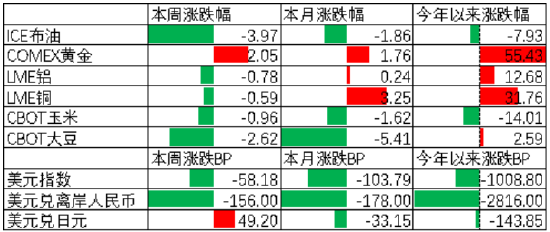
1. Report Industry Investment Rating - The document does not provide the report industry investment rating information 2. Core View of the Report - The significance of whether the Fed will cut interest rates below the neutral rate to the US Treasury and precious metals markets is analyzed, and four scenarios are proposed, with scenarios two and three having a relatively high probability [2] - Monetary policy may become the focus of China's incremental policies in 2026 [2] - Upstream price indicators have further rebounded [2] 3. Summary According to the Directory 3.1 High - frequency Data Panoramic Scan - After the Fed cut interest rates to the 3.5 - 3.75% range, this round has cumulatively cut interest rates by 175BP. The key to future interest rate cuts lies in whether to cut below the neutral rate. Four scenarios are analyzed, and the impacts on the US Treasury and precious metals markets are different. Scenarios two and three are more likely [2][10][11] - The central economic work conference's requirements imply that fiscal policy in 2026 may maintain the ratios of total fiscal expenditure/GDP and general public budget revenue/GDP stable. With limited decline space for real - estate - related revenue, monetary policy may be the focus of incremental policies [2][13] - This week, the average wholesale price of pork decreased by 1.09% week - on - week and 24.08% year - on - year; the average wholesale price of 28 key vegetables decreased by 0.30% week - on - week and increased by 17.61% year - on - year. The edible agricultural product price index increased by 0.70% week - on - week, and the year - on - year decline narrowed to 1.20%. The domestic cement price index increased by 0.44% week - on - week; the Nanhua iron ore index increased by 0.92% on average week - on - week; the operating rate of coking enterprises with a capacity of over 2 million tons decreased by 2.32% week - on - week; the rebar inventory index decreased by 7.54% week - on - week. The production material price index increased by 0.10% week - on - week and decreased by 1.76% year - on - year. Brent and WTI crude oil futures prices decreased by 3.10% and 3.42% on average week - on - week respectively. The LME copper spot price increased by 0.41% on average week - on - week; the aluminum spot price increased by 0.20% on average week - on - week, and the copper - gold ratio decreased by 1.87% week - on - week. From December 1 - 18 this year, the average daily transaction area of commercial housing in 30 large and medium - sized cities was about 293,000 square meters, compared with about 498,000 square meters per day in December 2024 [2] 3.2 High - frequency Data and Important Macroeconomic Indicators Trend Comparison - The document provides multiple charts showing the relationship between high - frequency data and important macro - economic indicators, such as the relationship between the RJ/CRB price index year - on - year and export value year - on - year, and the relationship between the production material price index year - on - year and PPI industrial year - on - year [29][33][37] 3.3 Important High - frequency Indicators in the US, Europe, and Japan - The document provides multiple charts showing important high - frequency indicators in the US, Europe, and Japan, such as the US weekly economic indicators and actual economic growth rate, and the US initial jobless claims and unemployment rate [97][102][108] 3.4 Seasonal Trend of High - frequency Data - The document provides multiple charts showing the seasonal trends of high - frequency data, such as the daily average production of crude steel (decade) and the production material price index [112][121][127] 3.5 High - frequency Traffic Data in Beijing, Shanghai, Guangzhou, and Shenzhen - The document provides charts showing the year - on - year changes in subway passenger volume in Beijing, Shanghai, Guangzhou, and Shenzhen [166][167]
春江水渐暖
HUAXI Securities· 2025-12-21 14:10
Group 1 - The report highlights significant fluctuations in the bond market following two important meetings, with the 30-year government bond yield experiencing a range between 2.23% and 2.28% [1][23] - The first main line of analysis focuses on the supply and demand issues for government bonds in 2026, with expectations of a net supply increase from 6.4 trillion yuan in 2025 to a range of 6.5 to 7.2 trillion yuan [2][25] - The second main line discusses speculation around structural interest rate cuts, particularly the LPR, due to weak demand and real estate data, with a notable decline in residential short-term loans [3][26] Group 2 - The report suggests that if the LPR structural interest rate cut is implemented, the bond market may experience a positive reaction, with potential rapid growth in demand towards the year-end [4][33] - The analysis indicates that the long-end interest rate's upward boundary is becoming clearer, with the 10-year government bond yield expected to stabilize around 1.85% [5][36] - The report emphasizes that the current bond market may be entering a turning point, with bullish forces beginning to emerge, suggesting a more optimistic strategy compared to early December [7][39] Group 3 - The report notes a slight decrease in the scale of wealth management products as the year-end approaches, with a weekly decline of over 1,000 billion yuan [40] - It highlights that the net value drawdown of pure bond products has continued to narrow, with the proportion of negative yields decreasing [47][56] - The report indicates that the overall performance of wealth management products is improving, with the proportion of products not meeting performance standards declining to 26.4% [56][61]