线下零售

Search documents
东方甄选首店将开,400平米门店月薪3万招店长
3 6 Ke· 2025-12-05 03:55
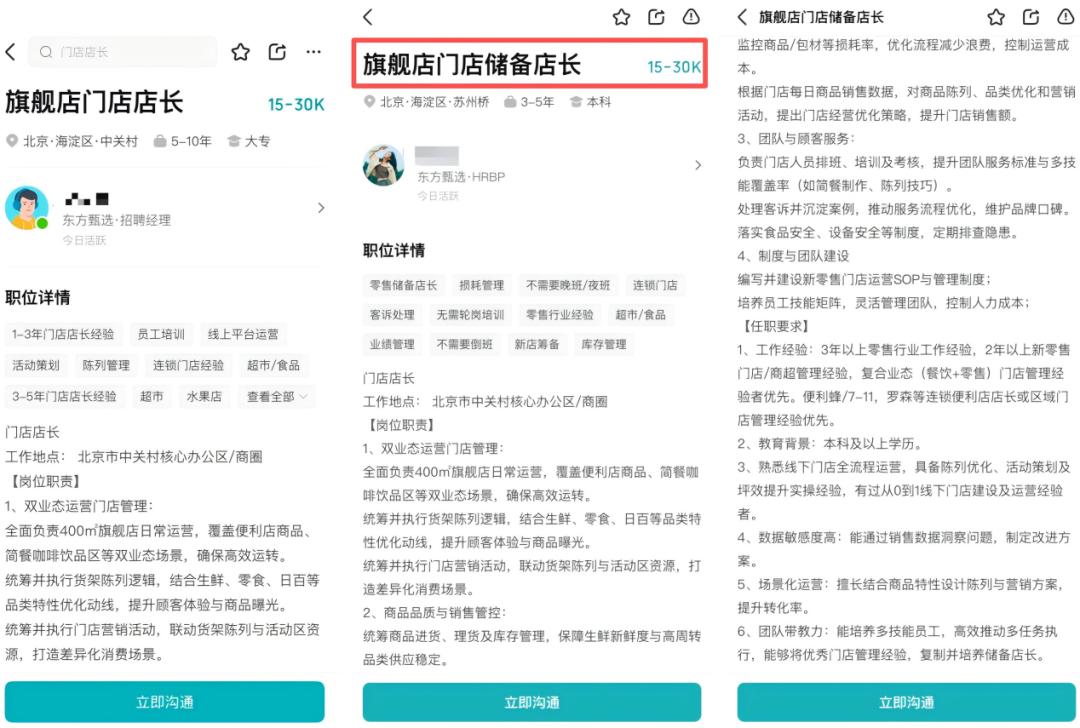
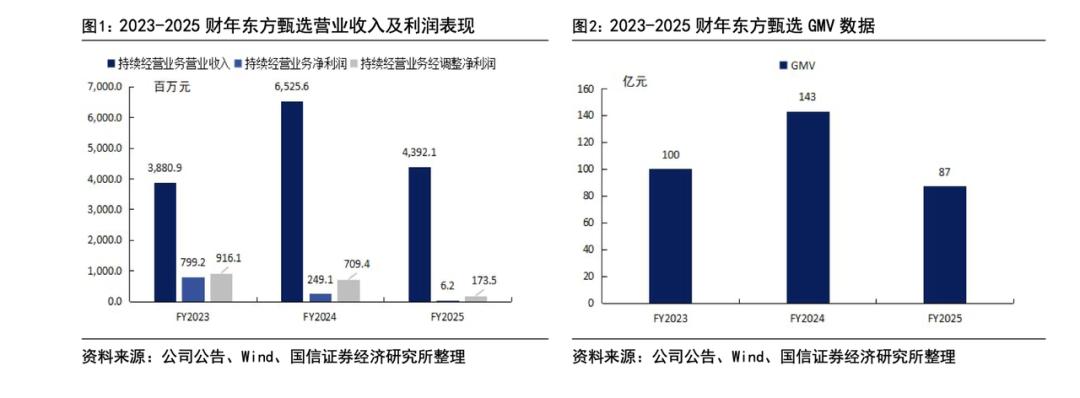
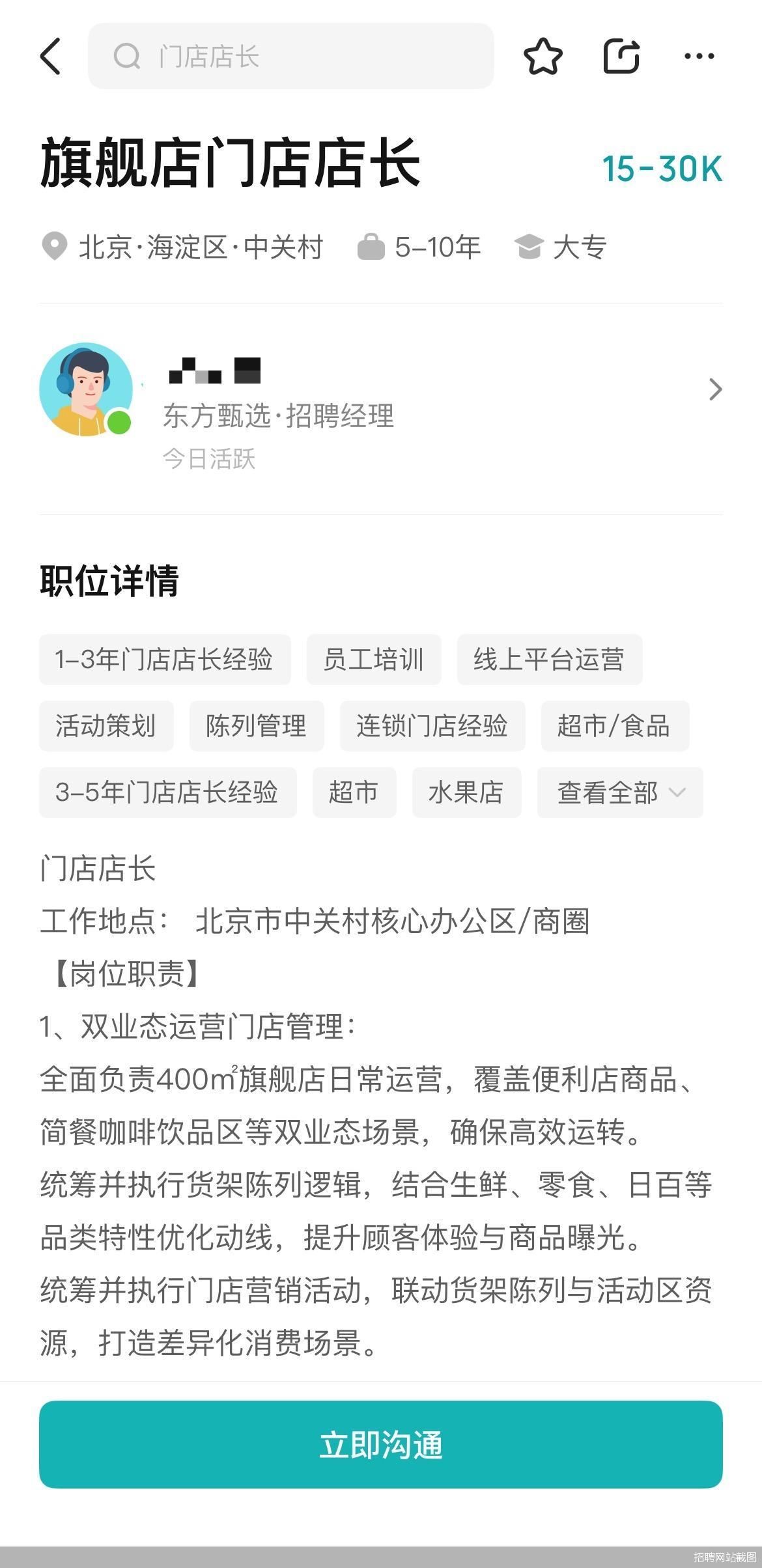
Core Insights - The core focus of the article is on Oriental Selection's strategic shift towards offline retail, highlighting the challenges and opportunities associated with this transition, particularly in the context of its recent leadership changes and financial performance [1][7]. Group 1: Company Strategy - Oriental Selection is actively seeking to establish its first flagship store in Beijing, with a monthly salary range of 15,000 to 30,000 RMB for the store manager, indicating a serious commitment to its offline retail strategy [1][2]. - The flagship store will cover approximately 400 square meters and will feature a combination of fresh food, snacks, daily necessities, and a dining area, aiming for a "restaurant + retail" hybrid model [3][4]. - The company is looking for store managers with at least five years of retail experience and a background in managing hybrid business models, indicating a focus on leveraging experienced talent to build its offline operations [3][4]. Group 2: Financial Performance - For the fiscal year 2025, Oriental Selection reported total revenue of 4.4 billion RMB, a decrease of 32.7% from the previous year, with a net profit of only 620,000 RMB, down 97.5% year-on-year [8]. - The financial implications of opening physical stores include significant operational costs such as rent, which could exceed 100,000 RMB per month for a prime location, alongside high salaries for staff, creating pressure on profitability [4][6]. Group 3: Market Competition - The offline retail market is highly competitive, with established players like 7-ELEVEn and Hema already having strong supply chains and operational efficiencies, posing a challenge for Oriental Selection as it enters this space [6][9]. - Competitors are leveraging unique business models and customer engagement strategies, such as integrating online and offline sales, which Oriental Selection must consider to differentiate itself [6][9]. Group 4: Operational Challenges - Oriental Selection faces significant operational challenges due to its lack of experience in offline retail, particularly in areas such as store location selection, layout design, and customer service [9][12]. - Previous quality control issues in its product offerings have raised concerns about its ability to maintain standards in a retail environment, where product quality is critical to brand reputation [9][12]. Group 5: Strategic Recommendations - It is suggested that Oriental Selection should initially focus on pilot stores in areas with high overlap with its existing educational centers to minimize costs and competition [13]. - The company should emphasize its strengths in self-operated products and create a unique shopping experience that differentiates it from traditional supermarkets, while also enhancing its supply chain efficiency [13].

董宇辉出走后,俞敏洪要去线下「捡钢镚」
3 6 Ke· 2025-12-04 23:30
东方甄选的野心不止是做"线上山姆"了。 近期,东方甄选正在招聘北京首家旗舰店的店长,优先有"餐饮+零售"复合业态管理经验的人才,薪资待遇15-30k。 这家旗舰店位于北京中关村,面积在400平方米左右,除了生鲜、零食、日百等便利店商品,还涵盖简餐和咖啡饮品区。 继董宇辉、孙东旭离职后,东方甄选终于走向线下,这家首店将是俞敏洪口中未来全国百家门店的第一步试点。 过去两年,东方甄选持续在供应链和品牌心智上做重投入,自营品占比提升、付费会员体系建立,但线上流量的天花板越来越清晰。要从直播电商转向新 零售品牌,线下门店是它必须补上的一块拼图。 此前,俞敏洪表示希望依托800个新东方地面教学点探索出一个线上线下相结合的模式,和全国新东方合作开设地面服务店、会员店、旗舰店。 那么,东方甄选的品牌力和用户黏性,能否支撑起一个真正意义上的零售业态? 一、不得不走的一步棋 东方甄选迈出线下旗舰店这一步,是渠道延伸,又不只是渠道延伸。这是东方甄选在多重压力之下的一次战略调整。 布局线下的最直接推力,是线上流量生态发生了根本性逆转。 众所周知,东方甄选从抖音起家,到现在,抖音仍然是东方甄选的基本盘。但是随着直播电商模式的常态化、东 ...
东方甄选将在北京中关村开首店,3万薪资招店长!最近刚有大动作…
Bei Jing Shang Bao· 2025-12-03 13:50
Core Insights - The flagship store business of Dongfang Zhenxuan aims to find incremental growth offline while linking to online operations [2][10] - Dongfang Zhenxuan is recruiting store managers for its first flagship store in Beijing, offering salaries between 15,000 to 30,000 yuan, prioritizing candidates with experience in "catering + retail" [3][9] - The company is exploring a multi-faceted business model, including restaurant management and delivery services, as part of its operational adjustments [7][9] Recruitment and Store Details - The flagship store will be located in Zhongguancun, Beijing, covering approximately 400 square meters and offering a variety of products including fresh food, snacks, daily necessities, and a dining area [3][9] - The recruitment criteria for store managers include over five years of retail experience and management experience in a combined catering and retail environment [3][9] Business Model and Strategy - The flagship store is expected to integrate online and offline experiences, potentially offering services like in-store pickup and immediate delivery [10][13] - Dongfang Zhenxuan's previous attempts at rapid delivery services faced challenges, leading to a reevaluation of its logistics and fulfillment strategies [11][13] Market Context and Competition - Other live-streaming institutions like San Zhi Yang and Jiao Ge Peng You are also expanding into offline markets, indicating a trend among similar businesses to seek growth outside of online platforms [14][16] - The flagship store's location in a competitive area with established brands like Sam's Club and Hema presents challenges for differentiation and product selection [18] Financial Performance and Product Strategy - Dongfang Zhenxuan's GMV from all sales channels dropped from 14.3 billion yuan to 8.7 billion yuan year-on-year, with significant declines in its main sales channel on Douyin [19][21] - The company is shifting its product mix to include higher-margin items like smart home products and apparel, expanding its self-operated product lines to over 700 [21]


独家|东方甄选将在京开首家旗舰店 直播机构扩张线下
Bei Jing Shang Bao· 2025-12-03 12:55
Core Insights - Oriental Selection is planning to open its first flagship store in Beijing, with a focus on hiring a store manager with experience in both food and retail sectors, offering a salary between 15,000 to 30,000 yuan [1][6] - The flagship store will feature a variety of products including fresh food, snacks, daily necessities, and a dining area for quick meals and coffee [1] - The company aims to leverage offline retail as a new growth avenue, especially after facing challenges in its online business due to the departure of key personnel [1][14] Recruitment and Store Management - The store manager position requires over five years of retail experience and management of teams larger than 15 people, with a preference for candidates from convenience store backgrounds [6] - Recent business registration changes indicate that Oriental Selection is expanding its operational scope to include food management and delivery services [6][7] Business Model and Strategy - The flagship store model may draw inspiration from successful convenience store operations, integrating dining and coffee areas [7] - The company is exploring a hybrid online-offline model, utilizing existing New Oriental teaching points to attract foot traffic and convert visitors into members [7][10] Market Context and Competition - The flagship store is positioned to enhance Oriental Selection's offline presence amid increasing competition from other live-streaming and retail brands [11][12] - The company faces significant competition in the offline retail space, particularly in high-traffic areas like Beijing's Zhongguancun, where it will compete with established brands [12][13] Financial Performance and Challenges - The company has experienced a decline in GMV across all sales channels, dropping from 14.3 billion yuan to 8.7 billion yuan year-over-year [14] - The departure of key figures has impacted the company's market presence, with a notable drop in followers and sales volume on major platforms [14][15] Product Diversification and App Development - Oriental Selection is diversifying its product offerings, moving beyond low-margin fresh food to include higher-margin items like smart home products and apparel [14] - The company's app has seen an increase in GMV contribution, rising from 8.4% to 15.7% of total sales, indicating a growing focus on digital sales channels [15]
国信证券:商贸零售行拥抱变局聚新势 重塑价值觅转机
智通财经网· 2025-11-28 01:29
Core Viewpoint - The retail industry is experiencing increased market volatility as of the end of 2025, with a focus on capturing new consumption trends and expectations for a reversal of traditional consumption challenges [1] 2025 Review - In the first nine months of 2025, the total retail sales reached 36,587.7 billion yuan, reflecting a year-on-year growth of 4.5%, with retail sales of consumer goods excluding automobiles growing by 4.9% [2] - By category, cosmetics sales grew by 3.9%, while gold and jewelry sales surged by 11.5% due to a low base last year and rising gold prices [2] - Cross-border e-commerce imports and exports reached approximately 2,060 billion yuan, marking a 6.4% increase, demonstrating resilience despite external impacts such as tariffs [2] - The consumption landscape shows structural highlights in sectors like pets, trendy toys, personal care, and jewelry, driven by insights into new consumer demands and product innovation [2] - The new consumption industry trends and expectations for a reversal in traditional consumption challenges are identified as the two main themes, with a positive market performance at the beginning of the year followed by a cooling trend later on [2] 2026 Outlook - New markets will be explored domestically, including customer return during offline channel adjustments and new dividends from innovative business models like instant retail, while overseas expansion remains crucial for Chinese brands [3] - New demands will focus on insights into emerging consumer preferences, emphasizing emotional and practical value in products, and exploring innovation through IP+ and AI+ [3] - A platform-based approach is necessary due to intensified competition, requiring companies to create mechanisms for continuous growth through both internal and external opportunities [3] Investment Recommendations - For beauty and personal care, focus on leading companies with room for product innovation and those with platform capabilities for iterative growth, such as Shangmei Co., Proya, and others [4] - In the gold and jewelry sector, companies with differentiated designs and expansion potential are expected to benefit, including Chao Hong Ji and Chow Tai Fook [4] - For cross-border e-commerce, leading firms expanding in target markets and new categories will see sustained fundamental catalysts, such as Small Commodity City and Anker Innovations [4] - In offline retail, companies showing initial operational improvements should be monitored, including Jiajiayue and Miniso [4]

拉动消费 线下市场依然重要
Xiao Fei Ri Bao Wang· 2025-11-26 22:34
Core Insights - The offline traditional consumption market remains significant and is experiencing stronger growth compared to online consumption, indicating a robust market space even in the e-commerce era [1][2][3] Group 1: Offline Consumption Growth - In October, the offline consumption heat index in major cities increased by 17.3% year-on-year, highlighting the potential for offline markets to surpass online markets [1] - The offline consumption heat index for first-tier and second-tier cities grew by 18.9% and 14.5% respectively, while third-tier and below cities saw a remarkable increase of 31.2% [2] Group 2: Consumer Behavior and Market Dynamics - The growth in offline consumption in lower-tier cities is attributed to rapid economic development and rising income levels, enhancing consumer spending capacity and willingness [2] - Consumers in third and fourth-tier cities prioritize the experience and interaction provided by offline shopping, which aligns with their slower-paced lifestyles [2] Group 3: Importance of Offline Markets - Offline retail stores serve as crucial platforms for brand display and image building, allowing consumers to better understand brand culture and product features [2] - The offline market plays a vital role in job creation and local economic development, emphasizing its importance alongside online platforms [2][3] Group 4: Strategic Recommendations - To stimulate consumption potential, it is essential to recognize the importance of offline markets and promote coordinated development between online and offline channels [3][4] - There is a need to explore the unique value and advantages of offline consumption, fostering a blended approach to drive market prosperity and economic growth [4]
名创优品(09896)Q3:模式进退两难,留给叶国富的空间已不多
智通财经网· 2025-11-24 06:34
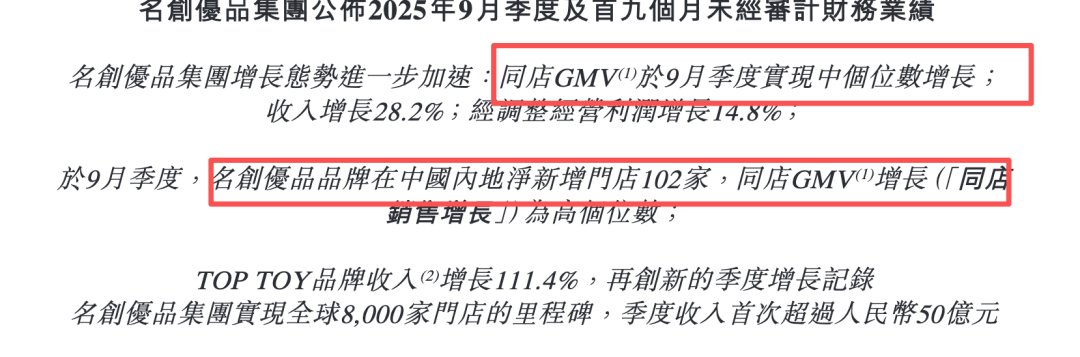
Core Viewpoint - The article discusses the financial performance and strategic direction of MINISO, emphasizing the importance of a strong business model for long-term returns and the challenges faced in maintaining competitive pricing and profitability in the retail sector [1][12]. Financial Performance - MINISO reported Q3 2025 revenue of 5.797 billion RMB, a year-on-year increase of 28.2%, achieving a record high for a single quarter. Gross profit rose by 28% to 2.58 billion RMB, with a gross margin of 44.7%. However, net profit attributable to shareholders decreased by 31% to 441 million RMB, while adjusted net profit increased by 12% to 767 million RMB, with an adjusted net profit margin of 13.2% [1]. - For Q1 2025, MINISO's revenue was 4.427 billion RMB, up 18.9%, but operating profit fell by 4.51% to 710 million RMB, and net profit dropped by 28.92% to 417 million RMB. Adjusted net profit was 587 million RMB, down 4.81%, with a net profit margin of 13.3% [3]. - In Q2 2025, total revenue reached 4.97 billion RMB, a 23.1% increase, with a gross margin of 44.3%. Operating profit grew by 11.3% to 836 million RMB, while net profit was 489.5 million RMB, down from 591.4 million RMB in the previous year [3]. Business Segments - MINISO brand revenue was 5.22 billion RMB, reflecting a 23% increase, while TOP TOY brand revenue surged by 111.4% to 570 million RMB. The total number of stores globally reached 8,138, with 7,831 MINISO stores and 307 TOP TOY stores [1]. - The same-store GMV showed single-digit growth across the group, with MINISO in China experiencing high single-digit growth, indicating a stable base in the domestic market [1]. Business Model Analysis - The article critiques MINISO's business model, questioning whether it aligns more with unique product offerings or cost efficiency. The current strategy appears to lean towards the former, aiming for distinctive product strength rather than merely competing on price [5][12]. - The founder's past assertion of a "quality at low price" model is challenged, as the current gross margin exceeds 50%, suggesting that the pricing strategy may not be as competitive as claimed [6][8]. - The company is seen as focusing on brand and IP management rather than traditional retail efficiency, which may limit its ability to compete on price against discount retailers [12][9]. Competitive Landscape - The article highlights the competitive pressures faced by MINISO, particularly from established players in the market. The potential for competitors to offer lower prices poses a significant risk to MINISO's market position [12][15]. - The discussion includes comparisons with other brands, such as Bubble Mart, which operates on a unique product model with higher gross margins, suggesting that MINISO's strategy may not be sustainable in the long term [14][15].
超八成的零售企业不赚钱,线下零售走到尽头了?
3 6 Ke· 2025-11-21 12:27
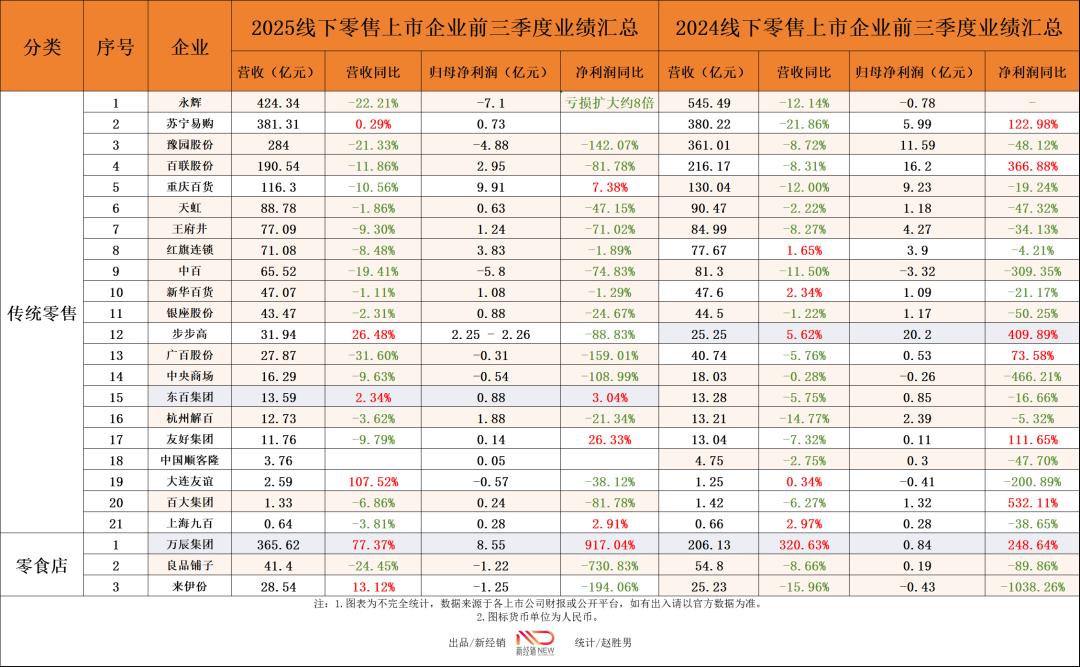
Core Insights - The offline retail industry is facing significant challenges, with many companies reporting declining revenues and profits, indicating a collective downturn in the sector [1][3] - Only 2 out of 24 listed retail companies achieved both revenue and profit growth in the first three quarters of 2025, highlighting the industry's struggles [3][10] Financial Performance Summary - Among the 24 listed retail companies, 18 experienced a year-on-year decline in revenue, and 19 saw a decrease in profits [3] - Notable companies with revenue and profit growth include: - 万辰集团: Revenue increased by 77.37% and net profit surged by 917.04% [10][11] - 东百集团: Revenue grew by 2.34% and net profit increased by 3.04% [10][13] Industry Trends - The shift towards online retail and new business models is evident, with the instant retail market projected to reach 1.4 trillion yuan by 2025, growing at a compound annual growth rate of 25% [6] - Instant retail sales during the 2025 "Double 11" shopping festival reached 67 billion yuan, a 138.4% increase year-on-year, outpacing traditional e-commerce growth [8] Business Model Innovations - New retail formats, such as membership stores and integrated online-offline experiences, are gaining traction, with companies like 山姆会员店 and 盒马 leading the way [9] - 万辰集团's success is attributed to its focus on the bulk snack market, which aligns with consumer demand for high value and convenience [11][12] Transformation Strategies - Retailers are exploring various transformation strategies, including: - Systematic adjustments to enhance user engagement and operational efficiency, exemplified by the "胖东来" model adopted by several companies [22] - Innovative shopping experiences that blend social, cultural, and entertainment elements to attract consumers [23] - Despite the challenges, successful transformation efforts in select stores indicate a potential path forward for the industry [24]

【财联社早知道】上调多达60%!三星电子11月提高内存芯片价格,机构称存储行业的“超级周期”或已经悄然启动
财联社· 2025-11-16 11:01
Group 1 - Samsung Electronics is raising memory chip prices by up to 60% in November, indicating a potential "super cycle" in the storage industry [1] - The State Council emphasizes the need to cultivate new consumption scenarios and business formats, with optimism for the recovery of the offline retail sector [1] - A company reports that its storage revenue is still largely driven by DDR3, but the proportion of new process products like DDR4 will gradually increase [1]

为什么品类繁荣,品牌增长却陷入困境?
3 6 Ke· 2025-11-12 07:36
Core Insights - The 17th year of "Double 11" has highlighted a significant shift in consumer behavior, moving from impulsive buying to more rational decision-making, driven by the influence of live streaming and daily product recommendations [1][4] - The competitive landscape is undergoing a transformation, with brands struggling to offer attractive prices during promotional events due to compressed profit margins [1][4] - The retail environment is witnessing a power shift, as online channels continue to grow, leading to a decline in traditional offline retail [4][6] Group 1: E-commerce and Retail Dynamics - E-commerce and instant retail are providing consumers with cheaper and faster shopping experiences, significantly reducing the advantages of offline channels [3][4] - The proportion of online retail sales is expected to exceed 30% of total retail sales by the end of 2024, indicating a continued shift towards online shopping [6][8] - Nielsen's data shows that online sales in fast-moving consumer goods (FMCG) are projected to grow by 21.1% in the first half of 2025, while offline sales are expected to decline by 4.3% [6][8] Group 2: Channel Value Transformation - The value of retail channels is shifting from merely reaching customers to reducing customer costs, both in terms of decision-making and purchasing expenses [9][11] - Successful models like Costco demonstrate the importance of stringent product selection and consumer trust in driving sales [9][11] - Discount stores are thriving by leveraging scale to negotiate lower prices with suppliers, showcasing a shift in consumer expectations towards value [11][12] Group 3: Brand and Distribution Challenges - Traditional distribution systems are under pressure as consumer traffic in physical stores stagnates, making extensive product placement less effective [14][15] - New brands are emerging, leveraging online channels to capture market share, while established brands face challenges in adapting to this new landscape [17][18] - Brands must rethink their strategies to maintain relevance, as the competitive environment becomes increasingly fragmented and dynamic [18][19] Group 4: Consumer Empowerment and Marketing Evolution - Consumers are increasingly empowered, preferring peer reviews over traditional advertising, which necessitates a shift in how brands communicate their value [25][26] - The integration of online and offline experiences is becoming crucial, as consumers navigate multiple platforms for product information and purchasing [25][28] - Brands must adapt to a new marketing paradigm that emphasizes collaboration across functions to meet evolving consumer expectations [28][29]