高端制造

Search documents
宏观点评:二十届四中全会公报的四大亮点-20251024
Ping An Securities· 2025-10-24 10:26
Group 1: Economic Development Highlights - The focus has shifted to "centering economic construction," emphasizing expanding domestic demand and the interaction between new demand and new supply[2] - Laborers' share of total income has increased from 49.8% in 2012 to 53.6% in 2023, indicating a significant rise in income distribution[2] - The proportion of fiscal budget spending on people's livelihoods has risen from 32.6% in 2012 to 36.7% in 2024, highlighting increased investment in social welfare[2] - China's final consumption rate in 2023 was 56.8%, which is 10.5 percentage points lower than the average of middle-income countries and 19.2 percentage points lower than high-income countries, indicating potential for growth in consumption[2] Group 2: Technological Advancements - A new goal of significantly improving "self-reliance and strength in technology" has been introduced, reflecting the importance of technological innovation[2] - In 2022, 47% of researchers in the top 20% of global AI institutions were of Chinese nationality, showcasing China's talent pool in cutting-edge technology[2] - China has achieved notable successes in industries such as new energy and high-end manufacturing during the "14th Five-Year Plan" period, leveraging its talent and institutional advantages[2] Group 3: Industrial and Trade Strategy - The meeting emphasized the importance of maintaining a reasonable proportion of manufacturing, with China's manufacturing value added accounting for nearly 30% of the global total[3] - The global supply chain is shifting towards localization and diversification due to rising protectionism and geopolitical tensions, presenting new opportunities for China's industrial transformation[3] - The strategy of "expanding high-level opening-up" has been elevated, aiming to counter trade protectionism and enhance China's role in global trade[3]
从“中国经济”到“中国人经济”,有何不同寻常?|新京报专栏
Xin Jing Bao· 2025-10-24 08:01
Core Viewpoint - The article emphasizes the strategic shift in China's economic development philosophy, highlighting the importance of both GDP and GNI, which reflects a transition from a production-oriented approach to a more comprehensive perspective on national wealth and economic well-being [2][3]. Summary by Sections Economic Development Strategy - The 20th Central Committee's Fourth Plenary Session approved the proposal for the 15th Five-Year Plan, focusing on expanding bilateral investment cooperation and emphasizing both GDP and GNI as key indicators of economic health [2]. - The shift from focusing solely on domestic production (GDP) to including national wealth (GNI) signifies a paradigm change in understanding economic performance [2][3]. GNI vs. GDP - GNI, which includes net income from abroad, provides a broader view of national wealth compared to GDP, which is limited to domestic production [3]. - GNI emphasizes the importance of individuals and their global resource allocation capabilities, while GDP focuses on local production [3]. International Investment and Competitiveness - Chinese enterprises have established over 50,000 companies abroad, with foreign investment stock exceeding $3 trillion, maintaining a global ranking in the top three for eight consecutive years [3]. - The growth of overseas assets contributes directly to GNI, aligning with the goal of meeting the people's growing needs and supporting high-level openness [4]. Policy Implications - The dual focus on GDP and GNI is seen as a necessary response to the challenges of globalization, enhancing China's control over global resources and supply chains [6]. - The proposal includes measures to attract foreign investment and support outbound investment, particularly in advanced manufacturing and digital economy sectors [7][8]. Institutional Reforms - The establishment of a more comprehensive institutional framework for high-level openness is anticipated, including aligning with international trade agreements and improving the business environment for foreign investors [7][8]. - The focus on GNI growth may lead to a shift in local government priorities from merely attracting investment to fostering talent and global engagement [8]. Global Economic Governance - The emphasis on both GDP and GNI offers a new model for economic governance, providing a reference for developing countries to balance efficiency and equity [9]. - This approach aims to enhance resilience against market fluctuations and promote inclusive globalization, as seen in projects like the China-Laos railway [9]. Conclusion - The transition from a GDP-centric model to one that values GNI reflects a profound change in development philosophy, positioning China as a global value creator rather than just a manufacturing hub [9].

读懂“5.6%”中的含金量
Sou Hu Cai Jing· 2025-10-23 19:02
Group 1 - Beijing's GDP grew by 5.6% year-on-year in the first three quarters, with an increase of 0.1 percentage points compared to the first half of the year, indicating a stable and improving economic performance [1] - Key industries such as information transmission, software and IT services, finance, and manufacturing contributed over 80% to the city's economic growth [1] - High-end manufacturing led the growth, with the added value of strategic emerging industries and high-tech manufacturing increasing by 17.9% and 9.9% respectively [1] Group 2 - The new consumption sector showed strong performance, with significant growth in the film and performance markets, as well as over 10% revenue growth in travel agencies and related services [1] - Policies promoting consumption, such as the trade-in program for household appliances, have effectively boosted production and sales [2] - The integration of various sectors, including culture, commerce, tourism, and sports, has led to double-digit growth in the number of large events and attendees in Beijing this year [2]
新三板,仍是中小企业境内IPO“复兴号”,专精特新企业黄金跳板!
Sou Hu Cai Jing· 2025-10-23 01:01
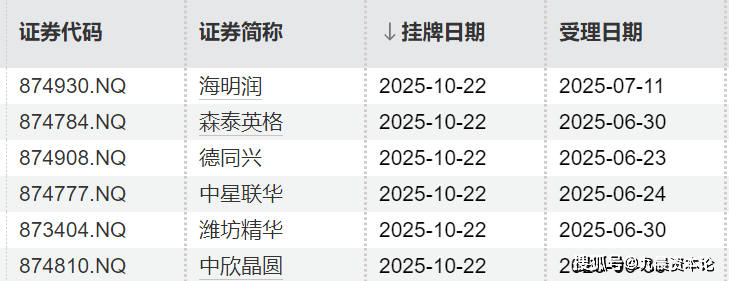
Core Insights - Six companies successfully listed on the New Third Board, showcasing a strong connection between capital and innovation on this undervalued platform [1] - The New Third Board is increasingly viewed as a "golden channel" to the Beijing Stock Exchange, with companies rapidly moving towards this goal [2][4] - The listing conditions of the Beijing Stock Exchange are more aligned with the realities of small and medium-sized enterprises, making it an attractive option for growth [2][3] Group 1 - The six newly listed companies come from high-end manufacturing, new materials, and semiconductor sectors, indicating a focus on innovative industries [1] - Companies like Guangdong Finney Technology demonstrate the strategic use of the New Third Board as a stepping stone to the Beijing Stock Exchange, with rapid progression from listing to advisory stages [2] - The New Third Board has undergone a significant transformation, with current listed companies exhibiting strong innovation capabilities and high market shares [4][5] Group 2 - The pathway for companies remains a tiered approach: listing on the New Third Board, entering the innovation layer, and then applying for the Beijing Stock Exchange [7] - The core value of listing on the New Third Board lies in the process of standardization and improvement in corporate governance, financial management, and legal compliance [9] - The current market environment encourages companies to consider when to initiate their listing process, as capital market reforms present significant opportunities for growth [9]
含“科”量大幅提升!华泰联合证券劳志明:产业并购加速,投行创新助推新质生产力跃迁
券商中国· 2025-10-22 23:24
Core Viewpoint - The current wave of mergers and acquisitions (M&A) among listed companies is characterized by a clear logic of industrial integration and transformation, driven by policies such as "Kebatiaos" and "Merger Six Articles," with a focus on enhancing quality and efficiency while returning value to investors [1][2]. Group 1: Market Activity and Trends - Since the implementation of the "Merger Six Articles," market activity has significantly increased, with 150 administrative license M&A transactions reported, a 285% increase, and a transaction scale exceeding 440 billion yuan, marking over 100% growth [2]. - The focus of M&A has shifted towards hard technology and new productive forces, with sectors like semiconductors, high-end manufacturing, and new energy seeing a continuous rise in transaction proportions [2][3]. - The proportion of private enterprise restructurings has increased, indicating a shift in the landscape of M&A activity [1]. Group 2: Characteristics of M&A Transactions - The majority of listed companies prefer acquisition targets with substantial size, often leading players in niche markets, and are increasingly willing to pay higher premiums for technology-intensive targets [2][3]. - Control transactions among listed companies are becoming more active, with a notable increase in buyers from technology-oriented backgrounds, particularly in the innovation-driven sector [3]. - Cross-industry mergers have become a strategic choice for companies facing growth plateaus in traditional sectors, with 43 out of 174 major asset restructuring transactions being cross-industry, accounting for about 25% [3]. Group 3: Valuation and Integration Challenges - Cross-industry M&A presents greater complexity and risks, leading to challenges in achieving consensus on core terms such as valuation [4]. - Companies are adopting innovative valuation methods to address the challenges of acquiring unprofitable assets, with a focus on understanding the core competitiveness of targets [5][6]. - The market has seen a trend towards more rational pricing strategies, including differentiated pricing and extended lock-up periods for long-term investors [6][7]. Group 4: Opportunities and Challenges for Investment Banks - The active M&A market presents new opportunities and challenges for investment banks, which need to deepen their understanding of the commercial needs and conditions of both parties involved in transactions [8]. - Investment banks are encouraged to enhance their service capabilities by improving the professional level of their staff and integrating research with M&A activities [8][9]. - The regulatory environment has become more accommodating, but there remains a need for better understanding and utilization of policies among market participants [10].
21评论|丁爽:释放创新与消费的“双引擎”作用
2 1 Shi Ji Jing Ji Bao Dao· 2025-10-22 11:25
Group 1 - The 20th Central Committee's Fourth Plenary Session will review the suggestions for the 15th Five-Year Plan, emphasizing innovation to enhance total factor productivity amid aging population and external complexities [1] - China is expected to increase investments in renewable energy to maintain its leading position and achieve carbon peak before 2030 [1][3] - The government is likely to implement measures to stimulate domestic demand, including income redistribution and further opening of the service sector [1][3] Group 2 - China's investment in R&D is yielding returns, with the country projected to become the 10th most innovative economy by 2025 [2] - The government will leverage its annual pool of 5 million STEM graduates and increase investments in AI, quantum computing, integrated circuits, biotechnology, humanoid robots, and renewable energy [2] - The emphasis will be on maintaining the manufacturing sector's share of the economy while transitioning from "Made in China" to "Created in China" [2] Group 3 - The green development agenda will remain a key component of industrial transformation, with annual targets for the "dual carbon goals" expected [3] - Investment will continue in renewable energy sectors such as wind, solar, hydrogen, smart grids, and electric vehicles [3] - The government will focus on improving residents' employment and income to boost consumption and reduce precautionary savings [3][4] Group 4 - There is strong demand for service consumption in areas like education, healthcare, and tourism, with the government opening the service sector to private and foreign capital [4] - The government is addressing issues of "involution" and disorderly competition, with plans to avoid redundant investments and reduce excess capacity [5]
锐评|这张成绩单,“含金量”与“含新量”都足足的
Sou Hu Cai Jing· 2025-10-22 10:42
Core Insights - Beijing's GDP grew by 5.6% year-on-year in the first three quarters, showing a slight increase of 0.1 percentage points compared to the first half of the year, indicating a stable and improving economic performance [1] - Key industries such as information transmission, software and IT services, finance, and manufacturing contributed over 80% to the city's economic growth [1] - High-end manufacturing led the growth, with the added value of strategic emerging industries and high-tech manufacturing increasing by 17.9% and 9.9% respectively [1] - New consumption trends are emerging, with significant growth in the cultural and tourism sectors, including double-digit increases in box office revenues and over 10% growth in travel agency and related services [1] Industry Analysis - The transformation of innovation potential into economic momentum is crucial for sustainable development, with Beijing focusing on becoming a major global scientific center and innovation hub [1] - Policies such as the trade-in program for consumer goods have stimulated rapid growth in the sales of household appliances [2] - The integration of diverse business models in the cultural, commercial, and tourism sectors has led to double-digit growth in the number of large events and attendees in Beijing this year [2] - The current economic environment is characterized by external uncertainties and insufficient domestic demand, necessitating a focus on reform and policy support to ensure equitable distribution of development benefits [2]
20cm速递|创业板50ETF国泰(159375)盘中微跌,政策层面支撑科技成长板块
Mei Ri Jing Ji Xin Wen· 2025-10-22 06:48
Group 1 - The policy direction is expected to accelerate the construction of a "self-controllable + internal circulation" system, focusing on key technology breakthroughs, supply chain enhancements, and energy security [1] - The main themes of the policy are anticipated to be technological independence, domestic substitution, and the establishment of new productive forces, benefiting sectors such as high-end manufacturing, semiconductor equipment, new materials, and new energy [1] - Consumer, pharmaceutical, and digital economy sectors driven by domestic demand are likely to show resilience amid economic recovery and policy support [1] Group 2 - The A-share market is characterized by "steady progress and defensive growth," with investment recommendations focusing on the "self-controllable + internal circulation" direction [1] - The Guotai 50 ETF (159375) tracks the ChiNext 50 Index (399673), which has a daily fluctuation of 20%, selecting 50 stocks with large market capitalization and excellent liquidity from the ChiNext market [1] - The index components are highly concentrated in sectors such as power equipment, biomedicine, and electronics, reflecting the core characteristics of "technology + growth" and showcasing the overall performance of innovative and high-growth listed companies in the ChiNext market [1]

增持中国资产将是大势所趋!四位大咖把脉全球资产配置
券商中国· 2025-10-22 03:50
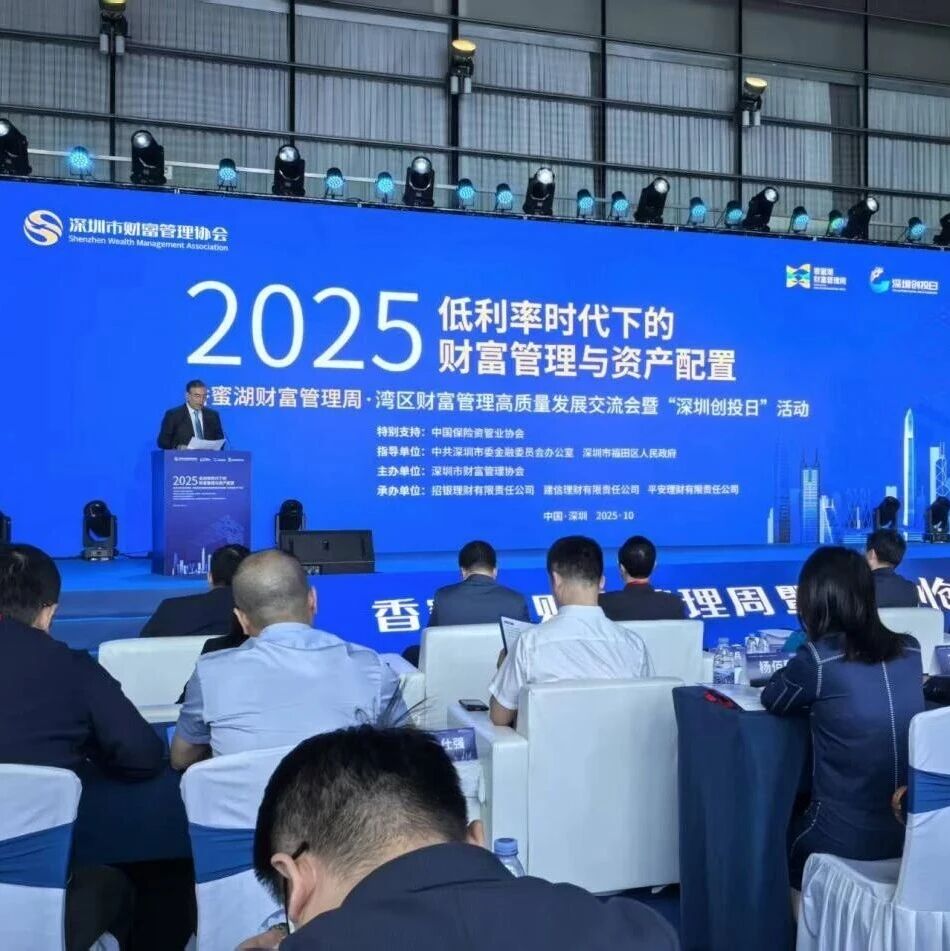
Core Viewpoint - The conference highlighted the optimistic outlook for Chinese assets, particularly in the technology sector, amidst a global trend of investment diversification and a consensus on the value of gold as a hedge [2][16]. Group 1: Market Performance and Economic Insights - The A-share market's strong performance is attributed to a decline in risk premiums rather than improvements in corporate earnings, indicating improved market expectations [4]. - The current bull market is believed to have entered its second phase, driven by fundamental improvements in technology sectors, with a focus on value sectors like real estate and consumer goods [7][9]. - The global economic outlook suggests a slowdown in GDP growth from 3.0% in 2025 to 2.8% in 2026, with inflation rates expected to remain stable, providing central banks with policy flexibility [12]. Group 2: Investment Strategies and Recommendations - Investment in Chinese assets is expected to increase, particularly in high-tech sectors such as AI, automation, and biotechnology, as global investors recognize the potential for growth [10][22]. - A diversified approach to global stock markets is recommended, with a preference for U.S. stocks due to their scale and quality, while being cautious of trade uncertainties that could impact market stability [19]. - The consensus among economists is to increase allocations in gold as a strategic asset, with expectations of at least a 5% price increase due to historical performance during rate cuts and geopolitical uncertainties [17][18]. Group 3: Regional Market Analysis - In the U.S. market, there is a preference for high-quality and cyclical stocks, while in Japan, companies benefiting from domestic inflation and governance reforms are favored [19][20]. - European markets face growth challenges, with a projected GDP growth of only 1% in 2025, suggesting a focus on resilient sectors like defense and banking [20]. - Emerging markets are viewed favorably for domestic-oriented companies and financial stocks, while exporters and semiconductor hardware firms are advised against [21].
稀土技术管制后,外媒惊觉事态严峻,带你看清全球产业链谁说了算
Sou Hu Cai Jing· 2025-10-22 02:43
Core Insights - China's recent export control on rare earths and related technologies has significant implications for global supply chains, particularly in high-tech industries [1][3][5] - Germany's response highlights the urgency of the situation, as the country relies heavily on Chinese rare earths for its manufacturing sector [3][9] Group 1: Export Control Implications - The new policy not only targets raw materials but also encompasses technology, usage ratios, and applications, setting a stringent threshold of 0.1% for rare earth content in products [3][5] - Approximately 70% of global rare earth refining occurs in China, with heavy rare earths accounting for over 90% of production, making it difficult for Western manufacturers to find alternatives [3][5][9] Group 2: Impact on Industries - The control measures affect not only high-tech sectors but also basic supply chains, impacting everyday products like smartphones and household appliances [5][9] - Prices for rare earth elements such as dysprosium and terbium have surged, with dysprosium prices doubling in recent months, indicating strong demand and the influence of Chinese policy [5][9] Group 3: Strategic Shift - China's approach is not a blanket ban but rather a structured regulation that allows compliant entities to access resources, contrasting with the U.S. strategy of restricting technology exports [7][11] - The new rules establish a framework where companies must adhere to Chinese regulations to secure rare earth supplies, shifting the balance of power in global supply chains [11][13] Group 4: European Response - Germany, as a key player in European manufacturing, acknowledges the risk of supply chain disruptions, particularly in the automotive and renewable energy sectors [9][11] - The European goal of achieving 40% domestic processing of rare earths by 2028 faces significant challenges, including technological and environmental hurdles [9][11]