
农产品加工

Search documents
棕榈油:消息面加剧波动,驱动持续性存疑,豆油:美豆动能不足,区间震荡为主
Guo Tai Jun An Qi Huo· 2026-01-18 07:58
1. Report Industry Investment Rating - Not provided in the content 2. Core Views of the Report - Palm oil is currently in a relatively high position within the bottom - range oscillation. Although Malaysia will enter the de - stocking period, if the production cut in Malaysia in February is not significant enough under the uncertainty of Indonesia's B50 policy, the fundamental situation of palm oil is not favorable, and it currently lacks the driving force to rise above 9000 yuan/ton. More definite long - entry opportunities for palm oil are expected in February - March. In the short term, it is recommended to focus on short - term operations, and there may be a second bottom - building if there are no more positive news [2][4][6] - Soybean oil is currently in a range - bound operation. The U.S. soybean is expected to show an oscillatory stabilization trend in January. In the first quarter, attention should be paid to the driving force that domestic spot prices can provide for the domestic soybean system's spread. Soybean oil is waiting for the thematic resonance of the entire oil and fat sector after it stabilizes [5][6] 3. Summary by Relevant Catalogs 3.1 Last Week's Views and Logic - **Palm oil**: Last week, the palm oil market was highly volatile due to changing news. After the MPOB report on Monday fulfilled the expectation of a rebound after the release of negative factors, on Tuesday, news about the uncertainty of Indonesia's B50 implementation hit a major positive factor for the palm oil market. With the weakening of geopolitical impacts, international oil prices dropped rapidly, and palm oil followed suit, falling to the first support range of 8400 - 8500. On Thursday night, news about the approaching implementation of U.S. biodiesel policy led to a rebound in U.S. soybean oil, and palm oil sentiment improved. The palm oil 05 contract rose 0.35% last week [1] - **Soybean oil**: Lacking South American weather - related speculation, the upward driving force of U.S. soybeans was limited. It mainly oscillated within a range following the oil and fat sector. The soybean oil 05 contract rose 0.58% last week [1] 3.2 This Week's Views and Logic 3.2.1 Palm oil - **Supply and demand data**: MPOB released December palm oil supply - demand data, showing a 7.58% increase in inventory to 3.05 million tons and a 5.46% decrease in production to 1.8298 million tons compared to the previous month, in line with UOB and MPOA estimates. Although the inventory is high, the market had already priced in the December inventory peak. With the 18% production cut shown by SPPOMA in January and the 18% increase in exports in the first 15 days according to ITS, the inventory in January is expected to return to around 2.8 million tons. However, if the month - on - month production cut in January continues to be less than 10%, the annual production in 2026 may increase by 100,000 tons per month on average, releasing continuous supply pressure [2] - **Indonesia's policy impact**: Indonesia's B50 policy implementation is uncertain, and the government aims to fully implement B40 first. The advancement of B50 depends on technology and POGO levels. There is a fundamental logic for the POGO spread to shrink to $250/ton. Raising Indonesia's export tax may only stimulate Malaysia's exports in the short term but will increase pressure on Indonesia's inventory. Recently, the price difference between Indonesia and Malaysia has shrunk, the price of fruit bunches in North Sumatra has weakened, and Indonesia's refining profit has remained high, indicating a marginal improvement in Indonesia's willingness to sell, but it is not clear whether the selling pressure has increased significantly [2] - **Sales area situation**: In the sales areas, India's CPO import profit has declined recently. Although the previous good profit stimulated India's purchases, it was not enough to cause a short - squeeze situation since June. In China, the import profit gap has widened, and the release of the origin's pressure is slow [2] - **Outlook and strategy**: Palm oil is currently in a relatively high position within the bottom - range oscillation. The more definite long - entry opportunity needs to wait until February - March. In February, if Malaysia's production is less than 1.4 million tons, there will be a rapid de - stocking. In March, the release of the U.S. 2026 biodiesel policy will make the trading process more certain. From last year's rainfall pattern, Malaysia's production from April - May is expected to decline year - on - year, which may also be a potential driving factor. Currently, the valuation is not low, the driving force is not strong, and there may be a second bottom - building without more positive news. It is recommended to focus on short - term operations [2][4][6] 3.2.2 Soybean oil - **U.S. biodiesel policy impact**: Reuters reported that the Trump administration is actively promoting the 2026 biofuel policy, expected to finalize the 2026 biofuel blending quota in early March. It is considered to set the volume range of D4 biomass diesel between 5.2 - 5.6 billion gallons and abandon the plan to punish the import of renewable fuels and their raw materials. This news implies a possible increase in the RVO level, and the expected annual industrial demand for U.S. soybean oil has increased from 7 million tons to 8 - 9 million tons. However, considering the low energy prices and the possible inconsistent statements from the EPA, the upward space of U.S. soybean oil still needs to be viewed cautiously [5] - **U.S. soybean situation**: As of this week, the growth of Brazilian soybeans is generally good with a positive production outlook, while the core production areas in Argentina are dry, and attention should be paid to the later rainfall forecasts. The positive outlook for South American soybeans has put pressure on the U.S. soybean market. If Argentina does not experience a drought later, it is difficult for the CBOT soybeans in January to rebound significantly, and it is expected to show an oscillatory stabilization trend [5] - **Domestic situation**: China's customs may accelerate the release of imported soybeans in the first quarter, and the state - reserve auction of imported soybeans is progressing well, which weakens the spread sentiment. However, there will be a shortage of soybean arrivals from March - April, which may support the domestic soybean - related spot and spread to oscillate strongly. The short - term driving force of U.S. soybeans is limited. Due to insufficient export demand and arrivals, domestic soybean oil can maintain a monthly de - stocking process until March - April next year. In the first quarter, attention should be paid to the driving force that domestic spot prices can provide for the spread. Soybean oil is currently in a range - bound operation, waiting for the thematic resonance of the entire oil and fat sector after it stabilizes [5][6] 3.3 [盘面基本行情数据] (Basic Market Data of Futures) - **Futures prices and changes**: The opening price of the palm oil continuous contract was 8,630 yuan/ton, the highest was 8,866 yuan/ton, the lowest was 8,490 yuan/ton, the closing price was 8,674 yuan/ton, with a weekly increase of 0.35%. The opening price of the soybean oil continuous contract was 7,970 yuan/ton, the highest was 8,048 yuan/ton, the lowest was 7,874 yuan/ton, the closing price was 8,016 yuan/ton, with a weekly increase of 0.58%. The opening price of the rapeseed oil continuous contract was 9,025 yuan/ton, the highest was 9,158 yuan/ton, the lowest was 8,806 yuan/ton, the closing price was 9,063 yuan/ton, with a weekly increase of 0.81%. The opening price of the Malaysian palm oil continuous contract was 4,042 ringgit/ton, the highest was 4,147 ringgit/ton, the lowest was 3,968 ringgit/ton, the closing price was 4,056 ringgit/ton, with a weekly increase of 0.45%. The opening price of the CBOT soybean oil continuous contract was 49.80 cents/pound, the highest was 53.48 cents/pound, the lowest was 49.80 cents/pound, the closing price was 52.51 cents/pound, with a weekly increase of 5.74% [9] - **Trading volume and position changes**: The trading volume of the palm oil continuous contract was 2,707,371 lots, with an increase of 439,942 lots; the position was 415,079 lots, with an increase of 14,526 lots. The trading volume of the soybean oil continuous contract was 2,267,429 lots, with an increase of 168,935 lots; the position was 716,141 lots, with an increase of 34,480 lots. The trading volume of the rapeseed oil continuous contract was 999,966 lots, with an increase of 153,895 lots; the position was 269,628 lots, with an increase of 24,507 lots [9] - **Price spread and warehouse receipt changes**: The closing price of the rapeseed - soybean 05 spread was 1,047 yuan/ton, with a decrease of 0.10% compared to last week; the soybean - palm oil 05 spread was - 658 yuan/ton, with an increase of 4.36%; the palm oil 5 - 9 spread was 12 yuan/ton, with a decrease of 89.29%; the soybean oil 5 - 9 spread was 130 yuan/ton, with a decrease of 16.67%; the rapeseed oil 5 - 9 spread was 53 yuan/ton, with an increase of 152.38%. The number of palm oil warehouse receipts was 1,148 lots, a decrease of 100 lots compared to last week; the number of soybean oil warehouse receipts was 27,959 lots, a decrease of 1,467 lots; the number of rapeseed oil warehouse receipts was 2,142 lots, an increase of 100 lots [9] 3.4 [油脂基本面核心数据] (Core Fundamental Data of Oils and Fats) - **Malaysian palm oil**: The production in December was 1.8298 million tons, with a 5.46% month - on - month decrease. The inventory increased 7.58% to 3.05 million tons. In January, SPPOMA showed an 18% production cut, and ITS showed an 18% increase in exports in the first 15 days. The inventory in January is expected to return to around 2.8 million tons [2] - **Indonesian palm oil**: The end - of - year inventory is expected to return to a neutral - to - wide level. Recently, the price difference between Indonesia and Malaysia has shrunk, the price of fruit bunches in North Sumatra has weakened, and the refining profit has remained high, indicating a marginal improvement in the willingness to sell [2][12] - **Export and price spread**: ITS data showed that Malaysia's palm oil exports from January 1 - 15 were 727,440 tons, a 18.64% increase compared to the same period last month. The POGO spread has been shrinking [12] - **Sales area data**: India's palm oil import profit is lower than that of soybean and sunflower oils, and the CNF price difference between soybean and palm oil in India has increased. The EU's cumulative palm oil imports in 2026 decreased by 10,000 tons, and the cumulative imports of four major oils and fats decreased by 40,000 tons [13][14] - **Base - spread data**: The palm oil (South China) basis to the 05 contract is - 50, and the soybean oil (Jiangsu) basis has strengthened oscillatory [13]
海南自贸港全岛封关运作满月 本地产货物成“香饽饽”
Xin Lang Cai Jing· 2026-01-18 00:34
Core Insights - The Hainan Free Trade Port has completed its first month of operation, with a key highlight being the inclusion of locally produced goods in the tax-exempt processing value range [1] - The new policy has created development opportunities for local farmers and processing enterprises, particularly in the agricultural sector [1] - The "two ends outside" model, which involves importing raw materials for local processing and then exporting, has opened new avenues for businesses [1] - A specific company has successfully engaged in the first batch of import-export trade for coffee products through this innovative model, indicating positive business prospects [1] Industry Impact - The implementation of the Hainan Free Trade Port policies is expected to stimulate growth in the local agricultural industry by enhancing the value chain for local products [1] - The "two ends outside" approach is likely to attract more businesses to Hainan, fostering a competitive environment for processing and export activities [1] - The success of initial trade activities, such as the coffee import-export, may encourage other companies to explore similar business models, potentially leading to increased trade volume [1]
中加经贸关系缓和,菜系将迎来哪些变化?
Qi Huo Ri Bao· 2026-01-17 23:35
Core Viewpoint - The recent discussions between China and Canada have led to specific arrangements to address trade issues in sectors such as electric vehicles, steel, aluminum, canola seeds, and agricultural products, with China planning to adjust anti-dumping measures on Canadian canola seeds and certain agricultural products [1] Group 1: Trade Relations - The negotiations have resulted in a potential resumption of Canadian canola seeds and meal imports into China starting in March [2] - Current canola meal inventory in China is approximately 470,000 tons, with 150,000 to 200,000 tons expected to be from Canadian imports in 2025, currently held in bonded warehouses [2] - Adjustments to anti-dumping measures could lead to a significant influx of canola meal into the domestic market, impacting the local spot market basis [2] Group 2: Market Dynamics - The theoretical profit margin for importing Canadian canola seeds remains around 300 CNY per ton, considering a 15% import tariff and 9% VAT, although this may change with fluctuations in international prices [2] - The rebound in ICE canola seed prices suggests that the CNF quotes for Canadian canola seeds may rise, potentially narrowing profit margins [2] - The domestic oilseed market may experience tight supply conditions until tariff adjustments are made post-March [2] Group 3: Price Trends and Forecasts - The international canola meal market is expected to face supply pressures as trade resumes, while Canadian canola oil prices are supported by the U.S. market [3] - Domestic canola meal prices are nearing corn prices, indicating potential demand improvements if prices decline further [3] - The price trends for domestic canola oil contracts will depend on the processing of Australian canola seeds, with current high prices for Russian and Dubai canola oil providing some support [3]



联农带农兴业 稳收增收富民
Xin Lang Cai Jing· 2026-01-17 20:47
Core Viewpoint - The article highlights the transformation of farmers in Yunnan from traditional roles to essential partners in the modern agricultural industry, driven by innovative benefit-sharing mechanisms and institutional reforms [1][2]. Group 1: Benefit-Linked Mechanisms - Yunnan has implemented the "Double Binding" mechanism, which connects leading enterprises with cooperatives and cooperatives with farmers, ensuring stable income for farmers as the industry grows [1][2]. - The "3582" benefit-sharing model allows farmers to receive 80% of profits, while cooperatives and village collectives receive 3% and 5% respectively, significantly improving village income and community development [2]. Group 2: Agricultural Development and Financial Support - By the third quarter of 2025, Yunnan had 9,716 agricultural leading enterprises and 67,000 farmer cooperatives, with a total investment of 258 billion yuan in agricultural support, providing a solid financial foundation for farmers [2]. - The province's financial products for poverty alleviation rank among the best in the country, facilitating farmers' integration into the agricultural value chain [2]. Group 3: Diverse Development Strategies - Yunnan's regions are adopting tailored strategies for different industries, ensuring farmers can find stable income sources across various agricultural sectors [3]. - The "622" model in Honghe has transformed former transport workers into blueberry growers, doubling their income and creating local employment opportunities [3]. Group 4: Multi-Source Income Models - The "Agricultural-Photovoltaic Complementation" model in Chuxiong allows farmers to earn income from land rent, labor, and additional economic benefits, promoting sustainable agricultural practices [4]. - The "721" benefit-sharing mechanism in Zhaotong has integrated over 5,200 households into the industry, generating significant employment and income growth [4]. Group 5: Value Chain Enhancement - The growth of the agricultural processing industry in Yunnan has increased the ratio of agricultural processing value to total agricultural output to 2.5:1, allowing farmers to share in the profits from value-added processing [5]. - The establishment of a cold chain logistics system has reduced post-harvest losses, further increasing farmers' incomes, while brand development has enhanced product value, benefiting farmers directly [5].
永州代表团赴盐答谢:以冠军之名 续合作之缘
Xin Lang Cai Jing· 2026-01-17 15:37
Core Viewpoint - The event held in Yancheng, where the Yongzhou delegation presented local products and cultural items, aims to strengthen cooperation and exchange between the two cities following Yongzhou's championship victory in the Xiang Super League [1][3]. Group 1: Event Highlights - The event featured a lion dance performance and showcased Yongzhou's cultural and natural beauty through a promotional video, attracting the audience's interest in the city [3]. - Yongzhou's delegation highlighted local tourism resources and quality agricultural products, emphasizing their commitment to investment and cooperation [5][6]. - An interactive food tasting area allowed attendees to sample Yongzhou's specialties, such as Dong'an chicken and navel oranges, alongside Yancheng's local products, fostering a sense of community [8][10]. Group 2: Agricultural and Economic Insights - The Yongzhou delegation visited the Yancheng Silver Treasure Group's operation center, observing over 2,000 types of quality agricultural products, showcasing Yancheng's agricultural strength [13]. - The "Salt of Flavor" brand aims to integrate online and offline sales channels, targeting a sales goal of 3.8 billion yuan by 2025, which will significantly boost income for local villages [13]. - The delegation also explored potential collaborations in smart manufacturing, renewable energy, and environmental protection industries during visits to local companies [15]. Group 3: Cultural and Community Connections - The relationship between Yongzhou and Yancheng has been strengthened through mutual support, including Yongzhou sending oranges to Jiangsu and naming a road after Jiangsu as a gesture of gratitude [17]. - The event symbolizes a new beginning for collaboration, with both cities looking to create more opportunities for mutual growth and development [17].

湖北襄阳奋力打造中西部发展的区域性中心城市
Xin Lang Cai Jing· 2026-01-17 09:29
Group 1: Core Objectives - The city of Xiangyang aims to accelerate its development as a provincial sub-center city during the "14th Five-Year Plan" period, contributing to the regional development of the Han River Basin and the southern Xiangfan Basin [1] - Xiangyang plans to transform its industrial structure from a single-industry focus to a multi-support model, establishing a modern industrial system that leverages its advantages [2] Group 2: Economic Development Initiatives - By 2025, Xiangyang will implement the "Two Capital Three Capabilities" project, aiming to attract over 456 projects with a total investment of 350.4 billion yuan, achieving an 88.9% commencement rate for major investment projects [2] - The city will enhance its automotive, modern chemical, and agricultural processing industries while fostering new energy materials, high-end equipment manufacturing, biomanufacturing, and low-altitude economy sectors [2] Group 3: Urban and Rural Integration - Xiangyang is committed to promoting new urbanization and rural revitalization, aiming for a modern, livable, and resilient city that supports agricultural modernization [3] - The city is actively renovating historical sites, such as the ancient city, to enhance urban aesthetics and community engagement [3][4] Group 4: Consumer and Cultural Development - Xiangyang is focusing on expanding new consumption models, leveraging cultural resources to boost economic growth, and enhancing its identity as a cultural tourism destination [7] - The city has 59 A-level tourist attractions, and efforts are underway to develop high-quality cultural tourism to contribute to Hubei's goal of becoming a world-renowned cultural tourism destination [7] Group 5: Social Welfare and Employment - During the "14th Five-Year Plan" period, Xiangyang has achieved significant progress in social welfare, including the creation of 510,000 new urban jobs and an increase in per capita disposable income exceeding 40,000 yuan [8] - The city plans to conduct over 600 recruitment events and provide various social services to enhance the quality of life for its residents [8]

零关税助力非洲好物拓展中国市场(环球热点)
Ren Min Ri Bao· 2026-01-16 23:16
Core Viewpoint - The core viewpoint of the articles is that China's implementation of a zero-tariff policy for products from least developed countries (LDCs) that have diplomatic relations with China is a significant step in enhancing trade relations with Africa, promoting economic development, and providing a competitive edge for African products in the Chinese market [1][2][3]. Group 1: Zero-Tariff Policy Implementation - Starting from December 1, 2024, China will apply a zero-tariff rate on 100% of product categories for all LDCs that have diplomatic relations with China, including 33 African countries [2][4]. - This policy is seen as a major initiative by China to expand its unilateral openness and fulfill international obligations, marking it as the first developing country to implement such a comprehensive zero-tariff policy [2][4]. Group 2: Economic Impact on Africa - The zero-tariff policy is expected to enhance the competitiveness and export scale of African products in the Chinese market, thereby injecting new vitality into China-Africa economic cooperation [3][5]. - It will also optimize the trade structure between China and Africa, stimulate the development of related industrial chains in Africa, and promote new business models such as cross-border e-commerce [3][5]. Group 3: Long-term Benefits - In the long run, the zero-tariff policy will solidify China's position as Africa's largest trading partner and facilitate the industrialization and modernization of African economies, fostering deeper integration and mutual benefits in China-Africa economic relations [3][6]. - The policy is anticipated to create a multiplier effect on African livelihoods, contributing positively to employment, poverty reduction, and overall economic stability [7][11]. Group 4: Global Trade Context - The zero-tariff initiative is positioned as a response to global trade tensions and protectionism, particularly in light of high tariffs imposed by the U.S., providing African nations with a buffer against external economic shocks [6][7]. - It reflects China's commitment to being a reliable partner for African development and sets a precedent for fair global trade practices [6][10]. Group 5: Future Cooperation Opportunities - The policy is expected to open new growth points in various sectors, including agriculture, green economy, digital economy, and artificial intelligence, enhancing cooperation between China and Africa [11][12][13]. - As China embarks on its "14th Five-Year Plan," the zero-tariff policy will likely facilitate further economic collaboration and innovation, benefiting both Chinese consumers and African producers [11][12].
村里有了冷库 “猫冬”变“忙冬”
Xin Lang Cai Jing· 2026-01-16 22:13
Group 1 - The core idea of the article highlights the transformation of agricultural practices in San Taizi Town, where cold storage facilities are enabling year-round production and sales of agricultural products, significantly increasing farmers' income [1][3][4] - The establishment of cold storage has allowed for the production of frozen tofu and other products, which are now available year-round, shifting from a seasonal to a continuous market presence [2][3] - The total capacity of cold storage in San Taizi Town has reached 28,000 cubic meters, facilitating the preservation of fruits like apples and grapes, thus extending their market availability and enhancing profitability for farmers [3] Group 2 - The local government has implemented a "one village, one industry" initiative, which has led to the consolidation of small processing operations into larger, standardized facilities, improving efficiency and market reach [2] - The production of frozen pears has increased significantly, with over 1,000 tons produced this year, allowing farmers to sell their products at higher prices by timing the market effectively [1][2] - The cold storage facilities have not only improved product preservation but also created numerous local job opportunities in sorting, packaging, and processing, contributing to the overall economic development of the region [3]
从“大粮仓”到“大厨房”
Xin Lang Cai Jing· 2026-01-16 17:04
Core Viewpoint - Heilongjiang Province aims to enhance its agricultural capabilities, achieving a total grain production of 1640.1 billion jin by 2025, marking 16 consecutive years of being the top grain producer in China, while transitioning from traditional to modern agriculture [3][4]. Agricultural Transformation - The province is focusing on a full-chain transformation in agriculture, emphasizing both production and sales, ensuring not only the quantity but also the quality of grain [4]. - Specific initiatives include the development of unique agricultural brands such as "Fengzheng Rich Selenium Rice" and the integration of aquaculture with rice farming [4]. - Heilongjiang is also enhancing its agricultural processing capabilities, with over 2200 large-scale agricultural processing enterprises established by September 2025 [5]. Technological and Ecological Advancements - The agricultural technology contribution rate is projected to reach 70.8% in 2024, with a mechanization rate exceeding 99% [5]. - The province is recognized as a leading area for green organic food certification, reinforcing its status as a "green granary" [5][6]. Talent and Cultural Development - The province is implementing policies to attract and retain talent in rural areas, including training programs and incentives for returning graduates and veterans [8]. - Cultural initiatives are being integrated into rural development, enhancing community identity and economic value through local heritage and tourism [9]. Ecological and Organizational Support - Heilongjiang is prioritizing ecological protection, with significant afforestation efforts and a focus on sustainable agricultural practices [10]. - The province is enhancing organizational structures to support rural revitalization, with innovative governance models being implemented to boost local economies [11][12].
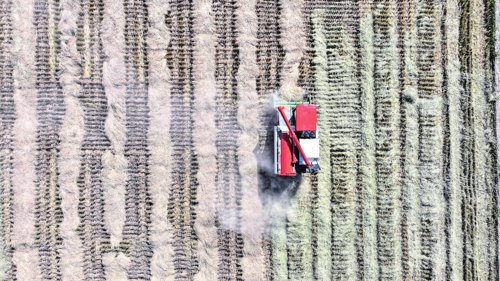
2021-2025年越南农林水产品出口近2880亿美元
Shang Wu Bu Wang Zhan· 2026-01-16 16:10
越南农产品加工业朝着现代化方向快速发展;深加工产品约占出口总额的45%。与此同时,越南农 村发展计划和可持续减贫计划取得了诸多成果。2024年,农村居民人均年收入约5400万越南盾(约2050 美元 ),比2020年增长1.3倍。 (原标题:2021-2025年越南农林水产品出口近2880亿美元) 越南《农业与环境报》1月15日报道,2021年至2025年越南农林水产品出口近2880亿美元,年均增 长10.6%。仅2025年,越南农林水产品出口700.9亿美元,其中11种商品出口额超10亿美元。农业贸易维 持顺差,2025年达207亿美元,为越南宏观经济稳定做出重要贡献,进一步提升越南农业在国际市场上 的地位。 ...