潮玩

Search documents
《公司的秘密7》预售 | 一册读懂2025年12家热门公司
第一财经· 2026-01-24 04:16
Core Viewpoint - The article emphasizes the shift in the approach of the "Company Secrets" annual report series, focusing on dissecting popular companies and their underlying business logic rather than merely reporting on current trends and stock price fluctuations [3][6]. Group 1: Overview of the Report - The upcoming "Company Secrets 7" report will break the previous pattern by centering on companies that are currently in the spotlight, reflecting a significant change from past editions [4][6]. - The selection of companies for analysis is based on their importance and interest rather than their media presence, aiming to uncover overlooked information from financial reports, interviews, and public data [6][7]. Group 2: Featured Companies and Trends - Notable companies highlighted include Cambrian, which briefly surpassed Moutai to become the second-largest by market value in China's A-share market, and Pop Mart, which saw over 400% growth in overseas performance [7]. - Other companies like Bawang Tea and Horizon have achieved significant IPO milestones, while F1's report coincides with the global release of a related film [7]. Group 3: Analytical Approach - The report aims to make complex business concepts accessible to the general public by transforming financial data and narratives into clear structures, charts, and visual cues [11][15]. - It focuses on key indicators such as cash flow, revenue, and market share, while also providing insights into how companies navigate competition, industry cycles, and globalization [11][16]. Group 4: Purpose and Philosophy - The underlying philosophy of the report is to enhance understanding of business dynamics, moving beyond surface-level analysis to reveal deeper insights into companies' challenges and decisions [16]. - The goal is to provide readers with a pleasurable learning experience about business logic, making it more relatable and understandable [11][16].

泡泡玛特股份回购难以撼动空头 做空押注持续上升
Xin Lang Cai Jing· 2026-01-24 02:03
Core Viewpoint - Pop Mart's recent stock buyback action has not swayed short sellers' confidence, despite a significant rebound in stock price, indicating a growing risk for these positions [1] Group 1: Short Positions - As of January 22, short positions in Pop Mart accounted for approximately 8% of free-floating shares, up from 6% the previous week, marking the highest level since July 2023 [1] - The number of short positions reached about 60 million shares, an increase from 44 million shares a week prior [1] Group 2: Market Sentiment - While Pop Mart attempts to restore investor confidence through strong stock buyback measures, many traders remain skeptical about its long-term growth prospects [1] - The market landscape shows a divide, with bulls emphasizing new product launches and attractive valuation levels, while bears focus on signs of cooling demand in key overseas markets [1] Group 3: Analyst Insights - Bernstein's analyst Melinda Hu noted that the U.S. market continues to generate significant short positions, with local sales trends slowing down in January [1] - The recent stock price rebound is suspected to not be driven by fundamental factors, leading to speculation that short sellers may take the opportunity to increase their positions [1]

9点1氪丨高铁车厢二氧化碳浓度超标,12306客服回应;中国太空旅游预售票300万一张;五家韩国航司26日起禁止机舱内使用充电宝
3 6 Ke· 2026-01-24 01:14
Group 1 - IKEA launches instant retail service in partnership with JD.com, marking its entry into the instant retail sector, covering 13 stores across 9 cities in China [7] - Bubble Mart's Valentine's Day limited edition series "Star People" sees prices surge nearly 7 times, with popular hidden items selling for up to 699 yuan [5] - Ideal Auto plans to close underperforming stores as part of a strategic evaluation, with the number of closures yet to be determined [4] Group 2 - Tencent's anti-fraud department reported over 90 employees were dismissed for violating company policies, with some cases referred to law enforcement [4] - Intel's CFO indicates the company is operating at a "hand to mouth" state, focusing on high-end products due to supply constraints, which may affect market share in lower-end segments [4] - Amazon is set to initiate another round of layoffs affecting thousands of employees as part of a broader plan to reduce its workforce by approximately 30,000 [5] Group 3 - Tesla's Full Self-Driving (FSD) system is expected to be approved in China as early as next month, although the company has not confirmed any specific updates [6] - The Chinese securities regulator imposed a record fine exceeding 1 billion yuan on individual Yu Han for manipulating the stock market [7] - Toyota has incurred an additional cost of approximately 5.1 trillion yen over the past four and a half years due to rising prices in the automotive industry [10]




刚上架就秒空,99元涨到396元!被戏称为“打工治愈神器”,网友:到底是谁在买……
Xin Lang Cai Jing· 2026-01-24 01:05
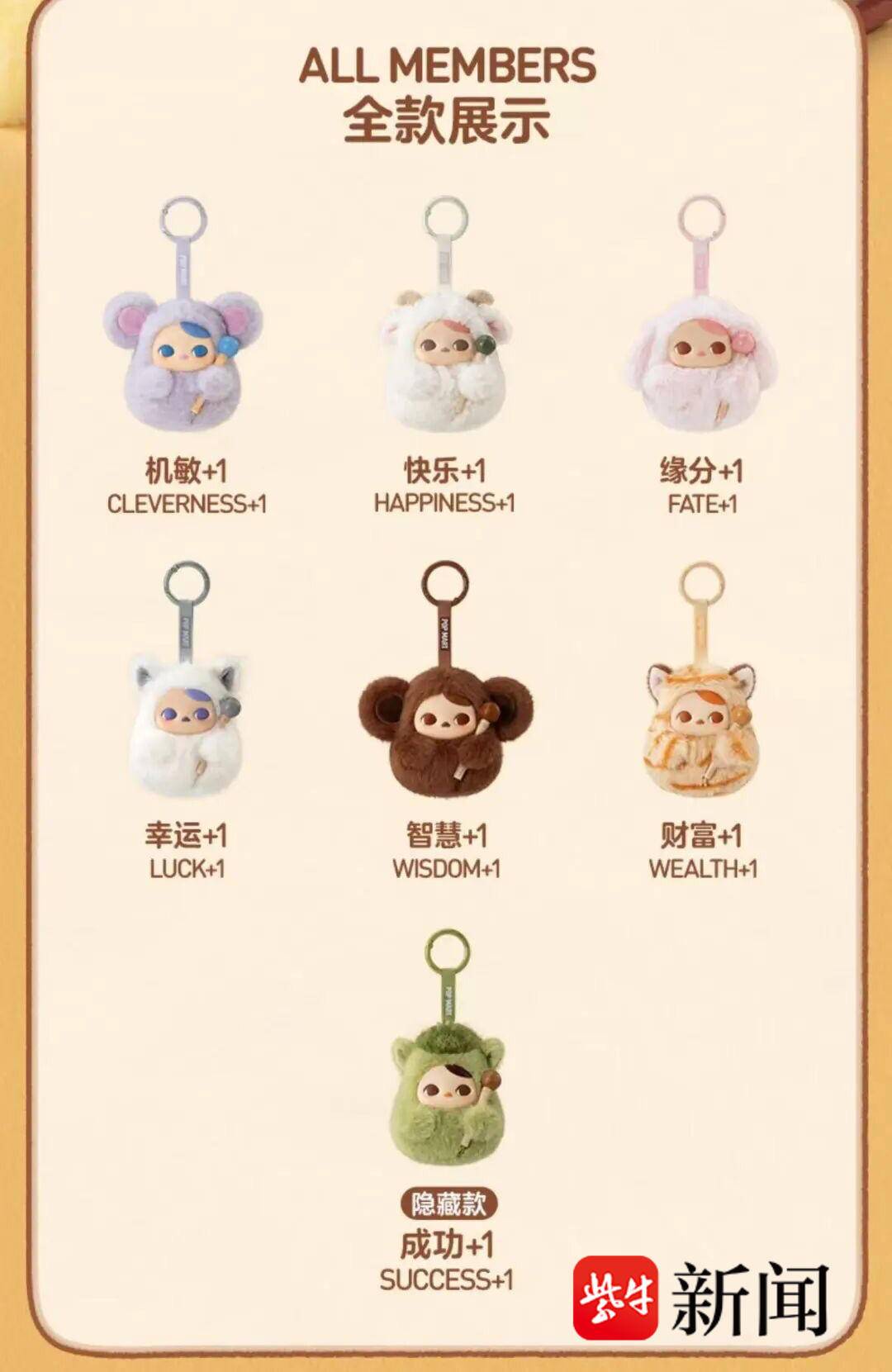
Core Viewpoint - The recent launch of the "PUCKY Knock Knock Series" by Pop Mart has gained significant attention on social media, primarily due to its innovative design that transforms a traditional wooden fish into an electronic sound device aimed at emotional relief [1]. Product Details - The "PUCKY Knock Knock Series" features plush blind box keychains that activate sound effects when the head is tapped, catering to the emotional relief needs of the younger demographic [1][2]. - Each blind box is priced at 99 yuan, with a set of six boxes available for 594 yuan, and the series includes six regular characters plus one hidden character [4][5]. Market Performance - The hidden character "Success" saw its market price rise from 99 yuan to 396 yuan, reflecting a more than threefold increase, while regular characters like "Wisdom" and "Wealth" also experienced price increases to 162 yuan and 169 yuan respectively [11]. - The average price of the product has increased by 25% recently, with second-hand platforms listing the items at prices starting from 245 yuan [14][16]. Stock Market Impact - Following the product's popularity, Pop Mart's stock price surged over 6% on January 22, closing at 206 Hong Kong dollars per share, resulting in a market capitalization of 276.4 billion Hong Kong dollars [18]. - On January 21, Pop Mart announced a share buyback of 50,000 shares for a total of 96.49 million Hong Kong dollars, marking the second buyback within the week, with a cumulative buyback amount nearing 350 million Hong Kong dollars [20].

情绪生意,凭什么溢价200%?
Xin Jing Bao· 2026-01-23 22:54
Group 1 - The core point of the article highlights the recent success of Pop Mart's products, particularly the 99 yuan "electronic wooden fish" and the Tangle stress-relief toy, which have sparked significant consumer interest and market activity [1] - The electronic wooden fish, which produces sound with a light tap, has seen a secondary market premium exceeding 200%, while limited edition Tangle toys, originally priced at a few dozen yuan, can resell for over a thousand yuan [1] - This trend reflects a broader shift in consumer behavior towards emotional value, indicating a transition from a focus on functionality to a desire for products that provide emotional healing [1] Group 2 - The emerging consumer sector, characterized by a market scale exceeding one trillion yuan, is rapidly gaining traction, suggesting a significant opportunity for growth in this new consumption landscape [1] - The article emphasizes the importance of understanding contemporary consumer logic, which is evolving towards products that cater to emotional and psychological needs rather than just practical functions [1]
与全世界“潮”在一起
Jing Ji Ri Bao· 2026-01-23 22:10
Core Insights - The year 2025 is highlighted as a significant year for Chinese "Guochao" brands, with their influence extending from domestic to international markets [1] - Chinese consumers show a strong preference for domestic trendy brands, with 85.79% favoring them over foreign brands, indicating high recognition and influence in the market [2] - Global consumers appreciate Chinese trendy products for their cute designs, aesthetic value, quality, health attributes, and emotional value, facilitating cross-cultural communication [2] Group 1 - The popularity of LABUBU and its collaborations, such as with Heytea, demonstrates the successful appeal of Chinese brands in international markets, with LABUBU achieving over 10 million RMB in first-day sales in Thailand [1] - Different regions exhibit varied preferences for specific IPs, allowing brands like Pop Mart to diversify their offerings and reduce dependency on a single IP [2] - The phenomenon of products gaining popularity overseas before returning to domestic markets, as seen with Heytea's "Triple Thick Spread," illustrates a new trend in global consumption [3] Group 2 - Successful "Guochao" brands have developed a clear strategy for international expansion, prioritizing nearby markets and culturally familiar areas, as evidenced by Pop Mart's choice of Singapore for its Southeast Asia entry [4] - Pop Mart's unique consumer experience in the U.S. market has been recognized by analysts, indicating a lack of direct competition [5] - Heytea's strategy combines high-profile locations in major cities with localized product offerings, enhancing brand recognition and cultural relevance [5][6] Group 3 - The rapid growth of "Guochao" brands has led to challenges such as market overheating and issues with intellectual property protection, highlighting the need for cultural understanding in marketing [7] - Consumer feedback indicates a desire for improved alignment with international trends, deeper cultural exploration, and innovation in product design [8] - Future development for "Guochao" brands should focus on long-term value creation, quality assurance, and maintaining a fair trading environment [8]
泡泡玛特(09992):飞轮效应已成,迈向星辰大海
SINOLINK SECURITIES· 2026-01-23 15:36
Investment Rating - The report maintains a "Buy" rating for the company [1] Core Views - The demand for trendy toys is not a false need; entertainment is a necessity. The "Kidult" trend, driven by demographic changes, media evolution, and consumer psychology, is a long-term trend in the toy industry, exemplified by the increasing market share of companies targeting adult consumers [1][14] - The global entertainment and media industry is projected to reach approximately $3 trillion by 2024, indicating a growing market for diversified entertainment offerings [1][35] Supply-Side Growth Potential - Store Expansion: The company has significant room for growth in retail locations, with a projected increase in global retail stores from 571 in 2025, with a substantial portion located in China [2][58] - Increased Store Traffic: Domestic single-store membership is expected to rise from 145,000 to nearly 200,000, with the opening of the first U.S. store in September 2023 [2] - Higher Member Spending: The maturity of IPs is expected to drive up the average spending per member, as seen with the SKULLPANDA IP, where the cost to purchase all products increased significantly from 5,922 RMB in 2021 to 47,430 RMB in 2025 [2] Demand-Side Competitive Barriers - Artist Talent Barrier: The company has established partnerships with mature toy artists in Hong Kong, creating a long-term competitive advantage [3] - Marketing Resource Barrier: The company's business model relies on top-tier brand collaborations and celebrity endorsements, which are core competitive barriers [3] - User Data Asset Barrier: The company has strong control over user data and market feedback due to its direct sales channels, enhancing operational efficiency [3] Valuation Safety Margin - The company's valuation is expected to be significantly above 10X PE, given its growth stage and the rising cultural influence of China on the global stage [3] Profit Forecast, Valuation, and Rating - Revenue projections for 2025-2027 are 36.96 billion, 55.10 billion, and 67.74 billion RMB, with adjusted net profits of 12.38 billion, 17.35 billion, and 22.66 billion RMB, reflecting growth rates of 295.98%, 40.21%, and 30.59% respectively [4][7] - The target price is set at 359.72 HKD, based on a 25X PE for 2026 [4]
泡泡玛特20260122
2026-01-23 15:35
Summary of the Conference Call for Pop Mart Company Overview - **Company**: Pop Mart - **Industry**: Toy and Collectibles Key Points and Arguments Stock Buyback and Market Confidence - Pop Mart initiated its first stock buyback since January 2024, indicating confidence in its operations and countering negative impacts from short-selling activities. The first buyback involved 1.4 million shares at a cost of HKD 250 million, and the second involved 500,000 shares at HKD 96.49 million [2][3] Market Sentiment and Short-Selling Reports - Bernstein's short-selling report claims that the U.S. market will weaken and all IPs are deteriorating. However, this argument is based on secondary market prices and search indices, which do not accurately reflect actual sales and consumer loyalty. The report also presents contradictory expectations for the Chinese and U.S. markets [2][4][5] Domestic Market Performance - The domestic channel and IP structure are superior to international counterparts, with healthy foot traffic in offline stores. Q4 store efficiency grew nearly 40% year-over-year. Successful IP operations include "Starry People," while "Labubu" relies more on chance factors [2][6] New Product Launches and Innovation - Recent product launches, such as the "Year of the Horse" plush toys and the "Biqi Knock Knock" series, have performed well. The company is exploring diverse operational strategies, showcasing its ability to innovate and adapt to market demands [2][7] Future Growth Prospects - The outlook for Pop Mart is optimistic, with strong growth in domestic channels and a successful introduction of new products. The company is diversifying its IP value, laying a solid foundation for future growth. The U.S. market, while still developing, shows initial positive results [2][8] IP Management Strategy - Pop Mart focuses on consumer feedback and membership data for product modifications in single IP operations. Examples include the third and fourth generation of "Labubu" products, demonstrating the company's capability in IP and product innovation [2][9] Second-Hand Market Dynamics - The second-hand market's price fluctuations are attributed to supply-demand adjustments. Despite a previous surge in prices, the current supply is sufficient, leading to a natural price decline. The second-hand transaction volume accounts for only 10%-15% of total releases, indicating that most inventory is absorbed by genuine demand [2][10] Importance of the Chinese Market - The Chinese market is expected to contribute 50%-60% of sales in 2026, supported by a healthy IP structure and a robust membership system. This market is crucial for the company's growth [2][11] U.S. Market Potential - Although the U.S. market accounted for less than 20% of sales in 2025, it remains significant. The company is implementing various measures to enhance market health, including introducing new IPs and expanding store numbers [2][12] Expansion in Other Regions - Pop Mart is also focusing on markets like Canada, the Middle East, and South America, with notable performance in Canada and stable results in Southeast Asia, Japan, and South Korea since 2024 [2][13] Future Product Categories - The company plans to expand into new categories such as building blocks, jewelry, and movable dolls (BJD) to further scale its business. These emerging categories are gaining consumer interest and are expected to become future growth drivers [2][14][15] Overall Confidence in Future Development - Considering the solid domestic foundation, ongoing international expansion, and healthy IP structure, Pop Mart is viewed as a long-term growth potential with a favorable investment profile [2][16] North American Market Adjustments - In North America, Pop Mart has made adjustments to its channel and product supply due to supply chain issues. The company is narrowing online supply while increasing offline availability to address consumer demand fluctuations [2][17] Performance of Specific IPs - The "Biqi" IP has not received significant resource allocation but is still being explored. The company responds quickly to successful trends to maximize exposure and effectiveness [2][18][19] Global Business Development - Pop Mart is expanding globally, with new stores in regions like the Philippines and Dubai. The company is also exploring opportunities in other Middle Eastern countries [2][20] Sales Growth Projections - For 2026, domestic market growth is projected at 20%-30%, while overseas growth is expected at 50%-60%. The overall target is a 30% growth rate, with specific IPs like "Labubu" and "Starry People" anticipated to achieve significant sales milestones [2][20]
泡泡玛特电子木鱼溢价3倍!“心价比”时代新爆款登场
Yang Zi Wan Bao Wang· 2026-01-23 15:02
Core Insights - The product "PUCKY Knock Knock Series Electronic Wooden Fish" has generated significant consumer interest and social media buzz within a week of its launch, becoming a phenomenon similar to the Labubu IP [1] - The product combines traditional cultural elements with modern entertainment, catering to the emotional needs of young consumers in a high-pressure society [7] Market Performance - The hidden variant "Success" has seen its market price surge from the original price of 99 yuan to 396 yuan, representing a 300% premium; the regular variant "Wisdom" increased from 99 yuan to 209 yuan, a 100% premium [7] - The pricing strategy of 99 yuan per box and 594 yuan per set is perceived by fans as an entry ticket to emotional relief and psychological comfort rather than a financial burden [7] Industry Trends - The success of the electronic wooden fish reflects the rapid expansion of the "emotional economy," which is projected to exceed 2.3 trillion yuan in 2024 and surpass 4.5 trillion yuan by 2029, with a compound annual growth rate of over 15% [10] - The emotional economy focuses on fulfilling consumer emotional needs, differing from traditional consumption by emphasizing emotional experiences and psychological comfort rather than functional value [10] - Generation Z consumers prioritize "emotional price-performance ratio" over "cost-performance ratio," showing a willingness to pay a premium for emotional resonance, cultural identity, and self-expression [10]
泡泡玛特,强势反弹!南向资金大举买入
证券时报· 2026-01-23 13:13
Core Viewpoint - The recent rebound of Pop Mart, one of the "new consumption three sisters" in Hong Kong stocks, is attributed to its first share buyback in two years, boosting market confidence and attracting institutional investment [1][3][5]. Group 1: Stock Performance - As of January 23, Pop Mart's stock rose by 6.6%, with a weekly increase of approximately 23%, marking the largest weekly gain in nearly three years [2]. - In the past seven trading days, net purchases by southbound funds reached nearly 1.7 billion HKD [2]. - Following the announcement of share buybacks, Pop Mart's stock saw a significant rebound, closing up about 9% on January 20, with intraday gains exceeding 10% [5]. Group 2: Share Buyback Details - On January 19, Pop Mart announced a buyback plan to spend 251 million HKD to repurchase 1.4 million shares at prices ranging from 177.7 to 181.2 HKD per share, marking the company's first buyback since early 2024 [4]. - A subsequent announcement on January 21 revealed an additional buyback of 96.49 million HKD for 500,000 shares at prices between 191.1 and 194.9 HKD per share, bringing the total buyback amount to nearly 350 million HKD [5]. Group 3: Market and Product Insights - The blind box market remains strong, with the release of the "Starry People" Valentine's Day limited edition blind box series selling out quickly and achieving high resale prices in the secondary market [3][9]. - The "PUCKY Knock Knock Series" blind box has also gained popularity, with secondary market prices showing a significant premium [9]. - Pop Mart's other IPs, such as HACIPUPU and CRYBABY, have shown impressive growth rates of 249.6% and 248.7% year-on-year, respectively [9][10]. Group 4: Strategic Developments - Pop Mart is diversifying its IP matrix and leveraging its brand for cross-industry collaborations, such as the release of a limited edition phone in partnership with Honor [10]. - The company is also expanding its product offerings through its independent dessert brand, POP BAKERY, which features various themed products [10].