
公用事业

Search documents
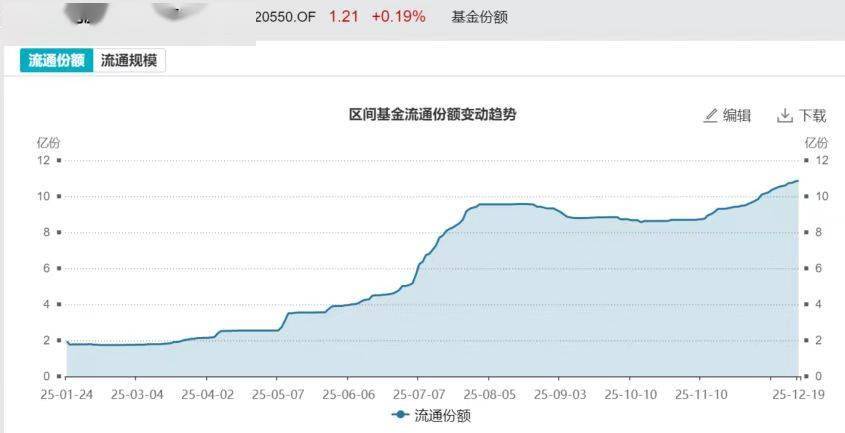
股息率近7%吸引力凸显,港股红利低波ETF(520550)年内获超10亿增仓
Sou Hu Cai Jing· 2025-12-22 06:32
Group 1 - The core viewpoint is that high dividend and low volatility assets are becoming a key focus for capital allocation as the year-end approaches, with significant net inflows into the Hong Kong dividend low volatility ETF (520550) indicating its role as a market "safe haven" strategy [1][3]. Group 2 - The continuous inflow of funds is driven by the ETF's attractive valuation and dividend returns, with the latest dividend yield reaching nearly 7%, making it particularly appealing in the current interest rate environment [3][4]. Group 3 - The ETF's low volatility characteristic aligns with current risk-averse demands, as it selects stocks with historically low volatility, resulting in overall volatility significantly lower than the Hong Kong market, thus serving as an ideal "ballast" in investment portfolios during uncertain macroeconomic conditions [4][5]. Group 4 - Overall, the sustained inflow of funds reflects a market preference for stable cash flow assets amid rational economic recovery expectations and declining risk-free interest rates, with ongoing policy support for corporate dividends further solidifying the long-term allocation value of dividend assets [5].

港股高股息板块迎布局窗口,聚焦港股通红利低波ETF基金(159118)布局机遇
Mei Ri Jing Ji Xin Wen· 2025-12-22 06:31
Core Viewpoint - The current market environment presents a favorable opportunity for investing in the Hong Kong Stock Connect high dividend sector, supported by historical performance and improving liquidity conditions [1] Group 1: Market Analysis - From 2014 to the present, the high dividend sector has shown an 82% success rate compared to major indices during the period from December to mid-January, with a 91% success rate for generating absolute returns [1] - The trading congestion is low, with the current trading volume accounting for only 6.1%, which is at a relatively low historical level, providing a good opportunity for repositioning [1] Group 2: Liquidity Environment - The tightest period of overseas liquidity has passed, with the end of the U.S. government shutdown leading to a significant decrease in the TGA account balance [1] - The probability of a 25 basis point rate cut by the Federal Reserve in December has risen to 86%, indicating a notable easing of external liquidity pressures [1] Group 3: Fund Characteristics - The Hong Kong Stock Connect Low Volatility Dividend ETF (159118) closely tracks the S&P Hong Kong Stock Connect Low Volatility Dividend Index, focusing on large-cap value stocks [1] - The top three sectors represented in the fund are real estate, public utilities, and banking, with the top ten holdings covering various high dividend targets [1] - The fund offers low fees (management and custody fees only 0.2%) and high efficiency (T+0 trading), allowing investors to easily access Hong Kong stocks, dividends, and low volatility [1]
93只股上午收盘涨停(附股)
Zheng Quan Shi Bao Wang· 2025-12-22 06:08
Market Overview - The Shanghai Composite Index closed at 3915.20 points, up 0.64%, while the Shenzhen Component Index rose 1.36% to 13318.80 points. The ChiNext Index increased by 1.80%, and the STAR Market 50 Index gained 1.95% [1] - Among the tradable A-shares, 3318 stocks rose, accounting for 64.33%, while 1652 stocks fell, and 188 stocks remained flat. There were 93 stocks that hit the daily limit up, and 8 stocks hit the limit down [1] Top Performing Stocks - The leading sectors for stocks hitting the daily limit up included basic chemicals, transportation, and construction decoration, with 9, 9, and 8 stocks respectively [1] - Notable stocks with the highest limit up included *ST Wanfang and ST Xifa, among 19 ST stocks. *ST Ningke achieved 8 consecutive limit up days, the highest among all [1] - HNA Holding was the most favored stock by funds, with a limit up order volume of 33,086,770 shares, followed by Shanzi Gaoke and Jiamei Packaging with 27,611,280 shares and 12,314,290 shares respectively [1] Limit Up Stocks Data - The top limit up stocks by order volume included: - Shengtong Energy: Closing price 28.75, turnover rate 0.26%, limit up order volume 3,710,940 shares, order amount 1,066.89 million [2] - Shanzi Gaoke: Closing price 3.65, turnover rate 6.85%, limit up order volume 27,611,280 shares, order amount 1,007.81 million [2] - China Duty Free: Closing price 91.09, turnover rate 4.38%, limit up order volume 998,040 shares, order amount 909.11 million [2] - Jiamei Packaging: Closing price 6.68, turnover rate 0.11%, limit up order volume 12,314,290 shares, order amount 822.59 million [2] Industry Insights - The basic chemicals sector had a strong showing with multiple stocks hitting the limit up, indicating robust investor interest [1] - The transportation sector also performed well, with significant order volumes in stocks like HNA Holding and Shanzi Gaoke, suggesting positive market sentiment towards this industry [1][2]


短期内市场仍面临扰动因素,逢低布局绩优股或是占优策略
British Securities· 2025-12-22 03:07
Market Overview - The A-share market experienced fluctuations, with the consumer sector showing strong performance, while the real estate sector rebounded from low levels. External factors, such as the Bank of Japan's interest rate hike, briefly boosted market sentiment, but the gains were not sustained, indicating that external factors can only cause short-term emotional fluctuations without altering the underlying market logic [1][4][14] - The recent market volatility is attributed to the uncertainty surrounding the strength of domestic economic recovery, the time required for policy effects to materialize, and seasonal liquidity pressures as the year-end approaches. Institutional rebalancing for annual performance also contributes to short-term disturbances [1][14] Sector Analysis Consumer Sector - The consumer sector has been active, with significant gains in retail, food and beverage, and other consumer stocks driven by favorable consumption policies. Recent government initiatives aim to stimulate consumption, indicating a structural rally in this sector [7][8][10] Real Estate Sector - The real estate sector has seen a rebound due to the implementation of supportive policies from both central and local governments. The focus on stabilizing the real estate market and addressing local debt risks is expected to improve the sector's fundamentals, providing short-term boosts to the market [10][11] Financial Sector - The financial sector, particularly insurance and brokerage stocks, has shown upward momentum. Recent regulatory adjustments have lowered risk factors for insurance companies, which is expected to enhance their performance. The overall market conditions, including liquidity and economic recovery, are favorable for the financial sector [11][12] Technology Sector - The technology sector, including semiconductor and AI-related industries, remains a focus for investment. The report suggests selecting stocks with strong earnings support while avoiding high-valuation stocks lacking performance backing [2][14] Automotive Sector - The autonomous driving sector has gained attention with the approval of L3 level autonomous driving vehicles for commercial use, marking a significant step towards commercialization in China. This development is expected to drive interest and investment in related stocks [12]
周期开启跨年行情
2025-12-22 01:45
Summary of Key Points from Conference Call Records Industry Overview - **Market Outlook**: The stock market is expected to accelerate in the short term, with a positive outlook for technology and non-bank sectors. Opportunities in cyclical and consumer goods are also worth noting. The impact of institutional profit protection and reduced positions on the market has been largely digested, with the ChiNext showing strong performance, indicating that the technology market is far from over [1][2][3]. Core Insights and Arguments - **Investment Strategy**: The focus remains on technology and non-bank sectors, while also considering transformation opportunities in cyclical and consumer goods. The liquidity aspect suggests that the market's adjustment is more about liquidity than value judgment [3][4]. - **Economic Policy**: The Central Economic Work Conference emphasized stabilizing investment and reducing inventory in real estate, aiming to address the negative growth in investment and foreign direct investment (FDI) [4][5]. - **Market Style Prediction for 2026**: The market is expected to favor quality growth or a return to fundamental strategies, with opportunities in both technology and non-technology sectors, as well as large-cap and small-cap stocks [5][6]. Sector-Specific Insights Aviation Industry - **Investment Logic**: The aviation sector's investment logic for the next two years is based on favorable oil prices, exchange rates, and national policies to boost consumption. High passenger load factors are expected to shift towards price increases, improving supply-demand dynamics and profitability [8][9]. Oil Shipping Industry - **Current Fundamentals**: The oil shipping industry remains robust, with crude oil freight rates maintaining high levels. The fourth quarter and annual profits are expected to reach a ten-year high. The supply-demand relationship in the compliant market continues to improve, with optimistic expectations reflected in rising one-year charter rates [10]. Chemical Industry - **Market Performance**: The chemical market is showing strength, particularly in new energy chemical materials. The spandex sector is expected to see a turning point, with companies like Huafeng Chemical showing potential due to cost advantages [11][12]. Metal Industry - **Future Outlook**: The metal industry is expected to be in a bull market phase, with optimism driven by anticipated interest rate cuts from the Federal Reserve. Industrial metals like copper, aluminum, and tin are expected to perform well, with strong demand driven by AI trends [14][15]. Petrochemical Industry - **Oil Price Predictions**: Oil prices are expected to face pressure in the first half of the year but may recover in the second half due to improving supply-demand dynamics. Companies like CNOOC and PetroChina are highlighted as potential investment opportunities [16][17]. Coal Market - **Short-Term and Long-Term Predictions**: The coal market is currently experiencing a price correction but is expected to stabilize between 650-670 RMB. Long-term, coal prices may enter a new upward cycle, with companies like China Shenhua and Yanzhou Coal Mining recommended for their production capacity [22]. Additional Noteworthy Points - **Investment Recommendations**: Specific companies and sectors are highlighted for potential investment, including technology stocks, financial services, and cyclical consumer goods that can successfully transition [6][7][27]. - **Public Utilities Concerns**: The public utilities sector faces concerns regarding electricity prices, but companies with strong dividend commitments are recommended for investment [26]. This summary encapsulates the key insights and recommendations from the conference call records, providing a comprehensive overview of the current market landscape and future expectations across various sectors.
248只港股获南向资金大比例持有
Zheng Quan Shi Bao Wang· 2025-12-22 01:33
Core Insights - The overall shareholding ratio of southbound funds in Hong Kong Stock Connect stocks is 19.35%, with 248 stocks having a shareholding ratio exceeding 20% [1] - Southbound funds hold a total of 4,922.61 million shares, accounting for 19.35% of the total share capital of the stocks, with a market value of 61,260.73 billion HKD, representing 14.61% of the total market value [1] Group 1: Shareholding Distribution - 248 stocks have a shareholding ratio of over 20%, 128 stocks between 10% and 20%, 96 stocks between 5% and 10%, 80 stocks between 1% and 5%, and 27 stocks below 1% [1] - The stock with the highest southbound fund shareholding is China Telecom, holding 10,007.11 million shares, which is 72.10% of the issued shares [2] - Other notable stocks include Green Power Environmental (70.23%) and China Resources Power (68.80%) [2] Group 2: Industry Concentration - Southbound funds with a shareholding ratio exceeding 20% are primarily concentrated in the healthcare, industrial, and financial sectors, with 56, 36, and 34 stocks respectively [2] - The majority of stocks with high southbound fund holdings are AH concept stocks, with 129 out of 248 stocks (52.02%) having a shareholding ratio over 20% [1] Group 3: Notable Stocks and Performance - Key stocks with high southbound fund holdings include: - China Telecom: 10,007.11 million shares, 72.10% [2] - Green Power Environmental: 28,403.90 million shares, 70.23% [2] - China Shenhua: 224,310.90 million shares, 66.41% [2] - Other significant stocks include: - Fosun Pharma: 31,757.00 million shares, 57.53% [3] - Longi Green Energy: 14,007.74 million shares, 56.00% [3]

股市和汇率谁“错”了?
Sou Hu Cai Jing· 2025-12-22 00:24
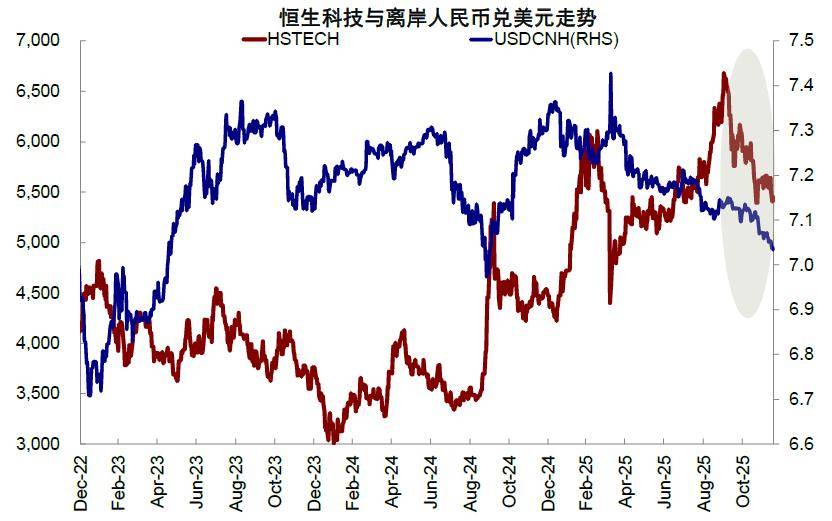
Group 1 - The recent phenomenon of a strong renminbi against the US dollar, appreciating by 1.3% since early October, contrasts with a declining stock market, particularly in Hong Kong where the Hang Seng Index has dropped 15% from its peak [1][4] - Historically, a strong currency correlates positively with stock market performance, as a stronger renminbi typically indicates foreign capital inflow and a favorable economic outlook [1][4] - The current divergence between currency strength and stock market weakness raises questions about whether the currency or the stock market is misaligned, with historical examples indicating that such divergences can occur [4][10] Group 2 - The relationship between the renminbi and the stock market has been predominantly positive, with recent divergence being rare and primarily driven by different underlying factors [8][18] - The renminbi's appreciation is attributed to a record trade surplus of $1.08 trillion and expectations of a weaker US dollar, while the stock market reflects weakening domestic demand and economic pressures [19][31] - The stock market's decline is linked to weak internal demand, with indicators such as PMI remaining below the growth line and fixed asset investment showing negative growth for three consecutive months [25][31] Group 3 - The recent strength of the renminbi is not primarily driven by foreign capital inflow, as evidenced by the stock market's decline and a lack of significant foreign investment in the bond market [19][21] - The central bank's intervention in the foreign exchange market appears to be diminishing, as indicated by changes in the onshore and offshore renminbi swap rates [26][27] - The divergence between the renminbi and the stock market may persist due to differing driving factors, with the potential for the renminbi to continue appreciating based on seasonal capital settlement and external economic conditions [30][32] Group 4 - The implications of a strong renminbi include potential benefits for import-dependent industries and sectors related to service trade, while negatively impacting exports and price pressures [42][49] - A sustained appreciation of the renminbi could lead to a temporary boost in market sentiment, particularly if it breaks key psychological levels, but the sustainability of this trend is uncertain without fundamental support [44][45] - The future trajectory of the renminbi and stock market will depend on the underlying economic fundamentals and whether fiscal policies can effectively stimulate growth [41][44]
十大券商一周策略:“春季躁动”行情积极因素累积,拥抱更具备确定性的“实物需求拉动”与“内需政策红利”
Sou Hu Cai Jing· 2025-12-21 23:57
Group 1 - The market is entering a critical window for cross-year layout, with expectations for A-shares to resonate upward with global markets by 2026, focusing on "technology + overseas expansion" as a continuing theme [1][2] - Current market conditions are characterized by narrow fluctuations, influenced by external factors such as concerns over the AI bubble in the US and interest rate hikes by the Bank of Japan [2][3] - Investor sentiment has recently dropped below 70, indicating a pessimistic outlook that may lead to a slight recovery in sentiment and upward market fluctuations [2] Group 2 - Industry allocation strategies include focusing on high dividend stocks, cyclical sectors, and thematic hotspots such as Hainan's duty-free shopping and nuclear power [2][4] - The anticipated "cross-year-spring" market rally is supported by early policy implementation and increased institutional investment in broad-based ETFs [4][5] - The potential for a structural outperformance in sectors like brokerage and technology is expected, driven by upcoming monetary policy changes and market liquidity improvements [7][8] Group 3 - The ongoing appreciation of the RMB is expected to influence asset allocation, with approximately 19% of industries likely to see profit margin improvements due to currency appreciation [3] - Key sectors benefiting from policy support include AI, aerospace, and innovative pharmaceuticals, while cyclical sectors like chemicals and energy metals may also see positive impacts [6][9] - The market is expected to experience a "spring rally" driven by favorable valuation levels, liquidity conditions, and catalysts that enhance risk appetite [6][12] Group 4 - The outlook for 2026 suggests a shift from a single narrative to a broader focus on physical demand and domestic policy benefits, with sectors like AI and consumer services poised for recovery [10][13] - Non-bank financials are highlighted as having significant earnings elasticity, while sectors like electric equipment and machinery are expected to benefit from AI investments and export demand [13][14] - The market is currently in a phase of adjustment before the anticipated cross-year rally, with a focus on structural opportunities aligned with policy directions and industry trends [11][14]
小摩2026年美股“作战图”:“选择性”牛市到来 板块轮动将惠及高质量增长及低波动性股票(附详细名单)
美股IPO· 2025-12-21 10:55
Core Viewpoint - Morgan Stanley's report emphasizes the specific opportunities and risks faced by various sectors in an AI-driven, K-shaped economic environment, highlighting a constructive but selective investor sentiment [1][6]. Group 1: Investment Themes - Key investment themes for 2026 include long-term growth driven by AI and data center expansion, infrastructure development, and a shift towards high-quality growth and operational resilience [3][6]. - Companies with strong pricing power, long-term growth drivers, robust balance sheets, and those benefiting from transformative trends like data center expansion and infrastructure investment should be prioritized [3][6]. Group 2: Selected Stocks by Sector - The report lists selected stocks across various sectors, including technology (e.g., Arista Networks, Palo Alto Networks), industrials (e.g., Boeing, Caterpillar), healthcare (e.g., Eli Lilly, CVS Health), and energy (e.g., ExxonMobil, Schlumberger) [4][5]. Group 3: Economic Outlook - The U.S. is expected to remain a global growth engine, driven by a resilient economy and an AI-driven supercycle, leading to record capital expenditures and rapid earnings expansion [6][8]. - Despite concerns about an AI bubble and valuation worries, current high valuation multiples are seen as justified due to anticipated above-trend earnings growth and increased shareholder returns [6][7]. Group 4: K-shaped Economic Recovery - The K-shaped economic recovery is creating a scenario of winners and losers, with a significant concentration of market gains among high-quality growth stocks [6][10]. - The S&P 500 index is projected to reach 7,500 points by the end of 2026, with earnings growth expected to be between 13%-15% [7][12]. Group 5: AI and Capital Expenditure - 2026 is anticipated to be another strong year for AI stocks, with capital expenditures likely to exceed expectations as companies and governments accelerate spending to address infrastructure and computing power imbalances [9][12]. - Approximately 60% of S&P 500 companies are investing in AI, with 50% mentioning cost-saving benefits, indicating a growing focus on commercialization [9][12]. Group 6: Policy Environment and Market Dynamics - The dynamic policy environment is expected to drive differentiation among stock themes, with potential benefits from deregulation in sectors like finance and energy [13]. - Tactical opportunities are emerging in low-end consumer stocks and U.S. importers, with attractive valuations and potential short-term upside from fiscal stimulus related to the "Inflation Reduction Act" [13].

美国旧金山遭遇大规模停电
Xin Lang Cai Jing· 2025-12-21 01:44
据旧金山市应急管理部门及该市主要公用事业公司通报,该市于当地时间周六遭遇大面积停电事故。太 平洋煤气电力公司表示,这场停电影响了这座约 80 万人口的加州城市中近 12.5 万名居民。旧金山市应 急管理局在社交媒体发文提醒民众:"旧金山正遭遇大面积停电 —— 仅在出现危及生命安全的紧急情况 时拨打 911 报警电话,避免非必要出行;交通信号灯失灵路段,按四路停车规则通行;请保持冰箱及冰 柜柜门关闭,并关闭大功率电器,以防电压骤升造成设备损坏。" ...