原油

Search documents
能源化策略:沙特连续第三个?下调对亚洲的OSP油价,塑料反弹后基差?弱
Zhong Xin Qi Huo· 2026-01-07 01:22
1. Report Industry Investment Rating No relevant content provided. 2. Core Viewpoints of the Report - Geopolitical risks are disturbing the energy and chemical market, and the chemical industry as a whole will continue its volatile pattern. The prices of various products are affected by factors such as geopolitical situations, supply - demand relationships, and cost support, showing different trends [4]. 3. Summary According to Different Catalogs 3.1 Market Outlook - **Crude Oil**: Geopolitical factors continue to cause disruptions, and oil prices will continue to fluctuate. The actual reduction in Venezuelan crude oil exports is still uncertain, API data shows a decline in US crude oil inventories but an increase in gasoline and diesel inventories. OPEC +'s production expectations for the first quarter are stable, but the geopolitical situations in Iran and Venezuela are the core factors affecting supply expectations [8][9]. - **Asphalt**: As the political situation in Venezuela stabilizes, asphalt futures prices will decline. The supply interruption expectation of asphalt raw materials will be alleviated, asphalt supply and demand are both weak, inventory is accumulating, and its valuation compared to some products is relatively high [10]. - **High - Sulfur Fuel Oil**: Support for fuel oil futures prices is gradually accumulating. However, high - sulfur fuel oil faces medium - to long - term double negatives from high - floating storage in the Asia - Pacific region and the substitution of fuel oil demand by natural gas and photovoltaics [10]. - **Low - Sulfur Fuel Oil**: Low - sulfur fuel oil futures prices will fluctuate. It follows the trend of crude oil, has a certain support, but also faces negative factors such as a decline in shipping demand, green energy substitution, and high - sulfur substitution [12]. - **Methanol**: Due to the turbulent situation in the Middle East, methanol will rise strongly. The market is affected by overseas supply disruptions and high inventory pressure, but the methanol market based on coastal trading logic is still considered strong [27]. - **Urea**: New orders are actively traded. The release of the India tender has boosted market sentiment, and urea prices will be moderately strong. The supply is increasing, demand from some regions is rising, and the market is in a moderately strong state, but the upside space during the off - season is limited [28]. - **Ethylene Glycol**: Geopolitical instability brings uncertainties to the supply side. Cost support is significant, but with the approaching Spring Festival, demand is expected to decline, and the price will be range - bound in the short term [20]. - **PX**: Geopolitical factors boost international oil prices, providing cost support for PX. In the short term, PX supply is expected to return, downstream polyester load is stable, and PX prices are expected to be sorted in a high - level range [13]. - **PTA**: Cost support and a positive chemical market sentiment strengthen the support for PTA prices. After the post - holiday maintenance devices return to production, the supply - demand relationship is marginally weaker, and the processing fee is slightly reduced [14][15]. - **Short - Fiber**: Cost provides some support, but demand is not sustainable, and profits are under pressure. Although the cost of upstream polyester raw materials is rising, the short - fiber's own supply - demand drive is weak, and it is in the off - season [22][23]. - **Bottle - Chip**: More device overhauls are scheduled in January, and the basis is strong. The cost is rising, but downstream buyers are waiting and watching. The increase in overhauls enhances the support for profits [24]. - **Plastic**: The weak basis restricts the upside space of plastics. Although the futures price has rebounded slightly due to macro - expectations and low - valuation varieties, the spot is weak, and demand is in the off - season [31][32]. - **PP**: The increase in overhauls makes PP prices rise cautiously. Affected by oil prices and geopolitical factors, the downstream is in the off - season, and the focus is on PDH in the future [33]. - **PL**: Supported by the expectation of PDH overhauls, PL prices will fluctuate. The spot trading atmosphere has improved, but downstream demand support is limited during the off - season [33]. - **PVC**: Frequent supply disruptions lead to a strong rebound in PVC. Geopolitical factors may boost the sentiment of commodity bulls. There are positive factors such as overseas device outages and expected increases in electricity costs, but the downstream is in the off - season [35]. - **Caustic Soda**: Positive market sentiment drives caustic soda prices. Geopolitical factors may boost the sentiment of commodity bulls. The expected increase in electricity costs for restricted - capacity caustic soda production in Shaanxi has boosted market sentiment, but the market is also facing problems such as high inventory [36]. 3.2 Variety Data Monitoring 3.2.1 Energy and Chemical Daily Indicator Monitoring - **Inter - period Spreads**: Different varieties have different inter - period spread values and changes. For example, Brent's M1 - M2 spread is 0.41 with a change of 0.02, and PX's 1 - 5 month spread is - 26 with a change of - 12 [39]. - **Basis and Warehouse Receipts**: Each variety has corresponding basis and warehouse receipt data. For example, asphalt's basis is - 74 with a change of - 11, and the number of warehouse receipts is 27920 [40]. - **Inter - variety Spreads**: There are also different inter - variety spread values and changes. For example, the 1 - month PP - 3MA spread is - 564 with a change of - 141 [41]. 3.2.2 Chemical Basis and Spread Monitoring - Although specific content for each variety is mentioned, no detailed data or summaries are provided in the given text. 3.3 Commodity Index - **Comprehensive Index**: The comprehensive index, specialty index (including commodity 20 index and industrial product index), and PPI commodity index all show positive growth rates on January 6, 2026 [284]. - **Sector Index**: The energy index on January 6, 2026, has a daily increase of 0.03%, a 5 - day decrease of 0.16%, a 1 - month decrease of 3.54%, and a year - to - date increase of 0.03% [285].
建信期货原油日报-20260107
Jian Xin Qi Huo· 2026-01-07 01:07
行业 原油日报 日期 2026 年 1 月 7 日 021-60635738 lijie@ccb.ccbfutures.com 期货从业资格号:F3031215 021-60635737 renjunchi@ccb.ccbfutures.com 期货从业资格号:F3037892 028-8663 0631 penghaozhou@ccb.ccbfutures.com 期货从业资格号:F3065843 021-60635740 pengjinglin@ccb.ccbfutures.com 期货从业资格号:F3075681 021-60635570 liuyouran@ccb.ccbfutures.com 期货从业资格号:F03094925 021-60635727 fengzeren@ccb.ccbfutures.com 期货从业资格号:F03134307 能源化工研究团队 研究员:李捷,CFA(原油沥青) 研究员:任俊弛(PTA、MEG) 研究员:彭浩洲(工业硅碳市场) 研究员:彭婧霖(聚烯烃) 研究员:刘悠然(纸浆) 研究员:冯泽仁(玻璃纯碱) 请阅读正文后的声明 每日报告 一、行情回顾与操作建议 | | ...
金银狂飙 原油基金却“按兵不动”?原因在这里
Zhong Guo Jing Ji Wang· 2026-01-07 00:38
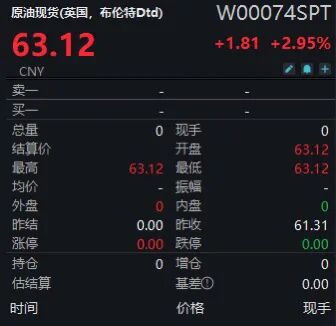
Core Viewpoint - The performance of oil funds has been lackluster compared to the significant gains seen in gold and silver funds, raising questions about when oil funds will rebound [1][2]. Group 1: Oil Fund Performance - In 2025, oil-related funds have shown poor performance, with many funds losing over 5%, while gold and silver funds have seen substantial gains, with some gold funds increasing by over 50% [1][3]. - Specifically, three oil funds have reported losses exceeding 10%, with the largest loss being over 13% for the E Fund Oil fund [3]. - Only two oil funds managed to maintain positive returns, one tracking an oil and gas industry index and the other actively selecting oil and gas stocks [3]. Group 2: Market Conditions - The Brent crude oil price has fluctuated between $50 and $80 per barrel in 2025, with the latest price at $63.12 per barrel as of January 6 [2]. - Factors contributing to the sustained low oil prices include increased production from OPEC and emerging oil-producing countries, along with high output from U.S. shale oil, leading to a surplus in supply [4]. - The demand for oil has been weak due to the rapid development of green energy and electric vehicles, coupled with a lack of growth in the chemical sector [4]. Group 3: Future Outlook - Analysts suggest that if the U.S. continues its loose monetary policy and domestic demand accelerates, there may be a window for oil prices to rise, but currently, the market remains in a weak state [5]. - Long-term investment in oil funds may yield significant returns if viewed through a 10 to 20-year lens, although uncertainties regarding future demand due to energy revolutions exist [5].
金银狂飙,原油基金却“按兵不动”?原因在这里
Guo Ji Jin Rong Bao· 2026-01-06 17:15
Core Viewpoint - The performance of oil funds has been lackluster compared to the significant gains seen in gold and silver funds, raising questions about when oil funds will rebound [1][5]. Group 1: Fund Performance - In 2025, commodity fund performance has shown divergence, with the Guotou Ruijin Silver LOF leading with over 130% gains, while multiple gold funds have increased by over 50% [1][6]. - Conversely, several oil funds have reported losses exceeding 5%, with three oil funds experiencing losses over 10%, the largest being E Fund Oil with a loss of over 13% [5][6]. Group 2: Oil Price Trends - Over the past year, gold and silver prices have reached new highs, while international oil prices have remained under pressure, fluctuating between $50 and $80 per barrel, with the latest price at $63.12 per barrel [3][4]. - The oil market is currently characterized by a weak state, primarily influenced by expectations of oversupply, as OPEC and emerging oil-producing countries have increased production, coupled with high U.S. shale oil output [9][10]. Group 3: Market Analysis - Analysts suggest that the current oil market is in a bottoming phase, with the potential for a rebound if U.S. demand and economic growth accelerate alongside global industrial recovery [9][10]. - Long-term investment in oil funds may yield substantial returns if viewed through a 10 to 20-year horizon, although uncertainties regarding future demand due to energy revolutions exist [10].

对伊威胁叠加市场偏暖情绪下能化板块今日偏强,但后续仍建议品种间分化对待-20260106
Tian Fu Qi Huo· 2026-01-06 12:12
1. Report Industry Investment Rating No relevant content provided. 2. Core Viewpoints of the Report - Amid the threat against Iran and a bullish market sentiment, the energy and chemical sectors are strong today, but it is still recommended to treat different varieties differently in the follow - up [1] - The US attack on Venezuela has limited impact on crude oil, and the market may return to the downward drive caused by the oversupply pressure in the first quarter [2][3][4] - Asphalt can be a key long - position variety, while PX - PTA is in a short - term correction and waiting for the next long - entry opportunity, and styrene can be a key short - position variety [2] 3. Summary by Relevant Catalogs (1) Crude Oil - Logic: The US attack on Venezuela has limited impact on crude oil as Venezuela's production accounts for about 1% and daily exports are 50 - 800,000 barrels, and it lacks the geographical advantage of the Strait of Hormuz. After the event, the market may return to the downward drive of the first - quarter oversupply pressure [2][3][4] - Technical Analysis: The daily - level shows a medium - term downward structure, and the hourly - level shows a short - term downward structure. Today, it rebounded with a reduction in positions, but the short - term downward structure remains intact. The short - term pressure is at the 436 level. The hourly - cycle strategy is to wait and see [4] (2) Asphalt - Logic: The US attack on Venezuela has a substantial impact on domestic asphalt raw materials. Venezuelan crude oil exports are paralyzed, and the main domestic asphalt raw material, Venezuelan heavy oil, faces a real supply cut. The asphalt market faces dual upward drivers of supply reduction and cost increase. [7] - Technical Analysis: The hourly - level shows a short - term upward structure. It oscillated today, and the trading volume has been well - matched since yesterday's gap - up opening. The short - term support is at the 2990 level. The hourly - level strategy is to hold half of the long positions and set the stop - profit at 2990 [7] (3) Styrene - Logic: The entire styrene industry chain has high inventory. The high inventory of upstream pure benzene and weak downstream 3S demand, along with the industry's over - capacity, may lead to a price decline if the expected January export increase is false [10] - Technical Analysis: The hourly - level shows a short - term upward structure, and the 15 - minute level shows a downward structure. The short - term support is below 6700. The hourly - cycle strategy is to wait and see, and hold the 15 - minute - level short positions with a stop - loss at 6835 [11][13] (4) Rubber - Logic: The seasonal inventory of domestic natural rubber is increasing rapidly, and the downstream tire inventory is high, so there is no significant upward driver [15] - Technical Analysis: The daily - level shows a medium - term oscillating structure, and the hourly - level shows a short - term upward structure. It rose slightly with increased positions today. The short - term support is raised to the 15550 level. The hourly - cycle strategy is to wait and see [15] (5) Synthetic Rubber - Logic: Synthetic rubber maintains a high - operating rate, with a slight inventory reduction due to traders' restocking. However, the high supply pressure of butadiene and high downstream tire inventory limit the upward space [17] - Technical Analysis: Both the daily - and hourly - levels show upward structures. It rose slightly with increased positions today. The short - term support is raised to the 11400 level. The hourly - level strategy is to wait and see [17] (6) PX - Logic: The fundamentals of PX - PTA are strong in both reality and expectation. However, due to the low acceptance of high prices by downstream polyester, it is facing a short - term correction. There is an opportunity for a second low - buying in the medium - term [20] - Technical Analysis: The daily - level shows a medium - term upward structure, and the hourly - level shows a short - term downward structure. It rebounded with increased positions today but did not break through the short - term pressure at 7390. The hourly - level strategy is to wait and see [20][23] (7) PTA - Logic: Similar to PX, the fundamentals of PX - PTA are strong, but it is facing a short - term correction due to downstream resistance. There is an opportunity for a second low - buying in the medium - term [25] - Technical Analysis: The daily - level shows a medium - term upward structure, and the hourly - level shows a short - term downward structure. It rebounded with increased positions today but did not break through the short - term pressure at 5205. The hourly - level strategy is to wait and see [25] (8) PP - Logic: The fundamentals of the olefin industry chain where PP - plastic belongs are still weak. It is only suitable for the chemical configuration logic in the medium - term hedging of long aromatics (PX, PTA) and short olefins (PP, plastic) [28] - Technical Analysis: The hourly - level shows a short - term upward structure. It rose slightly with increased positions today. The short - term support is raised to the 6305 level. The hourly - cycle strategy is to wait and see [28] (9) Methanol - Logic: Methanol port inventory is at a historically high level, and although there is an expected reduction in Iranian ship arrivals, the downstream MTO profit is weakening, and the fundamental driving force is still weak. The US attack on Venezuela has limited impact on methanol [31] - Technical Analysis: The daily - level shows a medium - term downward structure, and the short - term shows an upward structure. It rose sharply with increased positions today. The short - term support is at the 2200 level. The hourly - cycle strategy is to wait and see [31] (10) PVC - Logic: The reality of high production, weak demand, and high inventory of PVC continues, but the current valuation is low. Pay attention to the expected trading of anti - involution and policy support. The news of differential electricity prices in Shaanxi has stimulated a short - term upward movement [34] - Technical Analysis: The daily - level shows a medium - term downward structure, and the hourly - level shows a short - term upward structure. It rose sharply with increased positions today, hitting a new high. The short - term support is raised to the 4725 level. The hourly - cycle strategy is to hold long positions and set the stop - profit at 4725 [34] (11) Ethylene Glycol - Logic: The weak coal price in the cost side and the continuous inventory increase in ports, along with weakening demand, do not provide a driving force for a significant reversal [36] - Technical Analysis: The daily - level shows a medium - term downward structure, and the hourly - level structure is unclear. It rebounded with a reduction in positions today. The hourly - cycle strategy is to wait and see [36] (12) Plastic - Logic: Similar to PP, the fundamentals of the olefin industry chain where plastic belongs are weak. It is only suitable for the chemical configuration logic in the medium - term hedging of long aromatics and short olefins [39] - Technical Analysis: The daily - level shows a medium - term downward structure, and the hourly - level downward structure is being challenged. It rebounded with a reduction in positions today, breaking through the short - term pressure at 6545. The hourly - cycle strategy is to wait and see [39] (13) Soda Ash - Logic: The inventory pressure of soda ash has weakened slightly, but the over - supply pattern remains, and there is no significant upward driving force without an expected increase in terminal demand [40] - Technical Analysis: The hourly - level shows an upward structure. It rebounded slightly near the support level today. The short - term support is at the 1170 level, and the short - term upward structure remains intact. The hourly - cycle strategy is to wait and see [40] (14) Caustic Soda - Logic: Caustic soda has a pattern of high supply, high inventory, and weak demand. The supply - demand driving force is downward, but there is no space for chasing short positions [42] - Technical Analysis: The hourly - level structure is unclear. It rebounded with a reduction in positions today. Pay attention to the 15 - minute downward structure, and the 15 - minute pressure is at the 2260 level. The hourly - cycle strategy is to wait and see [42]
海外高频 | 开年行情港股大涨(申万宏观·赵伟团队)
申万宏源研究· 2026-01-06 02:52
Group 1 - The article discusses the significant rise in the Hong Kong stock market at the beginning of the year, while gold and silver prices have rapidly declined [2][40][91] - The S&P 500 index experienced a decline of 1.0%, while the 10-year U.S. Treasury yield increased by 5.0 basis points to 4.19% [8][19][91] - The U.S. dollar index rose by 0.4% to 98.46, and the offshore RMB appreciated to 6.97 [25][35][91] Group 2 - The article highlights the geopolitical tensions following U.S. military actions in Venezuela, marking an escalation in military pressure on the Maduro regime [56] - Japan's government announced a record-high budget for the fiscal year 2026, totaling 122.3 trillion yen, which is a 6.3% increase from the previous fiscal year [61] - The U.S. has postponed tariff increases on furniture and semiconductor imports, maintaining the current 25% tariff rate [66][67] Group 3 - The article notes that most developed countries' 10-year government bond yields have risen, with the U.S. yield increasing by 5.0 basis points [19][22] - Emerging market 10-year government bond yields mostly increased, with Turkey's yield rising by 133.0 basis points to 29.06% [22] - Commodity prices showed mixed results, with WTI crude oil prices rising by 1.0% to $57.3 per barrel, while precious metals saw significant declines [40][46]
百利好丨2025年主要资产表现回顾
Sou Hu Cai Jing· 2026-01-06 02:25
Economic Outlook - The global economy in 2025 shows strong resilience amid uncertainty, characterized by heightened competition, moderate growth slowdown, and increasing risk pressures [1] - A significant shift in monetary policy is anticipated in 2026, with potential interest rate cuts leading to a favorable environment for commodity markets [1] Commodity Market Trends - The commodity market is expected to experience a major surge in 2026, with gold, silver, and copper reaching new historical highs, and target prices set at $5000/oz, $100/oz, and $7.50/lb respectively [1] - Gold prices surged from $2624 to a peak of $4378 in 2025, marking a cumulative increase of $1754 (67%) driven by central bank purchases and geopolitical tensions [3][5] - Copper prices also reached a historical high of $5.88, with a 47% increase from $3.98, influenced by supply constraints and rising demand [16][17] Oil Market Dynamics - Oil prices continued a downward trend in 2025, influenced by increased supply and declining demand growth, with prices fluctuating between $80.74 and $55.11 [7][11] - OPEC+ plans to gradually lift production cuts starting April 2025, restoring 2.326 million barrels per day, which raises concerns about oversupply [8] Currency Trends - The US dollar index experienced a significant decline of over 12% in 2025, dropping from a high of 110 to a low of 96.20, driven by economic risks and geopolitical factors [12][14] Stock Market Performance - The US stock market showed a volatile upward trend in 2025, with the S&P 500 index rising by 26.84%, supported by AI infrastructure developments and favorable economic conditions [15]
品种晨会纪要:宝城期货原油早报-2026-01-06-20260106
Bao Cheng Qi Huo· 2026-01-06 01:31
Report Summary 1) Report Industry Investment Rating - Not provided in the given content 2) Report's Core View - The report believes that the crude oil market is dominated by supply - demand surplus, and the price of domestic crude oil futures is expected to run weakly with a volatile trend. Although geopolitical risks may drive up oil prices, the long - term logic of weak supply - demand fundamentals will suppress oil prices [1][5] 3) Summary by Related Catalogs 3.1 Time - cycle Views - **Short - term**: The short - term view of crude oil 2602 is "oscillating", and the short - term downward trend of domestic crude oil futures still exists [1][5] - **Medium - term**: The medium - term view of crude oil 2602 and domestic crude oil futures is "oscillating" [1][5] - **Intraday**: The intraday view of crude oil 2602 and domestic crude oil futures is "weak", with a reference view of "running weakly" [1][5] 3.2 Core Logic - **Positive Factor**: During the New Year's Day holiday, geopolitical risks have rapidly increased due to the US military operation in Venezuela and the US president's threat to other South American countries, which may drive up oil prices after the holiday [5] - **Negative Factor**: The long - term logic of the weak supply - demand situation in the crude oil market is the main reason for the suppression of oil prices. The global supply surplus concern persists, and the pessimistic sentiment among funds remains [5]
宏观金融类:文字早评2026-01-06-20260106
Wu Kuang Qi Huo· 2026-01-06 01:11
Report Industry Investment Rating No relevant content provided. Core Viewpoints of the Report - For the stock index, at the beginning of the year, institutional allocation funds are expected to flow back into the market, and with the unchanged policy support for the capital market, the medium - to long - term strategy is mainly to go long on dips [2][3]. - For treasury bonds, the improvement of market expectations for the economy may put pressure on the bond market. Although the central bank maintains an attitude of caring for funds, the bond market is expected to be weak and volatile in the first quarter, mainly affected by the spring rally in the stock market, government bond supply, and interest - rate cut expectations [4][6]. - For precious metals, there may be a short - term significant correction in January, but it does not mean the end of the upward cycle of gold and silver. In the long term, there are expectations of loose fiscal and monetary policies [7][8]. - For non - ferrous metals, most non - ferrous metals are affected by factors such as supply - demand relationships, cost, and market sentiment, with different trends. For example, copper prices are expected to slow down in their upward trend; aluminum prices are expected to be volatile and strong; zinc prices are expected to be volatile in the medium term and strong in the short term; lead prices are expected to be weak in the short term; nickel prices may have bottomed out in the short term; tin prices are expected to fluctuate with market sentiment; and the prices of some non - ferrous metal products such as stainless steel and casting aluminum alloy also have their own trends [10][11][13] [16][17][18]. - For black building materials, steel prices are expected to continue to oscillate in the bottom range; iron ore prices are expected to oscillate, with upside space limited by high inventory and supply expectations and downside supported by restocking expectations; glass prices may have some upward potential; and the supply - surplus pattern of soda ash has not changed fundamentally [32][33][35]. - For energy chemicals, different products have different trends. For example, rubber is recommended to be observed; the valuation of heavy - oil products in crude oil is expected to increase; methanol is considered to have the feasibility of going long on dips; urea is recommended to take profits on rallies; and the trends of pure benzene, styrene, and other products are also affected by factors such as cost, supply, and demand [49][50][55]. - For agricultural products, the short - term logic of rising pig prices is strong, but the medium - term support may collapse; egg prices have limited upside and downside space; the prices of soybean meal and rapeseed meal are expected to oscillate; the current fundamentals of oils and fats are weak, but the medium - and long - term expectations are optimistic; sugar prices may rebound after the northern hemisphere's harvest; and cotton prices are recommended to go long on dips after a correction [78][79][83]. Summary by Relevant Catalogs Stock Index - **Market Information**: The CSRC will strengthen the coordination of administrative, criminal, and civil actions to combat financial fraud. Goldman Sachs recommends overweighting Chinese stocks, expecting a 15% - 20% annual increase in 2026 and 2027. The basis ratios of stock - index futures are provided [2]. - **Strategy Viewpoint**: At the beginning of the year, institutional allocation funds are expected to flow back into the market, and with policy support, the medium - to long - term strategy is to go long on dips [3]. Treasury Bonds - **Market Information**: The prices of Treasury bond futures contracts have different changes. The National Development and Reform Commission has introduced policies for Yangtze River protection projects. The central bank conducted 135 billion yuan of 7 - day reverse repurchase operations, with a net withdrawal of 4688 billion yuan [4]. - **Strategy Viewpoint**: The improvement of economic expectations may put pressure on the bond market. Although the central bank maintains an attitude of caring for funds, the bond market is expected to be weak and volatile in the first quarter, mainly affected by the spring rally in the stock market, government bond supply, and interest - rate cut expectations [6]. Precious Metals - **Market Information**: The prices of Shanghai gold and silver, and COMEX gold and silver have increased. Weak US manufacturing PMI data and geopolitical issues have strengthened the expectations of the Fed's loose monetary policy, leading to a short - term increase in precious - metal prices [7]. - **Strategy Viewpoint**: There may be a short - term significant correction in January, but it does not mean the end of the upward cycle of gold and silver. In the long term, there are expectations of loose fiscal and monetary policies [8]. Non - Ferrous Metals Copper - **Market Information**: The price of LME copper has reached 13,000 US dollars for the first time. The price of domestic copper has continued to be strong, with changes in inventory and basis [10]. - **Strategy Viewpoint**: The upward trend of copper prices is expected to slow down, with support from supply - side factors and pressure from demand - side factors [11]. Aluminum - **Market Information**: The prices of domestic and international aluminum have accelerated their upward movement, with changes in inventory and basis [12]. - **Strategy Viewpoint**: Aluminum prices are expected to be volatile and strong, affected by factors such as supply - side disturbances and the high prices of precious metals and copper [13]. Zinc - **Market Information**: The prices of zinc futures and spot have changed, with changes in inventory and basis [14][15]. - **Strategy Viewpoint**: Zinc prices are expected to be volatile in the medium term and strong in the short term, affected by factors such as inventory and supply - demand relationships [16]. Lead - **Market Information**: The prices of lead futures and spot have changed, with changes in inventory and basis [17]. - **Strategy Viewpoint**: Lead prices are expected to be weak in the short term, affected by factors such as inventory and market sentiment [17]. Nickel - **Market Information**: The price of nickel has oscillated, with changes in spot premiums and cost factors [18]. - **Strategy Viewpoint**: The short - term bottom of nickel prices may have appeared, and it is recommended to observe in the short term [18]. Tin - **Market Information**: The price of tin has increased, with changes in supply, demand, and inventory [20][21]. - **Strategy Viewpoint**: Tin prices are expected to fluctuate with market sentiment, and it is recommended to observe [22]. Carbonate Lithium - **Market Information**: The price of carbonate lithium has increased, with changes in futures prices and inventory [23]. - **Strategy Viewpoint**: The fundamentals of carbonate lithium are expected to improve, but there are concerns about demand if prices remain high. It is recommended to observe or take a light - position attempt [23]. Alumina - **Market Information**: The price of alumina has decreased, with changes in inventory and basis [24]. - **Strategy Viewpoint**: It is recommended to observe. If there is no actual production - reduction action, short positions can be considered on rallies [26]. Stainless Steel - **Market Information**: The price of stainless steel has decreased, with changes in inventory and basis [27]. - **Strategy Viewpoint**: It is recommended to consider going long on dips and pay attention to the implementation of policies [28]. Casting Aluminum Alloy - **Market Information**: The price of casting aluminum alloy has accelerated its upward movement, with changes in inventory and basis [29]. - **Strategy Viewpoint**: Casting aluminum alloy prices are expected to be volatile and strong, affected by cost and supply - side factors [30]. Black Building Materials Steel - **Market Information**: The prices of rebar and hot - rolled coil have decreased, with changes in inventory and basis [32]. - **Strategy Viewpoint**: Steel prices are expected to continue to oscillate in the bottom range, affected by factors such as supply, demand, and macro - policies [33]. Iron Ore - **Market Information**: The price of iron ore has increased, with changes in inventory and basis [34]. - **Strategy Viewpoint**: Iron ore prices are expected to oscillate, with upside space limited by high inventory and supply expectations and downside supported by restocking expectations [35]. Glass and Soda Ash - **Market Information**: The price of glass has decreased, and the price of soda ash has decreased. There are changes in inventory and basis [36][38]. - **Strategy Viewpoint**: Glass prices may have some upward potential, and the supply - surplus pattern of soda ash has not changed fundamentally [37][38]. Manganese Silicon and Ferrosilicon - **Market Information**: The prices of manganese silicon and ferrosilicon have decreased, with changes in inventory and basis [39]. - **Strategy Viewpoint**: The future trends of manganese silicon and ferrosilicon are affected by factors such as market sentiment, cost, and supply - side disturbances [41][42]. Industrial Silicon and Polysilicon - **Market Information**: The price of industrial silicon has decreased, and the price of polysilicon has increased, with changes in inventory and basis [43][46]. - **Strategy Viewpoint**: Industrial silicon prices are expected to oscillate, and polysilicon prices are expected to be volatile, affected by factors such as supply, demand, and market sentiment [44][47]. Energy Chemicals Rubber - **Market Information**: The price of rubber has oscillated and increased, with different views from bulls and bears [49][50]. - **Strategy Viewpoint**: It is recommended to observe and partially close the hedging position of buying RU2605 and selling RU2609 [53]. Crude Oil - **Market Information**: The price of crude oil has decreased, and the prices of refined - oil products have also changed, with changes in inventory [54]. - **Strategy Viewpoint**: The valuation of heavy - oil products is expected to increase [55]. Methanol - **Market Information**: The regional spot prices of methanol have changed [56]. - **Strategy Viewpoint**: Methanol is considered to have the feasibility of going long on dips [57]. Urea - **Market Information**: The regional spot and futures prices of urea have changed, with a certain basis [58]. - **Strategy Viewpoint**: It is recommended to take profits on rallies [59]. Pure Benzene and Styrene - **Market Information**: The prices of pure benzene and styrene have changed, with changes in cost, supply, demand, and basis [60]. - **Strategy Viewpoint**: It is considered that the non - integrated profit of styrene has room for upward repair, and it is recommended to go long on the non - integrated profit of styrene before the first quarter of next year [61]. PVC - **Market Information**: The price of PVC has decreased, with changes in cost, supply, demand, and inventory [62][63]. - **Strategy Viewpoint**: It is recommended to short on rallies before significant production cuts in the industry [64]. Ethylene Glycol - **Market Information**: The price of ethylene glycol has decreased, with changes in supply, demand, and inventory [65]. - **Strategy Viewpoint**: The supply - demand pattern of ethylene glycol needs to be improved through increased production cuts, and the valuation may need to be compressed in the medium term [66]. PTA - **Market Information**: The price of PTA has decreased, with changes in supply, demand, and inventory [67]. - **Strategy Viewpoint**: PTA is expected to enter the Spring Festival inventory - accumulation stage after short - term destocking. It is recommended to pay attention to the risk of correction in the short term and the opportunity of going long on dips in the medium term [69]. Para - Xylene - **Market Information**: The price of para - xylene has decreased, with changes in supply, demand, and inventory [70]. - **Strategy Viewpoint**: PX is expected to maintain a small inventory - accumulation pattern before the maintenance season. It is recommended to pay attention to the risk of correction in the short term and the opportunity of going long on dips in the medium term [71]. Polyethylene (PE) - **Market Information**: The price of PE has changed, with changes in supply, demand, and inventory [72]. - **Strategy Viewpoint**: It is recommended to go long on the LL5 - 9 spread on dips [73]. Polypropylene (PP) - **Market Information**: The price of PP has changed, with changes in supply, demand, and inventory [74][75]. - **Strategy Viewpoint**: The supply - surplus pattern of PP may change in the first quarter of next year, and the price may bottom out [76]. Agricultural Products Live Pigs - **Market Information**: The prices of live pigs in different regions have changed, with different supply and demand situations in the north and south [78]. - **Strategy Viewpoint**: The short - term logic of rising pig prices is strong, but the medium - term support may collapse. It is recommended to short on rallies and pay attention to the support of far - month contracts [79]. Eggs - **Market Information**: The prices of eggs have changed, with stable supply and different digestion speeds in the terminal market [80]. - **Strategy Viewpoint**: Egg prices have limited upside and downside space. It is recommended to short on rallies [81][82]. Soybean Meal and Rapeseed Meal - **Market Information**: The prices of soybean meal and rapeseed meal futures have changed, with changes in spot prices and inventory [83]. - **Strategy Viewpoint**: The prices of soybean meal and rapeseed meal are expected to oscillate, affected by factors such as import costs and inventory [84]. Oils and Fats - **Market Information**: The prices of oils and fats futures have decreased, with changes in spot prices and inventory [85][86]. - **Strategy Viewpoint**: The current fundamentals of oils and fats are weak, but the medium - and long - term expectations are optimistic. The prices are not far from the bottom range [87][88]. Sugar - **Market Information**: The price of sugar futures has increased, with changes in spot prices and production data in different regions [89][90]. - **Strategy Viewpoint**: Sugar prices may rebound after the northern hemisphere's harvest, and the short - term downside space of domestic sugar prices is limited [91]. Cotton - **Market Information**: The price of cotton futures has changed, with changes in spot prices, supply, demand, and inventory [92]. - **Strategy Viewpoint**: It is recommended to go long on cotton after a correction, affected by factors such as supply - demand relationships and policy expectations [93].
海外高频 | 开年行情港股大涨(申万宏观·赵伟团队)
申万宏源宏观· 2026-01-05 15:48
Group 1: Major Asset Performance - The Hang Seng Index and other major indices saw mixed performance, with the Hang Seng Index rising by 2.0% and the DAX increasing by 0.7%, while the NASDAQ and S&P 500 fell by 1.5% and 1.0% respectively [2][8] - In the US, the S&P 500 sectors mostly declined, with energy and utilities up by 3.3% and 0.9%, while consumer discretionary and information technology fell by 3.2% and 1.5% [8] - Emerging market indices showed positive trends, with the Korean Composite Index rising by 4.4% and the Ho Chi Minh Index by 3.2% [2] Group 2: Bond Yields and Currency Movements - Developed countries' 10-year bond yields mostly increased, with the US yield rising by 5.0 basis points to 4.19% [19] - Emerging market 10-year bond yields also saw increases, particularly in Turkey, which rose by 133.0 basis points to 29.06% [22] - The US dollar index increased by 0.4% to 98.46, while other currencies depreciated against the dollar, including the euro and the British pound [25][35] Group 3: Commodity Prices - Commodity prices showed mixed results, with WTI crude oil rising by 1.0% to $57.3 per barrel, while gold and silver prices fell significantly, with gold down by 5.0% to $4317.8 per ounce and silver down by 10.3% to $70.7 per ounce [40][46] - The prices of base metals increased, with LME copper rising by 2.4% to $12510 per ton and LME aluminum by 1.8% to $3010 per ton [46] Group 4: Geopolitical Events and Economic Policies - The US military conducted airstrikes in Venezuela, escalating tensions in the region, as part of a broader strategy against the Maduro regime [56] - Japan's government announced a record-high budget for the fiscal year 2026, totaling 122.3 trillion yen, marking a 6.3% increase from the previous year [61] - The US postponed tariff increases on furniture and semiconductor imports, maintaining the current 25% tariff rate for an additional year [66]