
必需消费

Search documents
消费行业低迷,原因为何,未来还会起来吗?|第407期直播回放
银行螺丝钉· 2025-09-19 14:07
Group 1 - The core viewpoint of the article discusses the performance and future outlook of the consumer industry, highlighting its historical cycles of bull and bear markets over the past 20 years [1][11][13]. - The consumer industry is categorized into two main segments: essential consumption and discretionary consumption [5][6][7]. - Essential consumption includes daily necessities such as food and beverages, while discretionary consumption encompasses items that enhance quality of life, like automobiles and entertainment [6][7]. Group 2 - The consumer industry has shown good long-term performance, with both essential and discretionary segments being considered excellent investment options [11]. - Over the past 20 years, the consumer industry has experienced four cycles of bull and bear markets, indicating its volatility [13]. - The consumer industry has been relatively sluggish this year, with A-share consumer indices showing only slight increases compared to the broader market [15][19]. Group 3 - The recent low performance in the consumer industry can be attributed to high valuations in 2021, followed by a correction phase, leading to a decline in both valuation and earnings growth [17][22]. - The current economic cycle reflects a basic characteristic of the economy, where low fundamentals lead to pessimism and declining valuations, while improving fundamentals can boost investor optimism and valuations [26]. - Investment in the consumer industry should focus on undervalued opportunities, with a recommendation to buy during low valuation periods and hold until high valuations are reached [30][31].

招商证券:流动性驱动港股新一轮上涨 聚焦三进攻+两底仓
智通财经网· 2025-09-16 01:41
Group 1: Market Overview - The Hong Kong stock market is expected to experience a new round of increases driven by liquidity, with several factors alleviating liquidity constraints in September [1] - The easing of liquidity constraints is attributed to the Federal Reserve's interest rate cuts, improved funding conditions in Hong Kong, continuous inflow of southbound funds, and the resolution of profit concerns following interim reports [1][2] Group 2: Economic and Policy Context - The current economic recovery is weak, with a notable divergence between old and new economic structures, while the Chinese government continues to implement proactive fiscal policies and moderately loose monetary policies [2] - The focus of industrial policy is on "Artificial Intelligence+", with the State Council issuing relevant action plans to accelerate the cultivation of new productive forces [2] Group 3: Liquidity and Valuation - The disappointing U.S. non-farm payroll data in August, which fell significantly below expectations, has led to a projected interest rate cut in September, with a cumulative reduction of 75 basis points expected this year [3] - Southbound funds have seen a net inflow exceeding 1 trillion HKD this year, accounting for approximately 30% of market transactions, providing significant support to the market [3] Group 4: Investment Strategy - The investment strategy includes three aggressive sectors (technology, non-ferrous metals, and non-bank financials) and two defensive positions (turnaround stocks and high-dividend stocks) [4] - Technology stocks are expected to see growth due to the resolution of interim report concerns and sustained capital expenditure, while the valuation of the Hang Seng Technology Index is only half that of the Nasdaq, indicating potential for recovery [4] - Non-ferrous metals are driven by a combination of U.S. dollar depreciation, low interest rates, and liquidity, while high-dividend stocks are in demand due to stable dividend capabilities and the growing interest in "fixed income plus" products among southbound investors [4]

招商策略:流动性驱动港股新一轮上涨 聚焦三进攻+两底仓
智通财经网· 2025-09-15 23:12
Core Viewpoint - The Hong Kong stock market is expected to experience a new round of increases driven by liquidity, with both internal and external liquidity remaining abundant [1][2]. Liquidity and Valuation - Factors constraining liquidity have eased, including the Federal Reserve's interest rate cuts, improved funding conditions in Hong Kong, continuous inflow of southbound funds, and the resolution of profit concerns following the interim reports [2][3]. - Southbound funds have seen a net inflow exceeding 1 trillion HKD this year, accounting for about 30% of market transactions, becoming a significant market support [3]. Fundamental and Policy Analysis - The earnings growth of Hong Kong companies is at a historically low level, with a clear division between old and new economic structures [2]. - China is maintaining a more proactive fiscal policy and moderately loose monetary policy, emphasizing the effectiveness of policy implementation [2]. Investment Strategy - The recommended investment strategy includes three offensive sectors (technology, non-ferrous metals, and non-bank financials) and two defensive positions (turnaround stocks and high-dividend stocks) [4]. - Technology stocks are expected to see sustainable growth potential, with the Hang Seng Technology Index valued at only half of the Nasdaq [4]. - Non-bank financials are benefiting from record trading volumes and improved investment returns [4]. - High-dividend strategies are supported by a stable dividend yield of 6.12% from the Hang Seng High Dividend Yield Index, with increasing demand for dividend stocks [4].
招商策略:流动性驱动港股新一轮上涨,聚焦三进攻+两底仓
Sou Hu Cai Jing· 2025-09-15 14:13
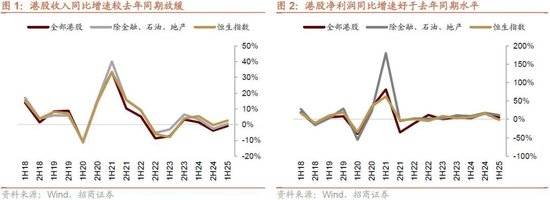
Core Viewpoints - The Hong Kong stock market is expected to experience a new round of increases driven by liquidity, with both internal and external liquidity remaining abundant [2][6] - Short-term liquidity constraints have eased due to factors such as the Federal Reserve's interest rate cuts and continuous inflow of southbound funds [2][3] - The earnings growth of Hong Kong-listed companies is at a historically low level, with a clear distinction between new and old economic structures [2][7] Market Liquidity and Valuation - The continuous inflow of southbound funds has surpassed 1 trillion HKD this year, accounting for about 30% of market transactions, providing significant support to the market [3][27] - The local liquidity in Hong Kong showed signs of improvement after a brief tightening period, with HIBOR rates stabilizing [3][20] - The valuation of the Hang Seng Index is significantly lower than that of major global indices, indicating substantial room for valuation recovery [32][34] Fundamental and Policy Analysis - The earnings growth of Hong Kong-listed companies is low, with a reported 0.9% decline in revenue and a 5.4% increase in net profit for the first half of 2025 [7] - The government continues to implement proactive fiscal policies and moderately loose monetary policies, emphasizing effective execution [11][12] - The focus of industrial policy is on "Artificial Intelligence +", with the government accelerating the cultivation of new productive forces [14][15] Investment Strategy - The recommended investment strategy includes three offensive sectors (technology, non-ferrous metals, and non-bank financials) and two defensive positions (turnaround stocks and high-dividend stocks) [4][52] - Technology stocks are expected to rebound as market pessimism fades, with significant growth potential in high-end manufacturing [54][62] - Non-bank financials are highlighted for their strong beta characteristics, with brokerage firms experiencing record trading volumes [70] Sector-Specific Insights - The technology sector is anticipated to benefit from improved earnings and capital expenditures, with AI and internet companies showing resilience [57][64] - The non-ferrous metals sector is expected to maintain upward momentum due to a weak dollar and abundant liquidity [66][68] - High-dividend stocks are in demand as investors seek stable income amidst increasing southbound fund inflows [4][31]
西麦食品(002956):收入成长延续,毛利改善明显
GUOTAI HAITONG SECURITIES· 2025-08-29 06:16
Investment Rating - The report assigns a rating of "Accumulate" for the company [1][6]. Core Views - The company is expected to become a leader in the oatmeal and health food sector, with a strong outlook for future growth [2][13]. - The company achieved a revenue of 1.149 billion yuan in the first half of 2025, representing a year-over-year growth of 18.07%, with a gross margin improvement of 1.07 percentage points to 43.59% [13]. - The report highlights the company's focus on product innovation and expansion into new health food categories, which is expected to drive long-term growth [13]. Financial Summary - Total revenue projections for the company are as follows: - 2023: 1,578 million yuan - 2024: 1,896 million yuan (growth of 20.2%) - 2025: 2,314 million yuan (growth of 22.1%) - 2026: 2,748 million yuan (growth of 18.7%) - 2027: 3,196 million yuan (growth of 16.3%) [5][14]. - Net profit attributable to the parent company is projected to grow from 115 million yuan in 2023 to 279 million yuan in 2027, with a compound annual growth rate of 27.0% [5][14]. - Earnings per share (EPS) is expected to increase from 0.52 yuan in 2023 to 1.25 yuan in 2027 [5][14]. Product and Regional Performance - In the first half of 2025, the company reported the following product performance: - Pure oatmeal: 13.24% growth - Compound oatmeal: 27.56% growth - Cold oatmeal: 27.23% growth [13]. - Regional performance showed that the southern region's revenue grew by 20.14%, while the northern region's revenue grew by 13.34% [13].
美国消费行业7月跟踪报告:非农前值大幅下修,整体继续谨慎
Haitong Securities International· 2025-08-25 14:42
Investment Rating - The report maintains a cautious investment stance on the consumer sector, particularly highlighting concerns over low-income consumer behavior and the impact of tariffs on essential goods [4]. Core Insights - The consumer confidence index has declined, with the Michigan Consumer Sentiment Index dropping to 58.6 in August from 61.7 in July, marking a 5% decrease and falling below market expectations [7]. - Retail sales data remains resilient, with July retail sales reaching $726.28 billion, a year-on-year increase of 3.9% [7]. - Inflation remains moderate, with the Consumer Price Index (CPI) rising 0.2% month-on-month and 2.7% year-on-year in July, slightly below expectations [9]. - Employment data shows a significant downward revision, with only 73,000 non-farm jobs added in July, far below the expected 110,000 [14]. Macroeconomic Overview - Consumer confidence has weakened, with inflation concerns rising. The short-term inflation expectation increased from 4.5% to 4.9% [7]. - Retail sales growth is dependent on policy incentives and promotional activities, while consumer concerns about prices and unemployment persist [7]. - The CPI is influenced by declining energy prices and initial tariff effects, with core CPI reaching 3.1%, the highest this year [9]. Essential Consumption Insights - Beverage sales show marginal weakness, while tobacco data has rebounded. Alcohol and dairy sectors continue to exhibit weakness [27]. - Alcohol retail sales in June were $5.95 billion, down 3.3% year-on-year, indicating limited resilience in sales [27]. - Dairy product shipments totaled $13.61 billion in June, with a year-on-year increase of 1.6%, reflecting a relatively flat performance [31]. - Tobacco shipments reached $6.05 billion in June, up 7.3% year-on-year, with a CPI increase of 6.5% [33]. Discretionary Consumption Insights - Restaurant and department store sales show marginal weakness, while clothing sales have improved [35]. - Restaurant retail sales in July were $98.3 billion, a year-on-year increase of 5.6%, but a month-on-month decline of 0.4% [35]. - Department store sales reached $77.39 billion in July, up 2.3% year-on-year, but still below overall retail sales growth [38]. - Clothing retail sales in July were $26.63 billion, up 5.0% year-on-year, with expectations of price increases due to tariffs [40]. Market Performance and Valuation - The discretionary consumption sector performed well, with an 8.2% increase, while the essential consumption sector declined by 1.7% [4]. - The essential consumption ETF saw a net inflow of $120 million, while the non-essential consumption ETF experienced a net outflow of $650 million [4]. - The median valuation for leading food and beverage companies in the U.S. stock market was 24x at the end of July, indicating a relatively high valuation level [4].
洽洽食品(002557):半年报点评:短期较大承压,静待后续复苏
GUOTAI HAITONG SECURITIES· 2025-08-23 12:53
Investment Rating - The report maintains a rating of "Accumulate" for the company [5][11]. Core Views - The company is currently under significant pressure due to external environment changes and its own strategic impacts, with a focus on waiting for recovery in the future [2]. - The revenue and profit are under pressure in the short term, with a reported revenue of 2.752 billion yuan for the first half of 2025, a year-on-year decrease of 5.05% [11]. - The company is expected to enhance its focus on key product categories and accelerate the launch of differentiated new products in the second half of 2025 [11]. Financial Summary - Total revenue for 2023 is projected at 6.806 billion yuan, with a slight decline of 1.1% [4]. - Net profit attributable to the parent company is forecasted to be 803 million yuan in 2023, reflecting a significant decrease of 17.8% [4]. - Earnings per share (EPS) for 2023 is estimated at 1.59 yuan [4]. Revenue Breakdown - In the first half of 2025, revenue from sunflower seeds was 1.772 billion yuan, down 4.45% year-on-year, while nut products generated 614 million yuan, down 6.98% year-on-year [11]. - The direct sales model's revenue proportion increased from 20.51% at the end of 2024 to 28.33% in the first half of 2025 [11]. Market Data - The company's current stock price is 23.37 yuan, with a target price set at 27.45 yuan [5][11]. - The market capitalization is approximately 11.822 billion yuan [6]. Financial Ratios - The return on equity (ROE) for 2023 is projected at 14.5% [12]. - The price-to-earnings (P/E) ratio at the current price is 14.85 [12].

安琪酵母(600298):2025年半年报点评:盈利改善持续,扣非增速亮眼
GUOTAI HAITONG SECURITIES· 2025-08-15 05:05
Investment Rating - The investment rating for the company is "Accumulate" [2][6][19] Core Views - The company's profit margin continues to improve, with rapid growth in foreign revenue and a recovery in domestic growth, indicating stable performance growth is expected [3][12] - The company achieved a revenue of 7.899 billion yuan in H1 2025, a year-on-year increase of 10.10%, and a net profit attributable to the parent company of 799 million yuan, a year-on-year increase of 15.66% [12] - The target price for the company is set at 44.12 yuan, based on a 25X PE for 2025 [12][19] Financial Summary - Total revenue is projected to grow from 13.585 billion yuan in 2023 to 20.425 billion yuan in 2027, with a CAGR of approximately 9.6% [5][13] - Net profit attributable to the parent company is expected to increase from 1.273 billion yuan in 2023 to 2.048 billion yuan in 2027, reflecting a CAGR of about 10.6% [5][13] - The earnings per share (EPS) is forecasted to rise from 1.47 yuan in 2023 to 2.36 yuan in 2027 [5][13] Revenue Breakdown - In Q2 2025, the company reported a revenue of 4.105 billion yuan, a year-on-year increase of 11.19%, with a net profit of 429 million yuan, up 15.35% year-on-year [12] - Domestic revenue reached 2.31 billion yuan in Q2 2025, a year-on-year increase of 4.3%, while foreign revenue was 1.78 billion yuan, growing by 22.3% [12] - The revenue from the yeast and deep processing segment was 2.98 billion yuan, reflecting a year-on-year increase of 11.7% [12] Market Position and Strategy - The company is undergoing internal restructuring in the domestic market, which is expected to enhance sales recovery [12] - The company is actively expanding its overseas market presence, with a focus on yeast and yeast extract products, which have higher profit margins [12]

美国消费行业6月跟踪报告:不确定性仍在,整体继续谨慎
Haitong Securities International· 2025-07-29 13:03
Investment Rating - The report maintains a cautious investment stance on the consumer sector, particularly highlighting concerns over inflation and the impact of tariffs on low-priced consumer goods and durable imports [4]. Core Insights - The consumer confidence index in the U.S. rebounded to 61.8 in July, indicating a slight recovery in consumer sentiment, although it remains significantly lower than historical averages [6][9]. - Retail sales data for June showed a year-on-year increase of 3.9%, reaching $720.11 billion, driven by pre-tariff purchasing behavior [6][9]. - Inflationary pressures are evident, with the June CPI rising to 2.7%, primarily due to increased energy prices and the initial effects of tariffs on imported goods [9][12]. - Employment data showed a strong increase in non-farm payrolls, with 147,000 jobs added in June, although the growth was largely driven by government sectors, while the private sector showed signs of weakness [14][16]. Summary by Sections Macro Overview - Consumer confidence index increased to 61.8 in July, reflecting a two-month rebound [6]. - Retail sales for June reached $720.11 billion, up 3.9% year-on-year, exceeding expectations [6][9]. - Inflation rose to 2.7% in June, with energy prices being a significant contributor [9]. - Non-farm payrolls added 147,000 jobs in June, with a decline in the unemployment rate to 4.1% [14]. Essential Consumption - Beverage sales showed robust growth, with a 5.2% year-on-year increase in May, while tobacco sales slowed down [2][28]. - Alcohol sales in May were $6.31 billion, reflecting a modest growth of 0.8% year-on-year, but overall sales volume continues to decline [2][24]. - Dairy product shipments totaled $13.49 billion in May, with a year-on-year increase of 1.1% [28]. Optional Consumption - Restaurant sales in June reached $98.74 billion, up 6.6% year-on-year, indicating strong consumer spending in this segment [3][32]. - Department store sales were $77.25 billion in June, reflecting a year-on-year increase of 3.2% [3][34]. - Clothing retail sales in June were $26.34 billion, with a year-on-year increase of 3.9% [3][36]. Market Performance - The optional consumption sector outperformed, with a 5.6% increase, while essential consumption saw a decline of 1.5% [4]. - The consumer sector remains under pressure from high valuations and inflationary concerns, particularly affecting low-priced consumer goods [4]. Employment and Credit - The labor market showed mixed signals, with strong overall job growth but significant weakness in the private sector [14][16]. - Consumer credit saw a sharp decline in May, with a 70% drop in growth compared to April, indicating a potential slowdown in consumer spending [20]. PMI and Economic Indicators - The manufacturing PMI for June was 49.0, indicating continued contraction, while the services PMI returned to expansion at 50.8 [22][23].
妙可蓝多(600882): 2025H1 业绩预增公告点评:协同释放,盈利高增
GUOTAI HAITONG SECURITIES· 2025-07-13 10:57
Investment Rating - The investment rating for the company is upgraded to "Accumulate" [4][10]. Core Views - The company is actively enriching its product matrix and strengthening its ambient products, enhancing C-end channel diversification and B-end channel synergy after integrating Mengniu Cheese, leading to a significant improvement in profitability for H1 2025 [2][10]. - The company expects a notable increase in net profit for H1 2025, projecting a net profit attributable to shareholders of 120-145 million yuan, representing a year-on-year growth of 56.29%-88.86% [10]. - The integration of Mengniu Cheese has strengthened synergy across the entire operation, from procurement to sales, enhancing efficiency and profitability [10]. Financial Summary - Total revenue for 2023 is 5,322 million yuan, with projections of 4,844 million yuan for 2024, and expected growth to 5,313 million yuan in 2025, reflecting a 9.7% increase [3][11]. - Net profit attributable to shareholders is forecasted to rise from 60 million yuan in 2023 to 225 million yuan in 2025, indicating a growth rate of 97.7% [3][11]. - Earnings per share (EPS) is expected to increase from 0.12 yuan in 2023 to 0.44 yuan in 2025, with a projected net asset return rate of 4.9% in 2025 [3][11]. Market Data - The company's target price is set at 33.20 yuan, with a current price of 28.34 yuan [4][10]. - The market capitalization is approximately 14,512 million yuan, with a 52-week price range of 11.78-32.69 yuan [5][10]. Financial Ratios - The price-to-earnings (P/E) ratio is projected to decrease from 241.60 in 2023 to 64.61 in 2025, indicating improved valuation [3][11]. - The return on equity (ROE) is expected to rise from 1.3% in 2023 to 4.9% in 2025, reflecting enhanced profitability [3][11].
