
消费者服务

Search documents
年度策略报告姊妹篇:2026年策略组风险排雷手册-20251231
ZHESHANG SECURITIES· 2025-12-31 12:32
Group 1 - The core viewpoint of the report is that the A-share market in 2026 will revolve around "structural transformation and confidence restoration," with a focus on technology investments and external demand recovery [3][4] - The report emphasizes a "systematic slow bull" market phase, suggesting a gradual upward trend in the market, with the Shanghai Composite Index expected to oscillate between the high point of February 2021 and the 0.809 quantile of 5178-2440 [9] - Investment strategies include focusing on four main lines: consumer services, sectors with growth potential like automotive and pharmaceuticals, traditional industries, and dividend-paying stocks such as banks and transportation [9] Group 2 - Policy risks are highlighted, particularly the impact of new public fund regulations on asset allocation, which may lead to a reallocation of equity fund performance benchmarks in the second half of 2026 [10][12] - Geopolitical risks are identified, with potential impacts from U.S. actions in Venezuela and Japan's political stance affecting market sentiment and inflation expectations [13][14] - Other risks include the pace of U.S. interest rate cuts, domestic economic recovery, and the performance of U.S. tech stocks, all of which could influence market dynamics in the second half of 2026 [15][17][20]
震荡分化,慢牛延续
Tebon Securities· 2025-12-30 14:28
Market Analysis - The stock market is experiencing a volatile divergence, with a slow bull market continuing. The Shanghai Composite Index closed at 3965.12 points, remaining flat, while the Shenzhen Component Index rose by 0.49% to 13604.07 points, and the ChiNext Index increased by 0.63% to 3242.90 points. The total market turnover was 2.16 trillion, maintaining above 2 trillion for three consecutive days, indicating a further increase in market divergence [2][5][7]. Sector Performance - The technology sector is leading the market, particularly driven by the robotics concept, which saw significant gains. Notable increases include Yushun Robotics up by 3.66% and other related stocks reaching their daily limit. The establishment of a standardization committee for humanoid robots and embodied intelligence is expected to catalyze growth in this sector [5][6][7]. - Conversely, the consumer sector is under pressure, with declines in retail, transportation, real estate, and consumer services, attributed to profit-taking after previous gains from stimulus policies [5][6]. Investment Strategy - The report suggests that the slow bull market remains intact, with the Shanghai Composite Index approaching 4000 points and a stable turnover of around 2 trillion providing ample liquidity. The market's financing balance has surpassed 2.5 trillion, and the depreciation of the US dollar against the RMB is expected to attract foreign investment, maintaining a loose liquidity environment [7][9]. - The report emphasizes the importance of monitoring industry catalysts, particularly in technology and resource sectors, as the market is currently experiencing a combination of technological growth and resource cycle trends [7][9]. Bond Market Insights - The bond market is showing a mixed trend, with the long-end of the government bond futures leading gains. The 30-year government bond futures closed at 111.83, up by 0.17%, while the 10-year futures slightly declined. The liquidity expectations for the year-end remain stable, with the interbank market continuing to show a loose funding environment [10][11]. Commodity Market Overview - The commodity index has risen, but precious metals are experiencing increased volatility. The Nanhua Commodity Index rose by 0.43%, while precious metals like platinum and palladium faced significant declines of 13%. The market sentiment is influenced by profit-taking and regulatory tightening in trading policies [9][14]. - Industrial products are rebounding, particularly those related to domestic demand, as the government continues to push for anti-involution policies, which are expected to impact supply and pricing dynamics positively [14]. Recent Trading Hotspots - Key trading hotspots include precious metals, commercial aerospace, nuclear fusion, AI applications, and consumer sectors, with each sector having specific catalysts and monitoring points for future developments [11][12][13].
沪指9连阳!白银狂飙后跳水!跨年倒计时,上涨行情还会继续吗?
Sou Hu Cai Jing· 2025-12-29 11:27
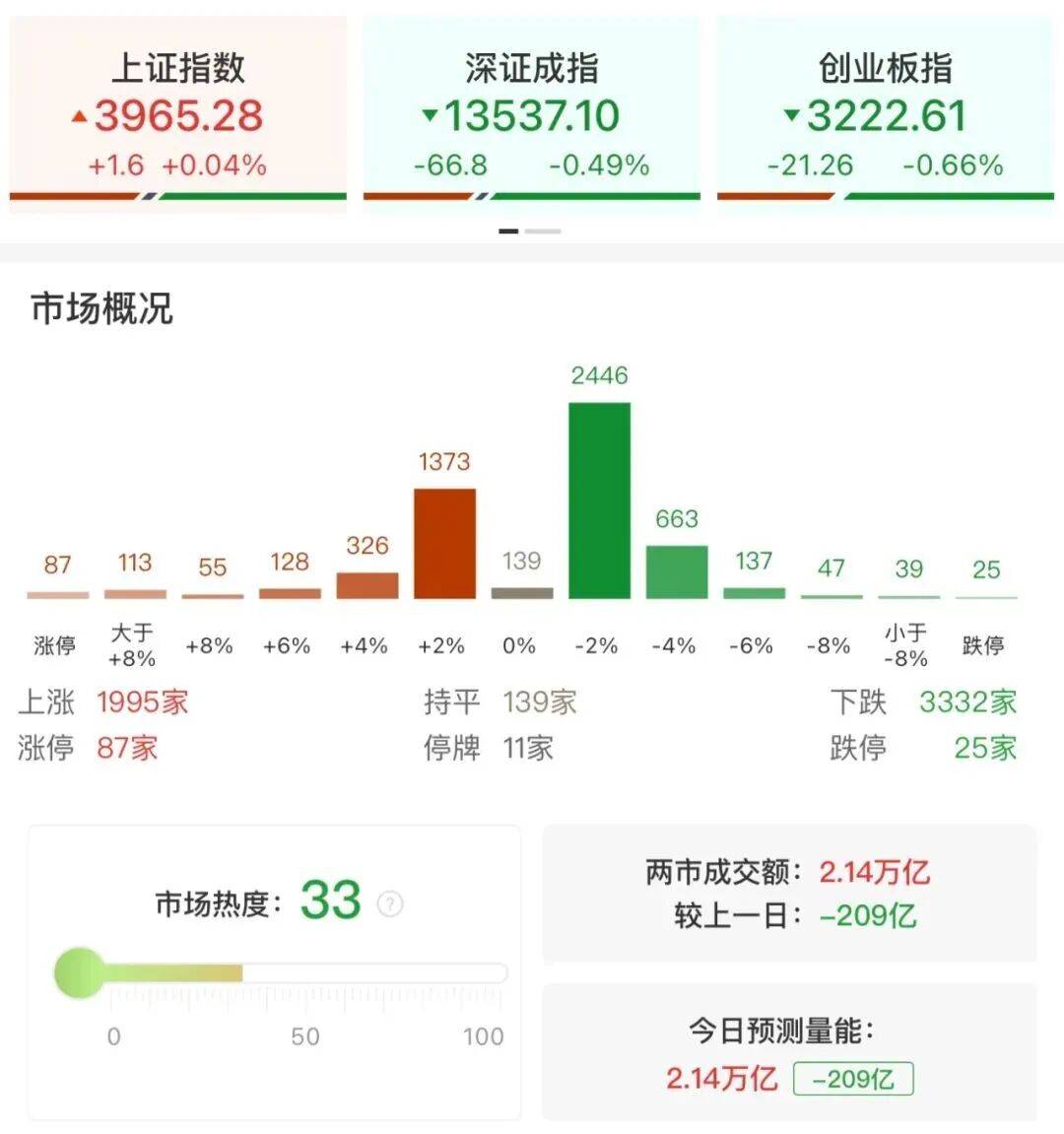
Market Overview - The A-share market showed mixed performance with the Shanghai Composite Index slightly up, achieving a nine-day winning streak, while the ChiNext Index fell over 1% at one point [1] - The total trading volume in the Shanghai and Shenzhen markets was 2.14 trillion, a decrease of 20.9 billion from the previous trading day [1] - By the market close, the Shanghai Composite Index rose by 0.04%, the Shenzhen Component Index fell by 0.49%, and the ChiNext Index declined by 0.66% [1] Commodity Market Dynamics - A significant surge in precious metals was noted, particularly with the national investment silver LOF fund experiencing extreme volatility, moving from consecutive gains to losses [5][6] - The market saw a rapid influx of arbitrage funds, with 1.7 billion entering in just five trading days, compared to the fund's initial size of just over 800 million at the beginning of the year [7][10] - Silver prices experienced wild fluctuations, reaching highs of $80 per ounce before a sharp drop, followed by a strong rebound, with the main silver futures rising nearly 10% [11][12] Consumer Sector Insights - The Hong Kong stock market's consumer sector has attracted significant southbound capital, primarily driven by institutional defensive repositioning due to weak domestic consumption data [15] - November economic data indicated weakness in both consumption and investment, raising concerns about the real estate market and potential withdrawal of consumer subsidies [16] - Despite the pessimistic outlook, this presents an opportunity for left-side positioning, as many consumer sectors are trading at historical low valuations, particularly in retail and consumer services [17][18] AI Sector Trends - The AI sector has been a dominant theme throughout the year, but recent market behavior indicates a divergence in investment logic, with a shift towards profitability rather than just narrative [20][21] - The performance of major tech stocks in the U.S. has lagged behind the market, while AI-related upstream resources like copper have seen significant gains [21] - There remains potential for AI investments in the upcoming year, particularly in the first half, driven by expectations of overseas monetary easing and seasonal market movements [23][24]

量化观市:货币财政双会定调,后续风格该如何配置?
SINOLINK SECURITIES· 2025-12-29 02:58
Quantitative Models and Construction Methods 1. Model Name: Rotation Model - **Model Construction Idea**: The model is based on the relative performance of micro-cap stocks and "Mao Index" (a large-cap index), using rolling slopes and relative net values to determine rotation signals[19][24] - **Model Construction Process**: 1. Calculate the relative net value of micro-cap stocks to the Mao Index. If the relative net value is above its 243-day moving average, the model prefers micro-cap stocks; otherwise, it prefers the Mao Index[19][24] 2. Compute the 20-day closing price slopes for both micro-cap stocks and the Mao Index. If the slopes diverge and one is positive, the model selects the index with the positive slope to adapt to potential style shifts[19][24] 3. Timing indicators include the 10-year government bond yield (threshold: 0.3) and micro-cap stock volatility crowding (threshold: 0.55). If either indicator hits the threshold, a closing signal is triggered[19][24] - **Model Evaluation**: The model effectively captures style rotation signals and provides a systematic approach to manage risk and optimize returns[19][24] 2. Model Name: Macro Timing Model - **Model Construction Idea**: This model integrates macroeconomic growth and monetary liquidity signals to determine equity allocation levels[44][45] - **Model Construction Process**: 1. Assign signal strengths to economic growth and monetary liquidity dimensions. For December, the signal strengths were 50% and 60%, respectively[45] 2. Combine these signals to recommend an equity allocation level. For December, the recommended equity allocation was 55%[45] 3. The model's performance is tracked, with a year-to-date return of 13.57% compared to a 25.65% return for the Wind All-A Index[44] - **Model Evaluation**: The model provides a balanced approach to equity allocation, leveraging macroeconomic indicators to guide investment decisions[44][45] --- Model Backtesting Results 1. Rotation Model - **Relative Net Value**: Micro-cap stocks to Mao Index relative net value was 2.06, above the 243-day moving average of 1.80[19] - **20-Day Slope**: Micro-cap stocks' 20-day slope was -0.15%, while the Mao Index's slope was 0.00%[19] - **Risk Indicators**: Volatility crowding was -17.17%, below the 55% risk threshold; 10-year government bond yield was 7.32%, below the 30% risk threshold[19] 2. Macro Timing Model - **Economic Growth Signal**: 50%[45] - **Monetary Liquidity Signal**: 60%[45] - **Equity Allocation**: 55%[45] - **Year-to-Date Return**: 13.57% (compared to Wind All-A Index's 25.65%)[44] --- Quantitative Factors and Construction Methods 1. Factor Name: Growth Factor - **Factor Construction Idea**: Measures the growth potential of companies based on financial metrics like net income and operating income growth[58][59] - **Factor Construction Process**: 1. Use single-quarter net income year-over-year growth (NetIncome_SQ_Chg1Y) and single-quarter operating income year-over-year growth (OperatingIncome_SQ_Chg1Y) as key metrics[59] 2. Combine these metrics to rank stocks and construct the factor[59] - **Factor Evaluation**: Demonstrated strong performance with an IC mean of 10.62% across all A-shares[48] 2. Factor Name: Consensus Expectation Factor - **Factor Construction Idea**: Captures market sentiment and expectations based on analysts' forecasts[58][59] - **Factor Construction Process**: 1. Use metrics like expected ROE changes over the past three months (ROE_FTTM_Chg3M) and target return over 180 days (TargetReturn_180D)[59] 2. Rank stocks based on these metrics to construct the factor[59] - **Factor Evaluation**: Performed well with an IC mean of 9.57% across all A-shares[48] 3. Factor Name: Volatility Factor - **Factor Construction Idea**: Measures stock price stability and risk using historical price and volume data[58][59] - **Factor Construction Process**: 1. Use metrics like 60-day return volatility (Volatility_60D) and CAPM residual volatility (IV_CAPM)[59] 2. Rank stocks inversely based on these metrics to construct the factor[59] - **Factor Evaluation**: Underperformed with an IC mean of -20.21% across all A-shares[48] --- Factor Backtesting Results 1. Growth Factor - **IC Mean**: 10.62% (all A-shares)[48] - **Multi-Long-Short Portfolio Return**: 20.54% (all A-shares, year-to-date)[49] 2. Consensus Expectation Factor - **IC Mean**: 9.57% (all A-shares)[48] - **Multi-Long-Short Portfolio Return**: 15.95% (all A-shares, year-to-date)[49] 3. Volatility Factor - **IC Mean**: -20.21% (all A-shares)[48] - **Multi-Long-Short Portfolio Return**: -2.96% (all A-shares, year-to-date)[49]
廖市无双-本轮上涨是否-一去不回头
2025-12-29 01:04
Summary of Conference Call Records Industry or Company Involved - The discussion primarily revolves around the **A500 ETF** and the broader **Chinese stock market** performance in 2025, including various sectors such as **financials**, **technology**, **commercial aerospace**, and **defense**. Core Points and Arguments 1. **Market Trends and Performance** - The market showed a stabilizing upward trend in 2025, with significant fluctuations due to events like the **Deepseek** surge and the **Trump tariff war**. The **A500 ETF** inflow significantly influenced market momentum, leading to a bullish sentiment with the Shanghai Composite Index surpassing **3,950 points** [1][2][7]. 2. **Impact of Small Probability Events** - Frequent small probability events in 2025 had a notable impact on market dynamics, such as the **April tariff war** causing sharp declines followed by strong rebounds. The shift of funds from the brokerage sector to the **ChiNext** and **STAR Market** indices led to notable increases in these indices [2][4]. 3. **Role of A500 ETF** - The substantial inflow into the **A500 ETF** starting December 17 transformed the market outlook from expected downward adjustments to an upward trend, indicating strong buying interest. This trend could lead to potential peaks around the **Lunar New Year** [5][11]. 4. **Brokerage Sector's Influence** - The brokerage sector is crucial in the current market context, with solid fundamentals but suppressed stock prices. The direction taken by this sector could significantly influence the overall market trajectory, with potential for either upward breakthroughs or further corrections [6][15]. 5. **Market Highlights and Drivers** - Recent market performance was driven by factors such as the **A500 ETF** inflow, a booming **commercial aerospace sector**, and strong performance in the **optical module sector**. Growth indices like **CSI 1000** and **National Index 2000** approached previous highs, with notable gains in **non-ferrous metals** and **defense** sectors [8][9]. 6. **Future Market Predictions** - Short-term trends appear positive, but sustainability of driving factors remains uncertain. The overall market trend is expected to remain upward, with potential high points around **4,034** and long-term targets reaching **4,130** [3][11]. 7. **Year-End Adjustment Risks** - Potential adjustments similar to the previous year's end are anticipated, driven by fund switching dynamics. However, the current market strength suggests a higher probability of upward movement compared to declines [12][14]. 8. **Investment Strategy Recommendations** - Investors are advised to avoid chasing high-performing sectors like **optical modules** and **non-ferrous metals** due to potential correction risks. Instead, focus on sectors with lower valuations and rebound potential, particularly in **non-bank financials**, **electrical new energy**, **electronics**, and **chemicals** [16][18]. Other Important but Possibly Overlooked Content 1. **Sector Rotation Performance** - The sector rotation strategy in 2025 yielded over **20%** excess returns, indicating a strong performance in cyclical sectors. Preparations for 2026 should focus on maintaining flexibility in investment strategies [3][18]. 2. **Macroeconomic Outlook** - Expectations for 2026 include potential surprises in **PPI** and **CPI** due to rising commodity prices across various sectors, necessitating close monitoring of these economic indicators [21]. 3. **Focus on Specific Sub-Sectors** - Key areas of interest include **plastics and products** in chemicals, **tourism and leisure** in consumer services, **electrical equipment** in new energy, and **aerospace** in defense, all showing high value in the current market environment [20].
广发基金投顾团队发布2026年市场研判:建议关注四大主线
Quan Jing Wang· 2025-12-25 06:55
Core Viewpoint - The market outlook for 2026 is optimistic, with expectations for more structural investment opportunities in A-shares, driven by a relatively loose liquidity environment [1][3]. Group 1: Market Trends and Performance - Both A-shares and U.S. stocks exhibited significant structural market characteristics in 2025, with technology as a common leading sector. The ChiNext Index rose over 50%, and the Sci-Tech 50 increased by more than 36% [1]. - Since 2020, A-shares have shown clear "structural market" characteristics, with notable trends in sectors such as electric equipment, new energy, and consumer services [1][2]. Group 2: Key Investment Themes for 2026 - The four main investment themes for 2026 include: 1. Technology: Strong focus on AI chain industry upgrades and innovation [3]. 2. Manufacturing: Emphasis on emerging industries like humanoid robots, commercial aerospace, nuclear fusion, and solid-state batteries, which are prioritized by policy [3]. 3. Cyclical sectors: Benefiting from global supply-demand changes and policies aimed at reducing competition [3]. 4. Consumption: Positive policy signals are noted, but the effectiveness of implementation is crucial [3]. Group 3: Insights from Policy and Market Perspectives - The market can be analyzed from both policy and market perspectives, with key directions identified as expanding domestic demand, technological innovation, and reducing competition [2]. - Both domestic and foreign investors are optimistic about A-shares, with a notable improvement in foreign investment sentiment compared to the previous year [2].
浙商证券浙商早知道-20251225
ZHESHANG SECURITIES· 2025-12-24 23:30
Market Overview - On December 24, the Shanghai Composite Index rose by 0.53%, the CSI 300 increased by 0.29%, the STAR 50 climbed by 0.9%, the CSI 1000 went up by 1.54%, the ChiNext Index gained 0.77%, and the Hang Seng Index rose by 0.17% [4] - The best-performing sectors on December 24 were defense and military industry (+2.88%), electronics (+2.12%), building materials (+1.72%), light industry manufacturing (+1.69%), and machinery equipment (+1.49%). The worst-performing sectors were agriculture, forestry, animal husbandry, and fishery (-0.85%), coal (-0.7%), food and beverage (-0.36%), banking (-0.3%), and media (+0.01%) [4] - The total trading volume for the entire A-share market on December 24 was 1,897.242 billion yuan, with a net outflow of 1.175 billion Hong Kong dollars from southbound funds [4] Key Insights Non-Bank Financial Sector - The non-bank sector is expected to see a rebound in 2026, offering both high probability and favorable odds [5] - Market expectations for the non-bank sector are low due to the high base in 2025 [5] - Factors driving this outlook include a long-term "slow bull" market in equities and optimization of the liability side [5] Industry Rotation Strategy - The top five industry indices from the 2025 Annual Industry Scoring Table yielded a cumulative return of 44.8% as of December 23, 2025, outperforming the CSI 300 by 22.2%, with positive excess returns in 11 out of 12 months [6][7] - In a bull market, focusing on industry fundamentals is deemed more important than trading comparisons, with a strategy of identifying and holding onto sectors with strong economic logic being favored over rotation trading [6][7] - Key sectors to watch in 2026 include cyclical and technology sectors, closely aligned with top-level policy themes such as technological self-reliance, domestic demand, and anti-involution [6][7] Automotive Parts Industry - The automotive lightweight trend presents significant opportunities for substituting steel with plastics, as modified plastics are lighter and stronger, making them ideal materials for automotive lightweighting [8] - The increase in the usage of modified plastics serves as a catalyst for this trend [8] - Risks include rising raw material costs and the potential for new material substitution [8]
量化观市:外资休整缩量博弈,聚焦政策主线
SINOLINK SECURITIES· 2025-12-24 15:22
- The report discusses a rotation model for micro-cap stocks, which uses the relative net value of micro-cap stocks to the "Mao Index" as a key indicator. If the relative net value is above its 243-day moving average, it suggests investing in micro-cap stocks; otherwise, it suggests investing in the Mao Index. Additionally, the 20-day closing price slope of both indices is used to determine the direction of rotation, favoring the index with a positive slope when the directions differ [19][24][26] - A timing indicator is constructed based on the 10-year government bond yield (threshold: 0.3) and the volatility congestion rate of micro-cap stocks (threshold: 0.55). If either indicator reaches its threshold, a closing signal is triggered to manage risk [19][24][20] - The report evaluates eight major stock selection factors across different stock pools (All A-shares, CSI 300, CSI 500, and CSI 1000). Among these, the value factor (20.46%), volatility factor (16.11%), and technical factor (13.68%) show strong IC mean performance, while the growth factor (-5.65%) and consensus expectation factor (-2.16%) perform relatively weakly [46][47][48] - The report highlights that defensive value factors and volume-price factors (volatility and technical) performed strongly in the past week, reflecting a shift in market style towards low-valuation defensive strategies amid a volatile environment. Growth and consensus expectation factors, which previously performed well, experienced a pullback [46][47][48] - For convertible bonds, the report constructs quantitative bond-picking factors, including equity-related factors and valuation factors such as parity and floor premium rates. Among these, equity consensus expectation, equity value, and convertible bond valuation factors achieved higher IC mean values in the past week [54][55][56]
金融工程日报:沪指四连阳重上3900点,海南自贸港概念持续发酵-20251222
Guoxin Securities· 2025-12-22 13:52
- The report does not contain any quantitative models or factors, nor does it provide any related construction processes, formulas, or backtesting results



廖市无双:中线进攻信号何时才会出现?
2025-12-22 01:45
Summary of Conference Call Records Industry Overview - The conference call discusses the current state of the Chinese stock market, particularly focusing on the Shanghai Composite Index and various industry sectors, including consumer, technology, and financial sectors [1][2][3][4]. Key Points and Arguments 1. **Market Conditions**: - The Shanghai Composite Index is facing resistance in the range of 3,920 to 3,950 points, with short-term rebounds limited and a mid-term direction still unclear [1][2]. - The market has been in a correction phase for 6-8 weeks, with expectations of continued consolidation in December and January, potentially leading to new opportunities in February [1][5]. 2. **Sector Performance**: - The consumer sector is showing signs of recovery, particularly due to favorable news from Hainan, which has positively impacted retail and consumer services [1][3]. - Non-bank financials have also seen a rise of approximately 3% [3]. - Technology sectors, including battery cells, electronic machinery, communication, and computing, continue to exhibit weakness [1][3]. 3. **Technical Analysis**: - The Hang Seng Technology Index has retraced 55%-60% of its gains since April 2025 and is showing signs of a potential rebound near the 5,360-point mark [6]. - The STAR 50 Index has been in a correction for 11 weeks, with a potential buying opportunity if it approaches 1,269 points [6]. 4. **Brokerage Sector Outlook**: - The brokerage sector is in a preparatory phase, with expectations of a more stable upward trend following sufficient consolidation [7]. - A rapid increase of 5% in the brokerage sector, along with strong performance in the optical module sector, could signal the start of a spring rally, although the potential for significant gains may be limited [8]. 5. **Investment Recommendations**: - The brokerage sector remains a key focus due to its low position and potential to lead market direction [10]. - The home appliance sector is also highlighted as having a high short-term win rate [10]. - Long-term attention should be given to consumer, pharmaceutical, and AI application sectors, with specific interest in Hainan-related consumer concepts and innovative pharmaceuticals in Hong Kong [10]. 6. **Market Style and Sector Allocation**: - The market is expected to trend towards balance, with opportunities in large-cap growth stocks, consumer, and financial sectors [11]. - A diversified approach is recommended, focusing on various sub-sectors such as tourism, general retail, aerospace, and communication equipment [11]. 7. **Short-term Trading Strategies**: - Short-term strategies should be flexible, with decisive action on stocks that are in a clear opportunity zone, while maintaining caution on those with unclear directions [12][13]. - Positions that have shown elasticity can be held for further expansion, while high-position stocks that have not adjusted should be reallocated in anticipation of year-end or spring rallies [13]. Additional Important Insights - The overall market is still in a state of indecision, with the potential for both upward and downward movements depending on future developments [2][4]. - The importance of maintaining a balanced portfolio and being prepared for various market conditions is emphasized throughout the discussion [11].