
铁矿

Search documents
大中矿业(001203) - 2025年10月30日大中矿业股份有限公司投资者关系活动记录表
2025-10-30 14:30
Group 1: Lithium Mining Projects - The Sichuan lithium project has a cost advantage due to high-grade spodumene ore and self-operated mining and selection [2] - The Hunan lithium project benefits from an integrated mining and smelting process, allowing for adjustments in concentrate grade and recovery rate based on market prices [2] - The Hunan project has a planned capacity of 2 million tons/year, producing 80,000 tons of lithium carbonate annually, with phased construction [3] Group 2: Capital Expenditure and Financing - The company plans to focus on exploration, mining, and selection for the Sichuan project without immediate plans for a smelting plant due to sufficient local smelting capacity [3] - The Hunan project investment scale has been disclosed in previous announcements, and the company currently has stable operating cash flow to support project construction [3] - There are no immediate plans for capital market financing; future needs will be assessed based on market conditions [3] Group 3: Iron Ore Production and Market Impact - The expected production of the Ximangdu iron mine may lead to downward price pressure in the market [4] - The company maintains strong cost control, with an average sales cost of iron concentrate at 374.11 RMB/ton and a gross margin of 54.79% [4] - Strategies to maintain profitability include a clear expansion plan and leveraging the quality of iron concentrate to enhance pricing power [5] Group 4: Technological Advancements - The company has made significant progress in the new lithium extraction process using sulfuric acid, achieving a lithium recovery rate of 90% and reducing waste by 50% [6] - The new process allows for the simultaneous recovery of valuable elements like potassium, enhancing overall production efficiency [6] - The extraction of by-products such as rubidium and cesium is integrated into the cost structure, although their sales have not yet been factored into cost reductions [6]
冠通期货早盘速递-20251029
Guan Tong Qi Huo· 2025-10-29 02:14
Group 1: Hot News - The Fourth Plenary Session of the 20th Central Committee of the Communist Party of China proposed suggestions for formulating the "15th Five-Year Plan", including boosting consumption and implementing more proactive macro policies [3] - Guinea's government signed shipping contracts for the Simandou iron ore project, paving the way for the first shipment by the end of 2025 [3] - GAPKI expects Indonesia's palm oil production to increase by 10% in 2025 due to favorable weather [3] - Citibank lowered short - term price targets for gold and silver, reducing the 0 - 3 month gold price forecast from $4000 per ounce to $3800 and silver from $55 to $42 [3] - Indonesia's mining ministry agreed to grant a copper concentrate export license to Amman Mineral, pending administrative procedures [3] Group 2: Sector Performance - Key sectors to focus on: iron ore, rebar, palm oil, Shanghai copper, and Shanghai gold [4] - Sector price changes during the holiday: night - session price changes and capital ratios of various commodity futures sectors are presented, with non - metallic building materials at 3.03%, precious metals at 29.49%, etc. [4] Group 3: Sector Positions - Changes in commodity futures sector positions in the past five days are shown for various sectors such as agricultural products, grains, and chemicals [5] Group 4: Performance of Major Asset Classes - Equity: different stock indices have different daily, monthly, and annual percentage changes, e.g., the Shanghai Composite Index has a daily change of - 0.22%, a monthly change of 2.72%, and an annual change of 18.99% [6] - Fixed - income: different - term treasury bond futures also have corresponding changes, like the 10 - year treasury bond futures with a daily change of 0.25%, a monthly change of 0.53%, and an annual change of - 0.47% [6] - Commodity: various commodities such as CRB commodity index, WTI crude oil, and London spot gold have their respective price changes [6] - Other: the US dollar index and CBOE volatility index also show certain percentage changes [6]
史诗级反转!中国暂停采购澳洲铁矿!定价权之争是如何逆转的?
Sou Hu Cai Jing· 2025-10-28 15:06
Core Viewpoint - The article discusses China's strategic shift in the iron ore market, where it has moved from being a passive buyer to actively negotiating terms, particularly in response to high prices set by Australian suppliers [1][3][19]. Group 1: Background and Context - For over a decade, China's steel industry has been heavily reliant on Australian iron ore, facing exorbitant prices and minimal negotiating power [3][5]. - The high pricing structure has not only affected the steel industry but has also increased costs for downstream sectors like construction and automotive, leading to a weakened competitive position across the entire industrial chain [7][9]. Group 2: Strategic Shift - China's decision to pause iron ore purchases is a calculated response to years of price pressure, marking a significant change in its approach to resource procurement [9][11]. - The country has diversified its supply sources, notably increasing imports from Brazil and Africa, which has improved its negotiating position and reduced dependency on Australian iron ore [11][13]. Group 3: Negotiation Dynamics - The halt in purchases has prompted Australian mining companies to reassess their pricing mechanisms and engage in negotiations with China, which is a notable shift from previous dynamics where China had little say [15][21]. - China's core demands in these negotiations include reasonable pricing and flexible settlement methods, indicating a newfound assertiveness in the market [15][19]. Group 4: Implications for Global Trade - This shift in China's strategy is not merely about pricing but signifies a broader change in the global commodity trading landscape, where resource pricing is becoming a matter of strategic collaboration rather than unilateral control by suppliers [17][19]. - The increased use of the Chinese yuan in transactions is also changing the financial dynamics, allowing China to mitigate currency risks and strengthen its bargaining power [11][19]. Group 5: Future Outlook - The article suggests that the changes initiated by China could lead to more rational pricing in the iron ore market and a more balanced structure in buyer-seller relationships [19][21]. - As China transitions from a passive buyer to a strategic participant in the global resource market, it is likely to influence the rules of engagement in commodity trading significantly [21].

广发期货日评-20251028
Guang Fa Qi Huo· 2025-10-28 05:09
1. Report Industry Investment Ratings - Not provided in the given content 2. Core Views of the Report - Overall, macro - sentiment has improved, which has re - boosted market risk appetite. The release of a loose - money signal has strengthened the expectation of a rise in bond futures, while the weakening of risk aversion has increased the decline of precious metals. Different commodity sectors show various trends based on their respective fundamentals and market factors [3]. 3. Summary by Relevant Catalogs Financial Sector - **Stock Index Futures**: With the improvement of macro - sentiment, all stock index futures have risen. For trading, it is advisable to try to lightly sell put options at the support level or construct a bull call spread [3]. - **Treasury Bond Futures**: The expectation of loose money has strengthened, and bond futures are expected to rise, though short - term fluctuations may occur due to multiple factors. Trading strategies include buying on dips and considering positive arbitrage strategies [3]. - **Precious Metals**: The risk aversion has subsided. Gold has stronger upward - driving forces, and it is recommended to buy at low levels below $4000. Silver may face pressure if gold falls after a short - term correction [3]. - **Container Freight Index (European Line)**: The main EC contract is oscillating in the short term, and it is recommended to buy on dips for the December contract [3]. Black Sector - **Steel**: The apparent demand has recovered, and steel prices have strengthened following coal prices. Attention should be paid to the previous high pressure for long positions, and the arbitrage of long coking coal and short hot - rolled coil can be held [3]. - **Iron Ore**: Shipment and arrival have declined, port inventory has increased, and iron ore has rebounded steadily. Trading strategies include buying on dips and relevant arbitrage operations [3]. - **Coking Coal**: The price of origin coal is strong, and downstream replenishment demand has recovered. It is recommended to buy coking coal on dips and conduct relevant arbitrage [3]. - **Coke**: The first - round price increase was implemented before the festival, and the second - round increase has been officially implemented with expectations of further increases. Buy on dips and conduct relevant arbitrage [3]. Non - ferrous Sector - **Copper**: Sino - US preliminary consensus has led to a new high in copper prices. Attention should be paid to the support near 86,000 [3]. - **Alumina**: Although the spot trading is active, the short - term surplus situation is difficult to change, with the main contract operating in the range of 2,750 - 2,950 [3]. - **Aluminum**: The market is running strongly, and the spot discount has widened. The main contract range is 20,800 - 21,400 [3]. - **Aluminum Alloy**: The inventory has shown an inflection point, and the market is following the upward trend of aluminum prices. The main contract range is 20,200 - 20,800 [3]. - **Zinc**: The squeeze of LME zinc and macro - benefits have led to a slight increase in zinc prices. The main contract range is 21,800 - 22,800 [3]. - **Tin**: Supported by strong fundamentals, tin prices are rising. It is recommended to wait and see [3]. - **Nickel**: The market is oscillating, and the fundamentals are weak during the policy window period. The main contract range is 120,000 - 128,000 [3]. - **Stainless Steel**: The market is mainly oscillating, and the cost support is weak. The main contract range is 12,500 - 13,000 [3]. Energy and Chemical Sector - **Crude Oil**: The progress of the Sino - US trade agreement has alleviated market concerns about demand, and the short - term oil price is in a range. It is not advisable to chase high in the short term [3]. - **Urea**: The daily output is expected to increase gradually, and the supply is sufficient. The short - term improvement of the market is limited [3]. - **PX and PTA**: The cost center has risen, but the rebound space is limited under weak expectations. Attention should be paid to the pressure levels for long positions and relevant arbitrage operations [3]. - **Short - fiber**: The inventory pressure is not large, and the short - term support is strong. The trading strategy is similar to that of PTA [3]. - **Bottle Chip**: The supply - demand pattern of bottle chips remains loose, and the processing fee is expected to decline in the short term [3]. - **Ethanol**: The short - term supply has slightly decreased, but the long - term supply - demand structure is weak. Relevant trading strategies include selling out - of - the - money call options and conducting reverse arbitrage [3]. - **Caustic Soda**: The spot trading is okay, and the price is stable. It is recommended to be short in the short term [3]. - **PVC**: The downstream purchasing enthusiasm is low, and the market is oscillating. It is recommended to stop loss on short positions [3]. - **Pure Benzene**: The supply - demand is relatively loose, and the price drive is limited. It will follow the oscillations of styrene and oil prices in the short term [3]. - **Styrene**: The supply - demand expectation is weak, and the price may be under pressure. It is recommended to be short on the rebound of the December contract [3]. - **Synthetic Rubber**: The cost support is weakening, but the supply is tightening. It is recommended to wait and see [3]. - **LLDPE**: The cost has risen sharply, and the trading has improved. Attention should be paid to the inventory - reduction inflection point [3]. - **PP**: The price has risen sharply, the basis has weakened slightly, and the trading is good. It is recommended to wait and see [3]. - **Methanol**: The price is stable, and the trading is okay. Attention should be paid to the positive arbitrage opportunity of the March - May spread [3]. Agricultural Sector - **Meal**: The warming of Sino - US relations provides cost support for near - month soybeans. It is recommended to go long on the 2026 January contract [3]. - **Pig**: Secondary fattening has increased the difficulty of slaughterhouses' procurement, boosting pig prices. It is recommended to exit the March - July reverse arbitrage and wait and see [3]. - **Corn**: The supply pressure remains, and the market is oscillating weakly. Attention should be paid to the support near 2,100 [3]. - **Oil**: The market focuses on Sino - US negotiations, and the domestic soybean oil fundamentals are bearish. The main palm oil contract may test the support of 9,000 yuan [3]. - **Sugar**: The overseas supply is loose, and the overall trend is bearish, oscillating at the bottom near 5,400 [3]. - **Cotton**: The cost of new cotton is gradually solidified, and the market is oscillating in the range of 13,200 - 13,600 [3]. - **Egg**: The spot price has risen, and it is a rebound from an oversold situation. Attention should be paid to the inter - month reverse arbitrage opportunity [3]. - **Apple**: The apple trading in the eastern region is active, and the price of high - quality goods has increased significantly. The main contract may break through and stabilize above 9,000 points [3]. - **Jujube**: The market sentiment is weak, and the market is oscillating downward. Attention should be paid to the support in the range of 10,000 - 10,300 [3]. - **Soda Ash**: The market is strongly affected by large - factory production cuts. It is recommended to wait and see and look for short - selling opportunities on rebounds [3]. Special Commodity Sector - **Glass**: The trading volume has increased, and it is necessary to pay attention to the follow - up of the spot market. It is recommended to stop loss on previous short positions and monitor the spot market [3]. - **Rubber**: The raw material price has continued to rebound, and the rubber price has continued to rise. It is recommended to wait and see [3]. - **Industrial Silicon**: The main contract has changed, and the market is mainly oscillating. The price range is 8,500 - 9,500 yuan/ton [3]. New Energy Sector - **Polysilicon**: The main contract has changed, and positive news has stimulated the market to rise. The price is oscillating at a high level [3]. - **Lithium Carbonate**: The market remains strong, and the strong demand is gradually being realized. The main contract reference range is 80,000 - 84,000 yuan [3].
中信期货晨报:股债商大部上涨,集运欧线跌幅较大-20251028
Zhong Xin Qi Huo· 2025-10-28 01:24
Report Title - "Stock, Bond, and Commodity Markets Mostly Rise, with a Large Decline in the European Container Shipping Route - CITIC Futures Morning Report 20251028" [1] Report Industry Investment Rating - Not provided in the report Core Viewpoints - In the short - term, assets should be evenly allocated. After the Fed cuts interest rates in the October meeting, progresses in China - US tariff talks, and the release of specific details from the 20th Fourth Plenary Session, both domestic and overseas equity sectors (especially the science and technology innovation sector) and non - ferrous metals are expected to benefit. Black commodities with low valuations due to domestic policy improvements also have some rebound opportunities, while precious metals may continue to fluctuate and adjust in the short - term [6] Summary by Relevant Catalogs 1. Market Performance 1.1 Stock Index Futures - The CSI 300 futures closed at 4684.4, with a daily increase of 1.07%, a weekly increase of 1.07%, a monthly increase of 1.44%, a quarterly increase of 1.44%, and a year - to - date increase of 19.47%. The Shanghai 50 futures, CSI 500 futures, and CSI 1000 futures also showed different degrees of increase or decrease [2] 1.2 Bond Futures - Bond futures generally rose. For example, the 30 - year bond futures had a daily increase of 0.34%, a weekly increase of 0.34%, a monthly increase of 1.32%, a quarterly increase of 1.32%, but a year - to - date decrease of 2.89% [2] 1.3 Foreign Exchange - The US dollar index remained unchanged on the day, with a monthly increase of 1.14% and a year - to - date decrease of 8.79%. The euro - US dollar exchange rate and the US dollar - Japanese yen exchange rate also had different trends [2] 1.4 Interest Rates - Interest rates showed different trends. For example, the 10 - year US Treasury yield had a daily increase of 1 bp, a monthly decrease of 0.18 bp, and a year - to - date decrease of 53 bp [2] 1.5 Industry Indexes - Industries such as construction, steel, and non - ferrous metals showed varying degrees of increase, while industries such as food and beverage, and electronics showed varying degrees of decline [3] 1.6 Commodities - Commodities had different performance. For example, COMEX gold had a daily decrease of 0.39%, a monthly increase of 6.16%, and a year - to - date increase of 56.36%. The European container shipping route had a daily decrease of 3.06% and a quarterly decrease of 21.36% [3][4] 2. Macro Analysis 2.1 Overseas Macro - The US government shutdown continued this week. The expectation of China - US tariffs eased, and the CPI in September was lower than expected, strengthening the expectation of monetary easing. There are four reasons: the lower - than - expected CPI in September, the continuous government shutdown, the increasing economic downward pressure after the government shutdown, and the easing expectation of China - US tariffs [6] 2.2 Domestic Macro - The communique of the 20th Fourth Plenary Session was released this week, sending positive signals. The economic and financial data in September showed relative resilience. Consumption and investment growth continued to slow down, but the strengthening of policy expectations is expected to boost physical work volume in the fourth quarter [6] 3. Asset Views - In the short - term, maintain a balanced asset allocation. After the Fed cuts interest rates in the October meeting, progresses in China - US tariff talks, and the release of specific details from the 20th Fourth Plenary Session, equity sectors (especially the science and technology innovation sector) and non - ferrous metals are expected to benefit. Black commodities with low valuations due to domestic policy improvements also have some rebound opportunities, while precious metals may continue to fluctuate and adjust in the short - term [6] 4. Market Outlook for Each Sector 4.1 Financial Sector - Stock index futures are expected to fluctuate and rise due to technology - related event catalysts. Stock index options and bond futures are expected to fluctuate [7] 4.2 Precious Metals Sector - Gold and silver are expected to fluctuate as geopolitical and trade tensions ease [7] 4.3 Shipping Sector - The European container shipping route is expected to fluctuate as the peak season fades and there is a lack of upward momentum [7] 4.4 Black Building Materials Sector - Most varieties in this sector, such as steel, iron ore, and coke, are expected to fluctuate due to various factors such as policy disturbances, inventory pressures, and supply - demand relationships [7] 4.5 Non - ferrous Metals and New Materials Sector - Most non - ferrous metals are expected to fluctuate as they await the clarification of macro - policies [7] 4.6 Energy and Chemical Sector - Most energy and chemical products are expected to fluctuate due to factors such as geopolitical risks, supply - demand imbalances, and cost changes [9] 4.7 Agricultural Sector - Agricultural products are expected to fluctuate due to factors such as weather, trade relations, and supply - demand changes [9]
新矿资源:主要供应商于Koolan作业区发生落石事故,集团正评估事故影响
Xin Lang Cai Jing· 2025-10-25 01:29
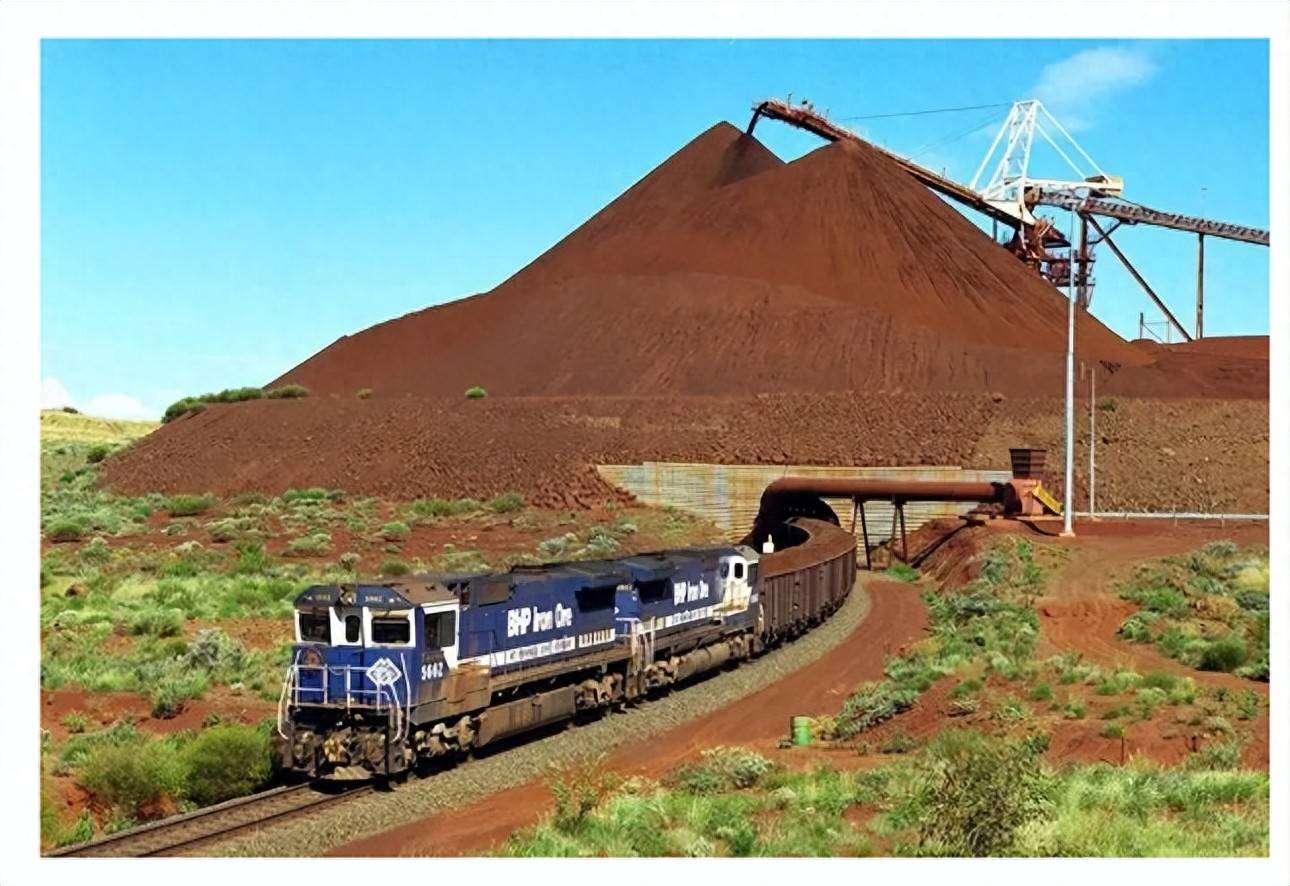
Core Viewpoint - The announcement from Mount Gibson Iron Limited (MGI) regarding a significant rockfall incident at the Koolan Iron Ore mine has led to the suspension of mining activities in the affected area, impacting iron ore supply to the company [1][2]. Group 1: Incident Details - A major rockfall occurred on October 16, 2025, at the eastern side of the main pit of the Koolan Iron Ore mine [1]. - MGI has determined that remediation and resumption of mining operations in the affected area are not feasible due to safety risks and the limited remaining mining life of the Koolan area, which was expected to conclude around September 2026 [2]. Group 2: Operational Impact - Mining activities at the Koolan area have been suspended, although processing of available ore stockpiles will continue to meet scheduled shipments [2]. - MGI has notified that some shipments originally planned for the fourth quarter of 2025 will be delayed due to the incident [2]. Group 3: Company Response - The company maintains that all major business operations are running normally as of the announcement date [2]. - MGI is currently in discussions with Koolan regarding iron ore supply and is assessing the overall impact of the incident on its business [2].
大中矿业股份有限公司 2025年第三季度报告
Zheng Quan Ri Bao· 2025-10-24 23:25
Core Viewpoint - The company has reported significant changes in its financial metrics for the third quarter, indicating both growth in certain areas and challenges in others, particularly in cash flow and investment activities [3][7]. Financial Data Summary - The company experienced a 78.78% increase in cash and cash equivalents compared to the end of the previous year, attributed to operational accumulation [6]. - Accounts receivable increased by 169.79%, reflecting a rise in credit limits [6]. - The company reported a 370.87% increase in investment income, primarily due to higher earnings from equity method accounting for a subsidiary [6][7]. - The company’s total liabilities saw a significant increase in accounts payable, which rose by 409.25% due to increased purchases of raw materials [6]. Non-Recurring Gains and Losses - The company reported non-recurring gains primarily from tax refunds and VAT reductions, although specific amounts were not detailed [4]. Shareholder Information - As of September 30, 2025, the company’s repurchase account held 41,483,448 shares, representing 2.75% of total shares, making it one of the top ten shareholders [8]. Other Important Matters - The company’s wholly-owned subsidiary obtained a mining license for the Zhouyoufang Iron Mine, increasing its production capacity from 450 million tons to 650 million tons per year, marking a significant advancement in its iron ore expansion efforts [9]. - A change in the board of directors occurred with the election of a new vice chairman following the resignation of a previous director [10]. - The company paid interest on its convertible bonds on August 18, 2025, with a coupon rate of 1.00% [11].
中信期货晨报:国内商品期货多数上涨,新能源材料涨幅居前-20251017
Zhong Xin Qi Huo· 2025-10-17 01:56
Report Industry Investment Rating - Not provided in the given content Core View of the Report - Next week, there is a risk of increased volatility in global major asset classes. Investors are advised to maintain a strategic allocation to precious metals such as gold and be relatively cautious about risk assets like equities, waiting and seeing. In the medium - term of the fourth quarter, the basic allocation view of equities > commodities > bonds is still held, and attention can be paid to potential buying opportunities for equity assets after the turmoil subsides [6] Summary by Related Catalogs Market Performance Summary - **Financial Market**: In the stock index futures, technology events catalyze the active growth style; the market turnover of index options slightly declines; the bond market of treasury bond futures remains weak. For example, the current price of CSI 300 futures is 4,590 with a daily increase of 0.30%, and the 2 - year treasury bond futures price is 102.362 with a daily decrease of 0.02% [2][7] - **Commodity Market**: Precious metals like COMEX gold and silver have significant increases, with COMEX gold rising 1.57% daily and COMEX silver rising 4.69% daily. In the energy sector, NYMEX WTI crude oil and ICE Brent oil have daily increases of 0.27% and 0.31% respectively, but have declined this year. In the agricultural products sector, CBOT soybeans and other varieties show different trends [2] - **Shipping Market**: The freight rate of container shipping to Europe is under pressure, with a monthly decline of 3.37% [3] Macro - situation Analysis - **Overseas Macro**: Next week, attention should be paid to new tariff threats from Trump and the marginal changes in the US government shutdown. There is a risk of conflict escalation before the APEC meeting at the end of October. If the US government shutdown exceeds 30 days, it will increase the recession risk [6] - **Domestic Macro**: China will gradually enter the period of focusing on the "15th Five - Year Plan" and tracking incremental policies. The progress and effectiveness of a batch of incremental policies such as 500 billion new policy - based financial instruments are worthy of follow - up [6] Asset Views - **Short - term**: Maintain a strategic allocation to precious metals such as gold, and be cautious about risk assets like equities next week [6] - **Medium - term (Fourth Quarter)**: Hold the basic allocation view of equities > commodities > bonds, and pay attention to potential buying opportunities for equity assets after the turmoil [6] View Highlights - **Financial**: Stock index futures are expected to rise in shock, index options to fluctuate, and treasury bond futures to oscillate [7] - **Precious Metals**: Gold and silver are expected to rise in shock [7] - **Shipping**: Container shipping to Europe is expected to fluctuate [7] - **Black Building Materials**: Most varieties such as steel, iron ore, coke, etc. are expected to oscillate [7] - **Non - ferrous Metals and New Materials**: Most non - ferrous metal varieties are expected to oscillate, and aluminum is expected to rise in shock [7] - **Energy and Chemicals**: Most varieties are expected to decline in shock, and some varieties such as asphalt and high - sulfur fuel oil are expected to oscillate [9] - **Agriculture**: Most varieties are expected to oscillate, and some varieties such as sugar and paper pulp are expected to decline in shock [9]
广发期货日评-20251015
Guang Fa Qi Huo· 2025-10-15 07:15
1. Report Industry Investment Ratings - No specific industry investment ratings are provided in the report. 2. Core Views - The market risk preference may be suppressed in the short - term due to Trump's statement on tariff hikes, causing A - shares to decline, but the stock index is expected to fall first and then rebound, with an upward long - term trend [3]. - The bond market warms up due to stock market adjustments and loose liquidity, and short - term treasury bond futures are expected to continue to fluctuate within a range [3]. - Gold has large market fluctuations before the APEC meeting in South Korea at the end of October, and silver maintains a strong trend [3]. - Steel products' hot - rolled coils have accumulated inventory, and attention should be paid to post - holiday demand recovery; the iron ore market has weakened [3]. - The price of crude oil is under pressure due to Sino - US trade tensions and a pessimistic IEA report; most chemical products have weak supply - demand expectations [3]. - Agricultural products such as soybeans, corn, and palm oil are affected by various factors and show different trends, with some under pressure and some in a weak pattern [3]. - Special commodities like soda ash and glass are in a situation of oversupply and weak operation; industrial silicon prices are weakly fluctuating [3]. - New energy products such as polysilicon and lithium carbonate have different trends, with polysilicon having a late - session rebound and lithium carbonate having a tight - balance fundamental situation [3]. 3. Summary by Related Catalogs Financial Index Futures - The stock index rises and then falls, with a style switch on the market. Due to the tariff conflict, the stock index is expected to fall first and then rebound in the short - term, and the long - term upward trend remains unchanged. Conservative investors can wait for the volatility to converge and then enter the market at low prices [3]. Treasury Bonds - The stock market adjustment and loose liquidity promote the bond market to warm up. Short - term treasury bond futures are expected to continue to fluctuate within a range. For example, T2512 may fluctuate between 107.4 - 108.3, and it is recommended to wait and see for over - adjustment opportunities [3]. Precious Metals - Gold has large fluctuations before the APEC meeting in South Korea at the end of October. One can choose to buy lightly above 910 yuan and set stop - loss and take - profit. Silver maintains a strong trend above 50 dollars [3]. Shipping Index (European Line) - From the perspective of macro - uncertainty factors, it is recommended to be cautious and wait and see [3]. Black Steel - Hot - rolled coils have accumulated a lot of inventory, and attention should be paid to post - holiday demand recovery. The profit of the coil - screw spread converges [3]. Iron Ore - Supply - side disturbances weaken, shipments decline, arrivals increase, and the iron ore market weakens. It is recommended to wait and see for the time being, with a reference range of 750 - 830 [3]. Coking Coal - After the holiday, coal prices in coal - producing areas are weak, downstream replenishment demand weakens, and there are concerns about reduced Mongolian coal supply. It is recommended to go long on JM2601 at low prices, with a reference range of 1080 - 1200 [3]. Coke - The first round of price increases was implemented before the holiday, and there is not much room for further increases. It is recommended to go long on J2601 at low prices, with a reference range of 1550 - 1700 [3]. Non - ferrous - Copper prices fluctuate, and it is recommended to take profit on long positions at high prices. Aluminum, zinc, nickel, stainless steel, etc. all have corresponding price reference ranges and operation suggestions [3]. - Tin can be bought when the macro - sentiment drops. Energy and Chemical Crude Oil - Sino - US trade tensions and a pessimistic IEA report suppress oil prices. It is recommended to maintain a short - selling strategy on the single side, with support levels for different benchmarks provided [3]. Chemical Products - Most chemical products such as urea, PX, PTA, etc. have weak supply - demand expectations, and corresponding operation suggestions such as short - selling on rebounds and month - spread reverse arbitrage are given [3]. Agricultural Products - Different agricultural products such as soybeans, corn, palm oil, sugar, cotton, eggs, apples, and dates are affected by various factors and show different trends and price ranges, with corresponding operation suggestions [3]. Special Commodities - Soda ash and glass are in a situation of oversupply and weak operation, and it is recommended to hold short positions. Rubber can be observed during the peak - production period, and industrial silicon prices fluctuate within a range [3]. New Energy - Polysilicon rebounds in the late session, and it is recommended to hold long positions. Lithium carbonate has a tight - balance fundamental situation, with a price - center reference range of 70,000 - 75,000 yuan [3].
黑色建材日报:市场谨慎观望,价格偏弱运行-20251015
Hua Tai Qi Huo· 2025-10-15 05:31
Report Summary 1. Report Industry Investment Ratings No specific industry investment ratings are provided in the report. 2. Core Views - The steel market is experiencing weak sentiment with prices trending downwards due to high post - holiday production, average demand, slow inventory reduction, and shrinking steel mill profits. The market is also influenced by geopolitical and economic uncertainties [1]. - The iron ore market is under cautious observation with prices weakening. Although demand is resilient, the expected increase in future supply and high current price valuations suggest potential downside risks, especially considering possible steel mill profit changes and steel production cuts [3]. - The coking coal and coke (double - coking) market shows no obvious supply - demand contradictions and is expected to move in a sideways pattern. Macroeconomic policies and supply - demand dynamics on both sides need to be monitored [5][6]. - The动力煤 market has seen rising prices in the production areas due to positive downstream demand. In the short term, prices will move sideways, while in the long - term, the supply remains ample [8]. 3. Summary by Commodity Steel - **Market Analysis**: The futures price of rebar closed at 3061 yuan/ton, and hot - rolled coil at 3421 yuan/ton. The spot trading volume of steel was average, with the national building materials trading volume at 94,577 tons, a daily decrease of 10.8% and a weekly increase of 17.51%. Post - holiday steel production remained high, demand was average, inventory reduction was slow, and steel mill profits continued to shrink [1]. - **Strategy**: The recommended strategy for single - side trading is to expect a sideways - to - downward movement [2]. Iron Ore - **Market Analysis**: The futures price of iron ore weakened. The main 2601 contract closed at 782 yuan/ton, down 2.8%. The price of imported iron ore in Tangshan ports declined. The total transaction volume of main ports was 185.9 million tons, a 95.27% increase from the previous day, and the forward - spot transaction volume was 91 million tons, a 44.44% increase. Iron ore arrivals increased significantly this week, iron - water production remained high, and port inventories increased slightly [3]. - **Strategy**: The recommended single - side trading strategy is a sideways - to - downward movement [4]. Double - Coking (Coking Coal and Coke) - **Market Analysis**: The futures of double - coking oscillated. The coke market was stable, with most steel mills purchasing for immediate needs. The production of coking coal was gradually recovering, but was affected by some factors. The customs system failure at the Ganqimaodu port led to a significant decline in customs clearance [5]. - **Strategy**: Both coking coal and coke are expected to move sideways [7]. 动力煤 - **Market Analysis**: In the production areas, coal prices continued to rise due to positive downstream demand from the metallurgical and chemical industries. At ports, the market sentiment was good, but the transaction was deadlocked. The imported coal market was strong, and the price advantage was obvious [8]. - **Strategy**: No trading strategy was provided [8].