
TMT

Search documents
港股通科技ETF(159262)今日重磅上市,锚定AI时代“纯科技革命”
Xin Lang Cai Jing· 2025-07-07 01:08
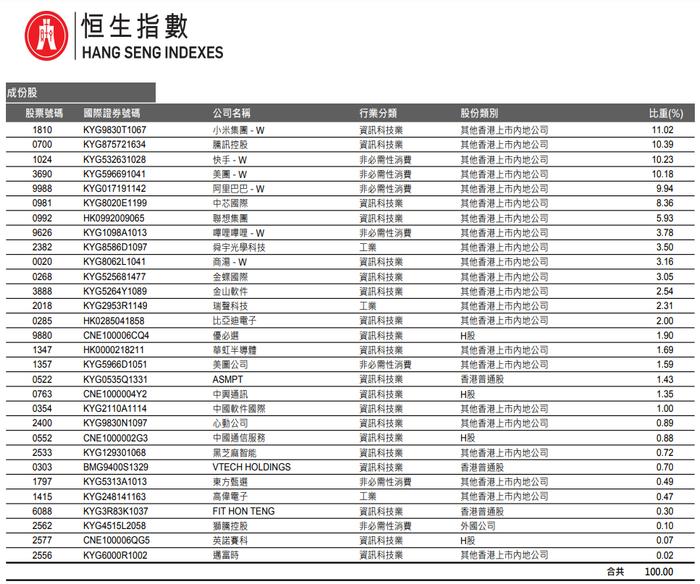
Core Viewpoint - The launch of the GF Hangseng Hong Kong Stock Connect Technology Themed ETF (code: 159262) provides an efficient tool for investors to access core technology assets in the Hong Kong stock market, with a fundraising scale of 1.337 billion yuan, marking a new high in the past 1.5 years for Hong Kong-related ETFs [1]. Group 1: ETF Overview - The ETF closely tracks the Hangseng Hong Kong Stock Connect Technology Themed Index, which focuses on TMT (Technology, Media, and Telecommunications) sectors, specifically excluding non-technology industries such as pharmaceuticals, home appliances, and automobiles [1]. - The index consists of 30 pure technology companies that are tradable via the Hong Kong Stock Connect, ensuring a focused investment logic that directs funds towards cutting-edge sectors like AI computing power, large models, and domestic chip production [1]. Group 2: Index Composition and Performance - The top ten constituent stocks of the index account for 76% of its weight, with leading AI companies like Xiaomi, Alibaba, and Tencent collectively representing over 30% [1]. - As of July 4, 2025, the total market capitalization of the index's constituent stocks exceeds 10.5 trillion HKD, approximately 13% of the total market capitalization of Hong Kong stocks [1]. - The Hangseng Hong Kong Stock Connect Technology Themed Index has recorded a 27.62% increase over the past three years, significantly outperforming the Hangseng Index (+9.40%) and the Hangseng Technology Index (+7.02%) [3]. Group 3: Market Trends and Investment Insights - In the first half of 2025, net inflows from southbound funds reached 731.193 billion HKD, a historical high for the period, indicating strong confidence and demand for quality assets in the Hong Kong stock market [3]. - Analysts suggest focusing on technology giants benefiting from AI industry catalysts, innovative pharmaceuticals, new consumer directions driven by technological advancements, and high-dividend assets in sectors like banking and utilities [5].


中国6月CPI将出炉;美联储将公布会议纪要丨一周前瞻
Sou Hu Cai Jing· 2025-07-07 00:37
Economic Data Release - China will release several important economic data this week, including June CPI, June PPI, July foreign exchange reserves, and July social financing data [1] - The U.S. "reciprocal tariffs" suspension period is about to end, and the Federal Reserve will publish the minutes of its monetary policy meeting [1] Stock Market Developments - This week, a total of 50 stocks will have their lock-up shares released, with a total market value of approximately 37.619 billion yuan. The top three stocks by market value of released shares are Lingyun Guang (5.952 billion yuan), Haohua Technology (4.263 billion yuan), and Weike Technology (3.636 billion yuan) [2] Regulatory Changes - The People's Bank of China is seeking public opinion on the draft business rules for the Cross-Border Interbank Payment System (CIPS), which includes detailed processes for account management, funding, and settlement [4] - The Ministry of Finance has announced measures regarding government procurement of medical devices imported from the EU, requiring that non-EU companies' products must not exceed 50% of the total contract amount for certain procurement projects [5] Aviation Industry Initiatives - The Civil Aviation Administration of China has established a leadership group for general aviation and low-altitude economy, focusing on the development and regulation of these sectors [6] Real Estate Market Stability - The Ministry of Housing and Urban-Rural Development emphasizes the importance of stabilizing the real estate market and encourages local governments to implement precise policies to promote healthy development [7] Electricity Demand Surge - China's electricity load reached a historical high of 1.465 billion kilowatts on July 4, driven by high temperatures, marking an increase of approximately 200 million kilowatts from the end of June and nearly 150 million kilowatts year-on-year [8] Oil Production Increase - Eight major oil-producing countries have decided to increase production by 548,000 barrels per day in August, adjusting their output based on current market conditions [9] New Tariffs Announcement - U.S. President Trump announced that new tariffs will likely be implemented starting August 1, with rates potentially reaching up to 70% [10] Stock Market Outlook - The market is expected to experience a strong oscillation, with a focus on industry logic as half-year reports approach. High-dividend blue-chip companies are anticipated to gain market favor [14] - The market is cautiously optimistic for July, with expectations for steady upward movement in the index amid various influencing factors [14][15]

总量双周报:开启新征程-20250704
Dongxing Securities· 2025-07-04 14:47
Macroeconomic Insights - Consumption has exceeded expectations, with May data showing a further recovery in consumer spending, slightly surpassing market forecasts[1] - The Consumer Price Index (CPI) remains negative year-on-year, but core inflation has stabilized above 0.5%[1] - Industrial added value growth rate fell to 5.8% year-on-year in May, indicating moderate production levels[1] A-Share Market Strategy - The A-share market is positioned at the beginning of a new structural slow bull market, with a significant breakthrough at 3400 points expected to mark a new journey[3] - The ongoing trade tensions and the strengthening of China's manufacturing sector are expected to enhance global trade dynamics and investor confidence[3] - The stock market's attractiveness is increasing as interest rates decline, with a notable rise in stock fund issuance compared to the previous year[3] Bond Market Overview - The yield on 1-year government bonds has decreased by 5 basis points to 1.35%, reflecting a relatively ample liquidity environment[5] - The central bank's liquidity support and a weak economic backdrop are the primary drivers for the bond market's stability[5] - The market anticipates a slight decline in total growth data in Q3 due to diminishing export effects[5] Banking Sector Outlook - The banking sector is expected to maintain stable expansion, with a focus on technology and consumption sectors[6] - The banking index has outperformed the broader market, with a year-to-date increase of 3.32%[24] - High-dividend stocks in the banking sector are becoming increasingly attractive as interest rates decline[6] Real Estate Market Trends - New home sales have seen an expanded decline, with a year-to-date cumulative sales area growth of only 0.2%[7] - The central bank is emphasizing the implementation of incremental policies to stabilize the real estate market[7] - The second-hand housing market has shown signs of recovery, with a year-to-date cumulative sales area growth of 26.1%[7] Securities Market Dynamics - Recent fluctuations in daily trading volumes have increased from below 1.1 trillion to 1.6 trillion, indicating heightened market activity[8] - The introduction of new policies for the Sci-Tech Innovation Board is expected to facilitate financing for quality tech companies[9] - The securities sector is likely to benefit from the government's initiatives to boost domestic demand and consumption[8]
“七翻身”能否上演?胜率、逻辑与策略全奉上
天天基金网· 2025-07-04 11:13
Core Viewpoint - The article discusses the "July Rebound" phenomenon in the A-share market, highlighting its historical patterns and potential investment opportunities based on behavioral finance and market trends [1][2]. Historical Performance - Over the past 15 years (2010-2024), the average return of the A-share index in June was -1.1%, while in July it rebounded to 0.9%, indicating a typical "bottoming-out and rebound" pattern [2]. - The success rate of the July rebound over the past 15 years was only 60%, with notable exceptions such as a more than 15% decline in July 2015 due to a liquidity crisis [2]. Structural Characteristics - The July market typically exhibits structural characteristics, with high success rates in sectors like military, new energy, and resource industries such as steel, chemicals, and non-ferrous metals, driven by policy expectations and industry cycles [2]. Driving Forces Behind July Rebound - The July rebound is supported by three main factors: liquidity recovery, policy signals from the Central Political Bureau meeting, and the onset of mid-year earnings reports, which can enhance market sentiment and structural opportunities [5]. Investment Opportunities - In July, focus on sectors with earnings forecast discrepancies and recovery potential, including non-US export chains, price increase chains, AI chains, and financial sectors [6]. - The military sector is expected to benefit from policy and event-driven catalysts, particularly during the transition from the 14th to the 15th Five-Year Plan [6]. - The technology sector, especially AI, is anticipated to continue its upward trend due to favorable valuations and market sentiment [6]. - Resource sectors are likely to see improvements due to seasonal demand and price increases in the third quarter [6].

早盘直击 | 今日行情关注
申万宏源证券上海北京西路营业部· 2025-07-04 02:18
Core Viewpoint - The A-share market has regained upward momentum in July, supported by a low interest rate environment and a recovery in risk appetite, with expectations for incremental policies to potentially break the current sideways trend [1][2]. Group 1: Market Overview - After breaking through the March high, the A-share market experienced slight fluctuations but continued to trend upwards, reaching recent highs [1]. - The market's risk appetite has improved, with sectors like non-bank financials, media, and military industry showing signs of recovery [1]. - The upcoming policy window in July is expected to further support the market's gradual upward trajectory [1]. Group 2: Sector Analysis - The market is likely to see a thematic event-driven approach in July, with a high probability of sector rotation between high and low-performing areas [2]. - Key sectors to watch include: 1. Consumer expansion and domestic demand, with a focus on dairy products, IP consumption, leisure tourism, and medical aesthetics [2]. 2. Robotics, with a trend towards domestic production and integration into daily life, particularly in humanoid and functional robots [2]. 3. Semiconductor localization, emphasizing semiconductor equipment, wafer manufacturing, materials, and IC design [2]. 4. Military industry, with expectations for order recovery and signs of bottoming out in Q1 reports across various sub-sectors [2]. 5. Innovative pharmaceuticals, which are expected to reach a turning point in fundamentals after a prolonged adjustment period [2]. Group 3: Market Performance - The A-share market has shown a continued upward trend, with electronic and other high-elasticity sectors leading the gains [3]. - Despite some fluctuations, the overall market confidence has strengthened, with over 3,200 stocks rising, indicating a positive earning effect [3]. - Leading sectors included electronics, power equipment, and pharmaceuticals, while sectors like coal, transportation, and banking faced declines [3].

上海甲级写字楼空置率攀升 生物医药企业租赁需求异军突起
Xin Hua Cai Jing· 2025-07-02 12:40
房地产服务和咨询顾问公司戴德梁行2日发布的数据显示,2025年第二季度,上海甲级写字楼市场量价 继续承压。第二季度净吸纳量为8.53万平方米,同比下滑67.6%,环比下滑18.4%。受新增供应冲击,市 场空置率有所攀升,至季度末达23.6%;甲级写字楼平均租金承压下行,降至6.99元/平方米/天,环 比跌幅1.9%。 而从细分行业来看,零售贸易制造业更倾向于传统核心商圈及优势新兴商圈,近期奢侈品、体育用品等 零售企业表现尤为亮眼;TMT行业则布局热门新兴商圈及新项目,主要有平台网络软件服务型企业改 善型搬迁、电商平台扩租需求,以及汽车软件平台企业续租成交。生物医药企业受上海市加快打造全球 生物医药研发经济和产业化高地政策影响,企业升级搬迁或扩租需求持续释放,成为拉动行业租赁需求 的重要力量。 围绕推动高质量发展首要任务和构建新发展格局战略任务,上海正在加快建设国际经济、金融、贸易、 航运和科技创新中心,进一步强化城市核心功能。"政策的调控为房地产市场发展指明了方向,通过优 化营商环境、加大产业扶持力度,为各类企业在沪投资兴业提供肥沃土壤。"戴德梁行华东区董事总经 理黎庆文表示。 (文章来源:新华财经) 戴德梁 ...
国泰海通证券6月基金表现回顾:重配 TMT、军工、有色等相关行业个股的基金表现较优
GUOTAI HAITONG SECURITIES· 2025-07-02 11:05
国泰海通证券 6 月基金表现回顾 [Table_Authors] 魏玮(分析师) 重配 TMT、军工、有色等相关行业个股的基金表现较优 本报告导读: 2025 年 6 月,A 股上涨,债市上涨,美股上涨,油价上涨,金价调整。基金方 面,部分重配 TMT、军工、有色等相关行业个股的基金表现较优。 投资要点: 2025 年 6 月基金业绩回顾 基金研究 /[Table_Date] 2025.07.02 | | 021-38676666 | | --- | --- | | 登记编号 | S0880525040123 | | | 庄梓恺(分析师) | | | 021-38676666 | | 登记编号 | S0880525040038 | 证 券 研 究 报 告 请务必阅读正文之后的免责条款部分 基 金 研 究 基 金 月 报 [Table_Summary] 2025 年 6 月资本市场回顾 股票市场:A 股上涨,TMT、军工、有色等行业表现较优。2025 年 6 月,5 月制造业 PMI 环比上升带动 A 股上行,但受中东局势影响, 市场于月中承压调整,后在伊以宣布正式停火、央行等六部门联合 发布《关于金融支持提振 ...
【金融工程】情绪指标回暖,小盘快速反弹——市场环境因子跟踪周报(2025.07.02)
华宝财富魔方· 2025-07-02 10:21
分析师:柏逸凡 登记编号:S0890524100001 分析师:程秉哲 登记编号:S0890522110001 投资要点 本报告统计时间为2025.06.23-2025.06.27。 指数层面,沪指冲上3400短期内指数方面或需震荡整固确认支撑,短期以结构性机会为主。前期 上涨较多的大金融板块动能有所减弱,不过银行板块的调整或主因季末部分风格漂移的基金进行 调仓,导致短期抛压上升,但跨月后有望扭转,仍然可视作布局机会。此外,市场情绪和活跃度 回升后,预计主题方向短期有望迎来机会,美股科技近期强势,指向科技股业绩前景仍然向好, 叠加前期成交占比回落,TMT、AI、算力、半导体、游戏等方向近期性价比上升。 权益市场, 上周,小盘成长风格重回优势;市场波动方面,大小盘风格波动下降,价值成长风格 波动略有上升。市场结构方面,上周,行业指数超额收益离散度略有上升,成分股上涨比例大幅 提高,行业轮动速度下降;交易集中度方面,前100个股成交集中度较上期持平,前5行业成交额 占比上升。市场活跃度方面,上周,市场波动率上升,市场换手率大幅增加。 商品市场方面 ,上周,商品市场方面,除农产品外,其余板块趋势强度均有所下降;基差 ...

可转债周报:从波动率把握转债的机会区间-20250702
Changjiang Securities· 2025-07-02 10:15
丨证券研究报告丨 固收资产配置丨点评报告 [Table_Title] 从波动率把握转债的机会区间 ——可转债周报 20250628 报告要点 [Table_Summary] 当周(2025 年 6 月 23 日–2025 年 6 月 28 日),可转债市场回暖,指数整体走强,市场风格 转向高弹性博弈。估值端,低平价区间个券有所分化,中高平价区间个券估值普遍拉升,市场 风险偏好温和回升,隐含波动率小幅抬升,交易情绪有所改善。当前万得全 A 风险溢价处于高 分位,权益市场相对债市或具备一定性价比。我们认为,转债市场波动率相关指标均有所回升, 反映市场情绪温和回暖。整体来看,当前转债市场风格自防御向进攻切换,建议兼顾弹性与安 全边际,关注具备事件驱动与业绩兑现预期的结构性机会。 分析师及联系人 [Table_Author] 赵增辉 熊锋 SAC:S0490524080003 SAC:S0490524120004 SFC:BVN394 请阅读最后评级说明和重要声明 %% %% %% %% research.95579.com 1 [Table_Title 从波动率把握转债的机会区间 2] ——可转债周报 202506 ...
生物医药企业在沪办公楼租赁市场占比 从3%提升至10%
news flash· 2025-07-02 10:06
生物医药企业在沪办公楼租赁市场占比 从3%提升至10% 智通财经7月2日电,零售贸易制造与TMT行业企业,成为上海甲级办公市场的租赁主力。据戴德梁行 今日披露的数据,2025年二季度,上海甲级写字楼市场净吸纳量为8.53万平方米,日平均租金6.99元/平 方米。按租赁需求结构,零售贸易制造与TMT行业企业,在该季度比例分别为28%、23%,占比超过一 半。监测数据显示,金融行业租赁成交占比为15%,此外,生物医药行业租赁需求明显增加;2024年二 季度,上海写字楼租赁中,生物医药企业占比为3%;而今年二季度,因部分国内外知名药企大面积搬 迁成交,该行业企业在上海二季度办公租赁市场占比大幅提升至10%。(智通财经记者 王海春) ...