医疗保健

Search documents
美国就业岗位大增失业率降低,但蕴含隐忧
Sou Hu Cai Jing· 2025-07-05 08:34
Group 1 - The core viewpoint of the articles indicates that despite uncertainties in the U.S. economy due to President Trump's tariff policies, the job market remains robust with significant job growth in June [2][4][14] - The U.S. added 147,000 jobs in June, surpassing expectations of 117,500, with the unemployment rate decreasing from 4.2% to 4.1% [2][4] - Job growth was primarily driven by healthcare (+58,600 jobs), leisure and hospitality (+20,000 jobs), and state and local government (+80,000 jobs), while private sector job growth was only 74,000, the lowest since October 2024 [4][5] Group 2 - The labor force participation rate has declined, and the unemployment rate for Black workers rose by 0.8 percentage points to 6.8%, the highest level since January 2022 [5][9] - Average hourly earnings increased by $0.08 (0.2%) to $36.30, with the year-over-year growth rate dropping from 3.9% to 3.7% [5][12] - The report indicates a potential slowdown in labor demand due to rising tariffs and restrictive monetary policies, which may hinder hiring activities [4][11] Group 3 - The job market has shown low turnover rates, with hiring activity at a near ten-year low, suggesting employers are retaining their workers amid economic uncertainty [8][9] - Initial claims for unemployment insurance decreased slightly, indicating that layoffs have not accelerated, but finding new jobs remains challenging for many [9][11] - The Federal Reserve is closely monitoring economic data, with expectations of maintaining high interest rates due to concerns over inflation and the impact of tariffs [11][12][14] Group 4 - Wall Street reacted positively to the employment report, with major indices rising, reflecting investor optimism about the resilience of the U.S. economy despite trade policy uncertainties [14] - The strong job report has led to a surge in U.S. Treasury yields and reduced expectations for an imminent rate cut by the Federal Reserve [14]


[7月4日]指数估值数据(经济火热时适合投资吗;抽奖福利)
银行螺丝钉· 2025-07-04 13:59
Core Viewpoint - The article discusses the current market conditions, emphasizing that economic downturns can present undervalued investment opportunities, contrary to the common belief that investments are only suitable during economic booms [10][19][18]. Market Overview - The market experienced a slight increase during the day, reaching a peak of 4.8 stars, but closed slightly down with the CSI All Share Index at 4.9 stars [1][2]. - Large-cap stocks like the CSI 300 saw minor gains, while small-cap stocks experienced slight declines [3]. - Value styles showed strong performance, with indices related to banks, dividends, and value overall rising [4][5]. - Growth styles saw a slight decrease [6]. Historical Context - The article outlines two types of bull markets: one driven by capital (e.g., 2015) and one driven by fundamentals (e.g., 2007, 2009, 2017, and early 2021) [11][12][13][15]. - It highlights that 2007 was a peak year for economic growth and corporate earnings, yet it also marked a significant market bubble [11]. - The 2009 stimulus plan led to a substantial increase in corporate earnings and a bull market, which eventually corrected [12]. - The year 2017 saw the fastest earnings growth in a decade, leading to elevated valuations [13][14]. Investment Timing - The article suggests that entering the market before fundamental improvements can yield significant returns [17]. - It warns that when most investors recognize a strong economy, it may already be too late, as valuations tend to be high at that point [18]. Economic Downturns - Economic downturns often correlate with slow corporate earnings growth, creating opportunities for undervalued investments [19]. - Historical examples include the 2008 financial crisis, where major indices reached low valuations, and subsequent recovery periods [20][21]. - The article notes that 2024 is projected to be a challenging year for corporate earnings, potentially leading to low valuations [21]. Valuation Data - The article provides valuation metrics for various indices, including P/E ratios, P/B ratios, and dividend yields, indicating the current market conditions and potential investment opportunities [24][33].

贸易专题分析报告:美国“对等关税”谈判进展如何?
SINOLINK SECURITIES· 2025-07-04 11:15
Group 1: Trade Negotiation Strategies - The U.S. is using "reciprocal tariffs" as a negotiation tool to encourage trade partners to increase purchases of American goods and enhance supply chain security[2] - Countries like India, Pakistan, and Switzerland are likely to reach trade agreements with the U.S., while the EU, Japan, and South Korea are still in negotiations[2][21] - The U.S. has clarified its demands in trade negotiations, which will be crucial for reaching agreements by the July 9 deadline[4] Group 2: Trade Deficits and Tariff Rates - The trade deficit with China stands at $295.40 billion, with a proposed reciprocal tariff rate of 34%[5] - The EU has a trade deficit of $235.57 billion, with a proposed tariff rate of 20%[5] - India has a trade deficit of $45.66 billion, with a proposed tariff rate of 26%[24] Group 3: Economic Objectives - The U.S. aims to reduce its trade deficit primarily by increasing exports of energy and agricultural products, which account for about 28% of total exports[8] - The Trump administration seeks to reduce overseas spending and has linked trade policies to military spending commitments from NATO allies[12][13] - Strengthening domestic manufacturing and supply chain resilience is a key goal, especially in critical sectors like semiconductors and medical supplies[16] Group 4: Risks and Uncertainties - The uncertainty surrounding "reciprocal tariffs" may decrease, but the Trump administration retains tools like Section 232 and Section 301 tariffs, indicating ongoing trade policy uncertainty[2][30] - Non-U.S. countries are showing a willingness to compromise to reach trade agreements, while those failing to negotiate may face higher tariffs[30]
6月美国非农数据解读:失业率意外下降,细节暗藏隐忧
China Post Securities· 2025-07-04 09:21
Employment Data Analysis - In June, the U.S. added 147,000 jobs, exceeding the expected 110,000, with revisions in April and May adding 16,000 jobs[1] - The unemployment rate fell slightly to 4.1%, better than the expected 4.3%[1] - Labor force participation rate has declined, primarily due to a drop in participation among younger workers, while the 25-54 age group saw an increase[2] Wage and Hour Trends - Average hourly earnings increased by only 0.2% month-on-month, falling short of expectations[2] - Average weekly hours worked have also shown a slowdown, indicating a potential cooling in labor demand[2] Sector-Specific Insights - Job growth was mainly driven by state government and healthcare sectors, with government jobs increasing by 73,000 and private sector jobs by 74,000[2] - The education sector added 40,000 jobs, likely reflecting seasonal effects[2] Labor Supply Concerns - Tightening immigration policies have led to a decrease in the number of foreign-born workers, with employment in this group declining for three consecutive months[2] - The number of individuals continuing to claim unemployment benefits has been rising since April, indicating a slowdown in hiring and increased difficulty for unemployed individuals to find new jobs[2] Federal Reserve Outlook - Despite the strong surface-level employment data, underlying issues suggest weakening labor supply and demand, leading to expectations of interest rate cuts by the Federal Reserve in September and three cuts throughout the year[3] - Risks include potential changes in tariff policies and unexpected inflation increases that could affect the Fed's rate-cutting schedule[4]
沪指逼近3500点 A500ETF嘉实(159351)盘中突破1元大关 成交额居深市同类第一
Mei Ri Jing Ji Xin Wen· 2025-07-04 07:42
Group 1 - The A-share market experienced a volatile upward trend, with the Shanghai Composite Index reaching a high of 3497 points, closing at 3472.32 points, an increase of 0.32%, marking a new high for the year [1] - A500ETF Jiashi (159351) saw significant trading volume, with a total turnover of 33.406 billion yuan, ranking second in the market for similar products, and first in the Shenzhen market [1] - The trading turnover rate for A500ETF Jiashi reached 21.14%, the highest among similar products in the Shenzhen market [1] Group 2 - A500ETF Jiashi (159351) tracks the CSI A500 Index, consisting of 500 stocks with large market capitalization and good liquidity, providing a balanced industry distribution and favoring large and mid-cap styles [2] - The fund includes a high proportion of new productive forces, offering investors a tool to allocate to representative A-share companies [2] - Investors can also access quality core asset opportunities through the Jiashi CSI A500 ETF linked fund [2]
【UNFX课堂】美国2025年6月就业报告解读:劳动力市场温和降温,支持美联储谨慎观望
Sou Hu Cai Jing· 2025-07-04 02:18
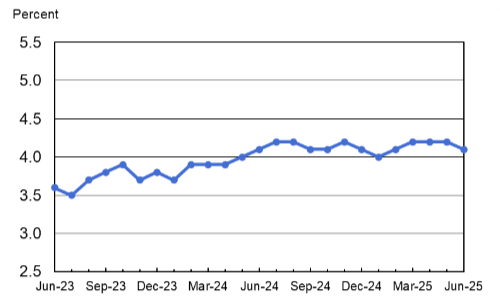
Core Insights - The June employment report indicates a moderate growth and stability in the U.S. labor market, with non-farm payrolls increasing by 147,000, aligning closely with the 12-month average of 146,000 [1][6] - The unemployment rate remained steady at 4.1%, reflecting a stable labor market environment since May 2024 [1][6] - Long-term unemployment and marginally attached workers have increased, suggesting underlying challenges within the labor market [2][6] Employment Data - Non-farm payrolls added 147,000 jobs in June, a figure that is consistent with the previous year's monthly average [1] - The unemployment rate held at 4.1%, with a total of 7 million unemployed individuals [1] - The labor force participation rate was stable at 62.3%, and the employment-population ratio remained at 59.7% [1] Wage and Hours Analysis - Average hourly earnings in the private non-farm sector rose by 0.2% to $36.30, with a year-over-year growth rate of 3.7%, indicating a decrease from previous years' higher growth rates [2][6] - Average weekly hours worked slightly decreased by 0.1 hours to 34.2 hours, suggesting a potential slowdown in overall labor demand [3] Sector Performance - Job growth in June was primarily concentrated in less economically sensitive sectors, such as state government (especially education) and healthcare, while federal employment continued to decline [3][4] - Most other major industries showed little change in employment numbers, consistent with the overall moderate growth trend [4] Federal Reserve Implications - The report's data supports the Federal Reserve's cautious and data-dependent monetary policy stance, indicating no immediate need for rate hikes or significant cuts [7] - The overall tone of the report aligns with the Fed's goal of achieving a "soft landing" for the economy, allowing for a gradual cooling of economic activity and labor markets [7][8] Market Reactions - Stock markets interpreted the report as a positive signal, reducing the risk of a hard economic landing and indicating manageable wage pressures [8] - Bond markets experienced downward pressure on yields due to the moderate employment and wage data, potentially enhancing expectations for future rate cuts [8] - The direction of the U.S. dollar will depend on market interpretations of this report relative to data from other major economies and its implications for future Fed policy [8]
大摩评非农:反移民拉低失业率,美联储将重点关注关税后续对通胀和消费影响
Hua Er Jie Jian Wen· 2025-07-04 02:16
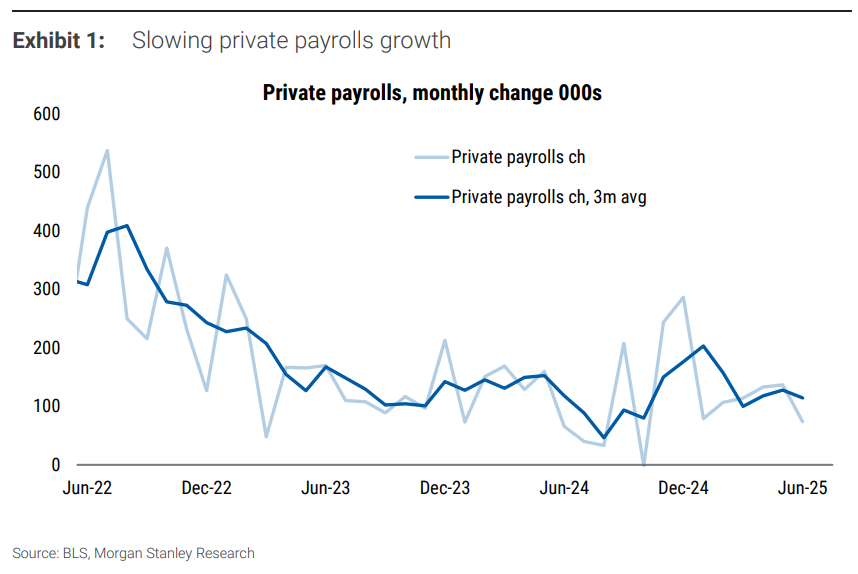
Core Insights - The latest employment report indicates a slowdown in private sector job growth, attributed to tighter immigration policies leading to a decrease in labor supply [1][4] - The Federal Reserve is expected to maintain a wait-and-see approach, awaiting data on tariffs' impact on inflation and consumption [1][8] Employment Data Summary - In June, non-farm payrolls increased by 147,000, exceeding expectations, but private sector jobs only rose by 74,000, below the three-month average of 128,000 [1][4] - The unemployment rate fell from 4.24% to 4.12%, not due to increased job opportunities but rather a decline in labor force participation, also linked to stricter immigration policies [3][4] Labor Market Dynamics - The labor market is exhibiting a paradox where private sector job growth is slowing, yet the market is becoming tighter [4] - Job growth in June was primarily in state government and healthcare, with private sector employment led by a slowdown in the service industry [4] Immigration Policy Impact - Immigration restrictions have two main effects on the labor market: 1. It lowers the employment balance point needed to maintain stable unemployment from 210,000 jobs per month last year to 140,000 this year, with expectations of a further drop to 70,000 by year-end [5] 2. It suppresses labor force participation rates, as enforcement actions create a chilling effect, reducing the willingness of workers to participate [7] Federal Reserve Outlook - Average hourly earnings increased by 0.2% month-over-month in June, with a year-over-year growth rate declining from 3.8% to 3.7% [8] - Despite a gradual slowdown in labor input, there is no significant market loosening, and the unemployment rate remains low, leading the Federal Reserve to likely refrain from interest rate cuts in July [8]
Nonfarm Payrolls Exceed Estimates in June
ZACKS· 2025-07-03 16:06
Employment Situation - The U.S. Bureau of Labor Statistics reported a job gain of +147K for June, exceeding the consensus estimate of +110K and the revised +144K for May [1][2] - The Unemployment Rate decreased to 4.1%, indicating a healthy labor market [1][2] Job Revisions - Revisions for the previous two months showed an increase, with May's job gain revised from +139K to +144K and April's from +147K to +158K, totaling an additional +16K jobs over the past two months [3] Sector Analysis - The Government sector contributed +73K jobs, while the Federal Government saw a loss of -7K jobs [4] - The Healthcare sector added +39K jobs, and Social Assistance added +19K jobs, while traditional sectors like Leisure & Hospitality and Trade/Transportation/Utilities were absent from the report [5] Interest Rate Implications - The strong jobs report may reduce the likelihood of the Federal Reserve cutting interest rates in the upcoming FOMC meeting, potentially delaying cuts until September [6] Jobless Claims - Initial Jobless Claims decreased to 233K from a revised 237K, which is below the expected 240K, indicating a moderation in the labor market narrative [7] - Continuing Claims remained stable at 1.964 million, suggesting that the labor market has not yet reached a critical threshold that would indicate weakness [8] Trade Balance - The U.S. Trade Deficit for May was reported at -$71.5 billion, an improvement from the March record low of -$138 billion, with April's deficit revised to -$60.3 billion [9] Market Expectations - Analysts anticipate a rebound in Factory Orders for May and mixed results for Services PMI, with both metrics expected to remain above the growth threshold of 50 [10][11]


美降息再生变?!深夜,黄金跳水,美元拉升
Zheng Quan Shi Bao· 2025-07-03 15:01
7月3日,美国劳工部发布的非农就业数据超出预期,令市场对美联储7月降息的预期下降。 美国劳工统计局周四报告称,经季节性调整后,6月新增人数为14.7万人,高于预期的11万人,略高于5月份上调后的14.4万人。4月份的统计数据也出现了 小幅上调,上调1.1万人至15.8万人。 细分来看,由于州和地方招聘的稳步增长,尤其是与教育相关的工作,政府就业人数大幅增加,以7.3万人领先所有类别。与此同时,联邦政府仍在感受 到埃隆.马斯克(Elon Musk)的政府效率部(Department of Government Efficiency)削减开支的影响,就业人数下降7000人。此外,医疗保健行业延续良好的就 业势头,增加了3.9万人,社会援助类工作贡献了1.9万人。 同时公布的失业率降至4.1%,为2月以来的最低水平,而预期将小幅上升至4.3%。劳动力参与率降至62.3%,为2022年末以来的最低水平,原因是劳动力 人口减少,未纳入劳动力统计的人数增加了32.9万人。 相比周三发布的有"小非农"之称的ADP就业数据,劳工部发布的非农就业数据对美联储货币政策的影响更大。 周四的数据发布后,美联储7月降息的概率下降。根据 ...
美国劳动力市场展现韧性 强劲数据或令美联储降息窗口延后
Xin Hua Cai Jing· 2025-07-03 13:33
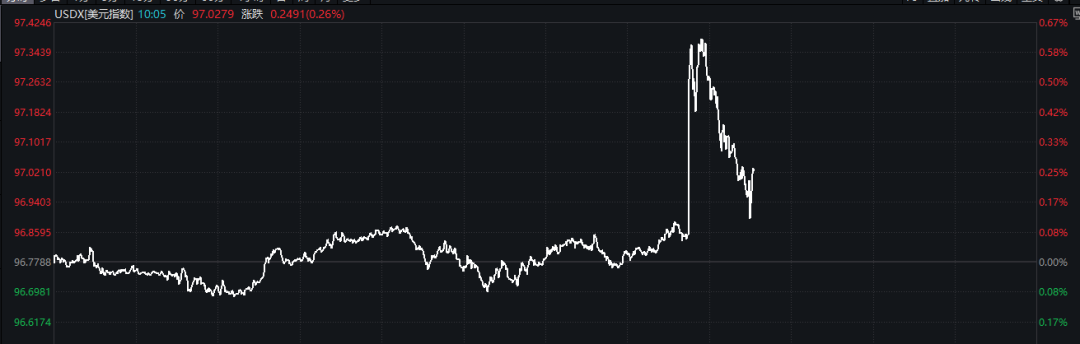
Core Insights - The U.S. labor market remains resilient, with June non-farm payrolls exceeding expectations at 147,000 jobs added, and the unemployment rate unexpectedly dropping to 4.1% [1][5] - The upward revisions of previous months' employment data further confirm the underlying strength of the labor market [5] Employment Growth - Despite the positive June figures, overall employment growth is showing signs of slowing down, indicating that companies are becoming more cautious in hiring due to economic uncertainties [6] - Employers are more inclined to retain existing staff rather than engage in large-scale hiring, reflecting a trend of "labor hoarding" [6] Wage Growth and Inflation - Average hourly wage growth in June was 3.7% year-on-year, below the expected 3.9%, suggesting a decrease in wage inflation pressure, which may influence the Federal Reserve's monetary policy [7] Structural Issues in the Labor Market - Significant disparities exist in unemployment rates among different demographic groups, with the Black unemployment rate rising to 6.8%, while rates for adult women and whites have decreased [8] - The number of long-term unemployed has increased to 1.6 million, representing 23.3% of the total unemployed population, indicating ongoing challenges for certain labor segments [8] Industry Performance - Government employment increased by 73,000, particularly in state government education, while healthcare added 39,000 jobs, highlighting the public sector and essential services as key drivers of job growth [9] Market Reaction - Following the non-farm data release, the U.S. dollar strengthened, and market expectations for a rate cut by the Federal Reserve in July significantly decreased [10] - The probability of a September rate cut also dropped from 98% to approximately 80%, reflecting confidence in the current labor market conditions [10] Federal Reserve Policy Implications - The strong labor market performance reduces the likelihood of immediate rate cuts, with market expectations shifting towards potential cuts in September or December [11] - Future non-farm data and inflation reports will be critical in determining the Federal Reserve's policy direction [12]