
新消费

Search documents
港股突然杀出个黑马
Hu Xiu· 2025-07-07 11:00
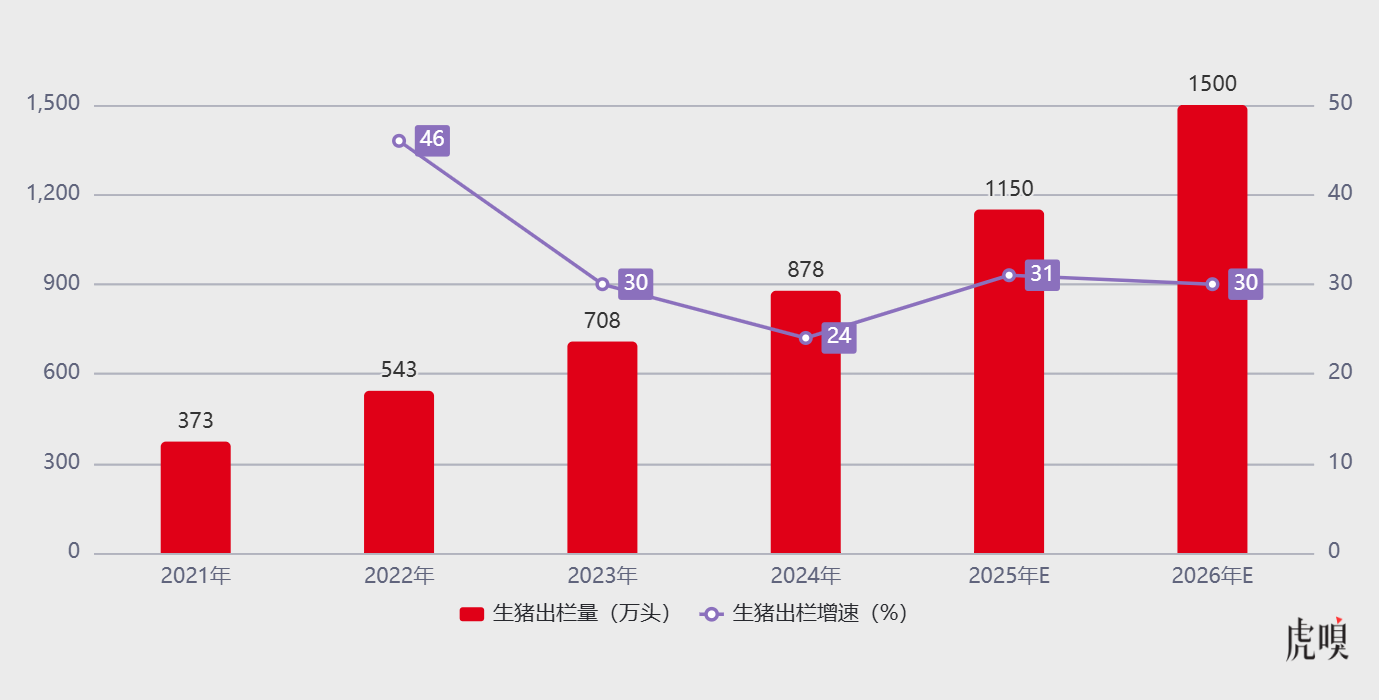
Group 1 - The Hong Kong stock market has shown strong performance in the first half of the year, with the Hang Seng Index rising by 20%, making it one of the best performers globally [1] - The "Hong Kong Three Sisters"—Lao Pu Gold, Pop Mart, and Mixue Group—have gained significant attention, with Lao Pu Gold surging by 330%, Pop Mart by 200%, and Mixue Group by 96% [2][4] - A lesser-known player, Dekang Agriculture (02419), has also performed well, with its stock price increasing by 192% this year, peaking at a 247% rise [3] Group 2 - Dekang Agriculture's growth is driven by its low valuation and strong growth potential, primarily in pig farming, which constitutes about 80% of its business [5] - The company is projected to have a stable growth rate, with a 24% year-on-year increase in pig output expected in 2024, and ambitious targets of 31% and 30% growth for 2025 and 2026, respectively [6] - In comparison, major competitors like Muyuan Foods and Wens Foodstuffs are expected to have lower growth rates of 26% and 13%, respectively [6] Group 3 - Dekang Agriculture's cost structure is competitive, with a complete breeding cost of approximately 12.4 yuan/kg, placing it among the industry's top tier [8] - The company's debt-to-asset ratio is projected to be around 62.76% by the end of 2024, which is in line with the industry average, indicating manageable financial pressure [10] - The valuation method for pig farming companies is based on head average market value during the bottom of the pig cycle, with Dekang's head average market value at 2560 yuan, which is relatively low compared to peers [12] Group 4 - The current pig cycle is characterized by overproduction, with the national breeding sow inventory exceeding the target, leading to a downward pressure on pig prices [13] - The industry has seen improvements in breeding efficiency, with the average number of piglets weaned per sow increasing significantly, contributing to higher supply levels [13][14] - Despite the challenges, there is potential for policy interventions to stabilize the market, which could lead to temporary boosts in stock performance for companies like Dekang Agriculture [15]

投资港股的QDII领跑市场,18只QDII基金年内收益率超50%
Ge Long Hui· 2025-07-07 07:47
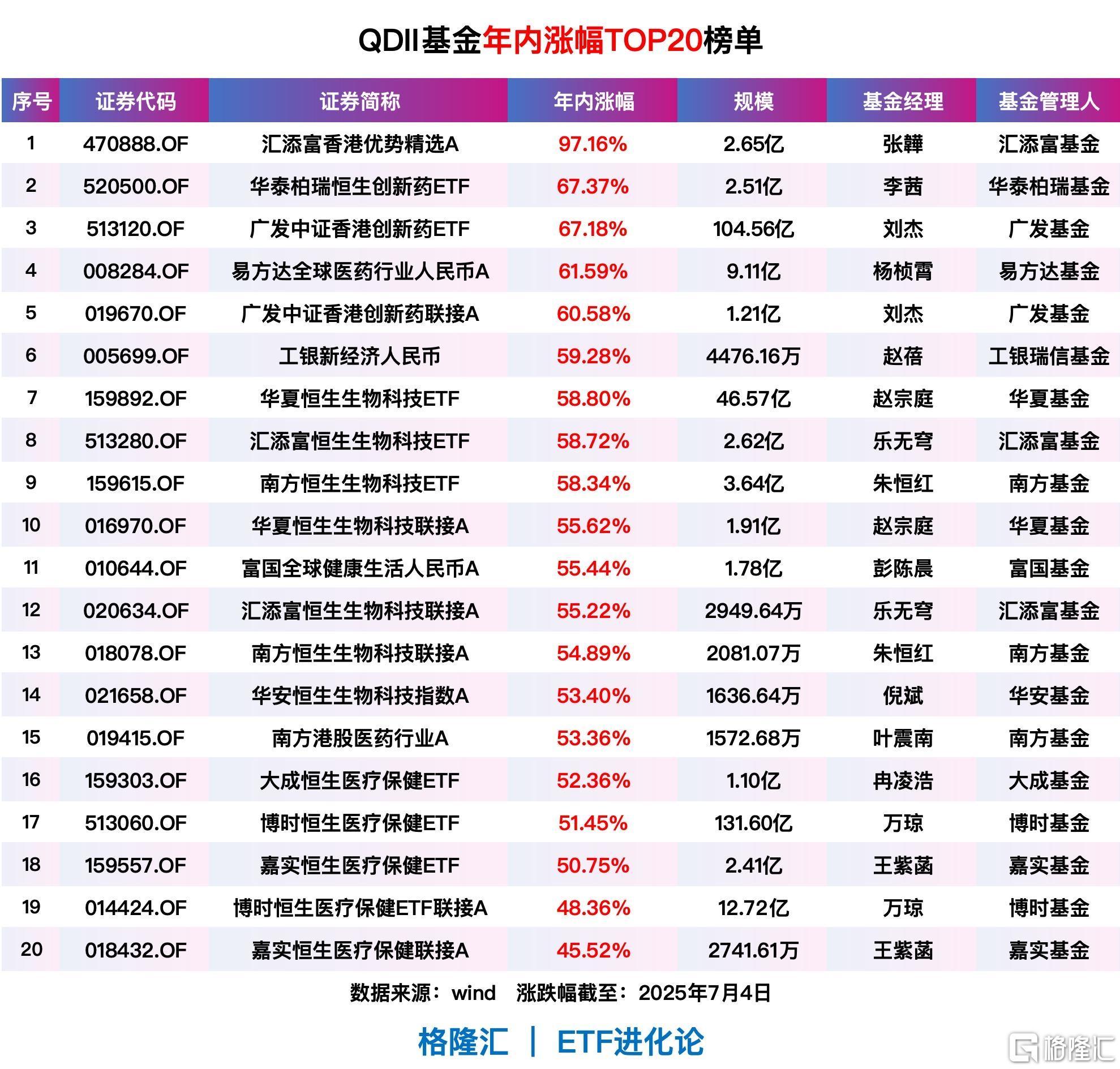
Core Viewpoint - After a significant market correction, QDII investments in Hong Kong stocks have outperformed major global markets, with the Hang Seng Index rising by 20% in the first half of the year, and the Hang Seng Tech Index increasing by 18.68% [1] Group 1: Market Performance - The Hang Seng Index and Hang Seng Tech Index have significantly outperformed major indices in developed markets such as the US and Japan [1] - Despite a major pullback in April due to Trump's tariffs, the market quickly rebounded, entering a "technical bull market" [1] - Individual stocks like Pop Mart, Mixue Group, and Laopu Gold have shown remarkable price increases [1] Group 2: QDII Fund Performance - QDII funds focused on Hong Kong stocks have dominated the performance rankings, with the top ten funds all being Hong Kong-focused [1] - As of July 4, the Huatai-PB Hang Seng Innovation Drug ETF and other funds have shown substantial gains, with the top fund, Huatai-PB Hong Kong Advantage Selection A, achieving a 97.16% return [3][4] - A total of 18 QDII funds have reported returns exceeding 50% this year, particularly those heavily invested in innovative pharmaceuticals [7] Group 3: Capital Inflows - Southbound capital has seen a net inflow of 739.865 billion HKD this year, doubling compared to the same period last year, which is a key driver for the rebound in Hong Kong stocks [9] - New QDII fund issuances continue to bring in additional capital, with 24 new QDII funds launched this year, primarily focused on Hong Kong themes [11][10] Group 4: Market Outlook - Analysts believe that the current favorable conditions for Hong Kong stocks are due to a combination of fundamental recovery and improved liquidity [12] - The market has experienced two significant rallies this year, driven first by new economy sectors and later by increased capital inflows amid trade uncertainties [12] - The technology sector is highlighted as having substantial investment value, with foreign capital showing long-term confidence in this area [12]
上半年,公募这样“擒牛”
天天基金网· 2025-07-07 05:50
Core Viewpoint - The article discusses the performance of A-shares and Hong Kong stocks in the first half of the year, highlighting the emergence of numerous "bull stocks" and the strong performance of funds focused on specific sectors, particularly in innovative pharmaceuticals and new consumption [1]. Group 1: Market Performance - As of June 30, 2023, 136 A-share companies saw their stock prices increase by over 100%, with notable stocks in the Hong Kong market, such as Old Puhuang and Rongchang Biopharmaceutical, experiencing gains close to 200% [1]. - The average return of actively managed equity funds was 7.32%, with a median return of 5.33%, outperforming the three major A-share indices [1]. Group 2: Fund Holdings - The top-performing fund, Huatai PineBridge Hong Kong Advantage Selected Mixed Fund, has significant holdings in Rongchang Biopharmaceutical and other leading Hong Kong pharmaceutical stocks [3]. - As of the first quarter of 2025, 57 fund companies held a total of 6,874,750 shares of Pop Mart, with a 31-fund increase in heavy holdings compared to the previous quarter [3]. - Public funds collectively held 550,150 shares of Old Puhuang, valued at 3.657 billion yuan, with significant contributions from the Guangfa Growth Leading Fund [3]. Group 3: Investment Strategies - Accurate assessment of fundamentals is crucial for identifying potential bull stocks, especially in the innovative pharmaceutical sector, where companies may not show immediate profits during their capability-building phase [4]. - The focus for the second half of the year will be on sectors like AI and innovative pharmaceuticals, with expectations for significant opportunities in AI hardware and software due to technological advancements [4]. Group 4: Industry Outlook - The innovative pharmaceutical sector is experiencing a dual-driven market of valuation recovery and fundamental improvement, with the A-share Shenwan Biomedicine Index's dynamic P/E ratio at a low point historically [5]. - The Chinese innovative pharmaceutical industry is entering a results realization phase, with some companies showing strong potential compared to global peers, warranting close monitoring of their R&D progress and overseas licensing dynamics [5].

中国资产重估三重奏——2025年度A股中期投资策略
2025-07-07 00:51
Summary of Key Points from the Conference Call Industry and Company Overview - The report focuses on the Chinese stock market, particularly the A-share and Hong Kong markets, with an emphasis on asset revaluation strategies for 2025 [1][3][4]. Core Insights and Arguments - **Market Performance**: In the first half of 2025, the A-share market exhibited structural differentiation, with sectors like AI, new consumption, and robotics performing well. The Hong Kong market saw a rise of approximately 20%, transitioning from a dividend bull market to an AI bull market [1][4]. - **Optimistic Outlook for H2 2025**: The outlook for the second half of the year is optimistic, with recommendations to invest in both emerging assets and traditional economic sectors, which are expected to face upward revaluation trends [1][5][6]. - **Focus on New Growth Areas**: Emphasis on autonomous and controllable sectors such as military and semiconductor industries, alongside a gradual clearing of traditional sectors like finance, banking, insurance, and brokerage [1][6][8]. - **Policy Expectations**: Despite potential fundamental pressures in Q3, the overall sentiment remains positive for the Chinese market, with expectations of a loosening credit policy if export growth declines significantly [1][7]. - **Valuation Discrepancies**: The report highlights a significant PE gap (20-40 points) between leading Chinese AI companies and their counterparts in the Nasdaq, indicating substantial room for growth in domestic tech stocks [1][8]. Important but Overlooked Content - **New Consumption Trends**: The revaluation of new consumption is informed by Japan's macroeconomic environment over the past 30 years, focusing on the consumption habits of Generation Z in China, which are expected to drive future market performance [1][11]. - **Red Code Concept**: This concept combines characteristics of dividend and blue-chip stocks, identifying traditional blue-chip stocks with enhanced dividend potential, particularly in logistics, condiments, film, and engineering machinery sectors [2][12]. - **Investment Recommendations**: Key recommended sectors include electronics, computing, communications, metals, machinery, military, and pharmaceuticals, covering 20 sub-sectors and 30 to 50 stocks [1][10]. Future Market Outlook - The annual strategy maintains a bullish perspective, with expectations of improved risk appetite in Q4. The three main revaluation directions are growth, new consumption, and traditional economy, with a focus on autonomous sectors and internationalized new consumption stocks [1][13].
A股分析师前瞻:贸易协定进展是下周的关注焦点
Xuan Gu Bao· 2025-07-06 13:56
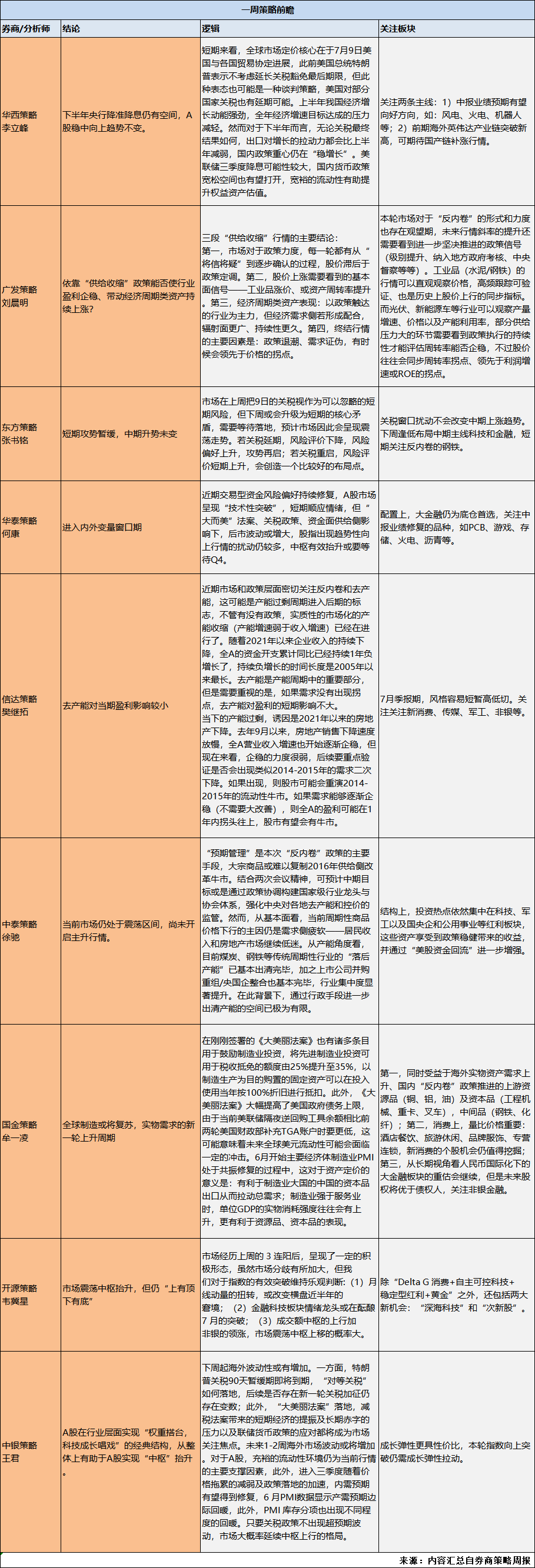
Group 1 - The focus of the brokerage strategy discussions this week is on the upcoming trade agreement progress and the sustainability of the "anti-involution" sector [1][2] - The Huaxi strategy team indicates that the core pricing in the global market is centered around the trade agreement progress on July 9, with potential tariff extensions being a negotiation tactic [1][3] - The A-share market is expected to maintain an upward trend, with two main lines of focus: positive mid-term performance expectations in sectors like wind power, thermal power, and robotics, and the potential for domestic chains to catch up following Nvidia's overseas breakthroughs [1][3] Group 2 - The Dongfang strategy team notes that the market previously viewed the July 9 tariff as a negligible short-term risk, but it may escalate into a core issue next week, leading to a volatile market [1][3] - The Zhongyin strategy team emphasizes that the current liquidity environment supports the market, and as the third quarter progresses, domestic demand expectations may improve if tariff policies do not experience unexpected fluctuations [1][3] - The Xuch team's analysis suggests that "expectation management" is a key tool in the "anti-involution" policy, with limited space for further capacity clearance in traditional cyclical industries like coal and steel due to already high industry concentration [2][4] Group 3 - The market is currently in a state of fluctuation, with the potential for increased volatility in the coming weeks due to the expiration of the 90-day tariff grace period and the implications of the "Great Beautiful Act" [5] - The overall sentiment in the A-share market is that the liquidity environment remains a primary support factor, with expectations for recovery in domestic demand as price pressures ease and policies are implemented [5] - The current cycle of capacity reduction is crucial, but its short-term impact on profitability may be limited if demand does not show signs of recovery [4][5]
港股IPO强势回归!7倍增速背后的资本盛宴与投资机遇
Sou Hu Cai Jing· 2025-07-04 07:50
Group 1 - The Hong Kong IPO market is experiencing a "V-shaped rebound" with total fundraising reaching 140 billion HKD in the first half of 2023, a 7-fold increase compared to the same period in 2022 [3] - The average first-day gain for new listings is 15.2%, significantly higher than the 9.5% from the previous year [3] - The biotechnology sector accounts for over 35% of the total IPOs, emerging as the biggest winner in the market [3] Group 2 - Three main drivers are contributing to the market recovery: 1. The trend of Chinese companies returning to Hong Kong continues, with 28 companies completing secondary listings and over 4.2 trillion HKD in market value awaiting return [5] 2. The Hong Kong Stock Exchange's regulatory innovations have attracted 18 companies to apply for listing, with optimized entry requirements for biotech firms [5] 3. International capital is being reallocated, with net inflows from southbound funds exceeding 280 billion HKD over five months, and foreign institutional holdings rising to 63% [5] Group 3 - Key investment opportunities in the second half of 2023 include sectors such as hard technology (semiconductors, AI), new energy, biomedicine (gene therapy, medical devices), and new consumption (domestic brands, cross-border e-commerce) [7] - Notable companies expected to raise significant funds include Lens Technology (5 billion HKD) as a core supplier for Apple and Kangfang Biopharmaceuticals (3 billion HKD) with its first PD-1 dual antibody [7] Group 4 - Current market conditions present an optimal window for companies to list in Hong Kong, with valuation levels up 25% compared to 2024 and a 40% increase in international investment bank participation [8] - Companies planning to go public should expedite preparations to complete listings within the year, while investors are advised to focus on IPO projects with specific characteristics [10][11]
近六成年轻人买完就后悔?这届消费者的钱都花哪了?
Sou Hu Cai Jing· 2025-07-04 04:23
Group 1 - The core viewpoint of the article highlights the dual nature of youth consumption, balancing rationality and emotional value, with a shift from material ownership to experiential consumption [2][3][5] - Young consumers prioritize both "cost-performance" and "emotional value" in their purchasing decisions, indicating a blend of rational and emotional factors [3][4] - The investment decision logic among young consumers is evolving, favoring "experiential economy" over "brand upgrades" and "IP economy" [2][11][13] Group 2 - The article identifies distinct consumption pain points across different age groups, with young people being impulsive, middle-aged individuals facing issues of excess, and older adults struggling with information overload and quality concerns [8][9][10] - Young consumers are willing to spend on experiences that bring joy, with a significant preference for interests such as trendy items and cultural experiences [6][12] - There is a notable difference in behavior between consumption and investment, where young consumers are more cautious when investing compared to their spending habits [11][12] Group 3 - Both investors and general consumers show a consensus on the potential of immersive cultural tourism projects, new domestic brands, and trendy collectibles [13][14] - The article emphasizes the importance of distinguishing between popular concepts and actual financial performance when investing in new consumption sectors [18][19] - The growth of new consumption is driven by generational shifts and technological advancements, with a strong focus on experiential and service-oriented consumption [19][20]

近六成年轻人买完就后悔?这届消费者的钱都花哪了?
中国基金报· 2025-07-04 03:58
Group 1 - The core concept of new consumption includes both new products and innovations in traditional consumption forms, driven by generational shifts in preferences and individual expression [3][4] - New consumption companies are gaining market attention due to solid fundamentals and strong operational performance, which support stock price increases [4][5] - Traditional consumption is still growing but at a slower pace due to market saturation, while new consumption is experiencing rapid growth as demand has not yet been fully met [4][5] Group 2 - The analyst is particularly optimistic about experiential or service-oriented consumption sectors, such as the ice and snow economy and low-altitude economy, which currently have low market share and significant growth potential [5] - Investment in new consumption should focus on companies with strong performance rather than following trends or speculative short-term trading [7] - Young consumers are seen as having healthy financial profiles and strong willingness to spend, particularly on experiences that provide emotional value [4][5]

杨德龙:A股市场吸引力持续提升 下半年行情值得期待
Xin Lang Ji Jin· 2025-07-03 09:36
Group 1 - The A-share market has shown strong performance in the first half of the year, with over 3,700 stocks achieving positive returns and the total market capitalization surpassing 100 trillion yuan, setting a solid foundation for the second half of the year [1] - The China Securities Regulatory Commission (CSRC) has emphasized the direction of "strengthening the home market" to enhance the attractiveness and competitiveness of the A-share market, indicating that more effective measures will be implemented to promote growth [1][2] - There has been a significant recovery in the profit-making effect of the A-share market compared to the same period last year, particularly in the technology innovation sector, with the North China 50 Index rising nearly 40% [1] Group 2 - A series of deepening reform measures are being gradually implemented to enhance the A-share market's attractiveness, including a shift from a financing-focused market to an investment-focused one, and strict enforcement against illegal activities to protect investors' interests [2] - The influx of foreign capital into the A-share and Hong Kong markets continues, while domestic savings are expected to shift towards the capital market, as the real estate market struggles to attract significant investment [2] - The A-share market is anticipated to enter a structural bull market in the second half of the year, with the Shanghai Composite Index having risen over 800 points, or more than 20%, from last year's low [3] Group 3 - The CSRC's focus on strengthening the home market is expected to significantly boost investor confidence and enhance the investability of the A-share market, contributing to a wealth effect that can stimulate consumption and drive economic growth [4] - A thriving capital market is seen as essential for building a strong financial nation, and the strengthening of the capital market is likely to lead to a slow and steady bull market [4]
基金公司下半年投资策略,来了
Zhong Guo Ji Jin Bao· 2025-07-03 01:45
Core Viewpoint - The outlook for the A-share market in the second half of 2025 is optimistic, driven by domestic growth-stabilizing policies and a gradual economic recovery [1][2][3]. Group 1: Market Outlook - Multiple fund companies, including Huabao and Ping An, are optimistic about the A-share market in the second half of 2025, citing supportive policies and economic recovery [1][2]. - The market is expected to show a trend of oscillating upward, with liquidity improving due to the gradual implementation of monetary easing policies [2][3]. - The overall sentiment is that the market will maintain resilience, with structural opportunities emerging in various sectors [3][4]. Group 2: Investment Focus Areas - Key sectors to watch include technology, innovative pharmaceuticals, and new consumption trends, which are seen as essential for China's development [4][6]. - The innovative pharmaceutical sector is compared to the semiconductor industry a few years ago, indicating significant market potential and policy support [6]. - The AI and cloud computing sectors are highlighted as areas of continued focus, with expectations of demand growth and technological advancements [5][6]. Group 3: Strategic Investment Approaches - Investors are encouraged to adopt a strategy of "deep digging for Alpha while waiting for Beta," focusing on structural opportunities within the market [4][6]. - The emphasis is on identifying safe and strategic industries that align with government policies and emerging trends [4][6]. - The investment landscape is shifting towards sectors that support domestic consumption and innovation, with a particular focus on new energy and AI-driven technologies [4][5].