
宠物食品

Search documents
佩蒂股份(300673.SZ):新西兰主粮工厂目前正处于商业化运营的初期关键阶段
Ge Long Hui· 2026-02-09 07:36
Core Viewpoint - Petty Holdings (300673.SZ) is currently in the critical early stage of commercial operation for its New Zealand staple food factory, focusing on brand building and OEM business to enhance capacity utilization [1] Group 1 - The company is leveraging a dual approach of "factory brand building" and "OEM business" to drive growth [1] - Significant growth in capacity utilization is expected by 2026 based on current business expansion progress [1]
耐用消费产业行业研究:国际烟草巨头财报频出,泡泡年会更新,苹果官宣AI硬件布局
SINOLINK SECURITIES· 2026-02-08 06:35
Investment Rating - The report maintains a "Buy" rating for the durable consumer goods industry [1] Core Insights - The durable consumer goods industry is experiencing growth driven by various segments, including trendy toys, new tobacco products, home furnishings, and AI technologies [1][2][3] - The report highlights the expansion of brands like Bubble Mart and the collaboration with Takara Tomy to enhance IP development in the trendy toy sector [1][8] - The new tobacco segment shows long-term growth potential, with companies like Philip Morris International reporting significant revenue increases [2][14] - The home furnishings market is showing signs of recovery, particularly in the second-hand housing market, while new housing remains under pressure [15][16] - The report emphasizes the importance of adapting to regulatory changes in the personal care and AI glasses sectors, which are expected to reshape marketing and distribution strategies [19][23] Summary by Relevant Sections Trendy Toys - Bubble Mart is expanding into the Japanese market and collaborating with Takara Tomy to enhance its IP development [1][8] - The company reported that it aims to sell over 400 million products across all IP categories in 2025, with significant growth in registered members and store numbers [9] New Tobacco - Philip Morris International's revenue reached $40.6 billion in 2025, with a 7.3% year-on-year increase, driven by a 15% increase in new tobacco product sales [14] - The market for heated tobacco products is expected to accelerate, despite potential regulatory challenges in various countries [2][13] Home Furnishings - The report notes a significant increase in transaction volumes in the second-hand housing market, with a 754.6% year-on-year increase in certain cities [15] - Export figures for furniture show a decline, but there is potential for recovery driven by policy support and improved consumer sentiment [16] AI and Personal Care - New regulations are set to transform marketing strategies in the personal care sector, emphasizing compliance and professional channels [19][21] - The AI glasses market is witnessing innovation, with companies like Oakley and Meta launching new products, indicating a growing trend towards smart technology integration [23] 3D Printing - The report highlights advancements in 3D printing technology, particularly in multi-color printing solutions, which are expected to enhance efficiency and usability in consumer applications [35] Two-Wheeled Vehicles - The electric bicycle market is facing challenges due to policy changes and high base effects, while the motorcycle sector is showing positive trends due to regulatory relaxations [36][37]





2026年中央一号文件点评:聚焦粮食稳产提质,重视农业科技
Shenwan Hongyuan Securities· 2026-02-06 13:59
Investment Rating - The report gives an "Overweight" rating for the agricultural industry, indicating that it is expected to outperform the overall market [3][10]. Core Insights - The 2026 Central Document emphasizes food security and agricultural modernization, reiterating the importance of "new agricultural productivity" and the continuous focus on seed industry revitalization, particularly in biological breeding [4]. - In livestock, there is a shift towards "strengthening" comprehensive regulation of pig production capacity, with a focus on stabilizing the beef and dairy industries, and promoting dairy product consumption [4]. - The document highlights the importance of grain security, aiming to stabilize grain production at around 14 trillion jin, and introduces measures to enhance grain circulation efficiency [4]. - The report outlines the implementation of agricultural technology, including the integration of artificial intelligence with agriculture, and identifies key application scenarios such as drones, IoT, and robotics [4]. - The report suggests three main investment focuses: the recovery of the beef and dairy industries, the expected rebound in the pig cycle, and the continued advancement of the seed industry and biological breeding [4]. Summary by Sections Livestock Industry - The report indicates a comprehensive approach to regulating pig production capacity and acknowledges the success of measures taken to support the beef and dairy industries [4]. - It also mentions the introduction of multiple measures to promote dairy product consumption for the first time [4]. Crop Production - The focus remains on food security, with a commitment to stabilize grain production and enhance the efficiency of grain circulation [4]. - The report introduces a new round of initiatives aimed at increasing grain production capacity, particularly for oilseed crops like soybeans [4]. Seed Industry - The report emphasizes the ongoing implementation of seed industry revitalization actions and the acceleration of biological breeding industrialization [4]. - It notes the continuous mention of biological breeding in the Central Document over the past six years, highlighting its growing importance [4]. Agricultural Technology - The report outlines the path for implementing new agricultural productivity, emphasizing the need for technology integration, particularly in AI applications [4]. Agricultural Trade - The report advocates for the coordination of agricultural trade and production, promoting diversification of agricultural imports and supporting the export of competitive agricultural products [4].


山西证券:宠物食品行业发展前景广阔 品牌升级转型谋突围
智通财经网· 2026-02-06 08:53
Core Insights - The pet food industry in China is expected to continue growing due to increasing pet ownership and consumer spending on pet products, with a notable shift from OEM to brand-oriented models [1][9] Group 1: Market Growth and Trends - The number of pets in urban China is projected to reach 126 million by 2025, with a year-on-year growth of 1.8%, and a CAGR of 4.6% from 2020 to 2025 [2] - The urban pet consumption market is expected to exceed 312.6 billion yuan by 2025, with a CAGR of 8.6% from 2020 to 2025, and the cat consumption market growing at a CAGR of 11.4% [2] - The pet ownership penetration rate in urban China is around 21% in 2024, indicating significant room for growth compared to Japan and South Korea [4] Group 2: Competitive Landscape - The global pet food market is growing at a steady rate of around 5%, with North America holding the largest share at 42.5%, and major players like Mars and Nestlé controlling over 40% of the market [3] - Domestic companies are gradually increasing their market share, with three out of the top five companies being local brands by 2024, including Guobao and Zhongchong [3] - The competitive landscape is characterized by a shift towards brand concentration, with larger companies leveraging brand matrices to enhance market presence [7] Group 3: Consumer Behavior and Preferences - The pet owner demographic is becoming younger, with 69% of pet owners being born in the 1990s and 2000s by 2025, leading to a trend of personalized and premium pet food choices [5] - There is a growing preference for high-end pet food products, with increased consumption of wet food, baked food, and freeze-dried food on platforms like Tmall [5] Group 4: Business Models and Strategies - The shift from OEM to brand-oriented models is evident, with domestic brands enjoying a premium of nearly 15% over OEM products [6] - Companies are increasingly focusing on R&D and supply chain management rather than traditional marketing strategies to build sustainable competitive advantages [8] - The competition is expected to intensify as new entrants emerge and marketing costs rise, necessitating a focus on product quality and brand reputation [9]

基金观察:消费能否从政策驱动转向自发增长?
Sou Hu Cai Jing· 2026-02-05 08:25
Core Viewpoint - In 2025, China's total retail sales of consumer goods are expected to grow by 3.7%, with service retail sales increasing by 5.5%, indicating significant effects from consumption promotion policies [2] Group 1: Consumption Policies and Their Impact - The consumption promotion policies have shown remarkable results, particularly in the first half of 2025, with initiatives like trade-in services and green upgrades driving stable consumption despite overall weak demand [2] - The trade-in policy has covered multiple sectors, including automobiles and home appliances, leading to over 2.6 trillion yuan in sales and benefiting more than 360 million people [2] Group 2: Potential for Self-Driven Growth in Specific Categories - The gold and jewelry sector shows strong self-driven growth potential, supported by high gold prices and a shift towards domestic design, catering to both self-satisfaction and value preservation [3] - The pet food industry is experiencing high growth rates and a shift from basic to premium consumption [3] - Cultural trendy toys and IP derivatives align with the self-consumption trends of younger generations, indicating potential for self-driven growth [3] Group 3: Market Trends and Investment Implications - There is a clear differentiation within the consumption sector in 2025, with service consumption, particularly in IP-related areas, outperforming traditional consumer leaders like the liquor industry [4] - Weakness in goods consumption is evident, with high dependency on policies, while service consumption shows structural upgrades and resilience in profitability [4] - The recovery of internal consumption is closely tied to the stabilization of the real estate market, which could lead to gradual improvement in goods consumption from the bottom [4]
中国宠物食品行业出海国别机会洞察报告
EqualOcean· 2026-02-05 07:00
Investment Rating - The report indicates a strong potential for investment in the Chinese pet food industry, particularly in the context of international market expansion and compliance with global standards [6]. Core Insights - The global pet food market is shifting towards health-oriented, functional, and natural products, with Chinese manufacturers benefiting from cost advantages in raw materials and production capabilities [6]. - The report highlights the transition of Chinese pet food companies from OEM/ODM models to developing their own brands, enhancing their competitiveness in international markets [32]. - Compliance with international regulations and a focus on sustainability are becoming critical for market entry, with companies adopting low-carbon materials and circular production methods [32]. Summary by Sections 1. Industry Development Overview and Export Data - The Chinese retail packaged dog and cat food export value is projected to rise from $12.21 billion in 2021 to $14.80 billion in 2024, with a year-on-year growth of 20.70% [10]. - In 2025, Germany is expected to be the largest market for Chinese pet food, accounting for 15.41% of exports, followed by the USA at 12.88% [10]. 2. Key Country Buyer and Policy Insights - The report outlines specific import regulations for key markets such as the USA, Philippines, Vietnam, and Indonesia, emphasizing the need for compliance with food safety and health standards [31]. - The USA's FDA and USDA APHIS regulations are highlighted as critical for import compliance, requiring detailed documentation and adherence to specific ingredient standards [31]. 3. Industry Export Development Trends and Challenges - The report notes a trend towards high-value product categories, with a shift from basic pet food to premium options like freeze-dried and low-temperature baked products [33]. - Challenges include the need for brand recognition in mature markets, compliance with diverse regulations, and the establishment of local market presence [38]. - The report emphasizes the importance of building consumer trust and adapting products to meet local market needs as essential strategies for successful international expansion [38].
乖宝宠物:关于持股5%以上股东减持股份预披露公告
Zheng Quan Ri Bao· 2026-02-04 14:05
Core Viewpoint - The announcement from Guibao Pet Company indicates that significant shareholders plan to reduce their holdings in the company, which may impact stock performance and investor sentiment [2] Group 1: Shareholder Actions - Beijing Junlian Shengyuan Equity Investment Partnership and Zhuhai Junlian Boyuan Equity Investment Partnership plan to reduce their combined holdings by up to 7,610,000 shares, representing 1.90% of the total share capital [2] - Beijing Junlian intends to reduce its holdings by up to 5,288,000 shares, accounting for 1.32% of the total share capital [2] - Zhuhai Junlian plans to reduce its holdings by up to 2,322,000 shares, which is 0.58% of the total share capital [2]

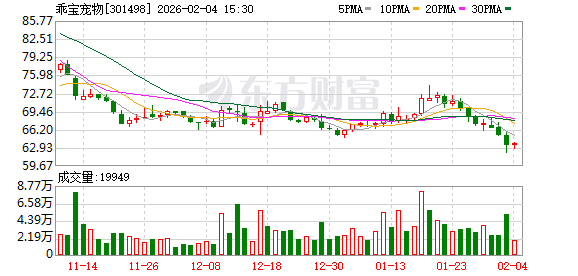
乖宝宠物股东北京君联及珠海君联拟合计减持不超1.9%股份
Zhi Tong Cai Jing· 2026-02-04 11:02
乖宝宠物(301498)(301498.SZ)公告,公司股东北京君联晟源股权投资合伙企业(有限合伙)("北京君 联")及珠海君联博远股权投资合伙企业(有限合伙)("珠海君联",系北京君联的一致行动人)计划自2026年 3月6日至2026年6月5日以集中竞价或大宗交易的方式减持公司股份合计不超过761万股(占公司总股本比 例1.90%)。 ...
自有品牌禾露绕肉咬胶不符合国标!华亨股份被罚
Nan Fang Du Shi Bao· 2026-02-04 10:52
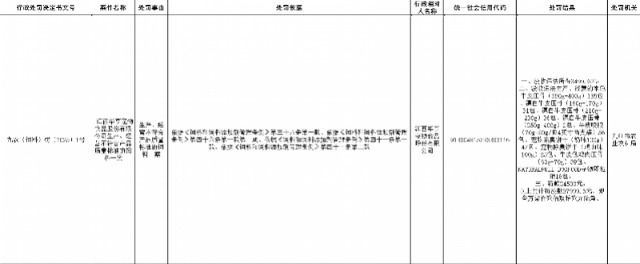
近期,九江市农业农村局发布了一则行政处罚决定书,江西华亨宠物食品股份有限公司(以下简称"华亨股 份"),因生产、经营不符合产品质量标准的宠物食品,被处以行政处罚。 2月4日,南都·湾财社记者就采访事宜致电华亨股份,但接线人员表示,"目前不方便接受采访",而一家名 为"CEREAL&DEW C&D禾露宠物食品旗舰店"的客服则表示,"有的产品添加了骨头成分,只有皮的产品才能不 超过18%。" 1款咬胶类产品标准水分含量超出国标规定上限 华亨股份共计被罚没近4万元 行政处罚书和信用中国信息显示,执法人员在接到群众举报后,对华亨股份的生产车间、仓储区域、电商业务部 等关键场所开展现场检查。其中,执法人员发现现场一款名为"禾露牌绕肉咬胶"的产品的外包装标注的水分含量 为"≤18%",超出国家标准《GB/T23185-2008 宠物食品狗咬胶》规定的"≤14%"上限。 此外,执法人员在后续的清点工作中还发现了部分无生产日期、无规格透明袋包装的宠物零食。对此,华亨股份 的法定代表人周青表示,"其只是半成品,还需进行加工。" 针对上述现象,九江市农业农村局依据《饲料和饲料添加剂管理条例》第四十一条第二款、《宠物饲料管理办 法 ...
乖宝宠物(301498):部署高端产能,提升未来竞争力
CSC SECURITIES (HK) LTD· 2026-02-04 05:11
Investment Rating - The report assigns a "Trading Buy" rating for the company, indicating a potential upside of 5% to 15% from the current price [11]. Core Insights - The company is focusing on enhancing its competitive edge by deploying high-end production capacity, with a significant investment of RMB 500 million in a new high-end pet staple food project in Shandong, expected to be completed by mid-2027 [11]. - The gross margin is projected to improve due to an increase in the proportion of high-end products, with gross margins expected to be 32.6%, 36.8%, and 42.3% from 2022 to 2024, respectively [11]. - The company is establishing a global production capacity layout, with projects in New Zealand and Thailand, aiming for a revenue target of RMB 9.65 billion by 2027 [11]. Financial Summary - The company’s net profit is forecasted to grow from RMB 709 million in 2025 to RMB 992 million in 2027, representing year-on-year growth rates of 13.5%, 19.1%, and 17.4% respectively [11]. - Earnings per share (EPS) are expected to increase from RMB 1.77 in 2025 to RMB 2.48 in 2027, with corresponding price-to-earnings (P/E) ratios of 36x, 30x, and 26x [11]. - Revenue projections show an increase from RMB 6.56 billion in 2025 to RMB 9.69 billion in 2027, reflecting the company's growth strategy and market positioning [14].