
农产品

Search documents
商品距离“大牛市”,还差一场经济衰退?
Hua Er Jie Jian Wen· 2026-01-30 10:08
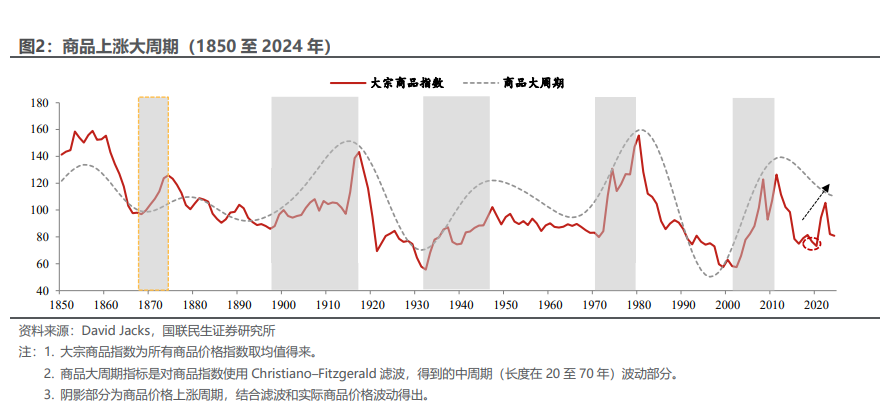
Core Viewpoint - The recent surge in prices of commodities like copper, gold, and silver has reignited market speculation about a "super cycle" in commodities, but the current cycle may not have completed necessary steps for a true bull market [1][19]. Group 1: Historical Context of Commodity Bull Markets - Historically, true commodity bull markets often begin not in prosperity but from economic lows, culminating during periods of economic overheating or recession [1][5]. - A review of commodity price trends since 1850 identified five typical commodity bull cycles, which average about 11.8 years in duration, with real commodity prices rising approximately 79% after adjusting for inflation [2][6]. - Key historical starting points for these cycles include 1897, 1932, 1971, 2002, and 2020, each corresponding to significant economic downturns [7][8]. Group 2: Current Market Dynamics - The current commodity price increase appears to be more of a "precious metals market" rather than a comprehensive commodity bull market driven by real demand [9][10]. - The breadth of commodity price increases has been insufficient compared to previous bull markets, with precious metals outperforming while energy, agricultural products, and some industrial metals lag behind [13][19]. Group 3: Structural Factors Influencing Commodity Prices - Three long-term variables are identified as critical for determining commodity pricing: war, technological revolutions, and emerging demand [10][16]. - Wars do not universally boost commodity prices; they can suppress demand and prices unless they lead to significant destruction of demand [11][12]. - Technological revolutions typically coincide with commodity bull markets, but the current technological advancements, particularly in AI, are still in early stages and have not yet led to a significant demand surge [16][17]. - Emerging demand from new buyers has historically been a prerequisite for commodity bull markets, but there is currently no equivalent to the demand surge seen with China's entry into the WTO [17][18]. Group 4: Conclusion and Future Outlook - The current commodity cycle likely began in 2020, supported by a long-term depreciation of the dollar, but lacks critical elements such as concentrated geopolitical conflicts, clear emerging demand, and a genuine economic recession to validate the cycle [19][20]. - A recession may serve as a crucial test for the current commodity price trends, determining whether they can transition from a structural rally to a full bull market [20].

广西五项举措精准发力 筑牢农产品质量安全防线
Xin Lang Cai Jing· 2026-01-30 09:20
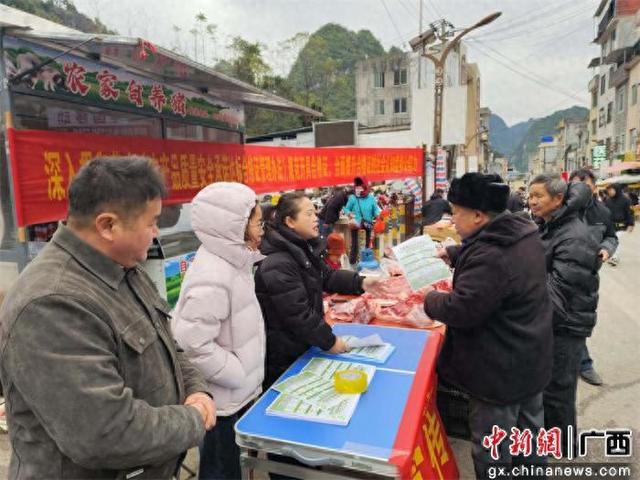
Core Viewpoint - Guangxi is implementing measures to ensure the effective execution of the "Management Measures for the Quality Safety Commitment Certificate of Agricultural Products" starting from February 1, 2026, focusing on building a long-term mechanism for agricultural product quality safety through proactive certification, certificate circulation, and regulatory oversight [1][5]. Group 1: Policy Implementation - Guangxi will conduct comprehensive policy promotion, utilizing online platforms to create over 20 easy-to-understand animations and short videos, and distributing more than 100,000 graphic materials and posters offline [1]. - The province will organize over 100 promotional events in production bases, cooperatives, and markets, using various methods such as banners and loudspeakers to ensure widespread understanding of the certification process [1]. Group 2: Training and Capacity Building - A three-tier training system has been established, focusing on regulatory personnel, production entities, and purchasing entities, with specialized training tailored to each group [2]. - Training methods include case studies, hands-on practice, and centralized training to ensure all personnel understand policies and can effectively implement them [2]. Group 3: Service Innovation - Guangxi is innovating service models to facilitate the electronic certification process, establishing guidance service points to assist small farmers with quality safety guidance and quick certification [4]. - A collaborative regulatory mechanism has been set up between agricultural and market supervision departments, with joint service posts in major markets to enforce certification requirements [4]. Group 4: Expanding Application and Compliance - The province is expanding the application scenarios of the quality safety certificate, linking its issuance and usage to agricultural project applications and brand certifications to encourage compliance [5]. - The implementation of the measures will enhance the responsibility of producers, shifting the agricultural product quality safety governance model from reactive to proactive [5].

预则立 | 谈股论金
水皮More· 2026-01-30 09:18
Market Overview - The A-share market showed mixed performance today, with the Shanghai Composite Index down 0.96% to close at 4117.95 points, while the Shenzhen Component Index fell 0.66% to 14205.89 points. In contrast, the ChiNext Index rose by 1.27% to 3346.36 points. The total trading volume in the Shanghai, Shenzhen, and Beijing markets was 286.27 billion, a decrease of 39.7 billion from the previous day [3][5]. Sector Performance - Technology stocks emerged as the unexpected leaders in supporting the market, particularly driven by the strong performance of "Yizhongtian," which saw an average increase of around 6%. This significantly impacted the Shenzhen and ChiNext indices, while financial stocks, which were previously expected to support the market, became the main force behind the sell-off, with the securities sector down 1.72%, insurance down 1.1%, and banking down 0.41% [4][6]. Trading Dynamics - The market experienced a notable sell-off today, marking one of the largest adjustments in recent times, with trading volume shrinking to approximately 2.86 trillion. This indicates that the market cooling measures have had some effect, particularly in suppressing speculative trading in thematic stocks [5][6]. Commodity and Sector Trends - The metal-related sectors collectively faced significant declines, with precious metals down 8.52%, energy metals down 7.29%, and mining down 5.53%. This was largely attributed to sharp fluctuations in gold prices, which dropped from $5626 per ounce to around $5400, affecting the performance of related commodities [7][9]. Agricultural Sector Insights - The agricultural and aquaculture sectors showed resilience, with some stocks rising despite the overall market downturn. However, the sustainability of this rally is questionable, as the sector has not undergone sufficient adjustment, and price increases may not lead to lasting trends due to overcapacity in domestic industries [8][9]. Key Signals - Two critical signals warrant attention: first, the gold market appears to have reached a turning point, with speculative trading potentially nearing its end. Second, significant volatility was observed in the U.S. stock market, particularly with the Nasdaq index, which reflects ongoing debates about the sustainability of AI-related investments, especially following substantial declines in major tech stocks like Microsoft [9][10].

商务预报:1月19日至25日食用农产品价格略有上涨 生产资料价格略有下降
Shang Wu Bu Wang Zhan· 2026-01-30 06:24
Group 1: Agricultural Products Market - The national market price of edible agricultural products increased by 0.9% from the previous week [1] - The average wholesale price of 30 types of vegetables was 5.75 yuan per kilogram, rising by 1.8%, with notable increases in zucchini (9.1%), cabbage (6.4%), and cucumber (5.4%) [1] - Wholesale prices of aquatic products saw slight increases, with carp, yellow croaker, and crucian carp rising by 1.2%, 1.1%, and 0.9% respectively [1] - Overall wholesale prices of meat increased, with pork priced at 19.09 yuan per kilogram, up by 1.4%, while lamb and beef rose by 0.9% and 0.4% respectively [1] - Poultry product prices fluctuated slightly, with eggs increasing by 4.3% and broiler chickens decreasing by 0.3% [1] - The average wholesale price of six types of fruits remained stable, with citrus, bananas, and pears increasing by 1.7%, 0.9%, and 0.3%, while watermelon, grapes, and apples decreased by 1.0%, 0.6%, and 0.5% respectively [1] - Grain and oil wholesale prices showed a slight decline, with flour remaining stable, while soybean oil, peanut oil, rice, and rapeseed oil decreased by 0.3%, 0.3%, 0.2%, and 0.1% respectively [1] Group 2: Production Materials Market - Prices of non-ferrous metals slightly decreased, with zinc, copper, and aluminum falling by 2.1%, 2.0%, and 0.8% respectively [2] - Rubber prices experienced a slight decline, with natural rubber and synthetic rubber decreasing by 0.6% and 0.2% respectively [2] - Steel prices showed a minor decrease, with channel steel, ordinary medium plates, and rebar priced at 3547 yuan, 3637 yuan, and 3363 yuan per ton, down by 0.3%, 0.2%, and 0.2% respectively [2] - Fertilizer prices fluctuated slightly, with urea decreasing by 0.1% and compound fertilizer increasing by 0.1% [2] - Coal prices showed minor fluctuations, with thermal coal and smokeless lump coal priced at 777 yuan and 1138 yuan per ton, both down by 0.3%, while coking coal increased by 1.2% to 1047 yuan per ton [2] - Wholesale prices of refined oil slightly increased, with 95-octane gasoline, 92-octane gasoline, and 0-octane diesel rising by 0.5%, 0.4%, and 0.4% respectively [2] - Prices of basic chemical raw materials saw slight increases, with sulfuric acid rising by 1.1%, while soda ash, polypropylene, and methanol decreased by 0.8%, 0.5%, and 0.4% respectively [2]
资产配置系列报告:百年浮沉,商品距离“大牛市”还缺什么?
Guolian Minsheng Securities· 2026-01-30 05:08
Group 1 - The report focuses on the long-term cyclical analysis of commodities, identifying five major commodity upcycles since 1850, with an average duration of 11.8 years and an average price increase of 125% [6][12][15] - The analysis highlights that energy and metals are classic cyclical commodities, while agricultural products tend to underperform, and precious metals gained prominence only after the abandonment of the gold standard by major economies [6][12][18] - The report identifies three structural factors influencing commodity cycles: wars, technological revolutions, and emerging demand, emphasizing that not all wars positively impact commodity prices and that technological breakthroughs often coincide with commodity bull markets [6][12][42] Group 2 - The report notes that the current commodity cycle began in 2020, coinciding with a recession and a low point in commodity prices, and suggests that the ongoing technological revolution, particularly in AI, may be in its early stages [6][12][42] - It emphasizes that the current cycle lacks significant geopolitical tensions or unexpected surges in emerging demand, which are critical for sustaining commodity price increases [6][12][42] - The report also points out that the depreciation of the US dollar is a favorable factor for the current commodity cycle, while an economic recession could serve as a critical test for the cycle's strength [6][12][42] Group 3 - The report provides a detailed examination of the performance of various commodity categories during past cycles, indicating that energy and industrial metals have consistently performed well, while agricultural products have shown weaker long-term performance [18][24][31] - It discusses the historical context of agricultural products, noting that their prices have generally trended downward due to increasing agricultural efficiency, although they can perform well during significant supply shocks, such as during wartime [24][30] - The report highlights that gold and silver have not always been dominant in commodity cycles, with their significant price increases occurring primarily in the last two cycles, influenced by the decoupling of currencies from gold [31][35]
2月新规来了 事关你我生活
Shang Hai Zheng Quan Bao· 2026-01-30 04:52
Group 1 - The People's Bank of China and other regulatory bodies have established new regulations regarding cash payment services, effective from February 1, 2026, which require businesses to support cash payments and maintain reasonable change availability [1] - Financial institutions are mandated to sell appropriate products through suitable channels to suitable clients, with a focus on risk assessment and differentiation between professional and ordinary investors, starting February 1, 2026 [2] - The China Securities Regulatory Commission has clarified the conditions for the acceptance of commitments in administrative law enforcement, enhancing the protection of investors' rights and improving enforcement efficiency, effective from February 1, 2026 [3] Group 2 - New regulations prohibit online trading platforms from forcing merchants to adopt specific refund policies or pay unreasonable fees, effective from February 1, 2026 [4] - The "Live E-commerce Supervision Management Measures" will regulate the use of artificial intelligence in live commerce, preventing misleading advertising and requiring clear identification of AI-generated content, starting February 1, 2026 [5] - The "Management Measures for Quality Safety Commitment Certificates of Agricultural Products" will require certain agricultural products to have a commitment certificate ensuring compliance with safety standards, effective from February 1, 2026 [6] Group 3 - The "Administrative Law Enforcement Supervision Regulations" will incorporate the results of enforcement supervision into the evaluation of the effectiveness of the rule of law government, effective from February 1, 2026 [8] - The "Unified Social Credit Code Management Measures" will implement lifecycle management of the unified social credit code for organizations, ensuring accurate identification and tracking, effective from February 1, 2026 [8] - The "National Reading Promotion Regulations" aim to enhance reading accessibility, particularly in underdeveloped areas, and provide support for vulnerable groups, effective from February 1, 2026 [8]
日度策略参考-20260130
Guo Mao Qi Huo· 2026-01-30 04:23
1. Report Industry Investment Ratings - **Bullish**: Copper, Aluminum, Palm Oil, Soybean Oil, Canola Oil [1] - **Bearish**: None - **Neutral**: Stock Index, Treasury Bonds, Alumina, Zinc, Non - ferrous Metals, Stainless Steel, Tin, Precious Metals, Platinum - Palladium, Industrial Silicon, Polysilicon, Lithium Carbonate, Rebar, Iron Ore, Other Metals, Soda Ash, Coking Coal, Coke, Cotton, Sugar, Corn, Soybean Meal, Pulp, Crude Oil, Bitumen, Shanghai Rubber, BR Rubber, PTA, Polyester Staple Fiber, Styrene, Methanol, PE, PP, PVC, SS, LPG, Container Shipping on European Routes [1] 2. Core Views of the Report - Before the holiday, the domestic macro - level may be relatively calm, and market performance will be highly related to regulatory trends. The stock index is expected to have limited short - term shock adjustment space and mainly show a shock - strong trend [1]. - Asset shortage and weak economy are beneficial to bond futures, but the central bank has recently warned of interest - rate risks, and attention should be paid to the Bank of Japan's interest - rate decision [1]. - Although the industrial drive is limited, the market risk preference has increased, and the prices of copper and aluminum are rising. The supply of domestic alumina is strong while demand is weak, and the price is expected to fluctuate [1]. - The cost center of zinc fundamentals is stabilizing, and there is room for a supplementary increase in zinc prices. The supply of Indonesian nickel ore is tightening, and short - term nickel prices are running at a high level [1]. - The supply of stainless - steel raw materials is unstable, and the futures are oscillating at a high level. The supply of tin ore in Myanmar has limited incremental supply in the first quarter, and there is upward potential for tin prices [1]. - Due to the tense geopolitical situation in Iran, the prices of precious metals have risen strongly, but short - term fluctuations are severe. The prices of platinum and palladium fluctuate greatly, and it is recommended to allocate platinum at low prices [1]. - The production of industrial silicon in the northwest is increasing while that in the southwest is decreasing. The production of polysilicon and organic silicon in December has decreased [1]. - The new - energy vehicle market is in the off - season, but the energy - storage demand is strong. The price of lithium carbonate has risen significantly [1]. - The expected increase in rebar and iron - ore prices is not strong, and it is recommended to take a wait - and - see approach. The supply and demand of other metals are in a situation of weak reality and strong expectation [1]. - The supply of soda ash is more relaxed in the medium term, and the price is under pressure. The market is pessimistic about the coking - coal 05 contract, and the previous low - buying strategy may need to be changed [1]. - The purchase rhythm of major consumer countries has started, and the price of palm oil is expected to be shock - strong. The fundamentals of domestic soybean oil are strong, and the price is bullish [1]. - The import of Canadian rapeseed is restricted, and the supply contradiction is not significantly alleviated. The cotton market is currently supported but lacks driving force [1]. - The global sugar market is in surplus, and the domestic new - crop supply is increasing. The upward momentum of corn prices before the holiday is insufficient [1]. - The Brazilian soybean supply is sufficient, and it is recommended to be cautious when chasing up the soybean - meal price. The paper - pulp price has fallen, and it is recommended to wait and see [1]. - The price of logs is expected to have limited further decline space and will fluctuate within a certain range. The pig - production capacity needs to be further released [1]. - Due to OPEC+ suspending production increase, tense Middle - East geopolitics, and the US cold wave, the price of crude oil is affected [1]. - Bitumen follows the trend of crude oil, and its profit is relatively high. Shanghai rubber is driven by cost and market sentiment to rise [1]. - The fundamentals of BR rubber are mixed, with short - term wide - range fluctuations and medium - long - term upward expectations. The PTA and polyester staple - fiber markets are affected by the strong PX market [1]. - The price of styrene has rebounded, and the inventory pressure has decreased. The methanol market is affected by the Iranian situation and downstream feedback [1]. - The supply of PE and PP is under pressure, and the PVC market has both positive and negative factors. The SS market fundamentals are weak [1]. - The LPG market is affected by multiple factors, and the price is expected to weaken. The freight rate of container shipping on European routes has peaked and fallen before the holiday [1] 3. Summary by Variety Stock Index - Before the holiday, the domestic macro - level may be relatively calm, and market performance will be highly related to regulatory trends. The short - term shock adjustment space is limited, and it will mainly show a shock - strong trend [1] Treasury Bonds - Asset shortage and weak economy are beneficial to bond futures, but the central bank has recently warned of interest - rate risks. Attention should be paid to the Bank of Japan's interest - rate decision [1] Copper - Although the industrial drive is limited, the market risk preference has increased, and copper prices have risen further [1] Aluminum - Recently, the industrial drive is limited, but the decline of the US dollar index supports the price. Coupled with the tense situation in the Middle East, which causes concerns about the supply side, aluminum prices are running strongly [1] Alumina - The supply of domestic alumina is strong while demand is weak, and the industrial situation is weak. The price is under pressure, but it is currently near the cost line and is expected to fluctuate [1] Zinc - The cost center of zinc fundamentals is stabilizing. Recently, the North American cold wave has increased energy prices, which is unfavorable for the resumption of overseas smelters. There is room for a supplementary increase in zinc prices [1] Non - ferrous Metals - The market risk preference has recovered, which boosts non - ferrous metals. The supply of Indonesian nickel ore is tightening, and short - term nickel prices are running at a high level, still affected by the resonance of the non - ferrous metals sector. In the medium - long term, the high global nickel inventory may still have a suppressing effect [1] Stainless Steel - The supply of raw - material nickel - iron prices has been rising continuously, the spot trading of stainless steel is weak, the speed of social - inventory reduction has slowed down, and the steel mills' production schedule in January has increased. The supply - side disturbances are repeated, and the stainless - steel futures are oscillating at a high level [1] Tin - In the short term, the market sentiment is changeable. Although the approval of explosives in Myanmar is a negative news, the incremental supply of tin ore in Myanmar in the first quarter is still limited. Under the situation of fragile supply and rigid demand, there is upward potential for tin prices [1] Precious Metals - Due to the tense geopolitical situation in Iran, the demand for hedging and the wave of de - dollarization have accelerated, and the prices of precious metals have risen strongly again. However, as the market sentiment has fermented to the extreme, the prices of gold and silver have plunged at a high level, with severe short - term fluctuations. It is recommended to participate with a light position [1] Platinum - Palladium - The macro - drive has weakened, and the liquidity is relatively insufficient, resulting in large price fluctuations of platinum and palladium. In the medium - long term, the supply - demand prospects of platinum and palladium are different. There is still a supply - demand gap for platinum, while palladium tends to have a loose supply. It is recommended to allocate platinum at low prices or focus on the [long platinum, short palladium] arbitrage strategy [1] Industrial Silicon - The production in the northwest is increasing while that in the southwest is decreasing. The production schedules of polysilicon and organic silicon in December have decreased [1] Polysilicon - The new - energy vehicle market is in the off - season, the energy - storage demand is strong, there is a rush for battery exports, and the price has risen significantly [1] Lithium Carbonate - The expected increase is strong, but the spot market is weak, and the sentiment has not been smoothly transmitted to the spot market. The upward momentum is insufficient [1] Rebar - The expected increase is strong, but the spot market is light, and the sentiment transmission to the spot is not smooth. The upward momentum is insufficient. It is recommended to close the long - single position and participate in the cash - and - carry arbitrage [1] Iron Ore - There is sector rotation, but the upward pressure on iron - ore prices is obvious. It is not recommended to chase up at this position [1] Other Metals - There is a situation of weak reality and strong expectation. The current supply and demand continue to be weak, but energy - consumption dual control and anti - involution may have an impact on the supply [1] Soda Ash - It mainly follows the trend of glass. The medium - term supply and demand are more relaxed, and the price is under pressure [1] Coking Coal - The market is pessimistic about the coking - coal 05 contract. After the first - round price increase of coke was shelved on Monday, funds began to anticipate the downstream's active de - stocking after the holiday. The short - position increased, and the price of coking - coal 05 broke through the previous important multi - empty boundary and support levels. The previous low - buying strategy may need to be changed [1] Coke - The logic is the same as that of coking coal [1] Palm Oil - The purchase rhythm of major consumer countries has started, and the production area is expected to reduce production and inventory. Coupled with the possible fermentation of the biodiesel theme, it is expected to be shock - strong [1] Soybean Oil - The fundamentals of domestic soybean oil are strong, and coupled with the rebound of US soybeans and positive news about US biodiesel, it is bullish [1] Canola Oil - Due to the influence of the US, the relationship between China and Canada is still uncertain, the continuous import of Canadian rapeseed is blocked, and the short - term supply contradiction is not significantly alleviated. Positive news about US biodiesel is beneficial to the oil market [1] Cotton - The domestic new - crop harvest is expected to be good, and the purchase price of seed cotton supports the cost of lint. The downstream operation rate is low, but the yarn - mill inventory is not high, and there is a rigid demand for replenishment. Considering the growth of spinning capacity, the demand for cotton in the new - crop market year is relatively resilient. Currently, the cotton market is in a situation of "supported but lack of driving force" [1] Sugar - Globally, there is a sugar surplus, and the domestic new - crop supply has increased. The short - term fundamentals lack continuous driving force. Attention should be paid to the change in the capital side [1] Corn - Before the holiday, the stocking is almost over, the regional price difference is at a low level, and the domestic grain - reserve inventory is sufficient. The funds have taken profit, and the upward momentum of the futures price is insufficient. It is expected to fluctuate and回调 before the holiday [1] Soybean Meal - In February, there is an expectation of rainfall return in the Argentine production area, and the total supply of Brazilian soybeans is sufficient. The expected logistics congestion has postponed the selling pressure of Brazilian premiums. Unilaterally, there are no conditions for a significant trend - like increase. Currently, the domestic soybean - purchasing and crushing profit is at a high level, and from the perspective of crushing profit, the valuation of the soybean - meal futures is relatively high. It is recommended to be cautious when chasing up [1] Pulp - Today, the pulp price has fallen due to the decline of the commodity macro - market, but it has not broken through the oscillation range. The short - term commodity sentiment fluctuates greatly, and it is recommended to wait and see [1] Logs - The spot price of logs has shown a certain sign of bottom - rebounding recently, and the futures price is expected to have limited further decline space. However, the January overseas offer has still slightly decreased, and the spot and futures markets of logs lack upward - driving factors. It is expected to fluctuate in the range of 760 - 790 yuan/m³ [1] Pigs - Recently, the spot price has gradually stabilized. Supported by demand and with the slaughter weight not fully cleared, the production capacity still needs to be further released [1] Crude Oil - OPEC+ has suspended production increase until the end of 2026, the geopolitical situation in the Middle East has heated up, and the cold wave in the US has increased energy demand [1] Bitumen - In the short term, the supply - demand contradiction is not prominent, and it follows the trend of crude oil. The probability of the 14th - Five - Year Plan rush - work demand being falsified is high, and the supply of Ma Rui crude oil is sufficient. The profit of bitumen is relatively high [1] Shanghai Rubber - The raw - material cost has strong support, the sharp rise of synthetic rubber has driven the sector to strengthen, and the overall atmosphere of the commodity market is bullish [1] BR Rubber - The cost - end butadiene still has strong bottom support, and the overseas cracking - device capacity has been cleared, which is beneficial to the long - term domestic butadiene export expectation. Recently, the profit of private cis - butadiene rubber plants has been severely lost, and the expectation of maintenance and production reduction has increased, and the short - term downstream negative feedback has been gradually realized. Fundamentally, butadiene is in the process of inventory reduction, and the high inventory of cis - butadiene rubber is still a potential negative factor. Attention should be paid to the pre - Spring - Festival inventory reduction of cis - butadiene rubber and the performance of butadiene inventory. The short - term futures price is expected to have a wide - range oscillation and a callback, and there is an upward expectation for BR in the medium - long term [1] PTA - The PX market has strongly led the rise of chemical products, and a large amount of funds have flowed into the chemical sector. Driven by the "cycle reversal" narrative, the market has significantly increased the allocation of chemical products. Polyester has led the rise of the entire chemical sector. The domestic PTA production has continued to increase, there is no new PTA production capacity in China, the domestic PTA has maintained a high - operation rate, the domestic demand has declined, and the production reduction of polyester factories has had a limited negative feedback on PTA [1] Polyester Staple Fiber - The PX market has strongly led the rise of chemical products, and a large amount of funds have flowed into the chemical sector. Driven by the "cycle reversal" narrative, the market has significantly increased the allocation of chemical products. Polyester has led the rise of the entire chemical sector. The domestic PTA production has continued to increase, there is no new PTA production capacity in China, the domestic PTA has maintained a high - operation rate, the domestic demand has declined, and the price of polyester staple fiber continues to closely follow the cost fluctuations [1] Styrene - There is news that the styrene plant in the Middle East has shut down. As the supply - demand fundamentals of styrene have improved marginally, the styrene futures price has rebounded rapidly. The Asian styrene market has stabilized, supported by the increase in domestic export opportunities and the rise of domestic prices. The styrene - benzene price difference has widened, and the economy has been slightly repaired. The styrene inventory has decreased, and the overall inventory pressure has been reduced [1] Methanol - Methanol is generally affected by the situation in Iran, and it is expected that the future import will decrease, but the downstream negative feedback is obvious, with both long and short factors intertwined. The downstream MTO leading plant has shut down, and some enterprises have reduced production, but Fude will restart on January 25th. The situation in Iran has eased, but the risk cannot be completely ruled out. Affected by the cold air, the freight in the inland area has increased, and the northwest enterprises have a large pressure to reduce inventory and sell at a reduced price [1] PE - The overseas ethylene glycol price has rebounded after a long - term slump. The reduction of ethylene glycol exports in the Middle East has boosted market confidence. A 1.8 - million - ton ethylene glycol plant in Jiangsu plans to switch the production of a 900,000 - ton EG production line in mid - February due to profit reasons. Driven by this news, the speculative demand in the market has significantly increased [1] PP - There are few maintenance operations, the operation load is relatively high, and the supply pressure is relatively large. The downstream improvement is less than expected. The price has returned to a reasonable range. The geopolitical conflict has intensified, and there is a risk of crude - oil price increase [1] PVC - In 2026, the global new production capacity is relatively small, and the future expectation is relatively optimistic. The fundamentals are poor. The export tax rebate has been cancelled, and there may be a phenomenon of rushing for exports later. The differential electricity price in the northwest region is expected to be implemented, which will force the elimination of PVC production capacity [1] SS - The macro - sentiment has temporarily subsided, and the futures price is expected to react to the fundamentals again. The fundamentals are weak, and the absolute price is at a low level. The factory is facing continuous inventory accumulation, and the spot price may still be reduced [1] LPG - The March CP is expected to decline compared with February, and the futures sentiment will switch between fundamentals and sentiment. The geopolitical conflict in the Middle East has cooled down, and the short - term risk premium has declined. The driving logic of the overseas cold wave is gradually weakening, the futures price is expected to weaken, and the basis is expected to gradually widen. The domestic PDH operation rate has declined, the profit is expected to be seasonally repaired, the global civil - combustion rigid demand is stable, the demand for MTBE
农产品日报-20260130
Guang Da Qi Huo· 2026-01-30 04:13
1. Report Industry Investment Rating No relevant information provided. 2. Core Views of the Report - Corn: The corn market is expected to be in a weak and volatile state. The main 2603 contract is adjusting with reduced positions, and the prices of near - term contracts are declining. Although the purchase prices in the north port and deep - processing areas in the production area are relatively high, providing some support, the overall sales progress of farmers is still slower than the same period last year, and the downstream procurement rhythm is stable [1]. - Soybean Meal: The soybean meal market is expected to be volatile. CBOT soybeans declined slightly due to the expected high - yield of Brazilian soybeans, while the domestic protein meal is in a relatively strong and volatile state. The pre - holiday stocking demand provides support, but the arbitrage funds of buying oil and selling meal limit the increase [1]. - Edible Oils: The edible oil market is expected to be in a strong and volatile state. The BMD palm oil has reached a three - month high, driven by factors such as the rise in commodity and crude oil prices. The domestic edible oil futures prices are rising, with palm oil leading the increase. The supply guarantee is beneficial, but it is not conducive to the basis [1]. - Eggs: The egg market is expected to be in a weak and volatile state. The egg futures have broken through the weekly oscillation range and showed a correction. The spot prices are mostly stable, and as the stocking is coming to an end, there is a risk of price decline. In the long - term, the increased replenishment willingness and decreased elimination willingness of the breeding end are not conducive to capacity reduction [1]. - Pigs: The pig market is expected to be in a weak and volatile state. The main 2603 contract of live - hog futures continued to decline, and the supply increased while the demand was weak. In the long - term, the trend of capacity reduction remains unchanged [2]. 3. Summary by Relevant Catalogs 3.1 Market Information - Argentina's central and southern regions have been experiencing continuous drought in the past two months. The long - term weather model predicts that Argentina will be relatively dry in February, especially in the first half of the month. If the prediction comes true, the crop conditions will continue to deteriorate, and the yield forecast will have to be lowered [3]. 3.2 Variety Spreads 3.2.1 Contract Spreads - The report provides charts of contract spreads for various agricultural products, including corn 5 - 9, corn starch 5 - 9, soybeans 5 - 9, soybean meal 5 - 9, soybean oil 5 - 9, palm oil 5 - 9, eggs 5 - 9, and live - hogs 5 - 9 [5][7][8][11]. 3.2.2 Contract Basis - The report provides charts of contract basis for various agricultural products, including corn, corn starch, soybeans, soybean meal, soybean oil, palm oil, eggs, and live - hogs [14][17][19][24]. 3.3 Research Team Introduction - The agricultural product research team consists of Wang Na, the director of the agricultural product research at Everbright Futures Research Institute; Hou Xueling, a soybean analyst; and Kong Hailan, a researcher in the egg and live - hog industries. They have rich experience and many honors [26].
金融期货早评-20260130
Nan Hua Qi Huo· 2026-01-30 02:12
1. Report Industry Investment Ratings There is no information about industry investment ratings in the provided text. 2. Core Views of the Report - The global market is in a critical transition phase with overseas waiting for policy verification and domestic waiting for demand recovery. The Fed's FOMC meeting maintained the benchmark interest rate, and there is a game between the White House and the Fed. The domestic economy is in a weak recovery, and the central bank may adopt a hierarchical strategy [2]. - For the RMB exchange rate, it is expected to appreciate in the long - term, but the process will be moderate and orderly, depending on the Fed chairperson selection and the central bank's exchange - rate regulation [3]. - Stock index is expected to continue adjustment in the short - term, with policy support limiting the downside [5]. - Treasury bonds suggest holding mid - term long positions and being cautious in the short - term [6]. - Container shipping on the European line is expected to maintain a pattern of near - term weakness and far - term strength [11]. - For commodities: - Lithium carbonate is recommended to be held with a light or no position during the Spring Festival. In the long - term, the industry fundamentals support its value [14]. - Industrial silicon and polysilicon are expected to fluctuate widely, with a short - term tendency to rise. It is recommended to hold a light or no position during the Spring Festival [16]. - For non - ferrous metals: - Copper prices are volatile, and it is recommended to hold existing long positions and consider hedging for enterprises [22]. - Aluminum has a long - term upward trend, but it is not recommended to participate in long positions at present. Alumina has a long - term weak trend, and cast aluminum alloy has a strong following relationship with aluminum [23]. - Zinc is expected to fluctuate widely in the short - term [24]. - Nickel - stainless steel is expected to run weakly and oscillate [26]. - Lead is expected to oscillate, and it is recommended to sell options to collect premiums [28]. - For oils and feeds: - For oilseeds, it is recommended to wait for stable opportunities. For oils, the short - term is prone to rise [29][33]. - For energy and oil and gas: - Fuel oil is affected by geopolitical factors and runs strongly. Low - sulfur fuel oil has a high geopolitical premium, and asphalt is affected by cost and is in a state of shock [34][35][39]. - For precious metals: - Platinum and palladium are expected to have a bull market in the long - term, and it is recommended to buy on dips. Gold and silver are in an upward - prone pattern with increased short - term volatility [45][48]. - For chemicals: - Pulp and offset paper are affected by multiple factors, and it is recommended to wait and see or conduct short - term trading. LPG is affected by the US - Iran situation, and PTA - PX and MEG - bottle chips are affected by geopolitical factors and supply - demand relationships [51][53][58]. - PP, PE, pure benzene - styrene, and rubber are all affected by geopolitical and supply - demand factors, and different trading strategies are recommended [63][67][69][71]. - Urea is recommended to hold long positions. Glass and soda ash are in a state of shock [78][80]. - Propylene is expected to run strongly, affected by cost and supply - demand [83]. - For building materials: - Rebar and hot - rolled coil are in a state of shock, and iron ore has a certain price support [85][89]. - Coking coal and coke are affected by market sentiment, and there is a risk of price decline in the medium - term [92]. - Ferrosilicon and ferromanganese are in an oscillating pattern [94]. - For agricultural and soft commodities: - For live pigs, it is recommended to sell call options. Cotton is expected to rise in the long - term but is restricted by the internal - external price difference in the short - term [96][100]. - Sugar is affected by capital, and eggs are expected to oscillate downward. Apple and jujube have different market situations, and log has an upward driving force [101][102][108][110][112]. 3. Summary by Relevant Catalogs Financial Futures - **Macro**: The US government faces a partial shutdown risk. The Fed's FOMC meeting maintained the interest rate, and there is a game between the White House and the Fed. The domestic economy is in a weak recovery [1][2]. - **RMB Exchange Rate**: The RMB is expected to appreciate in the long - term, and the key factors are the Fed chairperson selection and the central bank's exchange - rate regulation [3]. - **Stock Index**: It is expected to continue adjustment in the short - term, with policy support limiting the downside [5]. - **Treasury Bonds**: It is recommended to hold mid - term long positions and be cautious in the short - term [6]. - **Container Shipping on the European Line**: It is expected to maintain a pattern of near - term weakness and far - term strength, affected by geopolitical and supply - demand factors [7][11]. Commodities New Energy - **Lithium Carbonate**: The futures price declined, and the spot market price weakened. It is recommended to hold a light or no position during the Spring Festival, and the long - term fundamentals are stable [13][14]. - **Industrial Silicon and Polysilicon**: The prices are in a state of shock. The short - term is prone to rise, and it is recommended to hold a light or no position during the Spring Festival [14][16]. Non - Ferrous Metals - **Copper**: The price fluctuates sharply, and it is recommended to hold existing long positions and consider hedging for enterprises [19][22]. - **Aluminum and Its Industry Chain**: Aluminum has a long - term upward trend, alumina has a long - term weak trend, and cast aluminum alloy has a strong following relationship with aluminum [22][23]. - **Zinc**: It is expected to fluctuate widely in the short - term [24]. - **Nickel - Stainless Steel**: It is expected to run weakly and oscillate [25][26]. - **Lead**: It is expected to oscillate, and it is recommended to sell options to collect premiums [27][28]. Oils and Feeds - **Oilseeds**: The price rebounds but is affected by the post - holiday reserve release news. It is recommended to wait for stable opportunities [29][30]. - **Oils**: The short - term is prone to rise, and palm oil faces a pressure test [31][33]. Energy and Oil and Gas - **Fuel Oil**: It is affected by geopolitical factors and runs strongly, with a poor fundamental situation [34][35]. - **Low - Sulfur Fuel Oil**: It has a high geopolitical premium, and the supply pressure increases while the demand is weak [36][37]. - **Asphalt**: It is affected by cost and is in a state of shock, and the short - term upward driving force is limited [38][39]. Precious Metals - **Platinum and Palladium**: The prices fluctuate greatly, and the long - term bull market foundation remains. It is recommended to buy on dips [43][45]. - **Gold and Silver**: They are in an upward - prone pattern with increased short - term volatility, and attention should be paid to multiple factors [46][48]. Chemicals - **Pulp - Offset Paper**: The prices are affected by multiple factors, and it is recommended to wait and see or conduct short - term trading [51][52]. - **LPG**: It is affected by the US - Iran situation, and the short - term is strong but faces risks [53][55]. - **PTA - PX**: The prices are affected by geopolitical and supply - demand factors, and the high - valuation situation is not recommended for chasing long [56][58]. - **MEG - Bottle Chips**: They are affected by geopolitical and supply - demand factors, and the short - term is expected to oscillate widely [59][62]. - **PP**: The cost support is enhanced, and the supply - demand pressure is not large. It is affected by macro - sentiment [63][66]. - **PE**: The supply pressure increases, the demand is weak, and it is recommended to wait and see [67][68]. - **Pure Benzene - Styrene**: The prices are affected by geopolitical factors and are in a strong state, and attention should be paid to downstream feedback [69][70]. - **Rubber**: It is affected by the strength of the energy and non - ferrous metal sectors, and it is recommended to wait and see or hold a light position [71][77]. - **Urea**: It is recommended to hold long positions, and the price is expected to rise in the short - term and then adjust [78][79]. - **Glass and Soda Ash**: They are in a state of shock, and the supply and demand of soda ash are in an over - supply situation, while the glass is in a state of weak supply and demand [80][82]. - **Propylene**: It is expected to run strongly, affected by cost and supply - demand [83][84]. Building Materials - **Rebar and Hot - Rolled Coil**: They are in a state of shock, and the price range is predicted [85][87]. - **Iron Ore**: The price is affected by market sentiment, and there is a certain price support [88][89]. - **Coking Coal and Coke**: They are affected by market sentiment, and there is a risk of price decline in the medium - term [90][92]. - **Ferrosilicon and Ferromanganese**: They are in an oscillating pattern, and the price range is predicted [93][94]. Agricultural and Soft Commodities - **Live Pigs**: The futures price declines, and it is recommended to sell call options [96][97]. - **Cotton**: It is expected to rise in the long - term but is restricted by the internal - external price difference in the short - term [98][100]. - **Sugar**: The spot price rises, and the short - term is affected by capital [101]. - **Eggs**: The futures price is under pressure, and it is expected to oscillate downward [102]. - **Apple**: The futures price rises, and attention should be paid to the delivery logic [108][109]. - **Jujube**: The price is expected to oscillate at a low level in the short - term and be under pressure in the long - term [110]. - **Log**: The 03 contract has an upward driving force, and specific trading strategies are recommended [111][112].

清鲜味美!粤味珍品·清远好食材即将亮相2026广东年菜进上海营销行动
Nan Fang Nong Cun Bao· 2026-01-30 01:33
Core Viewpoint - The marketing campaign "2026 Guangdong New Year Dishes in Shanghai" will officially launch on January 30, showcasing the unique culinary offerings from Qingyuan, Guangdong, in Shanghai, aiming to enhance cultural exchange and industry collaboration between Guangdong and Shanghai [2][8]. Group 1: Marketing Campaign Overview - The campaign is part of the "Guangdong Goods Going Global" initiative, using New Year dishes as a medium to expand market reach and deepen culinary cultural exchanges [7][8]. - Multiple high-quality enterprises from Qingyuan will participate, bringing local specialties to showcase in Shanghai, leveraging the city's international platform [3][10]. Group 2: Featured Products - Participating companies include Qingyuan Agricultural Investment Group, Guangdong Tiannong Group, and others, presenting carefully selected local specialties that reflect Qingyuan's ecological heritage [11][12]. - Notable products include the renowned Qingyuan chicken, known for its tender meat and unique flavor, as well as Qingyuan silk rice and fresh bamboo shoots, catering to the demand for high-quality Cantonese ingredients in Shanghai [13][15][16]. Group 3: Event Activities - The marketing campaign will feature various activities such as product displays, immersive tastings, and opportunities for the public to learn about the cultivation, breeding, and processing of Qingyuan's food products [18][19]. - Attendees will have the chance to taste classic New Year dishes prepared with Qingyuan ingredients, experiencing the fusion of Cantonese and Shanghai culinary styles [20][21].
