
制造业

Search documents
2025年12月份普惠金融-景气指数:融资精准有力 经营温和回暖
Zheng Quan Ri Bao Wang· 2026-01-22 09:44
Group 1 - The Inclusive Finance Prosperity Index reached 49.48 points in December 2025, an increase of 0.12 points from November and 0.61 points higher than the same period last year, indicating a steady growth in credit scale and effective financial support for small and micro enterprises [1] - The financing prosperity index was 54.82 points in December, a slight decrease of 0.01 points from November, with credit costs remaining at historical lows and a significant trend of optimizing credit structure [1] - The operational prosperity index was 48.44 points in December, an increase of 0.16 points from November, with manufacturing PMI, non-manufacturing PMI, and composite PMI all entering the expansion zone, enhancing the operational vitality of market entities [1] Group 2 - In December, six industries showed an increase in operational prosperity index while three experienced a decline, with strong demand for meat and fresh agricultural products boosting the agricultural and transportation sectors [2] - Seasonal demand for community services, maintenance, and housekeeping services increased, further enhancing the vitality of the social service industry [2] - The Inclusive Finance Prosperity Index is jointly launched by the China Economic Information Agency, China Banking Association, China Construction Bank, and China Small and Medium Enterprises Association, with participation from several banks and operated by the Xinhua Index Research Institute [2]

量价齐升榜前十:瑞泰科技连续5天放量上涨,累计涨幅13.15%
Jin Rong Jie· 2026-01-22 08:56
Core Insights - The article highlights the significant stock performance of RuiTai Technology, which has seen a price and volume increase, with a cumulative rise of 13.15% over five consecutive days [1] Group 1: Stock Performance - RuiTai Technology has experienced a continuous increase in both price and trading volume, marking a cumulative increase of 13.15% [1] - Other stocks that have also shown similar trends with increased volume over five days include Tianrun Industrial, Runtu Co., Hopu Co., and Lianjian Technology [1] - Additional stocks with notable performance include Zhaojin Gold, Titan Chemical, Hunan Silver, Fengxing Co., all of which have seen a four-day increase in volume [1]

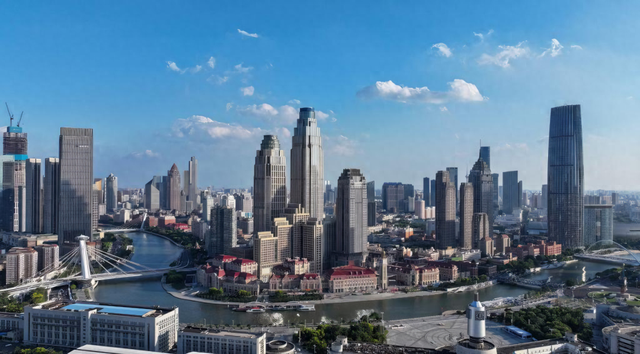
天津:2025年,地区生产总值同比增长4.8%
Bei Jing Ri Bao Ke Hu Duan· 2026-01-22 08:19
Economic Overview - In 2025, Tianjin's GDP reached 18539.82 billion yuan, growing by 4.8% year-on-year at constant prices [1] - The primary industry added value was 293.55 billion yuan, increasing by 3.0%; the secondary industry added value was 6154.46 billion yuan, growing by 3.5%; and the tertiary industry added value was 12091.81 billion yuan, rising by 5.4% [1] Agricultural Production - The total output value of agriculture, forestry, animal husbandry, and fishery increased by 3.2% in 2025, with total grain production reaching 279.2 million tons, also up by 3.2% [2] - Vegetable planting area and output grew by 5.5% and 5.9%, respectively, while beef production rose by 13.0% to 52,000 tons [2] Industrial Production - The industrial added value for large-scale enterprises grew by 4.2%, with mining increasing by 3.6%, manufacturing by 4.9%, and electricity, heat, gas, and water production and supply by 1.2% [3] - High-tech manufacturing saw a 5.3% increase, outpacing overall industrial growth by 1.1 percentage points, with significant growth in medical instruments (130%), computers (27.4%), and industrial robots (17.9%) [3] Service Sector - The service sector's added value grew by 5.4%, surpassing the overall GDP growth by 0.6 percentage points, with financial services increasing by 5.5% and modern services like IT services growing by 18.6% [3] Fixed Asset Investment - Fixed asset investment (excluding rural households) increased by 1.6%, with infrastructure investment rising by 9.7% [5] - Investment in electricity, heat, gas, and water production surged by 33.3%, while information technology services saw a 42.1% increase [5] Consumer Market - The total retail sales of consumer goods grew by 0.3%, with significant increases in categories such as sports and entertainment goods (110%) and communication equipment (75.7%) [6] - Online retail sales through public networks increased by 17.9%, indicating a shift towards digital consumption [6] Employment and Income - Urban employment increased by 327,300, with per capita disposable income reaching 55,918 yuan, a 4.4% increase year-on-year [7] - Rural residents' disposable income grew by 5.3%, indicating a narrowing income gap between urban and rural areas [7] Price Stability - Consumer prices rose by 0.1%, with food prices decreasing by 0.5% and clothing prices increasing by 2.1% [7] - Industrial producer prices fell by 3.5%, reflecting a broader trend of price stability in the economy [7] Future Outlook - The economic environment remains challenging, with external factors impacting demand; however, the focus will be on high-quality development and effective demand stimulation [8] - Continued emphasis on technological innovation, industrial renewal, and urban development is expected to drive future growth [8]

“十四五”时期江西GDP年均实际增长5.5%
Zhong Guo Xin Wen Wang· 2026-01-22 06:25
Economic Growth - During the "14th Five-Year Plan" period, Jiangxi's GDP is projected to grow at an average annual rate of 5.5%, increasing from 2.58 trillion yuan in 2020 to 3.6 trillion yuan by 2025 [1] - By 2025, the per capita GDP in Jiangxi is expected to exceed 10,000 USD, reaching 11,200 USD [1] Trade Performance - Jiangxi's foreign trade is expected to see both quantity and quality improvements, with an average annual import and export scale exceeding 530 billion yuan and an average growth rate of 3.7% [1] - The proportion of high value-added electromechanical product exports is projected to rise from 55.2% in 2020 to 63.2% by 2025 [1] Industrial Production - By 2025, the added value of industrial enterprises above designated size in Jiangxi is expected to grow by 7.5%, with foreign and Hong Kong, Macao, and Taiwan investment enterprises increasing by 3.2% [1] - Among 455 major industrial products monitored, 229 are expected to see production growth, with service robots, new energy vehicles, and electronic computers experiencing production increases of 104.2%, 86.8%, and 29.2% respectively [1] Cultural and Tourism Sector - The integration of culture, tourism, and sports in Jiangxi is accelerating, with significant trends such as "Gan Chao Hot" and "Museum Fever" emerging [2] - From January to November of the previous year, the operating income of the cultural and artistic industry above designated size grew by 18.1%, while the sports industry saw a 12.7% increase [2]
内外需增长斜率分化,关注出口和科技共振方向
China Post Securities· 2026-01-22 05:41
Economic Growth - China's GDP growth for 2025 is projected at 5%, achieving the annual economic growth target[2] - Quarterly GDP growth rates show a trend of high to low, with rates of 5.4%, 5.2%, 4.8%, and 4.5% respectively[9] Demand and Consumption - Retail sales growth in December was 0.9%, continuing a trend of marginal decline for seven consecutive months[14] - Consumer confidence remains low, with household short-term loans decreasing by CNY 1,023 billion in December 2025, a drop of CNY 16,113 billion compared to 2024[15] Investment Trends - Fixed asset investment growth fell to -3.8% for the year, a decline of 1.2 percentage points from the previous value[21] - Real estate investment saw a significant drop of 17.2% year-on-year, indicating a deep adjustment in the market[21] Export and Production - Industrial added value in December grew by 5.2%, with a notable increase in high-tech industries[27] - Export delivery value increased by 3.2% in December, correlating with the rise in industrial output[27] Policy and Future Outlook - The government aims to stabilize investment, with significant policy tools already deployed to support infrastructure projects[23] - The export momentum is expected to continue into 2026, remaining a key driver of economic growth[30]
十大关键词看工信部如何助力2026中国经济开好局!
Yang Guang Wang· 2026-01-22 02:56
Group 1: Industrial and Technological Development - The Ministry of Industry and Information Technology (MIIT) will implement the "Implementation Opinions on Promoting Future Industrial Innovation Development" and has initiated the second phase of 6G technology testing, focusing on breakthroughs in training chips and heterogeneous computing power [1][20] - MIIT aims to cultivate emerging pillar industries and will create national demonstration bases for the development of emerging industries, enhancing government investment fund efforts [5][6] - The ministry will promote smart manufacturing by implementing intelligent manufacturing projects and nurturing smart factories [7][8] Group 2: Consumer and Market Trends - MIIT will optimize product supply in line with consumption upgrade trends, enhancing the development ecosystem for Chinese consumer brands and promoting intelligent, green, and integrated development in consumer goods [9][10] - The ministry plans to develop key energy-saving and environmental protection equipment and solutions, facilitating the transition from demonstration applications to large-scale popularization of advanced technologies [13][14] Group 3: AI and Manufacturing Integration - MIIT will focus on technological innovation in AI and manufacturing, accelerating breakthroughs in critical technologies such as training chips and heterogeneous computing power, and fostering the development of application service providers [11][12] - The ministry will enhance ecological construction by establishing industry standards and ensuring algorithm security and data protection [12] Group 4: Support for SMEs - MIIT will formulate a development plan for small and medium-sized enterprises (SMEs) and implement measures to clear overdue payments to protect the rights of SMEs [17] Group 5: Digital Services and Robotics - MIIT will advance the "Ten Practical Matters for Warm Digital Services," enhancing digital service supply for vulnerable groups and expanding coverage of services [22] - The ministry will continue to promote innovation and upgrades in humanoid robot technology, driving the development of the embodied intelligence industry [25]

数据显示,日本企业破产数量连续4年增加——日本企业陷入破产“寒潮”(环球热点)
Sou Hu Cai Jing· 2026-01-22 02:54
Group 1 - In 2025, the number of bankruptcies among Japanese companies is projected to reach 10,261, marking a 2.9% increase year-on-year and the highest level since 2013, with the figure exceeding 10,000 for the second consecutive year [1][2] - The total debt of bankrupt companies in Japan for 2025 is estimated at 15.921 trillion yen, with small-scale bankruptcies (companies with debts below 100 million yen) accounting for approximately 80% of the total, the highest in the past 30 years [2] - The service industry has the highest number of bankruptcies, totaling 3,478, which is a 4.4% increase year-on-year, also a historical high [2] Group 2 - Labor shortages have led to a 36% increase in bankruptcy cases, reaching a record high of 397, while bankruptcies due to high prices have also risen for three consecutive years, totaling 767 cases [2] - The Japanese economy is facing structural contradictions, including labor shortages due to an aging population, weakened economic vitality, and low domestic demand, which are exacerbated by high government debt and limited policy space [5][6] - The Japanese government has implemented a 21.3 trillion yen economic stimulus plan to address the economic challenges, but this may conflict with the Bank of Japan's tightening monetary policy, increasing borrowing costs for companies [6][7] Group 3 - The deterioration of Japan-China relations due to political statements has raised concerns in the Japanese business community, with a significant drop in Chinese tourists to Japan, which directly impacts the service sector [8][9] - The tightening of export controls on dual-use items by China is expected to disrupt production for Japanese companies, particularly in the automotive and electronics sectors, leading to a decline in stock prices for related industries [8][9] - The overall economic confidence in Japan is weakened by the strained bilateral relations, which may suppress consumer spending and corporate investment, further diminishing economic growth momentum [10]
12月宏观数据点评:旧动能收缩,新动能暂未能支撑宏观增长
Yintai Securities· 2026-01-22 02:50
Economic Growth - In Q4 2025, GDP growth was 4.5%, with an annual GDP of 14,018.79 billion yuan, achieving a target growth of around 5%[12] - The contribution to GDP growth from final consumption expenditure was 2.6%, while net exports contributed 1.64%[12] Industrial Production - In December, industrial added value grew by 5.2% year-on-year, with an annual growth of 5.9%[16] - High-tech manufacturing and equipment manufacturing saw added value growth of 9.4% and 9.2%, respectively, exceeding the overall industrial growth by 3.5 and 3.3 percentage points[16] Fixed Asset Investment - National fixed asset investment in 2025 was 485,186 billion yuan, down 3.8% year-on-year, with private investment declining by 6.4%[19] - Infrastructure investment fell by 1.48%, marking the worst performance in a decade, while manufacturing investment saw a slight increase of 0.6%[19] Real Estate Market - Real estate development investment in 2025 decreased by 17.2%, the largest decline since the pandemic, with new construction area down by 20.4%[33] - New residential sales area fell by 8.7%, and sales revenue dropped by 12.6% year-on-year[33] Consumer Spending - In December, retail sales of consumer goods grew by only 0.9%, the lowest monthly increase of the year, with an annual growth of 3.7%[49] - Retail sales excluding automobiles increased by 4.4%, while online retail sales of physical goods rose by 5.2%[49] Price Trends - In December, the Consumer Price Index (CPI) rose by 0.8% year-on-year, while the Producer Price Index (PPI) fell by 2.6% for the year[54] - Food prices significantly contributed to the CPI increase, with fresh fruit prices recovering to a year-on-year growth of 4.4% in December[57]
第一上海证券FirstCall策略
First Shanghai Securities· 2026-01-22 02:30
Market Performance - As of the beginning of 2026, the Nasdaq 100 increased by 1.13%, the S&P 500 by 1.43%, and the Russell 2000 by 7.96%[5] - The VIX index decreased by 26.8%, indicating reduced market volatility[5] - There is a strong expectation of significant market fluctuations in the second half of the year, with a focus on small-cap stocks driven by policy and macroeconomic factors[5] Employment Trends - The unemployment rate shows significant structural differentiation among ethnic groups, with the highest slope for Black individuals, moderate for Hispanic, and stability for White individuals[5] - Job losses are notably present in interest-sensitive sectors like real estate and manufacturing, with the gig economy impacting Black workers the most[5] - A potential economic recovery may occur when interest rates begin to decline, with Black and Hispanic employment likely to recover before White employment[5] Sector Insights - The electricity sector saw a 13% increase in U.S. electricity prices last year, with ongoing affordability concerns linked to electoral outcomes[6] - The nuclear power sector is expected to experience significant growth due to policy changes and increased demand for long-term power purchase agreements (PPAs)[6] - The metals sector is facing short-term corrections due to tariff fears, but long-term demand for strategic resources remains strong[6] AI and Technology - The storage sector is identified as having the highest certainty for growth, driven by advancements in AI and hardware architecture[6] - The valuation reconstruction in the AI infrastructure space is expected to yield high returns, with a focus on overcoming supply constraints[6]
多方协同发力 培育服务消费新增长点
Jing Ji Wang· 2026-01-22 02:16
Core Viewpoint - The State Council's recent meeting emphasizes accelerating the cultivation of new growth points in service consumption, supporting the emergence of new business formats, models, and scenarios to enhance the quality of service supply and meet consumer needs [1][4]. Group 1: New Growth Points in Service Consumption - The shift in consumer behavior from product-centric to a balanced focus on both goods and services is being driven by rising living standards, unlocking the potential for service consumption [1][4]. - The integration of digital technology with the service industry is leading to the emergence of innovative service consumption formats, such as interactive robot stores in Shenzhen and experiential retail spaces in Beijing [2][3]. - Cross-industry integration is becoming a key direction for innovation in service consumption, with models like "agriculture + cultural tourism" and "manufacturing + services" creating new consumption growth points [3]. Group 2: Quality Service Supply - Various regions are innovating in consumption scenarios across cultural, tourism, entertainment, and sports sectors, with projections indicating double-digit growth in retail sales for tourism consulting, transportation, and leisure services by 2025 [4]. - The meeting highlighted the need to enhance the supply of quality services and address issues related to credit, standards, and safety management [4]. - Experts suggest focusing on digital service consumption, cultural tourism integration, silver economy services, green low-carbon services, and international consumption services as potential growth areas [4]. Group 3: Enhancing Consumer Motivation - The cultivation of new growth points in service consumption requires precise policy guidance and support, with the State Council advocating for the implementation of consumption-boosting actions [7]. - Collaborative efforts between central and local governments are leading to targeted policies that enhance service consumption, such as optimizing trade-in services and promoting regional cultural tourism [7]. - Recent policies aim to stimulate consumption in lower-tier markets, with initiatives to support county-level consumption and enhance consumer capacity through loans and subsidies [8].