
国防军工

Search documents
从加密狂潮到做空日债:复盘2025年令市场“心跳停止”的十一大押注
智通财经网· 2025-12-29 03:44
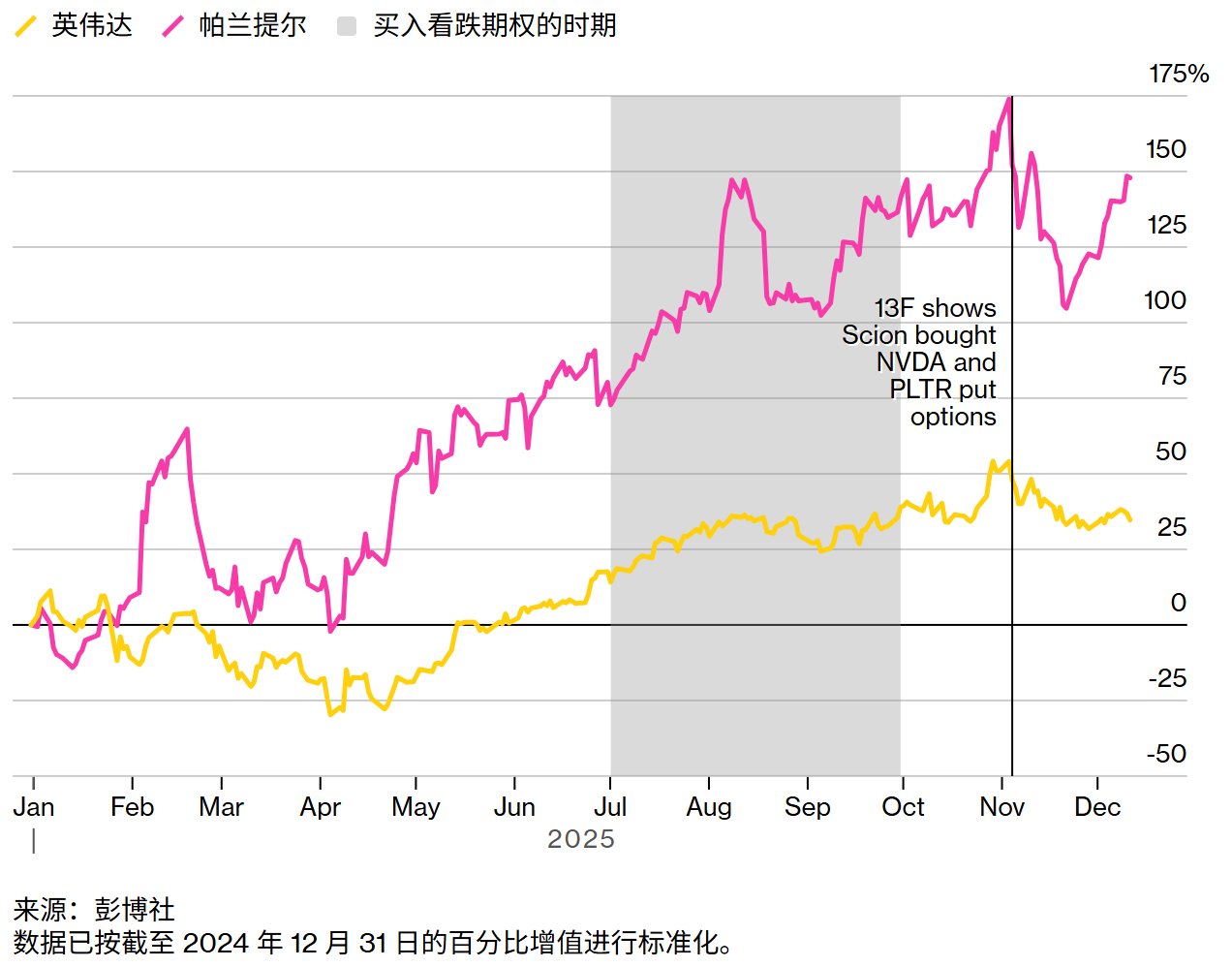
Group 1: Cryptocurrency and Political Influence - The year 2025 saw a surge in speculative trading linked to Donald Trump's brand, particularly in the cryptocurrency sector, with significant investments in assets associated with him [1][2] - Trump's family launched various tokens, including a meme coin and Melania Trump's own token, which experienced dramatic price declines by the end of the year, with some down nearly 99% [2][3] - Despite political momentum, these assets could not escape the fundamental volatility of the cryptocurrency market, highlighting the risks of speculative trading [1][3] Group 2: AI Stocks and Short Selling - Scion Asset Management disclosed protective put options on Nvidia and Palantir, signaling skepticism about their high valuations amid a market driven by AI hype [1][4] - The put options had strikingly low strike prices compared to the stocks' closing prices, indicating a bearish outlook from a well-known investor, Michael Burry [3][4] - This move reflects underlying doubts about the sustainability of AI-driven market gains, suggesting potential for significant market corrections [3][4] Group 3: European Defense Stocks - European defense stocks surged due to geopolitical shifts, with companies like Rheinmetall and Leonardo seeing year-to-date gains of approximately 150% and over 90%, respectively [6][8] - Investment managers, previously hesitant to engage with defense stocks, have now revised their strategies to include these assets, indicating a paradigm shift in investment focus [6][10] - The demand for defense-related investments has extended into the credit market, with new financial instruments being created to support military spending [6][10] Group 4: Gold and Inflation Hedge - The narrative of "devaluation trading" emerged as investors sought refuge in gold and cryptocurrencies amid concerns over national debts and inflation, leading to record highs for both assets [10][11] - This trend reflects a complex interplay between macroeconomic fears and the demand for safe-haven assets, with gold reaching unprecedented levels [10][11] - The market dynamics suggest that while fears of devaluation persist, strong demand for secure assets can coexist with broader economic uncertainties [10][11] Group 5: South Korean Stock Market - The South Korean stock market experienced a remarkable rise, with the Kospi index climbing over 70% in 2025, driven by government policies aimed at revitalizing the capital market [12][14] - Despite the impressive performance, local retail investors remained skeptical, opting to invest heavily in U.S. stocks instead, indicating a disconnect between foreign and domestic investor sentiment [12][18] - The government's ambitious target of reaching a Kospi index of 5000 has gained traction among major financial institutions, suggesting potential for continued growth [12][14] Group 6: Japanese Bonds - The Japanese bond market, once considered a "widowmaker," transformed into a profitable short-selling opportunity as yields surged, driven by government spending and interest rate hikes [22][25] - The Bloomberg Japan bond index recorded significant losses, marking it as the worst-performing major bond market globally [22][25] - Investor sentiment remains bearish, with expectations of further rate increases and ongoing fiscal challenges contributing to a negative outlook for Japanese bonds [22][25] Group 7: Credit Market Dynamics - The credit market in 2025 revealed vulnerabilities as several previously reliable borrowers faced significant financial distress, leading to a series of defaults and restructurings [30][31] - Notable cases included companies like Saxo Global and New Fortress Energy, which saw their bond values plummet, raising concerns about the overall health of the credit market [30][31] - The fragmentation of debt holders and the lack of transparency in borrowing practices have heightened risks for investors, prompting warnings from industry leaders [30][31]


招期金工股票策略环境监控周报(2025年12月22日-2025年12月26日):本周宽基指数普升,可增仓复制指数T和不依赖小微盘的交易型Alpha策略-20251229
Zhao Shang Qi Huo· 2025-12-29 02:23
1. Report Industry Investment Rating - No relevant content provided 2. Core Viewpoints of the Report - This week, broad - based indices generally rose, with most volatility declining. Market activity was at a medium - high level, and 77.4% of industries achieved positive returns. The current sentiment repair is relatively optimistic, component stock returns have strengthened, the profitability outside the index is poor, the basis has continuously converged to the growth level, and the intraday Alpha and trading - type Alpha environments have warmed up. Overall, the basis cost is favorable, the excess environment is weak, and the tail risk is moderately high. For long - only stock strategies, one can increase positions in trading - type Alpha or intraday Alpha, and strictly control the proportion of component stocks in long - only stock strategies with low exposure to small and micro - cap stocks. Neutral strategies can seize the window of low - cost position building and increase positions in replication T and strictly controlled exposure strategies that do not rely on the return contribution of small and micro - cap stocks [9]. 3. Summary by Relevant Catalogs 3.1 Equity Market Review - **Broad - based Index Performance**: As of December 26, 2025, this week, the CSI 500 index rose 4.03%, the CSI 1000 index rose 3.76%, the CSI 2000 index rose 3.06%, the CSI All - Share index rose 2.78%, the CSI A500 rose 2.75%, the SSE 50 index rose 1.95%, and the CSI Dividend index rose 0.55%. From the perspective of Barra style factors, the top three factors with the highest returns this week were BETA (1.16%), mid - cap (0.60%), and momentum (0.58%); the bottom three were leverage (0.03%), value (- 0.03%), and profitability (- 0.11%) [14]. - **Industry Index Performance**: This week, 77.4% of industries achieved positive returns, with the non - ferrous metals sector leading. The top three industries with the highest weekly returns were non - ferrous metals (6.43%), national defense and military industry (6.00%), and power equipment (5.37%); the bottom three were banks (- 1.01%), social services (- 1.05%), and beauty care (- 1.08%) [25]. - **Style Factor Performance**: The BETA, mid - cap, and momentum factors performed well, while the leverage, value, and profitability factors performed poorly. Among the Juchao stock style indices, the top three with the highest returns were small - cap growth (5.13%), mid - cap growth (3.28%), and large - cap growth (2.70%); the bottom three were mid - cap value (2.64%), small - cap value (2.19%), and large - cap value (- 0.02%) [27][32]. - **Futures Market**: The basis of IF, IC, and IM converged, and the basis volatility slightly increased, but the cost control pressure decreased. The estimated average returns of neutral products affected by each contract's hedging this week were - 0.38% for 300 neutral, - 0.50% for 500 neutral, and - 0.63% for 1000 neutral. Since the beginning of this year, the estimated average returns of neutral products affected by each contract's hedging were - 1.96% for 300 neutral, - 6.13% for 500 neutral, and - 7.71% for 1000 neutral [40]. - **Options Market**: This week, most implied volatilities declined, which is expected to be unfavorable for option - buying and arbitrage strategies [44]. 3.2 Strategy Environment Monitoring - **Intraday Alpha Environment**: Overall, it is conducive to intraday Alpha accumulation. The daily average trading volume of the stock market has slightly increased, the average intraday amplitude cross - sectional volatility is at a normal level, the proportion of high - volatility stocks is normal, and the short - term volatility of major indices is decreasing. Although the stock market has a daily net outflow, considering the market's upward trend, the actual capital inflow is beneficial for intraday Alpha accumulation [48][51][54]. - **Trading - type Alpha Environment**: The weekly average trading volume and turnover rate of the stock market are at a relatively high level, which is conducive to trading - type Alpha accumulation. The stock market shows a small - cap style, which is beneficial for trading - type Alpha accumulation, but the number of stocks that can beat the benchmark index has dropped to a low level, which is significantly unfavorable for trading - type Alpha accumulation [55][62]. - **Holding - type Alpha Environment**: It is generally conducive to holding - type Alpha accumulation and stability. The short - term returns of major broad - based indices are mostly positive, the trend smoothness of some factors is high, the style is small - cap, the number of daily limit and down - limit stocks is normal, the stock liquidity is normal, the volatility is high, the style return difference volatility is decreasing, the industry correlation coefficient is normal, and the factor rotation speed is at a high level [67][73][84]. - **Neutral Strategy Hedging Environment**: The basis of IF, IC, and IM converged, the basis volatility slightly increased, and the cost control pressure decreased [91]. 3.3 Future Strategy研判 - **Return Performance**: Based on the 20 - day rolling return, the relative returns of the CSI 1000, CSI 2000, and CSI 500 compared to the SSE 50 are in the normal or extremely high range, and the SSE 50 return is in the relatively high range [93]. - **Derivatives Market Sentiment**: In the options market, the sentiment towards the CSI 1000, SSE 50, and CSI 500 is generally cautious but shows structural differentiation. In the futures market, the basis of IF, IC, and IM converged, and market sentiment has recovered [97][102]. - **Risk Preference**: As of December 25, 2025, the margin trading balance was 2.53 trillion yuan, at the highest level in the past three years, indicating a high risk preference [105]. - **Trading Heat**: The trading heat of the SSE 50, CSI 500, CSI 1000, and CSI 2000 is at different levels, and the market trading volume is at an extremely high level [107]. - **Style Attention Multiple**: The CSI 1000 is in the relatively high range, the CSI 2000 is in the normal range, and the CSI 500 is in the extremely high range [110]. - **Profit Spread and Dividend Spread**: The profit spreads of the CSI 1000, CSI 500, CSI 2000, and SSE 50 are at different levels, mostly in the normal or extremely low range. The dividend spreads are all in the normal range [111][113]. - **Trading Crowding**: The trading heat of the TMT sector is in the low range, the trading heat of small - micro - cap sectors is in the high range, and the overall market trading volume is in the extremely high range [117].
华泰期货:股指连续上行,股指期货整体增仓
Xin Lang Cai Jing· 2025-12-29 02:20
市场分析 企业利润下滑。宏观方面,全国政协十四届四次会议将于2026年3月4日在北京召开,十四届全国人大四 次会议将于3月5日召开,审查"十五五"规划纲要草案列入2026年全国人代会建议议程。数据方面,1-11 月份,全国规模以上工业企业实现利润总额66268.6亿元,同比增长0.1%;11月份,规模以上工业企业 利润同比下降13.1%。海外方面,美国第三季度实际GDP初值年化季环比大幅增长4.3%,远超市场预期 的增长3.3%,增速创两年来最快。 作者: 汪雅航 来源:华泰期货 热点栏目 自选股 数据中心 行情中心 资金流向 模拟交易 客户端 股指上行。现货市场,A股三大指数连续上行,上证指数收盘涨1.88%收于3963.68点,创业板指涨 3.90%。行业方面,板块指数涨多跌少,有色金属、国防军工、电力设备、电子行业领涨,美容护理、 社会服务、银行行业跌幅居前。日均成交额回升至1.95万亿元,两融余额增加超400亿元。央行发布 《中国金融稳定报告(2025)》指出,下一步,证监会等相关部门将着力健全有利于"长钱长投"的制度 政策环境,显著提高各类中长期资金实际投资A股的规模和比例;多措并举推动上市公司质量 ...

两融余额缩水21.00亿元 杠杆资金大幅加仓254股
Zheng Quan Shi Bao Wang· 2025-12-29 01:52
12月26日沪指上涨0.10%,市场两融余额为25433.30亿元,较前一交易日减少21.00亿元。 证券时报·数据宝统计显示,截至12月26日,沪市两融余额12823.77亿元,较前一交易日减少23.35亿 元;深市两融余额12529.74亿元,较前一交易日增加2.07亿元;北交所两融余额79.79亿元,较前一交易 日增加0.28亿元;深沪北两融余额合计25433.30亿元,较前一交易日减少21.00亿元。 分行业看,申万所属行业中,融资余额增加的行业有13个,增加金额最多的行业是电力设备,融资余额 增加29.98亿元;其次是基础化工、国防军工行业,融资余额分别增加8.33亿元、5.63亿元。 具体到个股来看,融资余额出现增长的股票有1664只,占比44.24%,其中,254股融资余额增幅超过5% 。融资余额增幅最大的是C天溯,该股最新融资余额5847.88万元,较前一交易日增幅达55.61%;股价表 现上,该股当日上涨27.23%,表现强于沪指;融资余额增幅较多的还有航天发展、恒达新材,融资余 额增幅分别为43.86%、43.32%。 | | 信 | | | | | | --- | --- | --- | ...
廖市无双-本轮上涨是否-一去不回头
2025-12-29 01:04
Summary of Conference Call Records Industry or Company Involved - The discussion primarily revolves around the **A500 ETF** and the broader **Chinese stock market** performance in 2025, including various sectors such as **financials**, **technology**, **commercial aerospace**, and **defense**. Core Points and Arguments 1. **Market Trends and Performance** - The market showed a stabilizing upward trend in 2025, with significant fluctuations due to events like the **Deepseek** surge and the **Trump tariff war**. The **A500 ETF** inflow significantly influenced market momentum, leading to a bullish sentiment with the Shanghai Composite Index surpassing **3,950 points** [1][2][7]. 2. **Impact of Small Probability Events** - Frequent small probability events in 2025 had a notable impact on market dynamics, such as the **April tariff war** causing sharp declines followed by strong rebounds. The shift of funds from the brokerage sector to the **ChiNext** and **STAR Market** indices led to notable increases in these indices [2][4]. 3. **Role of A500 ETF** - The substantial inflow into the **A500 ETF** starting December 17 transformed the market outlook from expected downward adjustments to an upward trend, indicating strong buying interest. This trend could lead to potential peaks around the **Lunar New Year** [5][11]. 4. **Brokerage Sector's Influence** - The brokerage sector is crucial in the current market context, with solid fundamentals but suppressed stock prices. The direction taken by this sector could significantly influence the overall market trajectory, with potential for either upward breakthroughs or further corrections [6][15]. 5. **Market Highlights and Drivers** - Recent market performance was driven by factors such as the **A500 ETF** inflow, a booming **commercial aerospace sector**, and strong performance in the **optical module sector**. Growth indices like **CSI 1000** and **National Index 2000** approached previous highs, with notable gains in **non-ferrous metals** and **defense** sectors [8][9]. 6. **Future Market Predictions** - Short-term trends appear positive, but sustainability of driving factors remains uncertain. The overall market trend is expected to remain upward, with potential high points around **4,034** and long-term targets reaching **4,130** [3][11]. 7. **Year-End Adjustment Risks** - Potential adjustments similar to the previous year's end are anticipated, driven by fund switching dynamics. However, the current market strength suggests a higher probability of upward movement compared to declines [12][14]. 8. **Investment Strategy Recommendations** - Investors are advised to avoid chasing high-performing sectors like **optical modules** and **non-ferrous metals** due to potential correction risks. Instead, focus on sectors with lower valuations and rebound potential, particularly in **non-bank financials**, **electrical new energy**, **electronics**, and **chemicals** [16][18]. Other Important but Possibly Overlooked Content 1. **Sector Rotation Performance** - The sector rotation strategy in 2025 yielded over **20%** excess returns, indicating a strong performance in cyclical sectors. Preparations for 2026 should focus on maintaining flexibility in investment strategies [3][18]. 2. **Macroeconomic Outlook** - Expectations for 2026 include potential surprises in **PPI** and **CPI** due to rising commodity prices across various sectors, necessitating close monitoring of these economic indicators [21]. 3. **Focus on Specific Sub-Sectors** - Key areas of interest include **plastics and products** in chemicals, **tourism and leisure** in consumer services, **electrical equipment** in new energy, and **aerospace** in defense, all showing high value in the current market environment [20].
【策略】多重支撑护航,春季行情行稳致远——策略周专题(2025年12月第4期)(张宇生/郭磊)
光大证券研究· 2025-12-28 23:04
Core Viewpoint - The A-share market has shown strong performance recently, with major indices experiencing significant gains, particularly in small-cap growth stocks, while certain sectors have underperformed [4][6]. Market Performance - Major A-share indices, including the CSI 500 and ChiNext, have seen substantial increases, while the Shanghai Composite Index and CSI 300 have had smaller gains [4]. - The current valuation levels of indices like the Sci-Tech 50 and Wind All A are relatively high, with PE (TTM) percentiles above 85% since 2010 [4]. - The small-cap growth style has outperformed, with sectors such as non-ferrous metals and defense industries leading the gains, while beauty care and social services have lagged [4]. Important Events - The People's Bank of China has introduced a one-time credit repair policy, which will not display overdue information in personal credit reports for eligible individuals [5]. - The housing and urban-rural development meeting has set priorities for real estate development in 2026, with Beijing optimizing its real estate policies [5]. - The EU has extended economic sanctions against Russia for an additional six months, and Japan has finalized its budget for the 2026 fiscal year, reaching a historical high [5]. Market Outlook - The A-share market is expected to continue its upward trend, supported by favorable policies and increased capital inflows [6][7]. - Historical trends indicate a "spring rally" in the A-share market, with expectations for sustained economic growth and policy support to bolster market confidence [7]. - Focus on growth and consumer sectors is recommended, with particular attention to TMT and advanced manufacturing during the spring rally, as well as the commercial aerospace sector [7].

财信证券宏观策略周报(12.29-1.2):“春季躁动”行情开启,关注有色及科技-20251228
Caixin Securities· 2025-12-28 12:52
Group 1 - The report indicates that the market is likely entering a "spring rally" phase, with the overall market represented by the Wind All A Index breaking through moving averages and expected to reach new highs. This is supported by increased trading volume despite the suspension of northbound capital transactions [4][7][13] - The technology growth sector is identified as a long-term market focus, with a K-shaped economic recovery in China favoring technology growth performance. Opportunities are anticipated in previously lagging areas such as AI applications and humanoid robots [4][7][12] - The report highlights the ongoing expansion in the non-ferrous metals market, with prices for gold, silver, and copper reaching historical highs. This is attributed to a combination of factors including a loosening of dollar liquidity and supply-demand tightness [12][13] Group 2 - The report suggests that the domestic commercial aerospace industry is expected to develop rapidly, supported by new regulations that favor commercial rocket enterprises and the anticipated growth of the market, which is projected to exceed 2.5 trillion yuan [11][12] - The report emphasizes the importance of monitoring the non-ferrous metals sector for investment opportunities, particularly in strategic minor metals and industrial metals, as the market is currently in an expansion phase [12][13] - The report notes that monetary policy remains moderately accommodative, which supports a slow bull market in A-shares, with expectations of continued liquidity support for technology growth sectors [8][9]
负债行为跟踪:杠杆资金活跃度上升
ZHONGTAI SECURITIES· 2025-12-28 12:50
1. Report Industry Investment Rating - Not provided in the document 2. Core Views of the Report - This week, both the US and Chinese stock markets performed well, with the US three major stock indices rising over 1% and the Shanghai Composite Index rising 1.9%. The growth is due to the resonance of the global technology sector and year - end pre - positioning [4]. - Market risk preference is on the rise. Since mid - December, the S&P 500 volatility has generally declined, and the basis discount of stock index futures has narrowed since December [4]. - Leverage funds' activity significantly increased this week, becoming a major driving factor for the market. The proportion of margin trading turnover in A - share turnover rebounded, and leverage funds flowed into major broad - based indices [5]. - In 2026, the incremental funds flowing into the stock market are estimated to be 3.1 trillion yuan, and the scale of "fixed income +" products will double. If the market adjusts in December, incremental funds may pre - position. Next year, technology will still be the most promising direction for the spring rally [7]. 3. Summary by Relevant Catalogs 3.1 Asset Price Performance 3.1.1 Global Asset Performance - Global stocks: Most global stock indices rose, with the Korean Composite Index rising 2.7% and the Nikkei 225 rising 2.5%. The French CAC40 and the British FTSE 100 declined [12]. - Global bonds: US Treasury yields declined, while Japanese and Chinese government bond yields rose [12]. - Global commodities: Precious metals performed well, with COMEX silver rising 18.2% and lithium carbonate rising 16.5%. The US dollar index declined [12]. 3.1.2 A - share Market Performance - Broad - based indices: A - shares generally rose, with the ChiNext and STAR 50 indices rising 3.9% and 2.8% respectively. The CSI 500 and CSI 1000 also had significant gains [21][23]. - Trading volume: Except for the dividend index, the average daily trading volume of broad - based indices increased, returning to the level around mid - August [25]. - Industry performance: The top five rising industries were non - ferrous metals (8.47%), national defense and military industry (7.51%), power equipment (6.27%), machinery and equipment (5.74%), and basic chemicals (5.70%). Most cyclical sectors performed well, except for banks and coal [31]. - Technology sector: Since December, optical modules and optical communications have led the way, and on Monday, most technology sub - sectors rose and many had increased trading volume [35][39]. 3.2 Capital Behavior Tracking 3.2.1 Leverage Funds - Margin trading turnover ratio: The proportion of margin trading turnover in A - share turnover rose from 10.24% to 11.20%. The margin trading balance increased to about 2.53 trillion yuan, and the ratio of margin trading balance to A - share free - float market capitalization slightly decreased [49]. - Inflow into broad - based indices: From Monday to Thursday, leverage funds flowed into major broad - based indices, with the Shanghai Composite Index, CSI 1000, and CSI 300 having daily net inflows of over 2.5 billion yuan. Most broad - based ETFs had net outflows on Monday - Thursday, and on Friday, most broad - based indices had inflows except for the Shanghai Composite Index ETF and ChiNext Index ETF [54]. - Market - cap gradient: Stocks of all market - cap gradients increased leverage, with large - cap stocks above 50 billion yuan having a larger increase. Stocks like Zhongji Innolight, Industrial Fulin, Cambricon, and Zijin Mining had large net margin purchases [58]. - Industry perspective: Industries with large margin net purchases as a proportion of turnover included communications, real estate, machinery and equipment, etc. The national defense and military industry increased leverage for six consecutive weeks, and agriculture, forestry, animal husbandry, and fishery increased leverage for nine consecutive weeks [62]. - Hot stocks: Some hot stocks in the national defense and military industry and electronics added leverage. Stocks like Zhaoyi Innovation, Zhongji Innolight, and others had a margin net purchase as a proportion of turnover exceeding 10% [70]. 3.2.2 Quantitative Funds - Excess return: Since December, the median excess returns of CSI 500 and CSI 1000 quantitative index - enhanced strategies have been - 1.15% and 0.61% respectively [72]. - Futures basis: This week, the near - month stock index futures basis changed from premium to discount, and the far - month contract basis discount narrowed. Excluding the futures delivery week, the basis discount has been narrowing since December [78]. 3.2.3 Main Force Funds - Sector net flows: The main force funds in the CSI 300 and ChiNext continued to have net outflows, but the outflows slowed down. The main force funds in the STAR Market had net outflows for five consecutive trading days, accelerating compared to last week [80]. - Industry flows: Main force funds flowed into the power equipment industry and out of industries such as national defense and military industry, computers, electronics, and non - bank finance [88]. 3.2.4 Northbound Funds - Trading volume and proportion: The total trading volume of northbound funds decreased, with the average daily trading volume dropping from 203 billion yuan to 176.6 billion yuan, and the proportion in A - share trading volume dropping from 11.52% to 9.29% [92]. - Performance of heavy - holding stocks: The heavy - holding stocks of the Northbound Connect changed from rising to falling, and the Northbound Connect 50 index underperformed the CSI 300 [94]. 3.2.5 Southbound Funds - Trading volume and net purchases: The average daily trading volume of southbound funds decreased from 144.2 billion yuan to 110.2 billion yuan, and the proportion increased from 52.3% to 58.9%. The average daily net purchase amount decreased from 2.9 billion yuan to 0.8 billion yuan [99]. - Industry allocation: Southbound funds still had a balanced allocation, flowing into industries such as media, electronics, and non - bank finance, and flowing out of industries such as communications, petroleum and petrochemicals, and non - ferrous metals [102].





主动量化周报:12月末或为建仓时点:小盘迎来强势期-20251228
ZHESHANG SECURITIES· 2025-12-28 12:26
- The report discusses the performance of BARRA style factors, highlighting that fundamental factors showed increased differentiation, with growth being preferred over value. Profitability-related factors entered a retracement phase, while trading-related factors like high turnover and short-term momentum provided significant excess returns. Additionally, mid-cap style factors outperformed, with both size and non-linear size factors showing positive excess returns[24][25] - The report identifies that high turnover stocks achieved an excess return of 0.9%, short-term momentum stocks provided 0.7%, and non-linear size factors contributed 0.7% in excess returns. Meanwhile, profitability-related factors like earnings quality and investment quality showed negative returns of -0.1% and -0.3%, respectively[25]
固定收益周报:为何人民币汇率大涨但港股疲弱-20251228
Huaxin Securities· 2025-12-28 11:04
Report Industry Investment Rating No relevant content provided. Core Viewpoints - The current RMB exchange - rate appreciation is more likely the third scenario where domestic entities' risk preference changes, so it does not benefit Hong Kong stocks, and the sustainability of the RMB's strength is questionable. It is hoped that future RMB appreciation will be the first scenario, corresponding to the burst of the US tech bubble [17]. - In the de - leveraging cycle, the bias of the stock - bond ratio in favor of equities is limited, and the value style has a higher probability of relative dominance [9][58]. Summary by Directory 1. National Balance Sheet Analysis - **Liability Side**: In November 2025, the liability growth rate of the real sector was 8.6% (previous value 8.7%), expected to decline to around 8.3% in December. The money market continued to loosen marginally last week. The central bank's stance indicates that the goal of stabilizing the macro - leverage ratio remains unchanged, waiting for the quantitative fiscal target from the Two Sessions in 2026 [2][16]. - **Fiscal Policy**: Last week, the net increase in government bonds was 1707 billion yuan (higher than the planned 1148 billion yuan), and the planned net increase next week is 174 billion yuan. The government liability growth rate is expected to decline to around 12.4% in December from 13.1% in November [2][18]. - **Monetary Policy**: Last week, the average weekly trading volume and price of funds increased, and the term spread widened. The one - year Treasury yield dropped to 1.29% at the weekend. The market may have over - anticipated a 2026 interest - rate cut. The term spread between the ten - year and one - year Treasuries widened to 55 basis points. The money - market loosening may be approaching its limit [3][18]. - **Asset Side**: In November, physical quantity data showed signs of stabilizing at a low level. The full - year nominal economic growth target for 2025 is 4.9%, and it is necessary to confirm whether 5% will be the central target for China's nominal economic growth in the next 1 - 2 years [3][19]. 2. Stock - Bond Cost - Effectiveness and Stock - Bond Style - **Economic Cycle**: Since 2011, China has entered a downward cycle of potential economic growth, which seems to have ended in Q4 2024. The Chinese government put forward three policy goals in 2016. Currently, the convergence on the liability side is not over but has limited space. If the valuation of the US technology sector is re - evaluated, global funds may flow to China [6][20]. - **Last Week's Market Performance**: The money market continued to loosen, risk preference rose, and the growth style dominated. The stock - bond ratio favored stocks. The ten - year Treasury yield rose 1 basis point to 1.84%, the one - year yield dropped 7 basis points to 1.29%, and the 30 - year yield remained stable at 2.22%. The broad - based rotation strategy underperformed the CSI 300 by - 0.32 pct last week and - 5.41 pct since July 2024 [7][21]. - **Investment Recommendations**: Bonds at the long end are considered to have investment value. For equities, a neutral stance is taken, with a focus on style. Before seeing the government's bond - issuance plan, the value style is expected to dominate. This week, the Shanghai 50 Index (60% position), the CSI 1000 Index (20% position), and the 30 - year Treasury ETF (20% position) are recommended [8][22]. 3. Industry Recommendations - **Industry Performance Review**: This week, A - shares rose with increased trading volume. Among Shenwan primary industries, non - ferrous metals, national defense and military industry, power equipment, electronics, and building materials had the largest increases, while beauty care, social services, banks, coal, and food and beverage had the largest declines [28]. - **Industry Crowding and Trading Volume**: As of December 26, the top five crowded industries were electronics, power equipment, machinery, national defense and military industry, and non - ferrous metals. The trading volume of the whole A - share market rebounded. Transportation, non - ferrous metals, and other industries had the highest trading - volume growth rates, while banks, coal, and other industries had the largest declines [31][32]. - **Industry Valuation and Earnings**: This week, the PE(TTM) of non - ferrous metals, national defense and military industry, and other industries increased the most, while that of social services, beauty care, and other industries decreased the most. Industries with high 2024 full - year earnings forecasts and relatively low current valuations include banks, securities, and others [36][37]. - **Industry Prosperity**: Externally, there was a marginal decline. The global manufacturing PMI decreased in November, and export growth rates of some countries changed. Domestically, the second - hand housing price dropped, and quantity indicators fluctuated. The highway truck traffic volume declined, and the industrial capacity utilization rate showed a fluctuating trend [41]. - **Public - Fund Market Review**: In the fourth week of December, most active public - fund equity funds outperformed the CSI 300. As of December 26, the net asset value of active public - fund equity funds slightly increased compared to Q4 2024 [55]. - **Industry Recommendations**: In the de - leveraging cycle, the stock - bond ratio favors equities to a limited extent, and the value style is more likely to dominate. The recommended A + H dividend portfolio includes 13 stocks, and the A - share portfolio includes 20 stocks, mainly in industries such as banks, telecommunications, and oil and petrochemicals [9][58].