
有色金属

Search documents
指数方向有变化,机构蠢蠢欲动!题材分化,还有哪些投资机会?
Sou Hu Cai Jing· 2026-02-27 08:29
Economic Outlook - In February, high-performing sectors included certain resource products, utilities, and information technology, with industrial metals and chemical prices rising [1] - The midstream manufacturing sector saw an increase in the photovoltaic price index, while automotive production and sales slowed down [1] - The consumer services sector experienced improved profitability in pig farming, and the decline in retail sales of major appliances narrowed year-on-year [1] - The financial and real estate sectors continued to face sluggish sales of commercial housing, while gas prices in the utilities sector increased [1] Investment Trends - The top five sectors with net inflows included non-ferrous metals, domestic software, photovoltaics, rare earth magnetic materials, and lithium batteries [1] - The leading five concept sectors with net inflows were artificial intelligence, state-owned enterprise reform, big data, digital economy, and the Belt and Road Initiative [1] - The top ten individual stocks with net inflows included Baogang Co., Yunnan Zhiyuan, Xiamen Tungsten, Yongtai Energy, Cambrian, Haiguang Information, BOE Technology Group, China Tungsten High-Tech, Northern Rare Earth, and Kunlun Wanwei [1] Technology Development - Tsinghua University's research team introduced the FLEXI chip, a flexible AI chip designed for edge intelligence, which fills a gap in flexible electronics technology [3] - The global flexible electronics market is projected to grow from $85 billion to over $173 billion between 2025 and 2030, with China's flexible chip industry expected to rise from 50 billion yuan to 150 billion yuan, reflecting a compound annual growth rate of over 25% [3] Semiconductor Demand - NVIDIA's AI inference context storage platform significantly increased eSSD capacity requirements, with demand for H100 GPUs estimated at 4TB and B100/200 at 8TB, potentially reaching 24TB for Rubin [5] - The NAND capacity demand is expected to grow substantially, with a forecast of approximately 336 exabytes if VR200 shipments reach 14 million units [5] Market Sentiment - The overall market trend is currently strong, with no significant increase in incremental capital entering the market [7] - The Shanghai Composite Index showed signs of weakness, and attention is needed for movements in early March, with expectations of preemptive capital entry [11] - The A-share market has seen strong performance from major indices since last year, driven by a combination of capital inflow and external investment [11]


港股收盘,恒生指数收涨0.95%,恒生科技指数收涨0.56%
Mei Ri Jing Ji Xin Wen· 2026-02-27 08:20
每经AI快讯,2月27日,港股收盘,恒生指数收涨0.95%,恒生科技指数收涨0.56%,光通信、钢铁、有 色、稀土、创新药板块集体大涨。长飞光纤光缆涨近10%,马鞍山钢铁涨6.6%,金力永磁涨6.7%,中国 神华涨近6%,昭衍新药涨6%,康希诺生物涨7%,药明生物涨超3%。 ...
华宝期货晨报铝锭-20260227
Hua Bao Qi Huo· 2026-02-27 08:17
晨报 铝锭 成材:重心下移 偏弱运行 铝锭:节后复工进度偏缓 库存持续累积 从业资格号:F03127144 投资咨询号:Z0020161 电话:021-20857653 2026 年 2 月 27 日 逻辑:云贵区域短流程建筑钢材生产企业春节期间停产检修时间大多 在 1 月中下旬,复产时间预计在正月初十一至正月十六左右,停产期间预 证监许可【2011】1452 号 逻辑:昨日铝价区间震荡。宏观上交易员削减对美联储的降息押注,市 场仍在评估美国关税前景、市场情绪以及美国的经济状况。 以伊冲突 计影响建筑钢材总产量 74.1 万吨。安徽省 6 家短流程钢厂,1 家钢厂已 于 1 月 5 日开始停产;其余大部分钢厂均表示将于 1 月中旬左右停产放假, 个别钢厂预计 1 月 20 日后停产放假,停产期间日度影响产量 1.62 万吨左 右。2024 年 12 月 30 日-2025 年 1 月 5 日,10 个重点城市新建商品房成 交(签约)面积总计 223.4 万平方米,环比下降 40.3%,同比增长 43.2%。 成材昨日继续震荡下行,价格再创近期新低。在供需双弱的格局下, 市场情绪同样偏悲观,导致价格重心持续下移 ...
粤开市场日报-20260227
Yuekai Securities· 2026-02-27 08:09
Market Overview - The A-share market showed mixed performance today, with the Shanghai Composite Index rising by 0.39% to close at 4162.88 points, while the Shenzhen Component Index fell by 0.06% to 14495.09 points. The ChiNext Index decreased by 1.04% to 3310.3 points, and the Sci-Tech 50 Index increased by 0.15% to 1488.02 points. Overall, 3267 stocks rose, 2066 fell, and 146 remained unchanged, with a total trading volume of 248.8 billion yuan, down by 50.4 billion yuan from the previous trading day [1][2]. Industry Performance - Among the Shenwan first-level industries, sectors such as steel, coal, non-ferrous metals, public utilities, and agriculture led the gains, with increases of 3.37%, 3.20%, 3.10%, 2.27%, and 2.06% respectively. Conversely, industries like building materials, telecommunications, electronics, automotive, and home appliances experienced declines, with decreases of 1.45%, 1.38%, 0.71%, 0.41%, and 0.39% respectively [1][2].
全球资源民族主义来袭,有色狂飙!
Ge Long Hui· 2026-02-27 08:09
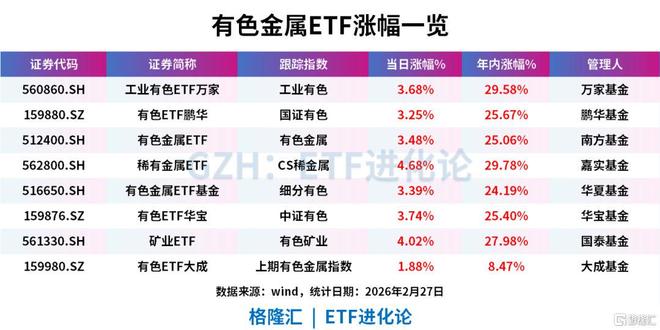
Core Viewpoint - The emergence of resource nationalism is reshaping global markets, particularly in the context of rising prices for metals like copper, aluminum, gold, and rare earths, as countries seek to maximize their benefits from natural resources [2][4][5]. Group 1: Resource Nationalism - Resource nationalism is characterized by countries implementing policies to strengthen control over their natural resources, increase local processing, and limit raw material exports to maximize national interests [4][5]. - Recent actions by countries like Zimbabwe and Indonesia reflect a broader trend of tightening resource policies globally, indicating a shift in how resources are managed and valued [4][5]. Group 2: Market Dynamics - The market has shifted focus from technology companies to upstream resources, with a notable increase in the prices of various metals, leading to a revaluation of mining and resource-rich countries [3][4]. - The surge in metal prices is driven by increased demand from emerging industries such as AI, electric vehicles, and renewable energy, prompting resource-rich nations to seek greater control and value from their resources [5][18]. Group 3: Performance of Metal ETFs - The performance of metal ETFs has been robust, with significant year-to-date gains; for instance, the Industrial Metal ETF has increased by 29.58% this year [8][10]. - Specific ETFs, such as the Rare Metal ETF and the Industrial Metal ETF, have seen substantial inflows, indicating strong investor interest in the sector [10][11]. Group 4: Price Trends and Data - Tungsten powder prices have surged to 1,800 RMB/kg, marking a 469.6% increase from last year and a 66.7% increase from the beginning of this year [6]. - The ammonium paratungstate (APT) price has reached 1.1 million RMB/ton, reflecting over a 400% increase from the previous year [6]. Group 5: Sector Classification - The non-ferrous metals sector is categorized into various segments, including precious metals (gold, silver), industrial metals (copper, aluminum), energy metals (lithium, cobalt), and rare metals [17][18]. - Each segment has distinct drivers; for example, copper demand is linked to electrification, while rare earths are increasingly important for strategic industries [17][18].





中金岭南(000060.SZ):中金岭南的钨矿主要分布在广东韶关万侯多金属矿,保有钨金属资源量1.65万吨
Ge Long Hui· 2026-02-27 08:02
Group 1 - The core viewpoint of the article is that Zhongjin Lingnan has significant tungsten resources located primarily in the Guangdong Shaoguan Wanhou polymetallic mine, with a total tungsten metal resource amounting to 16,500 tons [1] Group 2 - Zhongjin Lingnan's tungsten metal resources are concentrated in a specific geographic location, indicating potential for focused mining operations [1] - The company has publicly shared its resource data on an investor interaction platform, reflecting transparency in its operations [1] - The total tungsten resource amount of 16,500 tons suggests a substantial asset base for the company, which may influence its market position and investment attractiveness [1]

韶关跃迁:冲刺华南“智算之城”,挺起产业“钢铁脊梁”
2 1 Shi Ji Jing Ji Bao Dao· 2026-02-27 07:44
Core Insights - Shaoguan is transforming from a traditional industrial city to a "computing power city," with significant advancements in the digital economy since the 14th Five-Year Plan began [1][2] - The city has seen its economic total surpass 160 billion yuan, particularly after the establishment of a major data center cluster in 2022, attracting key players like Tencent and China Telecom [1][2] Economic Development - Shaoguan's economic growth is marked by the signing of projects exceeding 60 billion yuan, including a 26.3 billion yuan investment from Zhongjin Data for a zero-carbon computing power base [2] - The city aims to expand its data infrastructure significantly, with plans to increase the area by 10,000 acres and achieve a data center capacity of 300,000 standard racks by the end of the year [2][3] Infrastructure and Cost Advantages - Shaoguan boasts a low electricity cost of 0.35 yuan per kilowatt-hour, the lowest in Guangdong, and plans to increase the green energy share in data centers to 80% by 2026 [4] - The city has reduced network latency to 1.3 milliseconds to Guangzhou and 1.66 milliseconds to Shenzhen, enhancing its appeal as a data processing hub [4] Industry and Innovation - The city is positioning itself as a key player in the "East Data West Computing" strategy, with a focus on AI and low-altitude economy sectors that require substantial computing power [2][3] - Shaoguan is also developing its traditional industries, such as steel and non-ferrous metals, into high-end manufacturing and semiconductor materials [6][7] Policy Support and Business Environment - The local government is implementing reforms to streamline business operations, including a "commitment system" for land acquisition and a 10 billion yuan industrial development fund [8] - Shaoguan is actively attracting businesses by promoting a favorable climate for investment, with initiatives to support the "silver economy" and healthcare sectors [8]




从周期到成长:工业有色迎来“戴维斯双击”,看天弘中证工业有色金属主题(A类:017192/C类:017193)如何重塑投资逻辑
Sou Hu Cai Jing· 2026-02-27 07:43
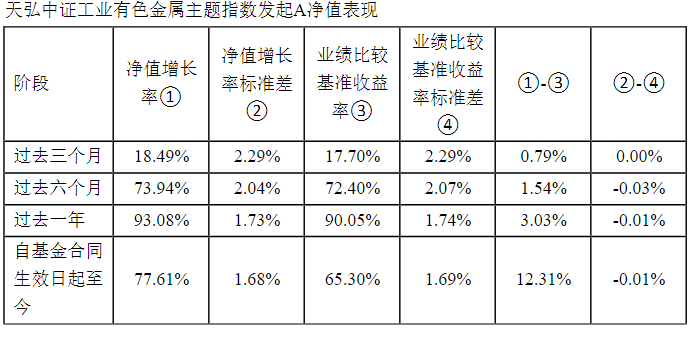
Core Insights - The non-ferrous metals industry in China is experiencing a historic moment, with total profits exceeding 500 billion yuan, reaching 528.45 billion yuan, a year-on-year increase of 25.6%, marking a record high [1] - The growth in profits is primarily driven by aluminum and copper, contributing 35% and 20% respectively to the industry's profit increase [1] - The underlying logic of the industrial non-ferrous metals sector is undergoing a profound transformation, shifting from being a "buyer of macro volatility" to a "seller of manufacturing upgrades" [1] Performance of Index Funds - The Tianhong CSI Industrial Non-Ferrous Metals Index Fund A class achieved a net value growth rate of 93.08% over the past year, significantly outperforming the benchmark growth of 90.05% by 3.03 percentage points [1] - The C class of the same fund recorded a net value growth rate of 92.60%, also exceeding the benchmark by 2.55 percentage points [3] - Both classes of the fund have shown substantial cumulative excess returns since their inception, with A class at 77.61% and C class at 76.48%, both surpassing the benchmark by over 12 percentage points [3] Market Dynamics - The market is beginning to recognize the growth potential of industrial non-ferrous metals, transitioning from a perception of them as purely cyclical assets to growth assets [4] - The first driver of this growth is the increase in earnings per share (EPS), with copper prices rising by 31% and aluminum prices by 17% in 2025, significantly boosting profits for leading companies [4] - The second driver is the expansion of price-to-earnings (PE) ratios, as the market starts to reassess copper and aluminum from a growth stock perspective, influenced by their roles in emerging technologies [6] Supply and Demand Factors - The supply side constraints, such as the established production cap for electrolytic aluminum at approximately 45 million tons per year, contribute to profit leverage, allowing profits to grow significantly with demand increases [7] - The low elasticity of supply in copper due to insufficient capital expenditure and declining ore grades further enhances profit potential [7] - The combination of rigid supply and growing demand maximizes profit elasticity, which is a key factor behind the substantial annual growth of the industrial non-ferrous index [7] Investment Suitability - The Tianhong Industrial Non-Ferrous Index Fund is suitable for investors who recognize the growth narrative of industrial metals and are willing to accept short-term volatility for long-term gains [8] - The fund's fee structure offers flexibility, with the C class being more suitable for tactical allocations under one year, while the A class is better for long-term investments [8] - The fund can be easily accessed through various financial platforms, making it a convenient option for investors looking to allocate to the industrial non-ferrous metals sector [8]


A股收评 | 2月收官!沪指收涨0.39%月线3连阳 涨价题材大放异彩
智通财经网· 2026-02-27 07:27
Market Performance - The A-share market ended February with the Shanghai Composite Index rising by 1.09%, while the Shenzhen Component Index increased by 2.04%, and the ChiNext Index fell by 1.08% [1] - Daily trading volume exceeded 1 trillion yuan, with the Shanghai and Shenzhen markets seeing over 2 trillion yuan in trading for four consecutive days after the Spring Festival [1] Sector Highlights - The non-ferrous metals sector showed strong performance, with significant gains in antimony, tungsten, and tin, leading to multiple stocks hitting the daily limit [3] - The power and grid equipment sector also saw gains, with stocks like South Network Energy and Fuling Power reaching their daily limits [4] - The photovoltaic sector experienced a rise, with stocks such as Junda Co. and Shuangliang Energy hitting the daily limit, driven by new applications in space solar power and satellite internet [5] Investment Outlook - The chief economist at Qianhai Kaiyuan Fund indicated that technology and resources are expected to be the two main investment themes for the year, as the market enters a slow bull phase [8] - CITIC Construction expressed optimism about the cyclical recovery in heavy asset industries, highlighting the potential for profit recovery in chemicals and construction materials due to rising inflation expectations and improved demand [9] - Everbright Securities noted that the transition from energy consumption control to carbon emission control in China will lead to a revaluation of carbon costs, benefiting low-carbon assets [10]
人民币对美元汇率创34个月来新高,A500ETF基金(512050)午后翻红,湖南黄金等多股涨停
Mei Ri Jing Ji Xin Wen· 2026-02-27 07:22
Group 1 - The A-shares market opened lower on February 27, with sectors such as photovoltaic equipment, rare earth permanent magnets, non-ferrous metals, steel, and electricity continuing to rise, while sectors like optical communication and CPO concept hardware experienced a pullback [1] - The A500 ETF fund (512050) showed strong performance in the afternoon, recovering from a decline, with a drop of 0.24% by 14:55. Several stocks in its holdings, including China Tianying, Hunan Gold, and Fenghuo Communication, hit the daily limit, while previously popular stocks like New Yisheng and Zhongji Xuchuang fell [1] - The RMB has been appreciating against the USD since the Spring Festival, with the offshore RMB/USD exchange rate dropping to 6.8267 on February 26, marking a nearly three-year low since March 23, 2023. This appreciation is attributed to the stabilization of China-US trade relations and an overall improvement in the external environment [1] Group 2 - Historical data indicates a significant positive correlation between the A500 index and the RMB exchange rate, with the A500 index typically performing well during RMB appreciation windows [2] - The A500 ETF fund (512050) offers investors a convenient way to invest in core A-share assets, benefiting from valuation increases. It features low fees (only 0.2% total fee), good liquidity (leading in average daily trading volume over the past year), and a large scale (over 35 billion) [2] - The fund tracks the CSI A500 index, employing a dual strategy of industry balanced allocation and leading stock selection, covering all 35 sub-industries, and integrating value and growth attributes, making it resilient to style rotations [2]
