
不锈钢

Search documents
精炼镍进口量大增,镍不锈钢价格高位震荡
Hua Tai Qi Huo· 2026-01-21 05:18
1. Report Industry Investment Rating No relevant content provided. 2. Core Viewpoints of the Report - The price of refined nickel and stainless steel is oscillating at a high level. The core contradiction of nickel lies in the continuous tug - of - war between "strong expectations" and "high inventory + weak reality", while that of stainless steel is the game between raw material cost support and weak downstream demand [1][3][4]. - The short - term nickel price is expected to oscillate in the range of 138,000 - 148,000 yuan/ton, and stainless steel will maintain a high - level oscillation [3][4]. 3. Summary by Related Catalogs Nickel Variety Market Analysis - **Futures**: On January 20, 2026, the main contract 2602 of Shanghai nickel opened at 142,500 yuan/ton and closed at 141,360 yuan/ton, with a change of 0.36% compared with the previous trading day. The trading volume was 695,146 (-254,226) lots, and the open interest was 79,005 (-4,205) lots. It showed a trend of wide - range oscillation after a high opening and a decline in the late session, affected by macro - sentiment, supply - demand expectations, and external market linkage. In December 2025, China's refined nickel imports were 23,394 tons, a month - on - month increase of 85% and a year - on - year increase of 24%. Other unwrought non - alloy nickel imports were 16,177 tons, accounting for 69% of refined nickel imports [1]. - **Nickel Ore**: The sentiment in the nickel ore market heated up. The tender price of Philippine mines jumped significantly, and the domestic mainstream grade quotation quickly followed. The CIF quotation of 1.4% grade nickel ore has risen to about 53 US dollars. The Indonesian market is temporarily stable after the previous benchmark price adjustment, and the official benchmark price in February is expected to increase by about 3 US dollars [1][2]. - **Spot**: Jinchuan Group's sales price in the Shanghai market was 150,900 yuan/ton, an increase of 1,300 yuan/ton from the previous trading day. The spot trading was average, and the spot premium of each brand of refined nickel was slightly adjusted. The premium of Jinchuan nickel changed by 400 yuan/ton to 8,250 yuan/ton, the premium of imported nickel changed by - 50 yuan/ton to 550 yuan/ton, and the premium of nickel beans was 2,450 yuan/ton. The previous trading day's Shanghai nickel warehouse receipt volume was 41,478 (-320) tons, and the LME nickel inventory was 284,736 (-972) tons [2]. Strategy - Due to the possible recurrence of Indonesia's nickel ore policy and the rainy season in Indonesia in the first quarter, the nickel cost is supported to run at a high level. It is expected that the short - term nickel price will oscillate in the range of 138,000 - 148,000 yuan/ton. Attention should be paid to the implementation of Indonesia's quota, changes in spot premium, and the recovery rhythm of stainless steel demand [3]. - Unilateral: Mainly conduct range operations; Cross - period: None; Cross - variety: None; Spot - futures: None; Options: None [3]. Stainless Steel Variety Market Analysis - **Futures**: On January 20, 2026, the main contract 2603 of stainless steel opened at 14,300 yuan/ton and closed at 14,345 yuan/ton. The trading volume was 296,762 (+9,074) lots, and the open interest was 145,198 (-4,171) lots. It followed the trend of Shanghai nickel, showing a trend of rising first and then falling and closing up. The core contradiction lies in the game between raw material cost support and weak downstream demand, and it is also affected by macro - sentiment and inventory pattern [3][4]. - **Spot**: Downstream demand is weak as it is the pre - Spring Festival ending stage. High prices suppress procurement, and the inventory digestion rhythm slows down. The quotations of traders are slightly adjusted after rising with the futures market. The stainless steel price in Wuxi market is 14,350 (+50) yuan/ton, and that in Foshan market is 14,250 (+100) yuan/ton. The premium of 304/2B is 85 to 285 yuan/ton. The ex - factory tax - included average price of high - nickel pig iron changed by 1.00 yuan/nickel point to 1,028.5 yuan/nickel point [4]. Strategy - In the short term, the high inventory and weak spot demand form a long - short contradiction with the rising cost and macro - policies. It is expected that stainless steel will maintain a high - level oscillation. Attention should be paid to the implementation of Indonesia's mining policy, the recovery rhythm of downstream demand, and inventory changes [4]. - Unilateral: Neutral; Cross - period: None; Cross - variety: None; Spot - futures: None; Options: None [4].
广发早知道:汇总版-20260121
Guang Fa Qi Huo· 2026-01-21 00:59
1. Report Industry Investment Rating No relevant content provided. 2. Core Viewpoints of the Report The report comprehensively analyzes various sectors including financial derivatives, precious metals, shipping, and multiple commodity futures. It points out the supply - demand situations, price trends, and investment strategies for each sector. For instance, in the financial derivatives sector, A - share markets are expected to be volatile, and investors are advised to control risks; in the commodity futures sector, different commodities face different supply - demand pressures and price trends, and corresponding investment strategies are proposed accordingly [2][3][4]. 3. Summary by Directory 3.1 Daily Selections - **Alumina**: The market is in a surplus situation with supply increasing and demand weakening. The price lacks upward momentum and is expected to fluctuate between 2600 - 2900 yuan/ton [2]. - **Ethylene Glycol**: Seasonal inventory accumulation is expected, and the price in January is under pressure. Strategies such as EG5 - 9 anti - arbitrage are recommended [3]. - **Coking Coal**: The spot price is strong before the Spring Festival, but the futures price has over - anticipated the increase. After the festival, the market is expected to be loose, and the price is expected to fluctuate between 1000 - 1150 [4]. - **Palm Oil**: Driven by export growth, it attempts to break through resistance levels. Domestically, it may try to break through 8750 yuan and may briefly reach 9000 yuan [5]. - **Gold**: Geopolitical conflicts boost safe - haven demand, and the price is expected to be strong in the long - term. Hold long positions above the 20 - day moving average [6]. 3.2 Financial Futures 3.2.1 Stock Index Futures - **Market Situation**: A - share major indices declined, and the four major stock index futures contracts also fell. The market is divided, and small and medium - sized indices corrected [7][8]. - **News**: The government will implement more active fiscal and monetary policies to promote economic growth and price recovery [8]. - **Funding**: Trading volume increased slightly, and the central bank had a net capital withdrawal. - **Operation Suggestion**: Control portfolio risks, reduce long positions, and wait for re - entry opportunities [9]. 3.2.2 Treasury Bond Futures - **Market Performance**: Treasury bond futures rose, and bond yields generally declined [10][11]. - **Funding**: The central bank had a net capital withdrawal, and the inter - bank market liquidity was generally stable [11]. - **Policy**: The fiscal policy in 2026 will be more active to support economic stability [11]. - **Operation Suggestion**: The bond market may fluctuate in the short - term. Adopt range - bound operations and pay attention to basis - widening strategies [12]. 3.3 Precious Metals - **Market Review**: Geopolitical and trade conflicts led to the selling of US and Japanese bonds, a decline in the US dollar and US stocks, and the precious metals market remained strong [13][14][15]. - **Outlook**: Gold is expected to be strong in the long - term due to geopolitical and trade risks. Silver is expected to have a rising price center, and platinum and palladium will follow gold with narrowed fluctuations [15][16]. 3.4 Shipping Index (European Line) - **Index**: The SCFIS European line index and the SCFI composite index declined [17]. - **Fundamentals**: Container shipping capacity increased, and the demand in the eurozone and the US showed different trends [17]. - **Logic**: The futures price is under pressure from the downward trend of spot prices [17]. - **Operation Suggestion**: Expect short - term fluctuations [17]. 3.5 Non - ferrous Metals 3.5.1 Copper - **Spot**: The spot discount widened, and the inventory continued to accumulate [18][21]. - **Macro**: The US is promoting negotiations on key minerals, which affects the tariff expectations for copper [19][22]. - **Supply**: The copper concentrate TC decreased, and the electrolytic copper production showed different trends in December and is expected to decline slightly in January [19]. - **Demand**: The downstream copper processing industry's operating rate was low, and the terminal demand was weak [20]. - **Logic**: The copper price may return to fundamental pricing, and attention should be paid to the CL premium and LME inventory changes [22]. - **Operation Suggestion**: Wait and observe, and enter long positions after adjustment. Pay attention to the support at 97500 - 98500 [23]. 3.5.2 Alumina - **Spot**: The spot price declined, and the inventory increased weekly by 7.9 tons [23][24]. - **Supply**: The production may decrease slightly in January due to some enterprises' losses [24]. - **Logic**: The market is in surplus, and the price lacks upward momentum. It is expected to fluctuate between 2600 - 2900 yuan/ton [25]. - **Operation Suggestion**: Short at high prices within the range of 2600 - 2900 [25]. 3.5.3 Aluminum - **Spot**: The spot price declined, and the transaction was cold [25]. - **Supply**: The production is expected to increase slightly, and the aluminum - water ratio may continue to decline [26]. - **Demand**: The downstream processing industry's operating rate was low, and the demand was weak [26]. - **Logic**: The price is expected to fluctuate widely between 23000 - 25000 yuan/ton in the short - term [28]. - **Operation Suggestion**: Do not chase high prices. Enter long positions after a pullback within the range of 23000 - 25000 [29]. 3.5.4 Aluminum Alloy - **Spot**: The spot price declined, and the market maintained rigid demand [29]. - **Supply**: The production is expected to decline slightly in January due to raw material shortages [29][30]. - **Demand**: The demand is in a mild recovery, but the terminal demand transmission is not smooth [30]. - **Logic**: The price is expected to fluctuate between 22000 - 24000 yuan/ton in the short - term [31]. - **Operation Suggestion**: Long AD03 and short AL03 for arbitrage within the range of 22000 - 24000 [31]. 3.5.5 Zinc - **Spot**: The spot price declined, and the transaction was general [32]. - **Supply**: The zinc ore supply is tight, and the refined zinc production decreased in December [33]. - **Demand**: The downstream processing industry's operating rate declined, and the demand was weak [34]. - **Logic**: The price is expected to fluctuate, and attention should be paid to the zinc ore TC and refined zinc inventory changes [35][36]. - **Operation Suggestion**: Pay attention to the support at 23800, and hold long positions in the long - term. Hold cross - market anti - arbitrage [36]. 3.5.6 Tin - **Spot**: The spot price increased, and the transaction was general [36]. - **Supply**: The tin ore and tin ingot import and export showed different trends in December [37]. - **Demand**: The downstream tin - soldering industry's operating rate declined, and the terminal demand was divided [38]. - **Logic**: The price is affected by market sentiment and is expected to be volatile. Consider low - buying after the sentiment stabilizes [39]. - **Operation Suggestion**: Wait and observe [39]. 3.5.7 Nickel - **Spot**: The spot price increased, and the transaction was weak [39]. - **Supply**: The refined nickel production increased, and the market supply was sufficient [40]. - **Demand**: The demand in different sectors showed different trends, and the stainless - steel demand was general [40]. - **Logic**: The price is expected to fluctuate widely between 138000 - 148000 [42]. - **Operation Suggestion**: Conduct range - bound operations [42]. 3.5.8 Stainless Steel - **Spot**: The spot price was stable, and the basis declined [43]. - **Raw Materials**: The prices of nickel ore and ferronickel increased, and the price of ferrochrome was firm [43]. - **Supply**: The production is expected to increase in January, and the supply is relatively loose [44]. - **Logic**: The price is expected to fluctuate between 13800 - 14600, and attention should be paid to the ore news and downstream inventory [45]. - **Operation Suggestion**: Operate within the range of 13800 - 14600 [46]. 3.5.9 Lithium Carbonate - **Spot**: The spot price increased, and the market sentiment was boosted [46][47]. - **Supply**: The production is expected to decline in January due to pre - holiday maintenance [47]. - **Demand**: The demand is expected to be optimistic, but the 1 - month demand may decline [48]. - **Logic**: The futures price increased sharply due to supply - side speculation. The price is expected to be strong in the short - term [49]. - **Operation Suggestion**: Wait and observe in the short - term, and enter long positions at low prices in the medium - term [50]. 3.5.10 Polysilicon - **Spot Price**: The spot price increased slightly [50]. - **Supply**: The production is expected to decline in January and the first quarter of 2026 [50]. - **Demand**: The demand may be improved by export demand, and the silicon wafer inventory decreased [51]. - **Logic**: The price is expected to be supported at 48000 yuan/ton. Wait and observe and consider hedging [52]. - **Operation Suggestion**: Wait and observe at high - level fluctuations [52]. 3.5.11 Industrial Silicon - **Spot Price**: The spot price was stable [53]. - **Supply**: The production is expected to decline in January and February [53]. - **Demand**: The demand is expected to decline in January, and attention should be paid to the polysilicon production [53]. - **Logic**: The price is expected to fluctuate between 8200 - 9200 yuan/ton, and attention should be paid to the demand changes [55]. - **Operation Suggestion**: Wait and observe at low - level fluctuations and pay attention to the production cut [55]. 3.6 Ferrous Metals 3.6.1 Steel - **Spot**: The spot price declined, and the basis of rebar strengthened [56]. - **Cost and Profit**: The cost decreased, and the profit increased. The profit order is billet > hot - rolled coil > rebar [56]. - **Supply**: The production is expected to decline seasonally [56][57]. - **Demand**: The demand declined seasonally, and the post - holiday demand elasticity is limited [57]. - **Logic**: The steel price may decline due to cost reduction. The rebar and hot - rolled coil are expected to fluctuate within certain ranges [57]. - **Operation Suggestion**: Exit long positions on the steel - ore ratio at high prices and hold long positions on the hot - rolled coil - rebar spread [57]. 3.6.2 Iron Ore - **Spot**: The spot price declined [58]. - **Supply**: The global iron ore shipment decreased, and the port inventory increased [58][59]. - **Demand**: The steel mill's demand was weak, and the iron - making production declined [58]. - **Logic**: The price is expected to be weak, and attention should be paid to the pre - holiday restocking [59]. - **Operation Suggestion**: Conduct range - bound operations within the range of 770 - 830 [60]. 3.6.3 Coking Coal - **Spot**: The Shanxi coal price increased more than it decreased, and the Mongolian coal price declined [61][63]. - **Supply**: The coal mine production increased slightly, and the port inventory decreased slightly [63]. - **Demand**: The steel mill's demand for replenishment increased, and the coking plant's profit declined [63]. - **Logic**: The price is expected to be weak after the holiday, and the price is expected to fluctuate between 1000 - 1150 [63]. - **Operation Suggestion**: Consider short - term weakness and operate within the range of 1000 - 1150 [63]. 3.6.4 Coke - **Spot**: The mainstream coke enterprises started to raise prices, and the port price declined [64][65]. - **Supply**: The production decreased slightly, and the coking plant's profit was under pressure [64][65]. - **Demand**: The steel mill's demand increased, and the iron - making production increased [65]. - **Logic**: The price is expected to be weak after the holiday, and the price is expected to fluctuate between 1600 - 1750 [65]. - **Operation Suggestion**: Consider short - term weakness and operate within the range of 1600 - 1750 [65]. 3.6.5 Ferrosilicon - **Spot**: The spot price was stable [66]. - **Cost and Profit**: The cost was stable, and the profit was negative [66]. - **Supply**: The production decreased slightly, and the output was at a low level [66][67]. - **Demand**: The demand from the steel industry and non - steel industries declined [67]. - **Logic**: The price is expected to fluctuate between 5300 - 5800, and attention should be paid to macro and policy factors [67]. - **Operation Suggestion**: Wait and observe and pay attention to the price range of 5300 - 5800 [67]. 3.6.6 Manganese Silicon - **Spot**: The spot price declined slightly [69]. - **Cost**: The cost was relatively high, and the profit was negative [69]. - **Supply**: The production decreased slightly, and the output was at a low level [70][71]. - **Demand**: The demand from the steel industry declined, and the inventory was high [71]. - **Logic**: The price is expected to fluctuate between 5600 - 6000, and attention should be paid to macro and policy factors [71]. - **Operation Suggestion**: Wait and observe and pay attention to the price range of 5600 - 6000 [71]. 3.7 Agricultural Products 3.7.1 Meal - **Spot Market**: The soybean meal price was stable, and the rapeseed meal price increased [72]. - **Fundamentals**: Brazilian soybean production and export are affected by weather and other factors [73]. - **Outlook**: The domestic soybean and soybean meal supply is sufficient, and the price is expected to fluctuate around 2700 [74]. 3.7.2 Live Pigs - **Spot Situation**: The spot price declined slightly [75]. - **Market Data**: The breeding profit improved, and the slaughter weight increased [75]. - **Outlook**: The market is in a game between supply and demand, and the price is expected to fluctuate at the bottom [76]. 3.7.3 Corn - **Spot Price**: The price was stable in most areas [77]. - **Fundamentals**: The grain inventory in Guangzhou Port increased [78]. - **Outlook**: The price is supported by supply shortage and pre - holiday demand but limited by policy supply. It is expected to fluctuate at a high level [79]. 3.7.4 Sugar - **Analysis**: The international sugar supply is sufficient, and the domestic market is in the pre - holiday stocking period. The price is expected to be weak [80]. - **Fundamentals**: The Indian sugar production increased, and the Brazilian sugar production decreased [80]. - **Operation Suggestion**: Wait and observe in the short - term [80]. 3.7.5 Cotton - **Analysis**: The ICE cotton price is under pressure, and the domestic cotton supply is sufficient. The price is expected to be adjusted [82]. - **Fundamentals**: The US cotton inspection progress is behind, and the domestic cotton commercial inventory is increasing [82]. - **Outlook**: The price is expected to continue to be adjusted [82]. 3.7.6 Eggs - **Spot Market**: The price was stable in most areas, and the supply and demand were balanced [84]. - **Supply**: The inventory of laying hens is stable, and the inventory pressure is relieved [84]. - **Demand**: The trader's purchasing is cautious, and the inventory has increased [84]. - **Outlook**: The price is expected to fluctuate within a range [84]. 3.7.7 Oils - **Analysis**: The palm oil price is boosted by exports, and the soybean oil and rapeseed oil prices are affected by multiple factors. The prices are expected to fluctuate [85][87][88]. - **Fundamentals**: The Malaysian palm oil export and reference price change, and the US soybean oil supply is sufficient [86][88]. - **Outlook**: The palm oil may break through resistance levels, and the
新能源及有色金属日报:多空分歧加剧,镍不锈钢呈震荡偏弱走势-20260120
Hua Tai Qi Huo· 2026-01-20 03:00
Report Summary 1. Report Industry Investment Rating No industry investment rating is provided in the report. 2. Report's Core View The nickel and stainless steel markets are experiencing intensified divergence between bulls and bears, showing a volatile and slightly weaker trend. The short - term trends of nickel and stainless steel are affected by multiple factors such as policy expectations, cost, demand, and technical adjustments, and they are expected to maintain a range - bound pattern [1][3]. 3. Summary by Related Content Nickel Variety - **Market Analysis** - **Futures**: On January 19, 2026, the main contract of Shanghai nickel opened at 141,500 yuan/ton and closed at 142,320 yuan/ton, a change of - 1.42% from the previous trading day. The trading volume was 949,372 (-375,848) lots, and the open interest was 83,210 (-14,515) lots. The contract showed a wide - range volatile downward trend, with an obvious outflow of funds. The core drivers include the game of Indonesia's nickel ore quota policy, the premium structure of spot goods, the demand transmission of stainless steel, and the high - level callback pressure on the technical side. The position - limit policy of the Shanghai Futures Exchange also had an impact [1]. - **Nickel Ore**: There were occasional inquiries in the nickel ore market but no transactions. The price of nickel ore was stable. In the Philippines, mines mainly fulfilled previous orders. The price of domestic ferronickel rebounded slightly, and domestic factories' attitude of bargaining for raw material nickel ore may ease due to pre - Chinese - New - Year stockpiling. In Indonesia, the domestic trade benchmark price in December (Phase I) dropped by 0.52 - 0.91 US dollars/wet ton, and the domestic trade premium was mainly at +25, with the premium range mostly between +25 - 26. The overall domestic trade price of nickel ore decreased [1]. - **Spot**: Jinchuan Group's sales price in the Shanghai market was 149,600 yuan/ton, a decrease of 4,700 yuan/ton from the previous trading day. Spot trading was average, and the spot premiums of refined nickel of various brands were mostly stable. The premium of Jinchuan nickel changed by 1,350 yuan/ton to 7,850 yuan/ton, the premium of imported nickel remained unchanged at 600 yuan/ton, and the premium of nickel beans was 2,450 yuan/ton. The previous trading day's Shanghai nickel warehouse receipt volume was 41,798 (-187) tons, and the LME nickel inventory was 285,708 (-24) tons [2]. - **Strategy** - The main contract of Shanghai nickel oscillated downward today, which is essentially the resonance of policy expectation correction and technical adjustment. In the short term, it may maintain a range - bound pattern between 138,000 - 148,000 yuan/ton. Attention should be paid to the implementation of Indonesia's quota, changes in spot premiums, and the recovery rhythm of stainless steel demand. Be vigilant against the callback risk caused by capital outflows. The strategy is mainly range - bound operation for the single - side position, and no operations are recommended for cross - period, cross - variety, spot - futures, and options [3]. Stainless Steel Variety - **Market Analysis** - **Futures**: On January 19, 2026, the main contract of stainless steel opened at 12,720 yuan/ton and closed at 14,305 yuan/ton. The trading volume was 287,688 (-82,040) lots, and the open interest was 141,891 (-4,171) lots. The contract showed a bottom - hunting and rebound, with a volatile and slightly stronger trend, presenting a pattern of "cost support + demand game". The core logic lies in the upward cost of ferronickel, the price - holding by steel mills, and the inventory reduction of spot goods providing support, while the low acceptance of high prices by end - users and the fluctuation of Shanghai nickel dragging down the futures market. The divergence between bulls and bears is concentrated on the pre - Chinese - New - Year stockpiling rhythm and the implementation rhythm of Indonesia's quota [3]. - **Spot**: Affected by the weak upward movement of the futures market, the quotes of spot traders declined. In the Foshan area, due to the early expected Spring Festival holiday, the high - pressure of year - end payment collection, the strong wait - and - see sentiment of downstream users, and the weak trading volume, traders' phenomenon of selling at a discount increased, and the price was slightly lower than that in the Wuxi area. Although the current demand for stainless steel is still weak and the spot quotes have slightly adjusted, the market's available spot supply is still tight, and the inventory pressure of traders mainly dealing in spot goods is low. With cost support and the high - level support of the futures market, the market's sentiment of holding prices still exists, and the short - term price may remain firm. The stainless steel price in the Wuxi market was 14,300 (-100) yuan/ton, and in the Foshan market was 14,150 (-150) yuan/ton. The premium of 304/2B was 10 - 210 yuan/ton. According to SMM data, the ex - factory tax - included average price of high - nickel pig iron changed by 10.00 yuan/nickel point to 1,027.5 yuan/nickel point [3][4]. - **Strategy** - In the short term, it may maintain a range - bound pattern. Attention should be paid to the implementation rhythm of Indonesia's nickel ore quota, the price trend of ferronickel, and the downstream stockpiling intensity before the Spring Festival. The support strength of the cost side and the recovery situation of the demand side will determine the subsequent trend direction. The single - side position is neutral, and no operations are recommended for cross - period, cross - variety, spot - futures, and options [4].
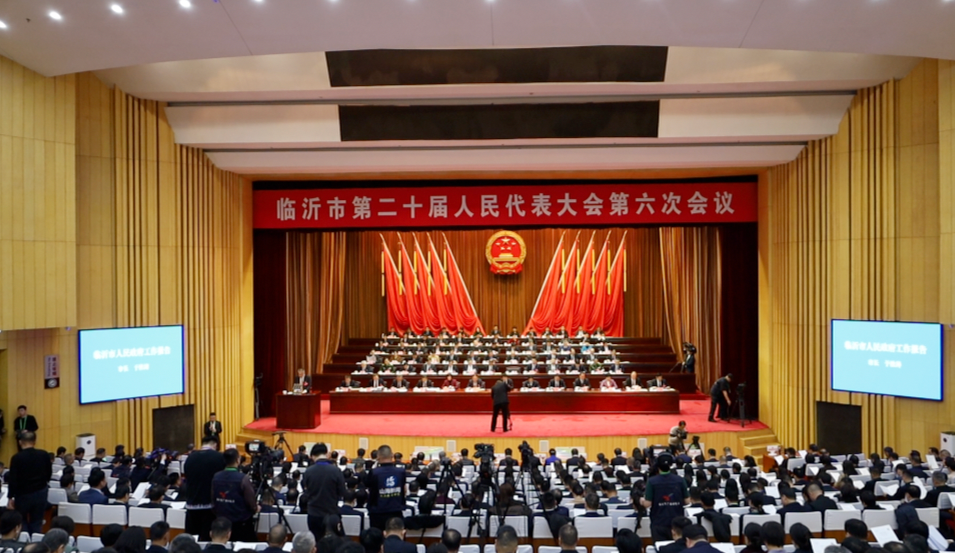
读懂这几个热词,就能看到未来的临沂
Qi Lu Wan Bao· 2026-01-19 08:43
Core Insights - The article discusses the strategic goals set by Linyi City for the next five years, aiming to become a "provincial regional sub-center" and a "trillion-yuan city" by focusing on key industries, private economy, and technological innovation [1][11]. Group 1: Industrial Development - Linyi has identified 13 key industrial chains that will reshape its industrial landscape, including high-end stainless steel, advanced special steel, and green agricultural processing [3][4]. - The contribution rate of these key industrial chains to the growth of industrial output value has reached 93.3%, with high-end stainless steel and advanced special steel becoming significant growth drivers [4]. - Despite recent industrial growth, Linyi's total industrial output remains in the middle tier within the province, indicating a need for further transformation and cluster effect enhancement [3][4]. Group 2: Private Economy - The private sector plays a crucial role in Linyi's economy, with 1 in 7 residents being a private business owner, contributing over 90% of the city's revenue and industrial tax [5]. - Linyi ranks 25th in China's vibrant private economy cities, with a net inflow of private enterprises maintaining high growth for five consecutive years [5]. - The local government emphasizes the importance of creating a favorable business environment to support the growth of private enterprises [5][6]. Group 3: Technological Innovation - Linyi is prioritizing technological innovation as a key driver for development, with initiatives like the "Artificial Intelligence+" action plan aimed at integrating technology with industry [7][8]. - The city plans to establish a research institute system to enhance the integration of research and industrial chains, focusing on fostering innovation among enterprises [8]. - The government aims to enhance the city's innovation capabilities and accelerate the transformation of technological achievements into practical applications [7][8]. Group 4: Internationalization of Commerce - Linyi's marketplace has evolved into a modern trade and logistics hub, with plans to enhance its international commercial presence [9][10]. - In 2025, Linyi established 30 new overseas warehouses and organized numerous trade activities, achieving significant growth in cross-border e-commerce exports [9]. - The city is working on a systematic approach to address challenges in international trade, including enhancing local production and creating a global supply chain network [10]. Group 5: Focus on Livelihood Improvement - The overarching goal of Linyi's development strategy is to improve the quality of life for its residents, with a commitment to maintaining high public spending on social welfare [12]. - Specific targets include job creation, social security enhancements, and educational improvements, reflecting a clear trajectory towards better living standards [12]. - The city's development plans are designed to ensure that economic growth translates into tangible benefits for the local population [12].

市场情绪有所降温 沪镍期货或有回调压力
Jin Tou Wang· 2026-01-19 08:01
Group 1 - The domestic futures market for non-ferrous metals showed a significant decline, with the main contract for nickel futures closing at 142,320.00 yuan/ton, down 1.42% [1] - Macro factors include Trump's announcement of tariffs on eight European countries starting February 1, which may lead to retaliatory tariffs from multiple EU countries [2] - The Canadian Prime Minister announced a reduction in the import tax rate on 49,000 electric vehicles from China from 100% to 6.1% [2] Group 2 - Indonesia's Ministry of Energy and Mineral Resources plans to set the nickel production target for 2026 between 250 to 260 million tons, a significant reduction from the 379 million tons quota for 2025, though actual implementation remains to be seen [2] - Nickel ore prices are stabilizing as Indonesia cracks down on illegal mining, and the Philippines enters the rainy season, which may impact future nickel mining activities [2] - The stainless steel sector is experiencing upward pressure, with increased losses for downstream nickel-iron plants, leading to some high-cost nickel-iron plants in Indonesia halting production for maintenance [2] - The outlook for nickel prices suggests they will follow fluctuations in the non-ferrous market, with uncertainty regarding nickel ore quotas likely to persist, and a recommendation to buy on dips despite short-term cooling market sentiment [2]
日度策略参考-20260119
Guo Mao Qi Huo· 2026-01-19 05:27
Industry Investment Ratings - Macrofinance: Index (Long-term bullish, short-term shock adjustment), Treasury bonds (Shock), Copper (Shock), Aluminum (Shock), Alumina (Shock), Zinc (Shock), Nickel (High-level shock), Stainless steel (High-level shock), Tin (Potential for increase), Precious metals (High-level wide-range shock), Industrial silicon and polysilicon (Bearish), Lithium carbonate (No clear rating), Rebar (Shock), Iron ore (Shock), Coke (Shock), Coking coal (Bullish), Anthracite (Bullish), Palm oil (Shock), Soybean oil (Bullish), Rapeseed oil (Bearish), Cotton (Shock), Sugar (Bearish), Corn (Shock), Soybeans (Bearish), Pulp (Shock), Logs (Shock), Live pigs (Shock), Fuel oil (Shock), Bitumen (Shock), BR rubber (Bullish), PTA (Shock), Ethylene glycol (Shock), Styrene (Bearish), Urea (Shock), PF (Shock), PVC (Shock), LPG (Bullish), Container shipping European line (Shock) [1] Core Views - The policy aims for a "slow bull" in the stock index rather than suppressing the market. The short-term shock adjustment space is expected to be limited, and long-term bulls can choose opportunities to layout. Asset shortages and a weak economy are beneficial to bond futures, but the central bank has recently warned of interest rate risks. The downstream demand is relatively pressured, and with the US suspending the tax on key minerals, the short-term concern about copper hoarding has eased, causing copper prices to fall from high levels. The supply of nickel ore remains tight, but the continuous accumulation of global nickel inventories may restrict the rise of nickel prices. The prices of precious metals are expected to shift to high-level wide-range shocks. The prices of industrial silicon and polysilicon are bearish. The prices of black metals are affected by weak reality and strong expectations. The prices of agricultural products are affected by various factors such as supply and demand, policies, and weather. The prices of energy and chemical products are affected by factors such as supply and demand, geopolitical situations, and cost support [1] Summary by Directory Macrofinance - Index: The stock index rose strongly in the first half of the week and then adjusted with policy regulation. The short-term shock adjustment space is limited, and long-term bulls can choose opportunities to layout [1] - Treasury bonds: Asset shortages and a weak economy are beneficial to bond futures, but the central bank has recently warned of interest rate risks. Pay attention to the interest rate decision of the Bank of Japan [1] Non-ferrous Metals - Copper: The downstream demand is relatively pressured, and with the US suspending the tax on key minerals, the short-term concern about copper hoarding has eased, causing copper prices to fall from high levels [1] - Aluminum: The recent industrial drive is limited, and the macro sentiment has weakened, causing aluminum prices to fall from high levels [1] - Alumina: The alumina production capacity still has a large release space, and the industrial side weakens the price. However, the current price is basically near the cost line, and the price is expected to fluctuate [1] - Zinc: The cost center of the zinc fundamentals is stable, but the inventory pressure is obvious. The current price has insufficient fundamental support, and the zinc price fluctuates in a range under the repeated macro sentiment [1] - Nickel: The supply of nickel ore remains tight, but the continuous accumulation of global nickel inventories may restrict the rise of nickel prices. The short-term nickel price fluctuates at a high level and is still affected by the resonance of the non-ferrous metal sector. It is recommended to pay attention to the policy changes in Indonesia, the macro sentiment, and the futures positions [1] - Stainless steel: The price of raw material nickel iron continues to rise, the social inventory of stainless steel decreases slightly, and the steel mill's production schedule in January increases. Pay attention to the actual production situation of the steel mill. The stainless steel futures fluctuate at a high level, and it is recommended to go long at low levels in the short term [1] - Tin: The short-term macro sentiment is repeated, and the tin price has corrected. However, the supply vulnerability of tin ore still exists, and it still has the driving force to rise. Pay attention to the opportunity of low absorption [1] - Precious metals: The geopolitical situation has cooled down, and the rise of precious metal prices has slowed down. The silver price has fallen under pressure. The short-term gold and silver prices are expected to shift to high-level wide-range shocks. In the long term, it is recommended to allocate platinum at low levels or choose the arbitrage strategy of [long platinum, short palladium] [1] Black Metals - Rebar: The expectation is strong, but the spot is weak, and the sentiment transmission to the spot is not smooth. The continuous rise kinetic energy is insufficient. Unilaterally long orders should leave the market and wait and see; participate in the positive arbitrage position in the spot and futures [1] - Iron ore: The sector rotates, but the upper pressure of iron ore is obvious. It is not recommended to chase long at this position. The weak reality and strong expectation are intertwined. The actual supply and demand continue to be weak, and the energy consumption double control and anti-involution may disturb the supply [1] - Coke: The short-term market sentiment warms up, and the supply and demand are supported, but the medium-term supply and demand continue to be surplus, and the price is under pressure [1] - Coking coal: If the expectation of "capacity reduction" continues to ferment and the spot replenishes the inventory before the Spring Festival, coking coal may still have room to rise, but the actual rise space is difficult to judge, and the volatility increases after a large rise. It is necessary to be cautious [1] - Anthracite: The logic is the same as that of coking coal [1] Agricultural Products - Cotton: The domestic new crop production expectation is strong, but the purchase price of seed cotton supports the cost of lint. The downstream start-up maintains a low level, but the yarn mill inventory is not high, and there is a rigid replenishment demand. The cotton market is currently in a situation of "supported but no driving force." Pay attention to the tone of the No. 1 Central Document on direct subsidy prices and cotton planting areas in the first quarter of next year, the intention of cotton planting areas next year, the weather during the planting period, and the peak season demand from March to April [1] - Sugar: The global sugar is in surplus, and the domestic new crop supply increases. The short consensus is relatively consistent. If the disk continues to fall, the lower cost support is strong, but the short-term fundamentals lack continuous driving force. Pay attention to the changes in the capital side [1] - Corn: The grain sales progress of Northeast corn is relatively fast, the port inventory is low, and the middle and lower reaches have a certain replenishment demand before the festival. The short-term spot is still relatively strong, and the disk is expected to fluctuate in a range [1] - Soybeans: With the progress of the Brazilian harvest, the Brazilian CNF premium is expected to reflect the selling pressure of the soybean harvest. Coupled with the pressure on the rapeseed sector from the Sino-Canadian easing, the MO5 is expected to be under pressure, and the MO5 - M09 is expected to be in a reverse arbitrage [1] - Pulp: The pulp fell today due to the decline of the commodity macro. The overall did not break through the shock range. The short-term commodity sentiment fluctuates greatly. It is recommended to wait and see cautiously [1] - Logs: The spot price of logs has recently shown a certain sign of bottoming out and rebounding. It is expected that the further decline space of the futures price is limited. However, the external quotation in January still shows a slight decline, and the spot and futures markets of logs lack driving factors for rising. It is expected to fluctuate in the range of 760 - 790 yuan/m³ [1] - Live pigs: The spot and futures of live pigs gradually stabilize. The demand support and the unsold slaughter weight, and the production capacity still needs to be further released [1] Energy and Chemical Products - Fuel oil: OPEC+ suspends production increase until the end of 2026. The uncertainty of the Russia-Ukraine peace agreement affects. The US sanctions the Venezuelan crude oil export. The short-term supply and demand contradiction is not prominent, and it follows the crude oil. The demand for the 14th Five-Year Plan rush work is likely to be falsified, and the supply of Ma Rui crude oil is not short. The asphalt profit is high [1] - Bitumen: The raw material cost support is strong. The spot-futures price difference rebounds greatly. The intermediate inventory increases [1] - BR rubber: The disk position decreases, and the new warehouse receipts increase. The BR increase slows down periodically. The spot leads the rise to repair the basis, and the BR continues to pay attention to the upward driving force above 12,000. The BD/BR listing price continues to be raised, and the processing profit of butadiene rubber narrows. The overseas cracking device capacity is cleared, which is beneficial to the long-term export expectation of domestic butadiene. The naphtha tax also has a positive support for the butadiene price. Fundamentally, butadiene rubber maintains high operation and high inventory, and the transaction center is average. Styrene-butadiene rubber is relatively better than butadiene rubber [1] - PTA: The PX market has experienced a rapid rise, and this round of rise is not due to a fundamental change. The PX fundamentals are indeed supported, and the market is expected to continue to tighten in 2026, driven by the new PTA production capacity in India and the organic growth of demand. The domestic PTA maintains high operation. The gasoline price difference is still at a high level, which supports the aromatics [1] - Ethylene glycol: The market spreads the news that two sets of MEG devices in Taiwan, China, with a total annual production capacity of 720,000 tons, plan to stop production next month due to efficiency reasons. Ethylene glycol rebounded rapidly during the continuous decline due to the stimulation of supply-side news. The current polyester downstream start-up rate maintains above 90%, and the demand performance slightly exceeds expectations [1] - Styrene: The Asian styrene market is generally stable. The suppliers are reluctant to reduce prices due to continuous losses, while the buyers insist on pressing prices due to the weak downstream polymer demand and profit compression. Although the downstream demand is weak, the domestic market has a bullish sentiment due to the export support. The market is in a weak balance state, and the short-term upward driving force needs to pay attention to the drive of the overseas market [1] - Urea: The export sentiment eases slightly, and the domestic demand is insufficient. The upper space is limited. The lower has the support of anti-involution and the cost side [1] - PF: The geopolitical conflict intensifies, and the crude oil has a rising risk. The maintenance decreases, and the operation load is at a high level. The long-distance arrival increases the supply. The downstream demand operation weakens. The price returns to a reasonable range [1] - PVC: There is less global production in 2026, and the future expectation is optimistic. The fundamentals are poor. The export tax rebate is cancelled, and there may be a phenomenon of rushing to export later. The differential electricity price in the northwest region is expected to be implemented, forcing the PVC production capacity to be cleared [1] - LPG: The January CP rises unexpectedly, and the cost support of imported gas is strong. The geopolitical conflict in the Middle East escalates, and the short-term risk premium rises. The EIA weekly C3 inventory accumulation trend slows down, and it is expected to gradually turn to destocking. The domestic port inventory also decreases [1] - Container shipping European line: It is expected to peak in mid-January. The airlines are still cautious in their tentative re-navigation. The pre-festival replenishment demand still exists [1]
跟随有色回调释放高位风险
Yin He Qi Huo· 2026-01-19 05:19
1. Report Industry Investment Rating No relevant information provided. 2. Core Views of the Report - The non - ferrous sector has seen a general decline due to the correction of precious metals and copper, but the medium - to - long - term trend remains upward. The cyclical upward trend of non - ferrous metals may have begun, and the industry trend is positive in the medium - to - long - term [6]. - For nickel, it is recommended to adopt a low - buying strategy after the correction stabilizes, and sell out - of - the - money put options for options trading [5][6]. - Stainless steel prices are expected to fluctuate at high levels, passively following the nickel price. It is recommended to wait and see for arbitrage [9]. 3. Summary by Directory 3.1 Spread Tracking and Inventory 3.1.1 Nickel - Global visible nickel inventory is at a high level, reaching 351,000 tons, with an increase of 3,406 tons this week. Domestic social inventory increased by 2,464 tons, and LME inventory increased by 942 tons. After the New Year's resumption of production, the spot premium of Jinchuan nickel has declined from a high level [11][12]. 3.1.2 Stainless Steel - Social inventory of stainless steel is decreasing, and warehouse receipts are at a low level [14]. 3.2 Fundamental Analysis 3.2.1 Pure Nickel - **Supply**: In 2025, the cumulative output of refined nickel increased by 17% year - on - year to 392,700 tons. In January, high nickel prices are expected to further boost production. From January to November 2025, the net import of domestic refined nickel was 48,900 tons, compared with a net export of 24,800 tons in the same period last year. Due to the opening of the import window at the end of December, net imports are expected to increase in January. From January to November 2025, the domestic refined nickel supply was 410,000 tons, a cumulative year - on - year increase of 48% [22]. - **Demand**: It is the off - season for electroplating and alloy consumption. From January to December, the cumulative consumption of pure nickel increased by 2% year - on - year to 291,000 tons. Electroplating consumption decreased seasonally, while alloy consumption increased slightly, and overall consumption slowed down [23][25]. 3.2.2 Stainless Steel - **Raw Materials** - **Nickel Ore**: In January 2026, the second - round domestic trade benchmark price of Indonesian nickel ore increased significantly month - on - month. On January 14, the Indonesian Ministry of Energy and Mineral Resources confirmed that the target production of nickel ore in 2026 would be reduced to 250 - 260 million tons from 364 million tons in 2025. The price of Indonesian ferronickel increased, and profits were slightly repaired. The FOB price of medium - and high - grade nickel ore from the Philippines also increased [27]. - **NPI**: The price of NPI has recovered, and the profit margin has been slightly repaired. The production of NPI in China and Indonesia is expected to increase [28]. - **Chromium Series**: The price of chromium series products has started to rise. Zimbabwe will impose a 10% tax on the export of chromium series products starting from January 1, 2026, which has led to a continuous rebound in the price of chromium ore [33][40]. - **Cost and Profit**: Estimated cold - rolling cash cost is around 14,200 yuan/ton, and the integrated cost reaches 13,700 yuan/ton [43]. - **Supply**: It is expected that the crude steel production of stainless steel in China and Indonesia in 2025 will be 45.06 million tons, a cumulative year - on - year increase of 4%. Due to the shortage of hot - rolled products in January, the production schedule of steel mills may be revised downward [45][52]. - **Demand**: The production of shipbuilding plates increased by 29% year - on - year from January to November, providing support. However, the growth rate of other terminal fields is not optimistic, especially the real estate transaction volume has decreased significantly year - on - year [53][54]. 3.2.3 New Energy Vehicles - **Domestic Market**: In 2025, the production and sales of new energy vehicles were 16.626 million and 16.49 million respectively, a year - on - year increase of 29% and 28.2% respectively, with a penetration rate of 47.9%, 7 percentage points higher than the same period last year. It is expected that the sales volume in 2026 will be 19 million, a year - on - year increase of 15.2%. From January 1 - 11, the retail sales of new energy vehicles in the domestic market decreased by 38% year - on - year and 67% month - on - month. The production of power cells increased by 41.9% year - on - year to 124.55 GWh from January to December. In January, the decline in power battery production due to poor vehicle sales may be smoothed by the boost of pre - export caused by the reduction of export tax rebates [56][59]. - **Global Market**: From January to November 2025, the cumulative global sales of new energy vehicles increased by 20.1% year - on - year to 18.39 million. In Europe, the cumulative sales from January to November increased by 29.2% year - on - year to 3.434 million, while in the US, it increased by 0.7% year - on - year to 1.39 million. China's new energy vehicle exports from January to December 2025 reached 2.583 million, a year - on - year increase of 103% [60][63]. 3.2.4 Nickel Sulfate Market - **Production**: In 2025, the production of nickel sulfate in China decreased by 4.3% year - on - year to 354,000 nickel tons. The production of ternary precursors increased by 6% year - on - year to 903,000 tons, and the production of ternary cathode materials increased by 19% year - on - year to 686,000 tons. In January, the demand for nickel sulfate slowed down, but the price followed the strengthening of refined nickel [64][65]. - **Raw Materials**: In 2025, the production of MHP in Indonesia increased by 41% year - on - year to 444,000 tons, while the production of high - grade nickel matte decreased by 18% year - on - year to 224,000 tons. The increase in sulfur prices led to an increase in the cost of MHP, but the good demand for nickel sulfate boosted the price of intermediate products and stimulated production recovery [67][72].
长安期货屈亚娟:矿端政策仍存扰动&库存压力大,镍价谨慎乐观
Xin Lang Cai Jing· 2026-01-19 02:47
Core Viewpoint - Nickel prices have seen a significant increase of over 30% from mid-December to early January, driven by news of Indonesia's potential reduction of nickel ore quotas for 2026, although prices are currently under pressure due to overall high levels in the non-ferrous metals market [3][15]. Nickel Ore Policy Developments - Indonesia's Ministry of Energy and Mineral Resources (ESDM) plans to strategically adjust the nickel ore production quota (RKAB) to between 250 million and 260 million tons, with existing quotas allowed to continue until the end of Q1 to ensure production continuity during the review period [4][16]. - The price of nickel ore has increased, with a recent transaction of 1.3% grade nickel ore from the Philippines at FOB $38, reflecting a significant week-on-week increase [4][16]. - Domestic nickel ore imports for the first 11 months of 2025 reached 40.169 million tons, a year-on-year increase of 10.3%, with nearly 91% sourced from the Philippines [4][16]. Nickel Iron Price Trends - In December 2025, nickel pig iron production in China and Indonesia was 180,300 tons, a slight increase of 0.6% month-on-month and a 4.8% year-on-year growth [6][18]. - Domestic high-nickel pig iron prices have risen, with factory prices reaching 1,010-1,020 RMB per nickel, while Indonesian nickel pig iron FOB prices increased to $128 per nickel [6][18]. - Nickel pig iron imports for the first 11 months of 2025 totaled 10.056 million tons, a 26.7% increase year-on-year, with approximately 97% of imports from Indonesia [6][18]. Refined Nickel Inventory Pressure - Domestic refined nickel production in December 2025 was 29,058 tons, a slight increase from November but a 16.4% year-on-year decline, with total production for the year at 410,800 tons, a 22.8% increase [8][20]. - As of January 16, total nickel inventory on the Shanghai Futures Exchange reached 48,180 tons, with registered warehouse receipts at 41,985 tons, indicating ongoing inventory pressure [8][20]. - LME nickel inventory has also been on the rise, with the latest total at 285,700 tons, suggesting a globally loose supply of refined nickel [8][20]. Demand Stability and Weakness - Nickel demand is primarily driven by stainless steel, ternary batteries, and nickel alloys, with stainless steel being the most significant sector [10][22]. - In December 2025, domestic production of 300 series stainless steel was 1.7472 million tons, a slight decrease from November but a 5.6% year-on-year increase [10][22]. - The price of battery-grade nickel sulfate has rapidly increased to 33,600 RMB per ton, indicating some purchasing demand from nickel salt manufacturers despite overall weak speculative demand [10][22]. Summary - The overall environment shows increased volatility in silver and copper prices, which may influence nickel prices [12][24]. - Indonesia's announcement regarding potential reductions in nickel ore quotas is still developing, which could impact market sentiment [12][24]. - Despite the recovery in sentiment across the nickel supply chain, there remains significant pressure from excess inventory, particularly in refined nickel [12][24].

光大期货有色金属类日报1.19
Xin Lang Cai Jing· 2026-01-19 01:37
Group 1: Copper Market - The macroeconomic environment shows that the US December CPI increased by 2.7% year-on-year, aligning with expectations, while core CPI rose by 2.6%, slightly below the expected 2.7% [3][18] - Domestic copper concentrate prices remain at historical lows, maintaining tight supply conditions, which is a strong support factor for the market [4][19] - January's estimated electrolytic copper production is 1.1636 million tons, a 1.2% month-on-month decrease but a 14.7% year-on-year increase due to tight copper concentrate supply [4][19] - The net import of refined copper in November decreased by 58.16% year-on-year to 161,700 tons, while scrap copper imports increased by 5.87% month-on-month to 208,100 tons [4][19] - As of January 16, global visible copper inventories increased by 76,000 tons to 1.037 million tons, with LME and Comex inventories also rising [4][20] - Market sentiment is influenced by precious metals, with copper prices showing strength initially but concerns over domestic policy impacts and seasonal demand weakening consumption [5][20] - The overall market outlook for copper remains bullish with a recommendation to buy on dips, but caution against excessive buying is advised [6][20] Group 2: Nickel and Stainless Steel - January's refined nickel production is expected to increase by 18.5% month-on-month to 37,200 tons, while Chinese nickel pig iron production is projected to decrease by 1% [7][21] - Demand in the new energy sector is weakening, with a decline in the production of ternary precursor materials and a drop in terminal sales of new energy vehicles [7][21] - LME nickel inventories increased by 942 tons to 285,732 tons, indicating a slight build-up in stock [7][21] - Indonesia is adjusting its nickel quotas to support local prices, which may provide some price support in the short term, but overall market sentiment remains weak [7][21] Group 3: Aluminum Market - Alumina futures are experiencing a weak trend, with prices dropping by 3.2% week-on-week, while aluminum and aluminum alloy prices also show declines [8][22] - The operating rate for alumina has increased slightly, while electrolytic aluminum production capacity is expected to rise, indicating a mixed supply outlook [8][22] - Downstream industries are preparing for the upcoming Spring Festival, leading to increased processing rates in some sectors, but overall demand recovery is limited [9][22] - Inventory levels for alumina and aluminum are rising, suggesting a potential oversupply situation in the near term [9][24] Group 4: Silicon and Polysilicon Market - Industrial silicon futures are showing a weak trend, with production decreasing week-on-week, while polysilicon prices are also under pressure [11][25] - The supply of industrial silicon is tightening due to reduced operating rates and closures in some regions, while demand remains subdued [11][25] - Inventory levels for both industrial silicon and polysilicon are increasing, indicating a supply-demand imbalance [11][26] - The market is shifting focus from speculative trading to fundamental analysis, with expectations of limited price recovery in the short term [11][26] Group 5: Lithium Carbonate Market - Weekly lithium carbonate production increased by 70 tons to 22,605 tons, with varying trends in different lithium sources [14][27] - Demand for ternary materials and lithium iron phosphate is declining, with significant drops in both retail and wholesale sales of new energy vehicles [14][27] - Social inventory of lithium carbonate decreased by 263 tons, but overall market sentiment remains pressured due to weak demand [14][28] - The market is experiencing fluctuations in prices due to funding disturbances, with a recommendation to monitor inventory turnover and demand trends closely [14][28]

国泰君安期货研究周报-20260118
Guo Tai Jun An Qi Huo· 2026-01-18 11:01
Report Summary 1. Investment Ratings The report does not provide overall industry investment ratings. 2. Core Views - **Nickel and Stainless Steel**: Indonesia's policy uncertainties, including nickel ore quota adjustments, consideration of taxing associated minerals, and fines for illegal mining, have led to a divergence in market expectations between the secondary market and the industry. Nickel prices are expected to fluctuate widely in the short - term, and stainless steel prices will also be affected by these factors, with a wide - range of fluctuations in the short - term [4][8][9]. - **Industrial Silicon and Polysilicon**: Industrial silicon inventory is increasing, and the supply - demand situation is weak. It is recommended to short at high prices. Polysilicon is expected to see a boost in market sentiment next Tuesday, with a supply - demand situation of weak supply and strong demand. It is not recommended to participate in futures directly, but options can be considered [29][33][34]. - **Lithium Carbonate**: The fundamentals are strong, and the spot purchase intention is increasing. The short - term downside space is limited. It is recommended to go long at low prices [52][55]. - **Palm Oil and Soybean Oil**: Palm oil is in a bottom - range oscillation. A clearer buying opportunity is expected in February - March. Soybean oil is in a range - bound operation, waiting for the resonance of themes in the first quarter [79][80][84]. - **Soybean Meal and Soybean No.1**: After the market has digested the negative factors, soybean meal prices may rebound at low levels. Soybean No.1 spot prices are stable and strong, and futures prices will follow the market sentiment [94][99]. - **Corn**: Corn prices are expected to be volatile and strong, with limited downward adjustment space before the Spring Festival [113][118]. - **Sugar**: Internationally, sugar prices are in a low - level consolidation. Domestically, the market maintains a weak basis expectation, and it is necessary to pay attention to import policy changes [136][138][164]. - **Cotton**: ICE cotton lacks fundamental drivers, and domestic cotton prices continue to adjust. It is recommended to wait until after the Spring Festival to trade based on demand [165][180]. - **Pigs**: Pig spot prices will fluctuate and adjust, and the futures market is waiting for the confirmation of the supply - demand increase stage. Attention should be paid to the trading of off - season expectations after the Spring Festival [181][182][183]. - **Peanuts**: Peanut spot prices are in a pattern of weak peak - season performance. Futures prices are weak in the short - term, and attention should be paid to the selling pressure after the Spring Festival [197][198]. 3. Summary by Category Nickel and Stainless Steel - **Price Trends**: Nickel prices fluctuate widely, and stainless steel prices are affected by nickel - related factors and show wide - range fluctuations [7][8][9]. - **Inventory**: Refined nickel inventory in China decreased slightly, while LME nickel inventory increased. The inventory of the nickel - stainless steel industry chain decreased [10]. - **Market News**: Indonesia has introduced a series of policies, including restricting new smelting licenses, adjusting nickel ore quotas, and considering taxing associated minerals [11][12]. Industrial Silicon and Polysilicon - **Price Trends**: Industrial silicon prices fell from high levels, and polysilicon prices fluctuated within a range [29]. - **Supply - Demand Fundamentals**: Industrial silicon supply decreased marginally, and demand was weak. Polysilicon supply decreased, and demand increased [30][31][32]. - **Inventory**: Industrial silicon inventory increased, and polysilicon inventory continued to accumulate [30][31]. Lithium Carbonate - **Price Trends**: Futures prices first rose and then fell, and spot prices increased [52]. - **Supply - Demand Fundamentals**: High lithium prices may lead to the resumption of overseas lithium mines. Demand is strong in the off - season, and inventory has decreased [53][54]. Palm Oil and Soybean Oil - **Price Trends**: Palm oil prices fluctuated, and soybean oil prices were in a range - bound operation [79][84]. - **Supply - Demand Fundamentals**: Palm oil production in Malaysia may decrease in January, and Indonesia's B50 policy is uncertain. Soybean oil is affected by the US biodiesel policy and South American soybean production [80][83]. Soybean Meal and Soybean No.1 - **Price Trends**: Soybean meal prices were weak, and soybean No.1 prices oscillated [94]. - **Supply - Demand Fundamentals**: China's continuous purchase of US soybeans has a positive impact, while the USDA report has a short - term negative impact. Domestic soybean meal inventory has decreased, and spot prices are stable [94][97]. Corn - **Price Trends**: Spot and futures prices both increased [113][114]. - **Supply - Demand Fundamentals**: CBOT corn prices fell, wheat prices were stable, and corn starch inventory decreased [115][116][117]. Sugar - **Price Trends**: Internationally, New York raw sugar prices increased slightly. Domestically, Zhengzhou sugar prices decreased slightly [136][137]. - **Supply - Demand Fundamentals**: The global sugar market is expected to have a surplus in the 25/26 season. Brazil's production increased slightly, India's production increased significantly, and Thailand's production decreased [154][155]. Cotton - **Price Trends**: ICE cotton prices first rose and then fell, and domestic cotton prices continued to adjust [165][168]. - **Supply - Demand Fundamentals**: The USDA report adjusted the US and global cotton balances. Domestic cotton supply is sufficient, and downstream demand is in the off - season [169][174]. Pigs - **Price Trends**: Spot prices were strong, and futures prices fluctuated strongly [181]. - **Supply - Demand Fundamentals**: Supply is tight, and demand is stable. The market is waiting for the confirmation of the supply - demand increase stage [181][182]. Peanuts - **Price Trends**: Spot prices were stable, and futures prices fell [197]. - **Supply - Demand Fundamentals**: Supply is expected to be abundant, and demand is weak. The inventory pressure may be postponed to after the Spring Festival [197][198].