证券业

Search documents
“十五五”规划前瞻:国际篇+金融篇
2025-10-19 15:58
Summary of Key Points from Conference Call Records Industry Overview - The records discuss the Chinese economy and its strategic responses to global geopolitical challenges, particularly in the context of the "14th Five-Year Plan" and the upcoming "15th Five-Year Plan" [1][2][3]. Core Insights and Arguments - **Economic Growth Projections**: China's economic growth is expected to maintain a range of 4.6% to 4.8% during the "15th Five-Year Plan" period, with a focus on energy supply security through strategic partnerships, particularly with Russia [1][3]. - **Foreign Trade Expansion**: By 2024, China's foreign trade is projected to reach $6.16 trillion, marking a 32.4% increase compared to the previous five-year period, maintaining its position as the world's largest trading nation [1][4]. - **Trade Structure Optimization**: The importance of ASEAN and the EU as trading partners is increasing, while the significance of the U.S. is declining. High-tech, green, and electromechanical products are identified as core drivers of exports [4]. - **Financial Policy Focus**: The financial policies during the "14th Five-Year Plan" emphasized service to the real economy, financial security, and supply-side structural reforms, with a new goal of building a financial powerhouse [5]. Important but Overlooked Content - **Challenges for Private and Tech Enterprises**: Private and tech enterprises face high loan interest rates, reliance on collateral for financing, and a low proportion of direct financing (31.6%) compared to developed countries (60%-80%) [6]. - **Strategic Directions for Financial Institutions**: Financial institutions are expected to adjust their strategies to focus on technology finance, green finance, and pension finance, with an emphasis on supporting innovation and sustainable development [7][9][10]. - **Internationalization of the Renminbi**: There is a push for the gradual internationalization of the Renminbi, with current foreign holdings of domestic bonds and stocks at only 3%-4%, indicating significant room for growth [8]. Sector-Specific Developments - **Banking Sector**: The banking industry will prioritize resources towards strategic areas such as technology innovation and green finance, utilizing differentiated products like intellectual property pledge loans [9]. - **Insurance Sector**: The insurance industry aims to enhance health insurance and long-term care systems to address aging population needs while increasing equity asset allocation in tech and green sectors [9]. - **Fund Management**: The fund industry is transitioning from a focus on scale to one on returns, emphasizing investments in pension-targeted funds and ESG products [10]. - **Securities Sector**: The securities industry is expected to evolve towards a more integrated, professional, and digital approach, focusing on investment banking and wealth management [10].
管涛:国际储备货币体系加速多极化 | 立方大家谈
Sou Hu Cai Jing· 2025-10-19 13:03
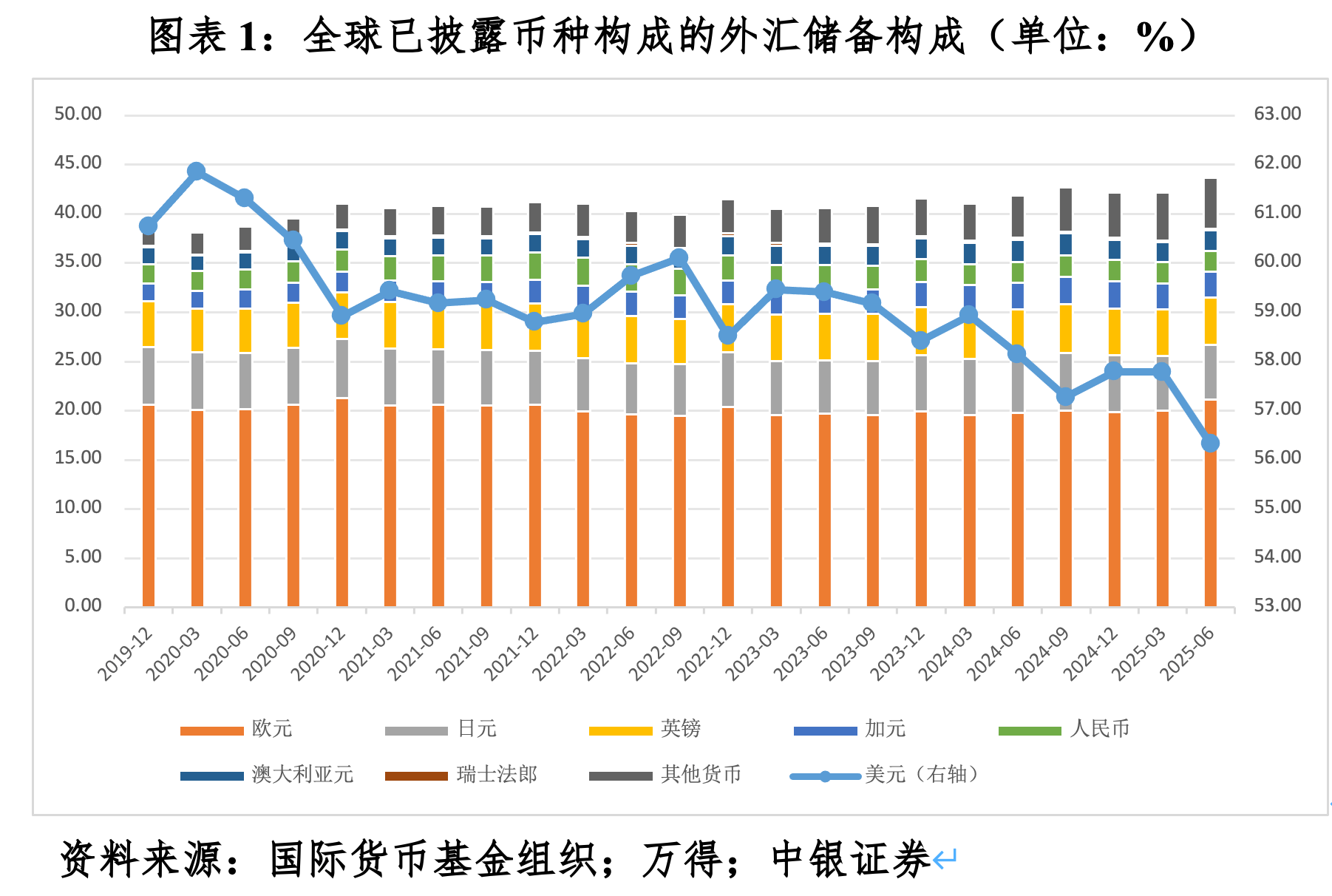
Core Viewpoint - The International Monetary Fund (IMF) has reported a decline in the dollar's share of global foreign exchange reserves, indicating a trend towards a more multipolar international reserve currency system, with the dollar's share falling to a 30-year low of 56.32% as of the end of Q2 [1][11]. Group 1: Dollar Reserve Share Decline - The dollar's share of global foreign exchange reserves decreased from 57.79% to 56.32%, a drop of 1.47 percentage points, marking the 11th consecutive quarter below 60% [1]. - The decline is attributed to a 7.1% depreciation of the dollar index during the same quarter, which contributed to a negative valuation effect [1][2]. - If exchange rates remained stable, the dollar's reserve share would have only slightly decreased to 57.67%, a drop of 0.13 percentage points [2]. Group 2: Euro's Performance - The euro's reserve share increased from 20% to 21.13%, a rise of 1.13 percentage points, but this was largely due to a 9% appreciation against the dollar, which masked the actual change in reserve share [2]. - Without the exchange rate effect, the euro's reserve share would have decreased by 0.04 percentage points to 19.96% [2]. Group 3: U.S. Long-term Securities Holdings - As of June, official foreign assets (excluding international organizations) held $67,395 billion in U.S. long-term securities, closely aligning with the IMF's reported global dollar reserve balance of $67,733 billion [5]. - The breakdown of these holdings includes $38,191 billion in U.S. Treasury securities (56.7%), $5,078 billion in government agency debt (7.5%), $2,185 billion in corporate bonds (3.2%), and $21,941 billion in U.S. equities (32.6%) [5]. Group 4: Market Dynamics and Valuation Effects - The U.S. stock market experienced significant volatility, with a 4.8% decline in Q1 followed by an 11% rebound in Q2, impacting the valuation of U.S. equities held as dollar reserves [8]. - In Q1, official foreign assets recorded a valuation loss of $19.7 billion, while in Q2, they saw a valuation gain of $2,152 billion, indicating a strong influence of asset price fluctuations on reserve valuations [8]. Group 5: Trends in International Capital Flows - In Q2, official foreign assets net purchased $51 billion in U.S. long-term securities, a 94.4% decrease from the previous quarter, highlighting a shift in investment strategy [9]. - The net buying of U.S. equities increased to $237 billion, while U.S. Treasury securities saw a net selling of $66 billion, indicating a preference for riskier assets over safe-haven investments [9]. Group 6: Global Reserve Currency Dynamics - The trend towards a multipolar currency system is linked to the concept of "de-dollarization," which involves reducing reliance on the dollar in international trade and finance [11]. - Despite the decline in the dollar's reserve share, it remains dominant in global foreign exchange transactions, accounting for 89.2% of daily trading volume as of April [19].

银行次级债组合有多强?
SINOLINK SECURITIES· 2025-10-19 12:08
Group 1 - The simulated portfolio returns have rebounded this week, with most credit style portfolios outperforming interest rate style portfolios. The weekly returns for secondary ultra-long and city investment ultra-long strategies were 0.34% and 0.28% respectively, while credit style portfolios saw returns of 0.65% and 0.41% for the same strategies [2][14][15] - The recovery in returns has shifted from interest rate and medium-long duration strategies to ultra-long bond strategies. The average weekly return for credit style time deposit heavy portfolios increased by 3.6 basis points to 0.12%, the highest since August, while city investment heavy portfolios rose to 0.22%, an increase of approximately 12.1 basis points [2][16] - The average return for secondary capital bond heavy portfolios increased by nearly 20 basis points, with the secondary bond duration and mixed duration strategies showing weekly returns nearly equal to the ultra-long strategy. The secondary bond bullet strategy has shown a faster recovery, with cumulative negative returns since the third quarter narrowing to -0.36% [2][16] Group 2 - In terms of return sources, the coupon income from various strategy portfolios has declined, while the contribution from capital gains has increased. Among mainstream strategies, the coupon income for secondary bond bullet and duration strategies fell by more than 0.04 basis points, while city investment bonds and bank perpetual bonds maintained annualized coupon rates around 2.24% and 2.26% respectively [3][25] - The capital gains contribution for credit style portfolios accounted for most of the returns this week, with coupon contributions falling within the range of 5% to 30%, further compressing and increasing concentration compared to the previous week [3][25] Group 3 - Over the past four weeks, medium-long duration secondary perpetual strategies have shown cumulative returns at the forefront. The cumulative excess returns for perpetual bond duration, secondary bond bullet, and secondary bond duration strategies were 13 basis points, 11.2 basis points, and 11.1 basis points respectively [4][29] - The medium-long duration secondary perpetual bond strategy has rebounded significantly, but its volatility exceeds that of the downshift strategies. The cumulative return for the secondary bond downshift strategy reached 9.2 basis points, demonstrating both low volatility and strong recovery advantages [4][29] - From a strategy duration perspective, medium-long duration secondary perpetual bonds and ultra-long strategies exhibit stronger offensive attributes. The short-end time deposit strategy's excess returns have dropped to the lowest in three months, lacking aggressiveness in a bond bull market [4][32]
资产配置周报:关注经济数据和重要会议指引,寻找资产配置方向-20251019
Donghai Securities· 2025-10-19 12:02
Group 1: Market Overview and Asset Allocation Recommendations - The report emphasizes the importance of monitoring economic data and key meetings to guide asset allocation strategies. As of the week ending October 17, there has been a decline in asset risk appetite, with technology stocks retreating and dividend sectors strengthening. Commodity prices showed mixed results, with gold, copper, and aluminum rising, while most other industrial products fell. U.S. Treasury yields decreased, and domestic trade data indicated a rebound in both imports and exports, with a continued expansion of trade surplus [8][9][10]. - The report highlights the upcoming release of China's Q3 GDP data, which will be analyzed from investment, consumption, and export perspectives. It also notes the ongoing U.S.-China trade tensions, particularly in sectors like rare earths and semiconductors, while expressing optimism about the development of artificial intelligence and its impact on the chip industry [8][9][10]. Group 2: Global Asset Review - The global stock market exhibited mixed performance during the week of October 17, with the French CAC index leading gains, supported by easing trade tensions between the U.S. and China. The report ranks major equity indices, with the CAC40 outperforming others, while the Hang Seng and ChiNext indices lagged behind [11][12]. - In commodities, oil prices continued to decline due to geopolitical easing, while gold prices reached new historical highs driven by safe-haven demand. The report notes that the industrial product futures market saw a decline in the South China Industrial Product Price Index, with slight increases in coking coal prices [11][12]. Group 3: Domestic Equity Market Review - The domestic equity market saw a shift in style, favoring financials over consumption, cyclical, and growth sectors. The average daily trading volume was reported at 21,766 billion yuan, down from the previous week's 25,869 billion yuan. Among the 31 sectors tracked, only four sectors saw gains, with banking (+4.89%) and coal (+4.17%) leading, while electronics (-7.14%) and media (-6.27%) faced significant declines [18][19]. Group 4: Interest Rates and Currency Exchange Rates - The report indicates that the funding environment remains ample, despite pressures from tax payments and MLF maturities. The central bank's supportive stance is expected to maintain a loose liquidity environment. Short-term interest rates have remained low, with DR001 and DR007 weighted average rates reported [20][21]. - The report notes a decline in U.S. Treasury yields, with the 2Y and 10Y yields falling to 3.46% and 4.02%, respectively. The dollar index decreased, leading to a corresponding appreciation of the offshore yuan against the dollar, with expectations for the yuan to fluctuate between 7.10 and 7.20 [25][26]. Group 5: Commodity Tracking - The report tracks energy commodities, noting that WTI crude oil prices fell to $57.54 per barrel, a decrease of 2.3% from the previous week. U.S. crude oil production increased to 13.636 million barrels per day, while the number of active drilling rigs decreased [26][27]. - Gold prices reached $4,251.45 per ounce, marking a 5.81% increase week-over-week, driven by ongoing government shutdowns and expectations of further rate cuts by the Federal Reserve. The report suggests that the long-term outlook for gold remains positive due to increasing safe-haven demand [43][44].
黑龙江天有为电子股份有限公司 关于使用部分闲置募集资金进行现金管理 到期赎回的公告
Zhong Guo Zheng Quan Bao - Zhong Zheng Wang· 2025-10-19 06:23
Group 1: Cash Management of Idle Funds - The company has approved the use of up to RMB 28 billion of idle raised funds and up to RMB 20 billion of idle self-owned funds for cash management, focusing on safe and liquid principal-protected financial products [1] - As of the announcement date, the company has redeemed idle funds amounting to RMB 30 million, generating a profit of RMB 1.0231 million, with all principal and interest returned to the fundraising account [2] - The total amount of idle raised funds under cash management that has not yet matured is RMB 850 million, with no overdue amounts reported [2] Group 2: Restricted Stock Listing - The company will list 718,386 shares of restricted stock on October 24, 2025, following the expiration of a six-month lock-up period since its initial public offering [4][7] - The restricted shares represent 0.45% of the company's total shares, which were part of the offline issuance under a proportionate lock-up method [5][6] - The company has confirmed that all shareholders of the restricted stock have complied with their commitments, and the listing complies with relevant regulations [6]
存款搬家结束了吗?
Western Securities· 2025-10-19 05:31
1. Report Industry Investment Rating There is no information provided in the report regarding the industry investment rating. 2. Core Viewpoints of the Report - The slowdown of deposit relocation does not mean it has ended. Further data observation is needed as the YoY growth rate of non - bank deposits remains at a relatively high level, and there are seasonal disturbances. Asset relocation may continue due to factors such as the high economic base and trade frictions in Q4 [2][14] - The bond market is likely to remain weakly volatile. A defensive approach is recommended, with control over the duration level, and seizing allocation and trading opportunities after adjustments [3][15] 3. Summary by Relevant Catalogs 3.1 Review Summary and Bond Market Outlook - This week, the bond market showed a "first decline then rise" trend. The 10Y and 30Y Treasury bond rates changed by +0.4bp and -3bp respectively. Market sentiment was affected by factors such as US - China negotiation signals, stock market trends, and economic data [10] - Deposit relocation accelerated in July and August but slowed down in September. It is still too early to conclude that it has ended [11][14] - The bond market is expected to be weakly volatile. It is recommended to focus on defense, control the duration, and choose to allocate certificates of deposit and short - term interest - rate bonds [15] 3.2 Bond Market Review 3.2.1 Fundamentals - The central bank had a net withdrawal this week, and the capital interest rate increased. Next week, the maturity volume of reverse repurchases is less than that of the previous week [16] - The R001 and DR001 increased by 5bp and 1bp respectively compared to October 11th. The 3M certificate of deposit issuance rate first rose, then fell, and then rose again [18] 3.2.2 Secondary Market Trends - Bond yields first rose and then fell. Except for the 7Y, 20Y, and 30Y Treasury bonds, the yields of other key - term Treasury bonds increased. Most of the term spreads of Treasury bonds narrowed [26] - The spread between new and old 10Y Treasury bonds first widened and then narrowed, the spread of 10Y China Development Bank bonds widened negatively, and the spread of 30Y Treasury bonds narrowed [29][30] 3.2.3 Bond Market Sentiment - The median duration of the full - sample bond funds slightly increased. The turnover rate of ultra - long bonds increased, and the 30Y - 10Y Treasury bond spread narrowed rapidly. The inter - bank leverage ratio rose to 107.6%, and the exchange leverage ratio decreased to 122.4%. The implied tax rate of 10 - year China Development Bank bonds slightly narrowed [33] 3.2.4 Bond Supply - This week, the net financing of interest - rate bonds decreased. Next week, the issuance scale of Treasury bonds will increase, and the 10Y Treasury bond 250016.IB will be re - issued. The issuance scale of local government bonds will also increase [48][51] - The net financing of certificates of deposit increased this week, and the average issuance rate rose to 1.63% [53] 3.3 Economic Data - In September, the import and export growth rates significantly rebounded, and prices generally recovered. The YoY decline of the freight rate index slowed down in October, and industrial production improved marginally [59][60] - The YoY growth rate of non - bank deposits declined in September, and the M1 growth rate increased [60] 3.4 Overseas Bond Market - The release of key US inflation data was postponed due to the government "shutdown." The expectation of a Fed rate cut in October has increased again, mainly due to the weak employment market [69] - US bonds rose, and most emerging markets had more gains than losses [70] 3.5 Major Asset Performance - The Shanghai Gold Index performed the best, followed by Chinese - funded US dollar bonds, Chinese bonds, the US dollar, convertible bonds, Shanghai Copper, rebar, the CSI 300 Index, live pigs, the CSI 1000 Index, and crude oil [74] 3.6 Policy Review - On October 17th, multiple policies were introduced, including promoting logistics cost reduction, expanding green trade, adjusting the Hainan duty - free shopping policy, and more. These policies aim to support economic development and stabilize market expectations [77][82]
2025可持续全球领导者大会圆满收官:潘基文、金垣洙演讲,国际合作共促全球繁荣
新浪财经· 2025-10-18 13:31
Core Insights - The 2025 Sustainable Global Leaders Conference was held from October 16 to 18, focusing on "Facing Challenges Together: Global Action, Innovation, and Sustainable Growth" [2] - The conference gathered global leaders and experts to explore new paths for sustainable development and inject "Chinese momentum" into global governance [2] Group 1: International Cooperation and Global Prosperity - China has made significant achievements in energy transition over the past five years, with rapid expansion in wind and solar power capacity, reducing reliance on fossil fuels [3] - The global development and prosperity are seen as a shared future, necessitating solutions for the challenges faced by humanity [5] Group 2: Climate Change and ESG - The global ESG-related assets are projected to reach $40 trillion by 2030, yet there has been a regression in achieving sustainable development goals despite widespread commitments [7] - The current environmental, social, and governance (ESG) risks are increasingly recognized as financial risks, impacting supply chains and market volatility [95] Group 3: Energy Transition and Challenges - China's energy transition opportunities lie in the rapid development of renewable energy, with a target of 3600 GW installed capacity by 2035, doubling from the current 1700 GW [21] - The challenge remains in balancing the rapid growth of renewable energy with energy security and stability [19][23] Group 4: Industrial and Technological Innovations - The role of technology and innovation in addressing social and economic challenges is widely acknowledged, particularly in the context of sustainable development [9] - The manufacturing sector must achieve breakthroughs in green products to meet carbon peak and neutrality goals by 2030 and 2060, respectively [25] Group 5: Education and Talent Development - There is a pressing need for talent development in the ESG industry to support sustainable transformation [41] - Educational institutions are encouraged to integrate sustainability deeply into their curricula to cultivate interdisciplinary talents capable of addressing complex global challenges [84][90] Group 6: Global Collaboration and Trade - China is recognized as a key player in the global green transition, with significant efforts needed in the Asia-Pacific region to scale up initiatives and combat climate change [50][93] - The interconnectedness of climate change, AI governance, and international cooperation is emphasized as essential for addressing global challenges [48]

“黄金狂热”到逆转的时候了吗?
Hua Er Jie Jian Wen· 2025-10-18 02:44
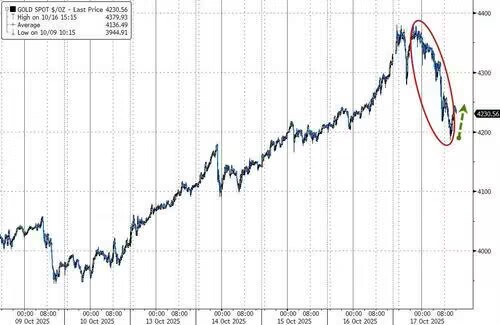
Core Viewpoint - The recent dramatic decline in gold prices, following a record high, raises concerns about whether the current gold bull market, driven by both safe-haven demand and speculative fervor, has reached a critical turning point [1][3]. Price Movement - On October 17, spot gold prices approached $4,380, setting a new historical record, but subsequently fell over 2% during the day, marking the largest single-day drop since Thanksgiving 2024. Despite this, gold prices increased nearly 5% for the week, marking the tenth consecutive week of gains and the best weekly performance since May [1][3]. Market Sentiment and Technical Indicators - Bill Gross, a legendary investor, warned that gold has become a "momentum/meme asset," suggesting potential buyers should wait [3]. - Technical indicators, market sentiment, and positioning are signaling that the gold market is becoming overcrowded, indicating that while gold may still be a "correct" asset, its price may no longer be "appropriate" [3][4]. - The distance between current prices and short-term moving averages is unusually large, with the 21-day moving average around $3,950 and the 50-day moving average at $3,675. A potential reversal pattern is forming, indicating short-term top risks [5]. Volatility and Institutional Positioning - The Gold Volatility Index (GVZ) has surged to extreme levels, reflecting a market driven by panic buying of call options, which could exacerbate price declines if sentiment reverses [7]. - Despite a record net inflow of $34.2 billion into gold ETFs over the past 10 weeks, the incremental inflow is slowing, indicating weakening buying momentum [9][10]. - Institutional positioning is at an extreme, with commodity trading advisors (CTAs) maintaining their highest long positions in gold, suggesting that any price reversal could trigger programmatic selling, amplifying declines [12][14]. Divergence from Traditional Drivers - The current gold bull market is characterized by a significant divergence from traditional fundamental drivers, with gold's rise not aligning with expected influences such as declining real interest rates or a weakening dollar [15][17]. - Gold prices have been rising alongside risk assets, which is unusual, and the recent increase in gold prices has outpaced the decline in real interest rates [15]. - The dollar index has been rising since mid-September, yet gold prices have seemingly ignored this traditional negative correlation [17]. Diverging Opinions on Market Outlook - A debate is emerging among Wall Street analysts regarding whether the current gold market represents a bubble or a new paradigm. Bears argue that the current enthusiasm is waning, while bulls maintain that strong physical demand can explain the price and interest rate divergence [18][19]. - Analysts from major banks suggest that non-traditional policies, including rising fiscal deficits and debt, will continue to support gold prices, with some asserting that the core driver of the current rally is the expectation of a restructuring of the global political economy [19].
【笔记20251017— 川普徒手画K线的一周】
债券笔记· 2025-10-17 14:40
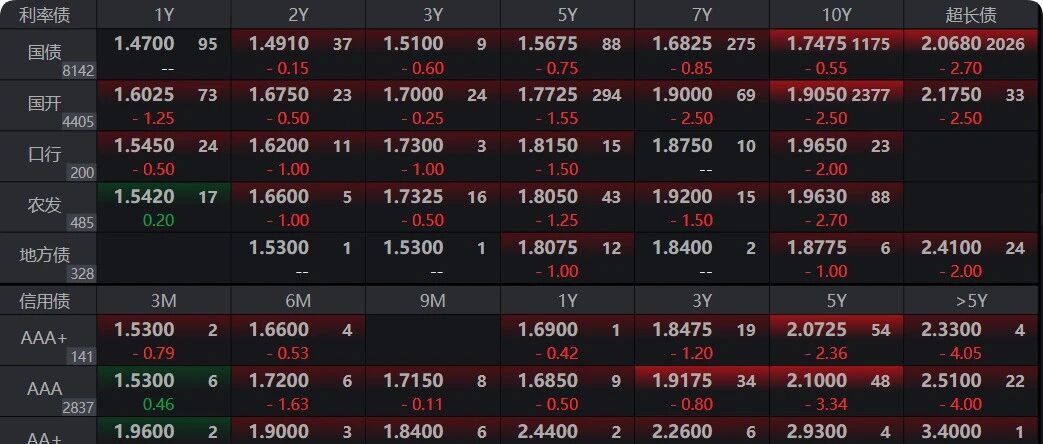
Core Viewpoint - The article discusses the dynamics of supply and demand in financial markets, emphasizing that price fluctuations serve as tests for both demand and supply [1]. Group 1: Market Conditions - The funding environment is described as balanced and slightly loose, with a notable decline in long-term bond yields [3]. - The central bank conducted a 7-day reverse repurchase operation of 164.8 billion yuan, with 409 billion yuan maturing, resulting in a net withdrawal of 244.2 billion yuan [3]. - The overnight funding rates are stable, with DR001 around 1.32% and DR007 at approximately 1.41% [3]. Group 2: Credit Market Concerns - Concerns in the U.S. credit market have suppressed risk appetite, leading to a significant drop in the stock market, with rates declining noticeably [5]. - Issues related to U.S. bank loans have raised market fears, causing risk assets to decline while gold prices surged [5]. - The 10-year government bond yield opened at 1.75% and dipped to 1.743% during trading, reflecting a downward trend in interest rates [5]. Group 3: Market Performance - The stock market experienced dramatic fluctuations, with investors who sold at 3800 points facing those who bought at 3930 points, highlighting the volatility [5]. - The gold price approached 4400 USD, while the domestic stock market fell below 3900 points, indicating a shift in investment preferences [5]. - The article notes that the performance of the A-share market is being compared to gold, suggesting a potential trend reversal [5].
黄金、白银,提示风险!
Zhong Guo Ji Jin Bao· 2025-10-17 12:19
Core Viewpoint - The Shanghai Futures Exchange (SHFE) has announced adjustments to the margin ratios and price fluctuation limits for gold and silver futures contracts due to increased volatility in the precious metals market [2]. Group 1: Margin and Price Fluctuation Adjustments - Starting from the close of trading on October 21, 2025, the price fluctuation limit for gold and silver futures contracts will be adjusted to 14% [2]. - The margin ratio for holding positions will be set at 15% for hedging and 16% for general positions [2]. Group 2: Risk Warnings from Banks - Several banks, including Industrial and Commercial Bank of China, China Construction Bank, and CITIC Bank, have issued risk warnings regarding fluctuations in precious metal prices [4]. - ICBC has advised investors to be aware of market changes and to diversify their investments to mitigate risks [4]. - China Bank has increased the minimum purchase amount for gold accumulation products from 850 yuan to 950 yuan, effective October 15 [4]. Group 3: Gold Price Volatility - Recent fluctuations in gold prices have been significant, with spot gold prices reported at $4,333.91 per ounce on October 17 [6]. - The main gold futures contract on the SHFE reached a historical high, surpassing the 1,000-point mark [7]. - Domestic gold jewelry prices have also risen, with some brands adjusting their prices to 1,270 yuan per gram [8]. Group 4: Future Price Trends - According to a report from招商证券, gold prices are expected to continue rising due to factors such as central banks' ongoing purchases of gold and a shift in gold ETFs from net sellers to net buyers [8]. - The report highlights that both monetary and financial attributes will drive gold prices in the future [8].