
农产品

Search documents
湖南望城:阵地活用“渔”民同乐 党群连心年味更暖
Xin Lang Cai Jing· 2026-01-20 06:33
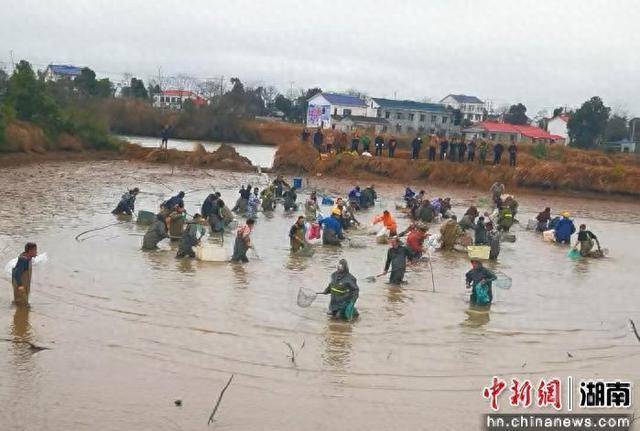
中新网湖南新闻1月19日电 (何昕懿)如何让村级党群服务中心不仅建得好,更能用得好、活得起来、聚 得起人心?1月19日农历腊月初一,湖南长沙市望城区靖港镇前榜村用一场年味十足的"干塘迎新春"活 动,给出了生动答案。活动以党群服务中心为阵地,将其真正转化为聚人气、暖人心的"乡村会客厅", 让阵地在实践中"活"了起来。 热闹的"靖港年货市集",游客把地道年味带回家。 这次干塘摸鱼活动在前榜村村民家的两口鱼塘展开,鱼塘占地约八亩,预计有2000多斤鱼。上午11时, 鱼塘边早已热闹起来,身着防水服的游客们摩拳擦掌。随着主持人的一声吆喝,摸鱼大战正式开始,一 条条二三十斤的草鱼、雄鱼被大伙合力"擒获",举出水面时引发阵阵欢呼。"所有烦恼,一摸到鱼都没 有了!" 鱼塘的另一侧,是热闹的"靖港年货市集"。新峰蘑菇、福塘皇菊、柏叶红薯粉条等农特产品琳琅满目, 在体验"摸鱼"之余,顺手就能把地道的年味带回家。现场还准备了靖港镇文旅地图,供游客领取,方便 大家接下来继续畅游靖港、感受更多乡土风情。 从农产品好物展推区出来后,游客们又聚到了党群服务中心里。这边,望城区书协的老师正带着大家一 起写春联、写"福"字,把美好的新春祝福送 ...

3个月来首笔!中国从加拿大下单
Guan Cha Zhe Wang· 2026-01-20 04:51
Core Viewpoint - A Chinese importer has purchased approximately 60,000 tons of Canadian canola seeds, marking the first transaction since October of the previous year, following Canadian Prime Minister Carney's visit to China [1][4]. Group 1: Trade Developments - The deal is expected to be shipped on a Panamax bulk carrier after March, coinciding with the anticipated reduction of tariffs on Canadian canola seeds [1]. - Following the visit, it is reported that the comprehensive tariff on Canadian canola seeds will be reduced to about 15% by March [4]. - The Canadian government anticipates that the value of canola seed exports to China will reach nearly CAD 5 billion (approximately RMB 25.77 billion) in 2024, although this figure is expected to decline to less than half by 2025 due to trade tensions [4]. Group 2: Market Reactions - The return of Chinese buyers to the Canadian market has led to a 2.4% drop in canola meal futures prices on the Zhengzhou Commodity Exchange, reaching a new low in over a year, indicating market expectations of increased supply [1]. - The Australian canola seeds have filled the market gap left by Canada, creating uncertainty for Australian exporters as Canadian canola returns [2]. Group 3: Industry Perspectives - The Canadian agriculture and food trade alliance (CAFTA) has welcomed the recent developments, viewing them as a significant step towards restoring stability in bilateral trade relations with China [5]. - Industry leaders express optimism that improved market access to China will directly influence Canadian farmers' planting decisions and long-term investments [5]. - The Canadian Canola Council and the Canadian Canola Growers Association view the agreement as a milestone and are hopeful for the complete restoration of canola seed trade [6].

好品山东·优特农品牵手阿里集团 精准对接拓宽产销新路径
Zhong Guo Jin Rong Xin Xi Wang· 2026-01-20 03:04
Core Insights - The "Good Products Shandong: Quality Agricultural Products Enter Alibaba" event was launched in Hangzhou, aiming to connect Shandong's high-quality agricultural products with e-commerce giants, enhancing market reach and brand influence [2][11] Group 1: Event Overview - The event gathered around 150 representatives from government and enterprises, utilizing various formats such as research visits, promotional matchmaking, and exhibitions to facilitate connections [2] - The collaboration between Shandong and Alibaba is described as a "strong alliance" that leverages Alibaba's vast user base and operational capabilities to support the upward movement of Shandong agricultural products [3] Group 2: Agricultural Highlights - Shandong is recognized as a major agricultural production base in China, with notable products including Shouguang vegetables, Yantai apples, Zhangqiu scallions, and Jinxing garlic, all known for their quality and reputation [3] - The event featured a product promotion session showcasing various regional specialties, including seafood like Jiaodong sea cucumber and Lushan oysters, as well as local agricultural products such as Yantai apples and Qingdao cabbage [8] Group 3: Strategic Initiatives - The event included discussions on agricultural new retail, smart supply chains, and digital agriculture, aiming to expand the reach of "Shandong-branded" products nationwide [4] - Alibaba's Taobao and Tmall platforms plan to enhance support for Shandong's agricultural products through initiatives like the "Origin Selection: Taste of the Rivers and Mountains" marketing program, focusing on traffic support, live streaming, content marketing, and ecosystem collaboration [4] Group 4: Networking and Collaboration - A face-to-face meeting was held between Shandong agricultural enterprises interested in joining Alibaba's platform and Alibaba's business line leaders to discuss cooperation details, platform policies, and resource support [9] - The event also included a tour of Alibaba's ecosystem and digital marketing models, providing insights into e-commerce operations [9] Group 5: Exhibition and Consumer Engagement - The "Good Products Shandong Specialty Agricultural Products Exhibition" was held concurrently, featuring 33 booths showcasing regional products from 16 cities in Shandong, creating an immersive experience for consumers [10] - The event is seen as a new platform for digital marketing of Shandong agricultural products, fostering a collaborative development model among government and enterprises [11]


当极端天气按下大宗商品-波动键
2026-01-20 01:50
Summary of Key Points from Conference Call Records Industry Overview - The records discuss the impact of extreme weather events on various commodity markets, particularly focusing on agricultural products, natural gas, and metals due to the ongoing weak La Niña phenomenon and its expected transition to neutral conditions by March 2026 [1][2][4]. Key Insights and Arguments Weather Patterns and Their Impacts - The weak La Niña event is expected to end in March 2026, transitioning to neutral conditions, with a rising probability of El Niño starting in July 2026, reaching nearly 60% by November [1][4]. - Global warming is anticipated to prevent widespread cold winters, although localized cold spells may occur [2]. - The solar cycle's downward trend may increase the risk of extreme weather events over the next three to five years, with frequent switches between La Niña and El Niño phenomena [2]. Agricultural Market Impacts - **Soybeans**: Increased expectations for South American soybean production, with U.S. soybean prices projected to remain between 1,000 and 1,150 cents per bushel, unlikely to break the upper limit [1][5]. - **Palm Oil**: Minimal impact from weak La Niña on palm oil production, with Malaysian production recovering. Short-term bullish outlook for palm oil prices in the first half of 2026, but potential reductions in palm fruit production could occur if a strong El Niño develops [1][5]. - **Wheat**: Delayed sowing in domestic wheat may lead to growth pressures, with increased risks of cold spells and spring droughts. This could elevate new wheat prices in April-May 2026, potentially resonating with corn prices, which are expected to trend upward [1][5]. Natural Gas Market Dynamics - The U.S. natural gas market is influenced by temperature fluctuations, with November 2026 expected to be cold but warming in December, leading to significant consumption volatility [6]. - European natural gas inventories are low, with actual consumption showing a year-on-year decline, leading to downward pressure on prices [6]. - A global LNG supply increase is anticipated in 2026, with new projects in the U.S. and Qatar expected to support U.S. natural gas markets [3][7]. Metal Markets and Weather Effects - The La Niña phenomenon is affecting black metal markets through supply and demand dynamics. Warmer winters are reducing heating and electricity demand, leading to a decline in coal prices [9]. - Brazilian iron ore shipments are expected to continue increasing, exerting pressure on iron ore prices [9]. - The impact of extreme weather on non-ferrous metals includes risks from heavy rainfall and drought, affecting mining operations in regions like Indonesia and Chile [10]. Additional Important Insights - The transition to neutral weather conditions post-March 2026 may lead to increased volatility in commodity prices due to the unpredictable nature of weather patterns [4]. - The interplay between agricultural and energy markets, particularly in terms of pricing and production, is highlighted, with potential for significant price movements based on weather-related supply changes [5][6]. - The need for monitoring extreme weather impacts on mining operations and supply chains is emphasized, particularly in resource-rich regions vulnerable to climate variability [10].
农产品早报-20260120
Yong An Qi Huo· 2026-01-20 01:49
【行情分析】: 农产品早报 研究中心农产品团队 2026/01/20 | 玉米/淀粉 | | | | 玉米 | | | | | | 淀粉 | | | --- | --- | --- | --- | --- | --- | --- | --- | --- | --- | --- | --- | | 日期 | 长春 | 锦州 | 潍坊 | 蛇口 | 基差 | 贸易利润 | 进口盈亏 | 黑龙江 | 潍坊 | 基差 | 加工利润 | | 2026/01/13 | 2160 | 2290 | 2240 | 2440 | 6 | 0 | 372 | 2750 | 2800 | 94 | -50 | | 2026/01/14 | 2160 | 2290 | 2240 | 2440 | 18 | 0 | 379 | 2750 | 2800 | 112 | -50 | | 2026/01/15 | 2180 | 2290 | 2240 | 2450 | -5 | 10 | 383 | 2750 | 2800 | 90 | -70 | | 2026/01/16 | 2180 | 2290 | 2240 | 2450 | 9 | ...
油脂油料早报-20260120
Yong An Qi Huo· 2026-01-20 01:37
Report Summary 1) Report Industry Investment Rating No information provided. 2) Core Viewpoints - As of last Thursday, the soybean harvest rate in Brazil's 2025/26 season was 2%, up 1.4 percentage points from the previous week and exceeding the 1.7% reported in the same period last year [1]. - Brazil's soybean exports in 2026 are expected to decline by 3% to 105 million tons, while the soybean crush volume is expected to increase to 60 million tons. Total soybean supply is expected to rise by 5% to 183.79 million tons, while demand is expected to fall by 1%. The ending inventory of soybean meal is expected to surge by 241% to 15.37 million tons [1]. - Brazil exported 1,307,357.38 tons of soybeans in the first three weeks of January, with the daily average export volume increasing by 145% compared to the same period last year [1]. - China's edible vegetable oil imports in December were 670,000 tons, up 4.9% year - on - year. The cumulative imports from January to December were 6.94 million tons, up 3.2% year - on - year [1]. 3) Section Summaries Overnight Market Information - **Brazilian Soybean Harvest**: As of last Thursday, the 2025/26 Brazilian soybean harvest rate was 2%, up 1.4 percentage points from the previous week and higher than last year's 1.7%. Mato Grosso led the progress, while Parana lagged due to cold and cloudy weather [1]. - **Brazilian Soybean Exports and Crush**: In 2026, Brazilian soybean exports are expected to drop 3% to 105 million tons, while the crush volume will increase to 60 million tons. Total supply will rise 5% to 183.79 million tons, and demand will fall 1% to 168.42 million tons. The output of soybean meal is expected to increase by 2% to 47.4 million tons, and the export volume will increase by 6% to 24.7 million tons. The ending inventory of soybean meal will surge by 241% to 15.37 million tons. The output of soybean oil will increase by 3% to 11.7 million tons, exports will fall by 19% to 1.1 million tons, and domestic consumption will increase by 3% [1]. - **Brazilian January Soybean Exports**: Brazil exported 1,307,357.38 tons of soybeans in the first three weeks of January, with a daily average of 118,850.67 tons, a 145% increase compared to January last year [1]. - **China's Vegetable Oil Imports**: In December, China's edible vegetable oil imports were 670,000 tons, up 4.9% year - on - year. Cumulative imports from January to December were 6.94 million tons, up 3.2% year - on - year. December soybean oil imports were 10,000 tons, up 23.6% year - on - year; cumulative imports from January to December were 350,000 tons, up 22.5% year - on - year. December palm oil imports were 280,000 tons, up 13% year - on - year; cumulative imports from January to December were 2.57 million tons, up 8.2% year - on - year. December rapeseed and mustard oil imports were 220,000 tons, up 2.9% year - on - year; cumulative imports from January to December were 2.13 million tons, up 13.1% year - on - year [1]. Spot Prices - Spot prices of soybean meal in Jiangsu, rapeseed meal in Guangdong, soybean oil in Jiangsu, palm oil in Guangzhou, and rapeseed oil in Jiangsu from January 13 to January 19, 2026 are provided [1].
中国2025年GDP同比增长5%
Dong Zheng Qi Huo· 2026-01-20 00:41
1. Report Industry Investment Ratings No specific industry investment ratings are provided in the given content. 2. Core Views of the Report - **Financial Markets**: Geopolitical risks, such as Trump's tariff policies and statements regarding Greenland, along with the upcoming Cook hearing, are influencing market risk - appetite. These factors are causing increased volatility in precious metals, US stock index futures, and other financial instruments. For example, the uncertainty around the Cook hearing and Trump's actions are leading to concerns about the Fed's independence and future inflation [11][14]. - **Commodity Markets**: Different commodities are facing various supply - demand situations. In the agricultural sector, South American soybean production is expected to be bountiful, while in the metal and energy sectors, factors like production changes, inventory levels, and geopolitical events are affecting prices. For instance, the potential release of Russian gasoline exports and the production adjustments of First Quantum Minerals in the copper market [32][52][45]. 3. Summaries by Relevant Catalogs 3.1 Financial News and Reviews 3.1.1 Macro Strategy (Gold) - **News**: Powell will attend the Cook hearing. Geopolitical risks and Trump's tariff policies have increased market risk aversion, driving up precious metals prices [11]. - **Investment Advice**: Short - term precious metals may experience increased volatility. With the gold - silver ratio at a low level, there are opportunities to go long [12]. 3.1.2 Macro Strategy (US Stock Index Futures) - **News**: Powell's attendance at the Cook case hearing and Trump's ambiguous statement about Greenland are increasing geopolitical risks. The potential dismissal of Cook may raise concerns about the Fed's independence [13][14]. - **Investment Advice**: During the US stock earnings season, volatility is expected to increase, and the US stock market is likely to oscillate at high levels [15]. 3.1.3 Macro Strategy (Stock Index Futures) - **News**: Premier Li Qiang held a symposium, emphasizing high - quality development and the implementation of more active fiscal and moderately loose monetary policies. China's GDP in Q4 2025 increased by 4.5% year - on - year, and the narrowing of price declines has boosted nominal GDP growth [16][18]. - **Investment Advice**: Hold long positions in stock index futures [19]. 3.1.4 Macro Strategy (Treasury Bond Futures) - **News**: December economic data was mostly below expectations, with a pattern of weakening overall, strong supply and weak demand, and domestic demand weaker than external demand. The bond market is expected to be volatile, and the probability of continued weakening after the oscillation is relatively high [20][22]. - **Investment Advice**: Be cautious when chasing up or betting on rebounds. Consider short - selling opportunities during rebounds [23]. 3.2 Commodity News and Reviews 3.2.1 Black Metals (Coking Coal/Coke) - **News**: The price of metallurgical coke in the Lvliang market is stable with a slight upward trend. Downstream steel mills have not responded to the coke price increase proposed by coke enterprises. Short - term spot prices are supported by downstream replenishment, but the upward momentum in the futures market is limited [24]. - **Investment Advice**: Expect short - term oscillations [24]. 3.2.2 Black Metals (Rebar/Hot - Rolled Coil) - **News**: In 2025, China's infrastructure investment decreased by 2.2% year - on - year, and real estate investment decreased by 17.2%. The terminal demand for steel products remains weak, and the fundamentals do not support a significant rebound in steel prices [25][28][29]. - **Investment Advice**: Adopt an oscillatory approach to steel prices. Hedge inventory at high prices if there is a rebound [30]. 3.2.3 Agricultural Products (Soybean Meal) - **News**: As of last Thursday, the Brazilian 25/26 soybean harvest rate was 2%. South American soybean production is expected to be abundant. Domestic soybean meal inventory has decreased but remains at a historically high level [31][32]. - **Investment Advice**: Expect weak oscillations in domestic and international futures prices [33]. 3.2.4 Non - Ferrous Metals (Lead) - **News**: Lead inventories in five major social warehouses increased. The low - inventory risk has been alleviated, and the fundamentals are weakening [34][35]. - **Investment Advice**: Consider short - selling opportunities at high prices. Adopt a wait - and - see approach for arbitrage [37]. 3.2.5 Non - Ferrous Metals (Zinc) - **News**: The zinc price is oscillating. Social inventories are rising, but the absolute increase is not large. Geopolitical risks need to be watched out for [38][39]. - **Investment Advice**: Adopt a wait - and - see approach for short - term single - side trading, and do not chase short positions. Wait and see for both monthly spread and internal - external arbitrage [39]. 3.2.6 Non - Ferrous Metals (Lithium Carbonate) - **News**: The second - phase project of Qingtao Energy's solid - state battery in Chengdu is progressing smoothly. The futures trading rules of lithium carbonate have been adjusted. The demand side is showing signs of strength, but the price transmission issue needs attention [40][41][42]. - **Investment Advice**: Focus on long - position opportunities at low prices after the trading volume and volatility stabilize [43]. 3.2.7 Non - Ferrous Metals (Copper) - **News**: South Mining Group focuses on gold and copper investments. First Quantum Minerals has lowered its copper production guidance. Geopolitical risks and macro - economic uncertainties are affecting copper prices [44][45][47]. - **Investment Advice**: Adopt a short - term wait - and - see approach. Look for long - position opportunities at low prices in the medium term. Wait and see for arbitrage [48]. 3.2.8 Non - Ferrous Metals (Tin) - **News**: The LME tin price is in a contango. The Shanghai Futures Exchange has adjusted the tin futures delivery warehouses. Supply uncertainties exist, and demand is weak [49][50][51]. - **Investment Advice**: Pay attention to December customs data, processing fees in Yunnan refineries, and the recovery of consumption [51]. 3.2.9 Energy and Chemicals (Crude Oil) - **News**: Russia may lift the gasoline export ban in February. As the Iranian situation cools down, the risk premium of oil prices is expected to decrease [52][53]. - **Investment Advice**: The short - term upward driving force for oil prices is weakening [54]. 3.2.10 Energy and Chemicals (Liquefied Petroleum Gas) - **News**: The weekly production of domestic liquefied petroleum gas increased slightly. The external market is relatively strong, but the upward space is limited [55]. - **Investment Advice**: Expect price sideways oscillations [56]. 3.2.11 Energy and Chemicals (Asphalt) - **News**: Asphalt refinery inventories decreased, while social inventories increased. Terminal demand is weakening, and the market is expected to be weak before the Spring Festival [56]. - **Investment Advice**: Expect short - term weak oscillations in asphalt prices [57]. 3.2.12 Energy and Chemicals (Styrene) - **News**: Pure benzene and styrene prices are rising. The increase in styrene is due to unexpected maintenance and export growth. Attention should be paid to geopolitical risks and US tariff policies [60]. - **Investment Advice**: Focus on long - position opportunities at low prices, but beware of risks such as excessive pure benzene imports and weak terminal purchasing [61]. 3.2.13 Energy and Chemicals (Urea) - **News**: The demand for urea from a sample of compound fertilizer producers in Shandong decreased. Urea production is expected to increase, and inventories are decreasing at a slower pace. Policy and demand factors are influencing prices [62][63]. - **Investment Advice**: Expect short - term oscillations in urea prices. The average price may decline in the next two weeks. Consider long - position opportunities in the 05 contract after the demand recovers [64]. 3.2.14 Energy and Chemicals (PVC) - **News**: The domestic PVC powder market price is slightly weak. The export tax - rebate policy will be cancelled in April, and domestic demand is expected to weaken before the Spring Festival [65][66]. - **Investment Advice**: Be bearish on PVC in the short term [66]. 3.2.15 Energy and Chemicals (Caustic Soda) - **News**: The price of caustic soda in Shandong decreased. Supply is abundant, and demand is weak. Inventories are high, and the market is under pressure [67][68][69]. - **Investment Advice**: Expect the caustic soda market to be under pressure before the Spring Festival [69].
“跳楼机”般的天气,如何影响2026经济?
吴晓波频道· 2026-01-20 00:30
Core Viewpoint - The article discusses the impact of the La Niña phenomenon on global weather patterns and its subsequent effects on various industries, including agriculture, energy, and consumer goods, highlighting the interconnectedness of climate events and economic conditions [3][7]. Group 1: La Niña Phenomenon - La Niña is characterized by a significant cooling of sea surface temperatures in the central and eastern Pacific Ocean, which can disrupt global weather patterns and has been identified as a contributing factor to recent extreme weather events in China [9][10]. - The current La Niña state, which began in October 2025, is expected to last until early 2026 but may not develop into a full event, leading to complex weather impacts such as "south drought, north flood" patterns [10][11]. Group 2: Agricultural Impact - The La Niña phenomenon is expected to disrupt food supply chains, with a notable decline in crop yields in the Southern Hemisphere, including an over 11% drop in corn production and a downward adjustment in soybean yields, which will affect global agricultural prices [10][11]. - As the largest importer of soybeans, China may face increased pork and poultry prices due to rising feed costs, leading to inflationary pressures in the meat market [10]. Group 3: Energy Sector Effects - The onset of cold weather has increased coal consumption in power generation, with a reported 12% rise in daily coal usage in October 2025, while natural gas demand is projected to grow significantly due to colder winter conditions [11][13]. - The fluctuations in energy demand and supply could lead to increased prices for electricity and heating, impacting both consumers and industries reliant on stable energy costs [11][13]. Group 4: Consumer Market Trends - The La Niña phenomenon has spurred a surge in demand for winter clothing and heating appliances, with sales of down jackets and electric heating products seeing significant year-on-year increases of 46% and over 200%, respectively [32]. - Consumer preferences are shifting towards products that offer enhanced functionality and design, with a notable rise in demand for high-tech materials and products tailored for specific winter needs [33][34]. Group 5: Climate Adaptation Strategies - China is enhancing its climate response strategies, integrating weather monitoring and emergency preparedness into macroeconomic governance, with a focus on building a climate-resilient society by 2035 [22][27]. - The shift from reactive to proactive disaster management in agriculture includes advanced techniques such as smart seedling cultivation and water-saving irrigation methods to mitigate the impacts of extreme weather [28][29].

玉米短期维持震荡偏强
Qi Huo Ri Bao· 2026-01-20 00:08
Group 1: Corn Market Overview - As of January 15, the corn selling progress in Northeast China reached 52%, which is 3% faster than the same period in 2025, with a weekly increase of 3% [1] - The average weekly price of corn nationwide as of January 16 was 2317 yuan/ton, reflecting a weekly increase of 7 yuan/ton [1] - The total corn inventory at the four northern ports was 1.332 million tons as of January 9, a decrease of 206,000 tons week-on-week, and significantly lower than the 4.618 million tons in the same period of 2025 [1] Group 2: Livestock and Feed Industry - As of January 15, the profit from self-bred pigs was 25.77 yuan/head, an increase of 26 yuan/head from the previous week, while the profit from purchased piglets was -100.5 yuan/head, up by 29 yuan/head [2] - The average inventory days for feed enterprises nationwide was 31.15 days, an increase of 1.05 days week-on-week, but down 6.71% year-on-year [2] Group 3: Corn Processing and Demand - The total inventory of 96 major corn processing enterprises across 12 regions was 3.59 million tons as of January 14, a 1.41% increase week-on-week, yet still the lowest in nearly three years [3] - From January 8 to January 14, major processing enterprises consumed 1.3559 million tons of corn, a decrease of 2.59 million tons from the previous week, and lower than the 1.41 million tons in the same period of 2025 [3] - The profit from corn-to-ethanol processing in Heilongjiang was -742 yuan/ton, lower than -377 yuan/ton in 2025, indicating increased processing losses despite a slight rise in starch prices [3] Group 4: Future Corn Price Outlook - Most institutions predict limited corn production growth in 2025, with imports expected to be between 5 to 6 million tons, which is relatively low [4] - The current market shows reluctance to chase high spot prices, indicating uncertainty about future corn prices, as evidenced by the lower increase in spot prices compared to futures [4] - The price gap between Northeast and Southern corn is near historical highs, and factors such as policy releases and wheat auctions are expected to limit the upward potential of corn prices in the short term [4]
庄河农海产品加速进军全国市场
Xin Lang Cai Jing· 2026-01-19 23:21
Core Viewpoint - The event aims to establish a platform for high-quality agricultural and marine products from Zhuanghe City to connect with high-end supermarkets, enhancing market expansion and optimizing the industry chain [1] Group 1: Event Overview - The promotional event for high-quality agricultural and marine products took place on January 16 at Wanda Plaza in Zhuanghe City [1] - The event included the unveiling of the "Wan Jia Yi Zhan" and signing ceremonies for production and sales cooperation [1] Group 2: Strategic Importance - This initiative marks a new phase of regular and institutionalized connections between Zhuanghe's high-quality agricultural and marine products and high-end supermarkets [1] - It represents a significant step in the local implementation of the rural revitalization strategy [1] Group 3: Industry Characteristics - Zhuanghe City boasts prominent agricultural and marine resource endowments, adhering to an ecological priority development approach [1] - The city has established a diverse industrial system that includes high-quality fruits and vegetables, specialty aquatic products, and green grains and oils [1]