商贸零售

Search documents
大消费行业周报(7月第1周):欧洲极端高温带动空调销售激增-20250707
Century Securities· 2025-07-07 00:53
Investment Rating - The report does not explicitly state an investment rating for the industry, but it suggests a focus on leading companies in the air conditioning and maternal and infant sectors due to current market conditions and policy support [3][4]. Core Insights - Extreme high temperatures in Europe have significantly increased demand for air conditioning units, with a notable rise in exports from China to Europe, indicating a robust market opportunity [4]. - The recent push for pro-natalist policies across various provinces in China is expected to enhance the investment value in maternal and infant-related industries, as these policies aim to alleviate the financial burden of raising children [4]. - The report highlights the importance of monitoring the duration and intensity of extreme weather conditions, as well as the performance of leading companies in terms of order growth and earnings realization [4]. Summary by Sections Market Weekly Review - The consumer sector showed mixed performance, with home appliances and textiles leading the gains, while sectors like beauty care and retail experienced declines [4]. - Notable stock performances included significant gains for companies like Huashanghuan (+11.71%) and Feiyada (+21.56%), while stocks like Xinshunda (-9.13%) and Jinsong New Materials (-21.72%) faced substantial losses [4]. Industry News and Key Company Announcements - The report discusses various industry news, including regulatory responses to illegal medical beauty training and significant corporate acquisitions aimed at diversifying product offerings in the pet food market [16][18]. - Companies like San Zhi Song Shu and Guo Quan announced substantial investments in supply chain improvements and new production bases, indicating a strategic focus on enhancing operational capabilities [20][21].
持续看好国内消费复苏潜力
Xiangcai Securities· 2025-07-06 13:53
Investment Rating - The industry investment rating is maintained at "Overweight" [3] Core Viewpoints - The report highlights the potential for domestic consumption recovery, supported by recent promotional activities and government policies [6][23] - The retail sector experienced a slight decline of 0.16% last week, underperforming the CSI 300 index by 1.7 percentage points [4][9] - The current Price-to-Earnings (PE) ratio for the retail sector is 37.92X, with a Price-to-Book (PB) ratio of 1.81X, indicating a slight decrease in valuation metrics [5][15][17] Industry Performance - The retail sector's performance over the past twelve months shows a relative return of -3% for one month and +1% for three months, with an absolute return of -1% for one month and +4% for three months [3][4] - Specific segments within the retail sector showed varied performance, with internet e-commerce up by 1.83% and professional chains up by 0.9% [4][10] Industry Dynamics - The "618" promotional event demonstrated significant consumer engagement, with platforms like JD.com and Tmall leading in sales growth across various categories [6][18][22] - Cross-border e-commerce also saw substantial growth, with orders on Alibaba's international platform increasing by 42% year-on-year [19] - The report notes that the government's subsidy policies have effectively stimulated consumption, particularly in electronics and home appliances [22][23] Investment Recommendations - The report suggests focusing on the ongoing potential for consumer spending, particularly in the digital and home appliance sectors, driven by trade-in policies [23] - It also recommends monitoring the performance of domestic beauty brands, which have gained consumer recognition and market share [23][7]
主力资金动向 28.11亿元潜入计算机业
Zheng Quan Shi Bao Wang· 2025-07-04 09:13
| 家用电 | 15.88 | -2.77 | 2.07 | 0.03 | -3.89 | | --- | --- | --- | --- | --- | --- | | 器 | | | | | | | 社会服 | 13.50 | 11.98 | 2.99 | -0.20 | -4.08 | | 务 | | | | | | | 环保 | 18.96 | 11.58 | 2.12 | -1.03 | -4.59 | | 医药生 物 | 68.04 | -1.48 | 2.49 | 0.39 | -5.73 | | 通信 | 32.51 | 17.15 | 1.87 | -0.85 | -15.10 | | 汽车 | 45.27 | -0.21 | 2.09 | -0.53 | -17.97 | | 基础化 工 | 71.27 | 1.70 | 2.66 | -1.22 | -21.74 | | 机械设 | 65.11 | -6.74 | 2.40 | -0.97 | -28.36 | | 备 | | | | | | | 国防军 | 32.96 | -12.68 | 3.05 | -0.91 | -29.30 | ...
金融工程定期:港股量化:南下资金累计流入达2024年91%,7月增配成长
KAIYUAN SECURITIES· 2025-07-02 12:15
- Model Name: Hong Kong Stock Selection 20 Portfolio; Model Construction Idea: The model selects the top 20 stocks with the highest scores based on four types of factors (technical, capital, fundamental, and analyst expectations) from the Hong Kong Stock Connect sample stocks and constructs an equal-weighted portfolio at the end of each month; Model Construction Process: The model uses the Hong Kong Composite Index (HKD) (930930.CSI) as the benchmark. The specific construction process involves selecting the top 20 stocks with the highest scores based on the four types of factors and constructing an equal-weighted portfolio at the end of each month[3][37][39]; Model Evaluation: The model has shown excellent performance in the Hong Kong Stock Connect sample stocks[37] - Factor Name: Technical Factors; Factor Construction Idea: Technical factors are constructed based on the price and volume data of stocks; Factor Construction Process: The specific construction process involves calculating various technical indicators such as moving averages, relative strength index (RSI), and moving average convergence divergence (MACD) to evaluate the stock's price trend and momentum[37][38]; Factor Evaluation: Technical factors have shown good performance in the Hong Kong Stock Connect sample stocks[37] - Factor Name: Capital Factors; Factor Construction Idea: Capital factors are constructed based on the capital flow data of stocks; Factor Construction Process: The specific construction process involves calculating the net capital inflow and outflow of stocks to evaluate the stock's capital flow trend[37][38]; Factor Evaluation: Capital factors have shown good performance in the Hong Kong Stock Connect sample stocks[37] - Factor Name: Fundamental Factors; Factor Construction Idea: Fundamental factors are constructed based on the financial data of stocks; Factor Construction Process: The specific construction process involves calculating various financial ratios such as price-to-earnings (P/E) ratio, return on equity (ROE), and total market value to evaluate the stock's financial health and valuation[37][38]; Factor Evaluation: Fundamental factors have shown good performance in the Hong Kong Stock Connect sample stocks[37] - Factor Name: Analyst Expectation Factors; Factor Construction Idea: Analyst expectation factors are constructed based on the analyst ratings and target prices of stocks; Factor Construction Process: The specific construction process involves collecting and analyzing the analyst ratings and target prices of stocks to evaluate the stock's future performance expectations[37][38]; Factor Evaluation: Analyst expectation factors have shown good performance in the Hong Kong Stock Connect sample stocks[37] Model Backtest Results - Hong Kong Stock Selection 20 Portfolio, Annualized Excess Return: 13.3%, Excess Return Volatility Ratio: 1.0[4][40][41] Factor Backtest Results - Southbound Capital, Average Return: 25.7%[32][36] - Foreign Capital, Average Return: 13.5%[32][36] - Domestic Capital, Average Return: 14.0%[32][36] - Hong Kong Capital and Others, Average Return: 10.2%[32][36]
市场成交稳定,盘面分化
Hua Tai Qi Huo· 2025-07-02 05:50
Report Industry Investment Rating No relevant content provided. Core Viewpoints - The latest US PMI and JOLTS job openings showed better-than-expected performance, leading to a decline in interest rate cut expectations and mixed closing of the three major US stock indexes. In China, the Caixin Manufacturing PMI rebounded above the boom-bust line, with significant improvements in new orders and production indexes. After the market rally, there is a divergence, which is expected to continue, and large-cap stocks may have a phased catch-up in the short term [3]. Summary by Directory Market Analysis - Manufacturing industry: In China, the Caixin Manufacturing PMI in June was 50.4, 2.1 percentage points higher than that in May and the same as in April, returning above the critical point. The new orders index rebounded slightly above the critical point, and the production index returned to the expansion range, reaching a seven-month high. In the US, the ISM Manufacturing PMI in June rose to 49, higher than the expected 48.8 but still in the contraction range for four consecutive months. Job openings in May increased from 7.4 million in April to 7.769 million, far exceeding the economists' expectation of 7.3 million [1]. - Index performance: In the spot market, the three major A-share indexes showed mixed performance. The Shanghai Composite Index rose 0.39% to close at 3457.75 points, while the ChiNext Index fell 0.24%. Most sector indexes rose, with the comprehensive, pharmaceutical and biological, banking, and non-ferrous metal industries leading the gains, and the computer, commercial retail, and communication industries leading the losses. The trading volume of the Shanghai and Shenzhen stock markets remained at 1.5 trillion yuan. In overseas markets, Trump said that he would not consider extending the July 9 deadline for tariff negotiations, might not reach an agreement with Japan before July 9, and Japan might face a 30% or 35% tariff. There were two or three candidates for the Fed chair. The three major US stock indexes closed mixed, with the Dow Jones rising 0.91% and the S&P 500 and Nasdaq closing down [1]. - Futures market: The basis discount of stock index futures deepened again. In terms of trading volume and open interest, only the trading volume and open interest of IM increased simultaneously [2]. Strategy - The latest US PMI and JOLTS job openings showed better-than-expected performance, leading to a decline in interest rate cut expectations and mixed closing of the three major US stock indexes. In China, the Caixin Manufacturing PMI rebounded above the boom-bust line, with significant improvements in new orders and production indexes. After the market rally, there is a divergence, which is expected to continue, and large-cap stocks may have a phased catch-up in the short term [3]. Chart Summary Macro Economic Charts - Include charts showing the relationship between the US dollar index and A-share trends, the US Treasury yield and A-share trends, the RMB exchange rate and A-share trends, and the US Treasury yield and A-share style trends [6][7]. Spot Market Tracking Charts - Table 1 shows the daily performance of major domestic stock indexes on July 1, 2025, including the Shanghai Composite Index (+0.39%), Shenzhen Component Index (+0.11%), ChiNext Index (-0.24%), CSI 300 Index (+0.17%), SSE 50 Index (+0.16%), CSI 500 Index (+0.33%), and CSI 1000 Index (+0.28%) [12]. - Also include charts on the trading volume of the Shanghai and Shenzhen stock markets and the margin trading balance [13]. Stock Index Futures Tracking Charts - Table 2 shows the trading volume and open interest of stock index futures. Only the trading volume and open interest of IM increased, while those of IF, IH, and IC decreased [17]. - Table 3 shows the basis of stock index futures (futures - spot), with the basis discount of all contracts deepening [38]. - Table 4 shows the inter - delivery spread of stock index futures, with various spreads showing different changes [43]. - Include charts on the open interest, open interest ratio, and foreign capital net open interest of different stock index futures contracts [6].
国新证券每日晨报-20250702
Guoxin Securities Co., Ltd· 2025-07-02 05:16
Domestic Market Overview - The domestic market experienced a V-shaped reversal with a slight increase on July 1, with the Shanghai Composite Index closing at 3457.75 points, up 0.39% [1][4] - The Shenzhen Component Index closed at 10476.29 points, up 0.11%, while the ChiNext Index fell by 0.24% [1][4] - A total of 14965 billion yuan was traded in the A-share market, showing a slight decrease compared to the previous day [1][4] - Among the 30 CITIC first-level industries, 18 sectors saw an increase, with pharmaceuticals, non-ferrous metals, and banking leading the gains, while comprehensive finance, computers, and retail saw significant declines [1][4] Overseas Market Overview - The US stock market saw a general increase on July 1, with the Dow Jones Industrial Average rising by 0.91% [2][4] - The S&P 500 index fell by 0.11%, and the Nasdaq Composite dropped by 0.82% [2][4] - Chinese concept stocks showed mixed results, with the Nasdaq Golden Dragon China Index up 0.2% and the Wande Chinese Technology Leaders Index up 0.27% [2][4] Key News Highlights - The Central Economic Committee held its sixth meeting, focusing on advancing the construction of a unified national market and high-quality development of the marine economy [10][11] - The National Healthcare Security Administration and the National Health Commission issued measures to support the high-quality development of innovative drugs [14] - A series of national standards were implemented starting July 1, covering various sectors including proton exchange membrane fuel cells and electric vehicle battery replacement stations [16] - SEMI projected a shortage of approximately 1 million skilled workers in the global semiconductor industry by 2030 [17]
商贸零售行业今日净流出资金10.91亿元,翠微股份等6股净流出资金超5000万元
Zheng Quan Shi Bao Wang· 2025-07-01 10:19
Industry Overview - The retail industry experienced a decline of 0.79% today, with a net outflow of funds amounting to 1.09 billion yuan [1] - Among the 99 stocks in the retail sector, 34 stocks rose, while 52 stocks fell, indicating a mixed performance within the industry [1] Fund Flow Analysis - The top three stocks with the highest net outflow include Cuiwei Co., Ltd. with 607 million yuan, Kuaijingtong with 227 million yuan, and Xiaoshangcheng with 158 million yuan [1] - The leading stock in terms of net inflow is Aishide, which saw an inflow of 253 million yuan, followed by Ruoyuchen and Tianyin Holdings with inflows of 48.9 million yuan and 37.8 million yuan respectively [1][3] Stock Performance - Cuiwei Co., Ltd. had the largest decline at -9.97%, with a turnover rate of 28.22% and a net outflow of approximately 607 million yuan [1] - Other notable decliners include Kuaijingtong at -3.19% and Xiaoshangcheng at -6.04% [1] Market Sentiment - The overall market sentiment in the retail sector appears negative, as indicated by the significant net outflow of funds and the number of declining stocks [1][2]




粤开市场日报-20250701
Yuekai Securities· 2025-07-01 08:41
Market Overview - The A-share market showed mixed performance today, with the Shanghai Composite Index rising by 0.39% to close at 3457.75 points, while the Shenzhen Component Index increased by 0.11% to 10476.29 points. However, the Sci-Tech Innovation 50 Index fell by 0.86% to 994.80 points, and the ChiNext Index decreased by 0.24% to 2147.92 points. Overall, 2628 stocks rose, 2542 fell, and 247 remained unchanged across the market [1]. - The total trading volume in the Shanghai and Shenzhen markets was 14660 billion, a decrease of 208.42 billion compared to the previous trading day [1]. Industry Performance - Among the Shenwan first-level industries, sectors such as comprehensive, pharmaceutical biology, banking, non-ferrous metals, public utilities, and building materials led the gains, while computer, retail, telecommunications, media, power equipment, and real estate sectors experienced declines [1]. Sector Highlights - The top-performing concept sectors today included China Shipbuilding System, innovative drugs, antibiotics, vitamins, generic drugs, low-priced stocks in the ChiNext, hydropower, biotechnology, advanced packaging, superhard materials, pet economy, CRO, medical material exports, selected banks, and brain-computer interfaces [1].
行业轮动组合月报:量价行业轮动组合2025年上半年月胜率为100%-20250701
HUAXI Securities· 2025-07-01 05:36
[Table_Title] 量价行业轮动组合 2025 年上半年月胜率为 100% [Table_Title2] ——行业轮动组合月报 证券研究报告|金融工程研究报告 [Table_Date] 2025 年 7 月 1 日 [Table_Summary] ► 量价行业轮动组合 2025 年前 6 个月皆跑赢基准 量价行业轮动组合 6 月份上涨 3.80%,相对于行业等权的 超额收益为 0.04%。今年以来,量价行业轮动组合上涨 7.73%,相对于行业等权组合的超额收益为 3.32%,月胜率为 100%。 2025 年 6 月份量价复合因子值排名较高的行业为:钢 铁、机械、房地产、商贸零售、家电。 风险提示 报告的结论基于历史统计规律,当历史规律发生改变 时,报告中的结论可能失效。市场可能出现超预期波动风 险。 评级及分析师信息 [Table_Author] 分析师:丁睿雯 邮箱:dingrw@hx168.com.cn SAC NO:S1120523040002 分析师:杨国平 邮箱:yanggp@hx168.com.cn SAC NO:S1120520070002 请仔细阅读在本报告尾部的重要法律声明 1 | ...
A股大消费产业链支付账期大观——“零售”篇:六成公司或违反“60天支付期限” 百大集团的支付账期超过3年
Xin Lang Zheng Quan· 2025-06-30 05:38
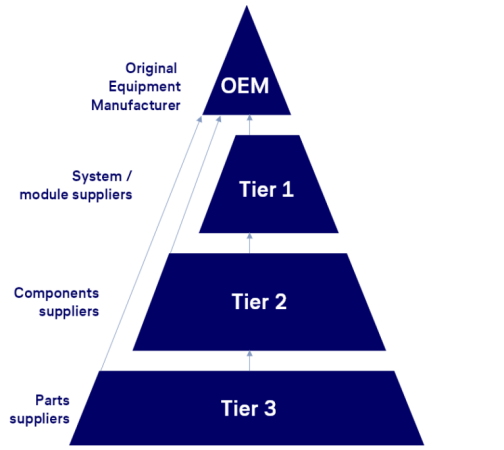
Core Viewpoint - The automotive industry is increasingly extending payment terms to suppliers, with average payment periods exceeding 170 days, impacting the cash flow of smaller suppliers and leading to financial distress [1][3]. Group 1: Payment Terms in Automotive Industry - Domestic automotive companies have an average payment term of over 170 days, with some exceeding 240 days [1]. - Payment terms for upstream suppliers are typically extended by an additional two months, resulting in even longer payment cycles for Tier 2 and Tier 3 suppliers [3]. - The revised "Regulations on Payment of Small and Medium-sized Enterprises" mandates that large enterprises must pay small and medium-sized suppliers within 60 days of delivery [3]. Group 2: Retail Industry Payment Terms - In the retail sector, over 60% of retailers have payment terms exceeding 60 days, with the average payment term for the retail industry in 2024 being 62 days, a slight increase from 58 days in 2023 [5]. - The trade industry has a payment term of 46 days, while the general retail sector has a significantly longer payment term of 112 days [6]. - The professional chain industry has the shortest payment term at 21 days, while the internet e-commerce sector has a payment term of 78 days, which has decreased by 8 days from the previous year [6]. Group 3: Historical Trends and Regulations - Payment terms in the retail industry have generally increased from 2020 to 2024, with the general retail sector's payment term extending by 4 days and the internet e-commerce sector by 40 days [7]. - The "Retailer Supplier Fair Trade Management Measures" established in 2006 aimed to regulate payment terms, stating that payment should not exceed 60 days post-delivery [7][8]. - Despite regulations, many retailers continue to extend payment terms beyond the stipulated limits, particularly in the general retail sector, where terms can be nearly double the recommended period [8]. Group 4: Specific Company Cases - Baida Group has the longest payment term in the retail sector at 1,308 days, significantly influenced by its business model and low operating costs [10]. - Hangzhou Xie Bai follows with a payment term of 838 days, also due to its business model that minimizes financial risk [11]. - In contrast, Kairuide, operating in the trade sector, has the shortest payment term of just 1 day, reflecting its self-operated business model and focus on cash flow management [12].