
服务业

Search documents
中央重磅部署“人工智能+” 推动一二三产业向智能化跃迁
2 1 Shi Ji Jing Ji Bao Dao· 2025-08-26 16:17
Core Viewpoint - The document outlines the "Artificial Intelligence +" initiative, emphasizing its integration into six key areas: scientific technology, industrial development, consumption enhancement, public welfare, governance capabilities, and global cooperation, with specific goals set for 2027, 2030, and 2035 [1][10]. Group 1: Key Areas of Focus - The initiative aims to achieve widespread integration of AI in six areas, including scientific technology, industrial development, consumption enhancement, public welfare, governance capabilities, and global cooperation [3][4]. - The document highlights the importance of AI in accelerating scientific discovery and creating new job opportunities while enhancing traditional roles [3][4]. - The initiative emphasizes the need for intelligent transformation across all sectors, including agriculture, industry, and services, to foster new business models and enhance productivity [7][8]. Group 2: Goals and Phases - By 2027, the goal is to achieve over 70% penetration of new intelligent terminals and applications, with significant growth in the core industries of the intelligent economy [10][12]. - By 2030, the aim is for AI to fully empower high-quality development, with over 90% penetration of intelligent applications, establishing AI as a crucial growth driver for the economy [10][12]. - By 2035, the vision is for China to enter a new stage of intelligent economy and society, providing strong support for the realization of socialist modernization [10][12]. Group 3: Implementation Strategy - The document outlines a systematic approach to implementing AI across various sectors, focusing on creating a collaborative ecosystem that includes researchers, businesses, consumers, and government entities [4][6]. - It emphasizes the need for a robust foundational support system, including advancements in models, data supply, computing power, and regulatory frameworks [9][12]. - The initiative aims to break down data silos and lower barriers for small and medium enterprises to adopt AI technologies, fostering a positive cycle of innovation and application [6][12].
“十五五”规划的两条主线(国金宏观张馨月)
雪涛宏观笔记· 2025-08-26 10:03
Core Viewpoint - The "15th Five-Year Plan" aims to achieve high-quality economic development through the expansion of domestic demand and the overall leap in new productive forces, which will mutually drive each other [2][20]. Group 1: Macroeconomic Environment - The "15th Five-Year Plan" period is crucial for achieving socialist modernization by 2035, with a key quantitative goal of doubling GDP per capita from 2020 levels by 2035, requiring an average annual GDP growth rate of over 4.4% from 2026 to 2035 [4][5]. - The external environment will face increased geopolitical risks and uncertainties, necessitating a focus on domestic development to maintain strategic initiative [7][9]. - Internally, insufficient effective demand, particularly in consumer spending, is identified as a major contradiction, with China's consumption rate significantly lower than that of developed countries [9][12]. Group 2: Internal Changes - The aging population will accelerate during the "15th Five-Year Plan," with the proportion of people aged 65 and over expected to reach 18.3% by 2030, posing challenges to economic growth and consumer demand [12]. - Urbanization will transition from rapid growth to stable development, with the urbanization rate projected to reach 70% by 2024, indicating significant potential for domestic demand expansion [15][16]. - The shift towards new industrialization is essential, with a focus on technological innovation to upgrade industrial structures and avoid falling into the "middle-income trap" [19][41]. Group 3: Domestic Demand as a Mainline - The plan emphasizes the need to enhance income distribution systems to increase residents' disposable income, particularly for middle and low-income groups, which are crucial for expanding domestic demand [23][27]. - Strengthening social security for middle and low-income groups is a priority, with a focus on improving public services and reducing household consumption burdens [29]. - Optimizing the consumption supply structure is vital, with a significant shift towards service consumption expected as the economy matures [30][31]. Group 4: Technological Advancement - The "15th Five-Year Plan" will prioritize the development of new productive forces, focusing on localized industrial development and breaking through key technological bottlenecks [42][43]. - Emphasis will be placed on increasing investment in basic research and development, aiming to raise the proportion of basic R&D spending significantly [45]. - The plan will also support the transformation and upgrading of traditional industries, promoting high-end, intelligent, and green manufacturing practices [49][50]. Group 5: Consumption Mechanisms - Establishing a long-term mechanism to promote consumption is critical, with potential indicators for consumption rates being introduced to guide economic policy [33][36]. - The plan will enhance statistical methods related to consumption to better reflect its impact on economic growth [36]. - Local government assessment mechanisms will be adjusted to prioritize consumption promotion, moving away from production-oriented evaluations [36][37].


泰政府出台刺激政策应对关税影响
Shang Wu Bu Wang Zhan· 2025-08-26 04:10
Group 1 - The Thai government is preparing a series of measures to mitigate the impact of US tariffs and enhance national competitiveness [1] - Proposed measures include stimulus initiatives, accelerated public investment budget disbursement for infrastructure projects, and tax reduction policies to boost domestic consumption [1] - The government plans to allocate a budget fund of 100 billion Thai Baht to support various projects [1] Group 2 - Tax measures will be implemented to help businesses reduce costs and increase liquidity, such as speeding up export tax refunds and extending tax payment deadlines for affected companies [1] - Regulatory reforms are planned, including modifications to Thai laws regarding import tariffs on US goods and adjustments to import quotas and health standards [1] - Structural regulatory reforms will aim to improve the investment environment by removing unnecessary licenses, updating labor and investment laws, and expanding digital systems [1]
【环球财经】德国8月商业景气指数环比上升
Xin Hua She· 2025-08-25 16:20
Core Viewpoint - The August business climate index in Germany has improved for the eighth consecutive month, rising from 88.6 to 89, indicating a slight optimism among businesses regarding future prospects despite a negative assessment of current conditions [1] Group 1: Business Climate Index - The Munich-based Ifo Institute reported that the seasonally adjusted business climate index for August increased to 89 points [1] - The index reflects a mixed sentiment, with current performance indicators in manufacturing, services, construction, and trade showing a decline [1] Group 2: Economic Recovery - The director of the Ifo Institute, Clemens Fuest, noted that the data suggests a weak economic recovery in Germany, with businesses being relatively optimistic about the future but negative about current business conditions [1] - ING's head of macro research, Carsten Brzeski, indicated that the improvement in business confidence may be linked to recent fiscal stimulus measures announced in Germany [1] Group 3: Economic Outlook - The German economy's ability to maintain momentum remains uncertain, especially considering a 0.3% quarter-on-quarter decline in GDP in Q2 and ongoing impacts from U.S. tariff policies on exports [1] - The business climate index is regarded as a key indicator for observing the economic situation in Germany [1]
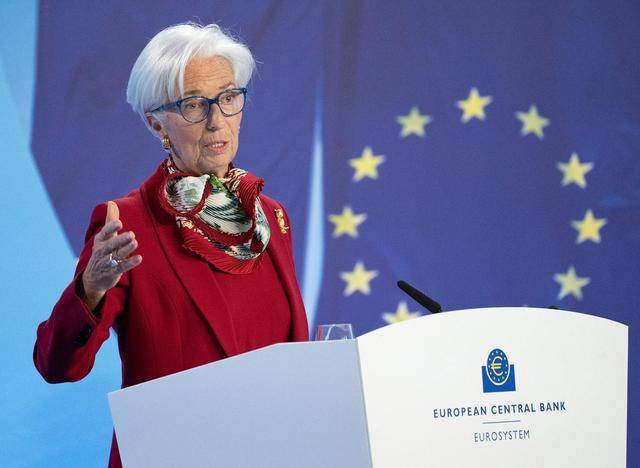
千万难民成欧洲红利!欧洲央行行长说漏嘴,揭露俄乌战争残酷真相
Sou Hu Cai Jing· 2025-08-25 16:09
Core Insights - The ongoing Russia-Ukraine conflict has inadvertently benefited Europe by providing a significant influx of Ukrainian labor, which has helped mitigate economic downturns post-pandemic [1][4][12] - European Central Bank President Christine Lagarde highlighted that the increase in foreign-born workers, particularly from Ukraine, has contributed to lower inflation rates without severely hindering economic growth [1][3] Group 1: Ukrainian Labor Impact - The influx of Ukrainian workers, estimated at around five to six million, has been crucial for various European economies, particularly in Germany, which accepted approximately two million [6][12] - Ukrainian migrants are primarily young, educated individuals willing to work for lower wages, thus filling labor shortages in sectors where local populations are reluctant to engage [10][12] - The presence of these workers has revitalized economic activities in aging European societies, as they are willing to take on jobs that locals avoid, thereby alleviating some economic pressures [12][17] Group 2: Humanitarian and Economic Dynamics - European countries initially provided extensive support to Ukrainian refugees, including housing and financial aid, but have since begun to reduce these benefits and encourage self-sufficiency among migrants [6][8] - The situation reflects a complex dynamic where Europe benefits economically from Ukrainian labor while the latter faces exploitation, working in low-wage jobs without full rights or protections [17][19] - The long-term consequences for Ukraine are severe, as the country has lost a significant portion of its young workforce, which is critical for its future economic recovery and demographic stability [14][15][19]
“十五五”时期中国面临的机遇、挑战与改革方向
Hua Xia Shi Bao· 2025-08-25 13:50
Group 1 - The core viewpoint highlights the challenges and opportunities for China's economy during the "14th Five-Year Plan" period, emphasizing the shift from high-speed growth to high-quality development and the need to address demand insufficiency [5][6][9] - The external environment is characterized by intensified trade friction with the U.S., which has escalated into a comprehensive confrontation affecting China's external demand and supply chains [4][6] - Internally, China faces structural issues such as aging population and insufficient demand, necessitating reforms in consumption and investment structures to stimulate economic growth [6][8] Group 2 - The economic growth rate during the "14th Five-Year Plan" is projected to be in the range of 4.5% to 5%, with a focus on balancing nominal and actual growth rates [6][10] - Key challenges include ongoing trade tensions, demographic shifts leading to labor shortages, and local government debt issues that require systemic reforms [6][11] - Opportunities arise from strengthening non-U.S. trade alliances, leveraging the potential of a unified domestic market, and fostering human capital and technological innovation [7][9] Group 3 - The planning and reform strategies for the "14th Five-Year Plan" should focus on balancing supply and demand, optimizing investment and consumption, and enhancing the relationship between manufacturing and service sectors [8][9] - Macro-control systems need to transition to prioritize nominal growth and adjust fiscal and monetary policies accordingly [10][13] - Structural reforms should aim to improve income distribution, accelerate urbanization, and enhance the fiscal system to support consumption and economic balance [11][12][13] Group 4 - The development of high-quality services in sectors such as healthcare, tourism, and elder care is essential to meet the growing demand for quality services [16] - Encouraging private sector participation and reducing market entry barriers will be crucial for service industry growth [16] - Strengthening regulatory frameworks to protect consumer rights and promote new service consumption models will enhance market stability and growth [16]

海外市场周观察:鲍威尔在全球央行年会定调宽松预期
Huafu Securities· 2025-08-25 11:26
Group 1 - The core viewpoint of the report indicates that Powell's dovish signal at the Jackson Hole meeting has led to a significant rebound in US stocks, with the market almost fully pricing in a rate cut in September and two cuts within the year [1][7][8] - Key economic data includes initial jobless claims at 235,000, slightly above previous and forecast values, and the S&P Global Manufacturing PMI for August at 53.3, exceeding both previous and forecast values [1][7][8] - The report highlights the importance of the upcoming July core PCE inflation data, suggesting that if it comes in below expectations, the trend of rate cut trading in the stock market may continue [1][7] Group 2 - The report tracks the performance of major global asset classes, noting that the Shenzhen Composite Index had the highest increase at +4.57%, while the New Zealand dollar saw the largest decline at -1.92% against the RMB [2][23] - In the equity market, the materials sector in the US saw the largest gain at +5.01%, while the healthcare sector experienced the largest decline at -0.37% [2][33] - The report also indicates that the energy sector in Japan had a significant increase of +18.44%, while the information technology sector faced a decline of -7.54% [2][33] Group 3 - The report provides updates on important global economic data, including a rebound in the Eurozone consumer confidence index and an increase in the UK services PMI [50][60][62] - The Japanese composite PMI also showed an upward trend, indicating a positive outlook for the Japanese economy [62][63] - The report emphasizes the significance of these economic indicators in assessing the overall health of the global economy [50][60][62]
宏观周报:新型政策性金融工具即将落地-20250824
KAIYUAN SECURITIES· 2025-08-24 08:11
Domestic Macro Policy - New policy financial tools are set to be implemented, focusing on promoting the healthy development of the private economy and enhancing consumption potential[3] - The State Council emphasizes the need for comprehensive measures to release domestic demand potential, including fiscal and financial support[4] - The implementation of a loan interest subsidy policy for service industry operators has been announced, with a maximum loan subsidy of 1 million yuan per entity[12] Monetary and Fiscal Policy - The central bank's second-quarter monetary policy report indicates a commitment to maintaining a moderately loose monetary policy, with potential for rate cuts[14] - Personal consumption loans will enjoy fiscal interest subsidies starting September 1, 2025, with a subsidy rate of 1% per year, covering loans under 50,000 yuan and significant purchases[16] - The Ministry of Finance has announced that childcare subsidies will be exempt from personal income tax starting January 1, 2025[16] Trade Relations - The U.S. and China have agreed to suspend the implementation of 24% tariffs for 90 days, indicating a temporary easing of trade tensions[19] - The U.S. Treasury Secretary has called for a new round of interest rate cuts, suggesting a potential reduction of 150 to 175 basis points from current levels[23] International Monetary Policy - The Federal Reserve is expected to lower interest rates by 25 basis points in September, with two rate cuts anticipated for the year[21] - The risk balance in the U.S. economy is shifting, with increasing downward risks to employment, prompting discussions on adjusting policy stances[21] Market Trends - The S&P 500 index increased by 0.27% over the past week, while the Nasdaq and Dow Jones indices saw declines of 0.58% and 0.36%, respectively[24] - Gold prices rose by 1.12% in the same period, reflecting a shift in investor sentiment towards safe-haven assets[25]
【省人力资源社会保障厅】陕西开展“技能照亮前程”行动
Shan Xi Ri Bao· 2025-08-23 22:26
Core Viewpoint - The "Skills Illuminate the Future" initiative in Shaanxi aims to enhance vocational skills training from 2025 to 2027, focusing on employment and talent development in key industries [1][2] Group 1: Vocational Skills Training - Shaanxi plans to conduct large-scale vocational skills training, targeting 1 million subsidized training sessions during the initiative [1] - The initiative will emphasize training in high-demand sectors such as elderly care, advanced manufacturing, and modern services [1] Group 2: Targeted Talent Development - Each year, Shaanxi aims to train over 20,000 skilled workers in the elderly care sector, implementing a tiered subsidy policy to promote training and employment synergy [1] - The initiative will also focus on training approximately 3,000 high-skilled workers annually in manufacturing, digital skills, and service sectors [1] Group 3: Leadership and High-Skill Talent - Shaanxi plans to cultivate around 300 leading talents in advanced manufacturing and modern services, which is expected to drive the training of approximately 150,000 high-skilled workers [1] - The initiative includes a project-based training approach for industries facing significant labor shortages [1] Group 4: Policy Support for Enterprises - The government supports enterprises in establishing training centers and provides subsidies for technician training [2] - Policies will be coordinated to enhance employment opportunities and provide skill enhancement subsidies for eligible individuals [2]
越南革新开放四十年经济增长106倍
Shang Wu Bu Wang Zhan· 2025-08-22 16:03
Group 1 - Vietnam's economy has grown nearly 106 times from $4.5 billion in 1986 to $476.3 billion in 2024, with GDP per capita increasing from $74 to $4,700, a growth of over 63 times [1] - The average annual economic growth rate from 1987 to 2024 is approximately 6.67%, making Vietnam one of the fastest-growing countries in ASEAN [1] - The contribution of agriculture to GDP has significantly decreased from 36.76% in 1986 to 11.86% in 2024, while the industrial and service sectors have risen to 37.64% and 42.36% respectively [1] Group 2 - Despite impressive achievements, Vietnam's growth model reveals limitations and faces challenges from global instability [2] - Vietnam's economic structure is still relatively backward compared to some regional countries, with the agricultural sector's GDP share indicating a lag behind Thailand in 2011, Malaysia in 1996, and South Korea in 1984 [2] - The current growth model heavily relies on capital and cheap labor, with weak productivity, innovation, and value chain connections [2]