
油运

Search documents
国泰海通:2025年油运运价再创新高 2026年期待超级牛市
Zhi Tong Cai Jing· 2026-01-09 07:40
Core Viewpoint - The oil shipping industry has experienced a four-year upward trend, with expectations that tanker profitability could reach a ten-year high by 2025. The capital market shows significant divergence regarding future trends in oil shipping, indicating potential opportunities for investment [1]. Group 1: Oil Shipping Long-term Logic - The first phase of the oil shipping boom is driven by geopolitical conflicts, notably the Russia-Ukraine conflict, which has restructured global oil trade and increased average shipping distances, leading to a significant rise in demand [1]. - The second phase is anticipated to be driven by global oil production increases, particularly with OPEC+ expected to commence production increases in April 2025, transitioning from a reduction to an expansion phase in global oil supply [1]. - The aging fleet of oil tankers, combined with stricter environmental regulations and sanctions on shadow fleets, is expected to maintain a rigid supply of compliant market capacity, supporting continued demand growth in the oil shipping sector [1]. Group 2: 2025 Outlook - The oil shipping market is projected to experience a significant recovery in 2025, with tanker capacity utilization expected to rise to threshold levels, making rates sensitive to marginal supply and demand changes [2]. - The average daily earnings for Very Large Crude Carriers (VLCCTCE) are estimated to reach $51,000 in 2025, surpassing the $36,000 forecast for 2023-2024, indicating a potential ten-year high in tanker profitability [2]. - The oil shipping industry has been on an upward trajectory since 2022, marking four consecutive years of growth [2]. Group 3: Gray Market and Compliance - The tightening of sanctions by the U.S. on Iran and shadow fleets has led to a decline in operational efficiency for these fleets, while the shift of India from Russian oil to compliant crude is expected to benefit the compliant market [3]. - Recent U.S. measures against Venezuela may impact its oil exports, potentially driving an increase in compliant oil production and benefiting the compliant market supply [3]. - Future geopolitical developments, particularly regarding sanctions on Venezuela and Russia, could significantly expand the compliant oil shipping market and reduce the operational space for shadow fleets, accelerating the dismantling of older tankers [3].

国泰海通|交运:2025年运价再创新高,2026年期待超级牛市
国泰海通证券研究· 2026-01-08 14:11
Core Viewpoint - The oil shipping industry has experienced a continuous uptrend for four years, with expectations for a super bull market driven by supply-demand dynamics and geopolitical factors [1][4]. Group 1: Oil Shipping Long Logic - The first phase of the oil shipping boom is driven by geopolitical conflicts, notably the Russia-Ukraine conflict, which has restructured global oil trade, increasing average shipping distances and demand by over 10% [1]. - The second phase is anticipated to be fueled by global oil production increases starting from April 2025, as OPEC+ shifts from a production cut cycle to an increase cycle, which is expected to boost oil shipping demand [1]. - The aging fleet of oil tankers, combined with stricter environmental regulations and sanctions on shadow fleets, will likely maintain a rigid supply in the compliant market, supporting continued demand growth [1]. Group 2: Market Outlook for 2025 - In the second half of 2025, oil shipping rates are expected to surge, potentially reaching a ten-year high in tanker profitability, with estimates for VLCC TCE (Time Charter Equivalent) at $51,000, up from $36,000 in 2023-24 [2]. - The oil shipping market will face pressure tests in late 2024 due to geopolitical oil prices and Iranian production increases, but a significant recovery is expected in early 2025 as oil prices stabilize [2]. - The combined effects of OPEC+ and South American production increases, along with India's shift to compliant oil imports, will drive high tanker utilization rates and elevated shipping rates [2]. Group 3: Focus on the Grey Market - The tightening of sanctions by the U.S. on Iran and shadow fleets has led to a decline in operational efficiency for these fleets, benefiting the compliant oil market [3]. - The recent U.S. measures against Venezuela are expected to impact its oil exports, potentially driving compliant oil production and benefiting the compliant market [3]. - Future geopolitical developments, such as the potential lifting of sanctions on Venezuela and Russia, could significantly expand the compliant oil shipping market and reduce the grey market's operational space [3]. Group 4: Seasonal Risks and Investment Recommendations - The oil shipping industry has seen a four-year upward trend, with expectations for tanker profitability to reach a ten-year high in 2025 [4]. - The capital market shows significant divergence regarding future trends in oil shipping, indicating potential for substantial gains [4]. - The recent seasonal price adjustments in the oil shipping market are in line with expectations, suggesting a strategic opportunity for investment during the off-season [4].


委内瑞拉变局,给“油运”送来风口
市值风云· 2026-01-05 10:05
Core Viewpoint - The global VLCC (Very Large Crude Carrier) freight rates have reached a new high since 2008, driven by geopolitical changes in Venezuela and supply constraints from sanctioned vessels [1][4][11]. Group 1: Market Dynamics - Venezuela, holding over 300 billion barrels of proven oil reserves, has experienced significant political upheaval, impacting global energy markets and oil transportation rates [4]. - On January 3, the Baltic crude oil freight index surged by 5%, with VLCC daily rental rates on the Gulf-Caribbean route increasing by 22% in a single day [4]. Group 2: VLCC Freight Rate Trends - VLCC freight rates are expected to show a "stair-step" increase throughout 2025, starting from $40,000/day at the beginning of the year, rising to $50,000-$60,000/day in Q1, and stabilizing around $60,000/day in Q2 [5]. - In Q3, rates may drop to around $40,000/day due to seasonal demand, but by Q4, rates are projected to soar from $65,000/day in September to $125,000/day in December on the Middle East-China route, with some routes reaching extreme highs of $218,000/day [5]. Group 3: Supply Constraints - The structural changes in the supply of "black fleet" (sanctioned vessels) and "white fleet" (compliant vessels) are the core drivers of rising freight rates [8]. - As of November 2025, sanctioned VLCC capacity accounted for 15.7% of the global VLCC fleet, with projections of reaching 18%-20% by 2026 [9]. - The exit of sanctioned capacity from the market is a key factor contributing to the current global oil transportation supply shortage and soaring freight rates [11]. Group 4: Aging Fleet Issues - The accelerated retirement of older vessels is also a constraint on supply, with over 20% of the global VLCC fleet being over 20 years old as of November 2025, expected to rise to 22% by 2026 [13].
中远海能(01138)涨3.62% 委内瑞拉地缘风险升温 支撑油运淡季不淡
Xin Lang Cai Jing· 2026-01-05 03:52
Core Viewpoint - The rising geopolitical risks in Venezuela are supporting oil transportation demand during the off-peak season, as indicated by Changjiang Securities' research report [1][2]. Group 1: Company Performance - Zhongyuan Shipping (中远海能) shares have increased by 3.62%, reaching HKD 10.02, with a trading volume of HKD 70.86 million [1][2]. Group 2: Market Dynamics - Venezuela's oil exports are expected to be 700,000 barrels per day in 2024, accounting for 1.8% of global oil exports, primarily to China and the United States [1][2]. - The recent U.S. actions against Venezuela have temporarily halted its oil exports, although there has been no significant damage to the state-owned oil company PDVSA's facilities [1][2]. - The disruption in Venezuelan exports may lead to tighter heavy oil supply in China and the U.S., prompting increased imports of heavy crude oil from Middle Eastern and Latin American countries, thereby raising compliant oil transportation demand [1][2]. Group 3: Long-term Outlook - Venezuela is characterized as a country with high reserves but low production, holding 19% of global oil reserves while contributing only 1.3% to global production [1][2]. - Former President Trump has indicated a strong intervention in Venezuela's oil industry, which could potentially increase the demand for Venezuelan oil along long-distance routes to the Far East, reshaping trade patterns [1][2].
交运周专题2026W1:委内瑞拉地缘波动托底油运,人民币升值交运几何?
Changjiang Securities· 2026-01-05 01:17
Investment Rating - The report maintains a "Positive" investment rating for the transportation industry [12] Core Insights - The geopolitical risks surrounding Venezuela are expected to support oil transportation during the off-peak season, with a recommendation for companies like China Merchants Energy and COSCO Shipping Energy [6][21] - The appreciation of the Renminbi is anticipated to benefit the transportation sector, particularly in three key areas: companies with significant dollar-denominated debt will gain from exchange rate benefits, increased purchasing power will boost outbound tourism and consumption, and lower dollar-denominated costs will improve profitability [7][35][42] Summary by Sections Geopolitical Risks and Oil Transportation - The U.S. has implemented significant sanctions against Venezuela, leading to a temporary halt in its oil exports, which are projected to be 700,000 barrels per day in 2024, accounting for 1.8% of global oil exports [6][21] - The sanctions may tighten heavy oil supply for China and the U.S., prompting increased imports from Middle Eastern and Latin American countries, thus raising compliant oil transportation demand [6][21] Renminbi Appreciation and Opportunities in Transportation - As of January 2, 2026, the Renminbi has appreciated by 1.4% against the U.S. dollar since December 2025, with expectations for continued appreciation due to anticipated interest rate cuts by the Federal Reserve [7][30][32] - The report categorizes beneficiaries into three tiers: companies with large dollar debts benefiting from exchange rate gains, increased outbound tourism boosting international flight revenues, and reduced costs for aviation fuel leading to improved profitability [7][35][42] Travel Demand and Market Performance - During the New Year holiday, domestic passenger traffic saw a 10% year-on-year increase, while international passenger traffic rose by 9% [8][57] - The average domestic passenger load factor improved by 6.0 percentage points year-on-year, and international load factors increased by 4.8 percentage points [8][63] Logistics and Freight Trends - The volume of express deliveries has shown a slight decline, with a 0.5% year-on-year decrease in the number of packages collected [9] - Despite the decline in express delivery growth, the logistics sector is expected to see a shift towards leading companies like ZTO Express and YTO Express due to a restructuring of the e-commerce ecosystem [9]

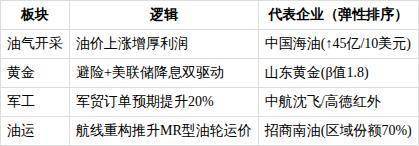
美军突袭委内瑞拉引爆全球!A股5大板块将巨震,龙头已异动?
Sou Hu Cai Jing· 2026-01-05 00:38
Core Viewpoint - The U.S. military's surprise operation in Venezuela has heightened global geopolitical tensions, impacting various sectors in the A-share market, particularly those related to defense, oil, lithium resources, gold, and supply chain security [1][3]. Group 1: Military Operation Details - The U.S. military operation, named "Absolute Resolve," involved over 150 aircraft and was executed within three hours, successfully capturing President Maduro and his wife [3]. - The operation was meticulously planned over several months, with significant military assets deployed, including F-22 and F-35 fighter jets, and B-1 bombers [3]. Group 2: Impact on A-share Market - The conflict is expected to cause significant movements in five key sectors: defense and military, oil services and transportation, lithium resources, gold, and supply chain security [4]. - Historical trends indicate that military conflicts typically lead to increased orders and positive sentiment in the defense sector, with China's military budget growing at around 7% annually [4]. Group 3: Sector-Specific Insights - **Defense and Military**: Likely to benefit from increased orders due to heightened geopolitical tensions [4]. - **Oil Services and Transportation**: Venezuela's oil infrastructure may be damaged, leading to higher global oil prices and increased demand for oil services and transportation [4]. - **Lithium Resources**: The conflict may halt lithium mining operations in Venezuela, exacerbating supply shortages as global demand for electric vehicles rises [4]. - **Gold**: Traditionally viewed as a safe-haven asset, gold prices are expected to rise amid increased global uncertainty [4]. - **Supply Chain Security**: Disruptions in Venezuela's mining operations could accelerate domestic production in China for critical materials [4]. Group 4: Market Movements and Stock Performance - Leading stocks in relevant sectors have already shown signs of movement, with increased trading volumes and price changes noted prior to the conflict [5]. - Key players include military contractors like AVIC Shenyang Aircraft Corporation and lithium producers such as Ganfeng Lithium, which have demonstrated strong business fundamentals [5].

委内瑞拉事件对金融市场的影响分析
Sou Hu Cai Jing· 2026-01-04 19:28
Group 1 - The U.S. military operation in Venezuela resulted in the capture of President Maduro and his wife, leading to a national emergency declaration and calls for armed resistance [1] - Venezuela, holding the world's largest oil reserves (3,040 million barrels), saw its heavy crude oil exports interrupted, causing Brent crude prices to spike by $3-5 per barrel [1] - If a pro-U.S. regime is established, companies like Chevron could potentially increase production from 1 million barrels per day to 2 million barrels per day [1] Group 2 - The energy market is expected to experience significant volatility, with immediate impacts on oil prices and potential long-term shifts depending on political outcomes in Venezuela [2][3] - Gold prices rose by 2.5% to $4,375 per ounce within a week, driven by safe-haven demand and expectations of U.S. Federal Reserve rate cuts [3] - The A-share market displayed a "defensive first" characteristic, with energy-related sectors gaining investor interest [3] Group 3 - Benefiting sectors include oil and gas extraction, gold, military industry, and oil transportation, with specific companies like China National Offshore Oil Corporation and Shandong Gold being highlighted for their potential gains [1] - The aviation sector is under pressure due to rising fuel costs, which could impact profitability [1][4] - The chemical sector faces challenges as cost transmission in the PTA/polyester supply chain is hindered by rising oil prices [4] Group 4 - Short-term trading opportunities exist in the oil and gold sectors, but caution is advised regarding profit-taking [4] - Military orders are expected to increase, with companies like AVIC Shenyang Aircraft Corporation being key players in this space [4] - The potential for guerrilla warfare supported by Russia could prolong oil price volatility, impacting market stability [4]
周期论剑|新年周期打头阵-思路详解
2026-01-04 15:35
Summary of Key Points from Conference Call Industry Overview - **A-Share Market Performance**: The Shanghai Composite Index rose by 18.41% in 2025, indicating a positive market outlook for 2026, driven by expectations of U.S. interest rate cuts and increased liquidity in overseas markets [2][3]. - **Chemical Industry**: The chemical sector showed strong performance in 2025, with expectations of continued growth into 2026, as supply pressures ease and some products see price increases [10][11]. - **Aviation Industry**: The aviation sector experienced a 13% increase in passenger traffic during the New Year period, with ticket prices rising over 10% year-on-year. Future growth is anticipated due to low supply growth and recovering demand [6]. - **Oil Shipping Industry**: The oil shipping sector is at a four-year high, driven by increased oil production. The next five years are expected to see continued demand growth [8][9]. Core Insights and Arguments - **Market Trends**: The A-share market is expected to benefit from several factors, including anticipated U.S. interest rate cuts, a stable and appreciating RMB, and supportive policies for investment and real estate [2][3]. - **Price Increase Logic**: Price increases are emerging in sectors like chemicals and new energy materials due to improved demand and constrained supply. The TMT supply chain is also experiencing price hikes due to demand expansion [4]. - **Investment Recommendations**: - **Technology Growth**: Positive outlook for technology sectors, including internet, electronics, and power equipment [5]. - **Non-Banking Financials**: Favorable conditions for insurance and brokerage firms [5]. - **Cyclical Sectors**: Sectors benefiting from domestic demand and stable real estate policies, such as tourism and consumer goods, are recommended [5]. Additional Important Insights - **Industrial Metals**: The industrial metals market is optimistic for 2026, with supply disruptions and increased demand from AI and traditional sectors driving growth [15]. - **Chemical Sector Recommendations**: Key companies to watch include Hualu Hengsheng in coal chemicals and leading firms in the refrigerant and new materials sectors [11]. - **Coal Market Outlook**: The coal market is expected to stabilize, with prices projected to rise in the latter half of 2026 after a period of decline [22][24]. - **Real Estate Sector**: The real estate sector is receiving renewed attention from policymakers, indicating potential recovery and investment opportunities in leading companies [25]. This summary encapsulates the key points discussed in the conference call, highlighting the performance and outlook of various industries, along with strategic investment recommendations.
委内局势突变-对油运影响几何
2026-01-04 15:35
Summary of Conference Call on Venezuelan Oil Market Impact Industry Overview - The discussion centers around the impact of the recent political turmoil in Venezuela on the oil transportation market and the broader implications for the global oil supply chain [2][3][6]. Key Points and Arguments - **Venezuelan Oil Supply Chain Changes**: The U.S. military action on January 3, which involved the capture of Venezuelan President Guaido's wife, has significant implications for the oil supply chain, particularly affecting the cruise market [2]. - **Venezuela's Oil Reserves**: Venezuela holds approximately 20% of the world's known oil reserves, despite current production being only about 30% of its historical peak [3][4]. - **Potential for Increased Production**: If sanctions are lifted, international capital and technology could flow into Venezuela, potentially restoring its oil production capacity and significantly increasing global compliant oil supply [3][4]. - **Short-term vs Long-term Effects**: In the short term, the political situation may lead to export disruptions and inventory build-up, pushing demand towards other compliant markets. In the long term, U.S. companies' involvement could enhance Venezuela's oil production, altering the global energy supply landscape [4][6]. - **Impact on Global Oil Prices**: The potential increase in compliant oil supply from Venezuela could lead to an oversupply in the global market, particularly in the Atlantic basin, which may depress short-term oil prices [5][6]. - **Shipping Requirements**: If Venezuela's production returns to 2008 levels, compliant oil exports could rise from 800,000 barrels per day to 2.4 million barrels per day, necessitating 140 Very Large Crude Carriers (VLCCs) for transportation, which would represent 20% of global compliant shipping capacity [5][6]. Additional Important Insights - **Geopolitical Risks**: The instability in Iran and other geopolitical factors may shift the dynamics of black oil trade, potentially benefiting compliant markets [8]. - **VLCC Freight Rates**: Recent fluctuations in VLCC freight rates have been noted, with a long-term outlook remaining positive as rental rates are expected to stabilize above $60,000 per day [8]. - **Cruise Market Outlook**: The anticipated increase in compliant oil supply from Venezuela could significantly benefit the cruise market, especially in the latter half of 2025, as demand remains high and supply tightens [6][7]. This summary encapsulates the critical insights from the conference call regarding the Venezuelan oil market and its implications for the global oil transportation industry.
国泰海通交运周观察:元旦航空量价两旺,油运淡季运价回落
GUOTAI HAITONG SECURITIES· 2026-01-04 08:06
Investment Rating - The report maintains an "Overweight" rating for the aviation and oil transportation sectors, indicating a positive outlook for both industries [35]. Core Insights - The aviation sector is expected to see robust demand growth, driven by increased travel during the New Year holiday, with significant year-on-year increases in both passenger volume and ticket prices. The report suggests a strategic investment during the off-peak season, anticipating a long-term super cycle [3][4]. - In the oil transportation sector, while seasonal price declines are noted, the report emphasizes the potential for future price increases due to ongoing global oil production growth and limited capacity expansion. It recommends a contrarian investment approach during the off-peak period [3][4]. Summary by Sections Aviation Sector - The report highlights a strong increase in travel demand during the New Year holiday, with a 19% year-on-year increase in overall passenger movement from December 31, 2025, to January 2, 2026. Specifically, civil aviation saw a 13% increase [3][4]. - Domestic ticket prices are estimated to rise by over 10% year-on-year during the holiday period, despite a projected short-term dip in passenger flow post-holiday [3][4]. - The aviation industry is experiencing high load factors while ticket prices remain at historical lows, suggesting a favorable environment for profitability growth driven by demand recovery and market pricing dynamics [3][4]. Oil Transportation Sector - The report notes that the average daily earnings for Very Large Crude Carriers (VLCC) reached $51,000 in 2025, significantly higher than the $36,000 in 2023-2024, driven by improved capacity utilization and increased oil production from the Middle East and South America [3][4]. - Despite a recent decline in freight rates during the traditional off-peak season, the report maintains a positive outlook for future price increases, supported by ongoing global oil production growth and limited fleet expansion [3][4]. - The report suggests monitoring geopolitical developments, particularly in Venezuela, and recommends increasing positions in companies like COSCO Shipping Energy, China Merchants Energy Shipping, and China Shipbuilding Leasing [3][4].
