
非银金融

Search documents
1月A股新开户数超490万户
Jin Rong Shi Bao· 2026-02-04 03:19
A股股票与基金开户量激增,是市场行情向好的直接体现与有力印证。 刚刚过去的1月,A股三大指数悉数收涨,上证指数、深证成指、创业板指分别上涨3.76%、5.03%、4.47%,科创综指则大幅收涨近12%。市场整体呈 现"小盘成长占优,大盘价值承压"的结构性分化格局,有色金属与科技两大主线交替领涨。 《金融时报》记者2月3日从上交所获悉,2026年1月,A股新开户数491.58万户,刷新2024年11月以来的单月开户纪录,环比增长89.3%,同比增长 213.1%。同月,基金新开户54.63万户,环比增长123.8%,同比增长168.7%。 | 日期 | 总数 | A股 | B股 | 基金 | | --- | --- | --- | --- | --- | | 2026.01 | 546.27 | 491.58 | 0.05 | 54.63 | 展望后市,国泰海通证券策略团队认为,A股市场有望逐步企稳。一是国内政策重心正转向内需主导,并作为首要任务,有望提振中国经济前景与资产回 报;二是中国证监会近期再次强调"全力巩固资本市场稳中向好势头"。 博时基金宏观团队表示,近期ETF资金流出、海外波动加大,对A股市场形成 ...


“申”挖数据 | 估值水温表
申万宏源证券上海北京西路营业部· 2026-02-04 03:15
Core Viewpoint - The current Buffett Indicator for A-shares is at 91.16%, which is above the safe zone, indicating potential overvaluation in the market [5][22]. Valuation Historical Percentile Levels - The PE valuation (TTM) for major broad market indices is above the 20% percentile for the CSI 500. The PE valuations for CSI 1000, CSI 300, SSE 50, CSI 500, SZSE Component Index, STAR Market 50, CSI A100, and SSE Index are at 82.79%, 84.44%, 84.89%, 87.57%, 92.47%, 96.81%, 99.46%, and 99.67% respectively, indicating relatively high valuations and associated risks [6]. - In terms of industry, the PE valuations for the food and beverage sector and non-bank financials are below the 20% percentile of the past decade, at 7.29% and 9.02% respectively, making them areas of focus [6]. - Other industries such as steel, comprehensive, light industry manufacturing, defense, coal, oil and petrochemicals, construction materials, basic chemicals, communication, media, real estate, electronics, computers, and retail have PE valuations at historical percentiles ranging from 82.34% to 98.66%, suggesting caution in investment [6]. Market Overview - The total market capitalization of listed companies is approximately 672,864.14 billion, with a circulating market value of 632,542.89 billion and an average PE ratio of 16.9 [13][18]. - The Shenzhen market has a total market capitalization of about 462,613.69 billion with 2,886 listed companies [14]. Industry Valuation Levels - The PE valuation levels for various industries show significant variation, with agriculture at 14.95, basic chemicals at 34.21, and steel at 5.69, among others. Notably, the food and beverage sector has a PE of 16.52, while the real estate sector is at 6.8 [32]. - The PB valuation levels also vary, with agriculture at 2.02, basic chemicals at 1.41, and steel at 0.73, indicating differing levels of valuation across sectors [36]. Industry PS Valuation Levels - The PS valuation levels for industries such as agriculture at 0.82, basic chemicals at 0.55, and steel at 0.31 reflect the relative valuation metrics across sectors, with food and beverage at 3.12 and real estate at 0.37 [40].

A股市场大势研判:大盘探底回升,三大指数集体收红
Dongguan Securities· 2026-02-03 23:30
证券研究报告 2026 年 2 月 4 日 星期三 【A 股市场大势研判】 资料来源:东莞证券研究所,iFinD 数据 后市展望: 大盘探底回升,三大指数集体收红 市场表现: | 指数名称 | 收盘点位 | 涨跌幅 | 涨跌 | 上证指数分时图 | | --- | --- | --- | --- | --- | | 上证指数 | 4067.74 | 1.29% | 51.99 | | | 深证成指 | 14127.11 | 2.19% | 302.75 | | | 沪深 300 | 4660.11 | 1.18% | 54.13 | | | 创业板 | 3324.89 | 1.86% | 60.78 | | | 科创 50 | 1471.07 | 1.39% | 20.17 | | | 北证 50 | 1549.51 | 3.27% | 49.08 | | 资料来源:东莞证券研究所,iFinD 数据 板块排名: | 申万行业表现前五 | | | 申万行业表现后五 | 概 | 念板块表现前五 | 概念板块表现后五 | | | --- | --- | --- | --- | --- | --- | --- | ...
【3日资金路线图】电力设备板块净流入逾251亿元居首 龙虎榜机构抢筹多股
证券时报· 2026-02-03 12:13
2月3日,A股市场整体上涨。 截至收盘,上证指数收报4067.74点,上涨1.29%,深证成指收报14127.11点,上涨2.19%,创业板 指收报3324.89点,上涨1.86%,北证50指数上涨3.27%。 1. A股市场全天主力资金净流入16.49亿元 今日A股市场主力资金开盘净流入50.22亿元,尾盘净流入20.19亿元,全天净流入16.49亿元。 | | | 沪深两市近五日主力资金流向情况(亿元) | | | | --- | --- | --- | --- | --- | | 日期 | | | 净流入金额 开盘净流入 尾盘净流入 超大单净买入 | | | 2026-2-3 | 16. 49 | 50. 22 | 20. 19 | 105. 03 | | 2026-2-2 | -539.77 | -143. 20 | -157. 11 | -384. 36 | | 2026-1-30 | -595. 71 | -279.84 | -50. 70 | -303.01 | | 2026-1-29 | -602. 22 | -221.16 | -98.94 | -296. 09 | | 2026-1-28 ...

A股2025年年报业绩预告点评:盈利改善趋势延续,把握结构性业绩线索
Ping An Securities· 2026-02-03 11:13
Core Insights - The report indicates a continuation of the profit improvement trend in A-shares, with a disclosure rate of 55.8% for 2025 annual reports as of January 31, 2026 [1] - The sectors with the highest pre-announcement rates and profit growth are concentrated in upstream materials and technology manufacturing [1][2] - The overall pre-announcement rate for 2025 is 35.8%, showing a marginal increase from 33.5% in 2024, with the highest rates in non-bank financials, non-ferrous metals, beauty care, and automotive sectors [3][5] Industry Comparison - The highest pre-announcement rates range from 50% to 82% in non-bank financials, non-ferrous metals, beauty care, and automotive sectors, while the lowest rates (below 25%) are found in coal, real estate, light manufacturing, food and beverage, and retail sectors [1][2] - Profit growth rates for 2025 show non-ferrous metals, non-bank financials, steel, automotive, and public utilities leading with a median year-on-year growth of 40% to 70% [2] - The report highlights that the profit growth for the majority of sectors, except for non-ferrous metals and steel, has improved compared to the third quarter of 2025 [2] Profit Growth Insights - The median year-on-year profit growth for all A-shares is reported at 17.9%, with a significant improvement of 12.6 percentage points from the third quarter [3][4] - The growth rates for the main boards, ChiNext, and STAR Market are 14.3%, 24.9%, and 22.4% respectively, indicating substantial improvements across all boards [3][4] - Specific sectors such as personal care products, electric motors, and aviation equipment show remarkable profit growth forecasts ranging from 65% to 275% for 2025 [2][11] Market Outlook - The report suggests that the overall profit improvement trend in A-shares is expected to continue, with structural highlights in upstream price increases and technology manufacturing [6] - Short-term market conditions are anticipated to remain favorable, with a focus on sectors with strong earnings support [6] - Mid-term expectations include continued policy support and industrial innovation driving profit improvements, with recommendations to focus on technology growth, commodity price beneficiaries, advanced manufacturing, and dividend assets [6]
掘金日报(2.3)|83股涨停聚焦“新质生产力”:航天发展被43亿资金“围猎”涨停
和讯· 2026-02-03 10:25
Market Overview - On February 3, A-shares experienced a slight opening followed by a decline, but rebounded significantly in the afternoon, with the Shanghai Composite Index rising by 1.29%, the Shenzhen Component Index by 2.19%, and the ChiNext Index by 1.86% [2] - The total trading volume in the Shanghai and Shenzhen markets was approximately 2.54 trillion yuan, a decrease of about 40.5 billion yuan compared to the previous day [3] Market Sentiment - Market sentiment was strong, with 4.9158 million new A-share accounts opened in January 2026, a month-on-month increase of 89% and a year-on-year increase of 213% compared to January 2025 [5] Sector Performance - High-end manufacturing and technology sectors, including electric equipment, defense, and machinery, saw active capital inflows, while traditional sectors like non-ferrous metals, non-bank financials, and banks experienced capital outflows [6] - The electric equipment sector led with a net capital inflow of 26.748 billion yuan, followed by defense with 17.106 billion yuan and machinery with 15.730 billion yuan [8] - In contrast, the non-ferrous metals sector had a net outflow of 4.542 billion yuan despite a 3.25% increase in the sector index [10] Stock Highlights - Notable stocks with significant capital inflows included Aerospace Development with a net inflow of 4.314 billion yuan, Zhejiang Wenlian with 3.556 billion yuan, and Huasheng Tiancai with 3.079 billion yuan [12] - Conversely, stocks with major capital outflows included Xingye Yinxin with a net outflow of 3.313 billion yuan and Caiwu Jiyuan with 2.765 billion yuan [14] Market Trends - A total of 83 stocks hit the daily limit up, indicating a clear market theme with structural differentiation, focusing on "new quality productivity" sectors such as photovoltaic, energy storage, and low-altitude economy [15] - The market's focus has shifted from previous "AI computing power" to a systematic layout in "new quality productivity" areas, driven by "hard technology + state-owned enterprise reform" [15] - The space and photovoltaic sectors saw a surge in interest, with over 30 stocks hitting the limit up due to rumors of a merger between SpaceX and xAI [15] Technical Analysis - The market showed a variety of limit-up stocks, with most being first-time limit-ups, indicating a cautious investor sentiment despite a recovery in short-term emotions [19] - The gold and silver markets experienced significant rebounds, with spot gold rising above $4,850 per ounce and spot silver increasing by over 8% [22] - The rebound in precious metals is attributed to a combination of market sentiment recovery, liquidity replenishment, and long-term fundamental support [23]



华安基金:光模块业绩预告乐观,创业板50指数上周逆势上涨
Xin Lang Cai Jing· 2026-02-03 02:57
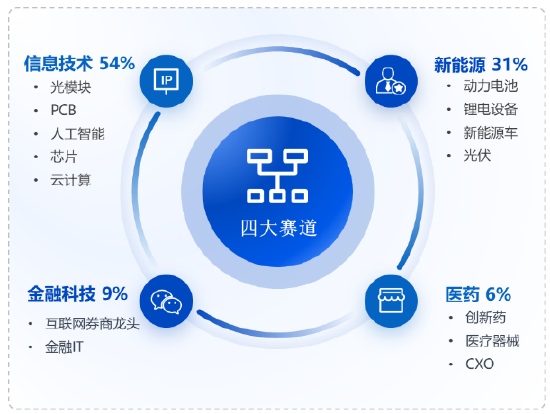
Market Overview - The A-share market exhibited a mixed trend last week, with the Shanghai Composite Index rising by 0.08%, while the CSI 500 and CSI 1000 fell by 2.56% and 2.55% respectively. The ChiNext 50 increased by 0.99% [1][10] - Daily trading volume in the A-share market averaged around 3 trillion yuan, indicating high investor enthusiasm. Market hotspots are rotating quickly, including sectors like commercial aerospace, precious metals, photovoltaic, AI applications, chip industry, and resource cyclical stocks [1][10] ChiNext 50 Index Insights - The ChiNext 50 Index serves as a direct financing platform for innovative enterprises focusing on "three innovations (innovation, creation, creativity)" and "four new (new technologies, new industries, new business formats, new models)" [1][10] - The index emphasizes sectors such as information technology, new energy, financial technology, and pharmaceuticals, showcasing pure technology growth attributes [1][10] Key Sectors Performance Technology, AI, and Communication - The ChiNext 50 Index includes 54% of the information technology sector, with significant weights in optical modules and AI application companies. Last week, optical modules performed notably well [3][13] - Key stocks like Zhongji Xuchuang and Xinyi Sheng are expected to benefit from the anticipated increase in 1.6T optical module production, with Xinyi Sheng projecting a net profit of 9.4-9.9 billion yuan for 2025, a 231% year-on-year increase [3][13] New Energy Photovoltaics - The new energy photovoltaic sector saw frequent hotspots last week, with SpaceX's "Million Starlink" plan emphasizing space solar energy as a long-term energy support. Silicon and perovskite technologies are prioritized for benefiting from this trend [4][14] - The capacity pricing mechanism has been implemented in multiple regions, improving the economic viability of large storage projects, benefiting system integrators as project initiation accelerates [4][14] Pharmaceutical and Biotechnology - The innovative drug industry chain is showing a positive trend across various dimensions, including investment data, order acquisition, and performance. The CRO sector is expected to see a turning point with new orders showing an increase in both volume and price [5][14] - The CDMO sector continues to experience strong growth, with a full order book and robust performance, alleviating previous concerns about geopolitical risks [5][14] ChiNext 50 ETF Overview - The ChiNext 50 ETF (code: 159949) tracks the ChiNext 50 Index, focusing on high-quality leading companies in five key technology sectors: new energy vehicles, biomedicine, electronics, photovoltaics, and internet finance [6][15] - The ETF has a substantial liquidity profile, with an average daily trading volume of 1.512 billion yuan over the past year, ranking among the top ETFs on the Shenzhen Stock Exchange [6][15] Recent Performance of ChiNext 50 ETF - The top ten weighted stocks in the ChiNext 50 ETF showed varied performance, with Ningde Times (19.80% weight) rising by 0.86%, while other stocks like Sunshine Power (4.93% weight) fell by 7.38% [7][16]

中观行业比较月报(2026年1月):轮动中把握景气线索,关注涨价与科技-20260203
Ping An Securities· 2026-02-03 01:13
策略配置研究 2026 年 2 月 3 日 中观行业比较月报(2026 年 1 月) 轮动中把握景气线索,关注涨价与科技 证券分析师 平安观点: 1. 上游周期:地缘风险、流动性偏宽等多重驱动下,1 月商品走强波动加大。 有色涨幅最为显著,月末价格回落、波动加大,多数品种已升至近两年 90% 以上高分位区间;石油、化工品接力上涨,但价格水平多数仍处于历史中枢以 下,化工品内部分化明显;煤炭价格波动向上,钢铁、建材表现平淡。 2. 中游制造:新能源产业链材料涨价,出口支撑部分行业量的景气。1 月新 能源光伏、电池产业链材料价格普遍上涨,多数品种已处近两年 80%以上分 位,但仍远低于 2022 年高点;12 月电池出口有支撑;电网设备迎"十五五" 政策支持。机械制造的近一年价格指数相对平稳,12 月通用机械、挖掘机出 口维持高增,机器人产量延续高增。汽车内销偏弱出口韧性,12 月乘用车、 新能源车销量环比负增,但出口相对韧性;商用车内销、出口环比同步增长。 3. TMT:存储引领半导体涨价周期,AI 软硬件需求延续向好。1 月存储 DXI 指数环比上涨 28.3%,同比涨幅超 10 倍,智能设备销售均价同步上涨 ...
春季行情未完,调整是布局机会
Huajin Securities· 2026-02-03 00:50
Market Overview - On February 2, 2026, the Shanghai Composite Index fell by nearly 2.5%[1] - The decline was attributed to expectations of tightening overseas liquidity and adjustments in cyclical sectors[6] Market Trends - The spring market rally is not over; adjustments present opportunities for low-cost positioning[11] - Short-term policy expectations remain positive, with limited external risks anticipated[11] Industry Insights - Adjustments in technology growth and certain cyclical sectors are expected to outperform in the near term[12] - From January 30, 2026, the declines in cyclical sectors included a 14.8% drop in non-ferrous metals and an 8.6% drop in steel[13] Performance Forecasts - High growth rates are projected for sectors such as beauty care (451.0%), non-bank financials (271.2%), and defense industry (140.3%) for 2025[17] - The transportation sector and non-ferrous metals are expected to see significant year-on-year profit growth of 31.2% and 22.6%, respectively[19] Risk Factors - Historical experiences may not apply to future market conditions, and unexpected policy changes could impact investment decisions[33] - Economic recovery may not meet expectations due to external disruptions or unforeseen events[33]
中泰证券2025年A股业绩前瞻:结构分化加剧 资源与制造板块领跑
智通财经网· 2026-02-02 23:24
智通财经APP获悉,中泰证券发布研报称,聚焦体系化扩张主线,规避消费关联品种。核心推荐方向是 需求持续向上,确定性较强的大宗商品相关板块。包括地缘动荡受益品种(贵金属),铜、铝等新能源金 属:军备+算力扩张关键品种(稀土):储能、锂电:长期能源替代品种(光伏、核电、太空算力中心)。谨 慎关注或规避方向是需求弹性弱,逻辑持续性不足的消费关联品种。包括与地产、消费需求相关的黑色 系、猪、高端白酒等奢侈品,或更多的是反弹需求。 二、行业表现剖析:结构分化驱动盈利修复与承压并存 行业方面,2025年出现集中"报喜"的行业有非银金融,有色金属,美容护理,汽车与公用事业。集 中"报忧"的行业有煤炭,房地产,轻工制造,食品饮料和建筑装饰。 非银金融板块集体预增,业绩预警表现远好于其他行业,业绩大幅改善主要得益于资本市场环境的明显 修复和投资端收益的显著提升。全年市场交易活跃、IPO与再融资恢复常态,推动券商经纪与投行业务 收入回升。同时,权益资产表现好转,带动自营投资回报显著增长,成为推动整体盈利的关键。 有色金属行业预喜公司占比约66%,表现出色。金属矿业企业受益于大宗商品价格上涨(如黄金、有色 金属行情走强)和产能释放 ...
