化工

Search documents
贵州省2025年国民经济和社会发展计划执行情况与2026年国民经济和社会发展计划草案的报告
Xin Lang Cai Jing· 2026-02-20 22:46
Group 1: Traditional Industry Optimization - The strategy focuses on enhancing traditional industries, particularly in mineral resource processing and the development of the liquor industry, with expected growth rates of over 12% in chemical and 10% in non-ferrous industries [1] - The initiative includes the establishment of new coal washing plants and the expansion of coal production to reach 190 million tons, alongside the development of renewable energy projects [1] - The liquor industry aims to strengthen its brand and expand international markets, with plans for a three-year action plan for overseas marketing [1] Group 2: Emerging Industry Cultivation - The digital economy is targeted for growth, with a goal for its core industries to contribute 5.5% to the regional GDP, supported by the establishment of data centers and the implementation of the "East Data West Computing" project [2] - The electric vehicle and new energy materials sectors are expected to see a 10% increase in value, with significant investments in battery production and infrastructure [2] - The advanced equipment manufacturing sector is being developed to support national strategic industries, including aviation and emergency rescue equipment [2] Group 3: Development Zone Enhancement - The management reform of development zones is being implemented, with a focus on increasing the utilization rate of standard factory buildings and establishing a digital management platform [3] - The construction of high-level development zones is underway, with two zones expected to reach a scale of 50 billion and 22 zones at 10 billion [3] Group 4: Service Industry Growth - The logistics sector is being enhanced with the establishment of national logistics hubs and a reduction in logistics costs, aiming for a ratio of logistics costs to GDP to drop to 13.8% [5] - The retail and hospitality sectors are encouraged to innovate, with support for digital supply chains and the introduction of new business models [6] - The tourism industry is being promoted through the development of key scenic areas and the integration of cultural and tourism sectors, with a target of 8% growth in tourist numbers and spending [7] Group 5: Agricultural and Rural Development - The agricultural sector is focused on improving quality and efficiency, with a target of a 2% increase in grain yield and the establishment of emergency supply bases for vegetables [21] - Rural revitalization efforts include enhancing infrastructure and public services, with a goal of covering 53% of the rural population with water supply projects [22] Group 6: Green Transition Initiatives - The implementation of carbon emission control measures aims to reduce CO2 emissions per unit of GDP, with a focus on energy efficiency and low-carbon projects [23] - Pollution prevention and ecological restoration efforts are being intensified, with specific targets for air and water quality improvements [24] Group 7: Risk Management and Stability - Financial risk management is prioritized, with measures to control local government debt and ensure the repayment of existing debts [26] - Safety production measures are being enhanced to prevent major accidents, with a focus on high-risk sectors such as mining and transportation [27] - Social stability is being maintained through comprehensive governance and public safety initiatives [28] Group 8: Social Welfare and Public Services - Employment stabilization measures are being implemented to support key groups, with a focus on enhancing job opportunities and skills training [29] - Public service quality is being improved, particularly in healthcare, with the establishment of regional medical centers and enhanced community health services [30] - Social security measures are being reinforced to ensure basic living standards and support for vulnerable populations [32]
2026年核心投资主线是什么?多家公募发声
证券时报· 2026-02-20 15:19
Core Viewpoint - The public fund industry remains optimistic about the economic fundamentals and market trends, highlighting structural opportunities in A-shares driven by multiple favorable factors, particularly in technology growth, energy transition, and consumer recovery [1]. Economic Fundamentals - Economic fundamentals are expected to continue improving, with a solid foundation and resilience in China's economy. The central economic work conference emphasizes "seeking progress while maintaining stability" and aims for stable growth and reasonable price recovery, leading to a good start for the 14th Five-Year Plan [3][4]. - Corporate profit growth is anticipated to stabilize, with ongoing breakthroughs in technological self-reliance and ample liquidity supporting a rational upward revaluation of Chinese assets. A-share valuations are still within a reasonable range, and an increase in dividends is expected to enhance shareholder returns [3]. Capital Market Dynamics - The influx of long-term capital is a core factor for the steady rise of the capital market. The market is expected to exhibit reduced volatility and structural differentiation, with funds concentrating on high-quality assets [7]. - The investor structure is shifting towards long-term and institutional investors, enhancing overall market stability. The "national team" is increasingly engaging in systematic long-term allocations, acting as a stabilizing force for the market [7][8]. Sector-Specific Opportunities - Investment opportunities are emerging in specific sectors, with a focus on technology growth, energy transition, and consumer recovery. The market style is expected to become more balanced, with notable sector rotation and structural rebalancing [10]. - Key areas of interest include: - Chemical and non-ferrous sectors showing positive changes in fundamentals, indicating a long-term upward trend [11]. - The banking sector is viewed as systematically undervalued, with certain quality enterprises offering stable growth attributes [11]. - Non-bank financial sectors with improving ROE trends are also expected to gain market attention [12]. - The Hong Kong stock market is seen as an opportunity for valuation recovery, liquidity improvement, and profit growth, becoming an essential part of risk diversification and income generation for residents [12]. Investment Themes - The investment focus for 2026 includes emerging technology growth and traditional industries, with an emphasis on high-growth sectors, relatively undervalued assets, and areas benefiting from policy dividends [13]. - Specific directions include: - Continued emphasis on technology growth, particularly in AI applications and semiconductors [13]. - Opportunities in cyclical recovery against the backdrop of "anti-involution" and service consumption driving economic growth [13]. - The importance of companies with real competitiveness and growth potential in technology self-reliance, energy transition, and consumer recovery [13].


春节见闻④ | 从泡菜经济到睫毛之都:胶莱平原谱写的转型答卷
申万宏源研究· 2026-02-20 07:01
Core Viewpoint - The article highlights the transformation of Pingdu, a city in Shandong Province, from an agricultural base to a hub of industrial innovation, particularly in the sectors of agriculture, chemical manufacturing, and beauty products, showcasing its economic growth and strategic advantages in these industries [3][4][6][9][12]. Agricultural Sector - Pingdu's agricultural foundation is strong, benefiting from fertile soil and a favorable climate, making it a significant producer of high-quality agricultural products, including the nationally recognized Majia River celery and Dazeshan grapes [4]. - The city is a major exporter of kimchi, holding over 60% of the market share in South Korea, with an annual export volume exceeding 200,000 tons [4]. - In 2024, Qingdao's vegetable planting area reached 112,000 hectares, with a total output of 7.039 million tons, highlighting the region's agricultural productivity [4]. Chemical Industry - The Qingdao New River Ecological Chemical Technology Industrial Base is one of the two major chemical parks in Qingdao, distinguished as the only "ecological" chemical park in the country, with a total investment of approximately 53 billion yuan and 84 enterprises established by May 2025 [6]. - The park is strategically located at the intersection of several economic zones, providing access to abundant natural resources, including a brine reserve of about 30 million tons and a nearby salt field of 100,000 acres [6]. - The industrial base has developed three major industry clusters, each valued at over 10 billion yuan, focusing on fine chemicals, bay chemicals, and advanced functional materials [6]. Beauty Industry - The eyelash industry in Pingdu has evolved from small-scale family workshops to a sophisticated manufacturing sector, producing 80% of China's and 70% of the world's eyelash products, with an annual output value exceeding 10 billion yuan [9]. - The industry employs approximately 50,000 to 60,000 people and has integrated advanced technologies such as 3D printing and automation, significantly enhancing production efficiency [9]. - Pingdu's beauty industry is supported by two industrial parks and has established a comprehensive digital ecosystem, contributing to its global market presence [9][12]. Economic Growth - By 2025, Pingdu's GDP is projected to exceed 101 billion yuan, with industrial output surpassing 110 billion yuan, ranking it among the top counties in Shandong Province for economic performance [12]. - The city has successfully integrated traditional agricultural practices with modern industrial advancements, creating a balanced economic landscape that fosters growth and innovation [12].

华泰 | 海外看中国:海外上市公司如何看中国修复
Xin Lang Cai Jing· 2026-02-20 01:40
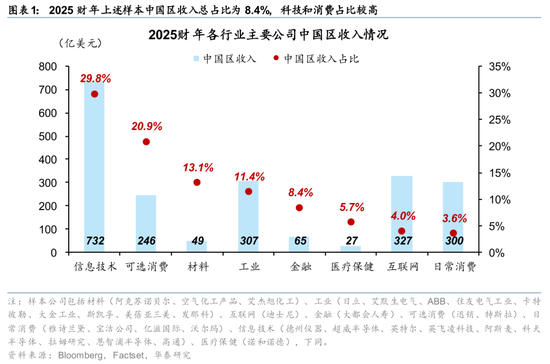
Core Insights - Domestic demand recovery is ongoing, with technological advancements and emotional consumption as structural highlights [1] - 45% of multinational companies reported improved performance in Q4 2025, while 33% expect further improvement [1][5] - The real estate sector continues to drag down growth, but there are notable structural strengths, particularly in technology and service consumption [1][5] Domestic Demand - Overall domestic demand remains weak, but there are structural highlights such as optimistic prospects for renovation in coatings and elevators [2][12] - Service and emotional consumption are experiencing high demand, with companies like Estée Lauder and Procter & Gamble reporting double-digit growth in specific product lines [2][12] - Companies are adapting to trade friction by increasing localization, with ABB reporting over 85% localization in China [2][12] Trade Friction - Localization strategies are being adopted by companies to mitigate the impact of trade tensions, with some firms shifting to local development and sales models [2][12] - Companies like SKF are facing supply chain pressures due to trade policy uncertainties, but are implementing measures to manage these risks [34] Technology - There is a slight decline in external demand for technology products, with a trend towards domestic substitution becoming evident [3][13] - Traditional companies are benefiting from increased demand driven by technological advancements, particularly in the semiconductor sector [3][13] - U.S. export restrictions and domestic competition are impacting overseas companies' revenues in China [3][13] Industry Summaries Materials and Industrial - Demand for materials and industrial products is generally weak, but there are structural demands in electronic gases due to the semiconductor industry [14][26] - The coatings sector is showing resilience due to renovation demand, while traditional electrical and elevator businesses are facing declines [14][27] Consumer Sector - The consumer sector shows significant differentiation, with companies like Uniqlo experiencing revenue declines due to increased competition [20][21] - High-end products in the beauty sector are performing well, while food and beverage sectors are facing slight declines [21][22] Financial Services - MetLife's operations in China are showing strong recovery, with a focus on optimizing distribution channels and enhancing service offerings [19][41] - The company is transitioning away from telemarketing and focusing on high-end customer segments [41] Technology Hardware - Semiconductor companies maintain a high revenue share in China, but face challenges from export controls and supply chain adjustments [23][30] - Companies like Intel and AMD are experiencing delays and increased competition from local manufacturers [30][31] Machinery - Caterpillar anticipates positive growth in the Chinese market, particularly in larger excavators, while SKF is facing challenges in the automotive sector [32][33] - Companies are adjusting their strategies to focus on local development and sales, with a shift in production towards Southeast Asia [39]
重磅!美国加征关税之际,德国总理急了,下周访华求建战略伙伴关系
Sou Hu Cai Jing· 2026-02-19 18:47
Core Viewpoint - The upcoming visit of German Chancellor Merz to China aims to establish a "strategic partnership" with China, reflecting Germany's need to seek new economic opportunities amid the challenges posed by U.S. tariff policies [1][3][4]. Group 1: Economic Context - The U.S. has been implementing tariff policies that significantly impact global trade, with Germany being one of the affected countries, facing increased costs and reduced sales in key export sectors such as automotive and machinery [1][4]. - Germany's economy is heavily reliant on exports, and the U.S. market has traditionally been a crucial destination for German goods. The recent tariffs have led to a sharp decline in exports, particularly in the automotive industry, which is vital for Germany's economic health [4][5]. Group 2: Strategic Partnership - The concept of a "strategic partnership" involves long-term, stable cooperation across political, economic, and diplomatic fields, which Germany seeks to establish with China to counterbalance U.S. pressures [3][9]. - Merz's emphasis on this partnership indicates a significant shift in Germany's foreign policy, prioritizing deeper cooperation with China as a strategic necessity [3][10]. Group 3: Broader European Implications - Merz's visit is not solely about bilateral relations; it aims to enhance cooperation between Europe and China, as many European nations face similar economic challenges due to U.S. tariffs [5][14]. - The German government is under pressure to act decisively to prevent further economic decline, and strengthening ties with China is seen as a critical step in this direction [5][11]. Group 4: Public and Business Support - There is considerable support among German businesses and the public for strengthening ties with China, as many view the Chinese market as essential for future growth and recovery from current economic difficulties [8][12]. - Business leaders express optimism that Merz's visit could lead to enhanced cooperation and better conditions for German companies operating in China [8][12]. Group 5: Challenges Ahead - Establishing a strategic partnership with China will not be without challenges, including differing opinions within Europe and existing tensions between China and some European nations influenced by U.S. policies [9][15]. - The potential for U.S. interference in the form of increased tariffs or diplomatic pressure poses a significant challenge to the success of Merz's visit and the broader goal of enhancing EU-China relations [11][15].

特朗普签署行政令,以保护国内草甘膦除草剂的稳定供应
Xin Lang Cai Jing· 2026-02-19 13:45
Core Viewpoint - The U.S. government has signed an executive order to protect the domestic supply of phosphorus and glyphosate, recognizing the potential risks to national defense and food supply from disruptions in these critical materials [1] Group 1: Executive Order Details - The executive order was signed by President Trump on February 18, invoking the Defense Production Act [1] - The order directs Agriculture Secretary Brooke Rollins to collaborate with the Department of Defense to ensure the continuous supply of these materials [1] Group 2: Importance of Phosphorus and Glyphosate - Phosphorus is a key raw material for smoke, lighting, and combustion devices, as well as a critical component in semiconductors [1] - Glyphosate is the most widely used crop protection tool in U.S. agriculture, playing a significant role in maintaining agricultural competitiveness [1] Group 3: Supply Chain Concerns - There is only one compliant domestic producer of both phosphorus and glyphosate in the U.S., with demand significantly exceeding production capacity [1] - The government emphasizes the importance of stable supply for existing critical inputs to ensure food security and national defense [1]
16万浙江人的新“赶海记”
Xin Hua Wang· 2026-02-19 04:42
Core Viewpoint - The Hainan Free Trade Port has been operational for two months, with significant developments in trade and investment opportunities, particularly for Zhejiang businesses, as the new policies facilitate easier access to both domestic and international markets [1][2][5]. Group 1: Trade and Investment Opportunities - The first batch of duty-free goods processed under the new Hainan Free Trade Port policy was completed shortly after the full closure, indicating a smooth transition to the new system [1]. - Zhejiang businesses have a long-standing presence in Hainan, with approximately 160,000 Zhejiang entrepreneurs and over 17,000 Zhejiang enterprises operating in the region [2]. - The new policy allows for a 30% processing value-added exemption from tariffs, significantly reducing costs for companies like Meishan Wang, which estimates annual savings of around 6 million yuan due to the elimination of import duties [2][3]. Group 2: Local Manufacturing and Industry Development - Hainan's local manufacturing base is relatively weak, but initiatives like the Zhejiang-Qiong Cooperation Industrial Park aim to enhance industrial chain connectivity and attract investment in high-tech sectors [4]. - The park has already attracted over 200 companies with planned investments exceeding 30 billion yuan, focusing on areas such as artificial intelligence, digital finance, and low-carbon processing [4]. Group 3: Global Economic Cooperation - The Hainan Free Trade Port is positioned as a key hub for global economic cooperation, with increasing interest from international businesses, particularly in high-end manufacturing and cross-border e-commerce [6][7]. - The unique policy framework of Hainan, characterized by a mix of liberalization and regulation, is seen as a strategic advantage for companies looking to expand their operations internationally [7]. Group 4: Challenges and Adaptations - Despite the opportunities, challenges remain regarding the implementation of new policies and the need for businesses to adapt to the evolving regulatory environment [8]. - The establishment of the "Zhejiang Business International Economic and Trade Cooperation Alliance" aims to facilitate deeper economic ties and collaboration under frameworks like RCEP [8][9]. Group 5: Economic Performance Indicators - Recent data shows a significant increase in duty-free shopping in Hainan, with sales reaching 1.106 billion yuan and a 26% increase in the number of shoppers during the first week of February [10].
Huntsman(HUN) - 2025 Q4 - Earnings Call Transcript
2026-02-18 16:00
Financial Data and Key Metrics Changes - The company converted 45% of its EBITDA to free cash flow, a higher percentage than many in the industry [5] - The company targeted $100 million in cost savings, achieving an annualized run rate by the end of 2025, with an expected $45 million in-year savings for 2026 [18][19] Business Line Data and Key Metrics Changes - The aerospace business is expected to grow slightly better than the build rate, with a focus on wide-body aircraft [13][16] - The polyurethanes business is projected to face headwinds due to rising natural gas costs, with a first-quarter EBITDA range of $25 million to $40 million, down from $42 million the previous year [86][88] Market Data and Key Metrics Changes - Early signs of improved volumes and pricing in Europe were noted, with price increases announced across the board [10][11] - The company anticipates a gradual recovery in North American home building and durable goods, as well as improvements in the Chinese domestic markets [5][6] Company Strategy and Development Direction - The company plans to focus on structural changes in operations to generate enough cash to cover dividends and will pursue new product development and innovation [7][8] - There is an expectation of further opportunities for mergers, joint ventures, and industry consolidation in 2026 [6][19] Management's Comments on Operating Environment and Future Outlook - Management expressed optimism about a potential recovery in the North American construction industry and noted that the upcoming weeks would be critical for demand signals [8][56] - The company remains hopeful for European policymakers to take action to improve competitiveness, despite skepticism about the pace of change [40][41] Other Important Information - The company is selectively using AI tools to reduce costs and expand R&D capabilities [7] - The company has made significant workforce reductions and facility closures, primarily in Europe, to streamline operations [18][40] Q&A Session Summary Question: What is driving the improvement in Europe? - Management noted price increases and a pickup in construction and auto demand as key drivers [10][11] Question: What are the expected cost savings for 2026? - The company expects $45 million in in-year savings for 2026, following a targeted $100 million in overall cost savings [18][19] Question: How are MDI margins expected to play out? - Margins are expected to improve with increased volumes and pricing initiatives to offset rising costs [31][32] Question: What is the outlook for global MDI capacity growth in 2026? - The company anticipates low to mid-single-digit capacity growth in North America, with no significant adverse changes expected [68][71] Question: What is the company's stance on potential mergers or acquisitions? - Management indicated a willingness to explore both acquisitions and divestitures, depending on market conditions [50][51]

欧洲集结?马克龙联手27国出招,对华全面施压,中方强硬回击
Sou Hu Cai Jing· 2026-02-18 06:48
Group 1 - The core issue revolves around the EU's strategic anxiety regarding its economic sovereignty and dependency on countries like China, which has been a growing concern for several years [3][8][21] - France's proposal to impose a 30% tariff on Chinese goods is not merely a symbolic gesture but is aimed at multiple core industries, reflecting deeper strategic considerations [10][12] - The EU's internal divisions are highlighted, with member states like Germany and the Netherlands expressing concerns over the potential impact of increased tariffs on their own industries [18][19] Group 2 - The historical context of Europe's loss of initiative in major geopolitical shifts, such as the Cold War and financial crises, informs its current approach to trade and economic policy [7][8] - The EU's response mechanisms to economic coercion have been in preparation for some time, indicating a structured approach to trade negotiations rather than a reactionary stance [10][15] - The complexity of the EU's economic landscape, with varying interests among member states, poses significant challenges to achieving a unified stance on trade policies [17][18] Group 3 - China's response to the EU's tariff proposals has been swift and targeted, indicating a strategic approach to countering potential trade conflicts without escalating to full-scale confrontation [19][21] - The potential for increased tariffs to disrupt supply chains and raise consumer prices is a significant concern, suggesting that the long-term effects of such measures may not align with immediate political objectives [21][23] - The ongoing trade dynamics reflect broader anxieties about Europe's industrial positioning in the global economy and the shifting landscape of international trade relationships [23]

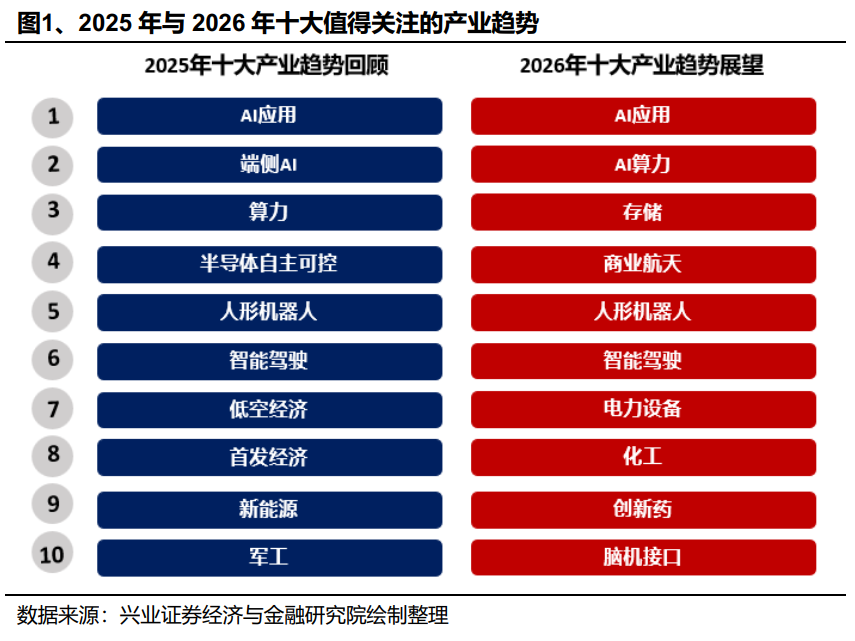
兴业证券:2026年值得关注的十大产业趋势
智通财经网· 2026-02-18 03:45
Group 1: AI Applications - The global AI competition is intensifying, with model iterations driving deeper application scenarios, and the focus is on whether significant capital expenditures by tech giants can lead to commercial applications [2][3] - The competitive landscape for AI applications is shifting from dominance by OpenAI to a more multipolar environment, with major players like Google and Meta integrating AI into their ecosystems [3] - In China, AI applications are experiencing a breakthrough, with major tech companies accelerating model iterations and application deployments, leading to a transformation from model landing to scenario monetization [5] Group 2: AI Computing Power - Overseas, major cloud service providers are maintaining high capital expenditures, with a projected increase of 67% in 2026, reflecting a strong demand for AI computing power [7][8] - In China, leading tech companies are increasing capital expenditures and accelerating the iteration of domestic large models, promoting the performance of domestic chips amid tightening supply from foreign sources [9] Group 3: Storage - The demand for storage is entering a new super cycle driven by AI training and inference needs, with AI servers consuming significantly more memory than traditional servers [11][16] - Supply constraints are expected to persist, leading to continued high prices for storage components, as major manufacturers shift production focus to advanced memory types [16] Group 4: Commercial Aerospace - Commercial aerospace is becoming a key battleground in US-China competition, with significant policy support and funding initiatives in both countries to accelerate industry development [19][21] - Domestic companies are achieving breakthroughs in satellite mass production and reusable rocket technologies, transitioning from technical validation to commercialization [22] Group 5: Humanoid Robots - Major overseas companies are ramping up production plans for humanoid robots, benefiting domestic component suppliers, with Tesla aiming for a production capacity of 500,000 units by 2026 [27][30] - Chinese manufacturers are leading in humanoid robot shipments, with significant contracts and production milestones achieved in 2025 [30] Group 6: Intelligent Driving - Domestic policies are expected to facilitate the commercialization of L3 autonomous driving in 2026, with several manufacturers preparing to launch L3 models [32][33] - Tesla's Full Self-Driving (FSD) technology is setting the direction for autonomous driving, with significant advancements in AI capabilities [35] Group 7: Energy Storage - The expansion of AI computing power in North America is driving electricity demand, with domestic power equipment expected to accelerate exports [37][40] - China's "14th Five-Year Plan" includes significant investments in the power grid and energy storage, creating a favorable environment for industry growth [40][43] Group 8: Chemicals - The chemical industry is undergoing a transformation driven by policies aimed at supply-side reform, with a focus on optimizing supply structures and reducing excess capacity [44][47] - New economic sectors are boosting demand for chemical materials, particularly in AI, renewable energy, and robotics, leading to a favorable outlook for new materials [47][48]