
美元指数期货

Search documents
贵金属期货周报-20260327
Dong Ya Qi Huo· 2026-03-27 12:24
1. Report Industry Investment Rating - No relevant content provided 2. Core Viewpoints of the Report - The demand for precious metals lies in the choice of sovereign funds in the context of de - dollarization, and the trends of de - dollarization and reserve diversification continue [2][3] - In the short and medium term, geopolitical conflicts lead to an abrupt shift in monetary policy towards tightening expectations, causing the US dollar and the interest rate curve to rise. The global financial tightening expectation outweighs geopolitical hedging and economic recession, posing short - and medium - term negative impacts on precious metals [2][3] - There has been a relatively significant increase in domestic gold warehouse receipts, while a relatively significant decrease in US gold warehouse receipts. Warehouse receipts for silver at home and abroad have dropped sharply. There have been significant fluctuations in the internal - external price ratios of gold and silver, presenting arbitrage opportunities [2][3] 3. Summary According to Relevant Catalogs 3.1 Gold and Silver Market Overview - One - Week Policy and Fundamental Review - The US is sending three warships and thousands of soldiers to the Middle East, possibly to "open up" the Strait of Hormuz or seize islands, and may launch a ground operation to take Iran's Harkel Island [7] - Saudi Arabia is trying to prevent the Yemeni Houthi rebels from joining the Iranian war, and the Houthi rebels previously said they might blockade the Bab - el - Mandeb Strait [7] - Influenced by remarks such as those of Trump, gold, bonds, oil, stocks, and foreign exchange completely reversed their intraday trends around 7 pm on Monday Beijing time, with oil prices dropping by $14 in 5 minutes and gold erasing a 9% decline and turning positive [7] - More central banks will increase their gold holdings due to geopolitical risks, as reported by the World Gold Council [7] - Turkey sold 22 tons of gold in a single week, the largest single - week decline since 2018, and a Turkish oil tanker carrying Russian oil was attacked in the Black Sea [7] 3.2 Gold and Silver Market Overview - Gold Market Tracking - COMEX: The latest long - position holdings of managed funds in gold futures and options are 122,450 contracts, with a持仓 ratio of 21%, and the short - position holdings are 35,978 contracts, with a ratio of 6%. In the past week, long - position holdings decreased by 5,556 contracts, and short - position holdings increased by 2,599 contracts [8] - SPDR's gold ETF holdings are 862 tons, and iShares' are 402 tons. The total gold ETF holdings are 1,447 tons [8] - The latest gold futures open interest in Shanghai is 407,927 lots, and the Shanghai gold warehouse receipts are 3 tons, while the external gold inventory is 617 ounces [8] 3.3 Gold and Silver Market Overview - Silver Market Tracking - COMEX: The latest long - position holdings of managed funds in silver futures and options are 44,277 contracts, with a持仓 ratio of 24%, and the short - position holdings are 27,801 contracts, with a ratio of 16%. In the past week, long - position holdings decreased by 4,423 contracts, and short - position holdings decreased by 4,757 contracts [14] - SLV's silver ETF holdings are 13,802 tons, and the total silver ETF holdings are 23,620 tons [14] - The latest silver futures open interest in Shanghai is 971,795 lots, and the Shanghai silver warehouse receipts are 1,075 tons, while the external silver inventory is 8,398 tons [14] 3.4 Gold and Silver Market Overview - Gold and Silver Import Profit Tracking - The import gold hedging profit margin and import silver hedging profit margin have shown certain trends over time, but specific numerical trends need to be analyzed from the provided graphs [21] 3.5 Factors Affecting the Price Trends of Precious Metals - US Dollar Index Futures Position Tracking - The non - commercial net long - position holdings of the US dollar index in ICE and related futures and options position data have shown certain trends over time, as presented in the graphs [23] 3.6 Factors Affecting the Price Trends of Precious Metals - US Treasury Bond Futures Position Tracking - The non - commercial net long - position holdings of CBOT's 2 - year, 5 - year, and 10 - year US Treasury bond futures and options, as well as related position data, have shown certain trends over time, as presented in the graphs [26] 3.7 Factors Affecting the Price Trends of Precious Metals - US Inflation Expectation - The 5 - year, 7 - year, and 10 - year break - even inflation rates have shown certain fluctuations from January 27 to March 26, 2026 [30] 3.8 Factors Affecting the Price Trends of Precious Metals - US Real Interest Rate - The monthly US Treasury real yield curves for 5 - year, 7 - year, and 10 - year terms have shown certain trends from April 2006 to October 2025 [32] 3.9 Factors Affecting the Price Trends of Precious Metals - US Interest Rate Term Structure - The US Treasury bond interest rates, real interest rates (based on PCE with linear interpolation within the year), and inflation expectations (with linear interpolation within the year) for different terms (1M - 30Y) are presented in the graphs [35][36] 3.10 Factors Affecting the Price Trends of Precious Metals - 2 - Year Treasury Bond Yield Spreads between the US and Major Non - US Countries - The 2 - year Treasury bond yield spreads between the US and the UK, Japan, China, and Germany have shown certain trends from January 27 to March 26, 2026 [39]
综合晨报:2026年中国GDP增长目标4.5%-5%-20260306
Dong Zheng Qi Huo· 2026-03-06 01:45
Group 1: Financial News and Comments 1.1 Macro Strategy (Gold) - CME Group reduces margin requirements for precious metals, with the initial margin for COMEX 100 gold futures dropping from 9% to 7% and for COMEX 5000 silver futures from 18% to 14%, effective after the close on March 6, 2026 [11] - The Polish central bank governor proposes selling gold reserves to fund defense spending, which may further weaken gold prices. However, due to geopolitical risks, there is still demand for gold allocation. It is recommended to pay attention to buying opportunities during price corrections [12] - Short - term precious metals are expected to be weak, with silver weaker than gold [13] 1.2 Macro Strategy (Foreign Exchange Futures - US Dollar Index) - Fed officials are optimistic about the labor market, making short - term interest rate cuts unlikely and causing the US dollar index to rise [15] - It is recommended that the US dollar will rise in the short term [16] 1.3 Macro Strategy (Stock Index Futures) - China's GDP growth target for 2026 is set at 4.5% - 5% [17] - A - shares have risen with the improvement of global risk appetite, but the situation in Iran is unclear, and overnight European and American stock markets have resumed their downward trend. It is recommended to wait and see in the short term [18] - It is recommended to hold a low - position long - strategy for stock index futures and wait and see [19] 1.4 Macro Strategy (US Stock Index Futures) - Iran is ready to deal with US ground operations and refuses to negotiate with the US, increasing short - term geopolitical risks. If the conflict persists, inflation may rise, and the Fed's rate - cut rhythm may be suppressed. The US stock market is expected to be weak and volatile in the short term [22] - It is recommended to wait and see for the US stock market [23] 1.5 Macro Strategy (Treasury Bond Futures) - The central bank conducts 800 billion yuan of outright reverse repurchase operations and 23 billion yuan of 7 - day reverse repurchase operations. The Government Work Report is slightly positive for the bond market. Bond prices are expected to rise in mid - and early March, but attention should be paid to the risk of imported inflation [24][25][27] Group 2: Commodity News and Comments 2.1 Black Metals (Coking Coal/Coke) - Seaborne coking coal port spot prices are stable. Supply has recovered rapidly after the holiday, but terminal demand has not started significantly. Spot prices are weak, and the market is in a volatile pattern. Attention should be paid to policy changes and downstream resumption of work [28][29] 2.2 Black Metals (Rebar/Hot - Rolled Coil) - The Government Work Report deploys real - estate policies for 2026. The economic growth target and macro - policy intensity are in line with market expectations, with limited incremental space. The inventory of five major varieties has increased, and the fundamentals of finished products are under pressure. However, due to low valuation and cost support, prices are expected to be in a volatile bottom - seeking state [30][31] - It is recommended to adopt a volatile trading strategy and pay attention to undervalued opportunities [32] 2.3 Black Metals (Steam Coal) - The price of steam coal in the northern port market is weakly stable. Overseas coal prices have risen, but the domestic market is not affected, and there is a large gap between domestic and foreign prices. Considering high terminal power - plant inventories and seasonal decline in daily consumption, domestic coal prices are expected to be difficult to rise in the short term [33][34] 2.4 Black Metals (Iron Ore) - Brazil's Natal Port will start iron - ore export business in 2028. The high inventory of finished products restricts the rebound of raw materials. Ore prices are expected to continue weak and volatile. Attention should be paid to external conflicts [35] 2.5 Agricultural Products (Soybean Meal) - The Buenos Aires Grain Exchange maintains its forecast of Argentina's soybean and corn production. Brazil exported 7.114 million tons of soybeans in February, a year - on - year increase of 11%. The USDA will release a monthly supply - and - demand report on March 10. CBOT soybeans provide strong cost support for soybean meal, but the domestic supply - and - demand situation is not optimistic [36][37][38] 2.6 Agricultural Products (Soybean Oil/Rapeseed Oil/Palm Oil) - The price of palm oil has the potential to rise if diesel prices remain high, but attention should be paid to risks and avoid excessive chasing [39] 2.7 Agricultural Products (Corn) - Corn prices are oscillating strongly. Low inventory in ports, slow release of farmers' selling pressure, and tight high - quality grain sources support prices. However, there are risks of concentrated selling of ground - stored grain in the Northeast, weak demand from downstream industries, and potential disturbances from wheat auctions. It is recommended to trade along the trend and not chase high prices [40][41] 2.8 Non - Ferrous Metals (Alumina) - Bahrain Aluminium declares force majeure, and overseas demand has decreased significantly, with many transactions at a discount. It is recommended to wait and see [42][43][44] 2.9 Non - Ferrous Metals (Lithium Carbonate) - The Zulu lithium - tantalum project's flotation plant construction is progressing smoothly. The supply and demand of lithium carbonate are intertwined. In the short term, it is recommended to take a bullish view, but beware of order - cutting if power demand recovers less than expected [45][46][47] 2.10 Non - Ferrous Metals (Lead) - The LME 0 - 3 lead is at a discount, and domestic social inventory has increased. It is recommended to consider buying on dips from a unilateral perspective and wait and see from an arbitrage perspective [48][49] 2.11 Non - Ferrous Metals (Zinc) - The LME 0 - 3 zinc is at a discount, and domestic inventory has increased. Zinc prices are expected to enter a stage of volatile adjustment. It is recommended to wait and see from a unilateral and monthly - spread arbitrage perspective and adopt a medium - term positive cross - market arbitrage strategy [50][51] 2.12 Non - Ferrous Metals (Copper) - MMG's Khoemacau copper mine starts its second - phase expansion. Copper smelting processing fees are at a historical low. Copper prices are expected to be volatile in the short term. It is recommended to pay attention to domestic and cross - market positive arbitrage opportunities [52][54][55] 2.13 Non - Ferrous Metals (Tin) - The "14th Five - Year Plan" emphasizes the development of artificial intelligence. The short - term supply of tin ore is gradually easing, but the supply is concentrated and vulnerable in the long term. Tin prices are under macro - level pressure. It is recommended to pay attention to downstream purchasing and macro - situation changes [56][59][60] 2.14 Energy Chemicals (Liquefied Petroleum Gas) - The inventory of LPG ports in China has increased. The LPG market is oscillating widely. Attention should be paid to the passage situation of the Strait of Hormuz [61][62] 2.15 Energy Chemicals (Fuel Oil) - Kuwait and Bahrain cut refinery capacities. If the Strait of Hormuz situation eases, the high - sulfur cracking spread may fall sharply. It is recommended to wait and see [62][63] 2.16 Energy Chemicals (Styrene) - The weekly output of styrene has decreased slightly. If the Strait of Hormuz remains blocked, the overall trend of styrene is bullish. Attention should be paid to the intensity of the conflict and the spread of credit risks [64][65][66] 2.17 Energy Chemicals (Soda Ash) - Soda ash manufacturers' inventory has continued to increase. In the medium term, a bearish view is recommended, and it is advisable to short far - month contracts on rallies [68][69] 2.18 Energy Chemicals (Float Glass) - The inventory of float - glass manufacturers has continued to accumulate. The glass market is under pressure, and the rebound space is limited [70][71] 2.19 Shipping Index (Container Freight Rate) - A container ship was hit by a shell. The near - month and far - month contracts of the European line have different trading logics. It is recommended to consider shorting on rallies for the near - month contract and focus on shorting the far - month contract [72][73]

特朗普称伊朗军事能力遭重创,否认被以色列“拖入战争”
Dong Zheng Qi Huo· 2026-03-04 00:14
1. Report Industry Investment Ratings No relevant content provided. 2. Core Views of the Report - The market's focus remains on the US - Iran war. Rising energy prices have led to inflation concerns, causing liquidity tightening and a significant decline in market risk appetite [1][17]. - Due to the escalating Iran war situation and inflation concerns, risk assets have been sold off, and the trading logic in the market is chaotic. It is recommended to focus on risk - aversion and appropriately reduce positions [2][20]. - With the potential rise in stagflation pressure, the bond market is unlikely to have a one - way trend. There is a possibility of reversal at extreme points, and it is advisable to focus on band - trading opportunities [3][25]. - Steel prices continue to be in a weak and volatile pattern, mainly due to fundamental constraints. It is difficult for steel prices to have a significant upward drive in the short term [4][27]. - The methanol futures are expected to be in a high - level shock in the short term, and it is advisable to wait and see [5][61]. - Under the influence of capital sentiment, the European - line container freight futures still have the potential to rise. However, without strong fundamental support, the high prices on the disk may not be sustainable. It is recommended to pay attention to short - selling opportunities at high levels after confirming the inflection point of sentiment [6][65]. 3. Summary by Directory 3.1 Financial News and Comments 3.1.1 Macro Strategy (Gold) - Kashkari is now uncertain about the expected one - time interest rate cut in 2026 due to the war cloud [11]. - Kevin Warsh, the nominee for the Fed Chair, will slowly advance the Fed's balance - sheet reduction, aiming to restore the Fed's balance - sheet size to the pre - 2008 crisis level [12]. - The White House will provide naval escort and political risk insurance for oil tankers passing through the Strait of Hormuz. Gold prices have dropped by about 4%, and silver has fallen by more than 10%. The strong US dollar has continued to suppress the market. The short - term inflation pressure in the US has increased, and the market's expectation of the Fed's interest rate cut has decreased. The precious metals' downward trend has been intensified. Gold has not yet stabilized [13]. - Investment advice: The short - term market volatility has increased, the precious metals' prices are oscillating, and silver still needs to pay attention to the risk of decline [14]. 3.1.2 Macro Strategy (Foreign Exchange Futures - US Dollar Index) - Trump claims that Iran's military capabilities have been severely damaged and denies being "dragged into the war" by Israel. The US will provide insurance and naval escort for ships passing through the Persian Gulf. Trump has ordered to cut off trade with Spain [15][16]. - The market's focus is on the US - Iran war. Rising energy prices have led to inflation concerns, causing liquidity tightening and a significant decline in market risk appetite. The US dollar is expected to remain strong in the short term [17]. - Investment advice: The US dollar index is expected to be strong in the short term [18]. 3.1.3 Macro Strategy (Stock Index Futures) - In February 2026, the number of new A - share accounts decreased month - on - month and year - on - year due to the Spring Festival holiday, but the enthusiasm of margin traders remained high. The number of new margin trading accounts increased year - on - year [19]. - The A - share market opened higher and closed lower. The Iran war situation has gradually spread, and the market is worried about the war getting out of control. Risk assets have been sold off. Due to inflation concerns, interest - rate hike trading has emerged. The market's trading logic is chaotic. It is recommended to focus on risk - aversion and appropriately reduce positions [20]. - Investment advice: Appropriately reduce the long - position strategy of stock index futures and wait for the situation to become clear for right - side trading [21]. 3.1.4 Macro Strategy (Treasury Bond Futures) - The central bank had a net injection of 50 billion yuan in the open - market Treasury bond trading in February. On March 3, the central bank conducted a 34.3 - billion - yuan 7 - day reverse repurchase operation, with a net withdrawal of 491.7 billion yuan on that day [22][23]. - The market has revised up the duration of the conflict, and inflation expectations have risen, leading to a decrease in the Fed's interest - rate cut expectation, a stronger US dollar, and an increase in US Treasury bond yields. The long - term Treasury bonds are in a relatively tangled state, and the yield curve has steepened. If the stagflation pressure rises, the bond market is unlikely to have a one - way trend. It is advisable to focus on band - trading opportunities [23][25]. - Investment advice: The bond market will be in a shock before the meeting, and attention should be paid to the impact of supply shocks after the meeting [26]. 3.2 Commodity News and Comments 3.2.1 Black Metal (Rebar/Hot - Rolled Coil) - The 4th Session of the 14th National Committee of the Chinese People's Political Consultative Conference opened on the afternoon of March 4, with a duration of 7 days. Steel prices are still in a volatile pattern. Geopolitical factors and rising energy prices have not brought substantial benefits to steel prices due to fundamental constraints. Before the terminal demand improves substantially, steel prices are expected to remain in a volatile pattern, and the downside space is relatively limited [27]. - Investment advice: In the short term, it is advisable to adopt a volatile trading strategy and pay attention to potential undervalued opportunities [28]. 3.2.2 Black Metal (Coking Coal/Coke) - The coking coal prices in the central - China market are running steadily with a weak trend. The supply has stabilized in the short term, but the intermediate links are mostly waiting and watching, and the inventory has accumulated at the mine end. The terminal demand is slowly released, and steel mills' profits are under pressure, so their enthusiasm for purchasing coking coal is not high. During the major meetings, steel mills have the expectation of reducing production, and the demand for coke is limited. The coking coal prices in the central - China market are expected to remain stable in the short term [29]. - Investment advice: In the short term, the supply is recovering rapidly after the festival, but the terminal demand has not been significantly activated, and the spot prices are still weak. The market will remain in a volatile pattern. Attention should be paid to policy changes around the two sessions and the resumption rhythm of downstream industries [31]. 3.2.3 Black Metal (Steam Coal) - On March 3, the steam coal prices in the northern port market remained stable. The willingness of spot traders to sell has increased, but the supply of high - quality spot goods is tight, and traders' asking prices are firm. The demand has not improved significantly, and the成交 situation is not good. The steam coal prices are expected to continue to rise due to the Indonesian export restrictions and the high oil prices caused by the Middle - East conflict [32]. - Investment advice: The short - term steam coal prices are expected to be strong [32]. 3.2.4 Black Metal (Iron Ore) - In early March 2026, the 11.6 - million - ton - per - year iron ore processing and expansion project of Leting Xintian Industry Co., Ltd. reached a key promotion node. The external uncertainties have increased, and the supply - demand situation of the industrial chain is uncertain. The iron ore prices are expected to be weak and volatile. During the two sessions, Hebei is expected to limit production by 30%. Affected by production restrictions and weather, the overall molten iron output is expected to rebound in mid - to - late March [33]. - Investment advice: During the two sessions, Hebei is expected to limit production by 30%. Affected by production restrictions and weather, the overall molten iron output is expected to rebound in mid - to - late March. The external uncertainties have increased, and the supply - demand situation of the industrial chain is uncertain. The iron ore prices are expected to be weak and volatile [34]. 3.2.5 Agricultural Products (Soybean Meal) - The US soybean crushing volume in January 2026 was 6.84 million short tons, higher than analysts' average forecast. The rise in crude oil prices due to the Middle - East conflict and the previous US bio - fuel policy have indirectly benefited the US soybean crushing demand and CBOT soybean prices. The domestic soybean meal futures prices are strongly oscillating, but the spot prices are slow to follow, and the basis has been continuously narrowing [36]. - Investment advice: The soybean meal futures prices may be strongly oscillating under cost support. Future attention should be paid to China's soybean purchases from the US, reserve sales, the progress of Brazil's soybean harvest and exports, and China's import soybean customs - clearance policies [36]. 3.2.6 Agricultural Products (Soybean Oil/Rapeseed Oil/Palm Oil) - India's palm oil imports in February increased by 10.1% month - on - month, reaching a six - month high. The increase in India's palm oil and soybean oil imports may reduce the inventories in Indonesia and Malaysia and boost the palm oil and soybean oil futures. The international diesel price increase has supported the palm oil price, and the Indian trade is expected to increase palm oil imports in March, which is conducive to the inventory reduction of Malaysian palm oil in March [37][38]. - Investment advice: The international geopolitical conflict has led to a sharp rise in crude oil and diesel prices, which is beneficial to the bio - diesel industry and will support the prices of the oil market. The oil market is expected to remain strong before the international situation eases [38]. 3.2.7 Agricultural Products (Corn) - The US corn export inspection volume in the week ending February 26, 2026, decreased by 8% week - on - week but increased by 37% year - on - year. The corn futures and spot prices are oscillating strongly. The supply from the grass - roots level is expected to gradually recover. The downstream demand has support, and the centralized procurement by the China National Grain Reserves Corporation has boosted the market sentiment [39][40]. - Investment advice: The low inventories at the north - south ports, the slow release of the grass - roots selling pressure, and the tight supply of high - quality corn in the Northeast provide support for the price. However, there is still a risk of concentrated selling of the ground - stored corn in the Northeast as the temperature rises. The weak demand in the downstream breeding and deep - processing industries and the potential impact of wheat auctions may suppress the price. In the short term, the market is affected by multiple factors, and the current futures price is relatively high. It is advisable to trade according to the trend and not to chase the high price. In the medium - to - long term, the price is expected to stabilize and rebound, but the upward range is limited by demand recovery and policy regulation. Attention should be paid to the weather, corn reserve purchase policies, and wheat auction dynamics [40]. 3.2.8 Agricultural Products (Cotton) - In the northern Xinjiang region, cotton enterprises' basis quotes are stable, and textile enterprises are adopting the "locked - basis" procurement strategy. Australia's cotton production in 2025/26 is expected to decrease by 20% due to water supply shortages and low cotton prices. The import yarn prices have increased slightly, and the port inventory has continued to increase. The Zhengzhou cotton futures have entered a shock - adjustment state after a sharp rise. The downstream gauze market recovery is slow, and the import yarn inventory has a negative impact on domestic cotton consumption. The new Xinjiang cotton target - price subsidy policy is about to be introduced, which will have a significant impact on the cotton planting area [41][42][44]. - Investment advice: The textile enterprises' cotton yarn inventory is not high, and the "Golden March and Silver April" peak season is approaching. The short - term factors such as the reduction of US tariffs on Chinese goods support the cotton price. The commercial cotton inventory in China and Xinjiang has decreased year - on - year, and the spot basis is strong. The market sentiment is expected to be positive. The Zhengzhou cotton futures are not expected to decline significantly in the short term. However, the peak - season performance is uncertain, and the high domestic - foreign cotton price difference will suppress the cotton price increase. The futures price is expected to be in a shock in the short term. Attention should be paid to the macro - level dynamics, the resumption of downstream enterprises, and the order situation [45]. 3.2.9 Agricultural Products (Hogs) - Huatong Co., Ltd. has provided a maximum - amount joint and several liability guarantee for the downstream pig - farmers' "Huatong Piglet Loan" business. The pig market has over - capacity and inventory pressure, and the overall spot sentiment is not optimistic. The futures price has a relatively high premium compared to the spot price, so the short - term long - position safety margin is not high. In the medium term, it is more suitable to adopt the strategy of short - selling on significant rebounds. Attention should be paid to the situation of piglets and sows to determine whether the cycle will reverse [46]. - Investment advice: Continuously pay attention to the short - selling opportunities brought by the postponed supply pressure [47]. 3.2.10 Non - ferrous Metals (Lead) - On March 2, the LME 0 - 3 lead was at a discount of $47.76 per ton. The Shanghai lead futures rose and then fell. The US - Iran geopolitical conflict has not eased, and the decline in interest - rate cut expectations, recession trading, and liquidity withdrawal have affected the precious metals and non - ferrous metals markets. The LME lead inventory remained unchanged, and the 0 - 3 cash spread decreased. The domestic social lead inventory decreased marginally. The lead price rebounded from a low level due to cost support and supply - demand mismatch, but it is also affected by the macro - level situation. Attention should be paid to the resumption of production of downstream large enterprises [48][49]. - Investment advice: In terms of the unilateral strategy, it is advisable to pay attention to medium - term long - position opportunities; in terms of the arbitrage strategy, it is advisable to wait and see [49]. 3.2.11 Non - ferrous Metals (Zinc) - In January, the total global sales of eight major Japanese automakers increased by 0.7% year - on - year, while the total production decreased by 1.6%. On March 2, the LME 0 - 3 zinc was at a discount of $20.6 per ton. The domestic and international zinc prices oscillated downward. The US - Iran geopolitical conflict has not eased, and the increase in energy prices and the decline in interest - rate cut expectations have affected the non - ferrous metals market. The LME zinc inventory decreased, and the 0 - 3 cash spread oscillated. The domestic social zinc inventory increased significantly, and the domestic fundamentals are under short - term pressure. The zinc price may enter a stage of shock adjustment, and it is advisable to manage positions well in the high - volatility market [50][51]. - Investment advice: In terms of the unilateral strategy, it is advisable to wait and see, and it is recommended to close the previous long positions; in terms of the arbitrage strategy, it is advisable to wait and see for the month - spread arbitrage, and it is recommended to adopt the medium - term positive cross - market arbitrage strategy [52]. 3.2.12 Non - ferrous Metals (Lithium Carbonate) - Canadian mining company First Phosphate has obtained conditional approval for a CAD 16.7 - million (about USD 12.2 - million) grant to support its lithium - iron - phosphate battery - grade phosphoric acid processing plan. The lithium carbonate futures limit - downed, and the weighted contract open interest decreased. The market rumor that the Middle - East situation affects energy - storage demand has limited impact. In March, the domestic lithium carbonate inventory is expected to decrease by about 2,000 tons. After the sharp decline in the futures price, the downstream buying demand has increased. In April, the lithium carbonate demand is expected to continue to increase, and the inventory will continue to decrease. Attention should be paid to the Zimbabwe export policy, the power - terminal situation, and the demand fulfillment [53][54]. - Investment advice: Referring to the night - session non - ferrous metals' volatility, the lithium carbonate futures may open lower today. The risk - return ratio around 150,000 yuan is average, but if the price continues to fall, it may be advisable to gradually try long positions [55]. 3.2.13 Non - ferrous Metals (Tin) - Indonesia's tin production quota in 2026 is 65,860 tons. The domestic SHFE tin futures warehouse receipts decreased, and the LME tin inventory increased. The short - term supply shortage situation has eased with the resumption of production in Myanmar and the expected increase in Indonesia's production in 2026. In the long - term, the supply is concentrated and vulnerable, and the supply may be restricted by anti - globalization and resource nationalism. The domestic smelting processing fees have remained unchanged, and the smelting profit margin has decreased slightly. The smelting enterprises' production decreased during the Spring Festival, and the downstream enterprises' holiday was extended. With the resumption of production of some downstream enterprises, the traders' willingness to sell has increased. Attention should be paid to the downstream inventory replenishment [56][57]. - Investment advice: Under the background of the US - Israel - Iran conflict, the risk - aversion sentiment and the rising US dollar index have suppressed the tin price. The visible inventory is relatively high, and the supply expectation has increased. The tin price is expected to be in a shock - consolidation state in the short term. Attention should be paid to the downstream receiving situation, open interest changes, and the macro - level and capital sentiment [58]. 3.2.14 Energy Chemical (Carbon Emissions
美国政府结束部分停摆状态,股指盘中V型反转
Dong Zheng Qi Huo· 2026-02-04 01:34
Macro Strategy (Gold) - The U.S. government has ended part of the shutdown, leading to a significant rebound in gold prices, indicating the end of a panic sell-off phase. After touching the 60-day moving average, bottom-fishing funds have entered the market, suggesting that gold prices are entering a consolidation phase [2][10][11] - Federal Reserve official Milan stated that there is a need to lower interest rates by over 100 basis points this year, which has influenced market sentiment towards gold and other precious metals [11] Macro Strategy (Foreign Exchange Futures - U.S. Dollar Index) - The U.S. government shutdown has ended, but geopolitical tensions remain high, particularly following the U.S. military's downing of an Iranian drone. This has led to a decrease in market risk appetite, resulting in fluctuations in the U.S. dollar index [3][12][13] Macro Strategy (Stock Index Futures) - The State-owned Assets Supervision and Administration Commission (SASAC) emphasized the need for central enterprises to focus on developing strategic emerging industries and future industries, aiming to open up a "second curve" of growth [16] - Despite initial market turbulence due to rumors about tax rate increases in certain sectors, the market rebounded after these rumors were debunked, indicating a return to a structural bull market driven by themes and concepts [15][16] Commodity News and Commentary Agricultural Products (Palm Oil) - India saw a 51% increase in palm oil imports in January, reaching the highest level in four months, driven by lower prices and pre-Ramadan stockpiling [29][30] - Malaysia's palm oil production decreased by 13.08% in January, continuing a trend of reduced output [28] Energy and Chemicals (Crude Oil) - The U.S. API reported a significant decrease in crude oil inventories, with a drop of 11.079 million barrels, indicating a tightening supply situation [46] - Geopolitical tensions, particularly between the U.S. and Iran, have led to a slight increase in risk premiums for oil prices [46][47] Shipping Index (Container Freight Rates) - The port of Chittagong has completely shut down due to worker protests, significantly impacting Bangladesh's import and export trade [52] - The SCFIS index showed a decrease of 3.6%, but the performance was better than expected, indicating some resilience in shipping rates despite ongoing supply pressures [52]
“货币贬值”交易只是情绪驱动?桥水前主管建议同时持有美元和黄金!
Jin Shi Shu Ju· 2026-01-28 13:23
Group 1 - The core viewpoint of the articles is that the current panic surrounding the US dollar is exaggerated, and a diversified investment strategy involving both the dollar and gold is recommended [1][2]. - Alexander Campbell suggests that holding gold positions is essentially equivalent to shorting the dollar, as gold is priced in dollars and tends to attract speculative funds when the dollar weakens [1][2]. - The so-called "currency devaluation" trade is more driven by market sentiment rather than actual trading behavior, with investors not fleeing the dollar en masse but rather under-allocating to gold and silver due to a long-term bull market and low inflation [2]. Group 2 - Campbell highlights that significant concerns regarding the dollar's future, such as large-scale liquidation of US Treasuries by Japanese insurers or a drop in the dollar's share of international payments, have not materialized [3]. - For those believing in a "dollar doomsday," Campbell advises shorting US stocks and bonds, as actual selling of these assets would reflect genuine bearish sentiment towards the dollar [3]. - Investors anticipating a controlled decline of the dollar are encouraged to hold a mix of gold, dollars, and short-term assets, drawing parallels to market strategies from 2000 to 2010 when the dollar also experienced a downtrend [3].
聚焦全球能源 | 油价将触底60美元?
彭博Bloomberg· 2026-01-28 06:06
Group 1 - The core viewpoint of the article is that oil traders expect oil prices to bottom out in the short term, influenced by U.S. military actions against Iran and ongoing geopolitical tensions, despite OPEC+ not fully lifting production cuts [3][4]. - CFTC data shows that WTI crude oil futures net long positions have dropped to a 15-year low, with a decrease of 75.3% since July 4, indicating cautious sentiment among traders due to expectations of OPEC+ increasing production and weak global demand [4]. - WTI crude oil prices have fallen by 11.7% to $59.3 per barrel, with speculation that prices may have bottomed out around $55 per barrel since positions have stabilized since December 12 [4]. Group 2 - CFTC data indicates that net long positions in gold futures have increased to 230,463 contracts, a rise of 19.2% since July 4, driven by heightened geopolitical tensions and a weakening U.S. job market, suggesting continued demand for gold as a safe-haven asset [6]. - The net short position in U.S. dollar index futures has remained, reflecting market expectations of further interest rate cuts by the Federal Reserve and concerns over inflation amid a weak economic outlook and escalating geopolitical conflicts [9].


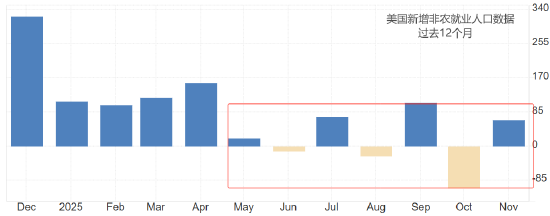
ATFX汇评:非农就业报告来袭 新增就业预期6万人
Xin Lang Cai Jing· 2026-01-09 11:03
Core Viewpoint - The upcoming U.S. non-farm payroll report for December is significant as it is the first complete month unaffected by the government shutdown, with expectations for stable employment figures [1][9]. Employment Data - The expected change in non-farm employment for December is around 60,000, with a previous value of 64,000, indicating a stable outlook [1][9]. - The unemployment rate for December is anticipated to be 4.5%, slightly down from the previous 4.6%, reflecting a stable labor market [1][9]. Market Expectations - The stability in employment expectations is attributed to the absence of government shutdowns in December, unlike the previous months [1][9]. - The ADP employment data, which serves as a precursor to the non-farm payroll report, showed a positive shift from a previous value of -29,000 to a current value of 41,000, suggesting a potential positive trend in the upcoming non-farm report [3][9]. Dollar Index Analysis - The dollar index is showing signs of a potential breakout from its current mid-term consolidation range, having started a rebound since December 24 [6][12]. - The established trading range for the dollar index is between 96.34 and 100.23, with the latest upward movement facing resistance near the 100-point mark [7][12].
综合晨报:沪指录得14连阳,美国ADP就业温和增长-20260108
Dong Zheng Qi Huo· 2026-01-08 00:42
1. Report Industry Investment Ratings - **Macro Strategy (Foreign Exchange Futures - US Dollar Index)**: Maintain a volatile outlook [15] - **Macro Strategy (Gold)**: Short - term, beware of continued correction risks, consider going long on the gold - silver ratio [20] - **Macro Strategy (US Stock Index Futures)**: Expected to run strongly with a volatile trend, maintain a bullish view [25] - **Macro Strategy (Stock Index Futures)**: Continue to hold long - term strategies [27] - **Macro Strategy (Treasury Bond Futures)**: Market is weak, not recommended to bet on oversold rebounds; if there is a rebound, consider short - selling opportunities [30] - **Black Metal (Rebar/Hot - Rolled Coil)**: Short - term sentiment dominates, steel prices may rebound further, but still need to beware of risks [34] - **Black Metal (Coking Coal/Coke)**: Short - term trends are less related to fundamental changes, focus on capital sentiment and policy news [37] - **Black Metal (Steam Coal)**: Prices expected to remain stable in January [40] - **Black Metal (Iron Ore)**: Prices expected to remain strong in the next two weeks [41] - **Agricultural Products (Cotton)**: Be cautious of the risk of price drops due to capital withdrawal [46] - **Agricultural Products (Soybean Meal)**: Futures prices have rebounded from lows, pay attention to state - reserve sales and customs policies; the May contract lacks a basis for continuous sharp increases under a bumper South American harvest [47] - **Agricultural Products (Hogs)**: Unilateral: Go short on near - term contracts on significant rebounds; Arbitrage: Maintain a reverse arbitrage strategy [51] - **Agricultural Products (Soybean Oil/Rapeseed Oil/Palm Oil)**: If the MPOB report is not overly bearish and high - frequency data shows continued production cuts and increased exports, consider long positions on the May contract; for rapeseed oil, be cautious due to policy uncertainties [54] - **Non - ferrous Metals (Industrial Silicon)**: Consider avoiding short positions for the time being. When the price rises above 9000 RMB/ton, consider short positions based on industry hedging conditions [58] - **Non - ferrous Metals (Lead)**: Both unilateral and arbitrage strategies suggest a wait - and - see approach [62] - **Non - ferrous Metals (Zinc)**: Unilateral: Be cautious about chasing up prices, and take profits on previous long positions in batches; Arbitrage: Wait and see for both monthly spreads and internal - external spreads [65] - **Non - ferrous Metals (Polysilicon)**: The industry pattern may change significantly. Consider buying put options to participate in the market [69] - **Non - ferrous Metals (Copper)**: Unilateral: Wait patiently for opportunities to buy on dips; Arbitrage: Wait and see [73] - **Non - ferrous Metals (Lithium Carbonate)**: The market is sensitive to positive information, prices are expected to remain strong, but be cautious about chasing up [76] - **Non - ferrous Metals (Nickel)**: Closely observe short - term capital intentions, and set acceptable stop - losses when going long [77] - **Non - ferrous Metals (Tin)**: Pay attention to supply recovery and demand improvement, beware of price drops when the capital enthusiasm fades [81] - **Energy and Chemicals (Crude Oil)**: Market concerns about oversupply continue to suppress oil prices [83] - **Energy and Chemicals (Asphalt)**: Prices expected to be volatile [85] - **Energy and Chemicals (Styrene)**: Temporarily treat the market as volatile in the short term [89] - **Energy and Chemicals (PTA)**: Short - term volatile adjustment, consider going long on dips [92] - **Energy and Chemicals (Soda Ash)**: In the capacity expansion cycle, maintain a bearish view in the medium term, recommend short - selling on the far - month contracts [94] - **Energy and Chemicals (Float Glass)**: The FG contract is expected to fluctuate between 900 - 1250 RMB/ton in 2026, recommend short - selling on rallies. Pay attention to potential supply - side changes [97] 2. Core Views - The US ADP employment showed moderate growth, indicating a mild downward trend in the labor market, and the US dollar index fluctuated [14] - Gold prices fluctuated and declined, the precious metals sector corrected, and funds shifted between commodity sectors [18] - The Shanghai Composite Index recorded 14 consecutive positive days. A - shares continued to rise with increasing trading volume. Despite market concerns about regulatory cooling, the market still has strong momentum due to abundant domestic liquidity and a bullish pattern [27] - International steam coal prices were stable with a slight upward trend. Although there were news of capacity reduction in Yulin, overall supply was expected to remain stable in 2026 due to new mine production and weak demand, and coal prices were expected to be stable in January [40] - The BMI predicted that the merger and acquisition boom in the mineral metals industry would continue in 2026. Macro factors supporting copper prices may weaken, and short - term fundamentals may suppress copper price increases, with copper prices likely to shift to a volatile pattern [73] - US EIA commercial crude oil inventories decreased, but gasoline and refined oil inventories increased significantly, and oil prices fluctuated weakly [82] 3. Summaries by Directory 3.1 Financial News and Comments 3.1.1 Macro Strategy (Foreign Exchange Futures - US Dollar Index) - Trump plans to ban Wall Street from investing in single - family homes, aiming to reduce housing prices, which may impact private equity owners and homebuilder stocks [12] - US ADP private - sector employment increased by 41,000 in December, mainly driven by the service industry, indicating a mild recovery in the labor market. The US dollar index is expected to remain volatile [13][14][15] 3.1.2 Macro Strategy (Gold) - US ADP employment in December was 41,000, slightly lower than expected. The ISM non - manufacturing PMI in December was 54.4, higher than expected [16][17] - China's official gold reserves increased by 300,000 ounces in December 2025. Gold prices fluctuated and declined, the precious metals sector corrected, and short - term precious metals still face downward risks [18][19] 3.1.3 Macro Strategy (US Stock Index Futures) - The US Energy Secretary will "indefinitely" control Venezuelan oil sales. The US 12 - month ISM services PMI reached a new high in more than a year, but the employment market demand continued to cool down. The US stock market is expected to be volatile and strong [21][22][24][25] 3.1.4 Macro Strategy (Stock Index Futures) - The Shanghai Composite Index recorded 14 consecutive positive days. A - shares were in a bullish sentiment with increasing trading volume. The market has strong momentum due to abundant liquidity [26][27] 3.1.5 Macro Strategy (Treasury Bond Futures) - The central bank will conduct a 1.1 - trillion - yuan repurchase operation. The bond market is affected by commodity price increases. The overall bond market logic is bearish, and short - selling on rebounds is recommended [28][29][30] 3.2 Commodity News and Comments 3.2.1 Black Metal (Rebar/Hot - Rolled Coil) - In December, the retail sales of passenger cars decreased by 13% year - on - year, and the wholesale sales decreased by 10% year - on - year. Steel prices rebounded due to the strong performance of metal prices. Short - term steel prices may continue to rise due to market sentiment, but the actual supply - demand situation is difficult to improve significantly [31][32][33][34] 3.2.2 Black Metal (Coking Coal/Coke) - The price of coking coal in the Linfen market remained stable. The recent sharp increase in coking coal futures was mainly driven by macro capital rotation and news sentiment, with limited connection to fundamentals. The short - term trend is mainly affected by capital and sentiment [35][36][37] 3.2.3 Black Metal (Steam Coal) - International steam coal prices were stable with a slight upward trend on January 7. Although there were capacity reduction news in Yulin, overall supply was expected to remain stable in 2026, and coal prices were expected to be stable in January [38][40] 3.2.4 Black Metal (Iron Ore) - The third - stage expansion of the Tonkolili iron ore project in Sierra Leone is advancing. Iron ore prices are expected to remain strong in the next two weeks due to the expected increase in iron - making water production and the low inventory of steel mills [41] 3.2.5 Agricultural Products (Cotton) - The US cotton planting area in 2026 may slightly decrease. The new cotton import quota policy has stimulated the domestic import cotton market, but the large inflow of imported cotton and yarn may impact the domestic market. Zhengzhou cotton futures may face a risk of price drops due to capital withdrawal [42][43][45][46] 3.2.6 Agricultural Products (Soybean Meal) - Brazil exported 3.383 million tons of soybeans in December. China is still purchasing US soybeans. The price of domestic soybean meal futures has rebounded from lows, but the May contract lacks a basis for continuous sharp increases under a bumper South American harvest [47] 3.2.7 Agricultural Products (Hogs) - The sales volume of hogs of some companies increased in December. The hog futures market has a short - term high - level shock, but the medium - term fundamentals are weak, and short - selling on rebounds is recommended [48][50][51] 3.2.8 Agricultural Products (Soybean Oil/Rapeseed Oil/Palm Oil) - Malaysia's palm oil production decreased by 4.64% in December. Indonesia may confiscate 5 - million - hectare palm plantations in 2026. The short - term trend of the oil market depends on MPOB data and high - frequency data [52][53][54] 3.2.9 Non - ferrous Metals (Industrial Silicon) - An organic silicon industry meeting may discuss measures to boost market confidence. The price of industrial silicon followed the increase of coking coal. In the long term, the oversupply pattern of industrial silicon is difficult to change [55][56][57][58] 3.2.10 Non - ferrous Metals (Lead) - The LME lead price had a high - level correction, and the domestic waste battery supply was tight. The lead price is expected to be volatile and strong in the short term [59][60][61][62] 3.2.11 Non - ferrous Metals (Zinc) - The LME zinc price fluctuated and corrected. The short - term zinc price may follow macro fluctuations, and the medium - term price is likely to be easy to rise and difficult to fall [63][64][65] 3.2.12 Non - ferrous Metals (Polysilicon) - There are rumors of production cuts by leading polysilicon companies, and the market is concerned about antitrust issues. The polysilicon industry pattern may change significantly, and buying put options is recommended [66][67][68][69] 3.2.13 Non - ferrous Metals (Copper) - The BMI predicted that the merger and acquisition boom in the mineral metals industry would continue in 2026. The short - term copper price is likely to shift to a volatile pattern, and waiting for opportunities to buy on dips is recommended [70][73] 3.2.14 Non - ferrous Metals (Lithium Carbonate) - A company plans to invest 3.688 billion yuan in a lithium ore project. The lithium carbonate market is sensitive to positive information, and prices are expected to remain strong, but be cautious about chasing up [74][75][76] 3.2.15 Non - ferrous Metals (Nickel) - LME nickel inventory increased significantly. The nickel price has been strong due to supply reduction expectations, but be cautious when going long and set stop - losses [76][77] 3.2.16 Non - ferrous Metals (Tin) - The supply of tin ore remains tight, and the demand is weak. Pay attention to supply recovery and demand improvement, and beware of price drops when the capital enthusiasm fades [78][79][80][81] 3.2.17 Energy and Chemicals (Crude Oil) - US EIA commercial crude oil inventories decreased, but gasoline and refined oil inventories increased significantly, and oil prices fluctuated weakly [82][83] 3.2.18 Energy and Chemicals (Asphalt) - The capacity utilization rate of domestic asphalt refineries decreased. The asphalt price is expected to be volatile [84][85] 3.2.19 Energy and Chemicals (Styrene) - The inventory of styrene in the East China main port decreased. The market is concerned about the impact of the new naphtha consumption tax policy on the cost of olefins and aromatics. The short - term market is expected to be volatile [86][87][88][89] 3.2.20 Energy and Chemicals (PTA) - The PTA spot basis was strong. The short - term PTA market is in a volatile adjustment stage, and going long on dips is recommended [90][91][92] 3.2.21 Energy and Chemicals (Soda Ash) - The price of soda ash in the Shahe area was stable. The soda ash futures price increased due to macro sentiment. In the capacity expansion cycle, the medium - term trend of soda ash is bearish [93][94] 3.2.22 Energy and Chemicals (Float Glass) - The price of float glass in the Hubei market was stable. The glass futures price increased due to market sentiment. The supply - side changes in 2026 may affect the glass market, and short - selling on rallies is recommended [95][96][97]
特朗普和平计划遇阻,常州锂源磷酸铁锂部分产线减产检修
Dong Zheng Qi Huo· 2025-12-30 01:12
1. Report Industry Investment Ratings - **Gold**: Short - term, pay attention to the risk of decline, and it is recommended to hold a light position during the holiday [11][12] - **US Dollar**: Short - term shock [14][15] - **US Stock Index Futures**: Expected to operate in a shock - upward manner, and maintain a bullish view [17][18] - **Stock Index Futures**: Continue to hold the long - position strategy and allocate the stock indexes evenly [19][20] - **Treasury Bond Futures**: Be cautious when gambling on a rebound from oversold conditions [21][23] - **Soybean Meal**: The supply of imported soybeans in China is sufficient. Focus on state reserve and customs policies. Without abnormal production cuts in South America, the supply - demand situation does not support a significant upward movement of the May contract [25] - **Steam Coal**: The coal price is expected to continue to weaken in January. Later, focus on whether the policy side will restrict supply when the coal price hits the previous low again [26][28] - **Iron Ore**: Expected to maintain a shock market with certain support [29] - **Copper**: In the short - term, it is advisable to wait and see. In the medium - term, patiently wait for opportunities to go long at low prices. For arbitrage, it is recommended to wait and see [32] - **Zinc**: Unilaterally, continue to pay attention to opportunities to buy on dips. For arbitrage, the positive spread should turn to waiting and see, and the internal - external spread should be treated with an internal - external reverse spread strategy [34] - **Lead**: Unilaterally and for arbitrage, it is advisable to wait and see in the short - term [38] - **Nickel**: Expected to return to a shock trend. If the RKAB quota is only 250 million tons, there will still be a large upside space [41] - **Lithium Carbonate**: There is short - term callback pressure, and it is recommended to pay attention to opportunities to go long at low prices in the medium - term [43][44] - **Tin**: The inventory accumulation may put pressure on the short - term futures price. In the long - term, the uncertainty of the ore supply will persist. Be vigilant about the price decline risk after the capital boom fades [48][49] - **Crude Oil**: The oil price is affected by geopolitical conflicts in the short - term [50][51] - **Asphalt**: The price will fluctuate in the short - term [52][53] - **Urea**: Do not chase the rise for now. After the Spring Festival, pay attention to the start time and rhythm of spring plowing fertilizer demand and next year's export policy fluctuations. Try to go long at low prices when the relative valuation provides a certain safety margin [55] - **Styrene**: In the short - term, it will continue to fluctuate. In the medium - term, maintain a bullish view [57][58] 2. Core Views of the Report - The report analyzes the market conditions of various financial instruments and commodities, including macro - strategy (such as foreign exchange futures, stock index futures, gold), agricultural products (soybean meal), black metals (steam coal, iron ore), non - ferrous metals (copper, zinc, etc.), and energy chemicals (crude oil, asphalt, etc.). It points out the influencing factors of each market, such as geopolitical events, policy changes, supply - demand relationships, and inventory changes, and gives corresponding investment suggestions [11][14][25] 3. Summary by Relevant Catalogs 3.1 Financial News and Comments 3.1.1 Macro - Strategy (Gold) - CME will raise the performance margin of multiple metal futures such as gold, silver, and lithium. Gold and silver prices dropped sharply. The short - squeeze trading in silver has temporarily ended. With the poor market liquidity around the holiday and the increase in margin, the selling pressure has intensified. It is recommended to reduce positions before the holiday. After the holiday, pay attention to the potential decline risk caused by the adjustment of the Bloomberg commodity index weight in mid - January [11] 3.1.2 Macro - Strategy (Foreign Exchange Futures - US Dollar Index) - Trump's peace plan has encountered new obstacles. Russia said that Ukraine attacked Putin's residence, causing the cease - fire plan to stall. The US - Russia situation has new variables, and the US dollar will fluctuate in the short - term [14][15] 3.1.3 Macro - Strategy (US Stock Index Futures) - The US existing - home sales in November reached a new high since the beginning of 2023. Trump is considering suing Powell. The mortgage rate has slightly decreased, leading to a marginal recovery in the real estate sector. However, the future interest - rate cut path is still uncertain. The US stock index futures are expected to operate in a shock - upward manner [16][17][18] 3.1.4 Macro - Strategy (Stock Index Futures) - The Shanghai Stock Index has recorded nine consecutive positive days with heavy trading volume. The A - share market has large price fluctuations, with the commercial space concept rising significantly and the ChiNext Index falling. The expansion of liquidity is the main driving force for the recent market. It is recommended to continue holding the long - position strategy and allocate the stock indexes evenly [19][20] 3.1.5 Macro - Strategy (Treasury Bond Futures) - The central bank conducted a 482.3 - billion - yuan 7 - day reverse repurchase operation. The decline in the bond market is mainly due to institutional behavior. It is necessary to be cautious when gambling on a rebound from oversold conditions [21][23] 3.2 Commodity News and Comments 3.2.1 Agricultural Products (Soybean Meal) - The port soybean inventory has decreased, while the oil - mill soybean meal inventory has continued to rise. The market is concerned about China's purchase of US soybeans. The South American production outlook is optimistic. As long as there is no abnormal production cut in South America, the supply - demand situation does not support a significant upward movement of the May contract [24][25] 3.2.2 Black Metals (Steam Coal) - The price of steam coal in the northern port market remained stable on December 29. The coal price accelerated its decline this week. Considering the warm winter in December and January, the coal price is expected to continue to weaken in January. Later, focus on whether the policy will restrict supply when the coal price hits the previous low again [26][28] 3.2.3 Black Metals (Iron Ore) - Champion Iron plans to acquire Rana Gruber. The iron - ore price has strong support. The decline risk of molten iron has slowed down, and the downstream inventory - replenishment sentiment may increase slightly. However, the market's expectation for the post - holiday demand is still cautious, and the iron - ore price is expected to maintain a shock market [29] 3.2.4 Non - Ferrous Metals (Copper) - High - end predicts the average copper price in 2026 to be $11,400/ton. The Khoemacau copper mine expansion project has been approved. The copper price has significantly corrected. In the short - term, it is advisable to wait and see. In the medium - term, patiently wait for opportunities to go long at low prices. For arbitrage, it is recommended to wait and see [30][31][32] 3.2.5 Non - Ferrous Metals (Zinc) - The import and export tariffs of zinc products in 2026 remain unchanged. The LME zinc inventory has decreased, and the domestic social inventory has continued to decline. The zinc price mainly fluctuates with the macro situation. In the medium - term, it is still in an upward - prone state. It is recommended to pay attention to opportunities to buy on dips [33][34] 3.2.6 Non - Ferrous Metals (Lead) - Tianneng and Chaowei have launched sodium - ion batteries. The import tariffs of lead - acid batteries in some countries will be reduced in 2026. The lead price has limited upward space. It is advisable to adopt a shock - trading strategy [35][36][37] 3.2.7 Non - Ferrous Metals (Nickel) - The social inventory of refined nickel remains high, and the market trading has become lighter. The RKAB quota and the pricing of cobalt at the mine end may support the nickel price. However, it is expected to return to a shock trend [39][40][41] 3.2.8 Non - Ferrous Metals (Lithium Carbonate) - Longpan Technology's subsidiary will conduct production - reduction maintenance on some lithium - iron - phosphate production lines. The lithium - carbonate price may have short - term callback pressure, and it is recommended to pay attention to opportunities to go long at low prices in the medium - term [42][43][44] 3.2.9 Non - Ferrous Metals (Tin) - The export tax rates of tin - related products will be adjusted in 2026. The inventory of tin has increased. The supply of tin ore remains tight, and the demand is weak. The inventory accumulation may put pressure on the short - term price, and the long - term supply uncertainty persists [45][46][48] 3.2.10 Energy Chemicals (Crude Oil) - The EIA commercial crude - oil inventory has slightly increased. The oil price has rebounded due to the geopolitical conflict. The supply is relatively abundant, and the global inventory pressure is large in the off - peak demand season [50][51] 3.2.11 Energy Chemicals (Asphalt) - The inventory of asphalt refineries and social warehouses has decreased. In the short - term, the asphalt market is expected to operate stably [52][53] 3.2.12 Energy Chemicals (Urea) - The urea enterprise inventory has decreased. The urea price has fluctuated strongly recently. The supply may increase in the future, and the demand is mainly from the trading link. Do not chase the rise for now, and pay attention to relevant factors after the Spring Festival [54][55] 3.2.13 Energy Chemicals (Styrene) - The inventory of pure benzene in Jiangsu ports has increased. The styrene price has been running strongly recently. In the short - term, it will continue to fluctuate. In the medium - term, maintain a bullish view [56][57][58]

贵金属期货周报-20251128
Dong Ya Qi Huo· 2025-11-28 10:43
Report Title - Weekly Report on Precious Metal Futures - November 28, 2025 [1] Core Views Gold AU - Trade war and economic recession curb consumption demand for gold and silver jewelry; precious metal demand comes from sovereign funds' de-dollarization [2]. - US interest rate cuts, dollar depreciation, and lower yield curves support precious metals; domestic gold warehouse receipts rise, US gold warehouse receipts fall, and domestic and foreign silver warehouse receipts drop sharply [2]. Silver AG - Similar to gold, trade war and economic recession impact jewelry consumption; demand from de - dollarization and interest - rate factors support prices; changes in warehouse receipts are the same as gold [4] Summary by Directory One - week Policy and Fundamental Review - Europe proposed a counter - proposal including US protection, Ukraine's non - military recovery of occupied territories, and conditions for Ukraine's NATO membership [9]. - Fed officials' views on interest rate cuts vary; some see room for cuts, others are cautious about December cuts but expect future cuts [9]. - US economic data shows mixed performance, with some indices at multi - month lows or highs, and private sector job losses [9]. - Trump administration prepares tariff backup plans; US may take new actions against Venezuela; and there are various international events such as Japan's economic stimulus and Italy's rating upgrade [9]. Gold Market Tracking - COMEX gold futures and options: long positions are 122,450, short positions are 35,978; ETF and other positions and their changes are also presented [10]. - Gold ETF total holdings, SPDR and iShares holdings, and changes in futures positions and warehouse receipts are tracked over time [10][11][13]. Silver Market Tracking - COMEX silver futures and options: long positions are 44,277, short positions are 27,801; ETF and other positions and their changes are shown [15]. - Silver ETF total holdings, SLV holdings, and changes in futures positions and warehouse receipts are tracked over time [15][16][18]. Gold and Silver Import Profit Tracking - Import gold and silver hedging profit margins are tracked over time, showing fluctuations [21]. Dollar Index Futures Position Tracking - ICE dollar index non - commercial net long positions and total positions are tracked over time [23]. US Treasury Futures Position Tracking - Non - commercial net long positions of 2 - year, 5 - year, and 10 - year US Treasury futures and options, as well as total positions, are tracked over time [26][27][28]. US Inflation Expectation - 5 - year, 7 - year, and 10 - year break - even inflation rates are presented over a period [31]. US Real Interest Rate - 5 - year, 7 - year, and 10 - year US Treasury real yield curves are shown over a long - term period [33]. US Interest Rate Term Structure - US Treasury interest rates, real interest rates, and inflation expectations for different maturities are presented [35][36]. US and Major Non - US Countries' 2 - year Treasury Yield Spreads - Yield spreads between US 2 - year Treasury and those of UK, Japan, China, and Germany are tracked over time [38]