
Di Yi Cai Jing

Search documents
金价急跌之下,银行密集提示风险,部分实物金全线售罄
Di Yi Cai Jing· 2026-02-01 12:36
市场对中长期金价走势仍存支撑预期。 1月最后一个交易日,金价的剧烈波动让不少投资者陷入困惑:是在高位止损,还是趁跌加仓? 在连续刷新历史高点后,贵金属市场突然踩下"急刹车"。1月30日,国际金价高位大幅回落,现货黄金 盘中一度跌破4700美元/盎司,白银价格同步大幅下挫,单日波动幅度刷新多项历史纪录。剧烈调整之 下,市场情绪迅速分化:一边是对高波动的警惕升温,另一边则是逢低配置需求集中释放。 金价剧烈波动下,工商银行、建设银行、中国银行、农业银行等多家机构接连发布风险提示,并同步调 整贵金属业务规则。与此同时,记者注意到,多家银行的实物金条、投资金却依然供不应求,部分产品 甚至出现"全线售罄"。 银行先"踩刹车" 价格剧烈波动之下,多家国内银行纷纷发布公告,提醒投资者审慎操作、理性布局。 2月1日,中国工商银行发布公告,提示近期国内外贵金属价格波动显著加大,市场不确定性上升,建议 投资者理性看待行情变化,从中长期视角出发,避免追涨杀跌,合理控制仓位,并坚持分批、分散配置 的原则。 事实上,类似的风险提示并非首次出现。早在1月下旬,工行已连续发布多次贵金属风险提示,并同步 对如意金积存等业务的办理规则进行调整: ...
22点至8点严禁催收、电话最多6次/天,消费贷催收新规划重点
Di Yi Cai Jing· 2026-02-01 12:36
保护债权人合法权利,也要保护债务人合法权益。 个人消费贷又迎新规,这次聚焦的是乱象频发的贷后催收环节。中国银行业协会日前发布《金融机构个 人消费类贷款催收工作指引(试行)》(下称《指引》),对会员单位及第三方催收机构的催收行为提 出了详细的规范要求。 《指引》共七章五十四条,从加强行业自律、规范业务发展的角度,通过催收行为定义、催收行为规 范、外部催收机构管理、内控管理、促进行业健康发展等五个方面对规则进行制定。 其中,在催收行为规范层面,新规要求,未经债务人同意,严禁在每日22:00至次日8:00进行电话催 收、外访催收及其他催收;按照电话催收当时具体情况,主动通话的频密程度应控制在合理及必需的范 围内。《指引》提出:"债务人电话未接通的,催收人员对债务人同一联系方式尝试拨打次数当天不宜 超过6次;与债务人另有约定除外。" 记者注意到,在此次新规发布之前,包括银行业协会2021年发布的《中国银行业协会信用卡催收工作指 引(试行)》在内,22:00至次日8:00为催收严禁时段已被多次强调。 2025年2月,由中国互联网金融协会、中国银行业协会等协会、研究院,以及多家金融机构、信息科技 企业等共同起草,国家市场 ...
特朗普总统权力越界扭曲美国社会经济秩序
Di Yi Cai Jing· 2026-02-01 12:19
美国经济与社会的固有秩序正在因此发生着罕见的脱轨与撕裂。 与库克交手之际,美联储执行理事库格勒提前半年自动申请离职,特朗普迅疾提名白宫经济顾问斯蒂芬 ·米兰填补了职位空缺,加上自己钦点的美联储现有两位执行理事沃勒与鲍曼,特朗普于是可以操控的 FOMC中票委成员人数达到了三人,再加上日前又选定了美联储前理事凯文·沃什接替鲍威尔出任美联 储新主席,对FOMC票委成员的操控便增至了绝对多数的四人。 公开资料显示,沃什不仅是特朗普的政治盟友,更是宽松货币政策的坚定拥趸者,他掌舵美联储, FOMC的决策行为与结果很难不受到总统意志的影响,特朗普进一步改造美联储核心权力架构于是更加 胸有成竹,到时美联储独立性根基很可能被撼动,同时现代货币政策体系的格局与走向也会发生改变。 还值得注意的是,任期为5年的12家地区联邦储备银行行长也即将从2026年2月起拉开重新选任的大幕。 按照规定,12名联邦储备银行行长集体进入美联储理事会,同时从中选出5名地区联邦储备银行行长出 任FOMC的成员,虽然新任地区联邦储备银行行长须由地区联储董事会投票产生,但更需得到美联储理 事会批准,尤其是FOMC中七人票委的投票认可。因此,在已经控制了美 ...
日本为何重振造船业
Di Yi Cai Jing· 2026-02-01 12:19
Group 1 - The Japanese government has approved a comprehensive economic strategy worth 21.3 trillion yen, designating shipbuilding as a key investment area to revitalize the industry by 2035 with a goal to double shipbuilding capacity [1][2] - Japan's shipbuilding industry has significantly declined, with its market share dropping from over 50% in the 1990s to approximately 13% in 2024, largely due to intense international competition and domestic labor shortages [2][3] - The "Shipbuilding Industry Revitalization Roadmap" aims for a joint investment of 1 trillion yen to increase domestic shipbuilding from 9.07 million gross tons in 2024 to 18 million gross tons by 2035, structured in three phases focusing on automation, facility upgrades, and production ramp-up [3][4] Group 2 - The roadmap emphasizes the restructuring of the shipbuilding industry, requiring the formation of 1 to 3 shipbuilding groups by 2028 to enhance competitiveness and supply chain resilience [4][5] - A significant investment of 350 billion yen has been pledged by a consortium of 17 Japanese companies to enhance shipbuilding capabilities, alongside increased government funding for maritime sectors [5] - The focus on technological innovation includes developing new energy vessels to meet international greenhouse gas reduction targets, positioning Japan to leverage its strengths in ammonia and hydrogen fuel technologies [5][6] Group 3 - The labor shortage due to Japan's aging population poses a significant challenge for the shipbuilding industry, with a projected shortfall of 790,000 IT professionals by 2030, necessitating both domestic talent development and foreign labor recruitment [7] - The "doubling strategy" is seen as a national policy aimed at revitalizing the shipbuilding sector, enhancing supply chain security, and addressing industrial hollowing-out issues [8][9] - The Japan-U.S. alliance is being deepened in the shipbuilding sector, with a memorandum signed to enhance cooperation and address global shipbuilding dynamics, including joint talent development and technological innovation [9][10]
管涛:债市动荡凸显日本的政策困境
Di Yi Cai Jing· 2026-02-01 12:19
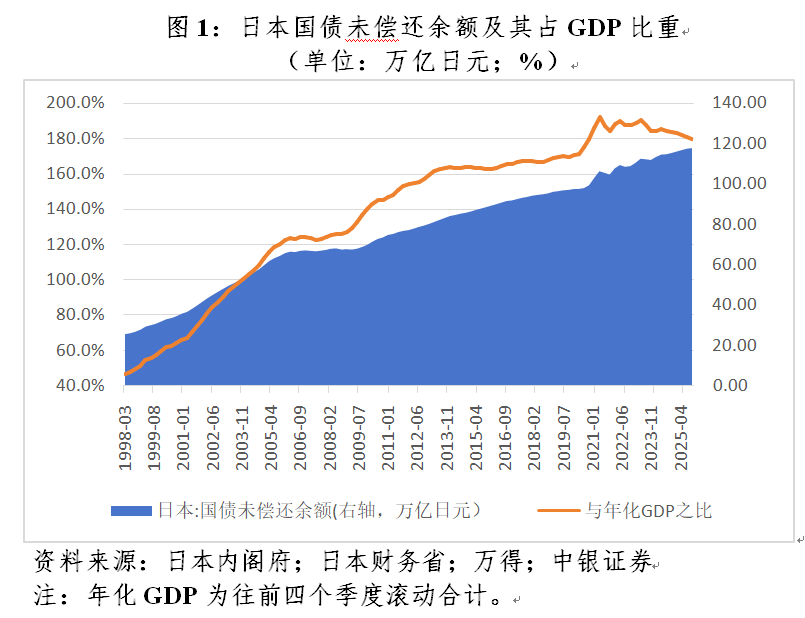
日本政府债台高企与日本经济"失去的三十年"密切相关。上世纪九十年代资产泡沫破裂,将日本推入资产负债表衰退。在非金融企业和家 庭部门大幅去杠杆的背景下,日本政府不得不通过财政扩张来应对经济下行。在持续的财政刺激下,日本国债余额与年化国内生产总值 (GDP)之比节节攀升,高至190.5%,到2025年9月末仍有179.5%(见图1)。国际货币基金组织(IMF)数据显示,2024年底日本政府债 务与GDP之比为237%,系全球发达经济体中最高。 2025年10月高市早苗政府上台以来,打出"扩张财政+减税纾困"的政策组合拳。同年11月,日本内阁正式批准总规模达21.3万亿日元的经济 刺激计划,包括17.7万亿日元的一般预算支出和2.7万亿日元的减税措施,是新冠疫情以来日本最大规模的经济刺激计划。2026年1月19 日,首相高市早苗又表示将加快探讨减税政策,拟将食品类商品的消费税税率在两年内降至零。翌日,日本国债市场遭受猛烈冲击。野村 证券警告,日本债市正面临类似英国"特拉斯"冲击(即2022年9月英国新任首相特拉斯宣布大规模减税计划引发的当地金融震荡)的"高市 冲击"风险。 "高市冲击"的直接原因是本次公布的减税计划 ...

程实:全球生产网络与绕不开的中国︱实话世经
Di Yi Cai Jing· 2026-02-01 12:19
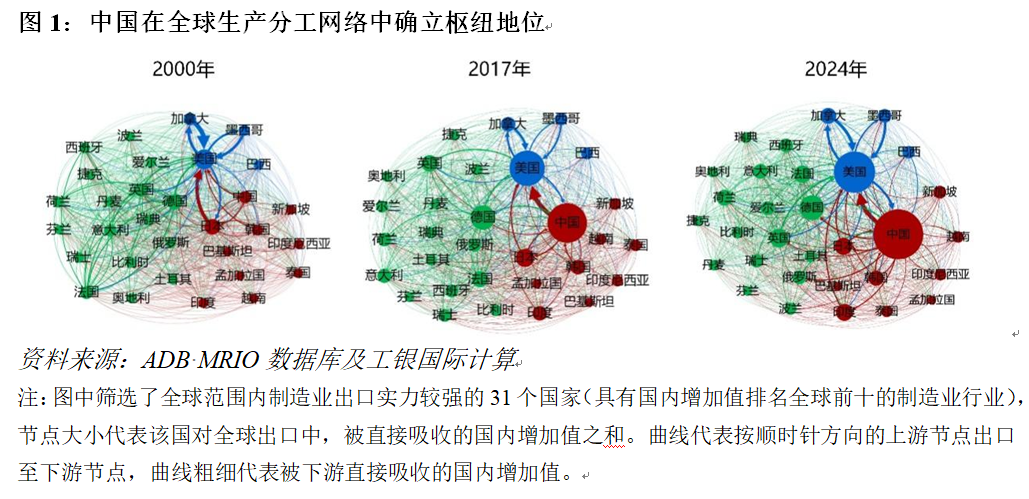
在全球生产网络中,中国正从参与既有分工的贸易节点,转变为牵动价值流向的中枢型力量。这一转变由三重结构性动能共同推动:一是长期积 累的规模化供给能力推高了中国在全球产出中的权重;二是产业升级推动价值获取能力上移,使中国逐步减轻对低端环节的依赖;三是本文重点 关注的,更广泛、更深入的跨国产业连接重塑了中国在全球价值链中的位置。传统价值链分析强调沿工序展开的纵向分工,而随着生产组织方式 的变化,价值流动越来越呈现多节点协同、跨区域重组的横向特征。因此,本文从网络视角分析,中国已经成为连接最密集的价值输出枢纽,并 与美国共同构成驱动全球价值循环的双核心。 但二者的作用方式并不相同,美国的影响更多体现在与核心经济体形成长期而稳定的黏性联系,中国的影响主要来自为大量经济体提供难以绕开 的生产投入。正是这种路径上绕不开、关系上未完全锁定的并存状态,使路径依赖在形成结构性优势的同时,也放大了潜在的系统性风险。如何 在巩固中枢地位的同时降低风险,关键在于海外生产节点的分散布局、与新兴节点的深度协同以及更高水平的经贸合作,将结构性依赖转化为更 稳固的价值锚定。 广结善缘:中国作为全球供给中心的结构角色 在图论与复杂网络分析中,度 ...
史诗级暴跌引发流动性踩踏,金银后市怎么走?
Di Yi Cai Jing· 2026-02-01 11:38
Core Viewpoint - The article discusses a significant market crash in gold and silver prices driven by a sudden shift in policy expectations following the nomination of Kevin Warsh as the new Federal Reserve Chairman, leading to a liquidity crunch and forced liquidations across various asset classes [1][2][3]. Group 1: Market Reaction - On the last trading day of January, gold prices experienced a historic drop, with spot gold falling over 12% and silver plunging more than 35%, marking the largest single-day declines in nearly 40 years [1][2]. - Gold prices fell from a peak of 5598.75 USD/oz to a low of 4682 USD/oz, closing at 4880.03 USD/oz, while COMEX gold futures dropped 8.35% [2]. - Silver saw an even steeper decline, with prices hitting a high of 121.65 USD/oz before plummeting to 74.28 USD/oz, closing down 26.42% [2]. Group 2: Policy Implications - Warsh's nomination is perceived as a shift towards a more hawkish stance for the Federal Reserve, which could undermine the previously supportive narrative for gold prices, leading to a significant sell-off [3][4]. - Analysts suggest that Warsh's approach may disrupt the narrative of central bank independence that had previously supported rising gold prices, resulting in a sharp increase in the dollar index [3]. Group 3: Margin Calls and Liquidation - The article highlights a vicious cycle of forced liquidations triggered by increased margin requirements from exchanges, leading to a downward spiral of selling pressure [4][5]. - The Chicago Mercantile Exchange and domestic exchanges raised margin requirements, exacerbating the liquidity crunch and forcing leveraged positions to liquidate [4][5]. Group 4: Technical Indicators - Prior to the crash, the gold and silver markets showed extreme overbought signals, with gold's RSI reaching 90 and silver's RSI exceeding 93, indicating a high likelihood of a correction [6]. - The implied volatility for gold ETFs surged to 39.67, reflecting a market with low tolerance for error and a need for significant price adjustments to absorb profit-taking and emotional premiums [6]. Group 5: Consumer Behavior - The article notes that retail investors faced challenges in responding to the price drop, with many unable to intercept orders for gold jewelry purchased at much higher prices [7]. - Retail policies regarding returns on gold products vary, with many retailers not accepting returns once the items are out of their possession, complicating consumer reactions to the price crash [7]. Group 6: Future Outlook - Despite the sharp decline, gold and silver recorded substantial gains for January, with COMEX gold and silver futures up 13% and 20% respectively [8]. - Analysts express divided views on the future of gold and silver, with short-term volatility expected due to ongoing forced liquidations, while long-term trends may favor a shift away from the dollar and increased central bank gold purchases [8][9].
IPO周报:2025年首家主板撤单!百菲乳业多次转向终“折戟”
Di Yi Cai Jing· 2026-02-01 11:25
Core Viewpoint - The IPO application of Guangxi Baifei Dairy Co., Ltd. has been withdrawn, marking the first main board withdrawal of the year, attributed to a misalignment between the company's business scale and the current A-share market positioning [1][2]. Group 1: Company Overview - Guangxi Baifei Dairy was established in 2017 and focuses on the research, production, and sales of dairy products and milk-containing beverages, including sterilized milk, modified milk, fermented milk, pasteurized milk, and milk-containing drinks [2]. - The company has experienced significant revenue growth, with main business revenues of 776 million yuan, 1.072 billion yuan, and 1.421 billion yuan from 2022 to 2024, reflecting a compound annual growth rate of 35.32% [2]. Group 2: Sales Channels - Baifei Dairy employs a combined online and offline sales model, with offline distribution being the primary channel, accounting for 75.35%, 71.12%, and 68.77% of main business revenue during the reporting period [3]. - Online sales have increased from 24.14% of main business revenue in 2022 to 30.97% in 2024, indicating a growing emphasis on digital sales channels [3]. Group 3: Profitability - The company's gross profit margins have shown a positive trend, with rates of 27.97%, 35.94%, and 40.39% over the reporting period, indicating relatively high profitability [4].
“有色狂潮月”终结后,2月资金将转向哪些赛道?
Di Yi Cai Jing· 2026-02-01 10:52
Core Viewpoint - The A-share market experienced a significant surge in the non-ferrous metals sector in January, with a monthly increase of 22.59%, marking the highest growth in nearly a decade. However, this trend reversed dramatically on January 30, leading to widespread declines in the sector and a historic drop in gold and silver prices, reflecting a market reassessment of extreme valuations and profit realizations [1][2][3][4]. Summary by Sections Non-Ferrous Metals Performance - The non-ferrous metals sector saw an average increase of 39.9% in January, significantly outperforming the overall A-share average of 8.18%. Notably, 16 stocks in this sector had monthly gains exceeding 50%, with Hunan Silver achieving over 200% growth [2][3]. - The sector's performance was driven by soaring international precious metal prices, with gold prices rising from $4,300 to $5,600 per ounce, a gain of over 30% in less than a month, and silver prices increasing by approximately 72% [3][4]. Market Dynamics and Adjustments - Following the extreme price increases, a sharp correction occurred on January 30, with gold and silver experiencing their largest single-day declines in 40 years, leading to a significant sell-off in the A-share non-ferrous sector [3][4]. - The market's focus shifted towards sectors with visible earnings potential and improved supply-demand structures as funds flowed out of the non-ferrous metals sector [5][6]. Future Investment Focus - As the sentiment in the non-ferrous sector cooled, attention turned to industries with clear earnings visibility and favorable supply-demand dynamics, such as AI applications and traditional sectors like chemicals and construction materials, which are expected to benefit from price recovery [5][7][8]. - The AI industry is highlighted as a key area for future investment, with expectations of significant developments in AI applications and semiconductor sectors, driven by major tech companies [6][7].


比亚迪:1月乘用车销量205518辆
Di Yi Cai Jing· 2026-02-01 10:45
比亚迪公告,2026年1月实现新能源汽车销量210,051辆,同比下降30.11%。其中乘用车销量为205,518 辆,同比下降30.67%;纯电动汽车销量83,249辆,同比下降33.60%;插电式混合动力汽车销量122,269 辆,同比下降28.53%。 ...
