
Hua Er Jie Jian Wen

Search documents
黑石集团被曝接近达成协议,有望成为新世界发展最大股东!
Hua Er Jie Jian Wen· 2026-01-29 11:06
Group 1 - Blackstone Group is in advanced negotiations to become the largest single shareholder of New World Development, potentially gaining control of the company and marking the first time a wealthy Hong Kong family relinquishes control of a business founded over 50 years ago [1] - The proposed plan involves restructuring New World Development, which is facing financial difficulties, allowing the Cheng family to sell assets to improve liquidity [1] - New World Development, one of Hong Kong's most indebted developers, was on the brink of default last year due to a downturn in the property market after previously expanding through debt [1] Group 2 - In August 2025, there were reports of initial contacts between New World Development and Blackstone Group regarding asset sales, with Blackstone exploring the acquisition of some assets and the possibility of future privatization [2] - New World Development clarified in an announcement that neither the company nor its controlling shareholders had engaged in formal discussions regarding equity acquisition with any parties [2] - The company's assets include notable properties such as the K11 Art Mall, Hong Kong Convention and Exhibition Centre, and several iconic residential projects [2]



天齐锂业:预计2025年净利润为3.69亿元-5.53亿元
Hua Er Jie Jian Wen· 2026-01-29 11:04
市场有风险,投资需谨慎。本文不构成个人投资建议,也未考虑到个别用户特殊的投资目标、财务状况或需要。用户应考虑本文中的任何 意见、观点或结论是否符合其特定状况。据此投资,责任自负。 天齐锂业公告,预计2025年度净利润为3.69亿元~5.53亿元,上年同期亏损79.05亿元。公司业绩变动主 要得益于控股子公司锂矿定价周期缩短,生产成本贴近最新采购价格,以及重要的联营公司SQM投资 收益大幅增长。 风险提示及免责条款 ...

菜鸟无人车并入九识RoboVan生态
Hua Er Jie Jian Wen· 2026-01-29 10:43
Core Viewpoint - After nearly 10 years of investment in autonomous vehicle development, the company has made a significant decision to integrate its autonomous vehicle business with Jiushi Intelligent, marking the beginning of deep collaboration in the autonomous vehicle sector [1][3]. Group 1: Strategic Integration - The company has injected its autonomous vehicle business and made a cash investment to become a shareholder of Jiushi Intelligent, supporting the creation of the RoboVan super carrier [1]. - Following this integration, the company will no longer directly produce and sell autonomous vehicles but will leverage its logistics scenarios and ecosystem advantages to enhance the application of autonomous vehicles in logistics [3]. - Jiushi Intelligent will operate under a dual-brand strategy, with the "Cai Niao Unmanned Vehicle" brand being authorized for use by Jiushi, while maintaining its identity as an Alibaba-invested incubated enterprise [3]. Group 2: Market Position and Product Development - The company has achieved breakthroughs in 2024, transitioning its autonomous vehicle work scenarios from closed and semi-closed areas to public roads for last-mile delivery, with its L4-level autonomous vehicle GT entering mass production [4]. - The company has launched new models, including the upgraded GT Pro and the budget-friendly GT-Lite, and has been actively involved in various applications such as heavy load, short-distance, cold chain delivery, and police patrols [4]. - Jiushi Intelligent, established in 2021, focuses on L4 RoboVan and aims to have over 16,000 autonomous vehicles operating by the end of 2025, covering more than 300 cities in China [4][5]. Group 3: Industry Outlook - The demand for logistics autonomous vehicles is significant, with the potential to reduce costs and improve efficiency for express logistics companies, applicable in various fields such as express delivery, takeaway, B2C retail, and fresh delivery [6]. - The average price of mainstream logistics autonomous vehicles is around 50,000 yuan, with a business model based on vehicle sales and FSD service fees [6]. - The integration of the two companies is seen as a key milestone in moving from "single-point breakthroughs" to "system integration" in the autonomous driving industry, with expectations for a win-win development in different market dimensions [6].
“投资业务”又放异彩?中泰证券去年净利润预增四到六成
Hua Er Jie Jian Wen· 2026-01-29 10:39
回顾2024年,中泰证券的归母净利润不足10亿元,每股收益为0.11元,甚至比前一年还大幅下降。而在 2025年,公司成功实现了业绩的"翻身仗"。增长逻辑:把握市场机遇+三大业务表现 随着2025年资本市场活跃度的显著回升,券商板块业绩修复不断得到验证。1月29日,中泰证券发布业 绩预增公告。 中泰证券大幅增长的原因可能还要追溯到市场环境和具体业务能力上。 一方面得益于外部环境的改善。2025年资本市场活跃度回升,交投情绪转暖,为券商各项业务开展提供 了良好的土壤。 中泰证券的大投资业务特长,日益明显。 公司预计全年实现归属于母公司所有者的净利润在13.12亿元至15.00亿元之间,较2024年同期的9.37亿 元大幅增长40%至60%。 业绩快报公布的内容不多,但传出的信号一点不少。 比如,值得关注的反映主营业务能力的"扣非净利润"指标方面。公告显示,中泰证券预计2025年扣非后 归母净利润为12.60亿元至14.52亿元,同比增幅达44%-66%。 这一增速略高于归母净利润增速,显示出公司主营业务的盈利质量在扎实提升。业务均衡性有待观察 中泰证券表示,本次业绩预告数据已经财务部门初步测算,并与年审会计师进 ...

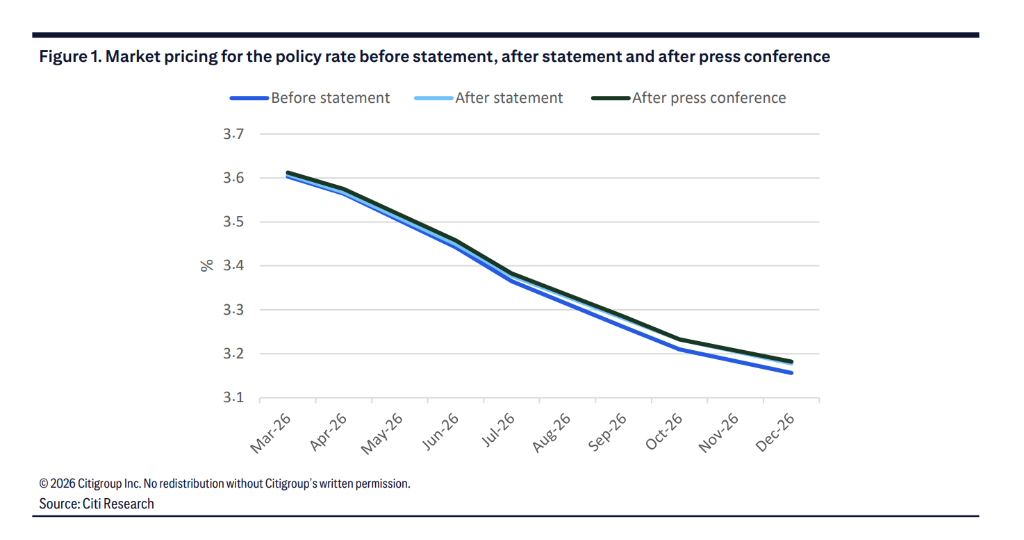
“大致中性”or“略微偏紧”?花旗解读鲍威尔讲话:降息门槛已经较低,年内有望降息三次
Hua Er Jie Jian Wen· 2026-01-29 10:07
鲍威尔在1月的FOMC会议上竭尽全力想要维持一种"不做新指引"的姿态,试图让市场相信美联储目前处于按兵不动的观望模式。 然而,对于敏锐的投资者而言,这次会议释放的信号远比表面看起来要鸽派得多。虽然美联储维持利率不变,但鲍威尔承认当前的政策利率处 于"略微限制性"区间,且对于劳动力市场所谓的"企稳"迹象持谨慎态度。这实际上暴露了美联储内部对于经济放缓的担忧。 劳动力市场:表面的企稳与底层的疲软 美联储在政策声明中对劳动力市场的描述进行了微调,将此前失业率"逐步上升"改为"显示出一些企稳迹象",并删除了"就业下行风险在近几个月 上升"的措辞。从表面看,这似乎是在为鹰派立场背书。 然而,花旗指出,投资者绝不能过度解读这一变化。 模糊的"中性"与明确的"限制性" 本次会议最值得玩味的细节在于鲍威尔对当前利率水平的描述。他继续将政策利率描述为处于中性区间的顶部,并表示政策利率"可能是大致中性 的,或者略微偏紧一些。" 这种语义上的微妙差别至关重要。如果是"宽松的中性",则意味着美联储可以长期维持现状;但如果是"略微限制性",则意味着如果通胀继续回 落,实际利率将变相上升,从而过度压制经济。 鲍威尔重申,大多数官员预计今 ...

微软与Meta季报回答了市场焦点问题:算力开支和AI需求,都很强!
Hua Er Jie Jian Wen· 2026-01-29 08:49
据追风交易台,摩根大通分析师Harlan Sur解读微软与Meta最新财报指出,AI基础设施的支出强度已明 确进入新一轮扩张周期。 这表明,在基础模型、AI代理及商业化应用加速部署的推动下,算力需求持续超越供给能力,驱动云 计算与超大规模企业持续加大投入。摩根大通认为,当前供需格局下,主要科技企业的资本支出仍具上 调空间,投资将重点集中于数据中心、服务器及网络基础设施,进而带动相关半导体产业链业绩。该投 资趋势预计将延续至2027年。 供应极限成为常态:需求缺口将持续 供应紧张已成为当前人工智能基础设施建设的核心瓶颈。微软与Meta在最新财报会议中均指出,算力 需求持续超越供应能力。 供需失衡的结构性原因在于基础模型、AI代理及商业化应用的加速部署,推动计算强度呈现指数级增 长。Meta透露,其用于训练生成式广告模型的GPU集群规模已实现翻倍,并正进一步扩展以支持2026 年新一代GEM模型的训练。 这种持续的供应紧缺态势,预计将继续支撑数据中心、服务器及网络基础设施在2026年至2027年间保持 高强度投资。 定制芯片开发成为战略重点 两家科技巨头在最新财报中均表示,AI算力供应紧张态势贯穿2026年。两家 ...


金铜暴涨,中国矿企赚麻了?
Hua Er Jie Jian Wen· 2026-01-29 08:28
高盛全球大宗商品研究团队在1月28日发布的报告中,显著上调了对黄金与铜两大关键金属的价格预 测,预计将直接驱动中国相关矿业企业的盈利预期系统性上修。报告指出,资源稀缺性溢价已实质性显 现。 据追风交易台,报告将2026年基准黄金目标价格上调10%-16%,预计当年均价可达4978美元/盎司;同 时将2026年LME铜价预测提升7%至12200美元/吨。基于上述价格调整,高盛相应将覆盖范围内的中国 铜与黄金企业2026-2027年盈利预测上调9%-33%。 研报强调,具备显著产量增长潜力的龙头企业将同时享受价格上行与产能扩张的双重红利,预计2026年 部分企业铜产量增幅可达9%-14%。从估值角度看,当前股价水平仍普遍反映较为保守的大宗商品价格 预期,若长期目标价位逐步兑现,当前板块估值具备明显安全边际与上行空间。 结构性配置推升金价,资金流入铸就铜稀缺溢价 高盛全球团队最新研究指出,大宗商品市场正步入结构性重估阶段,尤其体现在贵金属与工业金属领 域。 黄金方面,团队将2026年均价预测上调10%至4978美元/盎司,并将2027年上半年均价预测大幅调升16% 至5585美元/盎司。高盛分析指出,此前报告提示的 ...


世界黄金协会:全球黄金需求首破5000吨,散户和机构成购金主力
Hua Er Jie Jian Wen· 2026-01-29 08:23
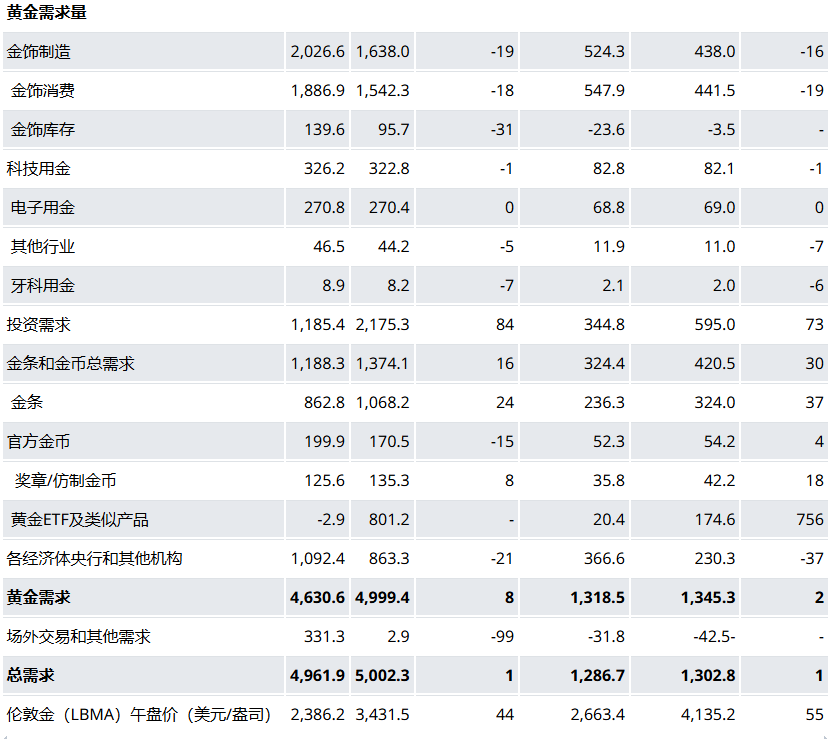
各国央行购金速度放缓五分之一至863吨,低于2022至2024年每年超过1000吨的购买力度。与此同时,投资需求激增 84%至创纪录的2175吨,其中黄金ETF持仓增加801吨,结束连续四年流出,金条和金币购买量跃升16%至1374吨,创 12年新高。 世界黄金协会首席策略师John Reade表示: 世界黄金协会周四发布报告显示,2025年全球黄金需求首次突破5000吨,达到5002吨的历史新高,投资需求取代珠宝 消费成为最大需求来源,其中散户和机构成为购金主导力量。 央行在2022年、2023年或许在这一走势中发挥了非常重要的作用,但现在其他因素已经占据了主导地位, 今年最大的问题将是投资需求能否保持足够强劲以维持黄金市场的强势。 除了利率下降和关税引发的动荡之外,主要发达市场货币信心的减弱也是投资需求激增的关键催化剂。对央行独立性 的攻击和主权债务上升削弱了投资者对主要货币的信心,推动资金流向黄金避险。 这一需求结构转变发生在金价屡创新高的背景下。2025年金价创下1979年以来最佳年度表现,全年上涨64%,并在53 个交易日刷新历史纪录。本周三金价首次突破每盎司5300美元,今年以来已上涨22%。全球 ...
全球最大主权基金回报15.1%,英伟达等科技股“带飞”
Hua Er Jie Jian Wen· 2026-01-29 07:57
Core Insights - The Norwegian Sovereign Wealth Fund achieved a 15.1% annual return in 2025, driven by strong performances in technology and financial sectors, continuing its reliance on large tech stocks [1] - The fund, managed by the Norwegian Central Bank Investment Management (NBIM), reported a stock investment return of 19.3%, with other asset classes also showing growth [1] - Despite solid overall performance, the fund lagged its benchmark index by 28 basis points [1] Group 1: Performance Highlights - Large tech stocks have consistently dominated the fund's performance in recent quarters, with NBIM holding approximately 1.5% of listed shares in around 7,200 companies globally [2] - The fund's largest holdings include major U.S. tech giants such as Nvidia, Apple, Microsoft, Alphabet, and Amazon [2] - Other asset classes also recorded positive returns, with fixed income investments yielding 5.4% and private real estate investments returning 4.4% [2] - The most notable performance came from private renewable energy infrastructure investments, which achieved a return rate of 18.1% [2] Group 2: Geographical Concentration Concerns - Over half of the fund's assets are concentrated in the U.S., primarily in stocks and bonds, raising concerns among experts due to recent geopolitical tensions [3] - An expert panel appointed by the government has recommended that the fund prepare for increasing geopolitical instability, particularly in light of recent comments from former President Trump regarding Greenland [3] - The expert panel advised against limiting the fund's investment scope, suggesting that NBIM should maintain its global and diversified investment strategy while addressing geopolitical risks [3]




贝森特表态“不干预”,市场抛售日元更“无所顾忌”了?
Hua Er Jie Jian Wen· 2026-01-29 07:47
Core Viewpoint - The statement by U.S. Treasury Secretary Yellen has weakened the last psychological defense of the yen, leading to a reduction in intervention expectations and making shorting the yen a more attractive trade [1][10]. Group 1: Market Reactions - Following Yellen's statement on January 28, the USD/JPY pair rebounded sharply from around 152.7 to 153.8, erasing losses caused by rumors of a "New York Fed price check" [1]. - The market's focus has shifted from intervention speculation to the fundamental strength of Japan's economy [5][10]. Group 2: Intervention Expectations - Yellen's denial of intervention has diminished the perceived "policy risk premium" associated with USD/JPY, making shorting the yen more appealing [3]. - There is insufficient evidence to suggest that Japan has intervened in the currency market, as data from the Bank of Japan shows no significant yen-buying activity during recent declines [4]. Group 3: Fundamental Factors - The market is now assessing three key areas regarding Japan's fundamentals: fiscal policy, inflation expectations, and monetary policy [5]. - The upcoming elections and the lack of clarity on funding for tax cuts could create downward pressure on the yen if fiscal expansion continues without a clear financing plan [5]. - Rising domestic inflation expectations have been found to correlate with a weaker yen, indicating that even without widening interest rate differentials, the yen remains under pressure [6]. Group 4: Monetary Policy Implications - Short-term, Yellen's comments may reduce expectations for immediate rate hikes by the Bank of Japan, but if USD/JPY approaches the 150 level again, the Bank may find it challenging to maintain its current stance [8]. - The weakening of the yen is becoming a significant variable in the Bank of Japan's response function, potentially leading to increased rate hike expectations if the yen depreciates too quickly [8][9].