Zhong Guo Neng Yuan Wang

Search documents
宏观风险逐步落地,看好后续金属行情 | 投研报告
Zhong Guo Neng Yuan Wang· 2025-12-22 02:03
Group 1: Market Overview - The price of praseodymium and neodymium oxide decreased by 0.88% this week, with expectations of a 20-25% reduction in monthly output due to stricter environmental inspections in December [5] - LME copper price increased by 2.75% to $11,870.5 per ton, while domestic copper price decreased by 0.96% to ¥93,200 per ton [2] - LME aluminum price rose by 2.80% to $2,955.50 per ton, and domestic aluminum price increased slightly by 0.07% to ¥22,200 per ton [3] - COMEX gold price increased by 0.79% to $4,368.7 per ounce, influenced by geopolitical risks [4] Group 2: Supply and Demand Dynamics - Domestic copper inventory saw a slight increase of 0.79% week-on-week, with expectations of reduced imports and stable domestic supply [2] - Domestic aluminum production capacity remains high, with an operating rate of 79.85%, but inventory pressures are evident as production continues to accumulate [3] - The supply of antimony is expected to decline due to reduced overseas production, while demand remains stable, indicating a potential upward trend in global antimony prices [5] - Lithium carbonate price increased by 3.66% to ¥96,700 per ton, while hydroxide lithium price decreased by 0.25% to ¥87,000 per ton [6] Group 3: Export and Future Outlook - China's magnetic material exports in October increased by 16% year-on-year but decreased by 5% month-on-month, with a more optimistic outlook for future demand due to expected easing in export restrictions [5] - The overall sentiment in the aluminum processing sector remains weak, with a decrease in operating rates among major processing enterprises [3] - The market for tin is expected to remain strong due to low inventory levels and supply disruptions in key overseas mining regions [5]
成本端支撑减弱,长丝价格下滑 | 投研报告
Zhong Guo Neng Yuan Wang· 2025-12-22 02:03
Group 1 - The price spread for domestic key refining projects this week is 2674 CNY/ton, an increase of 104 CNY/ton (up 4% week-on-week) [1][2] - The price spread for foreign key refining projects this week is 1305 CNY/ton, a decrease of 24 CNY/ton (down 2% week-on-week) [1][2] - The average price of PX this week is 838.6 USD/ton, an increase of 1.7 USD/ton week-on-week, with a price spread compared to crude oil of 400.0 USD/ton, an increase of 15.7 USD/ton week-on-week [2] Group 2 - In the polyester sector, the average prices for POY, FDY, and DTY are 6293, 6536, and 7686 CNY/ton respectively, with week-on-week changes of -111, -125, and -61 CNY/ton [2] - The weekly average profits for POY, FDY, and DTY are -58, -163, and +3 CNY/ton respectively, with week-on-week changes of -75, -85, and -42 CNY/ton [2] - The inventory levels for POY, FDY, and DTY are 19.0, 24.3, and 24.9 days respectively, with week-on-week increases of 2.3, 2.1, and 1.0 days [2] Group 3 - In the refining sector, domestic gasoline, diesel, and aviation fuel prices have decreased this week [2] - In the chemical sector, the PX operating rate is 89.2%, unchanged week-on-week [2] Group 4 - Relevant listed companies in the private refining and polyester filament sector include Hengli Petrochemical, Rongsheng Petrochemical, Hengyi Petrochemical, Tongkun Co., and Xin Fengming [3]


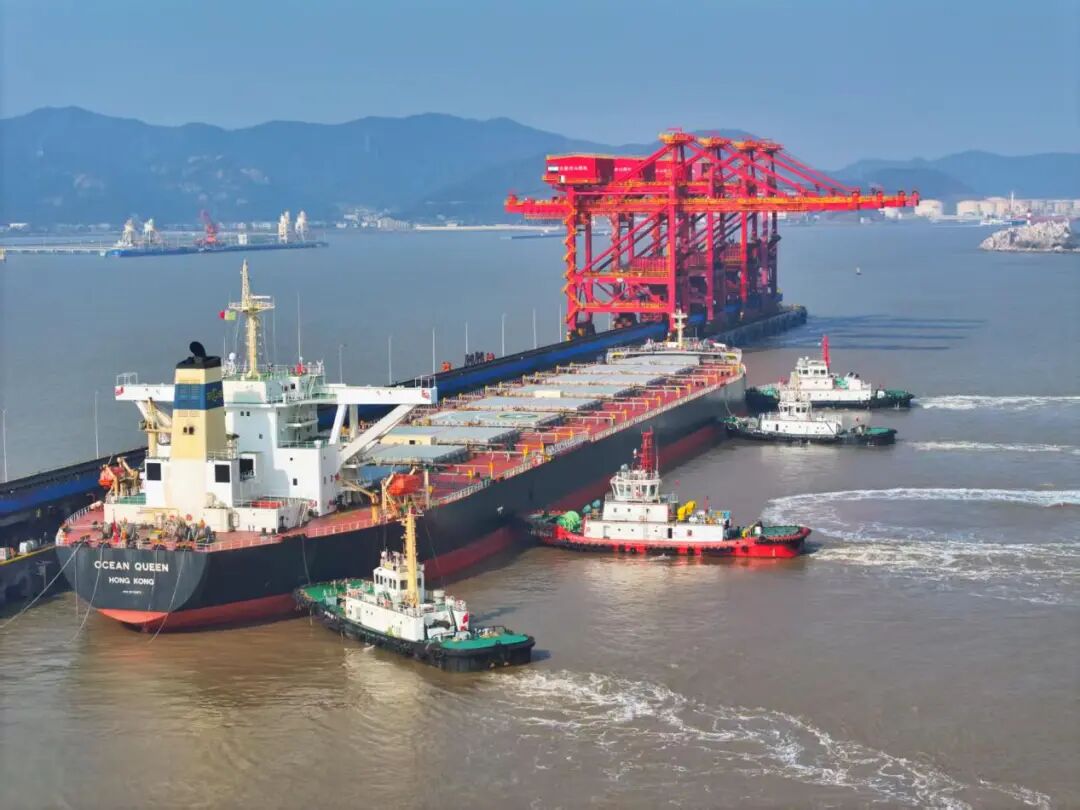
1-11月浙能港口煤炭进口量已超930万吨,同比增长10.9%
Zhong Guo Neng Yuan Wang· 2025-12-22 01:48
Core Viewpoint - Zhejiang Energy Port Company has successfully achieved its annual import target of 15 million tons of coal, marking a new high since its opening, which reflects the improvement in operational efficiency and service level of the company [1]. Group 1: Operational Achievements - The completion of the unloading of the "Ocean Queen" vessel signifies the achievement of the 15 million tons annual import target [1]. - From January to November this year, the coal import volume at Zhejiang Energy Port exceeded 9.3 million tons, representing a year-on-year increase of 10.9% [4]. Group 2: Technological Advancements - The company has focused on key areas such as coal unloading and transportation, enhancing operational efficiency through technological upgrades [6]. - The implementation of an unmanned operation for the bucket wheel and a smart yard operation system has significantly reduced labor costs and improved fault location accuracy [6]. Group 3: Environmental Initiatives - The port has adapted its shore power system to meet the electricity needs of various vessels, greatly reducing emissions from ships [6]. - The simultaneous launch of photovoltaic projects has enabled the port to achieve self-sufficiency in green energy, contributing to the construction of a "green and beautiful port" [6]. Group 4: Strategic Collaborations - Zhejiang Energy Port has optimized customs clearance processes and adopted a "hot berthing" model to reduce vessel waiting times [7]. - The company has expanded resource channels through long-term collaborations, contributing positively to lowering energy costs in the province [7]. Group 5: Future Directions - The company aims to continue its core responsibility of ensuring coal supply, deepen technological transformation, and enhance energy security reserves [7]. - Leveraging its geographical advantages, Zhejiang Energy Port plans to integrate further into the group’s industrial layout to support local economic development [7].


国网江苏省电力有限公司党委:“第一议题”领航 筑牢发展根基
Zhong Guo Neng Yuan Wang· 2025-12-22 01:37
一直以来,国网江苏省电力有限公司党委上下一心、紧跟党的步伐,将党的理论武装作为首要政治任 务,以"第一议题"学习习近平总书记近期重要讲话和重要贺信精神,并结合实际抓好贯彻落实,确保公 司发展始终沿着正确的政治方向前进。公司上下深入学习领会习近平总书记。在统筹协调方面,牢固树 立总体国家安全观,推动安全和发展良性互动,正确处理好安全和发展的关系强化体系化防控与精益化 管理,全面提升风险防范能力,特别是在防台防汛等关键时期,扎实做好保障工作,为公司的稳定发展 筑牢安全防线;在协同攻坚上,持续深化改革创新,扎实开展国企改革深化提升行动,服务全国统一大 市场建设,重视新能源上网电价市场化改革和科研体系改革,促进科技创新和产业创新深度融合,能够 让公司在市场竞争中占据优势地位,实现高质量发展;在队伍建设上,通过坚持党建带团建,加大团组 织建设力度,加强青年人才队伍建设,深入实施"青马工程"和青年精神素养提升工程,用好红色资源、 讲好红色故事,引导青年赓续红色血脉、凝聚奋进力量,为公司注入源源不断的青春活力;在作风建设 上,组织开展学习教育"回头看",梳理盘点整改整治成效,通报问题整治情况,总结学习教育成果和经 验,能够 ...
AI算力爆发催生液冷散热,关注液冷设备相关标的 | 投研报告
Zhong Guo Neng Yuan Wang· 2025-12-22 01:03
Market Overview - During the period from December 15 to December 19, the CSI 300 index decreased by 0.3%, while the machinery sector fell by 1.7%, ranking 28th among all primary industries [1] - Among the sub-sectors, plastic processing machinery experienced the smallest decline at 0.4%, whereas oil and gas equipment saw the largest drop at 6.7% [1] Industry Insights - The explosive growth in global AI computing power is driving the adoption of liquid cooling technology, which addresses the inefficiencies of traditional air cooling methods [2][3] - Liquid cooling offers advantages such as high thermal conductivity, low energy consumption, and reduced noise, making it a preferred solution for high-power chips and large-scale data centers [3] - Economic analysis indicates that liquid cooling can save 10% and 14% in investment costs compared to traditional air cooling for data centers with 20kW and 40kW per rack, respectively [3] - Regulatory requirements for data center Power Usage Effectiveness (PUE) are becoming stricter, with targets set for 2025 that necessitate the adoption of liquid cooling solutions [3]
党建赋能筑屏障 安全护航促发展 安徽能源集团新能公司“安全生产”主题党日见实效
Zhong Guo Neng Yuan Wang· 2025-12-22 00:59
Core Viewpoint - The Anhui Energy Group's New Energy Company is integrating "Party Building + Safety" to enhance safety production and ensure high-quality development, achieving significant operational milestones in renewable energy generation [1][4][5]. Group 1: Party Building and Safety Integration - The company has conducted 16 "Safety Production" themed Party Day activities, focusing on the integration of Party building and safety production [1]. - A total of over 10 "Learning Delivery" activities have been organized to reinforce safety production principles and educate employees on safety and integrity [4]. - The company has identified and rectified over 500 safety hazards through the "No Hidden Dangers Around Party Members" initiative, strengthening the safety production defense [5]. Group 2: Employee Engagement and Training - Leadership has engaged in "Summer Cooling Delivery" initiatives, providing care and support to frontline workers [4]. - The company has incorporated external teams into its safety training system, achieving a 100% pass rate in production skill assessments [4]. - Eight employees participated in the Group Company's New Energy Operation and Maintenance Skills Competition, showcasing the emphasis on skill enhancement [4]. Group 3: Operational Achievements - The company has achieved a cumulative safe operation of 3,310 days, indicating a stable safety production situation [5]. - The total installed capacity of renewable energy has surpassed 2.51 million kilowatts, with electricity generation exceeding 28 billion kilowatt-hours, marking a 44.55% year-on-year increase [5]. - The annual operational goals were met 16 days ahead of schedule, reflecting significant improvements in operational efficiency [5].
北京同仁堂集团声明:进行拉网式核查 坚决清理“擦边”使用“同仁堂”字号等行为
Zhong Guo Neng Yuan Wang· 2025-12-20 01:20
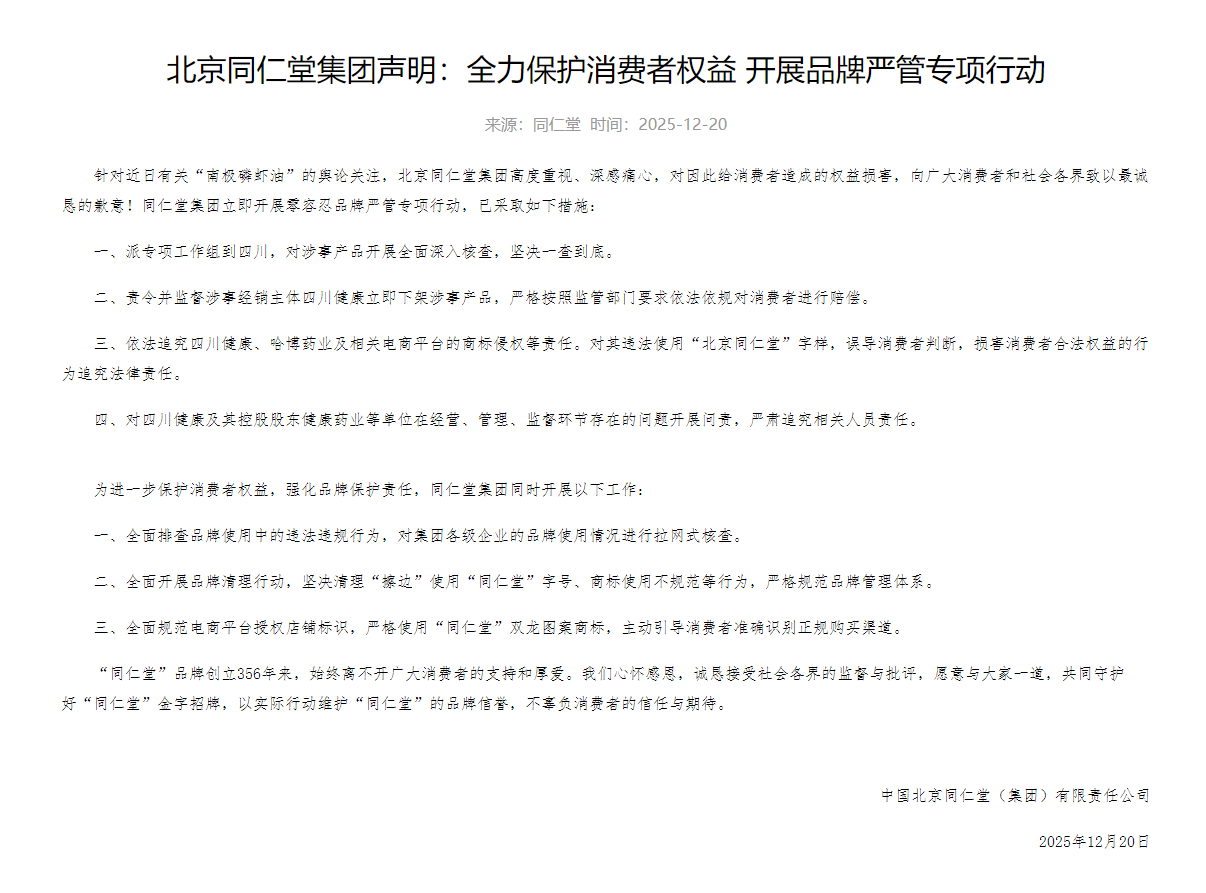
12月20日,中国北京同仁堂(集团)有限责任公司发布声明,针对近日"南极磷虾油"产品造假事件向消费者和社会各界致歉,并宣布启动"零容忍品牌严管 专项行动"。 声明中指出,北京同仁堂将派专项工作组到四川,对涉事产品开展全面深入核查,坚决一查到底。责令并监督涉事经销主体四川健康立即下架涉事产品,严 格按照监管部门要求依法依规对消费者进行赔偿。 北京同仁堂依法追究四川健康、哈博药业及相关电商平台的商标侵权等责任。对其违法使用"北京同仁堂"字样,误导消费者判断,损害消费者合法权益的行 为追究法律责任。对四川健康及其控股股东健康药业等单位在经营、管理、监督环节存在的问题开展问责,严肃追究相关人员责任。 同时,北京同仁堂全面排查品牌使用中的违法违规行为,对集团各级企业的品牌使用情况进行拉网式核查。全面开展品牌清理行动,坚决清理"擦边"使 用"同仁堂"字号、商标使用不规范等行为,严格规范品牌管理体系。全面规范电商平台授权店铺标识,严格使用"同仁堂"双龙图案商标,主动引导消费者准 确识别正规购买渠道。 近日,上海市消保委发布15款南极磷虾油产品比较检测结果,其中一款标称"北京同仁堂99%高纯南极磷虾油"的产品引发关注。 面对 ...

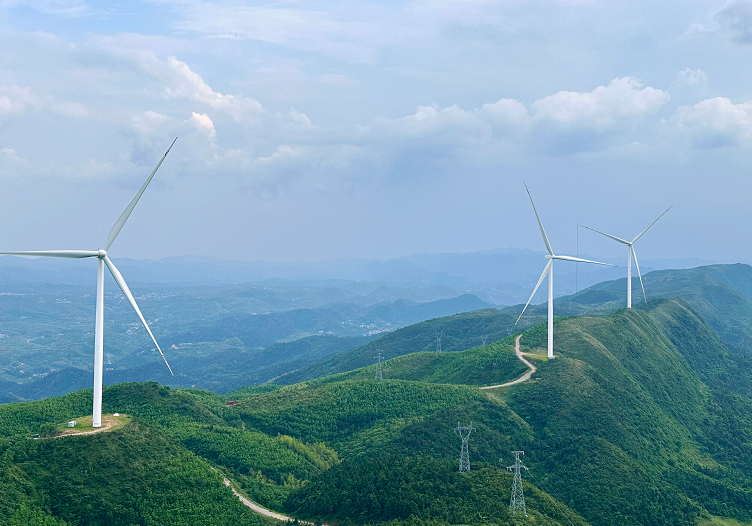
移动储能 织网赋能——中国车网互动迈向规模化时代的交响序章
Zhong Guo Neng Yuan Wang· 2025-12-19 11:41
Core Insights - The article discusses a significant transformation in China's energy sector marked by two nationwide experiments, indicating the beginning of a large-scale era in vehicle-to-grid (V2G) technology [1][2] Group 1: Overview of V2G Technology - V2G technology is enabling electric vehicles to transition from being mere consumers of energy to becoming essential producers and consumers within a new power system [1] - The first large-scale validation during the National Day holiday in October 2025 and the subsequent exploration in late November serve as critical tests for the capabilities of V2G technology [1][2] Group 2: National Validation Activities - The National Day validation event aimed to test the State Grid's smart vehicle networking platform, which successfully aggregated resources from 19 provincial electric vehicle companies and 19 operators, covering 30,000 public charging piles and 484 V2G charging piles [4] - The platform demonstrated its ability to manage over 3,000 MW of resources, achieving a maximum discharge power of 1.2 MW, validating its capability for precise load control across different regions [4] Group 3: User Engagement and Economic Incentives - The validation activities significantly lowered participation barriers for users, with the V2G order share increasing from an average of 9.10% to 28.56% during the event, driven by economic incentives [5] - User feedback highlighted the convenience and cost-effectiveness of participating in V2G activities, indicating a successful initial engagement with early adopters [5] Group 4: Challenges and Future Directions - Despite initial successes, challenges remain, including the need for sustainable business models, standardization of communication protocols, and addressing user concerns regarding battery management and financial processes [6][12] - The second phase of activities focused on value extraction, with significant increases in participation and discharge volumes, indicating a growing recognition of the value of electric vehicles as a resource for grid stability [7][8] Group 5: Ecosystem Development - The future of V2G technology requires collaboration across technology, standards, market mechanisms, and policies to create a sustainable ecosystem [12][13] - Establishing unified communication standards and a comprehensive business model is essential for the long-term viability of V2G initiatives [12][13] Group 6: Conclusion and Vision - The article concludes that the transformation in energy consumption patterns is underway, moving towards a more flexible and interactive energy system where electric vehicle owners can actively participate and benefit from energy production and consumption [17] - The successful validation of V2G technology indicates a promising future for a more resilient and green energy ecosystem, emphasizing the importance of user experience and satisfaction in scaling these initiatives [15][17]
政策与供需双轮驱动下,2026年电石行业走向何方?
Zhong Guo Neng Yuan Wang· 2025-12-19 09:41
Group 1 - The core viewpoint of the articles indicates that the calcium carbide market is experiencing price declines due to increased supply and weak downstream demand, particularly in the PVC industry [1][2] - In December, the price of calcium carbide has dropped significantly, with some manufacturers in the Wuhai region reporting a decrease of 100 yuan per ton within a week, leading to increased inventory pressure for producers [1] - The production capacity of calcium carbide is expected to be limited due to stringent approval processes for new capacity, with only existing companies allowed to make minor increases through technological upgrades or capacity replacements [2] Group 2 - By 2026, the calcium carbide industry is projected to see a structural increase in operating rates, driven by the exit of outdated production capacities, while the focus will remain on small-scale plants with annual capacities of 100,000 tons or less [2] - The demand for calcium carbide is anticipated to grow, particularly from developing Asian countries like India, Vietnam, and the Philippines, which are experiencing industrialization and have limited domestic production capabilities [2] - The price of calcium carbide is expected to remain stable but weak, influenced by factors such as raw material costs, production costs, and downstream demand, with a potential for price fluctuations within a defined range due to seasonal demand changes and regional policies [3]
百强竞发,群英荟萃——2025中国工程管道管材综合实力供应商百强发布
Zhong Guo Neng Yuan Wang· 2025-12-19 09:18
Core Insights - The "2025 China Engineering Pipeline and Pipe Material Comprehensive Strength Supplier Top 100" list has been released, showcasing the top suppliers in the engineering pipeline and pipe material industry across China [1] - The list evaluates suppliers based on multiple criteria including production scale, technological research and development capabilities, product quality, market share, brand influence, financial status, after-sales service, and social responsibility [1] - The publication aims to provide a clear map of the industry's strength, support collaboration within the supply chain, assist investment institutions, and guide industry policy formulation [1] Supplier Evaluation - The top 100 suppliers represent the backbone of China's engineering pipeline and pipe material industry, indicating the mainstream direction and overall level of industry development [1] - The suppliers are distributed nationwide and offer a diverse range of products to meet various engineering needs [1] Industry Goals - The initiative encourages all companies to benchmark against advanced peers and strive for progress, contributing to China's transition from a major manufacturing country to a strong manufacturing nation [1]