Zhong Guo Qi Che Bao Wang

Search documents
单季首盈利后,小米汽车第50万辆下线
Zhong Guo Qi Che Bao Wang· 2025-11-21 02:37
Core Insights - Xiaomi's automotive division achieved a significant milestone by producing its 500,000th vehicle in just 602 days, setting a record for the fastest production of 500,000 electric vehicles globally [1][4] - The company reported its first quarterly profit from its automotive business in Q3 2025, with revenue from this segment reaching 29 billion yuan, a year-on-year increase of over 199% [3][5] Production and Sales Growth - The production of the 500,000th vehicle marks a critical milestone for Xiaomi, indicating the successful establishment of a comprehensive system for research, manufacturing, sales, delivery, and service [4] - In Q3 2025, Xiaomi delivered over 100,000 vehicles, a record for a single quarter, representing a year-on-year growth of 173.4% [4] - Cumulatively, Xiaomi delivered over 260,000 vehicles in the first three quarters of 2025, with September and October seeing monthly deliveries exceeding 40,000 units [4] Financial Performance - The Q3 financial report highlighted that the automotive and AI innovation segment achieved a quarterly operating profit of 700 million yuan for the first time [5] - Revenue from smart electric vehicles alone reached 28.3 billion yuan in Q3 2025 [5] Manufacturing and Supply Chain Efficiency - Xiaomi's automotive production is supported by advanced manufacturing capabilities, including over 1,100 production robots and nearly 100 advanced manufacturing patents obtained in 2025 [6] - The production process involves 98 quality inspection stations and 143 high-precision testing devices, ensuring high safety and quality standards [6] - The automotive production has positively impacted over 300 component suppliers, generating an additional output value of nearly 14 billion yuan in the Beijing-Tianjin-Hebei region [6] Future Outlook - Xiaomi plans to enhance safety and delivery efficiency while increasing investment in technological innovation, with R&D spending expected to reach 32 to 33 billion yuan for the year [8] - The company aims to invest approximately 200 billion yuan over the next five years to further develop core technologies [8]


廉玉波、吴凯当选!汽车业新增两位院士
Zhong Guo Qi Che Bao Wang· 2025-11-21 02:37
Group 1 - The Chinese Academy of Sciences and the Chinese Academy of Engineering announced the results of the 2025 academician election, electing 73 academicians from the former and 71 from the latter [1] - BYD and CATL, two leading companies in the new energy vehicle industry, each had one representative elected as academicians: BYD's chief scientist and total engineer Lian Yubo and CATL's chief scientist Wu Kai [1] - The average age of newly elected academicians from the Chinese Academy of Sciences is 57.2 years, with 67.1% being 60 years old or younger, and 5 female scientists elected [1][2] Group 2 - The election emphasizes national strategic needs and the importance of technological innovation in driving new productive forces [1] - The election process was conducted with strict discipline and supervision, ensuring candidates' academic integrity and adherence to regulations [1] - After this election, the total number of academicians in the Chinese Academy of Sciences is 908, while the Chinese Academy of Engineering has 1002 academicians [2]



舍弗勒“割爱” 西菱动力“接盘” 涡轮增压业务易主背后的价值链重构
Zhong Guo Qi Che Bao Wang· 2025-11-21 01:56
Core Viewpoint - The automotive industry's transition to electrification is a definitive trend, leading major global component manufacturers to strategic crossroads that will shape the competitive landscape. Schaeffler Group's recent agreement to sell its turbocharger business in China to Xiling Power Technology marks a significant step in its strategy to divest from internal combustion engine (ICE) operations and focus on electric vehicle (EV) technologies [2][3][4]. Group 1: Schaeffler's Strategic Moves - Schaeffler has sold 100% of the shares of Weipai Automotive Electronics (Shanghai) Co., Ltd., which operates the turbocharger business in China, due to its ongoing financial losses, with a projected revenue of approximately €100 million in 2024 and a net loss of ¥22.58 million in 2024 [3][4]. - The divestment aligns with Schaeffler's core strategy of transitioning towards electrification, as the turbocharger business significantly diverges from this focus [3][5]. - Schaeffler's restructuring plan includes the formation of four core divisions, with the electric drive division expected to grow from 9% of total revenue in 2022 to 31% by 2030, while the ICE-related business is projected to decline from 53% to 28% in the same period [4][5]. Group 2: Xiling Power's Acquisition Strategy - Xiling Power's acquisition of Weipai Electronics is characterized by a cash payment structure, with an initial payment of only 1 yuan, indicating a strategic move to capitalize on the market potential of turbochargers amid the dual trends of fuel vehicle upgrades and new energy development [9][10]. - The company believes that the turbocharger market will continue to thrive, particularly in the mid-to-high-end fuel vehicle sector and through the growth of plug-in hybrid vehicles, which are expected to see significant production increases in 2024 [9][10]. - Xiling Power plans to enhance profitability post-acquisition by improving management efficiency, optimizing procurement channels, and implementing refined management practices to boost production efficiency and product quality [10]. Group 3: Market Dynamics and Future Outlook - The contrasting decisions of Schaeffler and Xiling Power reflect differing strategic assessments of the turbocharger business's future, with Schaeffler opting to divest due to financial pressures and a focus on electrification, while Xiling Power sees potential for growth [11][12]. - Despite the shift towards electrification, the turbocharger market is expected to maintain a solid demand foundation, with aftermarket needs likely to persist for 8 to 10 years, providing a buffer against the immediate impacts of the transition [12][13]. - The evolving landscape suggests a "giant exit, local replacement" scenario, where Chinese companies can leverage international assets and optimize operations to achieve breakthroughs in traditional markets [13].


602天!小米汽车第50万辆下线!
Zhong Guo Qi Che Bao Wang· 2025-11-21 01:56
Core Insights - Xiaomi's automotive division achieved a significant milestone with the production of its 500,000th vehicle in just 1 year and 7 months, marking the fastest record in China's new energy vehicle industry [2] - The company aims to deliver over 400,000 vehicles in 2025, a 33% increase from the initial target of 300,000 vehicles [2] - In Q3, Xiaomi's revenue from smart electric vehicles and AI reached a record high of 29 billion yuan, with a quarterly operating profit of 700 million yuan [3] Group 1 - The 500,000th vehicle was produced in 602 days since the launch of the first model, SU7, setting a new global record for mass production ramp-up [2] - The YU7 model became the best-selling SUV in China, surpassing the Model Y in sales for the first time in recent years [2] - Xiaomi's automotive division plans to maintain focus on safety, delivery, technological innovation, and the integration of AI and smart manufacturing [3] Group 2 - Xiaomi's total R&D investment for the year is expected to be between 32 billion and 33 billion yuan, with a projected investment of 200 billion yuan over the next five years [4]


东风汽车2025“梦想车”大赛颁奖,创新沃土再结成果
Zhong Guo Qi Che Bao Wang· 2025-11-21 01:49
Core Insights - The event "Dream Car Night 2025" marked the seventh edition of the "Dongfeng Dream Car" competition, showcasing achievements and awarding winners, emphasizing the integration of AI technology and innovation in the automotive industry [1][6][10]. Group 1: Event Overview - The event was co-hosted by Dongfeng Motor Corporation, the China Youth Entrepreneurship and Employment Foundation, and the Dongfeng Public Welfare Foundation, highlighting collaboration among key stakeholders in the automotive sector [1][4]. - The theme "Dreams Gathered, AI Renewed" reflects the focus on technological innovation and the future of smart mobility [6]. Group 2: Key Messages from Leaders - Dongfeng's leadership emphasized the company's commitment to social responsibility, technological innovation, and talent development, aiming to contribute to the high-quality development of China's automotive industry [6][14]. - The China Youth Entrepreneurship and Employment Foundation reiterated its mission to support youth development and innovation, positioning the competition as a platform for young talents to showcase their skills [8]. Group 3: Competition Achievements - The seventh edition attracted participation from 76 institutions worldwide, with a total of 231 innovative submissions, marking a record high for the competition [10]. - Tsinghua University's "Absolute Team" won the grand prize and the popular vote with their project "Lingyu-Twins," while South China University of Technology and Coventry University secured the second and third places, respectively [10]. Group 4: Future Directions - The event concluded with a commitment to continue the "Dongfeng Dream Car" competition for the next decade, aiming to empower youth and foster innovation in the automotive industry [14]. - Dongfeng Motor Corporation plans to leverage the competition as a key platform for corporate social responsibility and to embrace AI advancements, ensuring that youth creativity flourishes within the industry [14].


全新品牌“奕境”正式发布,重构智慧新能源市场格局
Zhong Guo Qi Che Bao Wang· 2025-11-21 01:40
Core Insights - The new electric vehicle brand "Yijing" was officially launched by Dongfeng and Huawei at the Huawei QianKun Ecological Conference, marking a new collaborative model in the automotive industry [1][3] - The brand aims to focus on the high-quality family vehicle market, with a mission to create the best cars for family users, emphasizing safety, intelligence, and ecological collaboration [3][9] Group 1: Brand Development - "Yijing" is the first brand under Dongfeng that involves deep user participation in its creation, reflecting a user-centered philosophy [3] - The name "Yijing" symbolizes a collective wisdom from users, representing a future of smart automotive development and a commitment to user expectations [3] Group 2: Strategic Collaboration - The partnership between Dongfeng and Huawei is characterized as a "dual-core drive," pooling resources and investing 10 billion yuan to create a unified team for collaborative operations [4][9] - Huawei provides its comprehensive product development and operational capabilities, ensuring seamless integration across the entire value chain from product definition to manufacturing [4] Group 3: Manufacturing and Technology - Dongfeng leverages over 50 years of manufacturing experience and insights from 60 million users to establish a leading smart factory for "Yijing" [5] - The development team focuses on meticulous product details, including safety measures like fire prevention in battery systems and precision in design [5] Group 4: Historical Context and Future Plans - The establishment of "Yijing" is a culmination of a 15-year partnership between Dongfeng and Huawei, evolving from initial explorations in smart technology to a comprehensive collaboration [7][8] - The brand plans to launch its first model at the Beijing Auto Show in April 2026, with a commitment to introduce at least one new model annually thereafter [9]

启境登场:高端智能出行的“华系”范本
Zhong Guo Qi Che Bao Wang· 2025-11-21 01:33
Core Insights - The launch of the Qijing brand at Huawei's QianKun Ecological Conference marks a significant milestone in the deep integration of technology companies and mainstream automotive manufacturers, combining GAC's decades of manufacturing experience with Huawei's substantial investment in smart technology development [1][11] Group 1: Strategic Collaboration - The establishment of Qijing is a result of a deep strategic alignment between Huawei and GAC Group, formalized through a cooperation agreement signed in November 2024, leading to the brand's official announcement in September 2025 [3] - The collaboration model of Qijing breaks traditional boundaries by implementing a "co-location, synchronized decision-making" system, moving beyond the typical "technology supplier + manufacturer" relationship [3][5] - Since early 2025, hundreds of Huawei QianKun team members have been integrated into Qijing, participating in all aspects of product definition, development, testing, and marketing, creating an "embedded collaboration" framework [3][5] Group 2: Technological Innovations - Huawei's full-stack intelligent solutions serve as the technical foundation for Qijing, with an annual R&D investment exceeding 10 billion and a dedicated team of over 8,000 [6] - The first model features advanced perception systems, including a 192-line LiDAR with a detection range of 250 meters and a 4D millimeter-wave radar with a maximum range of 280 meters, enhancing driving safety even in extreme weather conditions [6][7] - The digital chassis innovation integrates centralized control of vehicle components, improving traffic efficiency by 20% and reducing emergency braking rates by 30% [7] Group 3: Market Positioning and Product Strategy - Qijing's product definition logic focuses on user scenarios, aiming to capture the needs of young consumers for a balance between stability and individuality, with plans to launch its first model in mid-2026 [8][10] - The design philosophy emphasizes a balance between aesthetics and practicality, achieving a drag coefficient as low as 0.23Cd while ensuring ample interior space [8] - The first model will offer both pure electric and range-extended versions, addressing urban commuting and long-distance travel needs, with the range-extended version achieving over 1,200 kilometers under CLTC conditions [10] Group 4: Competitive Advantage - Qijing's differentiation strategy leverages Huawei's ecosystem for seamless connectivity between vehicles, smartphones, and smart home devices, enhancing user experience [10] - The combination of Huawei's IPMS system and GAC's manufacturing strengths has resulted in a 40% increase in pre-sale conversion rates compared to traditional models [10] - The collaboration exemplifies a shift in the smart automotive industry from single-point technology competition to ecosystem-based competition, showcasing the potential of deep integration between traditional manufacturing and advanced technology [11]


定义“下一代油车”,全新换代威兰达15.98万元起售
Zhong Guo Qi Che Bao Wang· 2025-11-21 01:17
Core Insights - GAC Toyota's new generation of the Venza has officially launched, marking the beginning of the oil vehicle domain control era with significant technological advancements and enhanced value across the entire product line [1][31] - The new Venza introduces a 2.0L hybrid version, making it the first mid-size SUV hybrid priced under 200,000 yuan, greatly improving cost-effectiveness [1][31] Product Features - The new Venza features advanced technology, comfort, and convenience configurations, with the entry-level model now being a luxury version that includes high-demand mid-to-high configuration features as standard [1][31] - The vehicle is equipped with Toyota's latest TSS 4.0 intelligent driving assistance system, enhancing safety and functionality with a significant increase in sensor count and capabilities [10][11] - The Venza's domain control architecture allows for centralized computing and resource integration, enabling over-the-air (OTA) updates similar to electric vehicles, thus redefining the intelligent foundation of oil vehicles [5][7] Performance and Efficiency - The new 2.0L hybrid version boasts a fuel consumption reduction of 28% compared to the previous generation, achieving a fuel efficiency of 4.59L per 100km, while the 2.5L HEV version shows a 6.1% reduction in fuel consumption [20][22] - The vehicle's mechanical quality is enhanced with the latest fifth-generation intelligent electric hybrid system, providing superior fuel efficiency and power performance without the need for charging [18][20] Intelligent Features - The Venza's intelligent cockpit includes a unique OMS cabin perception system, allowing gesture control and emotional recognition, significantly enhancing user interaction and experience [17][14] - The vehicle's hardware includes a high-performance Qualcomm Snapdragon 8155P chip, ensuring smooth operation of the infotainment system and supporting a wide range of applications [13][14] Market Positioning - The launch of the new Venza represents a significant shift in the oil vehicle market, transitioning from a focus on mechanical performance to a more intelligent, software-driven approach [31][33] - GAC Toyota aims to position the new Venza as the best oil vehicle under 200,000 yuan, appealing to a broad consumer base seeking advanced technology and value [33][1]

创新照进现实,AMG GT XX概念车亮相2025梅赛德斯-奔驰XX科技创新日
Zhong Guo Qi Che Bao Wang· 2025-11-21 01:17
Core Insights - The Mercedes-AMG GT XX concept car was unveiled at the 2025 Mercedes-Benz XX Technology Innovation Day in Guangzhou, showcasing the company's commitment to electric and intelligent vehicle innovation [2][4] - The GT XX concept car features advanced technologies derived from F1®, including an axial flux motor and direct cooling battery technology, breaking traditional performance barriers for electric vehicles [2][9] - The vehicle has set 25 performance records on real racetracks, demonstrating its engineering maturity and paving the way for mass production in 2026 [12][13] Group 1: Technology and Innovation - The GT XX concept car is part of the new "XX Technology Project," which symbolizes innovative thinking and cross-disciplinary collaboration, allowing Mercedes-Benz to lead technological advancements in the automotive industry [4][18] - The vehicle's axial flux motor is lighter and more compact than traditional motors, providing over 1000 kW (approximately 1360 horsepower) and a top speed exceeding 360 km/h [10][12] - The innovative battery system includes a new four-element battery and direct cooling technology, achieving an energy density of up to 300 Wh/kg, ensuring stable performance under high load conditions [11][12] Group 2: Performance and Testing - The GT XX concept car achieved an average speed of 300 km/h over 7 days, covering a total distance of 40,075 km, and set a new record for the longest distance traveled by an electric vehicle in 24 hours at 5,479 km, surpassing the previous record by approximately 38% [13] - The vehicle's charging capabilities are industry-leading, with an average charging power exceeding 850 kW, allowing for a range increase of 400 km in about 5 minutes [12][13] Group 3: User Experience and Sustainability - The GT XX concept car incorporates advanced aerodynamics and interactive technologies to enhance driving pleasure, including a variable blade aerodynamic wheel hub and an AR racing helmet for real-time information display [15][16] - Mercedes-Benz emphasizes sustainability in its innovations, collaborating with various partners to integrate advanced materials and technologies into its vehicles, such as LABFIBER bio-silk material and AI-driven voice assistants [18][19]

天马开启智能座舱显示2.0时代
Zhong Guo Qi Che Bao Wang· 2025-11-20 08:14
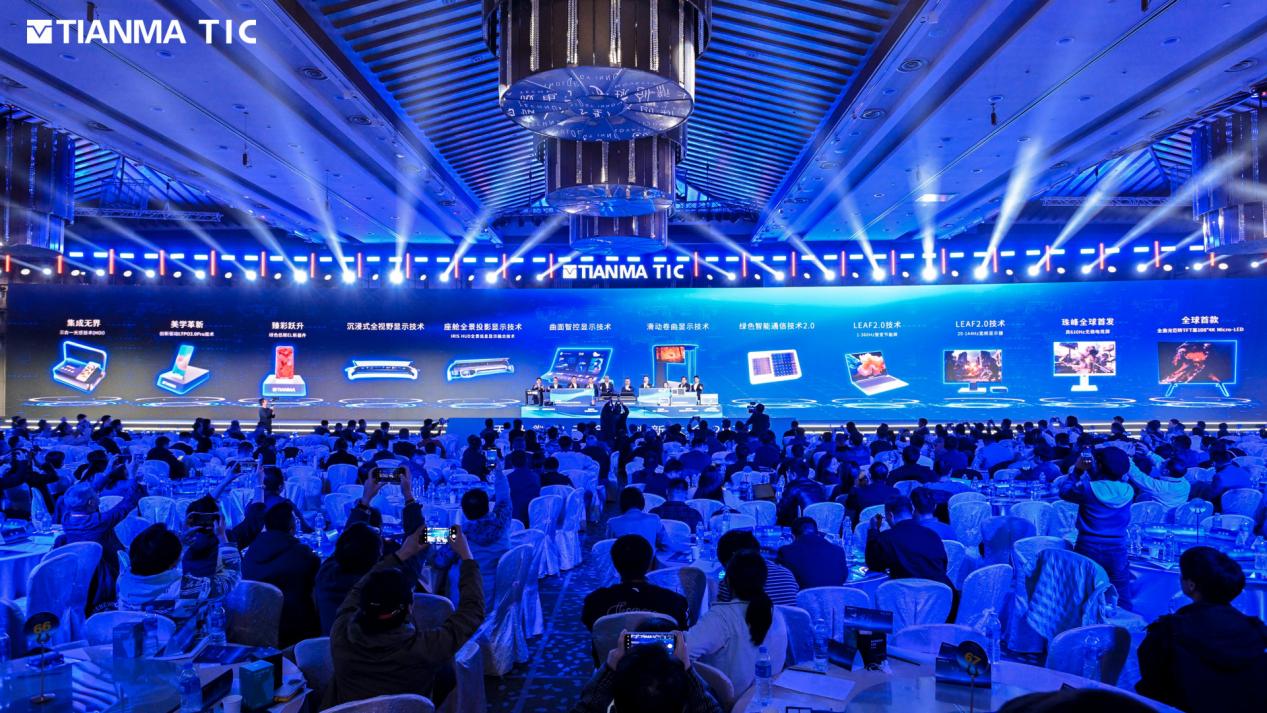
Core Insights - The Tianma Microelectronics Global Innovation Conference (TIC 2025) was held in Wuhan, focusing on the future of display technology and showcasing Tianma's technological strengths [1] - Tianma aims to transition from being a leader in small to medium-sized displays to becoming a global leader in the display ecosystem [3][14] Display Technology Innovations - Tianma unveiled 11 cutting-edge display technologies across OLED, automotive displays, IT displays, and Micro-LED, marking a new era of AI-integrated and boundary-less display technology [3] - The "Tianxuan" brand's panoramic immersive screen features a 49.6-inch, 8K, 1.25-meter integrated curved design, enhancing the driving experience by merging the screen with the windshield [4] - The IRIS HUD panoramic display projects driving information onto the windshield with a brightness of 12,000 nits and a power consumption reduction of 40%, making it accessible beyond high-end models [6] - The L-shaped curved central control screen and the flexible rollable screen demonstrate innovative designs that enhance user interaction and aesthetic integration with vehicle interiors [8][10] Connectivity and Future Directions - Tianma introduced a full-domain pure electric scanning intelligent flat antenna designed for high-speed data transmission, supporting the need for constant connectivity in vehicles [12] - The conference highlighted Tianma's commitment to defining product forms and leading scenario innovation in the display industry, marking a new phase for China's display sector [14]