
Guo Ji Jin Rong Bao

Search documents
沪指11连阳!节后谁是主线?
Guo Ji Jin Rong Bao· 2025-12-31 18:49
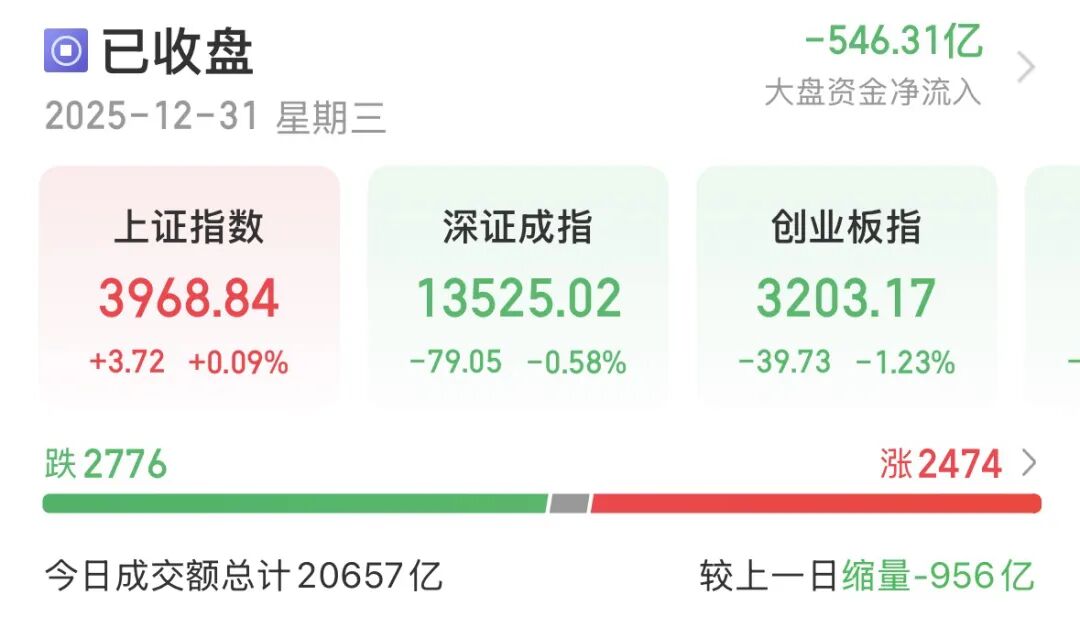
Market Overview - The Shanghai Composite Index closed at 3968 points, up 0.09%, with an annual increase of over 18% [2] - The Shenzhen Component Index closed at 13525 points, down 0.58%, with an annual increase of over 29% [2] - The ChiNext Index closed at 3203 points, down 1.23%, with an annual surge of over 49% [2] Market Sentiment - Analysts suggest that after several months of sideways movement, the A-share market is expected to continue its upward trend post-New Year [2] - A breakthrough of 4000 points in the Shanghai Index could signal the official start of the "second half of the bull market" [2][15] - High-growth sectors such as robotics, AI applications, and commercial aerospace are anticipated to attract significant capital [2][15] Sector Performance - The defense and military sector saw a notable increase, with a rise of 2.13% [7] - Other sectors such as media, real estate, and non-ferrous metals also performed well, each rising over 1% [7] - Conversely, sectors like communication, agriculture, and electronics experienced declines, with communication down 1.35% [9] Trading Volume and Activity - The market's trading volume decreased to 2.07 trillion yuan, down approximately 958 billion yuan from the previous trading day [4] - Margin trading balances in the Shanghai and Shenzhen markets rose to 2.56 trillion yuan as of December 30 [4] Investment Strategies - Investment strategies are focusing on high-certainty sectors, particularly in technology self-reliance and high-end manufacturing upgrades [17] - The AI sector is expected to see significant developments, with potential upgrades in large models anticipated to catalyze industry growth [16][17] - The strategy of balancing between offensive positions in technology and defensive positions in high-dividend assets is recommended [12][17]

吉利出行业务加速整合!曹操出行斥资3亿收购耀出行和吉利商旅
Guo Ji Jin Rong Bao· 2025-12-31 16:09
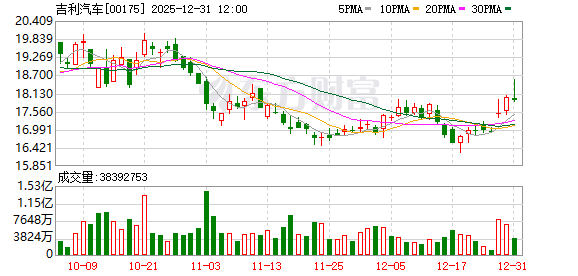
Core Viewpoint - Geely's integration efforts are advancing as Caocao Travel announces two strategic acquisitions, acquiring 100% of Yaochuxing for 225 million yuan and 100% of Geely Business Travel for 65 million yuan, totaling nearly 300 million yuan [2][4] Group 1: Company Overview - Caocao Travel, founded in 2015 and headquartered in Suzhou, is a ride-hailing platform incubated by Geely Holding Group and is the second-largest shared mobility platform in China [4] - Yaochuxing is a high-end mobility brand co-created by Geely and Mercedes-Benz, while Geely Business Travel focuses on comprehensive travel management services [4][5] Group 2: Strategic Implications - The acquisition of Yaochuxing will enhance Caocao Travel's high-end service offerings and expand its vehicle lineup, while also providing a platform for international expansion [4][5] - Geely Business Travel's corporate client resources will facilitate cross-selling opportunities, aiding Caocao Travel in rapidly expanding its corporate client base and market share [5] Group 3: Market Position and Financial Performance - Caocao Travel is transitioning from a single ride-hailing platform to a comprehensive service provider, aiming to fill gaps in high-end business travel and corporate travel management [5][7] - In the first half of the year, Caocao Travel reported revenues of 9.456 billion yuan, a 53.5% year-on-year increase, with a net loss reduced by 34% to 330 million yuan and a gross margin improvement to 8.4% [7][8] Group 4: Competitive Landscape - The Chinese internet taxi market is projected to reach 83.4 billion yuan by 2025, with the business taxi segment growing at 18.4%, while Didi holds a leading market share of 62.9% [9] - The acquisition will allow Caocao Travel to directly access luxury vehicle capacity and high-end customer resources, enhancing its competitive edge in the market [10]
车市寒冬迎新政“强心针”,2026年前景如何?
Guo Ji Jin Rong Bao· 2025-12-31 16:09
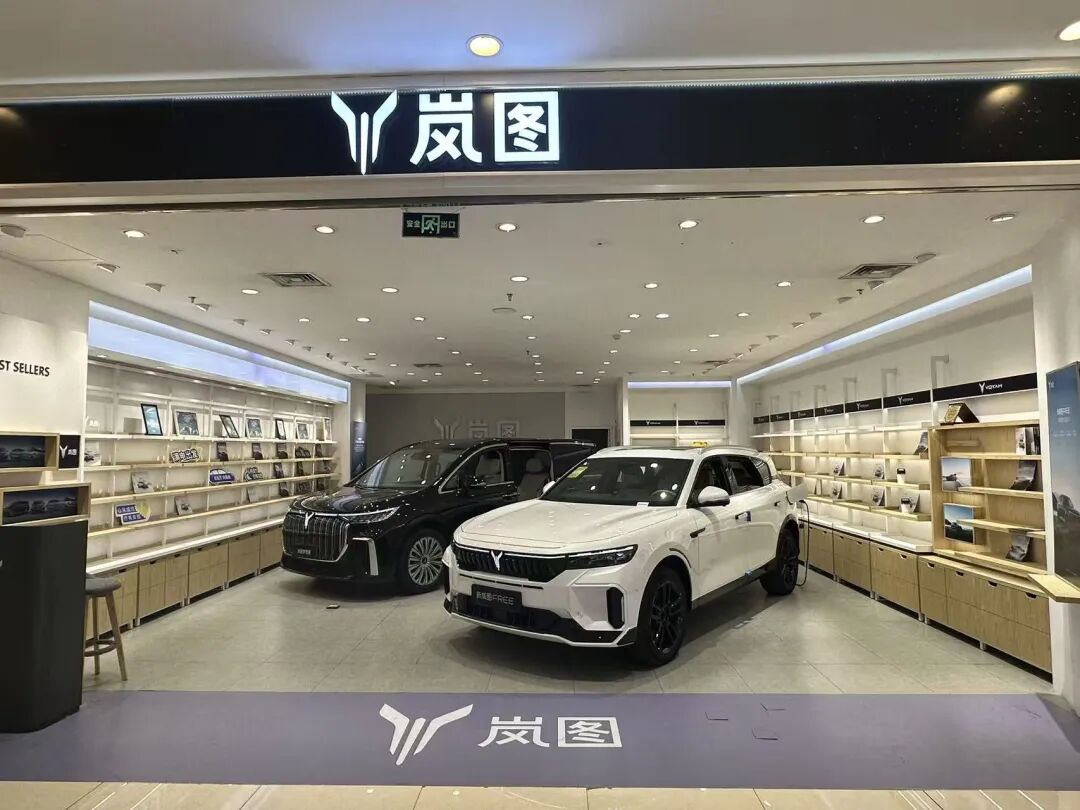
Core Viewpoint - The Chinese automotive market is experiencing a downturn as the year ends, with many companies facing challenges in sales and inventory management due to policy changes and consumer hesitation [1][6][15]. Group 1: Market Conditions - The automotive market is described as facing a "cold winter," with sales personnel frequently using the term to describe current conditions [1][5]. - Sales data indicates a significant decline in orders, with some brands reporting a drop from approximately 20 orders to around 10 in a month [9]. - The overall market sentiment is cautious, with many consumers waiting for clearer policy guidelines for 2026 before making purchasing decisions [6][7]. Group 2: Policy Impact - The Ministry of Finance and other departments released the implementation details for the 2026 vehicle trade-in subsidy, which is expected to provide a boost to the market [2][16]. - The new subsidy structure includes up to 20,000 yuan for electric vehicles and 15,000 yuan for fuel vehicles, aimed at encouraging consumer purchases [16]. - The discontinuation of previous trade-in subsidies has led to a decline in consumer demand, contributing to the current market slowdown [15]. Group 3: Sales Trends - Retail sales in the first three weeks of December showed a decline of approximately 19% year-on-year, with wholesale sales down by about 23% [14]. - The new energy vehicle segment also faced challenges, with retail sales only increasing by 1% year-on-year, while wholesale sales decreased by 10% [14]. - The disappearance of the "tail effect" typically seen at year-end is attributed to policy changes and consumer uncertainty regarding future incentives [15]. Group 4: Future Outlook - Industry experts predict that the overall growth rate for the automotive market in 2026 will exceed zero growth, with expectations for a strong start in January [16]. - Companies are focusing on inventory clearance and promotional strategies to stabilize sales channels as they await further policy developments [12].
双轮驱动,并购迎高质量发展新阶段
Guo Ji Jin Rong Bao· 2025-12-31 15:43
Group 1: Market Overview - The global M&A market shows signs of recovery in 2025, with China's M&A market experiencing a fundamental reshaping of rules, leading to a near doubling of the number of M&A approvals and a significant increase in major restructuring transaction volume compared to the past six years [1] - In 2025, the number of disclosed M&A events by A-share companies reached 4,044, with 147 major asset restructuring projects, a year-on-year increase of 44.12%, and the number of major asset restructuring approvals was 29, nearly doubling from 2024 [3] - The global M&A market in 2025 saw a transaction value of approximately $4.5 trillion, a nearly 50% year-on-year increase, marking the second-highest in history [7] Group 2: Policy Environment - The "14th Five-Year Plan" emphasizes a positive positioning for M&A and restructuring, aiming to support listed companies in transformation and upgrading, enhancing market efficiency through a set of policy measures [2] - The new "National Nine Articles" and "M&A Six Articles" are expected to create a policy environment that encourages industrial mergers and enhances market efficiency [2] Group 3: Sector Trends - The technology sector is becoming a focal point for M&A, with significant activity in areas such as AI, quantum computing, and advanced materials, driven by the need for companies to enhance operational efficiency and innovate [6] - The healthcare sector is also seeing increased M&A activity, particularly in biotech companies with breakthrough therapies, as well as in digital health and telemedicine, driven by rising demand for innovative treatments [9] Group 4: Future Outlook - In 2026, the M&A market is expected to benefit from continued policy optimization, with a focus on technology empowerment and industrial integration, particularly in traditional industries undergoing digital transformation [5][6] - The capital market is anticipated to support M&A activities through improved refinancing mechanisms, with a focus on high-quality assets and sectors such as new energy, innovative pharmaceuticals, and infrastructure [10][11]
愿智慧如光,照亮财富之路
Guo Ji Jin Rong Bao· 2025-12-31 15:36
Group 1 - The market experiences fluctuations similar to seasons, with short-term surges being enticing but sustainable wealth growth stemming from a deep understanding of enterprise value and long-term trends [2] - The importance of broadening cognitive boundaries and continuous learning to adapt to market changes is emphasized, as yesterday's success may not apply to tomorrow [2] - The fundamental purpose of investing is highlighted as improving life quality, encouraging a balance between investment and personal happiness in the new year [2] Group 2 - The narrative of investment success is framed around patience and consistent market research, suggesting that true investment wisdom lies in adapting to trends and finding a personal rhythm [1] - The need to reassess risk tolerance and establish a scientific asset allocation framework is stressed, with a reference to investment masters who achieve steady progress across multiple market cycles [1] - The call for cultivating the ability to penetrate noise and focus on familiar fields is made, indicating that true value often lies hidden beneath the surface [1]
金融“造血”新图景
Guo Ji Jin Rong Bao· 2025-12-31 15:36
Core Viewpoint - The central economic work conference in 2025 emphasizes financial support for key areas such as expanding domestic demand, technological innovation, and small and micro enterprises, marking a shift from "overall stability" to "structural reshaping" in financial regulation [1][2][3] Financial Support Focus - Financial institutions will focus on enhancing support for the real economy by creating a financial support system that integrates growth momentum, innovation, and market entities [2] - The shift aims to redirect funds from over-concentrated sectors like real estate to areas with higher marginal output, such as domestic demand and technology innovation [3][4] Internal Demand Expansion - The expansion of domestic demand faces structural bottlenecks on both the demand and supply sides, including high thresholds for consumer credit and insufficient financial support for consumption [5][6] - Strategies to enhance domestic demand include customizing financial products for specific consumption scenarios and improving financial infrastructure in rural areas [5][6] Technology Innovation Financing - Financing for technological innovation encounters challenges such as light assets, long cycles, and high risks, necessitating a comprehensive financial service chain that covers all stages of enterprise development [7][8] - Recommendations include establishing risk-sharing mechanisms and promoting the capitalization of intellectual property to facilitate funding for hard technology [7][8] Small and Micro Enterprises Financing - Small and micro enterprises face financing challenges due to credit gaps, information asymmetry, and weak risk resistance [9][10] - Solutions involve enhancing credit evaluation through big data, expanding government guarantee coverage, and simplifying approval processes to make inclusive finance accessible [9][10]
客单价40元,必胜客试水汉堡店
Guo Ji Jin Rong Bao· 2025-12-31 14:35
Core Insights - Pizza Hut is expanding its hamburger segment with the launch of "Pizza Hut Burger" in Shenzhen, marking a strategic move towards diversification in the fast-food market [1][3] Company Strategy - The introduction of "Pizza Hut Burger" aligns with the growing demand for single-serving meals, showcasing the brand's focus on innovation within the hamburger category [3] - The company plans to open over 600 new stores annually for the next three years, aiming to exceed 6,000 stores by 2028, with a goal to double operating profit by 2029 compared to 2024 [4] Market Position - The hamburger market is highly competitive, dominated by major players like McDonald's and KFC, while local brands such as Wallace and Tastin are also performing strongly [3] - The launch of "Pizza Hut Burger" indicates internal competition within Yum China, as both Pizza Hut and KFC operate under the same umbrella [3] Store Expansion - In the first nine months of 2025, Pizza Hut added 298 new stores, bringing the total to 4,022, with a significant increase in franchise stores expected to rise from 20%-30% to 40%-50% by 2028 [6] - The company is currently in a phase of "price for volume" adjustment, with a 4% year-on-year increase in system sales and a 1% increase in same-store sales for Q3 2025, despite a 13% decrease in average transaction value [6] Sales Performance - The reliance on delivery services is increasing, with a 27% year-on-year growth in delivery sales, accounting for 48% of total restaurant revenue, up from approximately 39% in 2024 [6]


千组认购后的价值兑现:徐汇汇元玺树立高端住宅交付新标杆
Guo Ji Jin Rong Bao· 2025-12-31 14:34
Core Insights - The delivery of the Huiyuanxi project in Xuhui Riverside marks a significant milestone in the high-end residential market, emphasizing that delivery is now the core standard for measuring project value [1][10] - The project achieved a high subscription rate, attracting over a thousand buyers, reflecting the scarcity of the Xuhui core area and high expectations for the project's delivery capabilities [1][2] Group 1: Market Trends - The Shanghai new housing market has seen a fundamental shift in evaluation criteria, with buyers increasingly emphasizing certainty regarding planning, construction quality, and delivery status [2][9] - In the high-end residential sector, the tolerance for delivery discrepancies has significantly decreased, indicating a more rational market approach [2][9] Group 2: Project Quality and Execution - Huiyuanxi's delivery showcased a successful transformation from design to reality, exceeding expectations with meticulous attention to detail and quality [2][4] - The project features a 35% green space ratio and high-quality materials, such as Italian imported stone and German kitchen appliances, reflecting a commitment to durability and aesthetic appeal [4][5] Group 3: Urban Development Context - The Xuhui Riverside area is a key location in Shanghai's high-end residential market, benefiting from urban renewal and the aggregation of financial, technological, and cultural resources [3][7] - The project aligns with the high standards of urban development, contributing to the area's image and long-term growth expectations [3][7] Group 4: Market Positioning and Value - Huiyuanxi's pricing strategy, set between 130,400 to 133,600 yuan per square meter, allows for clear value appreciation potential amid rising land prices in the area [7][8] - The project is well-positioned with access to quality educational institutions, transportation, and healthcare facilities, enhancing its overall value proposition [7][8] Group 5: Industry Implications - The successful delivery of Huiyuanxi serves as a reference model for the high-end residential market in Shanghai, reinforcing the importance of actual delivery and detailed execution over mere marketing narratives [9][10] - This case highlights a return to value assessment based on tangible outcomes and comprehensive project management capabilities [9][10]
最高2万元!2026年汽车“国补”定了→
Guo Ji Jin Rong Bao· 2025-12-31 14:26
根据《实施细则》,2026年补贴体系分为报废更新与置换更新两大类别,2026年消费者报废登记在本人 名下的乘用车,并购入新能源乘用车,可得到相当于车价12%、最高不超过2万元的补贴;若购买排量 不高于2.0升的燃油乘用车,可获得相当于车价10%、最高不超过1.5万元的补贴。 汽车置换更新方面,消费者转让登记在本人名下的乘用车,并购买新能源乘用车,可获得相当于车价 8%、最高不超过1.5万元的补贴;若购买排量不高于2.0升的燃油乘用车,可得到相当于车价6%、最高 不超过1.3万元的补贴。 年末车市"政策空窗期"的焦虑终得缓解。 12月30日,财政部、商务部等八部门联合印发《2026年汽车以旧换新补贴实施细则》,为年末陷入"政 策空窗期"焦虑的车市注入强心剂。 同时,国家发展改革委、财政部已先行发布政策框架,印发《关于2026年实施大规模设备更新和消费品 以旧换新政策的通知》,明确2026年汽车以旧换新补贴标准与范围调整方向。 政策落地前,2025年四季度汽车终端销量已呈现承压态势,据中国汽车工业协会数据显示,11月乘用车 国内销量为241.1万辆,同比下降6.5%。参考历史经验测算,第四季度理论上险量应为722 ...
华菱钢铁:预计2025年净利润同比增长27.97%~47.66%
Guo Ji Jin Rong Bao· 2025-12-31 14:25
Core Viewpoint - The company expects a net profit of 2.6 billion to 3 billion yuan for the year 2025, representing a year-on-year growth of 27.97% to 47.66% [1] Group 1: Company Performance - In 2025, the steel industry is undergoing deep adjustments and remains in a phase of "reduction in quantity and optimization of stock," with prominent supply-demand contradictions [1] - Despite facing significant operational pressures, the company maintains strategic determination and actively aligns with market demands [1] - The company is pushing forward with cost reduction and efficiency enhancement initiatives, accelerating the transformation towards "high-end, green, intelligent, and lean" development [1] Group 2: Financial Projections - The company anticipates a total profit of 4.7 billion to 5.3 billion yuan for 2025, with a net profit attributable to shareholders of 2.6 billion to 3 billion yuan [1] - The expected net profit growth of 27.97% to 47.66% is notable, especially considering the company will absorb approximately 657 million yuan in environmental protection taxes and late fees [1]
