
Zhong Guo Zheng Quan Bao

Search documents
北汽蓝谷2025年 亏损额料收窄 新品布局持续改善盈利能力待观察
Zhong Guo Zheng Quan Bao· 2026-01-22 23:03
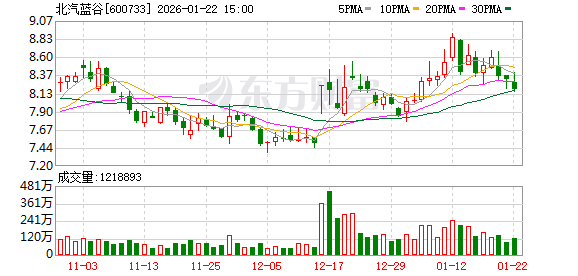
Core Viewpoint - Beiqi Blue Valley is expected to narrow its net loss in 2025, projecting a loss of 4.35 billion to 4.65 billion yuan, despite having reported losses for five consecutive years [2] Group 1: Financial Performance - The company anticipates a significant increase in sales, reaching 209,600 units in 2025, representing a year-on-year growth of 84.06% [2] - In the first three quarters of 2025, Beiqi Blue Valley's R&D expenses amounted to 1.573 billion yuan, up 43.26% from 1.098 billion yuan in the same period last year, while sales expenses rose to 1.552 billion yuan, a 22.11% increase from 1.271 billion yuan [4] - As of September 30, 2025, the total assets of Beiqi Blue Valley were 33.844 billion yuan, a decrease of 18.29% from the end of the previous year, and the equity attributable to shareholders was 2.087 billion yuan, down 62.13% [5] Group 2: Product Development and Market Strategy - Beiqi Blue Valley is in a strategic investment phase, with new product launches expected to enhance sales and improve profitability [2][3] - The company plans to launch multiple new models in the second half of 2025, including the Extreme Fox T1 and the Xiangjie S9T, which are anticipated to drive sales growth [3] - The Xiangjie brand achieved a record monthly sales of over 10,000 units in December, becoming the sales champion in the luxury new energy vehicle segment priced above 300,000 yuan [3] Group 3: Funding and Future Outlook - Beiqi Blue Valley continues to receive financial support from its controlling shareholder, Beiqi Group, which plans to invest 100 billion yuan in the development of its autonomous passenger vehicle business by 2030, focusing on new energy and intelligent technology [6] - The company has received approval for a private placement to raise up to 6 billion yuan, with 5 billion yuan allocated for new energy vehicle development and 1 billion yuan for AI and intelligent driving systems [6] - The fundraising is expected to improve the company's financial condition and enhance its profitability and competitive strength, reducing the risk of delisting [6]


公募基金规模环比大增 腰部机构黑马频现
Zhong Guo Zheng Quan Bao· 2026-01-22 22:42
Core Insights - The public fund management scale increased by over 1.3 trillion yuan in Q4 2025, driven mainly by money market funds, bond funds, commodity funds, and index funds [1][2] Group 1: Fund Management Scale - As of the end of Q4 2025, the total scale of public funds reached 37.26 trillion yuan, with significant contributions from various fund types: stock funds at 5.997 trillion yuan, mixed funds at 3.769 trillion yuan, bond funds at 10.907 trillion yuan, money market funds at 14.969 trillion yuan, overseas investment funds at 0.971 trillion yuan, commodity funds at 0.04268 trillion yuan, fund of funds (FOF) at 0.02188 trillion yuan, and other funds at 0.0001367 trillion yuan [2] - The largest growth in scale was seen in money market funds, which increased by 571.93 billion yuan, followed by bond funds with an increase of 446.94 billion yuan, and stock funds with an increase of 155.08 billion yuan, primarily from index stock funds [2] Group 2: Competitive Landscape - The top two fund companies, E Fund and Huaxia Fund, each managed over 2 trillion yuan, while eight other companies managed over 1 trillion yuan [3] - Among the top twenty fund companies by non-money management scale, most experienced growth in Q4 2025, with Guotai Fund leading the increase at 62 billion yuan, followed by Invesco Great Wall Fund at 53.11 billion yuan [3][4] Group 3: Emerging Players - The mid-tier fund companies saw significant changes, with several emerging as "dark horses" in Q4 2025, such as Changcheng Fund with over 20 billion yuan growth, and Dongcai Fund, Zhongjia Fund, Guotai Haitong Asset Management, Morgan Fund, and Rongtong Fund each growing by over 15 billion yuan [5] - Notably, Dongcai Fund's growth was driven by its bond fund, while Morgan Fund's growth was attributed to its index funds [5][6] Group 4: Small Fund Companies - Smaller public fund institutions like Shanzheng Asset Management, Huayin Fund, and Debang Fund also saw substantial growth in their non-money management scales [6] - Huayin Fund, after rebranding from Beixin Ruifeng Fund, achieved a scale of 26.753 billion yuan, with a significant contribution from a single product [6]
赋能跨境经贸高质量发展 中国银联出席达沃斯世界经济论坛年会
Zhong Guo Zheng Quan Bao· 2026-01-22 21:58
2026年1月19日,为期一周的世界经济论坛年会(冬季达沃斯论坛)正式开幕,来自世界各地的政界要 员、著名学者、企业家代表等汇聚一堂。本届年会以"对话的精神"为主题,旨在让与会者进行思想碰撞 并促成合作,探索应对互联互通挑战的长期解决方案,解锁促进增长、增强韧性与扩大影响力的新机 遇。 在全球数字经济加速演进、跨境贸易蓬勃发展的背景下,中国银联对接国际高标准经贸规则,与全球合 作伙伴深度协同,在数字支付与数字贸易领域持续深耕,构建起多元化、高效能的跨境金融服务生态, 为中外企业跨境经贸往来注入强劲动力。从优化双向跨境支付体验到创新对公支付解决方案,从数字贸 易场景延伸到"一带一路"沿线布局,银联与国际伙伴携手书写跨境支付互联互通的合作篇章。 构建双向支付服务体系 优化跨境人员经贸往来体验 为满足跨境人员流动与经贸往来的多元化支付需求,银联持续推动卡基网络和账基网络的底层互通及端 到端对接,实现卡到卡、卡到账、账到卡、账到账的全形态资金流转,解决不同形态网络兼容问题,构 建起覆盖境内外的双向支付服务体系。 在服务中国公民出境方面,银联落地推广"繁花行动",携手境内商业银行开展精细化用户经营,打 造"境内境外皆好 ...
黄金产业链叙事现分化: 上游享受金价红利 下游深耕产品溢价
Zhong Guo Zheng Quan Bao· 2026-01-22 21:52
Group 1 - The traditional pricing model for gold jewelry, based on weight, is facing challenges as prices approach 1500 yuan per gram, while "fixed price" models that integrate traditional craftsmanship and cultural elements are gaining popularity among younger consumers [1][2] - The "fixed price" model allows consumers to avoid daily fluctuations in gold prices, making it more appealing during times of rising gold prices [2][3] - Major brands like Chow Tai Fook and Chow Sang Sang are following the trend by introducing their own "fixed price" gold products, indicating a shift in consumer preferences [3] Group 2 - Despite a general decline in gold consumption, with a reported 7.95% decrease in total gold consumption and a 32.50% drop in gold jewelry sales in the first three quarters of 2025, high-value jewelry products continue to attract consumers [4] - Companies like Chow Sang Sang are forecasting significant profit growth for 2025, with expected net profits between 436 million to 533 million yuan, reflecting a year-on-year increase of 125% to 175% [5] - Mining companies such as Chifeng Gold and Zijin Mining are also projecting substantial profit increases due to rising gold prices, with Chifeng Gold expecting net profits of 3 billion to 3.2 billion yuan, a growth of 70% to 81% [6] Group 3 - Analysts are optimistic about the long-term outlook for gold prices, with Goldman Sachs raising its target price for gold to $5,400 per ounce by the end of 2026, driven by ongoing demand from central banks and geopolitical uncertainties [7] - The gold market is expected to enter a new phase characterized by dynamic balance, with various factors influencing price stability and potential upward trends [7]



政策引导资本赋能 商业航天迈向新阶段
Zhong Guo Zheng Quan Bao· 2026-01-22 21:52
Core Viewpoint - The Chinese commercial space industry is entering a new phase focused on large-scale launches and commercial closure, with significant breakthroughs expected in rocket capacity over the next 3 to 5 years [1] Group 1: Industry Developments - By 2025, China's commercial space sector is projected to complete 50 launches, accounting for 54% of total space launches, with 25 commercial rocket launches and 311 commercial satellites in orbit, representing 84% of all satellites [1] - The capitalization process of commercial space companies is accelerating, with Blue Arrow Aerospace's IPO application accepted by the end of 2025 and Zhongke Aerospace completing its listing guidance in January 2026 [1] - The rapid increase in rocket launches and reusable rocket tests aims to alleviate the "many satellites, few rockets" bottleneck in the industry [5] Group 2: Technological Advancements - The next generation of commercial rockets is expected to see intensive maiden flights or key tests in 2026 [3] - Blue Arrow Aerospace's reusable rocket "Zhuque-3" successfully completed its maiden flight by the end of 2025, while Star River Dynamics plans to conduct recovery tests for its "Zhishen-1" rocket in 2026 [4] - The manufacturing of satellites is shifting from customization to industrial mass production, with Galaxy Aerospace reporting an 80% reduction in satellite development cycles [6] Group 3: Application Expansion - The goal of frequent rocket launches is to support an unprecedented scale of satellite constellations, with over 200,000 satellites applied for frequency and orbital resources [6] - New business models such as in-orbit services are emerging as the number of satellites increases, driving value up the industry chain [7] Group 4: Capital and Policy Support - The healthy development of the commercial space sector requires a dual drive of technological breakthroughs and capital support [8] - The Shanghai Stock Exchange has provided clear pathways for commercial rocket companies to list on the Sci-Tech Innovation Board, which has accelerated the IPO processes of leading companies [5] - Industry participants are calling for more refined and forward-looking regulatory arrangements to address the challenges of large-scale and high-frequency operations [9]
内存领衔 涨价潮压顶 汽车行业供应链迎成本与自主升级大考
Zhong Guo Zheng Quan Bao· 2026-01-22 21:52
内存之外,铜、银等金属原材料的涨价压力持续传导。作为汽车电气系统、动力电池的核心原材料的 铜,自2025年下半年以来价格涨幅明显;同期,广泛应用于车载传感器、芯片封装的银,价格也上涨明 显。李斌透露,汽车与人工智能行业对这类原材料的争抢已进入白热化阶段,尽管目前涨价尚未传导至 终端售价,且车企仍有毛利空间承接,但长期压力不容小觑。 动力电池方面,尽管目前成本压力有所缓解,但芯片领域的风险仍未消散。赵非在接受中国证券报记者 采访时表示,宁德时代(300750)、比亚迪(002594)等电池龙头的规模效应与技术优势,使得电池涨 价风险可控,但存储芯片、智算芯片、功率芯片等多品类芯片的供应不确定性极大。理想汽车供应链副 总裁孟庆鹏已明确表示:"2026年,汽车行业可能面临存储芯片供应危机,满足率或许不足50%。"车企 未来可能面临"既买不起,也买不到"的双重困境。 多维施策 多品类涨价形成共振 当前汽车行业的成本压力,已从单一环节升级为全链条的系统性冲击,其中内存芯片的短缺与涨价成为 最突出的新痛点。日前,三星电子联席CEO卢泰文公开表态称,全球内存芯片短缺程度前所未有,没有 任何行业能独善其身,危机已从手机领域蔓 ...
银行探路“航天+”: 一本成本账 一盘生态棋
Zhong Guo Zheng Quan Bao· 2026-01-22 21:51
Core Insights - The article discusses the increasing involvement of commercial banks in the "finance + aerospace" integration, highlighting the significant financial investments required for satellite development, launch, and operation [1] Group 1: Satellite Launches and Applications - Several banks, including China Merchants Bank and Pudong Development Bank, successfully launched satellites, namely "Zhaoyin Jinkui" and "Puyin Shuzhi," which are part of China's first low-orbit satellite IoT constellation, "Tianqi Constellation" [1] - Pudong Development Bank aims to leverage its communication service expertise to innovate applications in financial asset lifecycle management and cross-border asset and trade supervision using the satellite data capabilities [1] Group 2: Technological Integration in Banking - China Merchants Bank has integrated remote sensing satellite technology into its financial risk control system, enhancing efficiency in post-loan monitoring of real estate projects across the country [3] - The bank has initiated the application verification of low-orbit satellite communication technology in its financial disaster recovery systems, establishing a technical foundation for a comprehensive financial emergency communication network [3] Group 3: Value Proposition and Investment Returns - The technology is expected to address three core pain points in traditional banking risk control: remote monitoring of collateral and project progress, application in agricultural finance to reduce data collection costs and loan default risks, and obtaining independent data from space to mitigate information asymmetry [4] - Investment returns from satellite systems are characterized by low initial returns, stable mid-term returns, and increasing long-term value as applications expand into green finance, cross-border finance, and disaster recovery [4] - Differentiated strategies are emerging, with large banks building their satellite systems to control data and create technological barriers, while smaller banks are opting for data service procurement or third-party platform integration for practical participation [4]


2025年销量达85万辆 北汽股份王昊:以用户共创破局越野红海
Zhong Guo Zheng Quan Bao· 2026-01-22 21:47
Core Insights - Beijing Off-road has revealed its core operating performance for 2025, with BAIC Group's total sales reaching 850,000 units, and Beijing Off-road contributing over 200,000 units, marking a significant growth trajectory [1][2] - The company emphasizes a transformation towards a user-centric model, focusing on optimizing user structure, strengthening brand core, and upgrading technology [3][4] Sales Performance - BAIC Group's self-owned brand sales have returned to over 1 million units for the first time in six years, with Beijing Off-road's sales exceeding 200,000 units [2] - The delivery of the "Box Car" model reached 147,499 units, a year-on-year increase of 72%, with personal users accounting for 83% of deliveries, up 13 percentage points from the previous year [2] Product Strategy - The BJ40 series has become the top seller in the off-road segment, with sales of hard-core off-road vehicles nearly doubling to 76,000 units [2] - New product launches, including the BJ40 extended version and the "Yuanjing Zhixing," have shown strong market demand, with the latter achieving over 5,000 orders within 24 hours [2][5] Marketing and Distribution - The company has expanded its dealer network by 136 new dealers in 2025, with plans for an additional 100 in 2026, enhancing its market presence [3] - A data platform has been established to improve the conversion rate by 30% and shorten the transaction cycle by 20% [3] User Engagement - Beijing Off-road is transitioning to a "user-oriented enterprise," focusing on building long-term relationships with customers through direct communication and feedback [4] - The company operates numerous user clubs and communities, enhancing brand loyalty and engagement [4][5] Future Outlook - The product matrix will expand to include light off-road, professional off-road, and luxury off-road series, aiming for a sales target of 1 million units by 2030 [5][6] - The company plans to launch several new models in 2026, including the BJ40 Explorer and a new C-class SUV co-created with users [5] Technological Innovation - Beijing Off-road's smart factory has achieved flexible production across multiple vehicle types, ensuring no loss in capacity during model changes [5][6] - The company is committed to a diversified powertrain strategy, including hybrid, extended-range, and pure electric vehicles, to meet varying market demands [6]
“固收+”规模突围 主动产品热点频现
Zhong Guo Zheng Quan Bao· 2026-01-22 21:42
Core Viewpoint - The "fixed income +" products, led by secondary bond funds, have achieved significant growth in Q4 2025, with secondary bond funds adding over 250 billion yuan in scale, reaching a total of 1.5 trillion yuan by the end of 2025 [1] Group 1: Growth of "Fixed Income +" Products - Secondary bond funds experienced explosive growth in Q4 2025, with Invesco Great Wall Fund being a leading public institution in this sector [2] - By the end of 2025, Invesco Great Wall Fund's secondary bond fund management scale surpassed 190 billion yuan, ranking first in the public fund industry [2] - The fund "Invesco Great Wall Jing Sheng Shuang Xi" was the only secondary bond fund to add over 20 billion yuan in scale during Q4 2025, with a stock position of 14.63% and an A-class share return of 10.24% for the year [2] Group 2: Performance of Other Fund Managers - Other fund managers like Huatai PineBridge, China Merchants Fund, and others are also advancing their "fixed income +" business, with notable achievements in Q4 2025 [3] - The "Yongying Stable Enhancement Fund" managed by Gao Nan and Yu Guohao added over 14 billion yuan in scale, becoming the largest secondary bond fund in the market by the end of 2025 [3] - By the end of 2025, there were 14 secondary bond fund products with scales exceeding 20 billion yuan, with stock positions generally above 16% [3] Group 3: Active Equity Funds - Active equity funds faced significant redemptions and scale shrinkage in Q4 2025, but some focused products successfully attracted investments [4] - Funds focusing on sectors like storage chips and satellite internet saw substantial scale increases, with returns exceeding 56% for some products [4] - Other growth-style funds in technology and resource sectors also reported scale increases of over 15 billion yuan in Q4 2025 [5] Group 4: Stock Selection Products - Stock selection products like "Anxin Rui Jian You Xuan" and "Yongying Rui Xin" attracted significant investments, with the latter's A-class share return exceeding 90% in 2025 [6] - The fund's strategy focuses on company growth potential and earnings realization, with a diversified approach to industry concentration [6]
东吴证券党委书记、董事长范力: 以特色高质量发展谱写一流现代投行建设新篇章
Zhong Guo Zheng Quan Bao· 2026-01-22 21:40
Core Viewpoint - Dongwu Securities aims to achieve high-quality development by integrating into national and regional strategies, focusing on serving small and medium-sized enterprises (SMEs) while leveraging its strengths in the Yangtze River Delta region [1][2]. Company Development - Established in 1993, Dongwu Securities has evolved from a regional broker to a comprehensive securities firm with 30 branches and 130 business units nationwide, positioning itself strategically in Suzhou and the Yangtze River Delta [2]. - As of Q3 2025, the company's total assets reached 217 billion yuan, and net assets reached 42.8 billion yuan, doubling and increasing by 1.5 times respectively compared to the end of the 13th Five-Year Plan [2]. - The company has seen significant growth, with total assets increasing by 7,000 times, net assets by 3,500 times, revenue by 420 times, and net profit by 260 times since its inception [2]. Strategic Focus - Dongwu Securities emphasizes a differentiated development path rather than blindly pursuing scale, focusing on its core strengths and integrating into the local economy [3][4]. - The company has identified five strategic guidelines for development: focusing on its base, integrating into the Yangtze River Delta, serving SMEs, enhancing compliance and risk control, and promoting corporate governance and social responsibility [4]. Industry Context - The 14th Five-Year Plan highlights the importance of building a financial powerhouse, urging financial institutions to focus on their core businesses and develop unique strengths [5]. - Dongwu Securities recognizes the need for three fundamental shifts in the industry: from scale expansion to functional priority, from homogeneous competition to distinctive advantages, and from passive compliance to proactive risk control [5]. Service Orientation - The company aims to serve the real economy by efficiently allocating financial resources to support national strategies and regional development [6][7]. - Dongwu Securities positions itself as a financial advisor for local economies, providing comprehensive financial solutions to key industries in Suzhou and the Yangtze River Delta [6][7]. Innovation and Technology - The company is committed to enhancing its professional capabilities through innovation, focusing on the growth patterns of SMEs and providing comprehensive listing guidance services [8][9]. - Dongwu Securities is advancing its digital transformation, utilizing AI technologies to improve customer service and operational efficiency [9][10]. Risk Management - The company prioritizes compliance and risk management, establishing a comprehensive risk management system supported by AI technology for dynamic oversight [11]. - Dongwu Securities promotes a culture of compliance throughout the organization, ensuring that all employees are aware of and adhere to compliance standards [11]. Future Vision - Dongwu Securities is determined to pursue a differentiated development path, aiming to become a first-class modern investment bank while contributing to the modernization of China's economy [12].
