
Qi Huo Ri Bao Wang

Search documents
资金总量突破2万亿元:期货市场高质量发展的新起点
Qi Huo Ri Bao Wang· 2025-10-24 00:32
Core Insights - The total funds in China's futures market surpassed 2 trillion yuan, reaching approximately 2.02 trillion yuan, marking a 24% increase from the end of 2024, indicating a significant growth in market scale and maturity [1][2] Group 1: Funding Expansion - The continuous increase in total funds is driven by three main factors: policy empowerment, product adaptation, and demand upgrade, reflecting a fundamental optimization of the market ecosystem [2] - Regulatory policies have laid a solid foundation for development, with the State Council's guidelines promoting "safe regulation, steady development, and gradual opening" [2] - The expansion of the product system has provided a core vehicle for growth, with 157 futures and options products currently listed, enhancing the alignment with real demand [2][3] Group 2: Demand Dynamics - The comprehensive upgrade of real demand has activated funding momentum, with a record number of companies engaging in hedging activities, indicating a rising need for risk management [3] - The participation rate of listed companies in hedging reached 29.9%, up 1.3 percentage points from the end of 2024, showcasing the increasing importance of futures for risk management [3] Group 3: Structural Optimization - The leap in funding scale is accompanied by systematic improvements in market structure, including upgrades in client structure, trading structure, and service structure [4] - The client structure is increasingly characterized by institutional and international drivers, with effective client numbers exceeding 2.7 million, a 14% year-on-year increase [4] - The trading structure has shifted towards rational trading, with a 24.11% year-on-year increase in cumulative trading volume, driven by hedging and long-term investment [4] Group 4: Service Transformation - The service structure has transitioned from a mere transactional role to a comprehensive ecosystem, enhancing the precision of financial services to the real economy [5] - Futures companies are now offering integrated services that combine on-exchange and off-exchange, domestic and international, and technology and service [5] Group 5: Future Challenges and Pathways - The ongoing inflow of funds and structural optimization are crucial for the effective functioning of the futures market in price discovery, risk management, and asset allocation [6] - The market's milestone of 2 trillion yuan represents both an achievement and a new starting point, necessitating continued innovation in products and systems to address service gaps [7] - Strengthening technology and talent support is essential for enhancing service precision, with a focus on utilizing big data, blockchain, and AI [8]
塑化产业期待月均价期货赋能
Qi Huo Ri Bao Wang· 2025-10-23 16:04
Core Viewpoint - The plastic industry is facing significant pressure due to price volatility, leading to an urgent need for effective pricing and risk management tools to adapt to operational cycles and hedge risks [1]. Traditional Pricing Models - Traditional pricing methods, such as third-party spot indices and fixed pricing, have notable shortcomings, causing challenges for businesses across the supply chain [2]. - Third-party spot indices are often based on limited data, leading to a lack of responsiveness to real-time supply and demand, which diminishes the effectiveness of hedging strategies [2]. - The fixed pricing model lacks flexibility, creating a win-lose scenario between buyers and sellers, which can result in lost orders for companies that cannot adapt [3]. Basis Point Pricing Model - The basis point pricing model improves transaction efficiency but still requires strong decision-making and risk management skills from the pricing party [3]. - Many downstream plastic processing companies have accumulated high-cost inventory due to price declines, leading to reduced processing profits compared to competitors using more flexible purchasing strategies [3]. Industry Needs - Companies express a desire for stable raw material prices to focus on product upgrades and technological improvements [4]. - The mismatch between upstream continuous production and downstream short order cycles complicates traditional pricing models [4]. - Midstream traders face challenges as they must balance fixed pricing demands from upstream suppliers with the preference for point pricing from downstream customers, exposing them to basis risk [4]. Monthly Average Pricing Model - The emergence of the monthly average pricing model offers a potential solution to the industry's challenges by smoothing price fluctuations and enhancing operational stability [6][7]. - This model allows for pricing based on the average price over a month, reducing the impact of daily volatility and aligning with continuous production and monthly purchasing rhythms [7]. - The monthly average pricing model is gaining traction, with 20% to 30% of long-term contracts in the domestic chemical trade adopting this approach [8]. Market Adaptation and Future Outlook - The model is particularly beneficial for multinational companies, traders, and integrated firms, helping to manage regional price differences and inventory devaluation risks [8]. - The upcoming launch of monthly average futures contracts is anticipated to address existing mismatches in risk management tools, enhancing the industry's ability to manage price risks effectively [9]. - The adoption of the monthly average pricing model is seen as a safer choice for companies seeking stable costs and profits, promoting a diversified pricing strategy within the plastic industry [9].
融达期货“保险+期货”项目精准滴灌云南边境胶农“心头产业”
Qi Huo Ri Bao Wang· 2025-10-23 06:53
Core Insights - The "insurance + futures" project in Ximeng County, Yunnan Province, aims to provide a financial safety net for local rubber farmers, addressing the challenges posed by price volatility in the natural rubber market [1][2] - The project covers an insurance scale of 1,000 tons, benefiting 652 rubber farmers, and is designed to operate during the critical rubber tapping season [2] - The initiative not only offers price guarantees but also focuses on enhancing the financial literacy of farmers through training programs [2][3] Summary by Sections Project Overview - The project is supported by the Shanghai Futures Exchange and involves collaboration between Rongda Futures and China Pacific Insurance [1] - It aims to stabilize the income of rubber farmers in Ximeng County, which is crucial for poverty alleviation and rural revitalization [1] Financial Mechanism - Farmers voluntarily bear 10% of the insurance premium, with compensation provided if market prices fall below the agreed target price [2] - The project features an optimized options structure to enhance protection levels for farmers [2] Educational and Community Engagement - Rongda Futures plans to conduct training sessions to improve farmers' understanding of the "insurance + futures" model [2] - The initiative emphasizes a multi-dimensional approach, integrating finance, education, and community engagement to ensure long-term sustainability [2][3] Future Outlook - The project exemplifies the role of financial services in supporting the real economy, with plans for continued professional support to enhance the resilience of local industries [3]
成品油需求萎缩 炼化利润承压
Qi Huo Ri Bao Wang· 2025-10-23 01:01
Group 1: Industry Overview - The research conducted by Huishang Futures focused on the current state of the aromatic hydrocarbon industry chain in Shandong, particularly regarding the supply and demand dynamics of benzene and styrene [1] - The overall market for refined oil products is facing significant challenges, with diesel consumption declining due to the acceleration of electric vehicle adoption and cautious sales behavior from gas stations [3][13] - The competition among local refineries is intensifying, especially with the commissioning of the Yulong Petrochemical integrated project, which is expected to further exacerbate market conditions [3][13] Group 2: Company Insights - The local refinery in Dongying primarily produces gasoline, diesel, and various petrochemical products, with gasoline and diesel being the largest output [2] - The refinery's daily production of pure benzene is approximately 100 tons, with a storage capacity of about 3000 tons, indicating a relatively strong risk tolerance in a declining market [4] - The refinery in Linzi has a daily production capacity of pure benzene between 120 to 200 tons, positioning it as a medium-sized player in the Shandong pure benzene market [5][6] Group 3: Market Dynamics - The domestic retail penetration rate of new energy vehicles reached 57.8% in September 2025, contributing to the pressure on traditional fuel demand [3] - The current market environment for refined oil is characterized by a downward price trend, with expectations for further price reductions in November [3][4] - The EPS producer, which consumes 200,000 tons of styrene annually, is experiencing a shift in demand structure, with emerging sectors like aquaculture showing slight growth despite overall EPS consumption growth slowing down [10][12] Group 4: Future Outlook - The overall trend for Shandong's local refineries is moving towards high-end and refined production, although the new capacity from Yulong Petrochemical may increase market competition in the short term [13] - The EPS producer is actively managing its raw material costs through futures market participation, indicating a strategic approach to mitigate price volatility [12]
交投活跃度有所回落
Qi Huo Ri Bao Wang· 2025-10-23 00:55
Market Performance - The A-share market opened lower and maintained a weak trend throughout the day, with the Shanghai Composite Index down by 0.07%, the Shenzhen Component Index down by 0.62%, and the ChiNext Index down by 0.79% [1] - The total trading volume in the Shanghai and Shenzhen markets was 16,678 billion yuan [1] Options Market Activity - All varieties of options saw a decline in trading activity, influenced by the expiration of the main ETF contracts, leading to an overall decrease in open interest [2] - Specific trading volumes and open interest for major ETFs included: - Shanghai 50 ETF options: 1,068,860 contracts traded, 1,488,004 contracts open, with a trading volume of 431 million yuan - CSI 300 ETF options: 1,274,494 contracts traded, 1,249,609 contracts open, with a trading volume of 658 million yuan - CSI 500 ETF options: 1,646,858 contracts traded, 1,282,436 contracts open, with a trading volume of 1,456 million yuan - ChiNext ETF options: 1,867,528 contracts traded, 1,999,196 contracts open, with a trading volume of 1,175 million yuan [2] Implied Volatility - Implied volatility for various options slightly decreased but remained at relatively high levels for the year, indicating cautious market sentiment [3] - The weighted implied volatility for key ETFs included: - Shanghai 50 ETF options: 0.1639 - CSI 300 ETF options: 0.1428 - CSI 500 ETF options: 0.1873 - ChiNext ETF options: 0.2999 [3] Market Outlook - Recent significant intraday fluctuations in underlying assets suggest that a turning point may be approaching, with a recommendation to consider strategies that capitalize on increased volatility [3] - In the medium term, the Shanghai and Shenzhen markets are expected to continue a trend of oscillating upward, with opportunities to buy on dips or construct long positions in the distant months [3]
“数智化”助力企业一站式套期保值
Qi Huo Ri Bao Wang· 2025-10-23 00:47
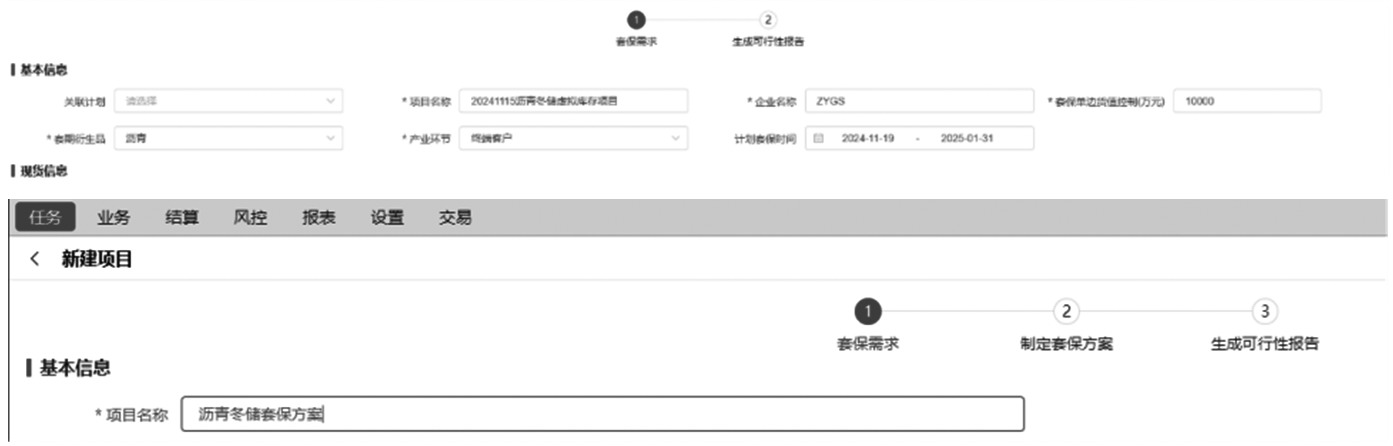
Core Viewpoint - The article discusses the development and implementation of a risk management platform called "Qizhi Hui" by Zhejiang Merchants Futures Co., Ltd. to assist a state-owned asphalt company in managing risks and utilizing financial derivatives for hedging purposes [1][24]. Group 1: Company Background - The asphalt company, referred to as Z Company, has a complete integrated supply chain for asphalt products, with an annual production capacity of 300,000 tons and a storage capacity of 50,000 tons [2]. - Z Company primarily uses high-grade petroleum asphalt and has a brand mix of 65% from Singapore (e.g., Shell, Esso) and 35% from domestic brands (e.g., Sinopec, PetroChina) [2]. - The company has historically faced devaluation risks due to a lack of risk management systems and has begun to shift its management perspective towards using financial derivatives for hedging [2][3]. Group 2: Service Solution and Process - Z Company has encountered challenges in implementing hedging strategies due to insufficient risk management systems and a lack of understanding of derivatives among employees [3][4]. - The risk management platform offers a comprehensive solution that includes centralized trading, risk control, automatic settlement, and statistical analysis to facilitate standardized management of hedging activities [4][5]. - The platform allows Z Company to input its procurement and usage plans, enabling intelligent analysis of future risk exposures [5][6]. Group 3: Hedging Process and Strategy - The platform features a rapid hedging module that generates hedging proposals and feasibility reports based on the company's needs, which can be optimized by hedging experts [7][9]. - Z Company plans to establish a virtual inventory with a maximum available capital of 100 million yuan, with an initial hedging ratio of 40% based on a price of 3,350 yuan/ton for asphalt [9][11]. - The platform provides a structured approval process for hedging applications, ensuring compliance with risk management protocols [14][15]. Group 4: Risk Management and Evaluation - The platform includes a risk monitoring module that allows real-time analysis and monitoring of risks associated with derivative trading [17][19]. - After the completion of a hedging project, the platform generates evaluation reports that analyze the correlation between spot and futures prices, profit and loss, and risk control measures [22]. - Z Company's hedging project in November 2024 resulted in a cost savings of 20.325 million yuan by locking in prices effectively [22]. Group 5: Industry Impact and Future Prospects - The intelligent risk management platform aims to lower the barriers for companies to participate in hedging, enhancing the effectiveness of risk management and reducing potential risks [25][26]. - The integration of digital technology in the futures industry is expected to improve service quality and efficiency, allowing for better risk management and support for economic stability [26][27]. - The platform's development aligns with regulatory goals of enhancing risk prevention and management capabilities within the financial market [27].

跨界赛事牵线搭桥 业务合作多方共赢
Qi Huo Ri Bao Wang· 2025-10-23 00:40
Core Insights - The collaboration between companies has led to unexpected results, including the successful acquisition of red dates in Xinjiang for the 2024/2025 season [1][4] - The "Tongzhou Cup" event has facilitated partnerships across industries, enhancing business opportunities and financial supply chain activities [1][4] Group 1: Business Collaboration - Tongzhou Group has leveraged its resources in Xinjiang to establish partnerships, particularly in the red date industry, which is central to its business strategy [2][3] - The collaboration allows for the rental of idle warehouses and storage spaces, enabling efficient red date acquisition and initial processing [2][3] - The partnership has opened new business fields for Tongzhou Group, allowing it to engage in cross-industry operations while maintaining controllable risks [2][3] Group 2: Financial Supply Chain - Tongzhou Group provides supply chain financial services to alleviate the funding pressure during peak red date acquisition seasons [4] - The collaboration enhances the financial risk control system by utilizing industry data from partners [4] - The partnership has created a positive cycle of employment and economic development in the Xinjiang red date production area, benefiting both companies and local farmers [4] Group 3: Market Impact - The collaboration has significantly reduced acquisition and transportation costs for red dates, improving market competitiveness for partners [3] - The annual sales of red dates and related products for the partner company are around 300 million yuan, with a deep processing capacity of 20,000 tons [4] - The "Tongzhou Cup" event has created opportunities for comprehensive cooperation with leading agricultural enterprises, enhancing market influence and competitiveness [4]
期货交割制度型开放实现突破
Qi Huo Ri Bao Wang· 2025-10-22 16:39
Core Insights - The successful completion of the first PTA export-type bonded delivery business marks a significant milestone for China's futures market, enhancing its attractiveness and international influence on commodity prices [1][4]. Group 1: PTA Export-Type Bonded Delivery System - The PTA bonded delivery system was designed to cater to the net export characteristics of PTA, filling a gap in the domestic futures market for bonded delivery of net export commodities [1][2]. - The process involves three core stages: buyer application, seller response, and exchange settlement, simplifying the delivery workflow [2][3]. - The first transaction was completed in just eight days, significantly reducing the time and costs associated with traditional export processes [1][3]. Group 2: Benefits for Participants - The new system allows foreign buyers to directly lock in prices and sources through the futures market, reducing trade risks and improving cost stability [3][4]. - Domestic sellers, such as Yisheng Petrochemical, benefit from reduced operational costs and simplified procedures, allowing them to respond directly to foreign buyer demands [3][4]. - The successful implementation of this system demonstrates the potential for the futures market to connect domestic and international supply chains effectively [4][5]. Group 3: Future Implications - The Zhengzhou Commodity Exchange plans to further promote high-level institutional openness in the futures market, aiming to replicate this model for other related futures products [5]. - This initiative is expected to enhance China's international competitiveness in the futures market and contribute to the high-quality development of the industry [5].
前三季度民航运输生产保持增长
Qi Huo Ri Bao Wang· 2025-10-22 16:32
Core Insights - The civil aviation industry in China has maintained a stable safety operation status and steady growth in transportation production during the first three quarters of 2025 [1] Industry Performance - The total transportation turnover reached 1220.3 billion ton-kilometers, reflecting a year-on-year increase of 10.3% [1] - The passenger transportation volume reached 580 million, with a year-on-year growth of 5.2% [1] - The cargo and mail transportation volume amounted to 739.5 thousand tons, showing a year-on-year increase of 14.0% [1] - A total of 4.88 million flights were operated, averaging 18,000 flights per day, which is a 5% year-on-year increase [1]
国家外汇管理局:前三季度跨境资金净流入1197亿美元
Qi Huo Ri Bao Wang· 2025-10-22 16:32
Core Insights - The total scale of foreign-related income and expenditure in China reached $11.6 trillion in the first three quarters of this year, marking a historical high for the same period and a year-on-year increase of 10.5% [1] - There was a net inflow of cross-border funds amounting to $119.7 billion, and a surplus of $63.2 billion in bank foreign exchange transactions, both exceeding the levels of the previous year [1] Group 1 - The foreign exchange market in China has shown strong resilience and vitality, with stable market expectations and a basic balance of supply and demand [1] - In September, the total cross-border income and expenditure for non-bank sectors, including enterprises and individuals, amounted to $1.37 trillion, reflecting a month-on-month increase of 7% [1] - The cross-border capital flow showed a slight net outflow of $3.1 billion in September due to seasonal effects from the National Day holiday, but has since turned into a net inflow in October [1] Group 2 - The foreign exchange market supply and demand remained relatively balanced in September, with significant month-on-month growth in bank customer foreign exchange settlements and sales [2] - The surplus in foreign exchange transactions was $51 billion in September, with a trend towards balance in the latter half of the month [2] - Since October, the foreign exchange settlements and sales by banks have been roughly equal, indicating a basic balance in the foreign exchange market [2]