
Qi Huo Ri Bao Wang

Search documents
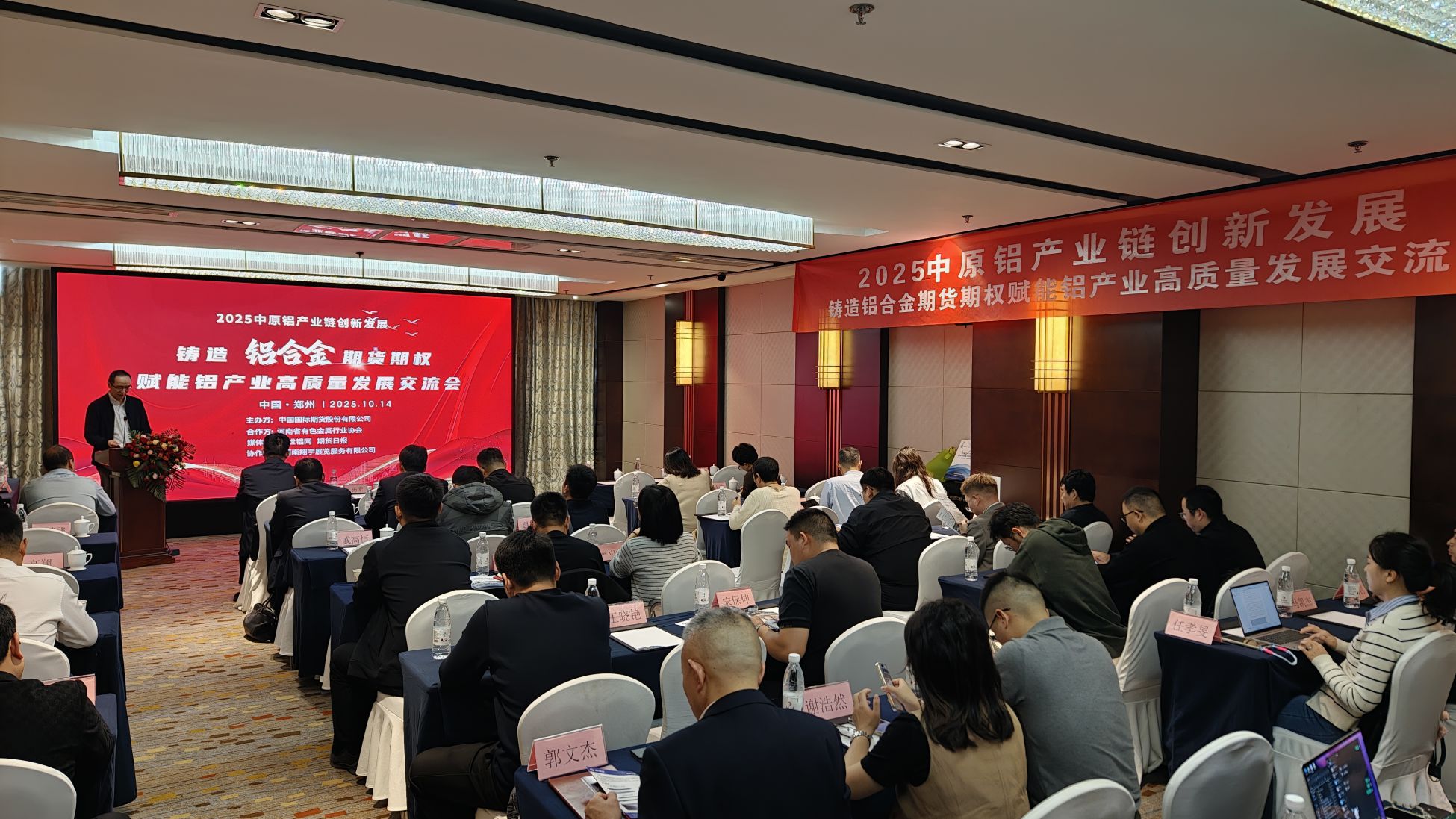
2025中原铝产业链创新发展暨铸造铝合金期货期权赋能铝产业高质量发展交流会在郑举行
Qi Huo Ri Bao Wang· 2025-10-14 07:26
Core Insights - The conference focused on the integration of futures tools with the aluminum industry, highlighting the importance of risk management strategies in stabilizing operations and enhancing quality in the aluminum sector [1][2] Group 1: Industry Overview - The aluminum industry faces price volatility from upstream mining to downstream manufacturing, which poses uncertainties for business operations [1] - The introduction of casting aluminum alloy futures and options enhances the variety of futures products available, providing a "risk protection wall" for aluminum companies [1] Group 2: Financial Tools and Strategies - Companies can utilize hedging strategies to lock in production costs and sales profits, allowing them to focus on technological innovation and capacity optimization [1] - Experts discussed how derivative tools like aluminum futures and options can help industry players effectively manage price fluctuations and ensure stable operations [1][2]

2025年长江期货延长苹果“保险+期货” 新农提升计划项目顺利进场出单
Qi Huo Ri Bao Wang· 2025-10-14 02:05
近日,由郑州商品交易所(以下简称郑商所)立项支持、长江期货股份有限公司(以下简称长江期货) 联合其风险子公司长江产业金融服务(武汉)有限公司(以下简称长江产业金融)承做的2025年陕西省 延长县苹果"保险+期货"新农提升计划项目顺利完成期货端进场和保险端出单工作。 长江期货将继续在郑商所、中金所和陕西省各级政府的支持下,做好2025年延长县苹果"保险+期货"新 农提升计划项目的后续执行工作,并继续对延长县进行多样化帮扶,助力延长特色产业发展和乡村全面 振兴建设。 长江期货自2018年扎根延长县以来,连续在延长县通过开展苹果"保险+期货"试点项目、围绕项目常年 开展市场和期货培训、"美丽果园建设"产业帮扶、捐资助学教育帮扶、捐建医院健康帮扶、消费帮扶和 苹果文创等多种途径,用金融的力量帮助延长县果农脱贫致富,推动延长县苹果产业的优质化发展和对 外宣介,全方位助力延长县的乡村振兴建设,有效提高了农户种植苹果的获得感和生活幸福指数。 该项目由长江期货独家承做,中国人民财产保险股份有限公司(以下简称人保财险)承保。在郑商所、 中国金融期货交易所(以下简称中金所)、陕西省、延安市、延长县政府的多方支持和指导下,长江期 ...
神华期货:以监管政策为引领 深化合规治理转型
Qi Huo Ri Bao Wang· 2025-10-14 01:10
Core Viewpoint - The release of the "Opinions on Strengthening Regulation to Prevent Risks and Promote High-Quality Development of the Futures Market" emphasizes the importance of compliance management as both a regulatory requirement and a driving force for sustainable development in the futures market [1] Group 1: Compliance Management and System Construction - The company has established a relatively complete compliance system, adhering strictly to regulations such as the "Futures Trading Management Regulations" and the "Supervision and Administration Measures for Futures Companies" [2] - A dedicated compliance department conducts regular internal compliance checks, ensuring orderly business operations and preventing illegal activities such as insider trading [2] - The company implements a dynamic assessment mechanism for clients, focusing on their risk tolerance and ensuring they engage in suitable futures trading [2] Group 2: Effective Execution of Compliance and Systems - A three-tier mechanism for self-inspection has been established, including departmental self-checks, compliance supervision, and company audits [3] - The company has developed a comprehensive trading monitoring system to detect unusual trading behaviors and assess market and credit risks in real-time [3] - The risk warning model provides scientific basis for risk management, enhancing the company's ability to respond to risk events [3] Group 3: Building Compliance Teams and Enhancing Awareness - The company aims to build a professional and versatile compliance team, requiring staff to have at least two years of financial experience and relevant qualifications [4] - Regular compliance awareness training is conducted for all employees, incorporating case studies and regulatory interpretations to enhance understanding of compliance importance [4] - Strict penalties are imposed for violations of laws and internal regulations, with measures including warnings, fines, demotions, and contract termination [5] Group 4: Future Directions - The company recognizes the critical role of compliance and system construction in its development, planning to optimize regulations covering derivatives and cross-border businesses [5] - There is a focus on identifying emerging risks and cultivating versatile compliance talents to enhance the integration of technology and improve management efficiency [5]
平安期货:衍生品服务助力产业企业穿越市场波动
Qi Huo Ri Bao Wang· 2025-10-14 01:03
Core Viewpoint - The article emphasizes the importance of risk management for companies in the face of volatile commodity prices and global economic uncertainties, highlighting how Ping An Futures supports industrial clients through professional derivative services [1]. Group 1: Policy Guidance - The issuance of the "Opinions" by the State Council marks a significant milestone in China's futures market, emphasizing the role of the futures market in macroeconomic management and risk management for the real economy [2]. - The document encourages futures companies to focus on their core business and provide precise and efficient risk management tools for real enterprises [2]. Group 2: Company Actions - Ping An Futures has organized multiple seminars to translate the policy's spirit into actionable guidelines, focusing on reducing hedging costs and providing comprehensive derivative services [3]. - The company has established a "three-pronged" service standard: customized solutions, close service, and refined risk control, ensuring effective implementation of national policies in frontline operations [3]. Group 3: Customized Solutions - A case study illustrates how a Guangdong aluminum processing company faced significant anxiety over fluctuating aluminum prices, prompting Ping An Futures to develop a tailored hedging plan to secure costs [4]. - The hedging strategy involved establishing long positions in the Shanghai aluminum futures market to protect against rising costs, demonstrating the effectiveness of customized risk management solutions [4]. Group 4: Practical Outcomes - In July, the aluminum price surged, but due to prior hedging actions, the company avoided an additional 5 million yuan in procurement costs and achieved a profit of 1 million yuan [5][6]. - This case exemplifies how effective use of futures tools can transform market risks into stable profits, reinforcing the idea that futures are not merely speculative but essential for maintaining profit margins [6]. Group 5: Service Upgrades - In response to the growing volatility in commodity prices, Ping An Futures has upgraded its service model to provide comprehensive solutions, including rights-based trading and futures-spot linkage [7]. - The company has served over a thousand industrial clients, enhancing their risk management capabilities through training and sharing insights on macroeconomics and hedging strategies [7].
山东聚丙烯产业链的场外期权创新应用
Qi Huo Ri Bao Wang· 2025-10-14 00:56
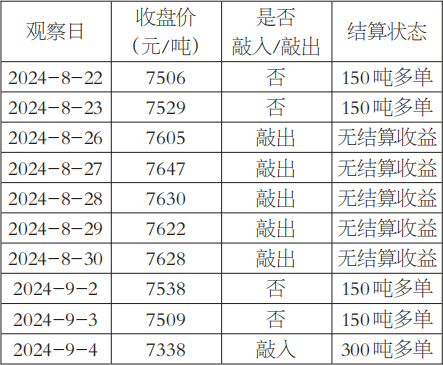
Core Insights - The article highlights the innovative application of derivative tools in the polypropylene industry chain in Shandong, showcasing how companies are utilizing customized over-the-counter options to manage risks in a complex market environment [1][2]. Industry Background - The polypropylene industry is facing challenges due to global economic uncertainties, including fluctuations in crude oil prices and supply-demand imbalances [2]. - In 2024, the price range for polypropylene in East China is projected to be between 7265 to 7795 yuan/ton, with significant price volatility observed throughout the year [2]. - The industry is characterized by high costs, high production rates, and high maintenance rates, coupled with weak orders and cash flow [2]. Case Studies - A plastic packaging company in Linyi utilized a strategy of selling out-of-the-money put options to hedge against inventory devaluation, achieving a net gain of 32,000 yuan [4][5]. - A medical products manufacturer employed a zero-cost cumulative purchase option to manage raw material costs, successfully locking in 900 tons of low-priced raw materials [6][8]. Implementation Process - The plastic packaging company sold a put option with a strike price of 7605 yuan/ton, receiving a premium of 102 yuan/ton for a contract of 500 tons [4][5]. - The medical products company bought a cumulative purchase option with a trigger mechanism to dynamically lock in procurement costs, ultimately securing a purchase price of 7500 yuan/ton for 900 tons of polypropylene [6][7]. Advantages and Highlights - Selling put options requires less capital compared to traditional futures trading, allowing companies to enhance inventory value while mitigating devaluation risks [10]. - The cumulative purchase option optimizes procurement processes, enabling companies to lock in low-cost raw materials without needing to predict market timing [11]. Summary and Outlook - The case studies demonstrate how structured derivative solutions can effectively address risk management challenges in the chemical industry, enhancing companies' ability to hedge against market risks [12]. - This practice not only supports the transformation and upgrading of the chemical industry but also illustrates the positive role of financial instruments in stabilizing commodity prices and ensuring the smooth operation of the industry chain [12].
工业硅企业风险管理的“法宝”
Qi Huo Ri Bao Wang· 2025-10-14 00:54
Core Viewpoint - The industrial silicon industry is experiencing a transformation and market restructuring, with financial derivatives playing a crucial role in risk management and operational efficiency for related enterprises [2][5]. Group 1: Industry Context - Industrial silicon is a key resource supporting high-end manufacturing, deeply integrated into sectors like photovoltaic new energy, organic silicon, and aluminum alloys [2]. - The rapid expansion of industrial silicon production capacity, coupled with price volatility and dynamic policy adjustments, has increased uncertainty for enterprises in the sector [2]. - The Chinese government is promoting the orderly exit of backward production capacity and addressing low-price competition in the photovoltaic industry, signaling a shift in market dynamics [3]. Group 2: Financial Derivatives Application - Financial derivatives, such as futures and options, provide various risk management strategies for industrial silicon enterprises, including price risk hedging, procurement cost optimization, and inventory value management [2][5]. - In a rising price environment, enterprises using a "order-first, purchase-later" model may face profit compression, necessitating the use of futures markets to lock in procurement prices [3]. - A case study illustrates that a downstream grinding enterprise utilized options to reduce costs, selling a put option on July 10, 2025, which provided a premium of 181 yuan/ton, effectively lowering their costs [4]. Group 3: Operational Challenges - Industrial silicon grinding enterprises are facing thin profit margins due to increased raw material price volatility, low technical barriers in processing, and intense competition [4]. - The lack of pricing power and challenges in passing cost pressures downstream further compress profit margins, making the use of financial derivatives essential for stabilizing operations [4]. - By employing futures and options, companies can lock in raw material costs and sales prices, mitigate price fluctuation risks, and enhance capital efficiency [4]. Group 4: Future Outlook - The application of financial derivatives in the industrial silicon sector is expected to expand, becoming a core driver for optimizing risk management and resource allocation [5]. - This strategic use of financial tools will help the industry seize development opportunities amid the global energy transition and achieve high-quality growth [5].

协同各方力量 更好服务企业利用期货市场
Qi Huo Ri Bao Wang· 2025-10-14 00:54
Core Insights - The training program aims to enhance the understanding of futures derivatives among government officials to better support enterprises in managing operational risks through the futures market [1][5] - The participation rate of A-share listed companies in hedging activities has significantly increased, indicating a growing trend in risk management through futures and options [2][5] - The futures market in China is entering a new phase of high-quality development, with substantial growth in market size and capacity to provide innovative financial services to state-owned enterprises [2][4] Group 1 - The training session in Hunan involved over 160 officials from various government departments and state-owned enterprises, focusing on the role of the futures market in supporting the real economy [1][3] - The futures market's total funds reached approximately 1.82 trillion yuan by the end of July, reflecting an 11.6% increase compared to the end of 2024 [2] - The training covered key topics such as the overview of the futures market, its role in high-quality economic development, and the regulatory aspects of hedging for state-owned enterprises [1][3][5] Group 2 - The Chinese futures market is recognized for its capability to serve the real economy, with a focus on enhancing operational stability for enterprises, particularly state-owned ones [4][5] - The collaboration between Zhengzhou Commodity Exchange and local enterprises aims to build financial service bases and improve risk management for agricultural and manufacturing sectors [4] - Government officials are encouraged to deepen their understanding of the futures market to effectively support regional economic development and enhance financial capabilities [4][5]
资金动态20251014
Qi Huo Ri Bao Wang· 2025-10-14 00:46
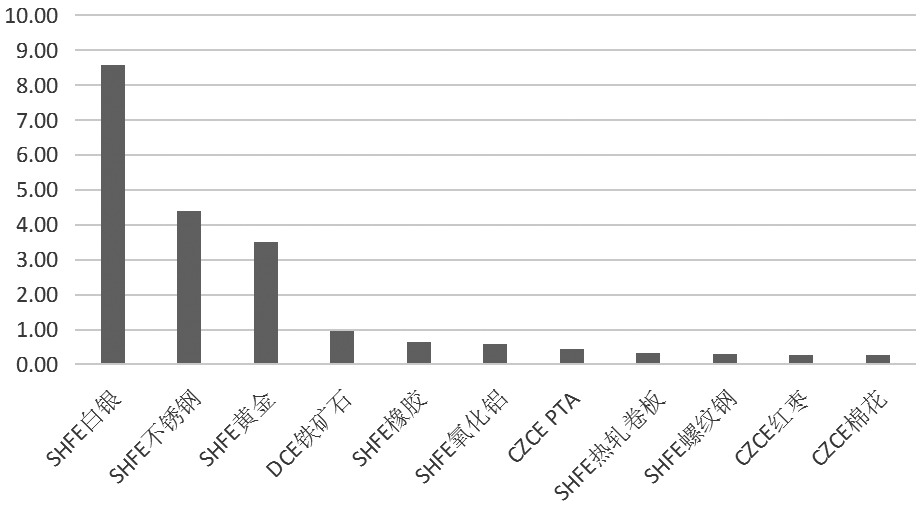
Core Insights - The article highlights the recent capital flow trends in commodity futures, indicating a significant outflow in certain sectors while others experienced inflows [1] Capital Inflows - Major inflows were observed in silver (0.859 billion), stainless steel (0.440 billion), gold (0.351 billion), iron ore (0.096 billion), and rubber (0.063 billion) [1] - The black and financial sectors showed a net inflow, particularly in stainless steel and iron ore [1] Capital Outflows - Significant outflows were noted in copper (0.833 billion), aluminum (0.266 billion), crude oil (0.190 billion), palm oil (0.172 billion), and soda ash (0.156 billion) [1] - The non-ferrous metals, chemical, and agricultural products sectors experienced notable outflows, with a focus on copper, aluminum, crude oil, palm oil, and tin [1] Overall Market Sentiment - The overall sentiment in commodity futures was characterized by a moderate outflow, with specific attention on the sectors experiencing the most significant capital movements [1] - The financial sector's focus was on the CSI 1000 index futures and 30-year treasury futures [1]
9月全国期货市场成交71.5万亿元
Qi Huo Ri Bao Wang· 2025-10-13 16:51
Core Insights - The Chinese futures market experienced a slight decline in trading volume in September, while trading value continued to grow, indicating mixed market conditions [1][2]. Trading Volume and Value - In September, the national futures market recorded a trading volume of 770 million contracts and a trading value of 71.5 trillion yuan, representing a year-on-year decrease of 3.03% in volume but an increase of 33.16% in value [1]. - From January to September, the cumulative trading volume reached 6.744 billion contracts, with a cumulative trading value of 54.762 trillion yuan, showing year-on-year increases of 18.29% in volume and 24.11% in value [1]. Exchange Performance - The Shanghai Futures Exchange (SHFE) reported a cumulative trading volume of 1.686 billion contracts and a trading value of 16.842 trillion yuan, with year-on-year increases of 2.55% in volume and 13.58% in value [1]. - The Zhengzhou Commodity Exchange (ZCE) saw a cumulative trading volume of 2.355 billion contracts and a trading value of 6.785 trillion yuan, with year-on-year increases of 20.54% in volume and 4.19% in value [1]. - The Dalian Commodity Exchange (DCE) reported a cumulative trading volume of 1.980 billion contracts and a trading value of 7.893 trillion yuan, with year-on-year increases of 17.41% in volume and 8.49% in value [1]. - The China Financial Futures Exchange (CFFEX) had a cumulative trading volume of 227 million contracts and a trading value of 18.857 trillion yuan, with year-on-year increases of 31.8% in volume and 53.26% in value [1]. - The Guangxi Futures Exchange (GFE) experienced significant growth, with a cumulative trading volume of 371 million contracts and a trading value of 1.990 trillion yuan, showing year-on-year increases of 165.82% in volume and 152.72% in value [1]. Market Trends - The overall market showed signs of reduced activity in September, with significant declines in trading volumes for non-ferrous, black, and energy chemical products, while stock index futures and options continued to see growth [2]. - Specific products such as industrial silicon, polysilicon, and lithium carbonate futures on the GFE saw substantial increases in trading volume [2]. Market Outlook - The futures market's open interest decreased by 8.25% by the end of September, attributed to macroeconomic factors and reduced trading activity from industrial clients due to financial reporting needs [3]. - Looking ahead, the market is expected to be influenced by the Federal Reserve's interest rate decisions and changes in U.S. tariff policies, with potential for increased trading activity in October as domestic economic conditions improve [3].
前三季度我国外贸增速逐季加快
Qi Huo Ri Bao Wang· 2025-10-13 16:45
Core Insights - China's total goods trade value in the first three quarters reached 33.61 trillion yuan, a year-on-year increase of 4%, with exports growing by 7.1% and imports declining by 0.2% [1][2] - In September, the monthly trade value was 4.04 trillion yuan, marking an 8% year-on-year increase, the highest monthly growth rate of the year [1][2] Group 1: Trade Growth Characteristics - The growth rate of imports and exports has accelerated quarter by quarter, with Q1 at 1.3%, Q2 at 4.5%, and Q3 at 6% [2] - Trade with countries involved in the Belt and Road Initiative reached 17.37 trillion yuan, a 6.2% increase, accounting for 51.7% of total trade [2] - Exports of mechanical and electrical products reached 12.07 trillion yuan, a 9.6% increase, making up 60.5% of total exports [2] Group 2: Import Trends - Imports showed signs of recovery, with a 0.3% increase in Q2 and a further acceleration to 4.7% in Q3 [2] - In Q3, the import volumes of crude oil and metal ores increased by 4.9% and 10.1% respectively [2] Group 3: Trade Entity Activity - The number of foreign trade enterprises with import and export performance reached 700,000, an increase of 5.2% year-on-year [2] Group 4: Global Trade Position - As of September, China's exports and imports have shown a four-month consecutive year-on-year increase, maintaining its position as the world's largest goods trader with an 11.8% share of global trade [3] Group 5: Future Outlook - The fourth quarter is expected to see continued support for foreign trade policies, including measures to assist enterprises in exporting and stabilizing markets outside the U.S. [4]