Wen Hua Cai Jing

Search documents
原料供应偏紧 沪锡创半年新高【10月9日SHFE市场收盘评论】
Wen Hua Cai Jing· 2025-10-09 07:38
Core Viewpoint - The overall performance of risk assets, particularly in the metals sector, has been strong during the National Day holiday, driven by expectations of overseas liquidity easing and supply concerns in the tin market [1][2]. Group 1: Market Performance - During the holiday, LME tin prices rose by 2.95%, while domestic Shanghai tin futures increased by 2.99%, reaching a six-month high of 287,090 yuan/ton [1]. - The tightening supply of tin, exacerbated by Indonesia's crackdown on illegal mining, has contributed to the upward price movement [1]. Group 2: Supply Dynamics - Indonesia's strict enforcement against illegal mining is aimed at better controlling its tin industry, with the closure of many small illegal mining operations. Major tin smelting companies in Indonesia are expected to remain unaffected due to their stable supply channels [1]. - The Indonesian Tin Exporters Association (ITEA) projects that refined tin exports will rise from 45,000 tons in 2024 to approximately 53,000 tons, indicating that the recent regulatory actions will not significantly impact exports [1]. Group 3: Domestic Supply and Demand - Domestic tin production is set to resume as Yunnan Tin ends maintenance, and most smelting plants maintained normal operations during the holiday. Additionally, transportation of tin from Myanmar is gradually recovering, suggesting a slight increase in overall supply [1]. - Post-holiday, the operating rate of downstream tin processing enterprises is expected to remain stable, although colder weather and lower-than-usual Christmas order volumes may keep the operating rates steady in the fourth quarter [1]. Group 4: Future Market Outlook - The expectation of high interest rate cuts by the Federal Reserve is favorable for risk assets, while new regulations in Indonesia to shorten mining quota validity from three years to one year will effectively control tin supply [2]. - The LME inventory has decreased again, and fluctuations in the 0-3 structure indicate ongoing liquidity concerns, which may further stimulate tin prices [2].
矿端担忧笼罩 沪铜重心大幅上移【10月9日SHFE市场收盘评论】
Wen Hua Cai Jing· 2025-10-09 07:38
Core Viewpoint - Copper prices have surged significantly, reaching a nearly 16-month high, driven by concerns over supply and expectations of continued liquidity easing in overseas markets [1] Group 1: Market Dynamics - The main copper futures contract rose by 4.19% during the morning session, indicating strong upward momentum in prices [1] - The market is increasingly betting on two rate cuts by the Federal Reserve this year due to a surprising decline in private employment data, suggesting a weakening labor market [1] Group 2: Supply Concerns - The Grasberg copper mine, the second largest globally, faced force majeure at the end of last month, contributing to supply worries [1] - Chile, the largest copper-producing country, reported significant declines in copper production for August, both month-on-month and year-on-year, exacerbating supply concerns [1] - New Lake Futures indicated that the production cuts from the Freeport Indonesia mine are expected to be much larger and longer than previously anticipated, with a reduction of approximately 470,000 tons from Q4 this year to next year, which will shift the global supply-demand balance [1] Group 3: Inventory and Pricing - As of October 9, domestic electrolytic copper inventory stood at 167,900 tons, an increase of 11,200 tons compared to September 29 [1] - Limited arrivals of domestic copper during the holiday period and reduced imports contributed to a decline in inventory levels [1] - Despite a significant price increase post-holiday, the market remains cautious about downstream acceptance of high prices and future inventory changes [1]
ICSG:明年全球精炼铜市场将供应短缺15万吨
Wen Hua Cai Jing· 2025-10-09 02:14
Group 1: Global Copper Supply and Production - Global copper mine production is expected to grow by 1.4% in 2025, revised down from a previous forecast of 2.3%, primarily due to significant accidents at Grasberg (Indonesia) and Kamoa (Democratic Republic of Congo) impacting output [1] - Growth in copper production is mainly attributed to increased output from Kamoa (pre-accident), the expansion project at Oyu Tolgoi (Mongolia), and ramp-up at the new Malmyzmine mine (Russia) [1] - For 2026, production growth is projected to rise to 2.3%, driven by new capacity releases in several countries, expected improvements in output from Chile, Peru, and Zambia, and recovery in Indonesia's operational rates [1] Group 2: Refined Copper Production - Global refined copper production is anticipated to grow by approximately 3.4% in 2025, supported by ongoing capacity expansion in China and new capacities coming online in countries like the Democratic Republic of Congo, India, and Indonesia, along with improved operational rates in Zambia [2] - Overall, primary refined copper production is expected to increase by 3%, while secondary refined copper production (from scrap) is projected to grow by 4.5% [3] - In 2026, global refined copper production is expected to see a slight increase of 0.9%, with growth in primary electrolytic refined copper production limited by tight concentrate supply [3] Group 3: Global Refined Copper Consumption - Global refined copper apparent consumption is expected to grow by about 3% in 2025, with China's consumption projected to increase by approximately 3.3% and other regions by 2.5% [4] - In 2026, the growth rate for global refined copper consumption is expected to slow to about 2.1%, primarily due to a decrease in China's consumption growth rate to 1% [5] - Asia is expected to remain the main driver of global growth, while demand in other major copper-consuming regions, particularly the EU and Japan, is expected to remain weak [6] Group 4: Market Balance and Forecast - The global refined copper balance predicts a surplus of approximately 178,000 tons in 2025, followed by a shortage of 150,000 tons in 2026 [7] - The shift from surplus to shortage is attributed to refined copper production falling below previous expectations, constrained by reduced copper concentrate supply [7] - The International Copper Study Group (ICSG) acknowledges that actual market balance results may differ from forecasts due to unforeseen developments [7]


阿根廷暂时取消铝、钢及其衍生产品的出口税
Wen Hua Cai Jing· 2025-10-09 02:07
Core Points - The Argentine government has temporarily eliminated export taxes on aluminum, steel, and their derivatives, effective until the end of 2025 [1] - This exemption applies to metal products exported to countries that previously imposed at least 45% import tariffs on such goods [1] - The decision aims to enhance export capacity and improve the competitiveness of the domestic production sector, reflecting Argentina's intention to adopt a more open trade policy [1] Summary by Category Export Policy - The export tax exemption is valid until December 31, 2025, or until the relevant countries reduce their tariffs below 45%, whichever comes first [1] - This measure follows a previous temporary cancellation of export taxes on soybeans, corn, wheat, and their by-products in September, which aimed to accelerate overseas sales and stabilize the weakening peso [1] Economic Impact - The government emphasizes that the decision is part of a broader strategy to boost exports and attract foreign currency [1] - The earlier measure on agricultural products was short-lived, lasting less than a week, indicating potential volatility in trade policy [1]
ICSG:2025年铜市将供应过剩,2026年转为供应短缺
Wen Hua Cai Jing· 2025-10-09 02:07
Group 1 - The International Copper Study Group (ICSG) predicts a supply surplus of approximately 178,000 tons in the global refined copper market by 2025, followed by a shift to a supply deficit of 150,000 tons in 2026 [1] - Global copper mine production is expected to grow by 1.4% in 2025 and accelerate to 2.3% in 2026, while refined copper consumption is projected to increase by about 3% in 2025 and 2.1% in 2026 [1] - Refined copper production is anticipated to rise by 3.4% in 2025, but the growth rate will slow to 0.9% in 2026 [1] Group 2 - China, as the largest copper consumer globally, faces three major challenges: increasing dependence on foreign upstream resources, overcapacity in the midstream processing sector, and downstream demand being suppressed by high copper prices [1] - To assist the industry in navigating these challenges, Shanghai Nonferrous Metals Network (SMM) has collaborated with copper industry chain enterprises to compile a bilingual version of the "2026 China Copper Industry Chain Distribution Map" [1]
原料供应偏紧 沪锡偏强震荡【盘中快讯】
Wen Hua Cai Jing· 2025-10-09 02:01
Core Viewpoint - During the National Day holiday, LME tin prices experienced a strong performance with a cumulative increase of 2.95%, while Shanghai tin opened with a rapid rise of over 2% today, driven by supply concerns due to Indonesia's crackdown on illegal mining and slow recovery of tin production in Myanmar [1] Group 1 - LME tin prices rose by 2.95% during the National Day holiday [1] - Shanghai tin opened with a rise of over 2% today [1] - Supply concerns are heightened due to Indonesia's intensified crackdown on illegal mining [1] Group 2 - The slow recovery of tin production in Myanmar continues to exert pressure on raw material supply [1] - Tight supply conditions are providing strong support for tin prices [1]
Evercore ISI:铝厂火灾将给福特带来高达10亿美元的损失
Wen Hua Cai Jing· 2025-10-09 02:01
Core Viewpoint - A fire at an aluminum plant in New York is expected to significantly impact Ford's production of the F150 truck, potentially leading to losses of up to $1 billion for the automaker [1] Group 1: Incident Details - The fire occurred on September 16 and is expected to halt most operations at the aluminum plant until the first quarter of 2026 [1] - The incident will affect the supply of metal for Ford's best-selling F150 truck, particularly as the year-end approaches [1] Group 2: Company Response - Ford has been working closely with Novelis, one of its aluminum suppliers, to address the situation and explore alternative solutions to minimize potential disruptions [1] - A dedicated team has been assigned to manage the response to the supply chain interruption caused by the fire [1] Group 3: Industry Impact - While other automakers may also be affected by the fire, Ford is expected to experience the most significant impact due to its reliance on aluminum for the F150 truck's body, which was adopted over a decade ago to reduce vehicle weight [1]

矿端担忧延续 沪铜早间高开【盘中快讯】
Wen Hua Cai Jing· 2025-10-09 02:01
(文华综合) 沪铜和国际铜节后高开,目前主力合约涨幅都在2%附近。智利8月铜产量同比减近一成,环比也有明显 下滑,主要受Codelco旗下矿山事故影响,叠加前期印尼Grasberg矿遭逾不可抗力,市场对于铜矿端脆弱 性担忧继续笼罩。宏观方面,美国非农推迟发布,ADP就业人口表现疲弱,继续推升市场对美联储年内 继续降息两次的预期,铜价和贵金属涨势联动。整体来看,矿端担忧持续叠加宏观氛围偏暖,铜价仍然 偏强运行。 ...
矿端脆弱性担忧笼罩 LME铜重心上移【十一外盘综述】
Wen Hua Cai Jing· 2025-10-09 01:54
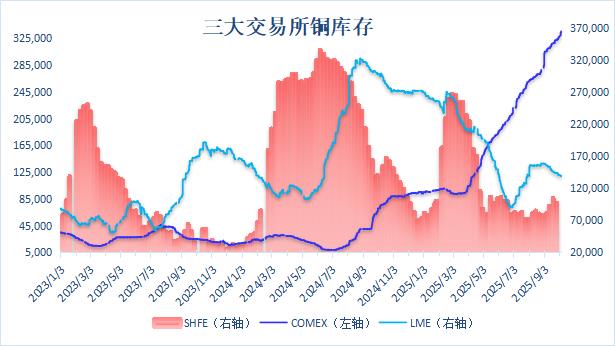
Group 1 - During the National Day holiday, overseas liquidity easing expectations boosted risk assets, with copper prices reaching around $108,000, the highest since May 2022 [1] - The U.S. government shutdown has led to a decline in ADP employment data, with a decrease of 32,000 jobs in September, raising expectations for two rate cuts by the Federal Reserve this year [1] - Chile's copper production fell by 9.9% year-on-year in August, marking the largest decline in over two years, primarily due to an accident at Codelco's El Teniente mine [1] Group 2 - Global copper mine vulnerabilities have been increasingly exposed this year, complicating negotiations between domestic smelters and overseas miners, leading to concerns about supply tightness [2] - Freeport's Grasberg mine in Indonesia faced force majeure, further escalating supply concerns and contributing to rising copper prices [2] - LME copper inventory has slightly decreased, while COMEX copper inventory has accumulated to over 330,000 tons, indicating a potential shift in market dynamics [2]
海外股市纷纷创出新高,美元触及逾两个月高位,美国期金突破4000【十一外盘综述】
Wen Hua Cai Jing· 2025-10-09 01:48
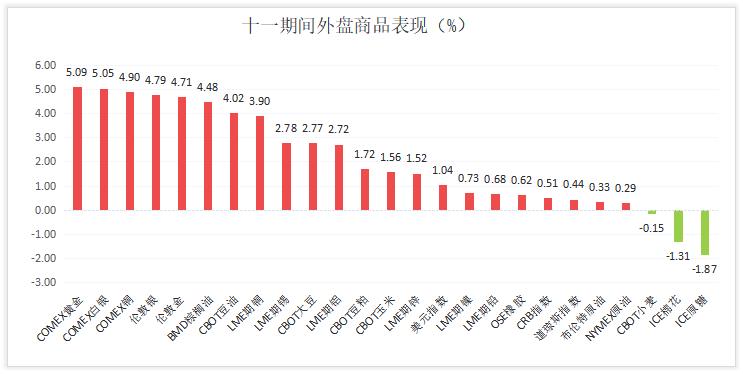
Market Overview - During the National Day holiday, global financial markets faced multiple risk events, including the U.S. government shutdown entering its eighth day and political changes in Japan and France impacting the markets [1] - U.S. stock markets continued to rise, with major indices reaching record highs, supported by expectations of interest rate cuts [1] - The dollar index reached a two-month high, while the Japanese yen fell to its lowest level since mid-February [1][2] Commodity Market - LME copper prices hit a 16-month high due to supply concerns, reaching $10,815 per ton, influenced by operational disruptions in major mines [3] - COMEX gold prices surpassed $4,000 per ounce for the first time, driven by expectations of interest rate cuts and geopolitical uncertainties [6] - Oil prices fell to a four-month low, with concerns over oversupply and OPEC's decision to maintain a modest production increase of 137,000 barrels per day [7][17] Agricultural Commodities - CBOT soybean futures rebounded after hitting a seven-week low, supported by lower yield forecasts and expectations of improved demand [9][10] Central Bank Insights - The Federal Reserve noted increased risks in the employment market while remaining vigilant about inflation, with discussions on potential interest rate adjustments ongoing [11][12] - The New Zealand central bank unexpectedly cut rates by 50 basis points, indicating concerns over economic weakness [13]